Millions of people receive a federal tax deduction for the interest they pay on home loans. Under President Donald Trump’s new tax-cut law, many people for the first time also could claim a tax deduction for interest on their vehicle loans.
The new tax break will be available even to people who don't itemize deductions. But there are some caveats that could limit its reach. The vehicles must be new, not used. They must be assembled in the U.S. And the loans must be issued no sooner than this year, to list just a few qualifications.
Here are some things to know about the new auto loan interest tax deduction:
Trump pledged while campaigning last year to make interest on car loans tax-deductible. He said it would make car ownership more affordable and “stimulate massive domestic auto production.”
The idea made it into the big tax-cut bill passed by Congress, which Trump signed into law July 4.
The law allows taxpayers to deduct up to $10,000 of interest payments annually on loans for new American-made vehicles from 2025 through 2028. It applies to cars, motorcycles, sport utility vehicles, minivans, vans and pickup trucks weighing less than 14,000 pounds, a threshold referred to as light vehicles. But it only applies to vehicles purchased for personal use, not for fleets or commercial purposes.
The tax break can be claimed starting on 2025 income tax returns. But the deduction phases out for individuals with incomes between $100,000 and $150,000 or joint taxpayers with incomes between $200,000 and $250,000. Those earning more cannot claim the tax break.
U.S. automobile dealers sold 15.9 million new light vehicles last year, a little over half of which were assembled in the U.S, according to Cox Automotive. It says around 60% of retail sales are financed with loans.
After excluding fleet and commercial vehicles and customers above the income cutoff, an estimated 3.5 million new vehicle loans could be eligible for the tax break this year, if purchasing patterns stay the same, said Jonathan Smoke, chief economist at Cox Automotive.
The tax break applies to vehicles assembled in the U.S., no matter where the company making them is headquartered. All Tesla vehicles sold in the U.S. are assembled in this country. But so are all Acura brands, the luxury model of Japanese automaker Honda.
Last year, 78% of Ford vehicles sold in the U.S. were assembled in this country, according to Cox Automotive. But customers wanting the tax break will need to pay attention to specific models. While the Ford Mustang is assembled in Michigan, the Mustang Mach-E is built in Mexico.
General Motors assembles all of its Cadillacs in the U.S. But just 44% of its Chevrolets sold last year were assembled in the U.S., and just 14% of Buicks, according to Cox Automotive. That's a lower U.S-assembled rate than Honda (60%), Toyota (52%) and Nissan (48%), which all are headquartered in Japan.
The average new vehicle loan is about $44,000 financed over six years. Interest rates vary by customer, so the savings will, too. In general, the tax deduction will decline after the initial year, because interest payments on loans are frontloaded while principal payments grow on the back end.
At a 9.3% interest rate, an average new vehicle buyer could save about $2,200 on taxes over four years, Smoke said. The tax savings would be less on a loan at 6.5%, which is the rate figured into calculations by the American Financial Services Association, a consumer credit industry trade group.
Whereas the tax deduction for home loan interest can be claimed only by people itemizing on their tax returns, Congress wrote the deduction for auto loan interest so that it can apply to all taxpayers, including those claiming the standard deduction.
On a tax form, the auto loan deduction will come before the calculation of a taxpayer's adjusted gross income. That's an important distinction, because many states use a taxpayer's federal adjusted gross income as the starting point for figuring their state income taxes. If that income figure is lower, it could reduce the state taxes owed.
At Bowen Scarff Ford in Kent, Washington, customers started asking about the auto loan tax deduction before Congress had even taken a final vote on the tax-cut bill, said General Manager Paul Ray. So he decided to promote it on the dealer's website.
A website ribbon exclaims: “CAR LOAN TAX DEDUCTION NOW AVAILABLE" while also promoting an electric vehicle tax credit that is ending soon as a result of Trump's tax-cut law.
“I think it’s going to help incentivize vehicle purchases through this year," Ray said.
Celia Winslow, president and CEO of the American Financial Services Association, concurred: “For some people deciding — should I buy it, should I not — this could be something that tips the scale.”
Others remain skeptical. According to Smoke's math, the average annual tax savings is smaller than a single month's loan payment for a new vehicle.
“I don’t think it moves the needle on somebody on the fence of buying a new vehicle or not," Smoke said. "But I think it could influence their decision to finance that vehicle instead of paying cash or instead of leasing a vehicle.”
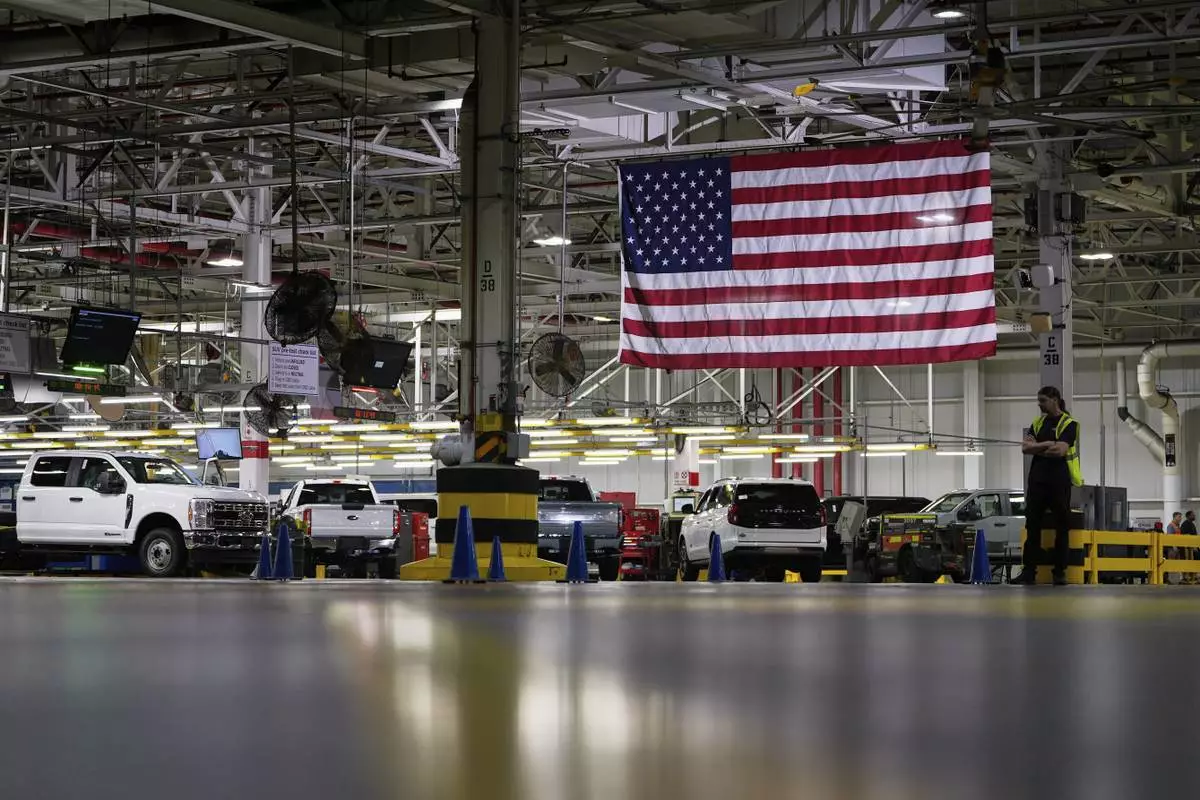
An American Flag at the Ford Motor Company Kentucky Truck Plant is seen during a media tour for the launch of the 2025 Ford Expedition in Louisville, Ky., April 30, 2025. (AP Photo/Carolyn Kaster, File)
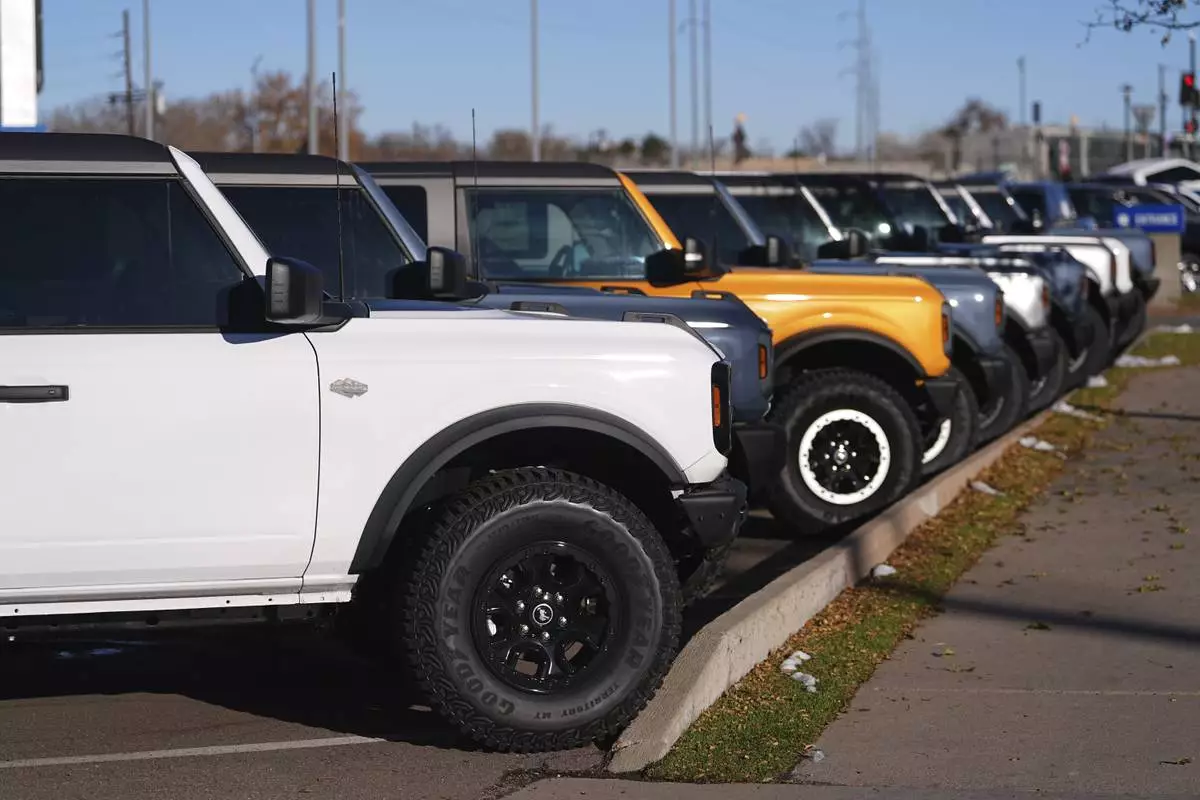
FILE - A long line of unsold 2024 Bronco utility vehicles sit on display at Ford dealership in Denver, Nov. 28, 2024. (AP Photo/David Zalubowski, File)
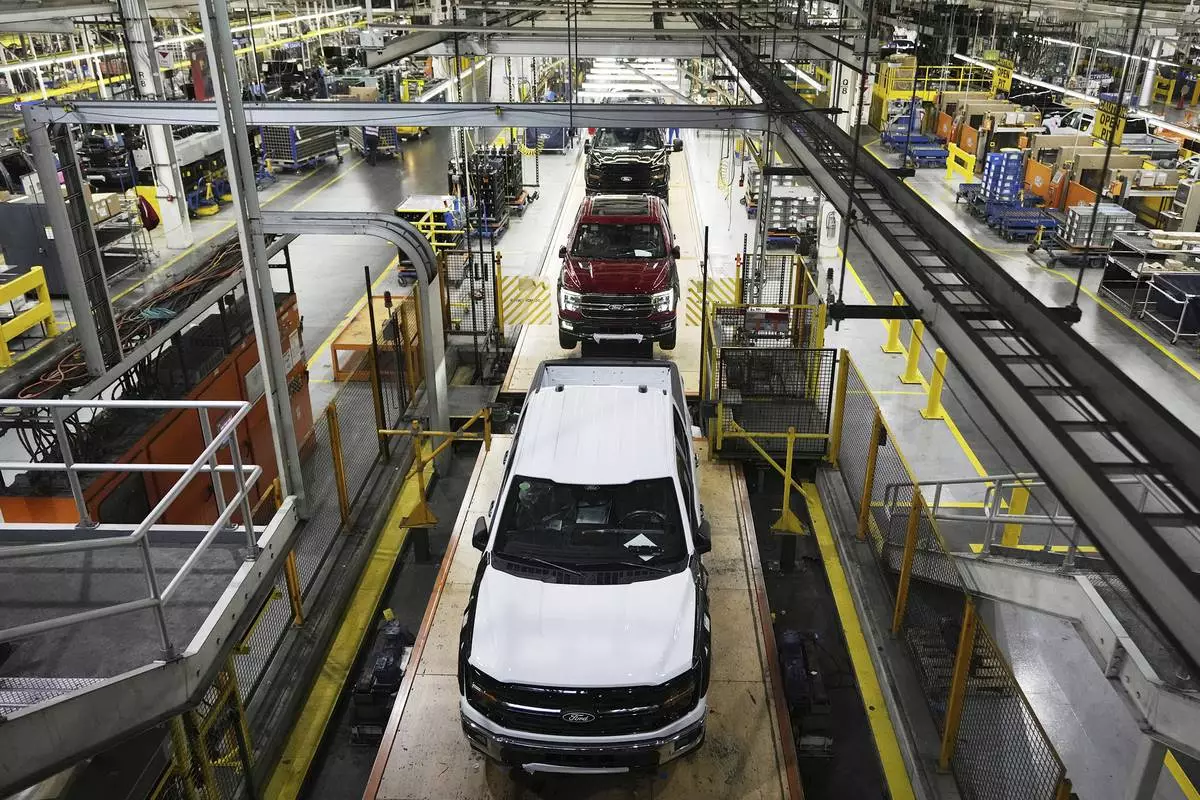
FILE - The 2024 Ford F-150 truck is assembled at the Dearborn Truck Plant in Dearborn, Mich., April 11, 2024. (AP Photo/Carlos Osorio, File)
MINNEAPOLIS (AP) — Federal officers dropped tear gas and sprayed eye irritant at activists Tuesday during another day of confrontations in Minneapolis, while students miles away walked out of a suburban school to protest the Trump administration's bold immigration sweeps.
Meanwhile, the fallout from the fatal shooting of a Minneapolis woman by an immigration agent reached the local U.S. Attorney's Office: At least five prosecutors have resigned amid controversy over how the U.S. Justice Department is handling the investigation, according to people familiar with the matter.
Separately, a Justice Department official said Wednesday there's no basis for a criminal civil rights investigation. An FBI probe of Renee Good's death is ongoing.
Strife between federal agents and the public continues to boil, six days since Good was shot in the head while driving off in her Honda Pilot. At one scene, gas clouds filled a Minneapolis street near where she died. A man scrubbed his eyes with snow and screamed for help after agents in a Jeep sprayed an orange irritant and drove off.
It’s common for people to boo, taunt and blow orange whistles when they spot heavily armed immigration agents passing through in unmarked vehicles or walking the streets, all part of a grassroots effort to warn the neighborhood and remind the government that they’re watching.
“Who doesn't have a whistle?” a man with a bag of them yelled.
Brita Anderson, who lives nearby and came to support neighborhood friends, said she was “incensed” to see agents in tactical gear and gas masks, and wondered about their purpose.
“It felt like the only reason they’d come here is to harass people,” Anderson said.
In Brooklyn Park, Minnesota, students protesting the immigration enforcement operation walked out of school, as students in other communities have done this week.
The departures in the U.S. Attorney's Office include First Assistant U.S. Attorney Joe Thompson, who had been leading the sprawling prosecution of public fraud schemes in the state, according to people who spoke to The Associated Press on the condition of anonymity to discuss personnel matters.
With the Department of Homeland Security pledging to send more than 2,000 immigration officers into Minnesota, the state, joined by Minneapolis and St. Paul, sued President Donald Trump’s administration Monday to halt or limit the surge.
The lawsuit says Homeland Security is violating the First Amendment and other constitutional protections by focusing on a progressive state that favors Democrats and welcomes immigrants.
“What we are seeing is thousands — plural — thousands of federal agents coming into our city. And, yeah, they’re having a tremendous impact on day-to-day life,” Minneapolis Mayor Jacob Frey said.
A judge set a status conference for Wednesday.
Homeland Security says it has made more than 2,000 arrests in the state since early December and is vowing to not back down. Spokesperson Tricia McLaughlin, responding to the lawsuit, accused Minnesota officials of ignoring public safety.
In a different lawsuit, a judge said she would rule by Thursday or Friday on a request to restrict the use of force, such as chemical irritants, on people who are observing and recording agents' activities. Government attorneys argued that officers must protect themselves.
The Trump administration has repeatedly defended the immigration agent who shot Good, a 37-year-old mother of three, saying he acted in self-defense. But that explanation has been widely panned by Frey, Minnesota Gov. Tim Walz and others based on videos of the confrontation.
State and local authorities are urging the public to share video and any other evidence as they seek to separately investigate Good's death after federal authorities insisted they would approach it alone and not share information.
In Wisconsin, Lt. Gov. Sara Rodriguez is proposing that the state ban civil immigration enforcement around courthouses, hospitals, health clinics, schools, churches and other places. She is hoping to succeed Gov. Tony Evers, a fellow Democrat, who is not running for a third term.
“We can take a look at that, but I think banning things absolutely will ramp up the actions of our folks in Washington, D.C.,” Evers said, referring to the Trump administration. “They don’t tend to approach those things appropriately.”
Associated Press reporters Ed White in Detroit; Steve Karnowski in Minneapolis; and Scott Bauer in Madison, Wisconsin, contributed.
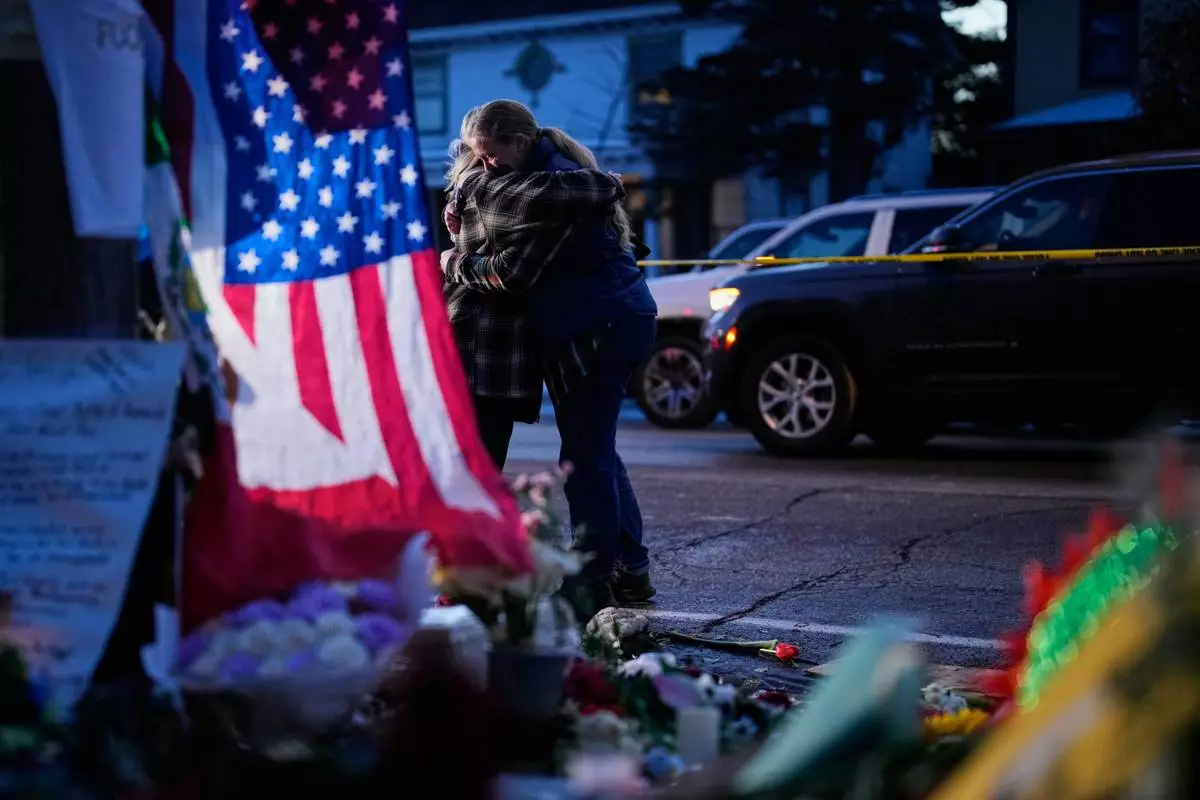
Monica Travis shares an embrace while visiting a makeshift memorial for Renee Good, who was fatally shot by an ICE officer last week, Monday, Jan. 12, 2026, in Minneapolis. (AP Photo/John Locher)
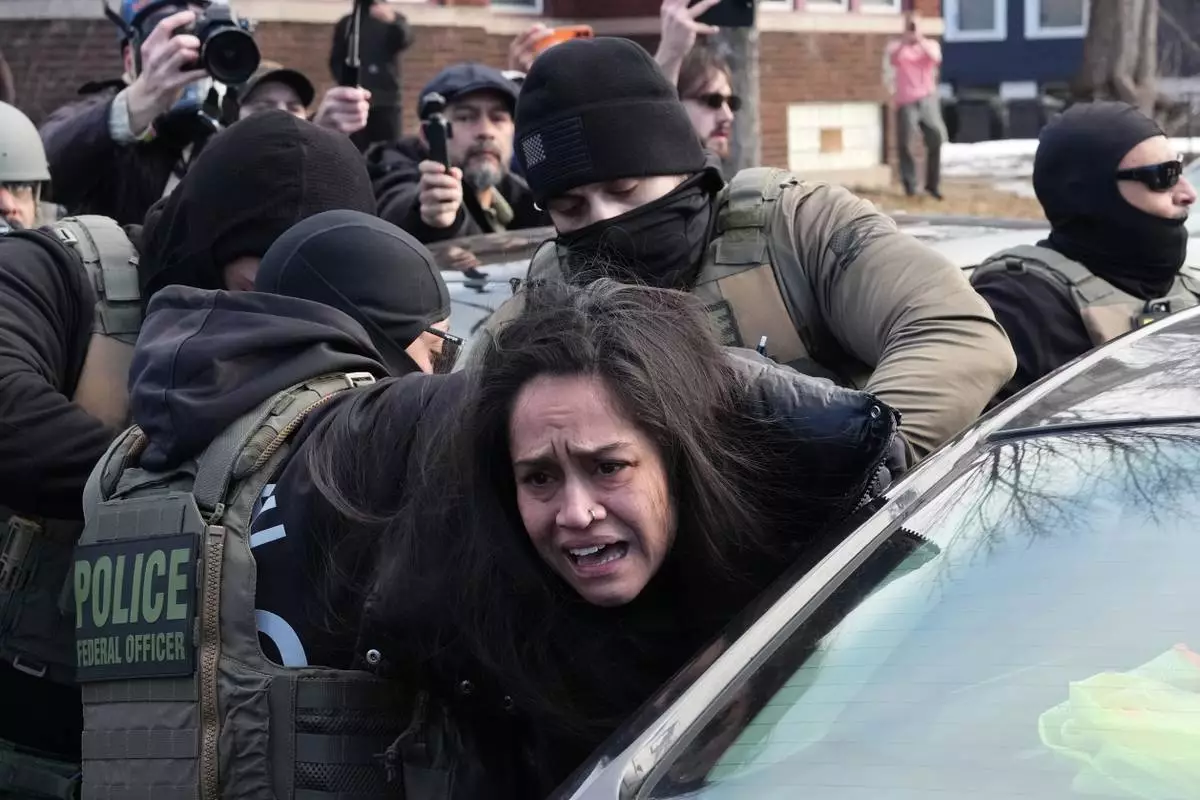
A protester is detained by Federal agents near the scene where Renee Good was fatally shot by an ICE officer last week, Tuesday, Jan. 13, 2026, in Minneapolis.(AP Photo/Adam Gray)
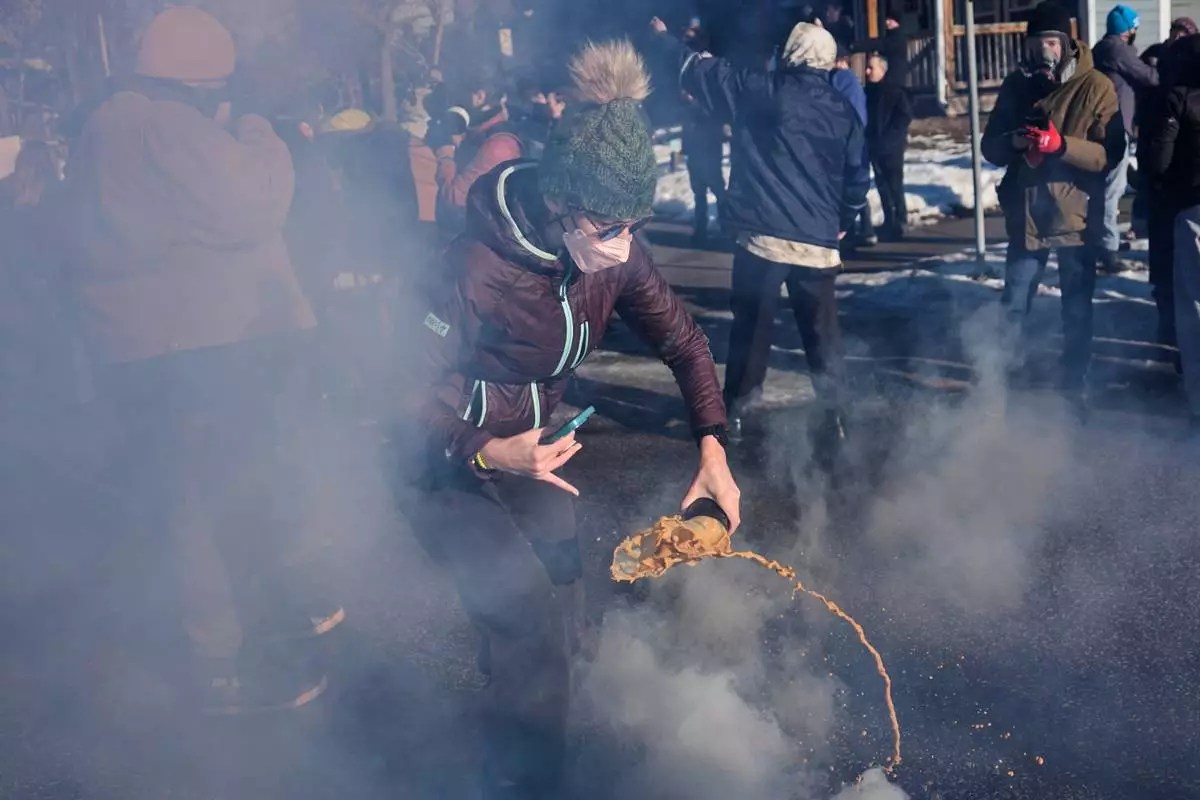
A protester grabs a tear gas grenade deployed by federal immigration officers near the scene where Renee Good was fatally shot by an ICE officer last week, Tuesday, Jan. 13, 2026, in Minneapolis. (AP Photo/John Locher)
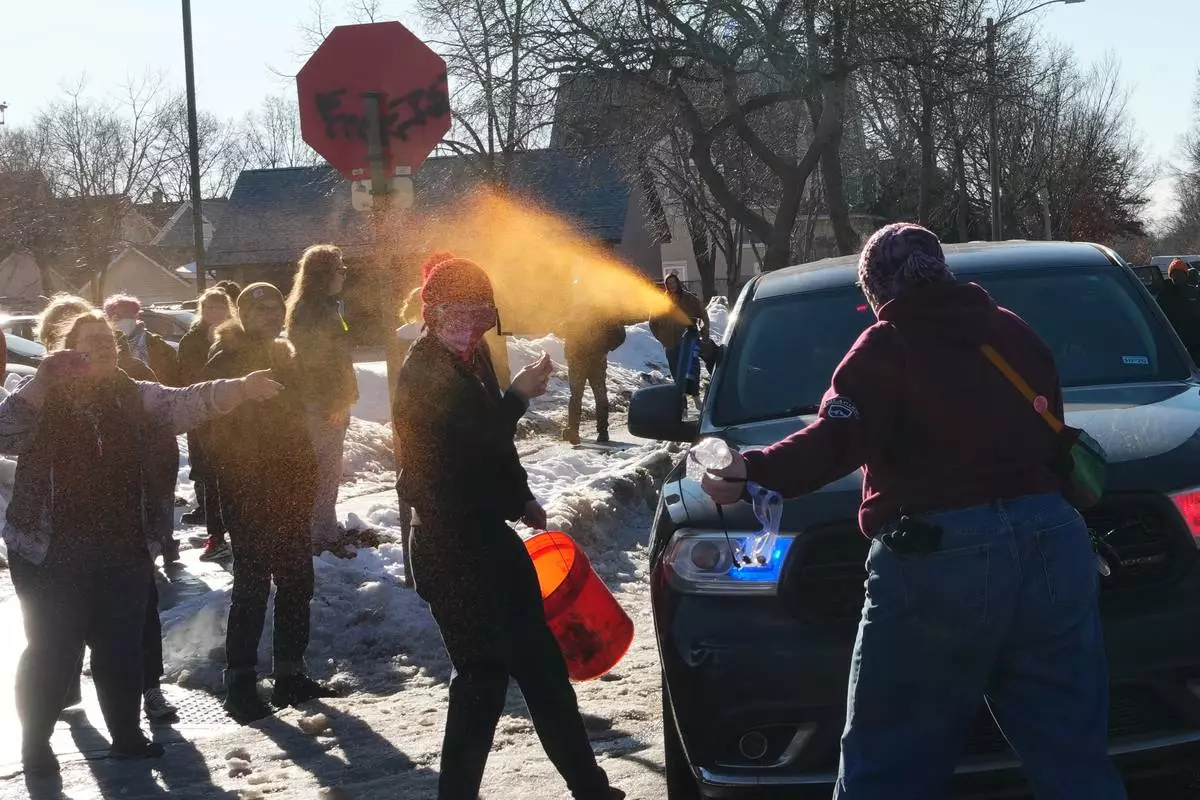
A protester is sprayed with pepper spray by a Federal agent Tuesday, Jan. 13, 2026, in Minneapolis.(AP Photo/Adam Gray)
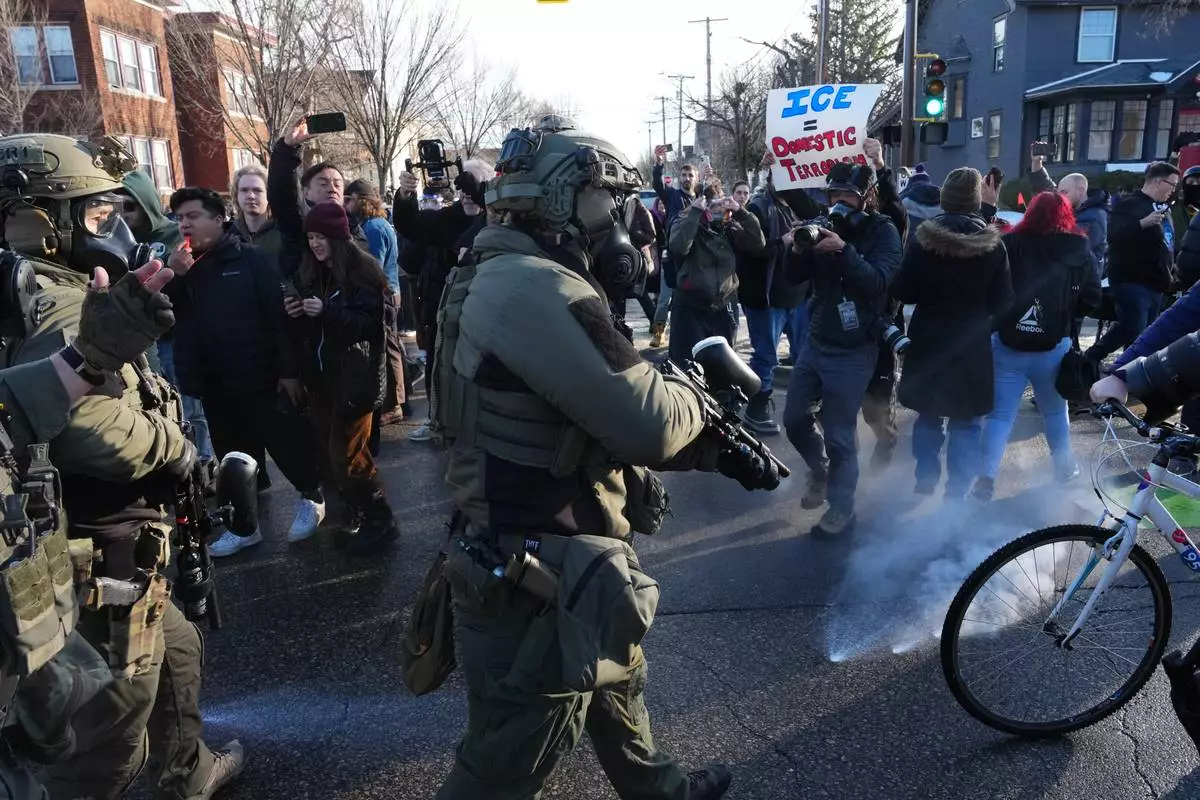
Tear gas is deployed amid protesters near the scene where Renee Good was fatally shot by an ICE officer last week, Tuesday, Jan. 13, 2026, in Minneapolis.(AP Photo/Adam Gray)
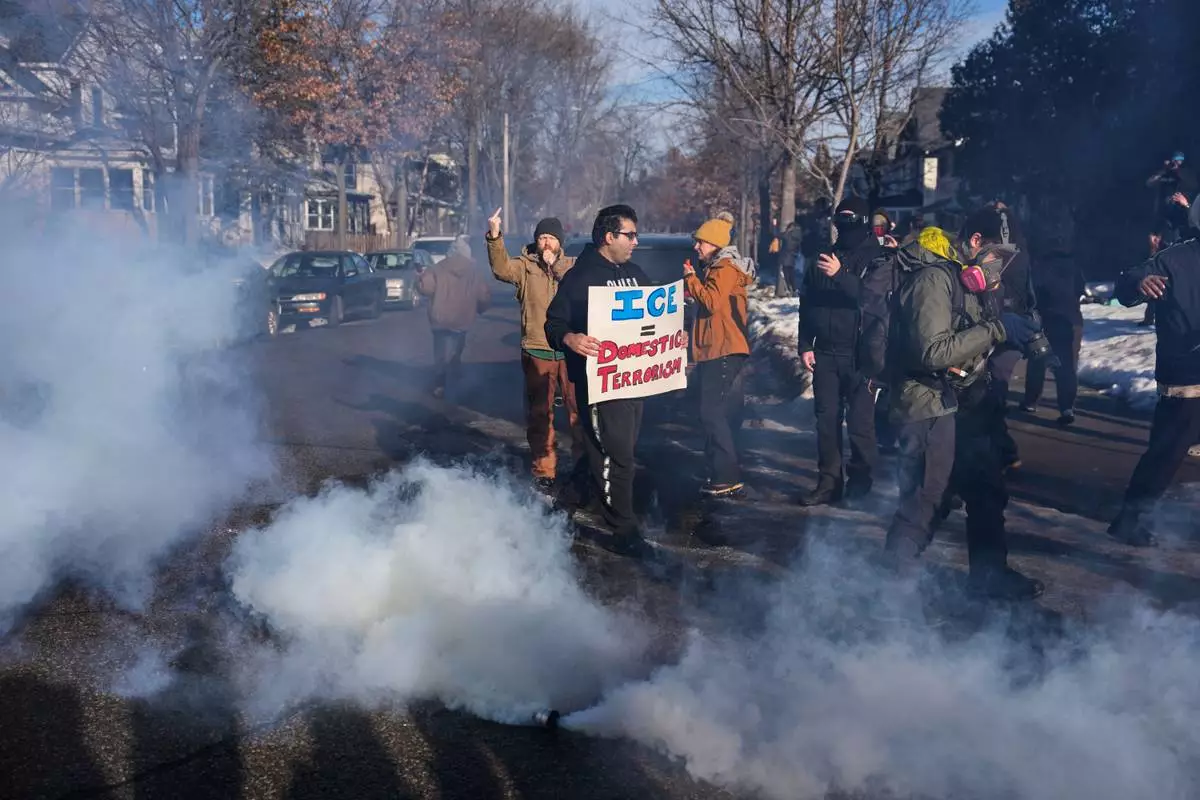
EDS NOTE: OBSCENITY - Tear gas is deployed amid protesters near the scene where Renee Good was fatally shot by an ICE officer last week, Tuesday, Jan. 13, 2026, in Minneapolis. (AP Photo/John Locher)
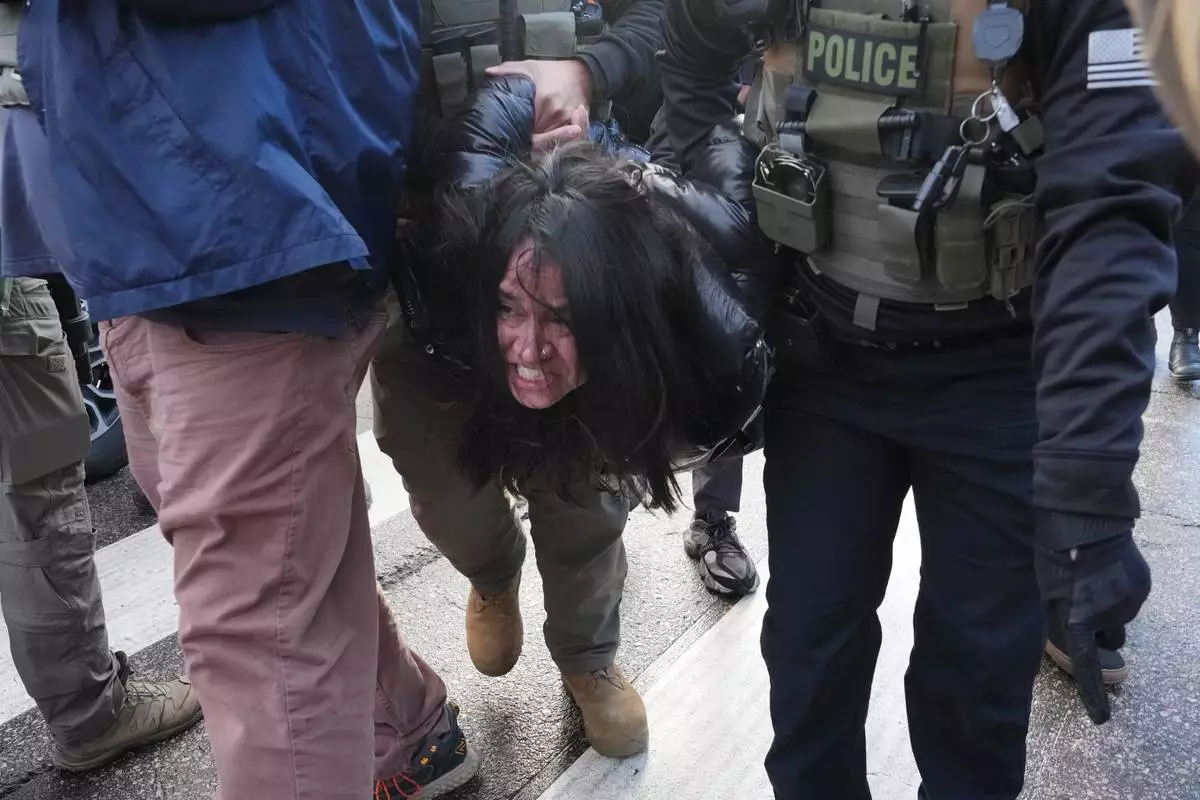
A protester is detained by Federal agents near the scene where Renee Good was fatally shot by an ICE officer last week, Tuesday, Jan. 13, 2026, in Minneapolis.(AP Photo/Adam Gray)(AP Photo/Adam Gray)
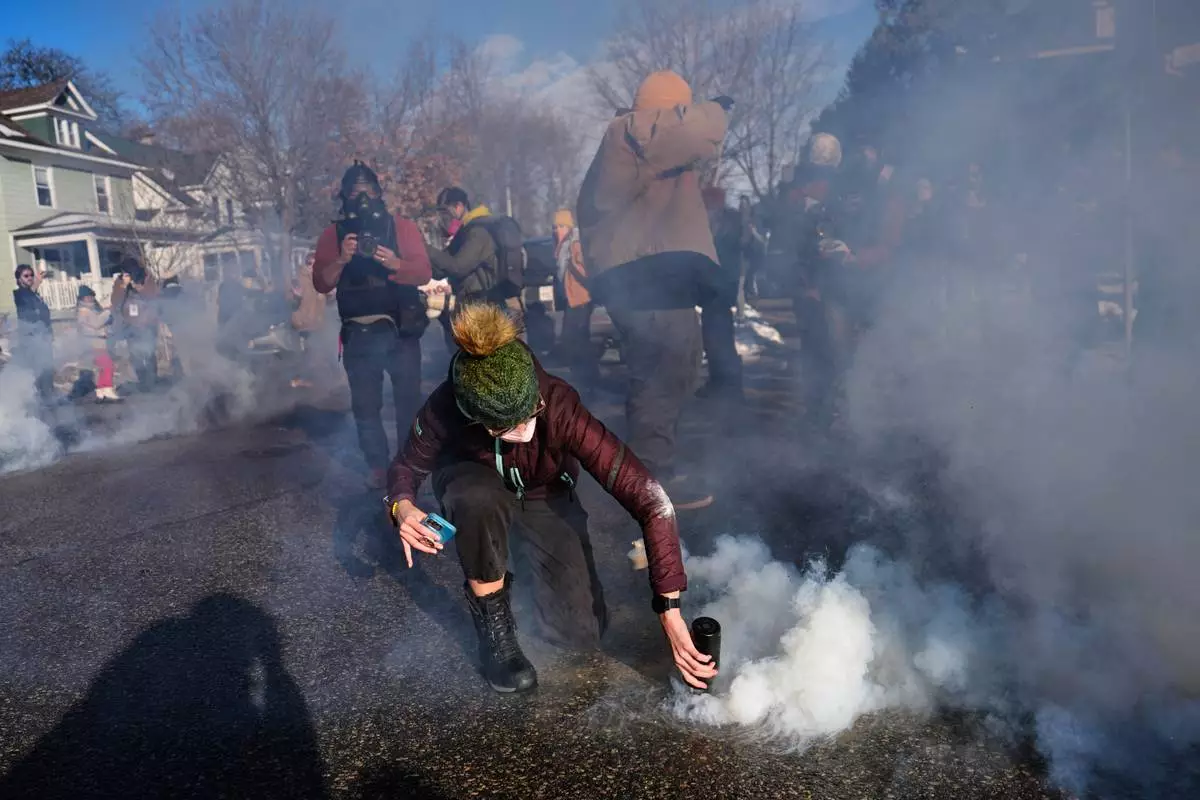
A protester grabs a tear gas grenade deployed by federal immigration officers near the scene where Renee Good was fatally shot by an ICE officer last week, Tuesday, Jan. 13, 2026, in Minneapolis. (AP Photo/John Locher)

Fireworks are set off by protesters outside the Bishop Henry Whipple Federal Building, Monday, Jan. 12, 2026, in Minneapolis. (AP Photo/Jen Golbeck)
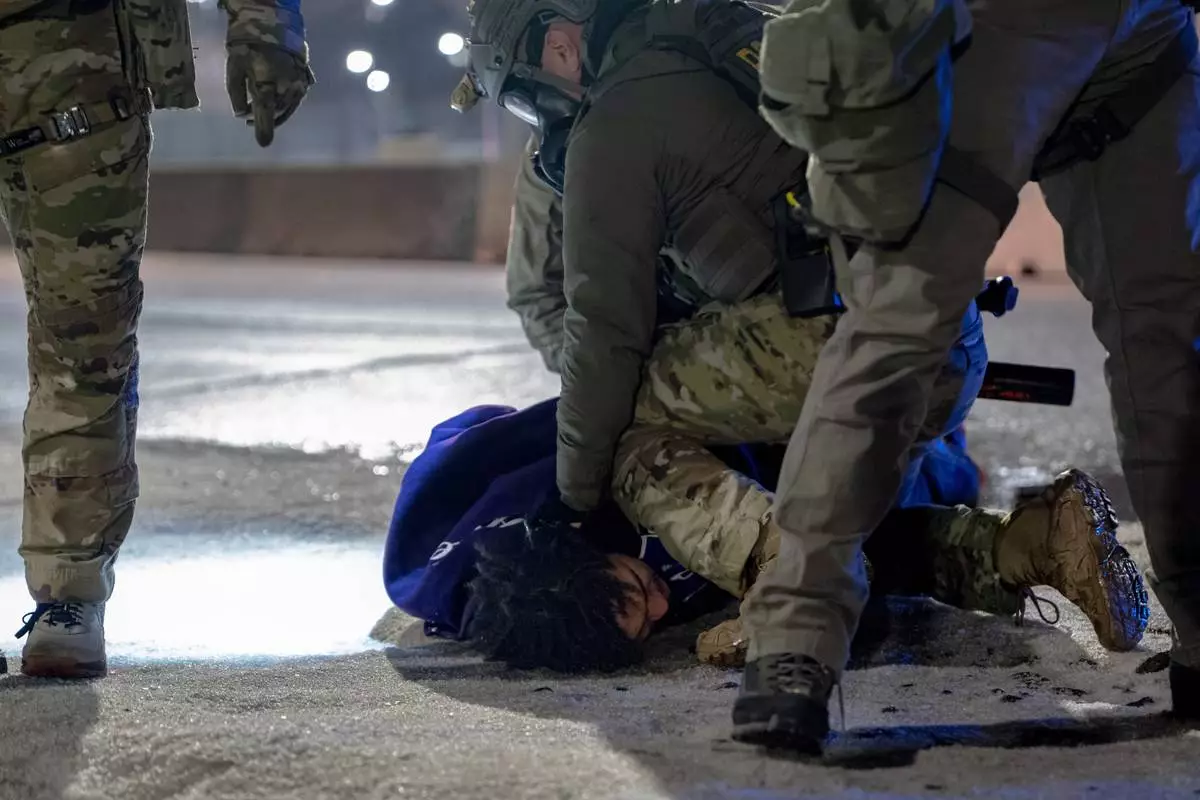
Federal immigration officers detain a demonstrator outside Bishop Whipple Federal Building after tear gas was deployed Monday, Jan. 12, 2026, in Minneapolis. (AP Photo/Jen Golbeck)
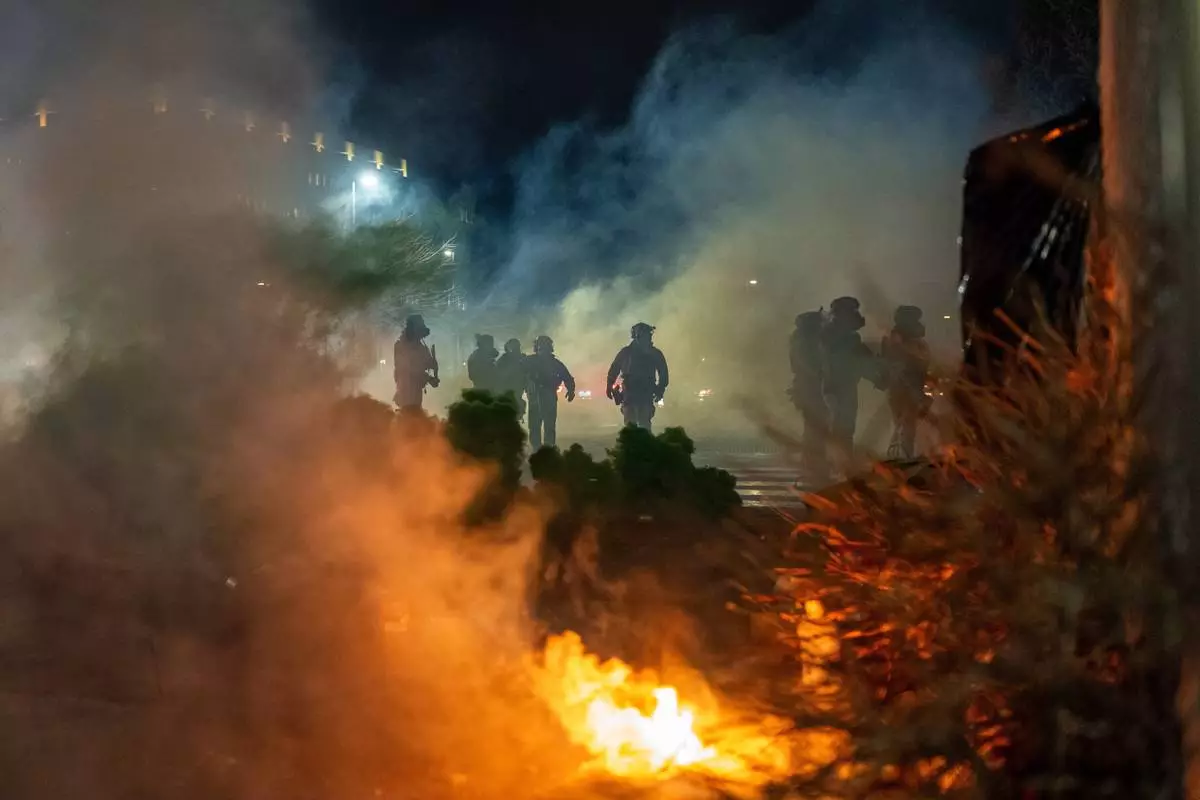
Federal immigration officers are seen outside Bishop Whipple Federal Building after tear gas was deployed Monday, Jan. 12, 2026, in Minneapolis. (AP Photo/Jen Golbeck)
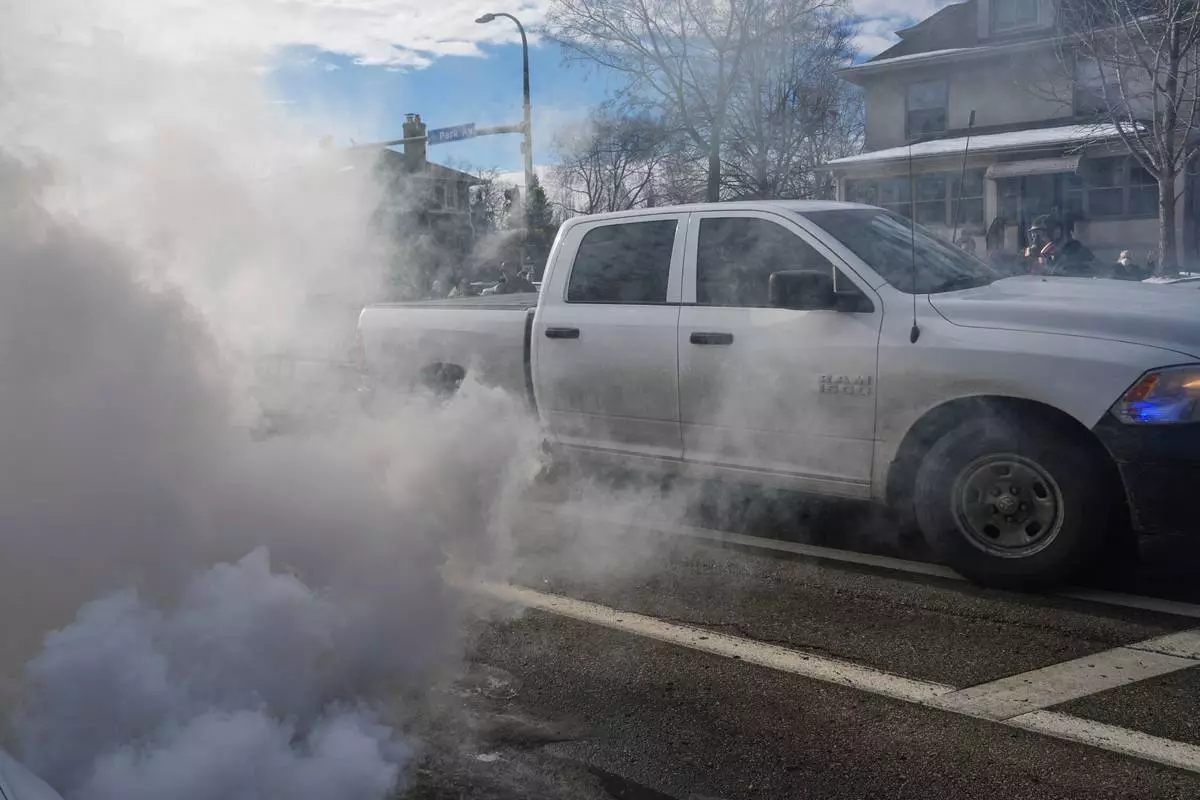
Federal agents drive through smoke from tear gas dispersed during a protest, Monday, Jan. 12, 2026 in Minneapolis (AP Photo/Adam Gray)

A protester's face is doused in water after he was pepper sprayed outside of the Bishop Whipple Federal Building, Monday, Jan. 12, 2026, in Minneapolis. (AP Photo/Jen Golbeck)
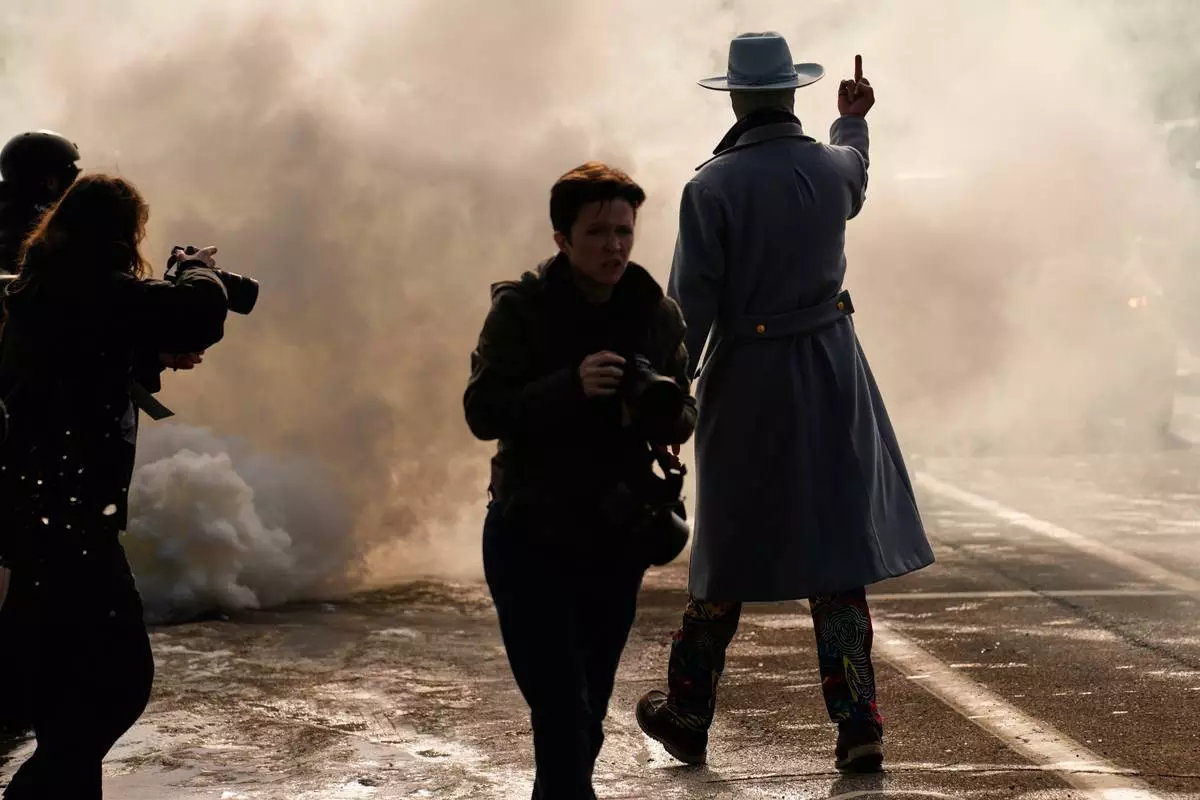
EDS NOTE: OBSCENITY - A man gestures as he walks toward a cloud of tear gas that was deployed by federal immigration officers Monday, Jan. 12, 2026, in Minneapolis. (AP Photo/John Locher)
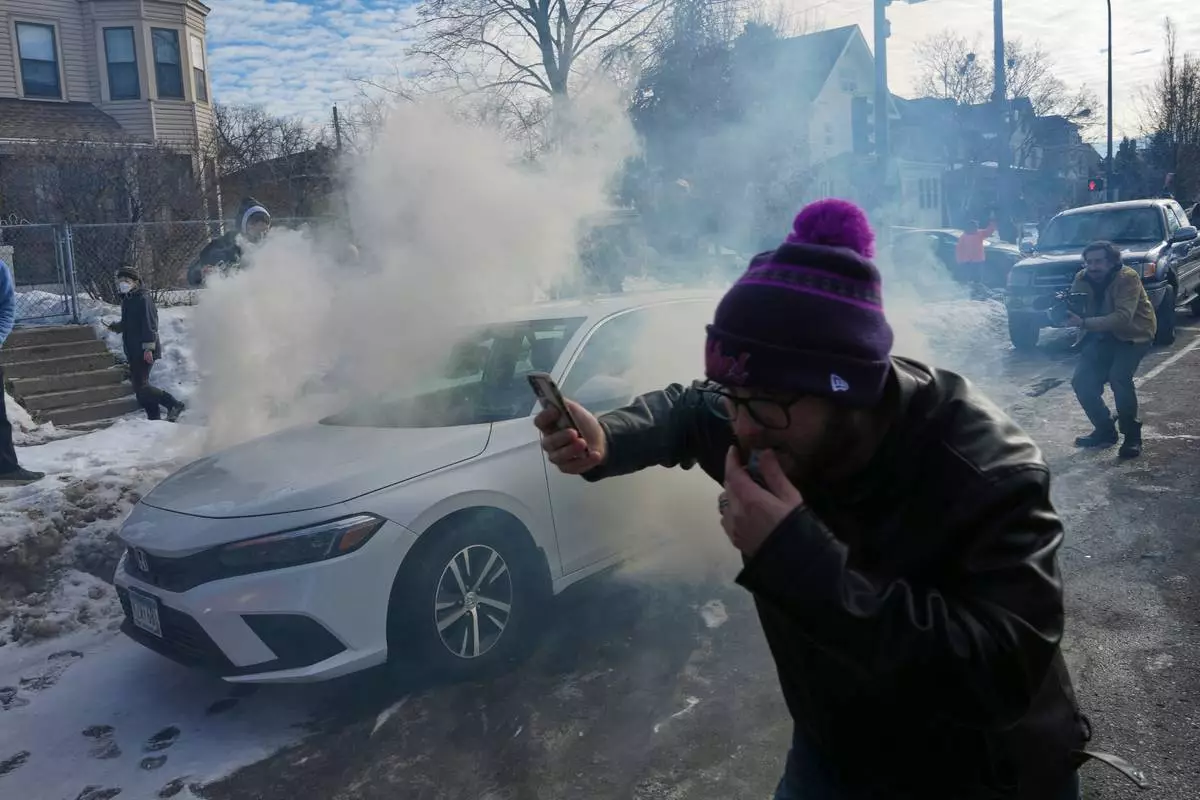
Protesters try to avoid tear gas dispersed by federal agents, Monday, Jan. 12, 2026 in Minneapolis (AP Photo/Adam Gray)
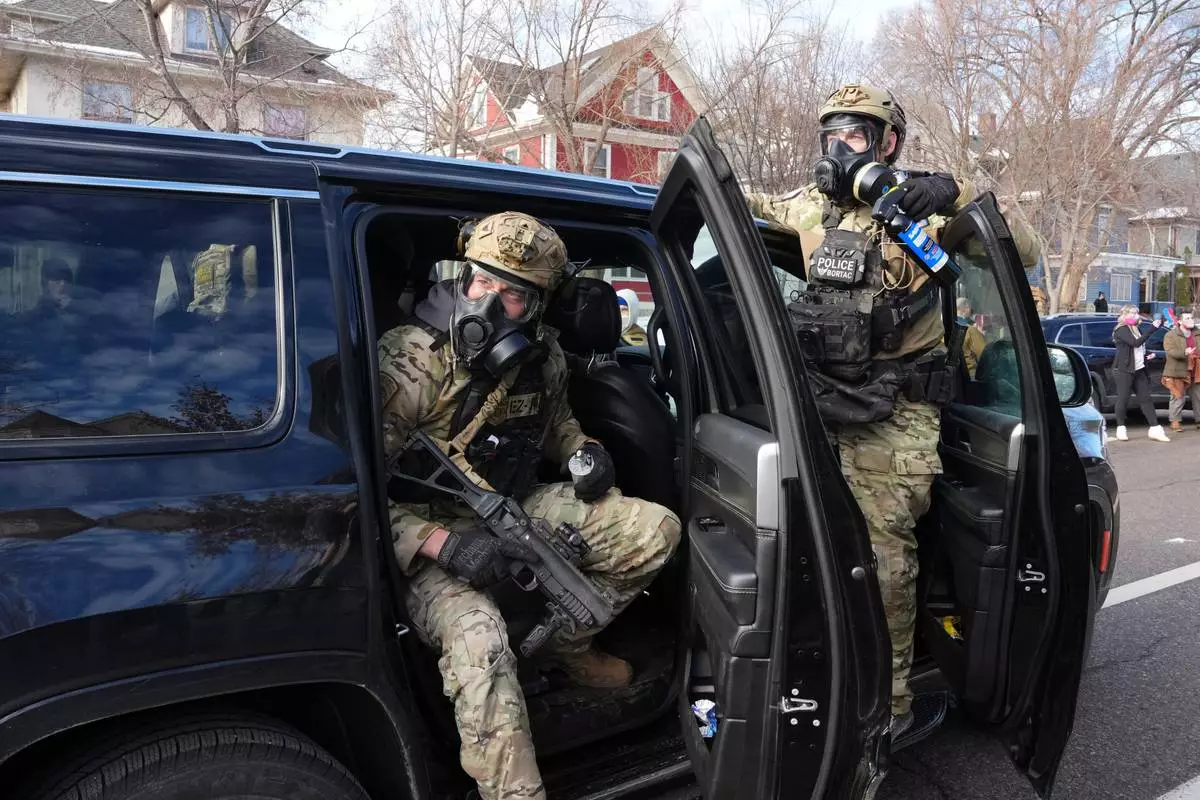
Federal agents get ready to disperse tear gas into a crowd at a protest, Monday, Jan. 12, 2026 in Minneapolis (AP Photo/Adam Gray)