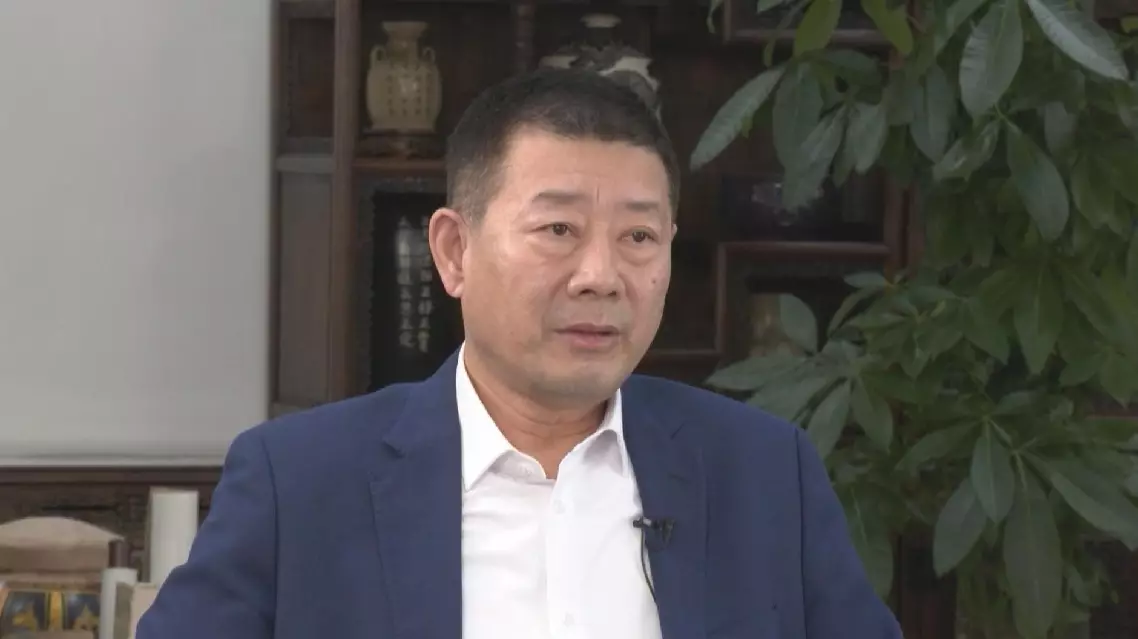
From heavy debt to industry leadership, Leng Youbin, chairman of China Feihe, has steered one of the country’s largest infant formula producers to global success, navigating disruption and fierce competition along the way.
Feihe originated as a state-owned dairy factory in Qiqihar City of northeast China’s Heilongjiang Province. In 2001, Leng, then the factory director, took on over 10 million yuan (about 1.4 million U.S. dollars) in debt and launched a new venture with just over 100 veteran workers in the city.
At the outset, Feihe faced shortages of all kinds: capital, talent and market presence. To break through, Leng set his sights on Beijing, one of China's biggest markets, more than 1,300 kilometers away.
"When I first arrived in Beijing, I knew no one. We visited malls and saw only foreign brands dominating the shelves. That left a powerful impression on me," said Leng.
At the time, China's surging economy and rising standard of living were driving strong demand for high-quality infant formula. In 2006, spotting an opportunity, Leng set out to build large-scale dairy farms to meet growing consumer needs. To raise capital, he pursued a listing in the United States.
China's booming economy not only gave Leng the courage to make the bold move but also won the confidence of global investors. Following China's accession to the World Trade Organization, foreign firms ramped up efforts to capture the country's consumer market. Backed by brand recognition and research and development strength, they quickly dominated the high-end segment. According to customs data, China's milk powder imports soared from 98,000 tonnes in 2007 to 826,000 tonnes by 2016.
Confronted by formidable foreign milk giants, Leng wavered at one point.
"Once a foreign company came to us with an offer to buy Feihe for 4.8 billion yuan (about 670 million U.S. dollars), a 100 percent acquisition. We seriously considered it. I told the team to sleep on it before deciding. By morning, we decided not to sell. If we had, it would have almost marked the collapse of Chinese infant formula brands," he said.
Leng's decision coincided with a wave of policy support aimed at revitalizing China's dairy industry. Stricter quality regulations, innovation incentives, and reforms like the infant formula recipe registration system helped boost the industry.
"Strict oversight from government and industry regulators, rigorous market testing, company-imposed entry thresholds and the formula registration system have all set high standards for companies to upgrade. By prioritizing quality and scientific research, the country's strong measures have also promoted the industry's development," he said.
By 2022, domestic brands accounted for over 68 percent of China's infant formula market, and average milk yield per cow had reached 9.2 tonnes, double the 2008 level.
Crediting his success to favorable policies and market conditions, Leng believes the younger generation has even greater opportunities, thanks to rapid developments in science and technology and China’s vast domestic market.
"We benefited from government support for private enterprises and a booming market. Today’s younger generation is more knowledgeable and idealistic; they’ve grown up with the internet and artificial intelligence. With rising consumer power, I believe China remains the largest market in the world," said Leng.
Chinese entrepreneur builds top milk company from scratch