Natalia Khryukina, daughter of Timofey Khryukin, a Soviet pilot who served during the Chinese People's War of Resistance Against Japanese Aggression, shared her father's heroic legacy and close ties with the Chinese people during a conversation with China Central Television (CCTV).
In the darkest hours of the Chinese People's War of Resistance Against Japanese Aggression between 1937 and 1942, the Soviet Union sent more than 5,000 military experts, technicians and pilots to China.
The Soviet Volunteer Group, part of the Soviet Air Force, fought alongside the Chinese people in Nanjing, Wuhan and Chongqing. Among them, more than 200 Soviet pilots lost their lives in China.
Timofey Khryukin joined the force in early 1938. Before his departure, he wrote a letter to his wife, saying he would be away on a long mission, but he did not reveal that the mission was in China or the dangers involved.
"I'm Natalia Khryukina, daughter of twice Hero of the Soviet Union Timofey Khryukin. My father wrote a letter to my mother before he left for China, but until his return, my mother didn't know he was fighting in China" said the daughter.
"My father was eager to become a fighter pilot, but his two-meter height and muscular physique made it impossible for him to squeeze into the cockpit of a fighter. So, he chose to fly heavy bombers," she said.
On July 3, 1938, a bomber formation led by Timofey Khryukin successfully sank a Japanese ship carrying fighter aircraft, according to official Soviet archives.
"One day while in China, my father noticed that the Japanese army had a specially built aircraft that could take off from and land on ships similar to aircraft carriers. After searching, they saw such a huge ship anchored in the Yangtze River, surrounded by many battleships and patrol boats. Although they only carried three heavy aerial bombs, my father and his companions rushed toward the ship. The Japanese did not expect that a fighter would suddenly appear from the clouds. Although Japanese fighters urgently took off from other ships to pursue, their maximum altitude was only 6,000 meters, while our fighters had already climbed to 9,000 meters. The engines of the Japanese fighters began to shake, and they shut down and fell one after another," said the daughter.
During their mission in China, the Soviet pilots built deep connections with the Chinese people, she said.
"Chinese farmers had rescued our pilots many times. They hid pilots who had parachuted from disabled aircraft in their homes and disguised downed planes. When our pilots were not performing flight missions, they would train Chinese pilots. They communicated and learned from each other. When Chinese pilots were performing flight missions, the mechanics on the planes would be Russians, and vice versa. By exchanging positions, they improved their ability to coordinate operations. My father originally planned to stay in China for a three-month regular pilot assignment, but he stayed for two terms, or six months," she said.
"In 1939, the Presidium of the Supreme Soviet of the Soviet Union awarded my father as a Hero of the Soviet Union. The experience my father accumulated while fighting in China came in handy in the northern region after he return home, and he later became the Deputy General-Inspector of the Soviet Air Force," she added.
This year marks the 80th anniversary of the victory in the Chinese People's War of Resistance Against Japanese Aggression, the Great Patriotic War and the World Anti-Fascist War.
Both China and Russia, which suffered the greatest losses during World War II, are set to stage military parades to celebrate this occasion.
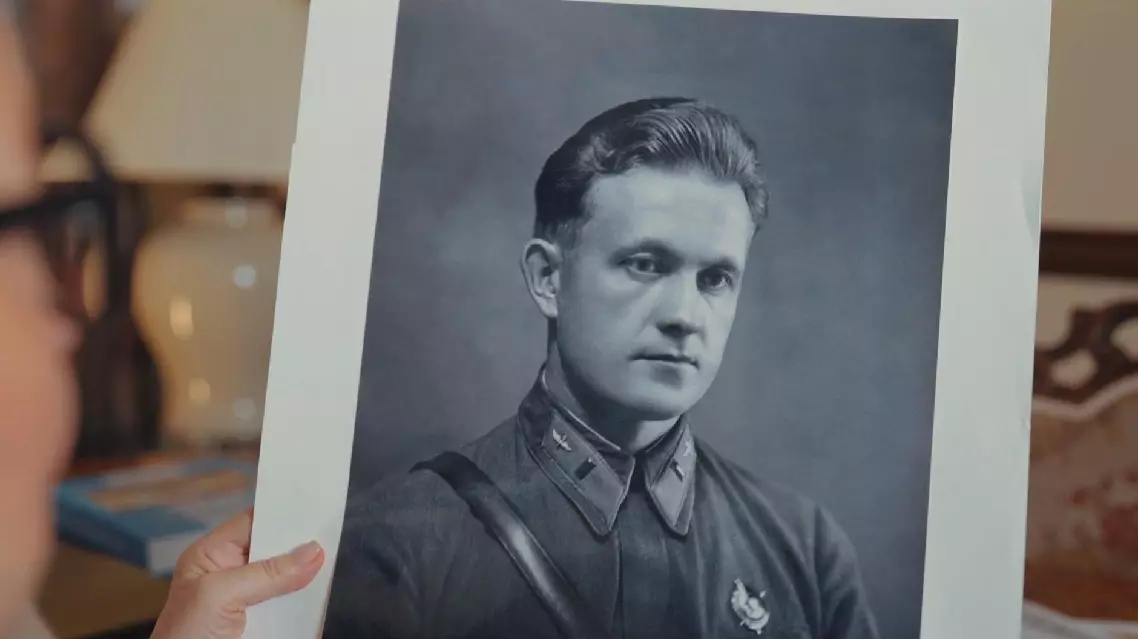
Daughter of Soviet Volunteer Group member shares pilot's fight against Japanese aggression in China