JAKARTA, Indonesia--(BUSINESS WIRE)--Jul 14, 2025--
The University of Melbourne, in partnership with the Indonesia Council, hosted ICOC 2025, a key multidisciplinary gathering of Indonesian experts in the Southern Hemisphere. Over four days, the Indonesia Council Open Conference (ICOC) brought together more than 350 scholars, students, policymakers, artists, and community leaders from across Australia, Indonesia, and beyond for critical conversations on the future of the region.
This press release features multimedia. View the full release here: https://www.businesswire.com/news/home/20250714176504/en/
This biennial, free, and open conference convened emerging and established voices in Indonesian studies. Participants debated pressing contemporary issues, from environmental governance and climate resilience to economic development, gender equality, Indigenous rights, democratic transformation, and the arts. The theme, ‘Indonesia Now: Eighty Years of Independence’, offered an opportunity to reflect on past achievements and envision new directions for Indonesia across law, health, religion, education, social movements, and more.
Professor Jennifer Balint, Dean of the Faculty of Arts, said: “The University of Melbourne has long served as a bridge in the Australia-Indonesia relationship, welcoming Indonesian students and collaborating on research for nearly eight decades. Our campuses are enriched by Indonesian scholars, and Indonesian studies enlivens our intellectual life. ICOC 2025 celebrates these enduring connections and forges new ones for the future.”
The program featured over 180 papers presented by scholars, covering a breadth of innovative research and perspectives.
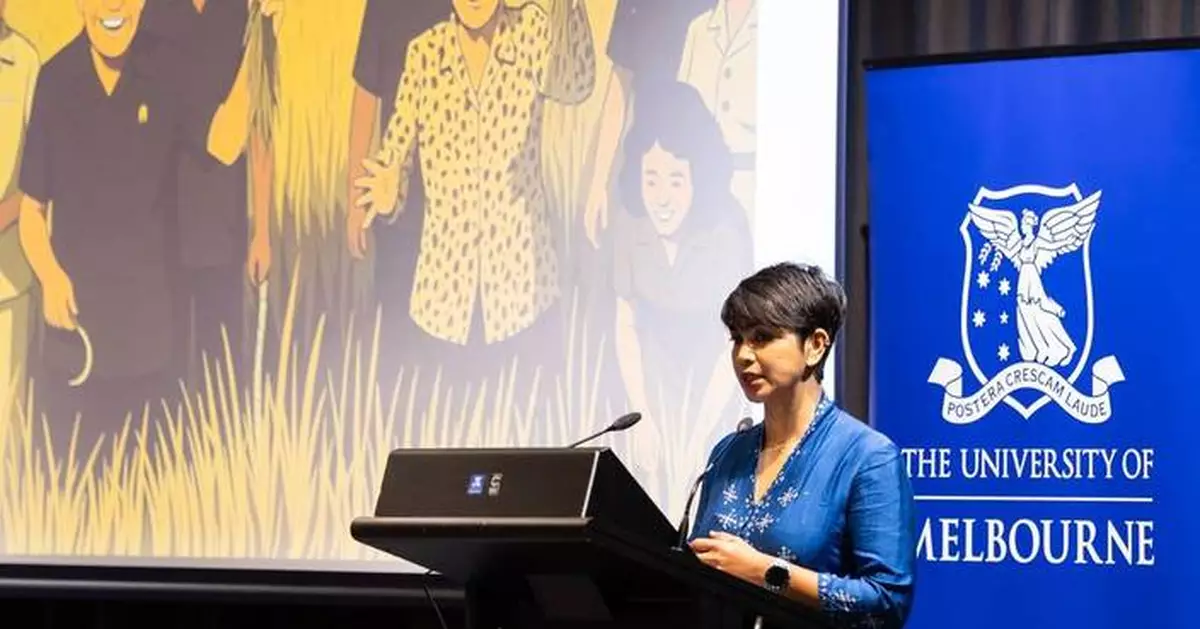
Conference highlights included a keynote by Farwiza Farhan, Indonesia’s renowned environmental leader and Ramon Magsaysay laureate, whose conservation work in Sumatra’s Leuser Ecosystem stands as a global model for biodiversity protection.
Farhan spoke of Indonesia’s environmental governance, reflecting on the progress and challenges that have unfolded in the eight decades since the country’s independence.
“Indonesia stands poised to harness technology and community-led initiatives to forge a path of sustainable development and climate resilience. However, we must remain vigilant, ensuring that our progress doesn't come at the cost of our rich biodiversity or the well-being of our communities. The next chapter of Indonesia's environmental story must be one of inclusive conservation, balancing economic growth with ecological stewardship,” Farhan said.
The event also featured the fifth annual Australia-Indonesia in Conversation, a partnership with Universitas Gadjah Mada focused on Indigenous Knowledge, and an exclusive curator-led tour of the recently launched exhibition "65,000 Years: A Short History of Australian Art" at the Ian Potter Museum of Art, celebrating First Nations voices and cross-cultural connections.
Reflecting the University’s deep commitment to Indonesia’s national agenda, Dr Ken M.P. Setiawan launched ‘ The Routledge Handbook of Human Rights in Southeast Asia ’ at the conference with co-editor Professor Amalinda Savriani from Universitas Gadjah Mada, joining many other relevant publications.
Professor Michael Wesley, Deputy Vice-Chancellor (Global, Culture and Engagement), noted: “We are committed to enabling and empowering our Indonesian partners, and to strengthening the ties that benefit both our societies through the transformative power of research and education.”
“The success of ICOC 2025 underscores the vital role universities play in bringing together diverse voices to address complex global challenges. By facilitating these exchanges of ideas and fostering people-to-people connections, the University of Melbourne continues to enhance the Australia-Indonesia relationship and strengthen its impact across both countries,” he concluded.
In its 70 th year of teaching Indonesian language, the University of Melbourne remains deeply engaged with Indonesian institutions through innovative programs, joint research initiatives, and enduring academic ties.
Learn more about ICOC here.
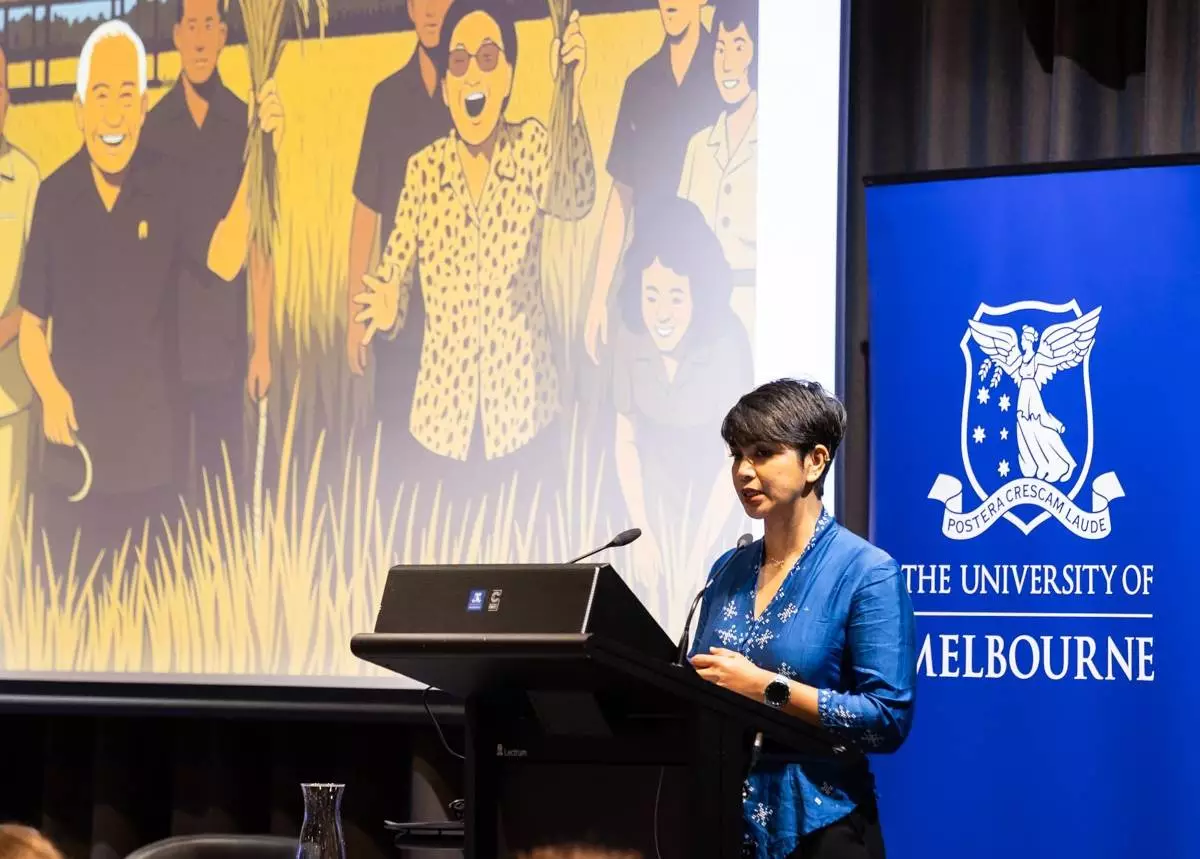
Keynote speaker Farwiza Farhan addresses the conference. Picture: Drew Echberg