Gabriel House had seen better days, but for residents and their families it was the center of a caring community.
The 100-unit assisted-living facility that burned Sunday night, killing nine people so far, opened in 1999 in Fall River, Massachusetts. Some photos on its Facebook page show neat rooms but older-looking carpeting and furniture, and before the fire state inspectors had hit the facility with health and safety citations.
Click to Gallery
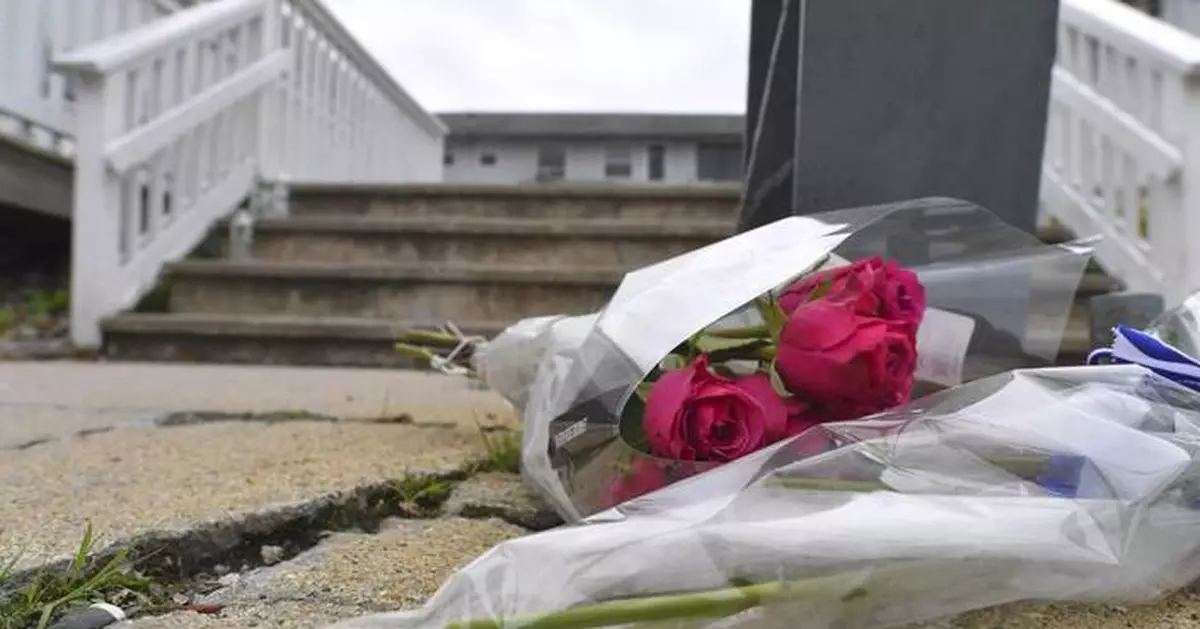
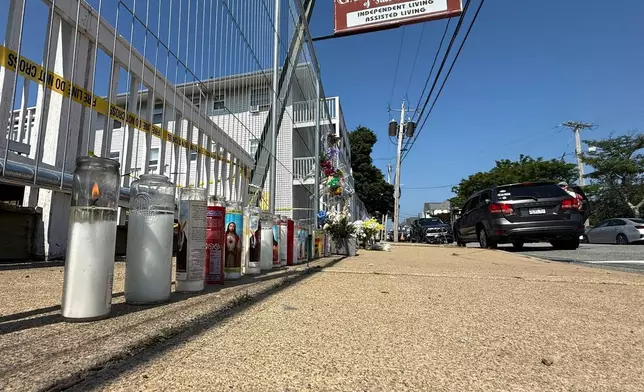
Flowers rest near an entrance to the Gabriel House assisted living facility, Monday, July 14, 2025, following a fire that started late Sunday and resulted in multiple fatalities, in Fall River, Mass. (AP Photo/Steven Senne)
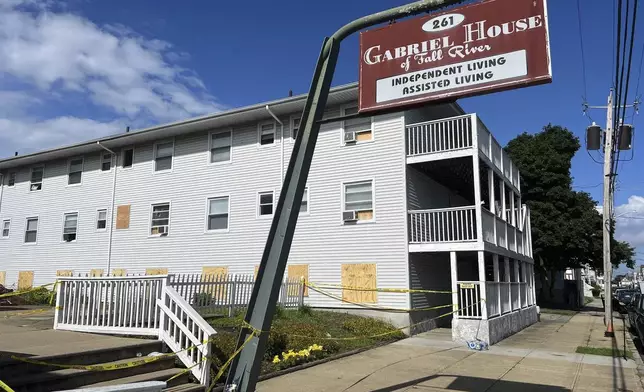
Boards cover the windows of the Gabriel House assisted living facility, where a fire on Sunday killed several people, Tuesday, July 15, 2025 in Fall River, Mass. (AP Photo/Kimberlee Kruesi)
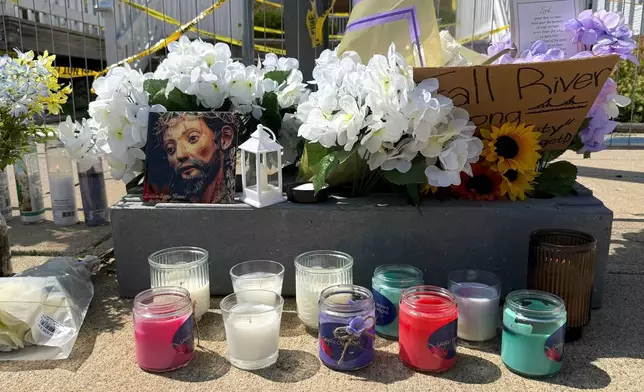
Flowers sit at a makeshift memorial in front of the Gabriel House assisted living facility, where a fire on Sunday killed several people, Wednesday, July 16, 2025 in Fall River, Mass. (AP Photo/Rodrique Ngowi)
Flowers sit at a makeshift memorial in front of the Gabriel House assisted living facility, where a fire on Sunday killed several people, Wednesday, July 16, 2025 in Fall River, Mass. (AP Photo/Rodrique Ngowi)
Flowers rest near an entrance to the Gabriel House assisted living facility, Monday, July 14, 2025, following a fire that started late Sunday and resulted in multiple fatalities, in Fall River, Mass. (AP Photo/Steven Senne)
Displaced residents and relatives also have told of substandard conditions, but also say it was a place where people from difficult circumstances found each other.
Some say Gabriel House was emblematic of Fall River — a fiercely proud city despite a years-long downturn. The city of tight-knit neighborhoods has been shaped by immigrants who came to work in now-dwinded textile mills, including a large population of Portuguese descent.
A memorial of candles and balloons that grew at the site Tuesday and Wednesday. People held a vigil there and attendees talked about the importance of community. Krista Cormier, a Fall River resident, said the fire has been “heavy on my heart all week."
“Anytime something happens people just come together just because of this,” Cormier said, beating on her heart. “This city is full of love and support.”
But there were notes of discord. Gabriel House owner Dennis Etzkorn has said he is cooperating with investigators but Mayor Paul Coogan said he should have been at the memorial and has criticized him for being hard to reach in the aftermath of the fire.
“To me, he should be down here every day,” Coogan said.
Fall River has endured tragedy and controversy, from officials accusing Victorian spinster Lizzie Borden of killing her father and stepmother with an ax in 1892 to convicting wunderkind Mayor Jasiel Correira of fraud in 2021.
The Gabriel House assisted living facility opened on Olive Street nearly a century after the coastal city — nicknamed “Spindle City” — roared with roughly 100 textile mills and a population of 120,000 people. Most of those mills were silenced by the Great Depression, while the city declared bankruptcy in 1931.
These days, Fall River’s population is now about 95,000, Census figures show. The city’s median household income of nearly $53,000 is a little more than half the state’s median, while the 24% poverty rate is more than double that of Massachusetts state. The city is trying to revitalize its downtown and waterfront and while local and state officials are working to bring in more affordable housing.
Her granddaughter didn’t like the assisted-living center, but 86-year-old Eleanor Willett wanted something that left her money to play the slots at a casino. She earned too much to qualify for Medicaid but not enough to afford a higher-priced assisted-living facility, Holly Mallowes told The Associated Press Tuesday.
“She said, ‘I don’t need much, but a roof over my head and someplace to put my sewing machine,’” Mallowes said.
A Massachusetts native, Willett spent more than 20 years as a secretary and even worked briefly as a cocktail waitress, her granddaughter said.
Her home was always a base for everyone in her family, Mallowes said.
“My mom worked a lot and Grammy’s was always a place we called home,” said Mallowes, 45. “We lived with her often. She was very strong. She outlived two husbands and raised five children. She was absolutely a joy.”
Kim Mackin, 71, was a violist who performed in Boston-area orchestras, according to her nephew, Austin Mackin.
She was described in a statement from family members as “gifted beyond words.”
“We will all miss Kimmy,” the statement read. “Beyond being exceptionally kind, few knew that she was a brilliant musician.”
Mackin received a full scholarship to the Manhattan School of Music and after graduating, toured the world as first chair viola.
Breonna Cestodio described her 78-year-old uncle, Richard Rochon, as “a very quiet guy,” yet a “great guy.”
“He kept to himself,” she told reporters. “He was a sharpshooter in the Army. He loved getting visits from all of his nieces and nephews.”
Rochon moved into Gabriel House about a year ago. Cestodio had little good to say about the facility, remarking that it always seemed hot inside the building.
The city motto, “We’ll try,” dates to the Great Fire of 1843, which destroyed much of the center of town. Other large fires altered the city forever in the 1920s and 1940s.
The Gabriel House fire is the latest disaster for the city to navigate, and it will, said Frank Sousa, director of the Saab Center for Portuguese Studies at University of Massachusetts Lowell.
“These are people who had tough lives, and in Fall River found new opportunities,” he said. “This ten years from now, 20 years from now will just be one of the many things that have happened in the city that have required resilience.”
—-
Associated Press writer Mark Scolforo contributed from Harrisburg, Pennsylvania.
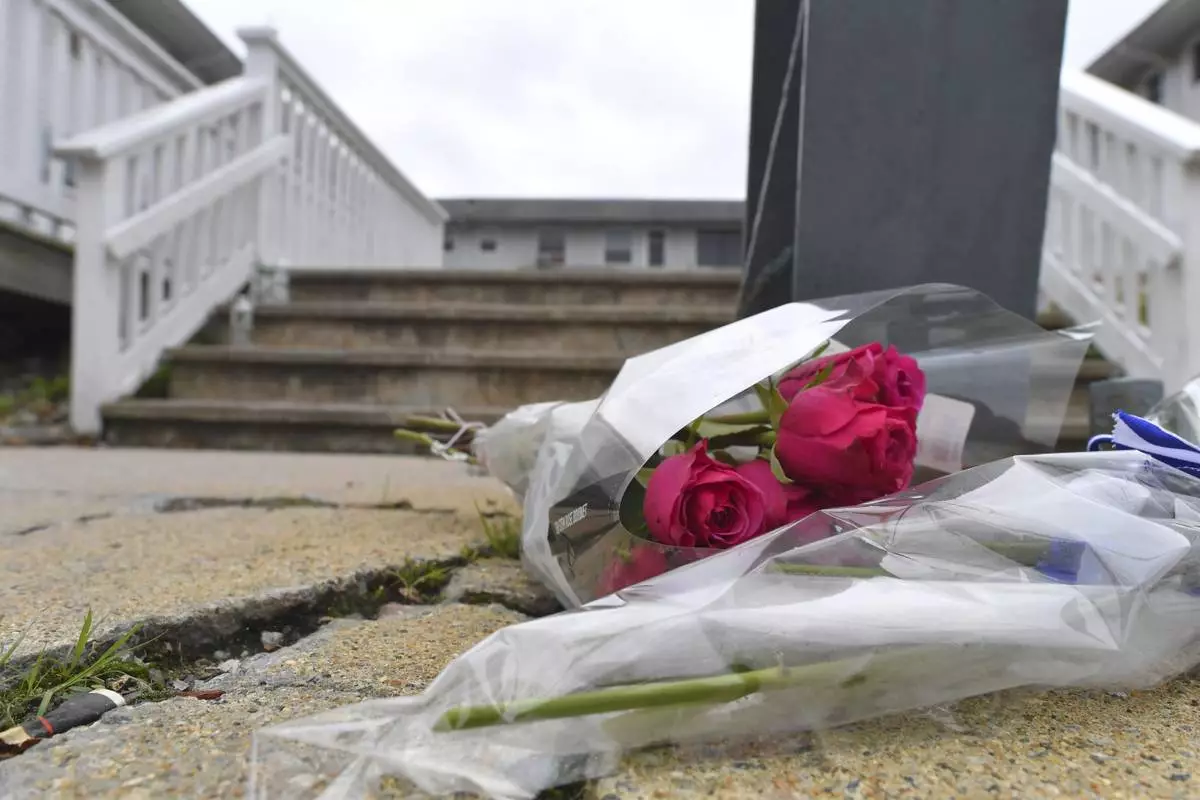
Flowers rest near an entrance to the Gabriel House assisted living facility, Monday, July 14, 2025, following a fire that started late Sunday and resulted in multiple fatalities, in Fall River, Mass. (AP Photo/Steven Senne)
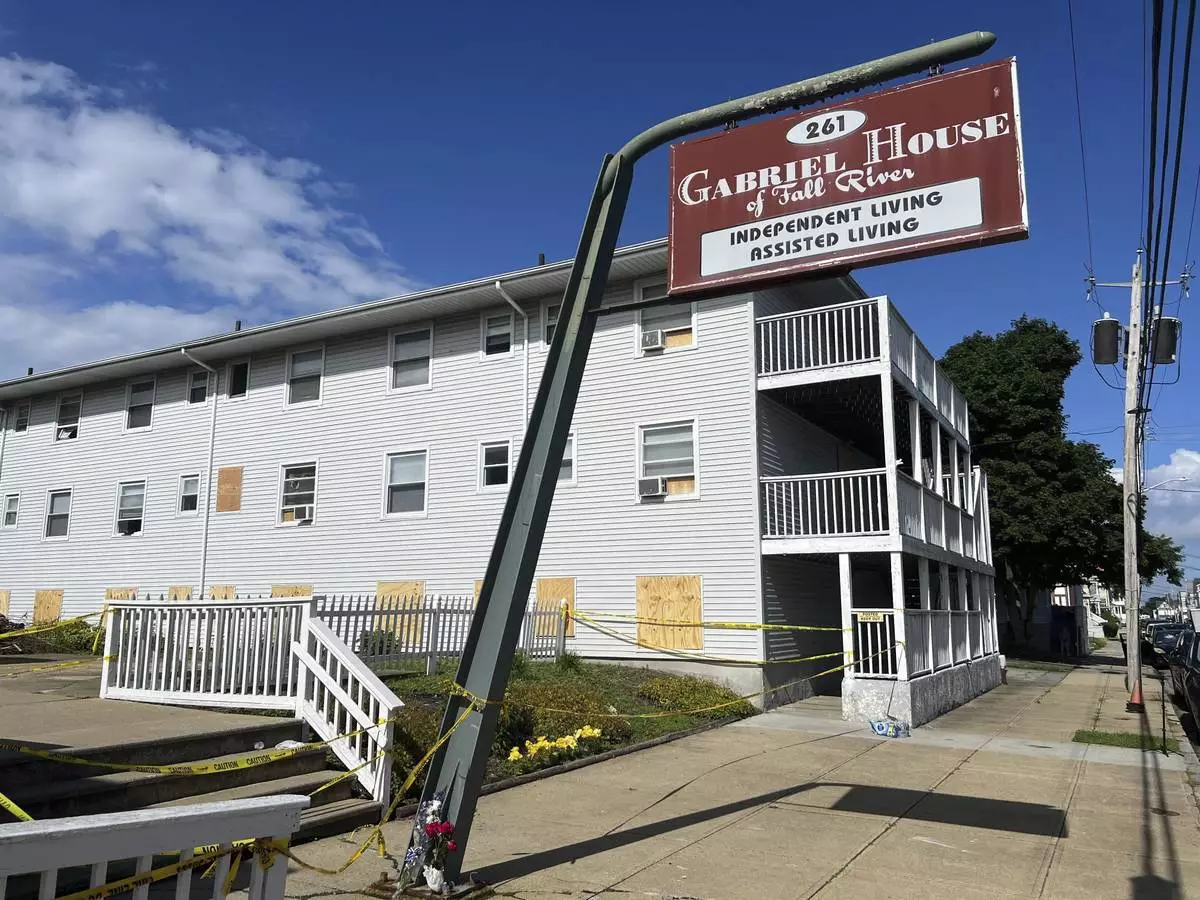
Boards cover the windows of the Gabriel House assisted living facility, where a fire on Sunday killed several people, Tuesday, July 15, 2025 in Fall River, Mass. (AP Photo/Kimberlee Kruesi)
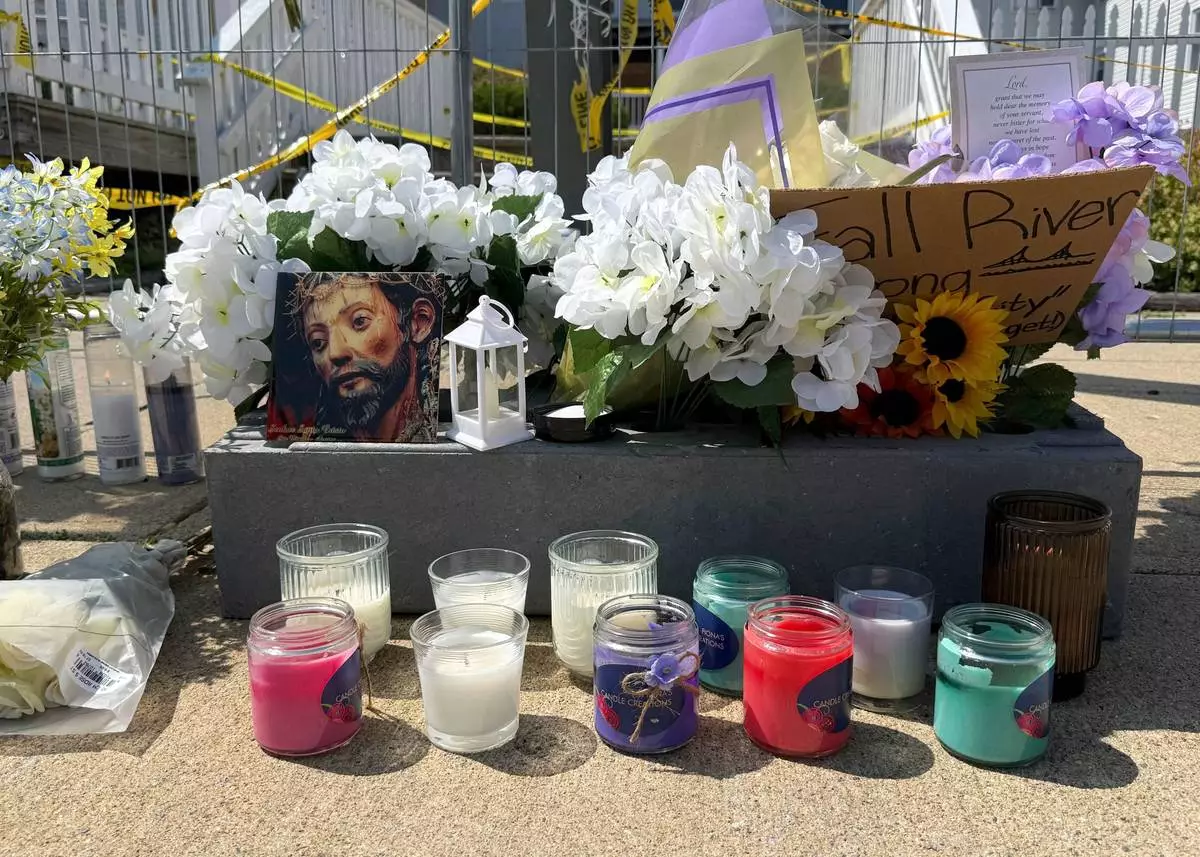
Flowers sit at a makeshift memorial in front of the Gabriel House assisted living facility, where a fire on Sunday killed several people, Wednesday, July 16, 2025 in Fall River, Mass. (AP Photo/Rodrique Ngowi)
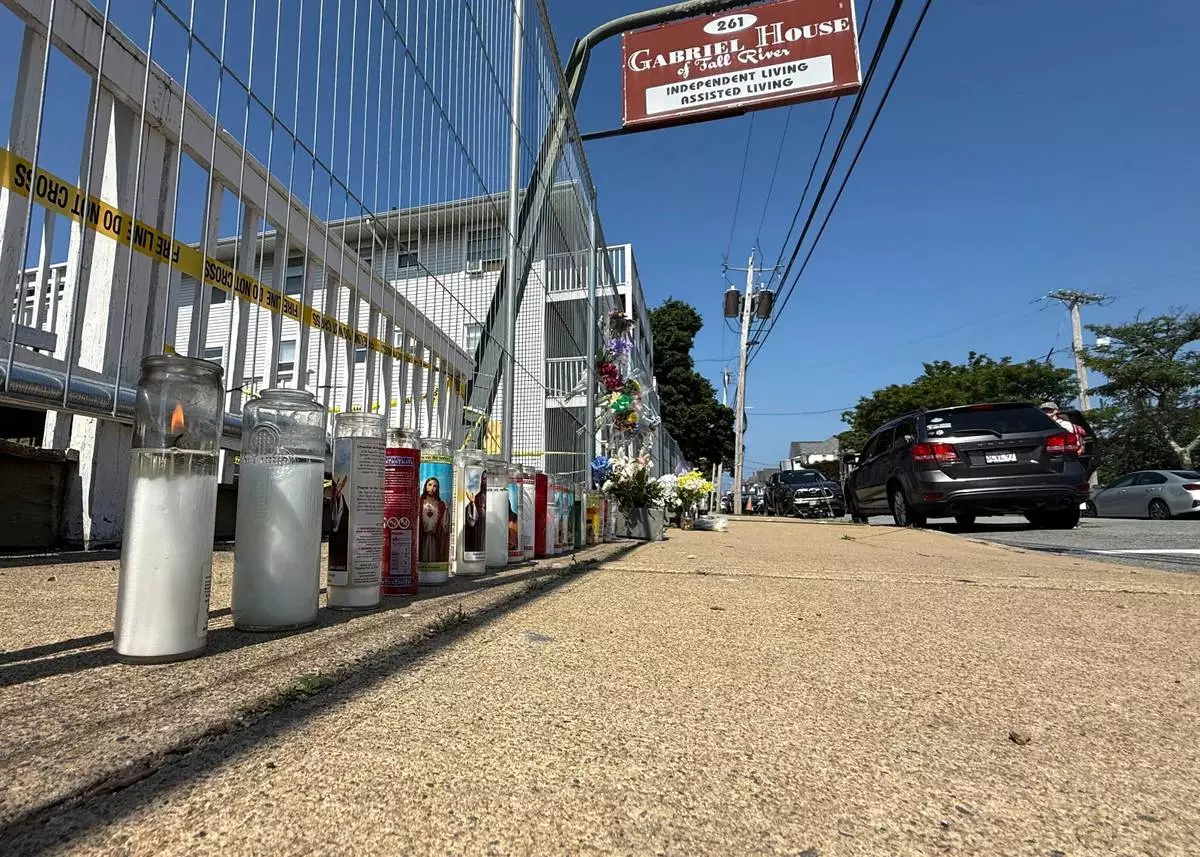
Flowers sit at a makeshift memorial in front of the Gabriel House assisted living facility, where a fire on Sunday killed several people, Wednesday, July 16, 2025 in Fall River, Mass. (AP Photo/Rodrique Ngowi)
Flowers rest near an entrance to the Gabriel House assisted living facility, Monday, July 14, 2025, following a fire that started late Sunday and resulted in multiple fatalities, in Fall River, Mass. (AP Photo/Steven Senne)
A group of Buddhist monks and their rescue dog are striding single file down country roads and highways across the South, captivating Americans nationwide and inspiring droves of locals to greet them along their route.
In their flowing saffron and ocher robes, the men are walking for peace. It's a meditative tradition more common in South Asian countries, and it's resonating now in the U.S., seemingly as a welcome respite from the conflict, trauma and politics dividing the nation.
Their journey began Oct. 26, 2025, at a Vietnamese Buddhist temple in Texas, and is scheduled to end in mid-February in Washington, D.C., where they will ask Congress to recognize Buddha’s day of birth and enlightenment as a federal holiday. Beyond promoting peace, their highest priority is connecting with people along the way.
“My hope is, when this walk ends, the people we met will continue practicing mindfulness and find peace,” said the Venerable Bhikkhu Pannakara, the group’s soft-spoken leader who is making the trek barefoot. He teaches about mindfulness, forgiveness and healing at every stop.
Preferring to sleep each night in tents pitched outdoors, the monks have been surprised to see their message transcend ideologies, drawing huge crowds into churchyards, city halls and town squares across six states. Documenting their journey on social media, they — and their dog, Aloka — have racked up millions of followers online. On Saturday, thousands thronged in Columbia, South Carolina, where the monks chanted on the steps of the State House and received a proclamation from the city's mayor, Daniel Rickenmann.
At their stop Thursday in Saluda, South Carolina, Audrie Pearce joined the crowd lining Main Street. She had driven four hours from her village of Little River, and teared up as Pannakara handed her a flower.
“There’s something traumatic and heart-wrenching happening in our country every day,” said Pearce, who describes herself as spiritual, but not religious. “I looked into their eyes and I saw peace. They’re putting their bodies through such physical torture and yet they radiate peace.”
Hailing from Theravada Buddhist monasteries across the globe, the 19 monks began their 2,300 mile (3,700 kilometer) trek at the Huong Dao Vipassana Bhavana Center in Fort Worth.
Their journey has not been without peril. On Nov. 19, as the monks were walking along U.S. Highway 90 near Dayton, Texas, their escort vehicle was hit by a distracted truck driver, injuring two monks. One of them lost his leg, reducing the group to 18.
This is Pannakara's first trek in the U.S., but he's walked across several South Asian countries, including a 112-day journey across India in 2022 where he first encountered Aloka, an Indian Pariah dog whose name means divine light in Sanskrit.
Then a stray, the dog followed him and other monks from Kolkata in eastern India all the way to the Nepal border. At one point, he fell critically ill and Pannakara scooped him up in his arms and cared for him until he recovered. Now, Aloka inspires him to keep going when he feels like giving up.
“I named him light because I want him to find the light of wisdom,” Pannakara said.
The monk's feet are now heavily bandaged because he's stepped on rocks, nails and glass along the way. His practice of mindfulness keeps him joyful despite the pain from these injuries, he said.
Still, traversing the southeast United States has presented unique challenges, and pounding pavement day after day has been brutal.
“In India, we can do shortcuts through paddy fields and farms, but we can’t do that here because there are a lot of private properties,” Pannakara said. “But what’s made it beautiful is how people have welcomed and hosted us in spite of not knowing who we are and what we believe.”
In Opelika, Alabama, the Rev. Patrick Hitchman-Craig hosted the monks on Christmas night at his United Methodist congregation.
He expected to see a small crowd, but about 1,000 people showed up, creating the feel of a block party. The monks seemed like the Magi, he said, appearing on Christ’s birthday.
“Anyone who is working for peace in the world in a way that is public and sacrificial is standing close to the heart of Jesus, whether or not they share our tradition,” said Hitchman-Craig. “I was blown away by the number of people and the diversity of who showed up.”
After their night on the church lawn, the monks arrived the next afternoon at the Collins Farm in Cusseta, Alabama. Judy Collins Allen, whose father and brother run the farm, said about 200 people came to meet the monks — the biggest gathering she’s ever witnessed there.
“There was a calm, warmth and sense of community among people who had not met each other before and that was so special,” she said.
Long Si Dong, a spokesperson for the Fort Worth temple, said the monks, when they arrive in Washington, plan to seek recognition of Vesak, the day which marks the birth and enlightenment of the Buddha, as a national holiday.
“Doing so would acknowledge Vesak as a day of reflection, compassion and unity for all people regardless of faith,” he said.
But Pannakara emphasized that their main goal is to help people achieve peace in their lives. The trek is also a separate endeavor from a $200 million campaign to build towering monuments on the temple’s 14-acre property to house the Buddha’s teachings engraved in stone, according to Dong.
The monks practice and teach Vipassana meditation, an ancient Indian technique taught by the Buddha himself as core for attaining enlightenment. It focuses on the mind-body connection — observing breath and physical sensations to understand reality, impermanence and suffering. Some of the monks, including Pannakara, walk barefoot to feel the ground directly and be present in the moment.
Pannakara has told the gathered crowds that they don't aim to convert people to Buddhism.
Brooke Schedneck, professor of religion at Rhodes College in Memphis, Tennessee, said the tradition of a peace walk in Theravada Buddhism began in the 1990s when the Venerable Maha Ghosananda, a Cambodian monk, led marches across war-torn areas riddled with landmines to foster national healing after civil war and genocide in his country.
“These walks really inspire people and inspire faith,” Schedneck said. “The core intention is to have others watch and be inspired, not so much through words, but through how they are willing to make this sacrifice by walking and being visible.”
On Thursday, Becki Gable drove nearly 400 miles (about 640 kilometers) from Cullman, Alabama, to catch up with them in Saluda. Raised Methodist, Gable said she wanted some release from the pain of losing her daughter and parents.
“I just felt in my heart that this would help me have peace,” she said. “Maybe I could move a little bit forward in my life.”
Gable says she has already taken one of Pannakara’s teachings to heart. She’s promised herself that each morning, as soon as she awakes, she’d take a piece of paper and write five words on it, just as the monk prescribed.
“Today is my peaceful day.”
Freelance photojournalist Allison Joyce contributed to this report.
Associated Press religion coverage receives support through the AP’s collaboration with The Conversation US, with funding from Lilly Endowment Inc. The AP is solely responsible for this content.
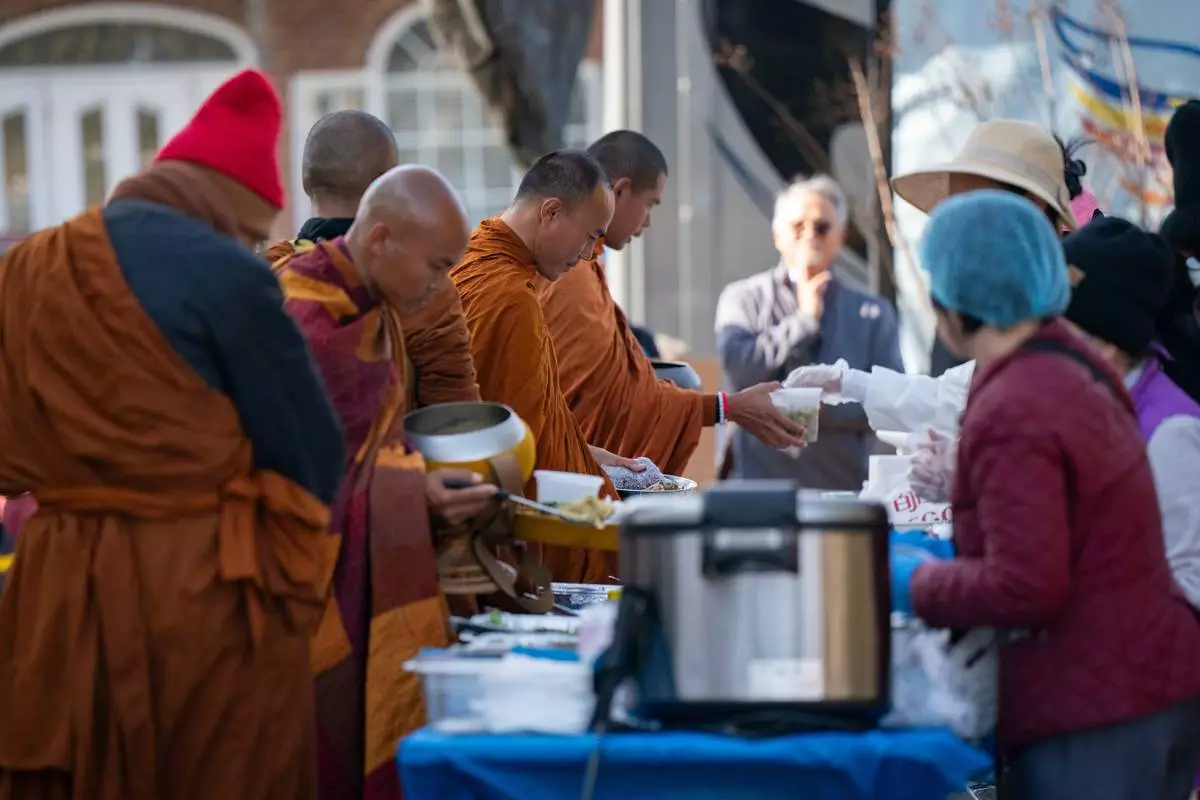
Buddhist monks who are participating in the, "Walk For Peace," get lunch Thursday, Jan. 8, 2026, in Saluda, S.C. (AP Photo/Allison Joyce)
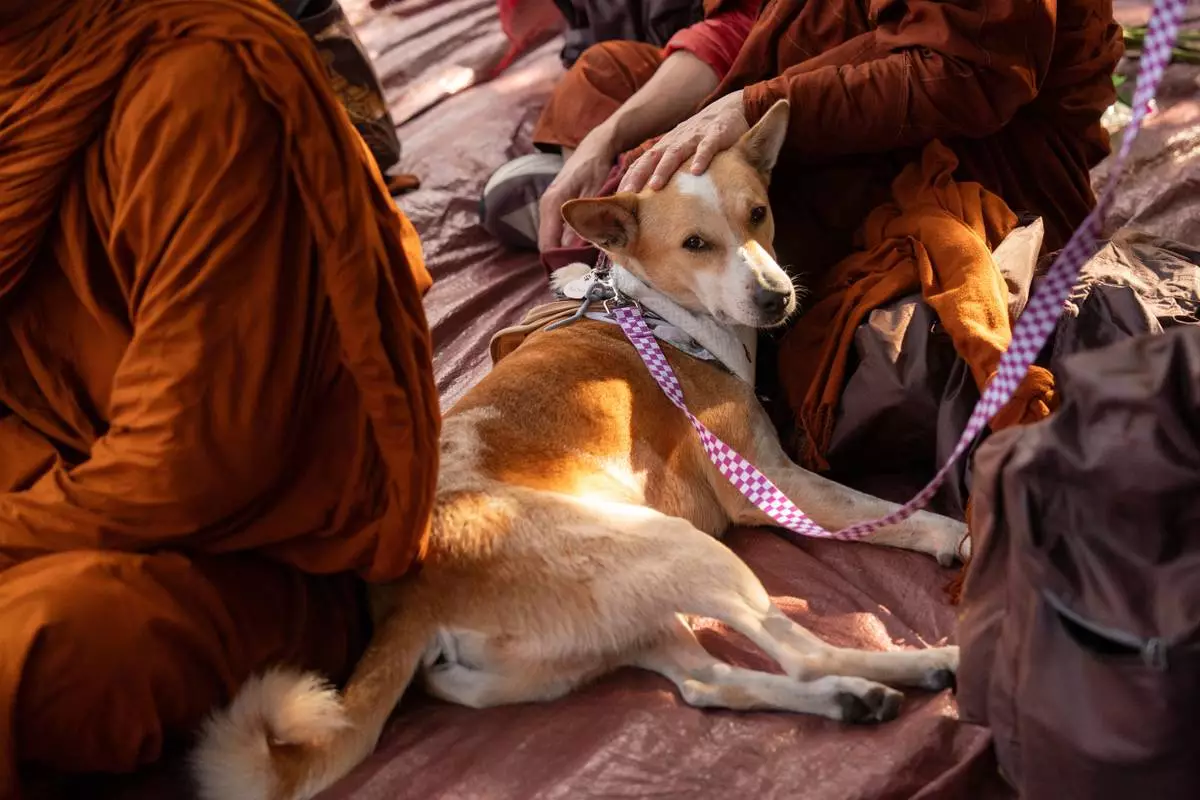
Aloka rests with Buddhist monks who are participating in the, "Walk For Peace," Thursday, Jan. 8, 2026, in Saluda, S.C. (AP Photo/Allison Joyce)
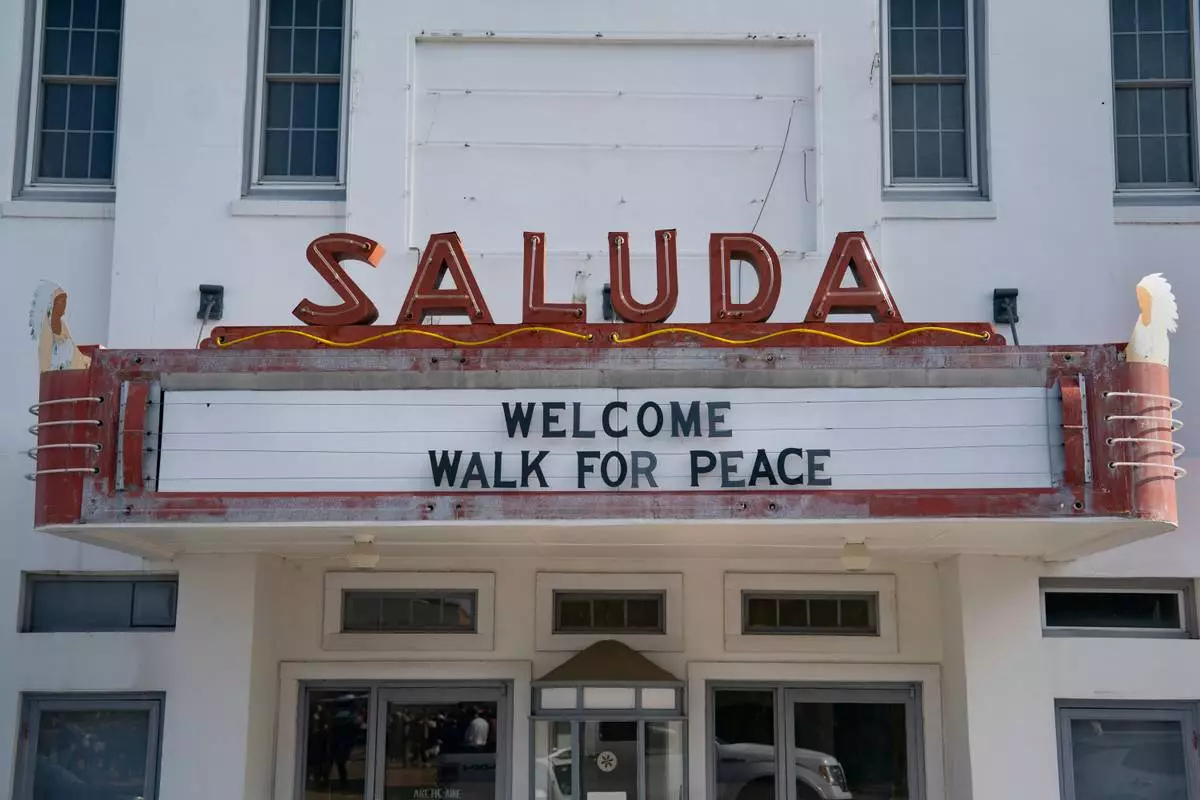
A sign is seen greeting the Buddhist monks who are participating in the, "Walk For Peace," Thursday, Jan. 8, 2026, in Saluda, S.C. (AP Photo/Allison Joyce)
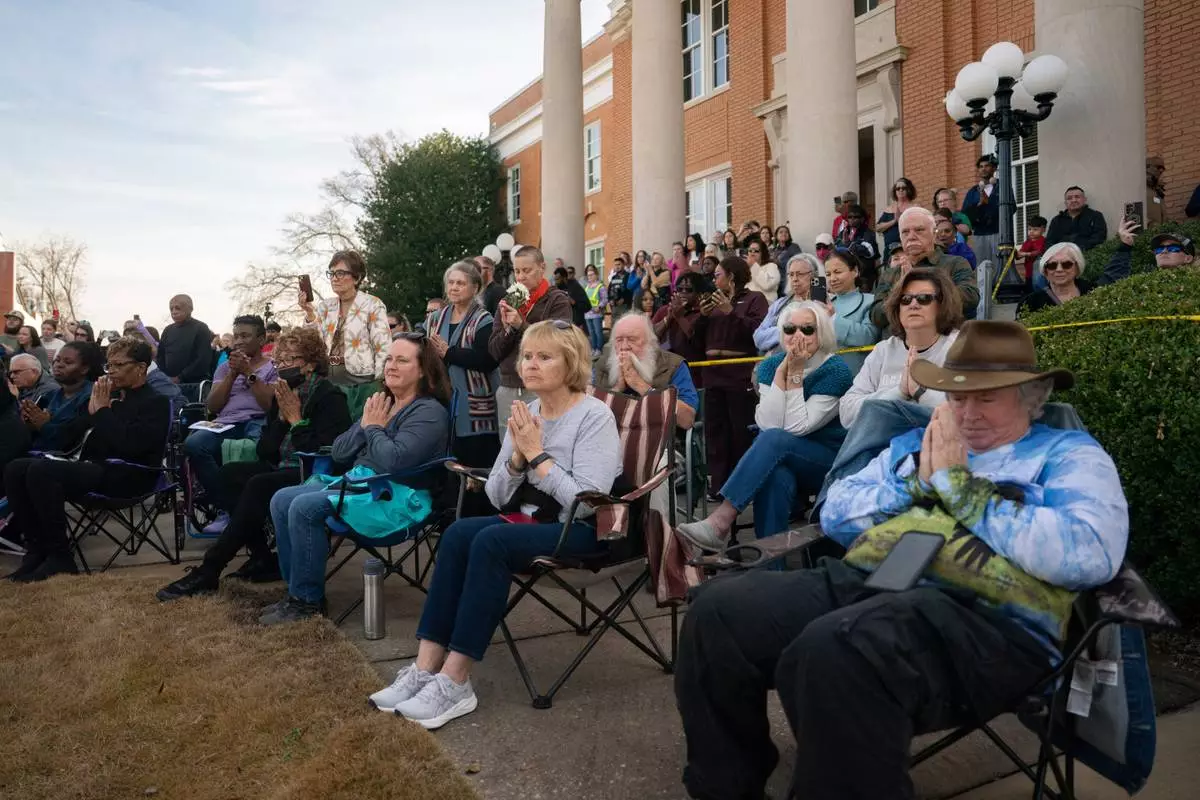
Supporters pray with Buddhist monks who are participating in the, "Walk For Peace," Thursday, Jan. 8, 2026, in Saluda, S.C. (AP Photo/Allison Joyce)
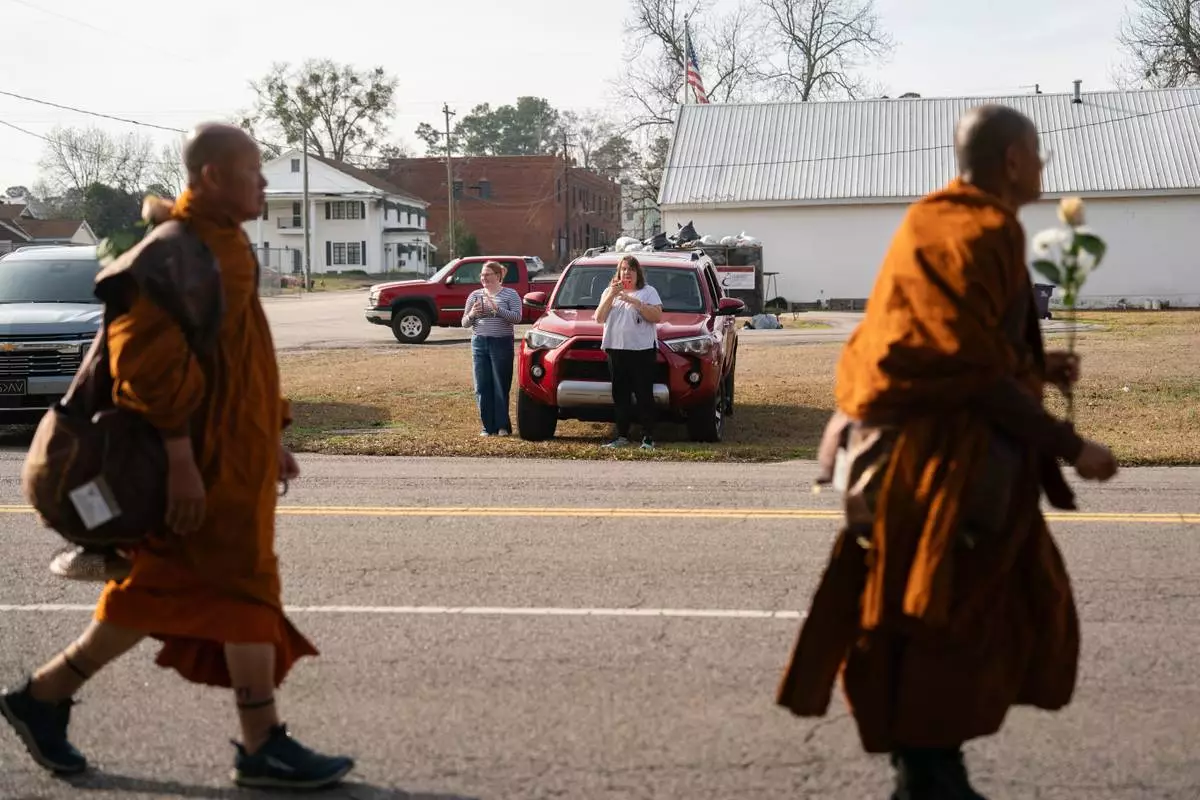
Supporters watch Buddhist monks who are participating in the, "Walk For Peace," Thursday, Jan. 8, 2026, in Saluda, S.C. (AP Photo/Allison Joyce)
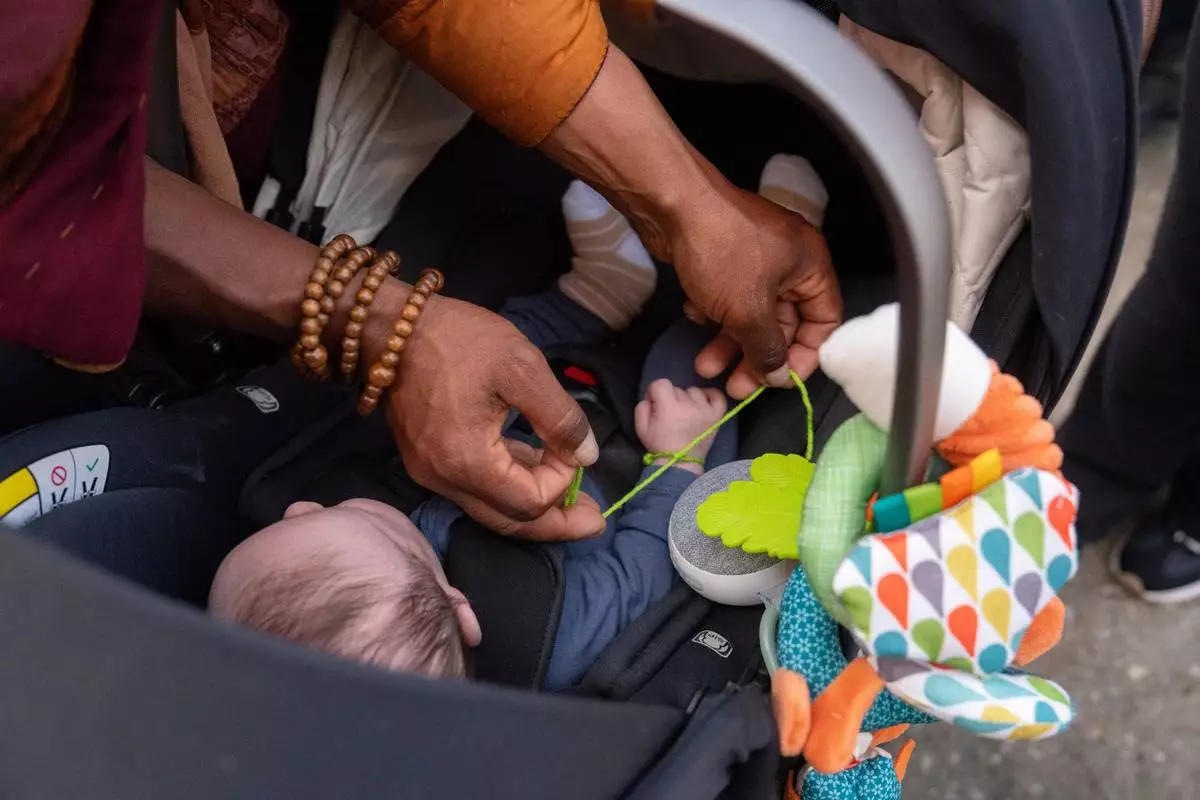
A Buddhist monk ties a prayer bracelet around the wrist of Josey Lee, 2-months-old, during the, "Walk For Peace," Thursday, Jan. 8, 2026, in Saluda, S.C. (AP Photo/Allison Joyce)
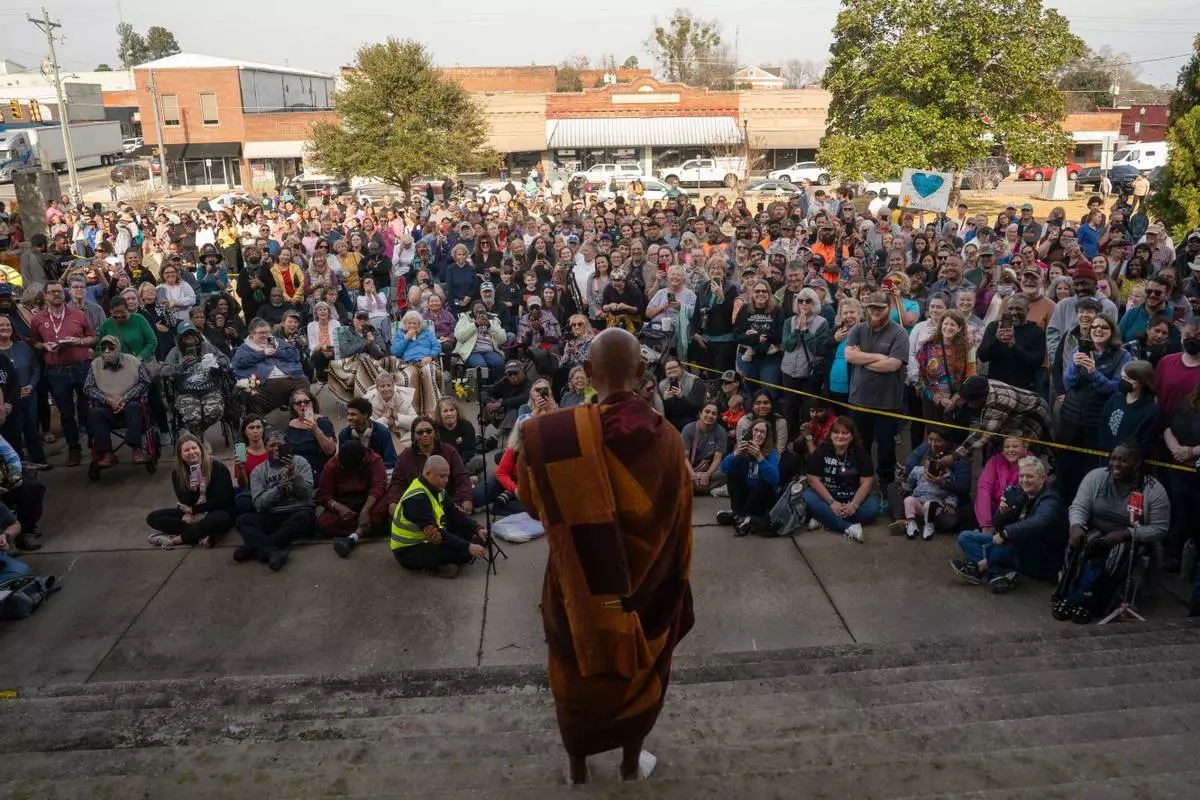
Bhikkhu Pannakara, a spiritual leader, speaks to supporters during the, "Walk For Peace," Thursday, Jan. 8, 2026, in Saluda, S.C. (AP Photo/Allison Joyce)
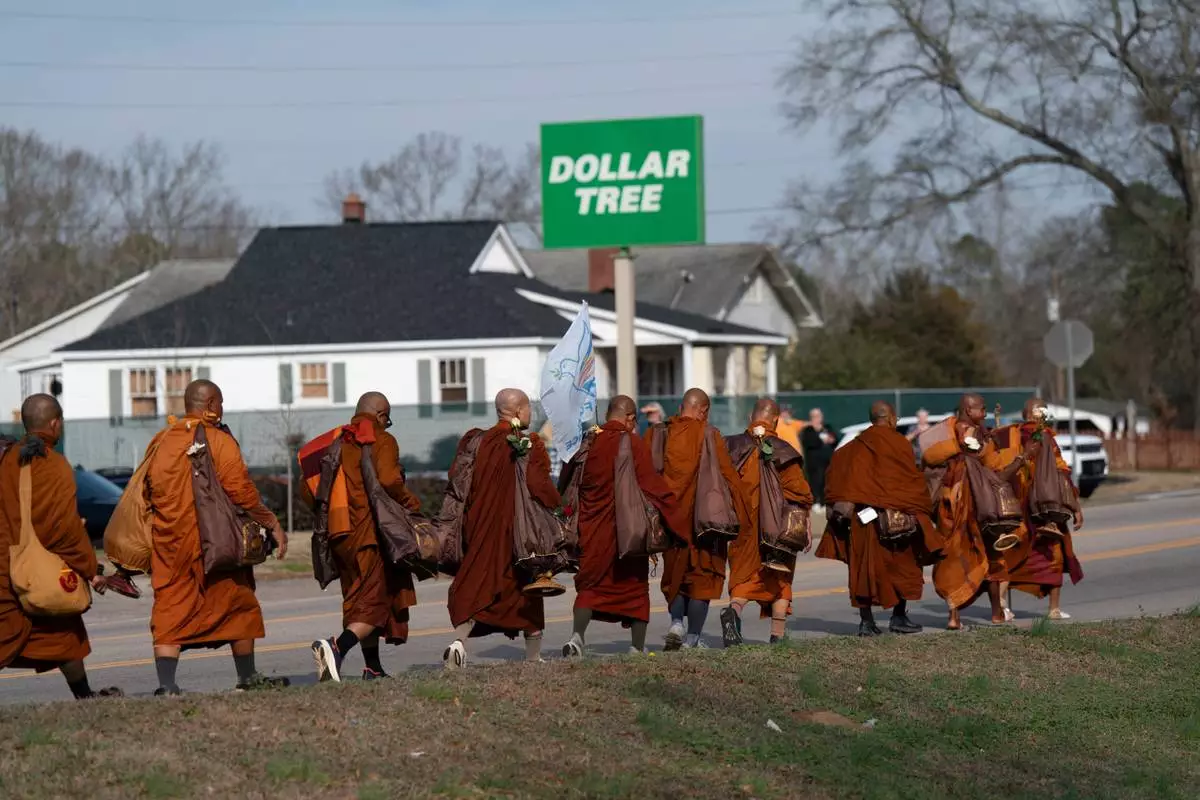
Buddhist monks participate in the, "Walk For Peace," Thursday, Jan. 8, 2026, in Saluda, S.C. (AP Photo/Allison Joyce)
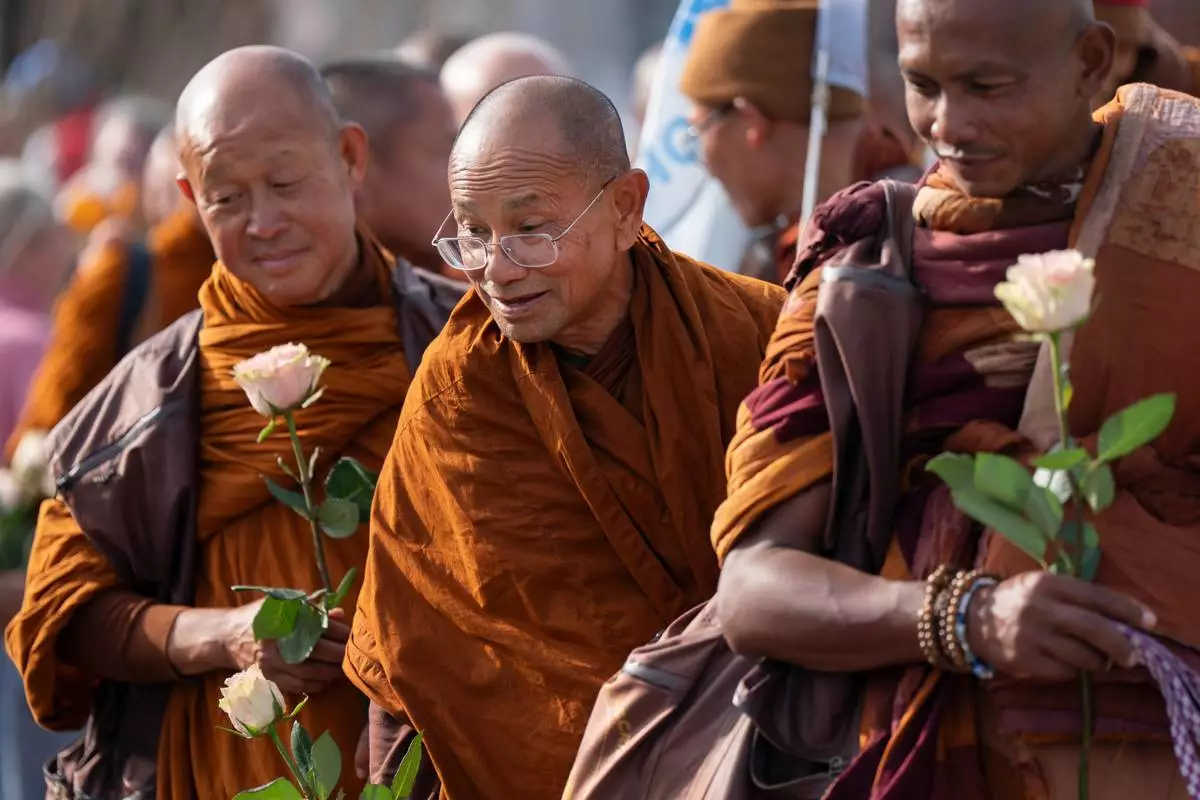
Buddhist monks participate in the, "Walk For Peace," Thursday, Jan. 8, 2026, in Saluda, S.C. (AP Photo/Allison Joyce)
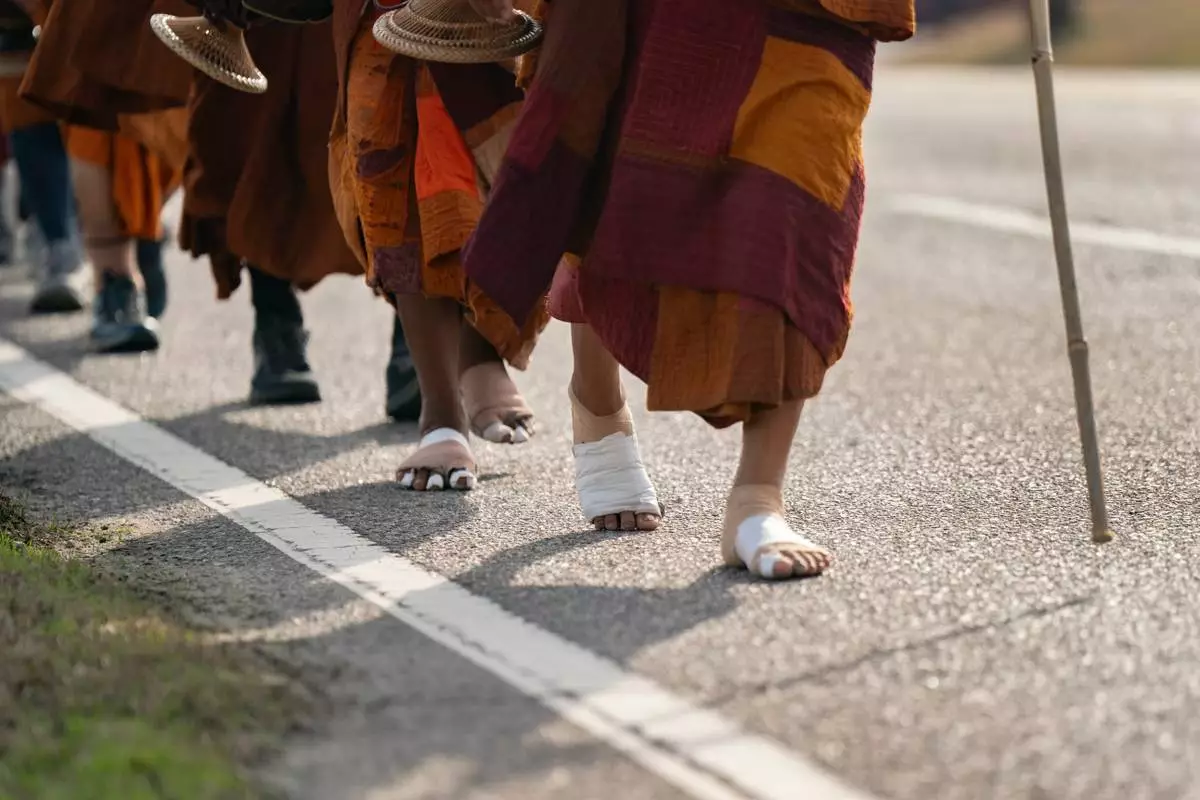
Bhikkhu Pannakara leads other buddhist monks in the, "Walk For Peace," Thursday, Jan. 8, 2026, in Saluda, S.C. (AP Photo/Allison Joyce)
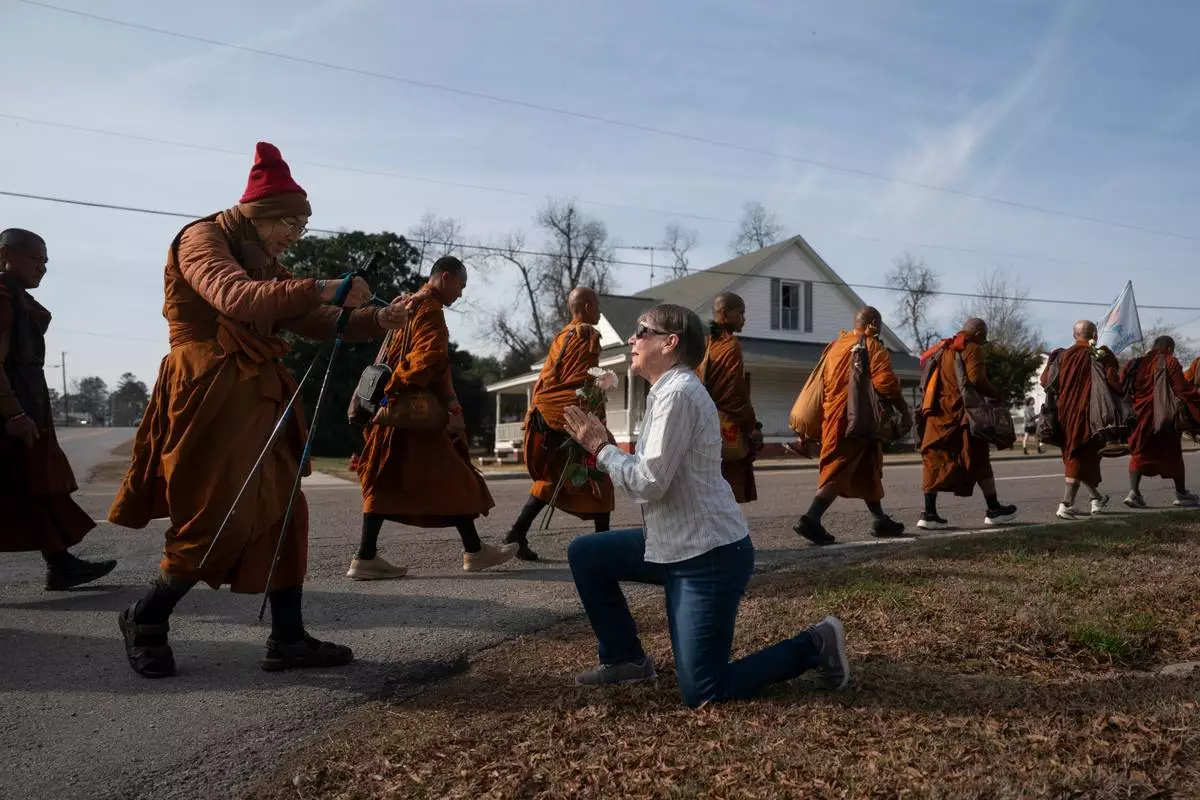
Audrie Pearce greets Buddhist monks who are participating in the, "Walk For Peace," Thursday, Jan. 8, 2026, in Saluda, S.C. (AP Photo/Allison Joyce)
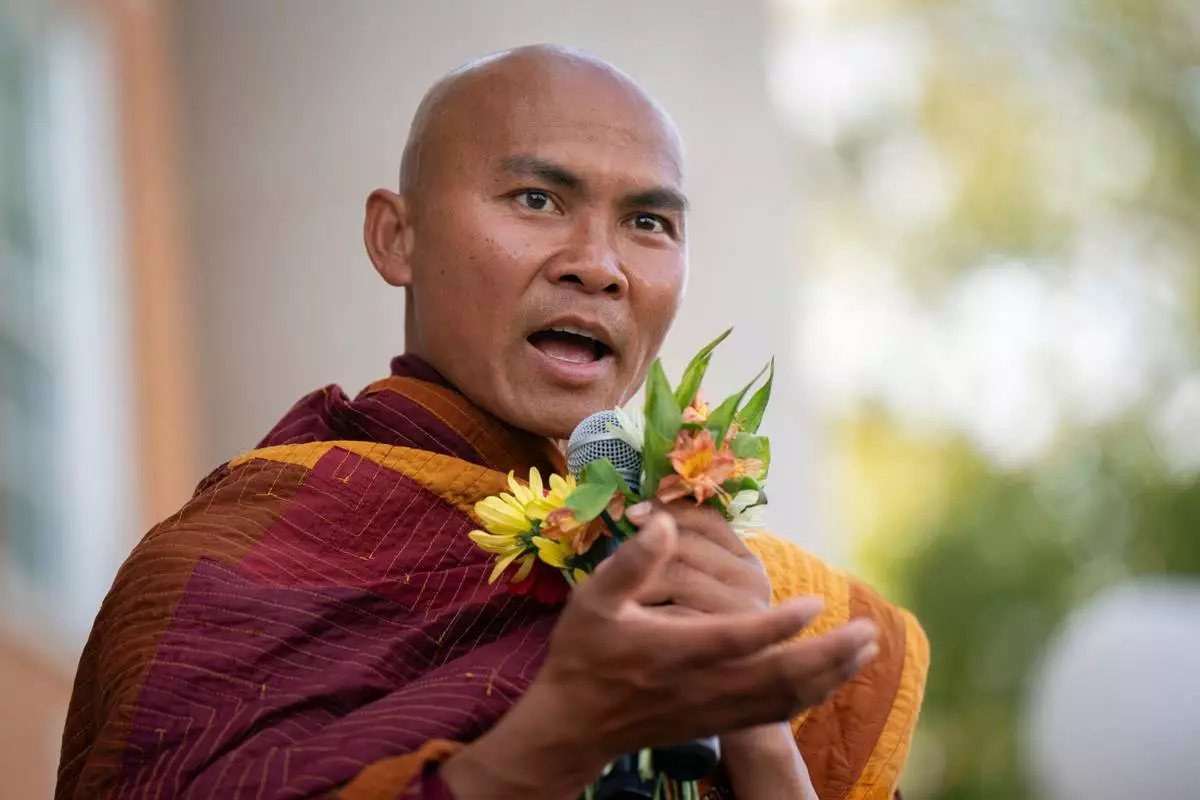
Bhikkhu Pannakara, a spiritual leader, speaks to supporters during the, "Walk For Peace," Thursday, Jan. 8, 2026, in Saluda, S.C. (AP Photo/Allison Joyce)
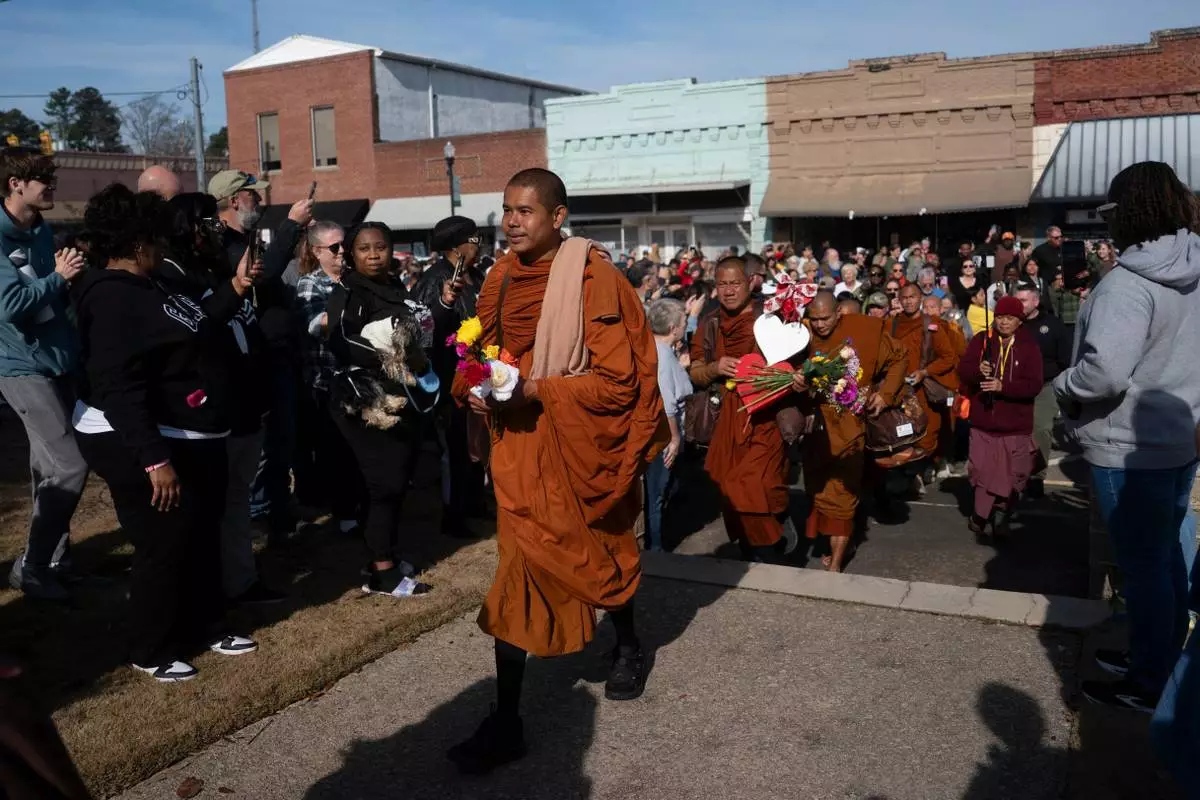
Buddhist monks who are participating in the, "Walk For Peace," arrive in Saluda, Thursday, Jan. 8, 2026, in Saluda, S.C. (AP Photo/Allison Joyce)
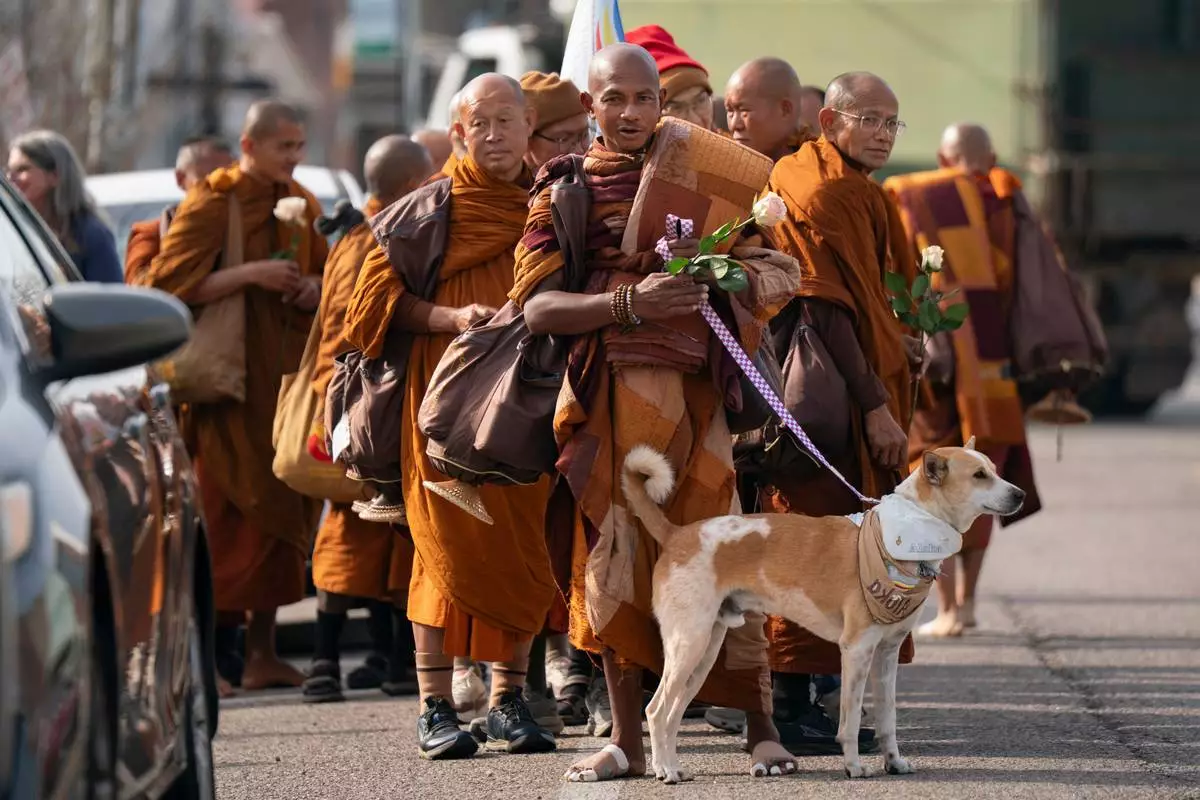
Buddhist monks who are participating in the, "Walk For Peace," are seen with their dog, Aloka, Thursday, Jan. 8, 2026, in Saluda, S.C. (AP Photo/Allison Joyce)