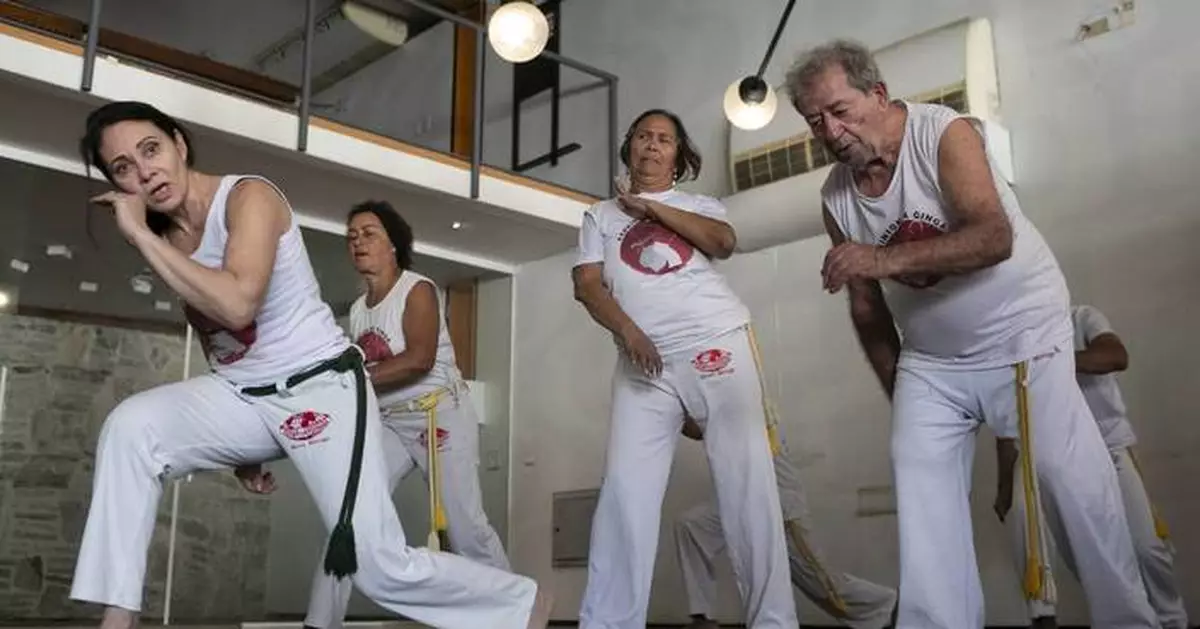
RIO DE JANEIRO (AP) — Nilma Teles de Freitas, an 80-year-old retired teacher in Brazil who was diagnosed with Parkinson’s disease more than a decade ago, says she used to fall over all the time.
That changed after she began attending a capoeira class in downtown Rio de Janeiro especially designed for people with the neurodegenerative illness.
Click to Gallery
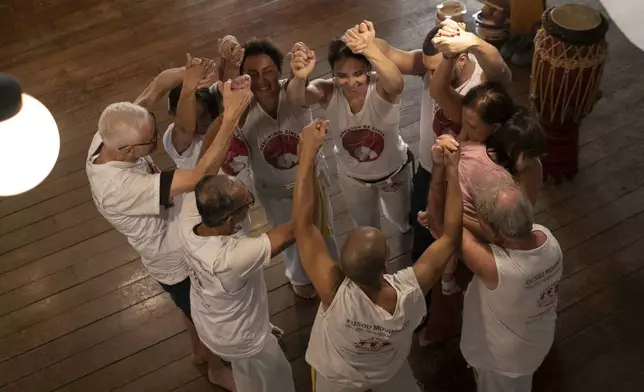
Attendees and staff of the “Parkinson's in the swing” project come together after a capoeira class for Parkinson's patients at the Progress Foundry cultural center in Rio de Janeiro, Tuesday, July 15, 2025. (AP Photo/Bruna Prado)

Ruth Maria Souza Barros, 60, center, attends a capoeira class by a project called “Parkinson's in the swing” for people with Parkinson's disease at the Progress Foundry cultural center in Rio de Janeiro, Tuesday, July 15, 2025. (AP Photo/Bruna Prado)
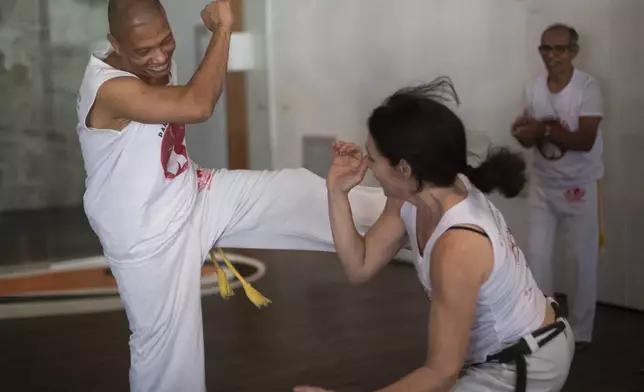
Ronaldo Mauricio de Freitas, 54, kicks out at physical therapist Rosemeire Peixoto, the founder of a project called “Parkinson's in the swing,” during a capoeira class for people with Parkinson's disease at the Progress Foundry cultural center in Rio de Janeiro, Tuesday, July 15, 2025. (AP Photo/Bruna Prado)

Physical therapist Rosemeire Peixoto helps Valdivino Jose di Lima, 73, during a capoeira class by the “Parkinson's in the swing” project at the Progress Foundry cultural center in Rio de Janeiro, Tuesday, July 15, 2025. (AP Photo/Bruna Prado)
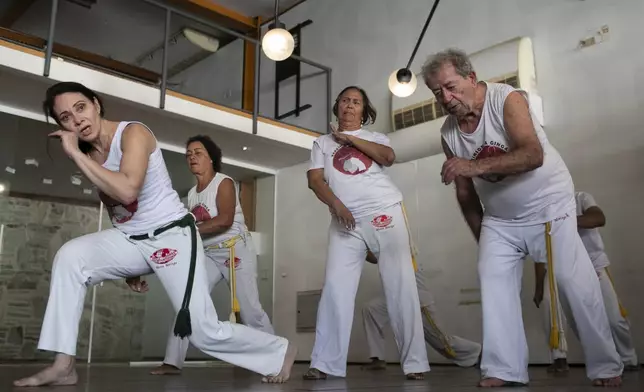
Physical therapist Rosemeire Peixoto, left, founder of a project called “Parkinson's in the swing,” leads a capoeira class for people with Parkinson's disease at the Progress Foundry cultural center, in Rio de Janeiro, Tuesday, July 15, 2025. (AP Photo/Bruna Prado)
Capoeira is a movement practice that originated within the large enslaved communities in Brazil, where nearly 5 million kidnapped Africans disembarked during the transatlantic slave trade that started in the 16th century.
It is considered both a martial art and a dance, combining ritual, exercise, spirituality and music.
“Capoeira gives me freedom to work on my body. What I can do. What I can’t do. So I can have balance and a more comfortable life,” Teles de Freitas said during a recent class.
Practiced for centuries by Afro-Brazilians, it has since become popular around the world. UNESCO recognized the practice in 2014 as Intangible Cultural Heritage.
The project started in 2018 with physical therapist Rosimeire Peixoto, 60, who at that point had been attending capoeira classes herself for over a decade.
After working with many patients with Parkinson’s, she said she became convinced that introducing them to capoeira may help alleviate some of their symptoms.
Parkinson's has a range of different symptoms, and along with difficulties in balancing, some common ones include slowness of movement, tremors and stooped posture. Patients can also experience anxiety, depression, sleeping disorders and nausea.
“I had the idea after reading an article that said alternating both hands when using a cell phone stimulates both hemispheres of the brain,” she said. “And as a physiotherapist treating neurological patients, I was lacking exercises that would motivate them.”
Peixoto's project was dubbed "Parkinson na ginga” — or “Parkinson's in the swing” — a reference to the first fluid, rhythmic step that capoeira practitioners learn. She now holds classes twice a week in the Progress Foundry, a sprawling cultural center in downtown Rio next to a famed white 18th century aqueduct and surrounded by palm trees.
Capoeira helps improve balance, coordination and strength, with music loosening up tense bodies, Peixoto says.
“There is a lot happening in a capoeira circle. They feel the vibration, the energy, they pay attention to the music and to the partner to dodge blows” and to themselves, she said.
During a recent class, Peixoto walked among the students, placing a gentle hand on a back here and there to help with balance, patiently repeating demonstrations and offering words of encouragement.
Antônio de Azevedo, who was diagnosed with Parkinson’s disease a few years ago, said he could hardly stand before. But since he started practicing capoeira, his stability returned.
“It’s the best thing that’s ever happened to me,” he said while he attended a capoeira class with around 10 other people, all with Parkinson's.
Peixoto tries to make the classes a fun and social event — she often suggests a group samba dance at the end of the class, and regularly brings a cake to share.
Teles de Freitas, the retired teacher, says that she loves the camaraderie among the class.
“We are there for one another,” she said. “Feeling and conversing with friends gives strength.”
She remembers how when she got her diagnosis, she left the doctor’s office crying, terrified of the future.
“Today I’m smiling," she said. "I’m managing to live. I’m managing to interact with other people. I’m managing to be happy.”
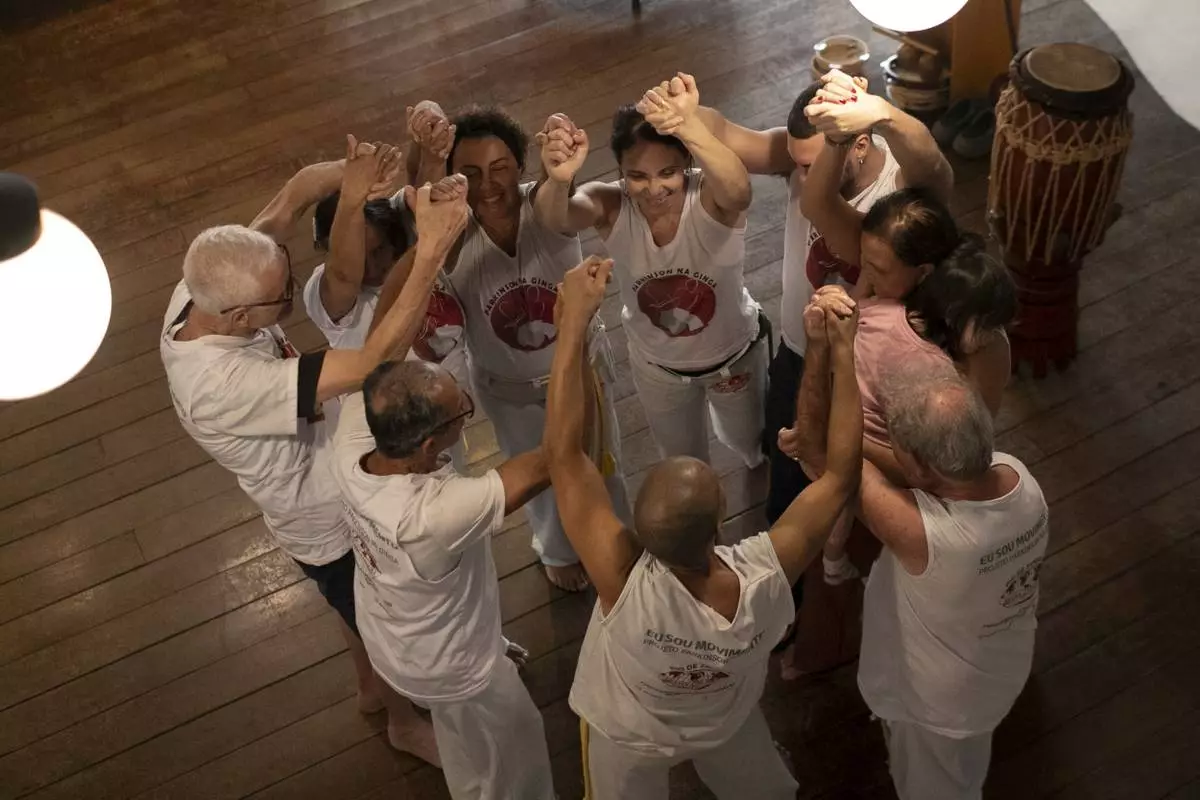
Attendees and staff of the “Parkinson's in the swing” project come together after a capoeira class for Parkinson's patients at the Progress Foundry cultural center in Rio de Janeiro, Tuesday, July 15, 2025. (AP Photo/Bruna Prado)
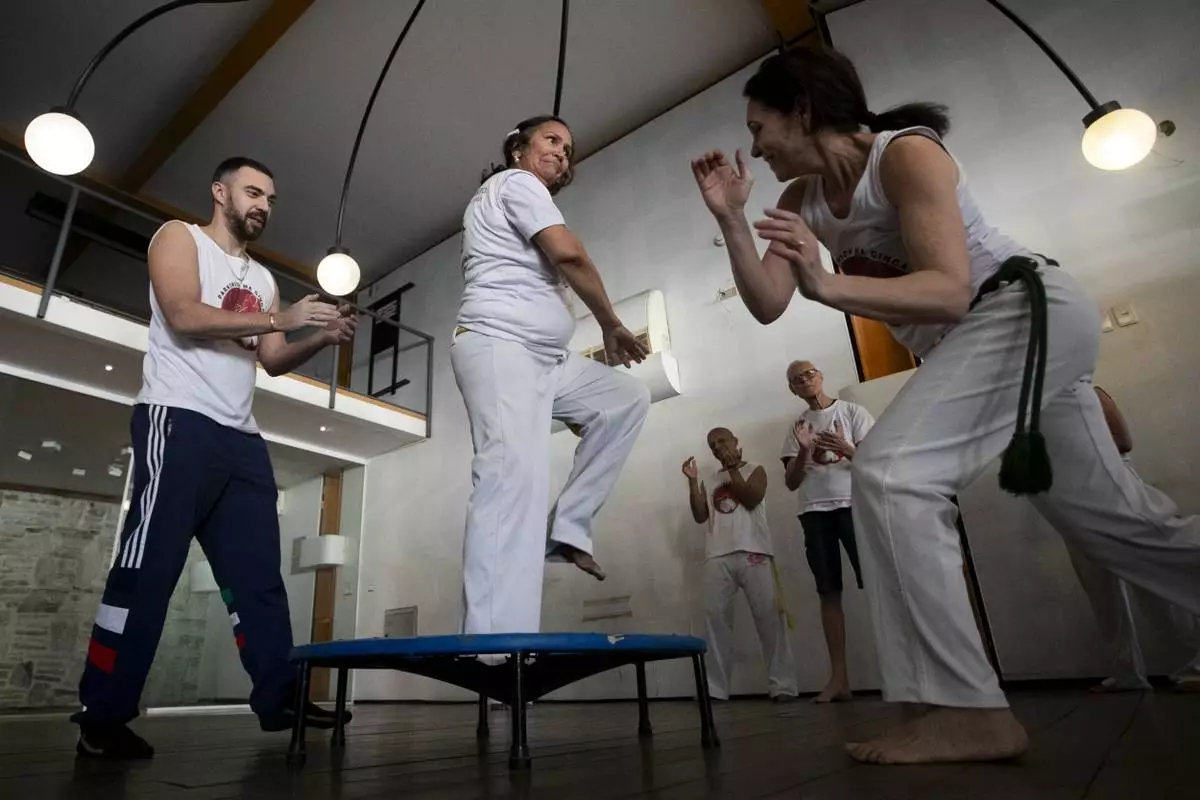
Ruth Maria Souza Barros, 60, center, attends a capoeira class by a project called “Parkinson's in the swing” for people with Parkinson's disease at the Progress Foundry cultural center in Rio de Janeiro, Tuesday, July 15, 2025. (AP Photo/Bruna Prado)
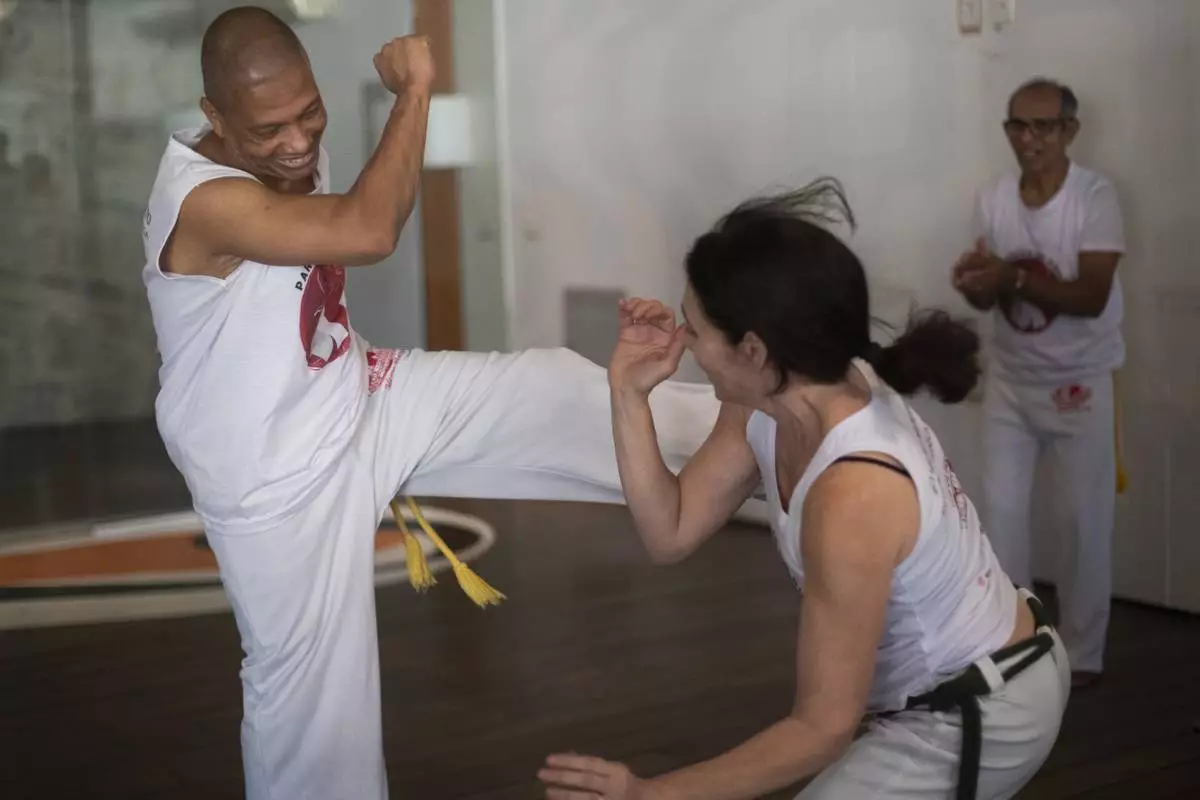
Ronaldo Mauricio de Freitas, 54, kicks out at physical therapist Rosemeire Peixoto, the founder of a project called “Parkinson's in the swing,” during a capoeira class for people with Parkinson's disease at the Progress Foundry cultural center in Rio de Janeiro, Tuesday, July 15, 2025. (AP Photo/Bruna Prado)
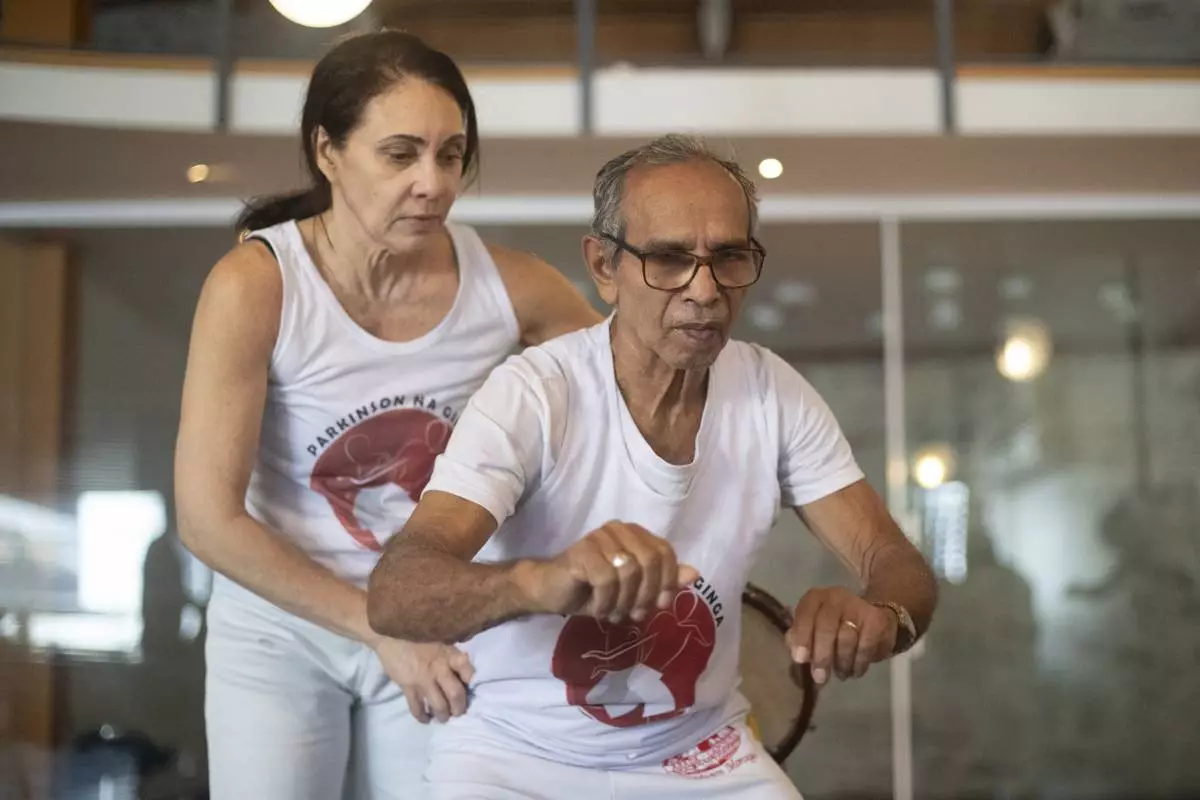
Physical therapist Rosemeire Peixoto helps Valdivino Jose di Lima, 73, during a capoeira class by the “Parkinson's in the swing” project at the Progress Foundry cultural center in Rio de Janeiro, Tuesday, July 15, 2025. (AP Photo/Bruna Prado)
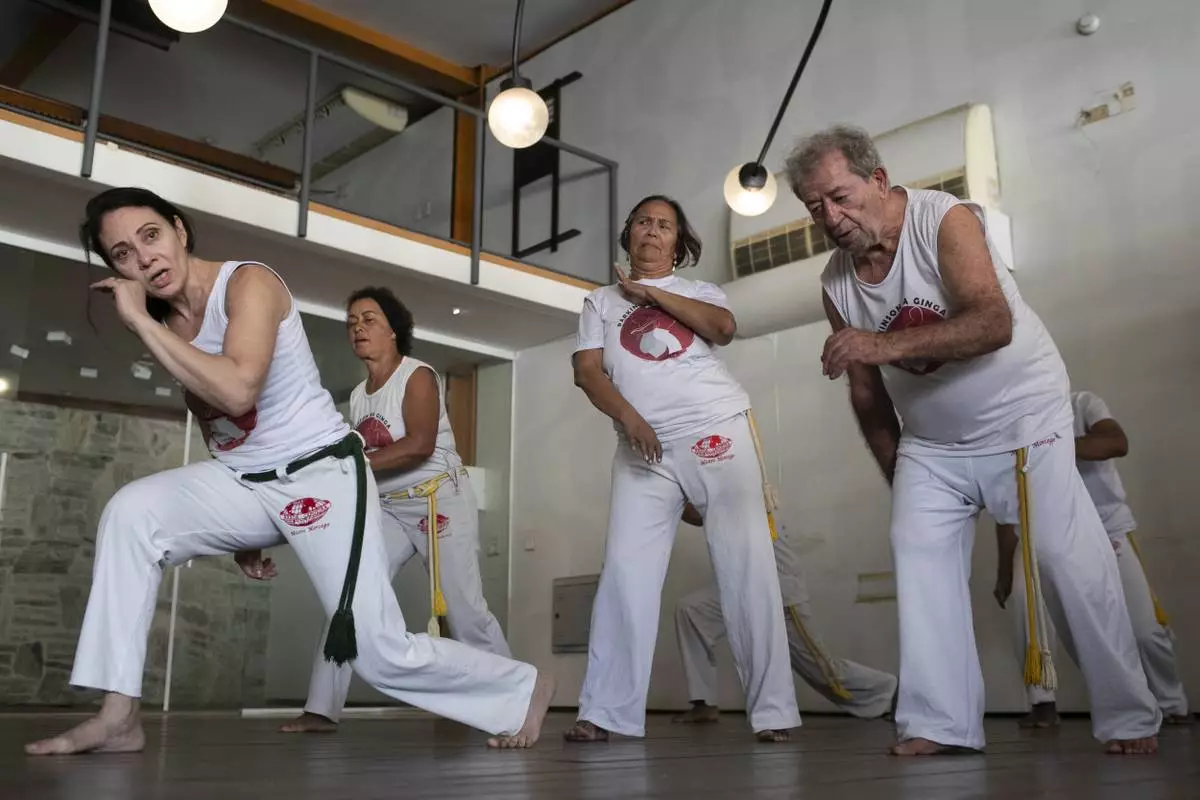
Physical therapist Rosemeire Peixoto, left, founder of a project called “Parkinson's in the swing,” leads a capoeira class for people with Parkinson's disease at the Progress Foundry cultural center, in Rio de Janeiro, Tuesday, July 15, 2025. (AP Photo/Bruna Prado)