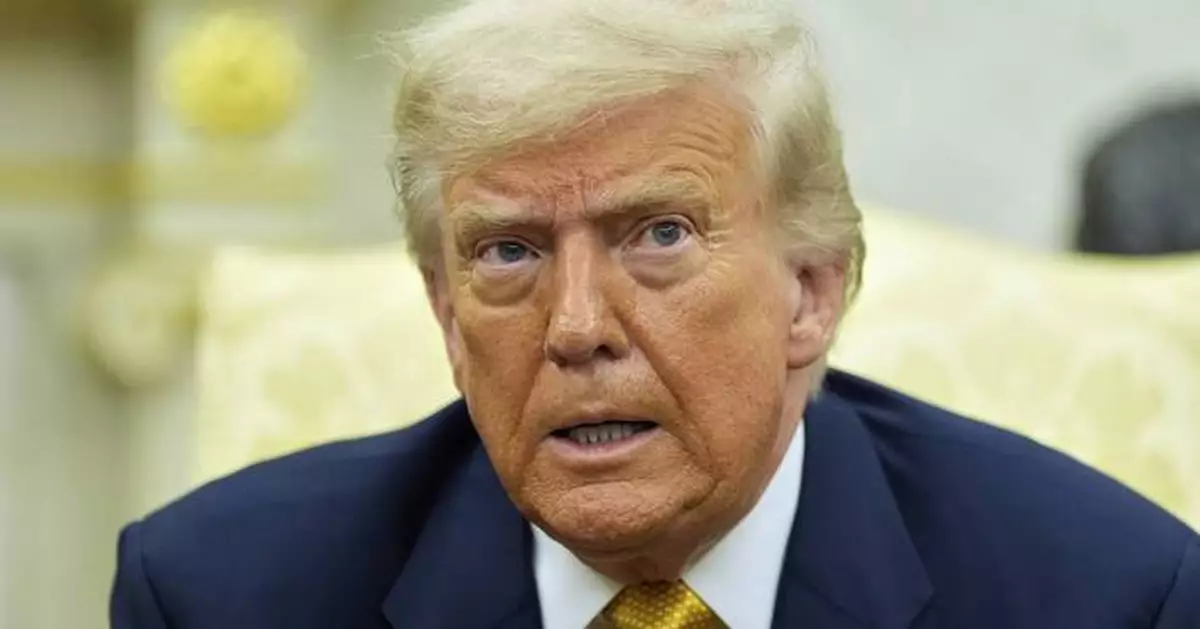
WASHINGTON (AP) — The Senate has passed about $9 billion in federal spending cuts requested by President Donald Trump, including deep reductions to public broadcasting and foreign aid, moving forward on one of the president's top priorities despite concerns from several Republican senators.
The legislation, which now moves to the House, would have a tiny impact on the nation's rising debt but could have major ramifications for the targeted spending, from the Corporation for Public Broadcasting to U.S. food aid programs abroad.
Click to Gallery
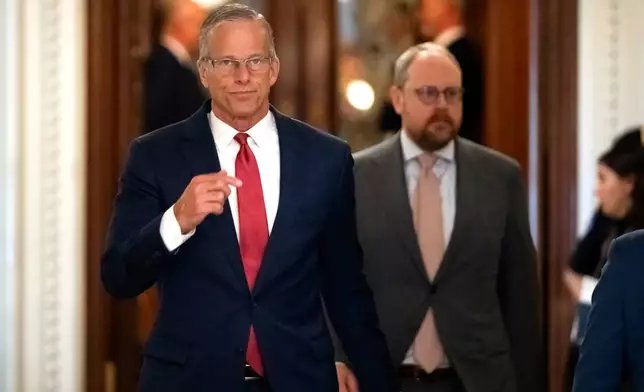
Senate Majority Leader John Thune, of S.D., walks toward his office from the Senate chamber at the Capitol, Wednesday, July 16, 2025, in Washington. (AP Photo/Mark Schiefelbein)
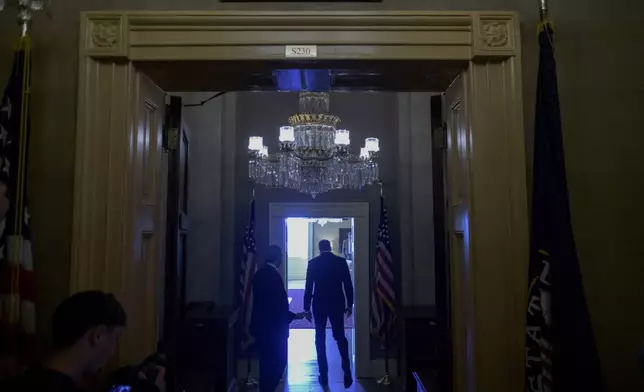
Senate Majority Leader John Thune, R-S.D., walks to his office from the Senate chamber as Senate Republicans vote on President Donald Trump's request to cancel about $9 billion in foreign aid and public broadcasting spending, at the Capitol in Washington, Wednesday, July 16, 2025.(AP Photo/Rod Lamkey, Jr.)
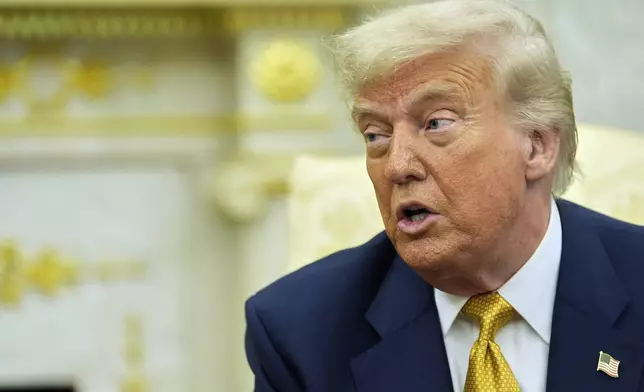
President Donald Trump speaks during a meeting with Bahrain's Crown Prince Salman bin Hamad Al Khalifa in the Oval Office of the White House, Wednesday, July 16, 2025, in Washington. (AP Photo/Alex Brandon)
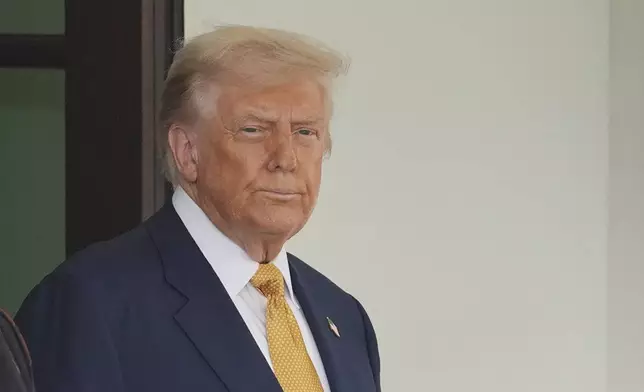
President Donald Trump waits to greet Bahrain's Crown Prince Salman bin Hamad Al Khalifa at the White House, Wednesday, July 16, 2025, in Washington. (AP Photo/Evan Vucci)
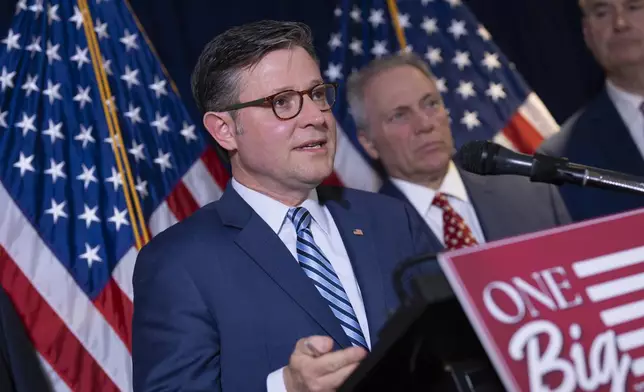
Speaker of the House Mike Johnson, R-La., joined at right by Majority Leader Steve Scalise, R-La., speaks at the Republican National Committee headquarters in Washington, Tuesday, July 15, 2025. (AP Photo/J. Scott Applewhite)
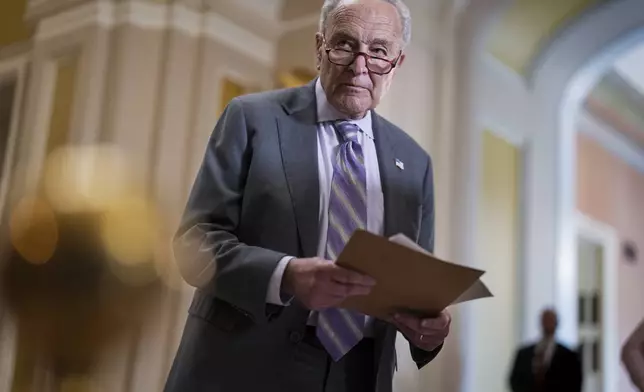
Senate Minority Leader Chuck Schumer, D-N.Y., looks over notes as Senate Republicans work to cancel $9.4 billion in previously approved spending targeted by DOGE, at the Capitol in Washington, Tuesday, July 15, 2025. (AP Photo/J. Scott Applewhite)
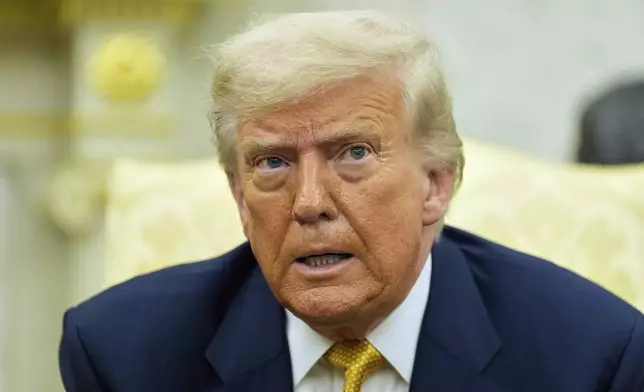
President Donald Trump speaks during a meeting with Bahrain's Crown Prince Salman bin Hamad Al Khalifa in the Oval Office of the White House, Wednesday, July 16, 2025, in Washington. (AP Photo/Alex Brandon)
It also could complicate efforts to pass additional spending bills this year, as Democrats and even some Republicans have argued they are ceding congressional spending powers to Trump with little idea of how the White House Office of Management and Budget would apply the cuts.
The 51-48 vote came after 2 a.m. Thursday after Democrats sought to remove many of the proposed rescissions during 12 hours of amendment votes. None of the Democratic amendments were adopted.
Senate Majority Leader John Thune, R-S.D., said Republicans were using the president’s rescissions request to target wasteful spending. He said it is a “small but important step for fiscal sanity that we all should be able to agree is long overdue.”
But Senate Appropriations Committee Chairwoman Susan Collins, R-Maine, said the bill “has a big problem — nobody really knows what program reductions are in it.”
Collins and Sen. Lisa Murkowski, R-Alaska, joined Democrats in voting against the legislation. Kentucky Sen. Mitch McConnell, the former Republican leader, had voted against moving forward with the bill in a Tuesday procedural vote, saying he was concerned the Trump White House wanted a “blank check," but he ultimately voted for final passage.
The effort to claw back a sliver of federal spending comes after Republicans also muscled Trump’s big tax and spending cut bill to approval without any Democratic support. The Congressional Budget Office has projected that measure will increase future federal deficits by about $3.3 trillion over the coming decade.
Along with Democrats, Collins and Murkowski both expressed concerns about the cuts to public broadcasting, saying they could affect important rural stations in their states.
Murkowski said in a speech on the Senate floor Tuesday that the stations are "not just your news — it is your tsunami alert, it is your landslide alert, it is your volcano alert.”
Less than a day later, as the Senate debated the bill, a 7.3 magnitude earthquake struck off the remote Alaska Peninsula, triggering tsunami warnings on local public broadcasting stations that advised people to get to higher ground.
The situation is “a reminder that when we hear people rant about how public broadcasting is nothing more than this radical, liberal effort to pollute people's minds, I think they need to look at what some of the basic services are to communities," Murkowski said.
The legislation would claw back nearly $1.1 billion from the Corporation for Public Broadcasting, which represents the full amount it’s due to receive during the next two budget years.
The corporation distributes more than 70% of the money to more than 1,500 locally operated public television and radio stations, with much of the remainder assigned to National Public Radio and the Public Broadcasting Service to support national programming.
Sen. Mike Rounds, R-S.D., said he secured a deal from the White House that some funding administered by the Interior Department would be repurposed to subsidize Native American public radio stations in about a dozen states.
But Kate Riley, president and CEO of America’s Public Television Stations, a network of locally owned and operated stations, said that deal was “at best a short-term, half-measure that will still result in cuts and reduced service at the stations it purports to save, while leaving behind all other stations, including many that serve Native populations.”
The legislation would also claw back about $8 billion in foreign aid spending.
Among the cuts are $800 million for a program that provides emergency shelter, water and sanitation and family reunification for those who flee their own countries and $496 million to provide food, water and health care for countries hit by natural disasters and conflicts. There also is a $4.15 billion cut for programs that aim to boost economies and democratic institutions in developing nations.
Democrats argued the Trump administration's animus toward foreign aid programs would hurt America's standing in the world and create a vacuum for China to fill.
Sen. Brian Schatz, D-Hawaii, said the amount of money it takes to save a starving child or prevent the transmission of disease is miniscule, even as the investments secure cooperation with the U.S. on other issues. The cuts being made to foreign aid programs through Trump's Department of Government Efficiency were having life-and-death consequences around the world, he said.
“People are dying right now, not in spite of us but because of us,” Schatz said. “We are causing death.”
After objections from several Republicans, GOP leaders took out a $400 million cut to PEPFAR, a politically popular program to combat HIV/AIDS that is credited with saving millions of lives since its creation under then-President George W. Bush.
Democrats say the bill upends a legislative process that typically requires lawmakers from both parties to work together to fund the nation’s priorities. Triggered by the official recissions request from the White House, the legislation only needs a simple majority vote instead of the 60 votes usually required to break a filibuster, meaning Republicans can use their 53-47 majority to pass it along party lines.
The Trump administration is promising more rescission packages to come if the first effort is successful. But some Republicans who supported the bill indicated they might be wary of doing so again.
“Let’s not make a habit of this,” said Senate Armed Services Committee Chairman Roger Wicker, who voted for the bill but said he was wary that the White House wasn’t providing enough information on what exactly will be cut. Wicker said there are members “who are very concerned, as I am, about this process.”
North Carolina Sen. Thom Tillis echoed similar concerns and said Republicans will need to work with Democrats to keep the government running later in the year.
“The only way to fund the government is to get at least seven Democrats to vote with us at the end of September or we could go into a shutdown,” Tillis said.
Collins attempted to negotiate a last minute change to the package that would have reduced the cuts by about $2.5 billion and restored some of the public broadcasting and global health dollars, but she abandoned the effort after she didn't have enough backing from her Republican colleagues in the Senate and the House.
The House has already shown its support for the president’s request with a mostly party line 214-212 vote, but since the Senate amended the bill, it will have to go back to the House for another vote.
The bill must be signed into law by midnight Friday for the proposed rescissions to kick in. If Congress doesn't act by then, the spending stands.
Becky Bohrer in Juneau, Alaska, contributed to this report.
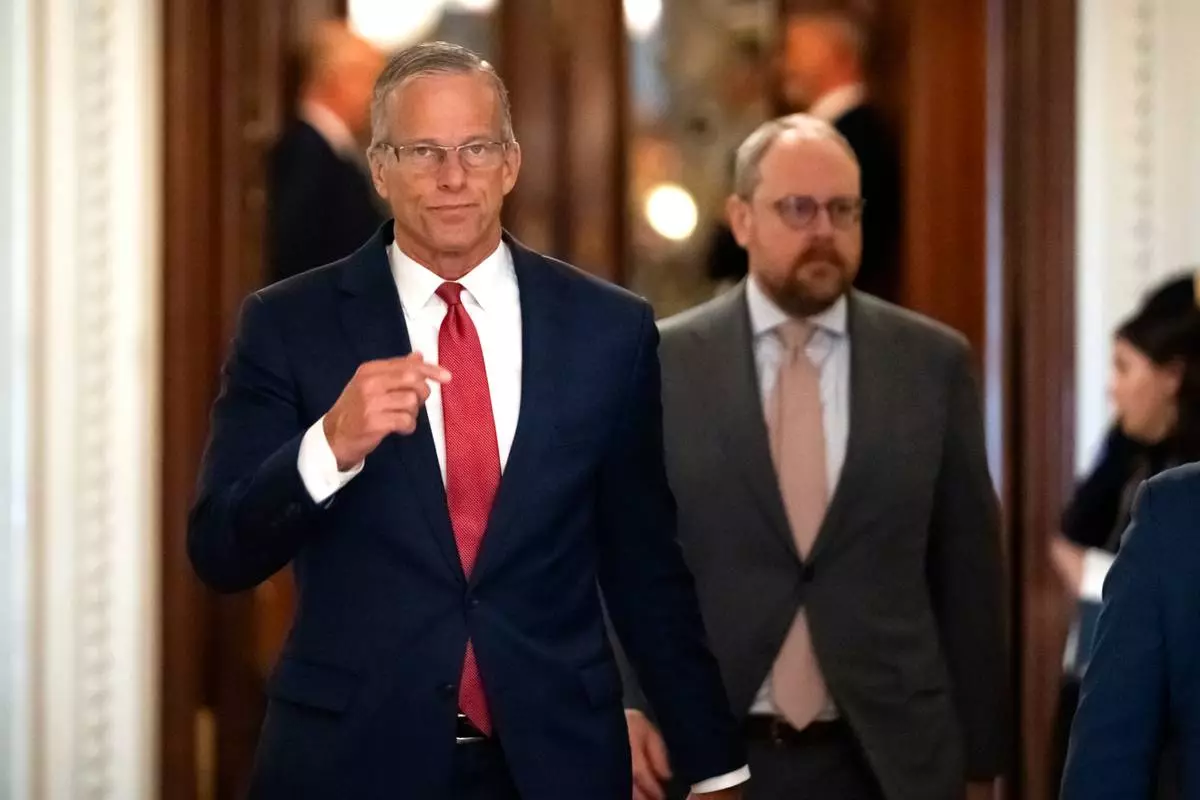
Senate Majority Leader John Thune, of S.D., walks toward his office from the Senate chamber at the Capitol, Wednesday, July 16, 2025, in Washington. (AP Photo/Mark Schiefelbein)
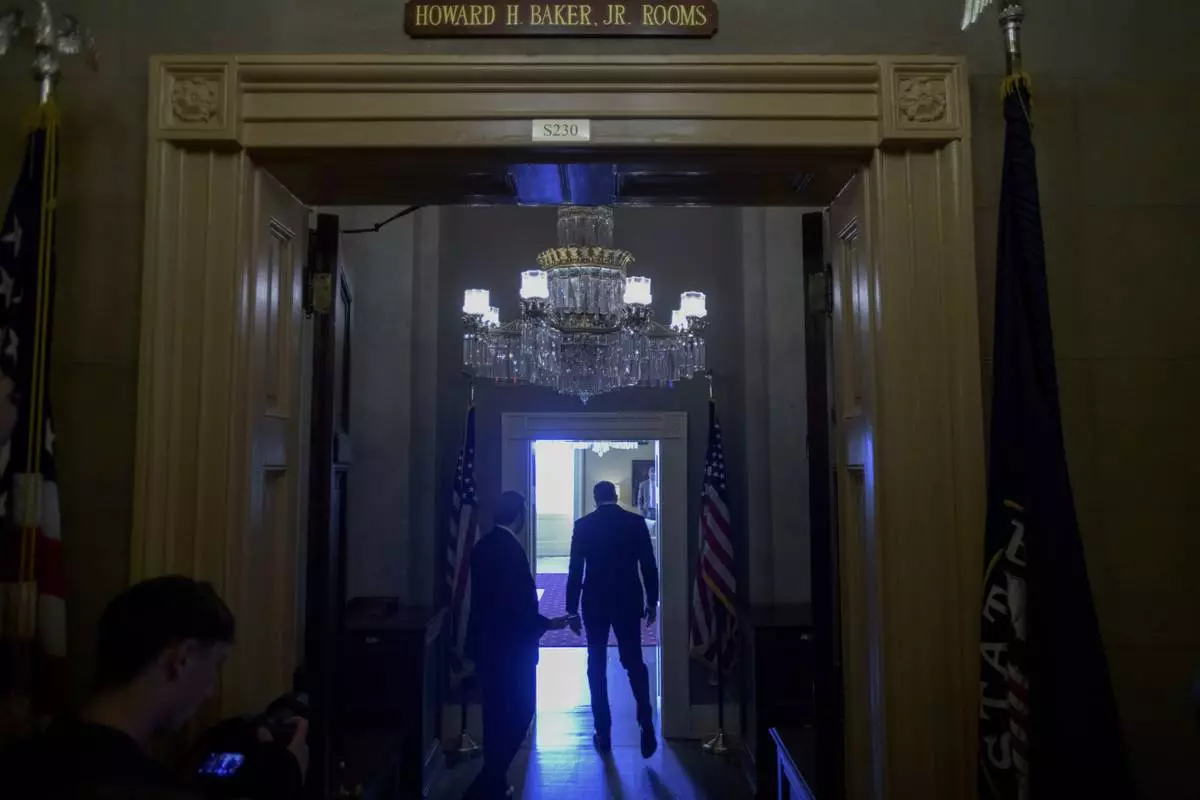
Senate Majority Leader John Thune, R-S.D., walks to his office from the Senate chamber as Senate Republicans vote on President Donald Trump's request to cancel about $9 billion in foreign aid and public broadcasting spending, at the Capitol in Washington, Wednesday, July 16, 2025.(AP Photo/Rod Lamkey, Jr.)
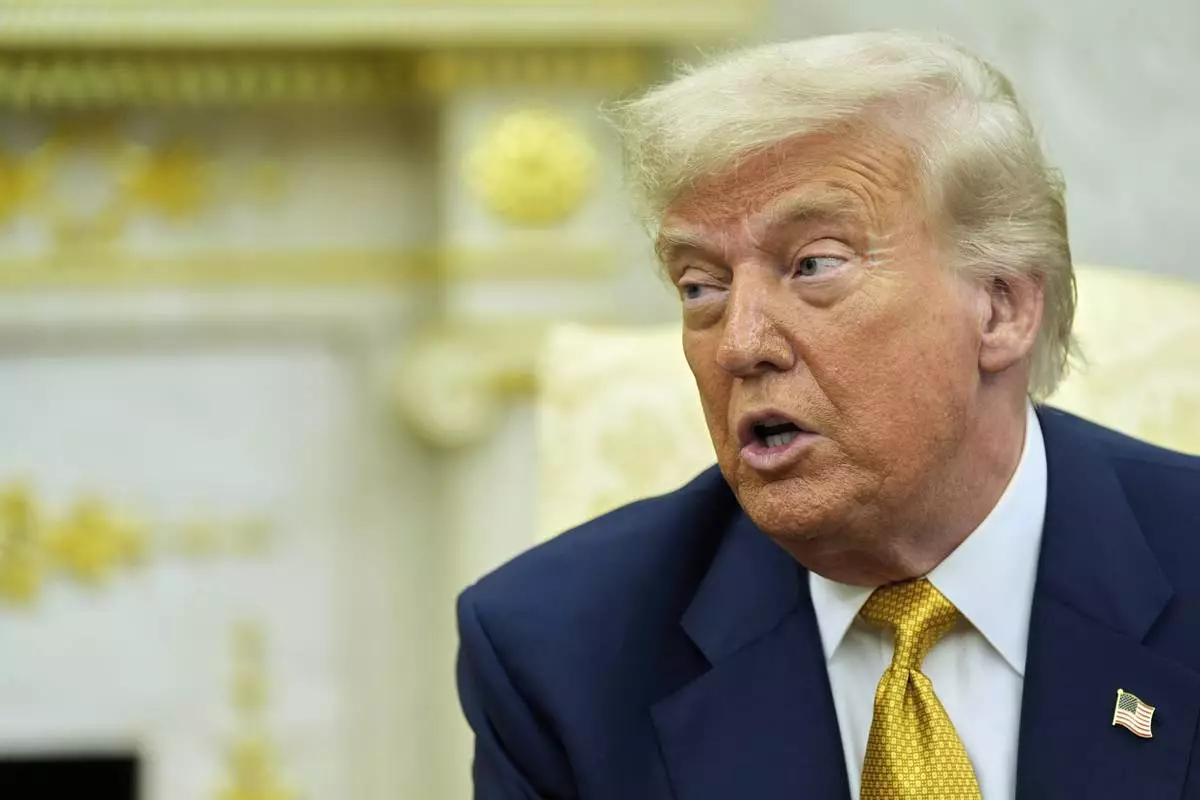
President Donald Trump speaks during a meeting with Bahrain's Crown Prince Salman bin Hamad Al Khalifa in the Oval Office of the White House, Wednesday, July 16, 2025, in Washington. (AP Photo/Alex Brandon)
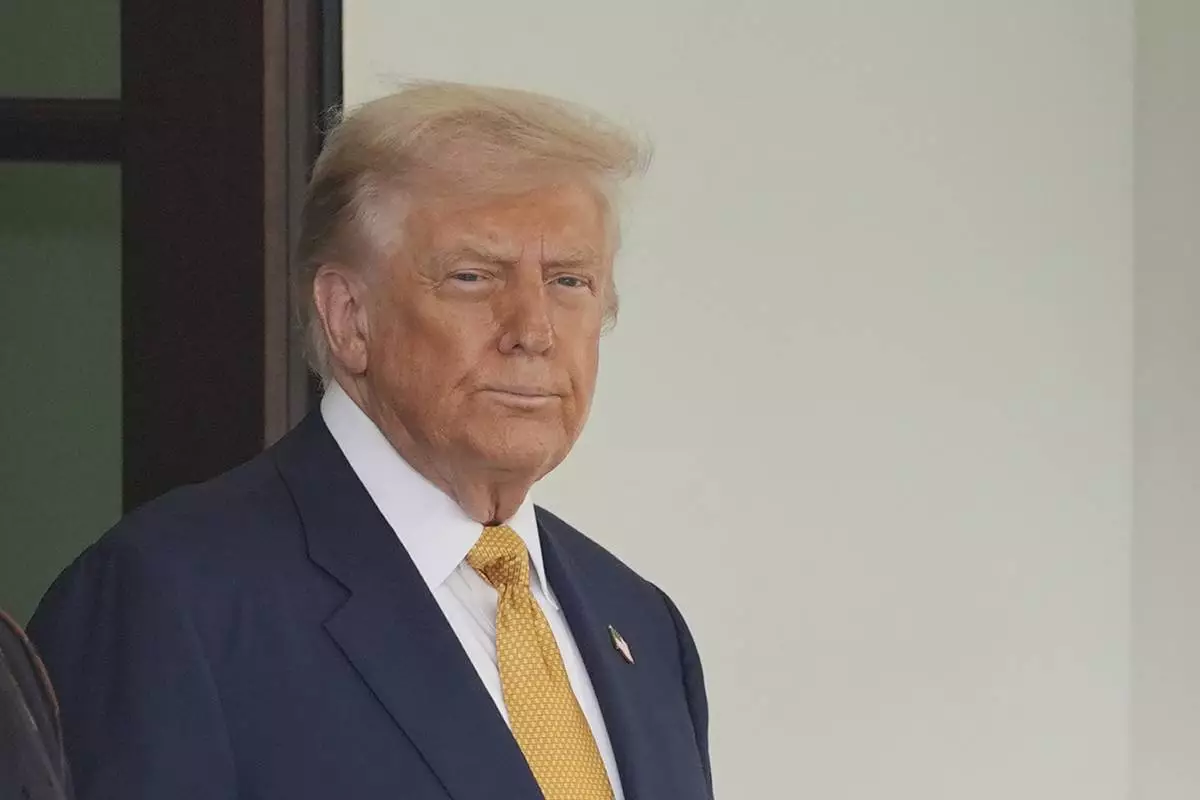
President Donald Trump waits to greet Bahrain's Crown Prince Salman bin Hamad Al Khalifa at the White House, Wednesday, July 16, 2025, in Washington. (AP Photo/Evan Vucci)
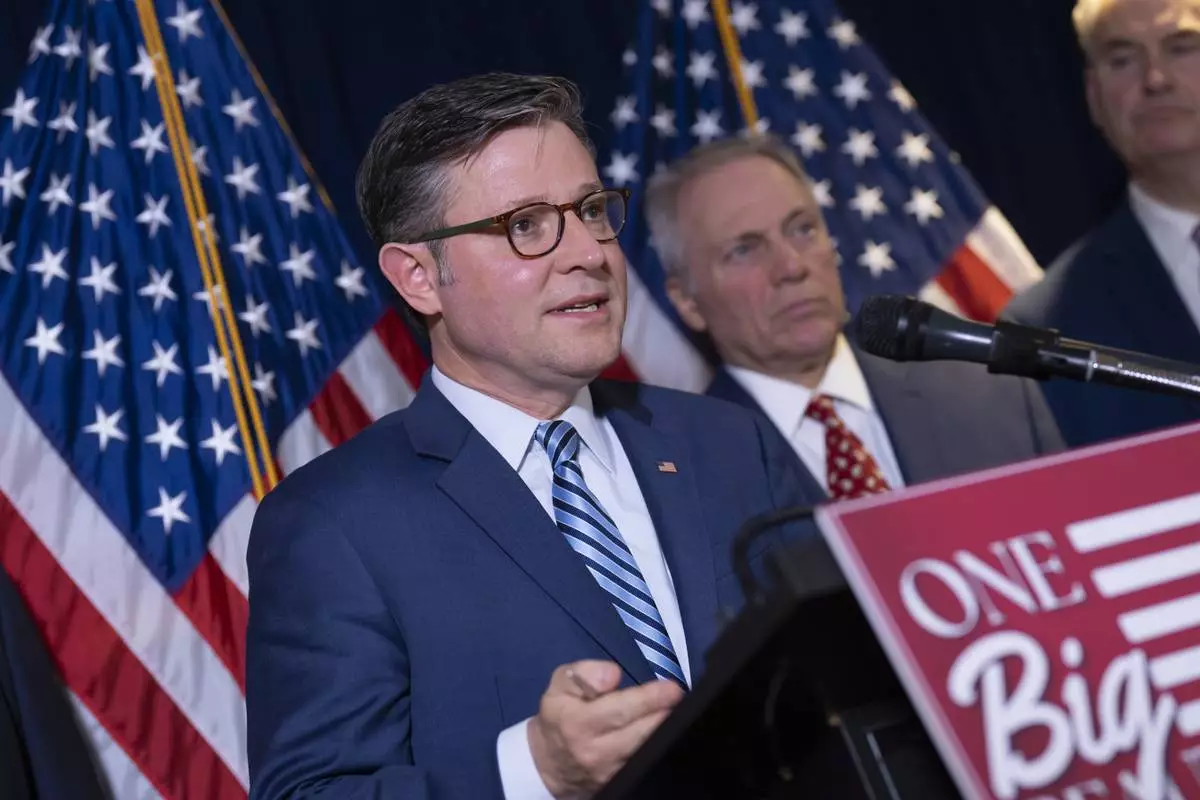
Speaker of the House Mike Johnson, R-La., joined at right by Majority Leader Steve Scalise, R-La., speaks at the Republican National Committee headquarters in Washington, Tuesday, July 15, 2025. (AP Photo/J. Scott Applewhite)
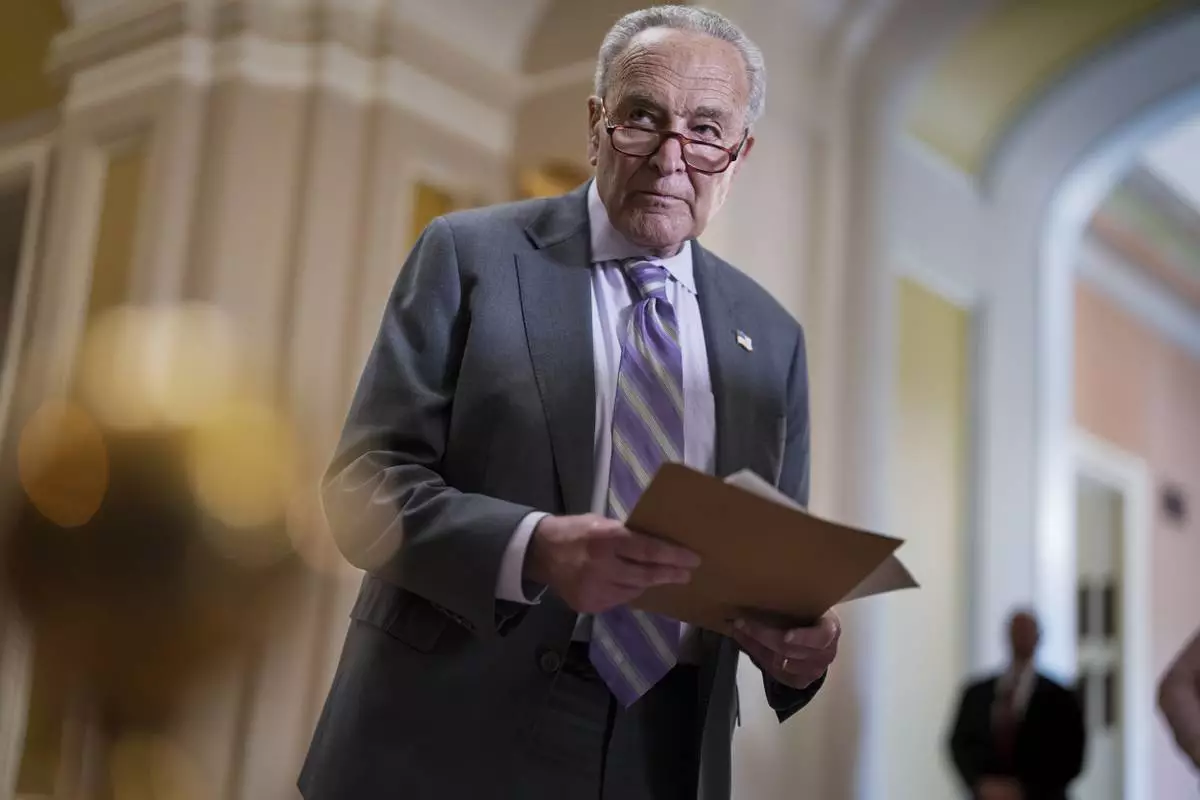
Senate Minority Leader Chuck Schumer, D-N.Y., looks over notes as Senate Republicans work to cancel $9.4 billion in previously approved spending targeted by DOGE, at the Capitol in Washington, Tuesday, July 15, 2025. (AP Photo/J. Scott Applewhite)
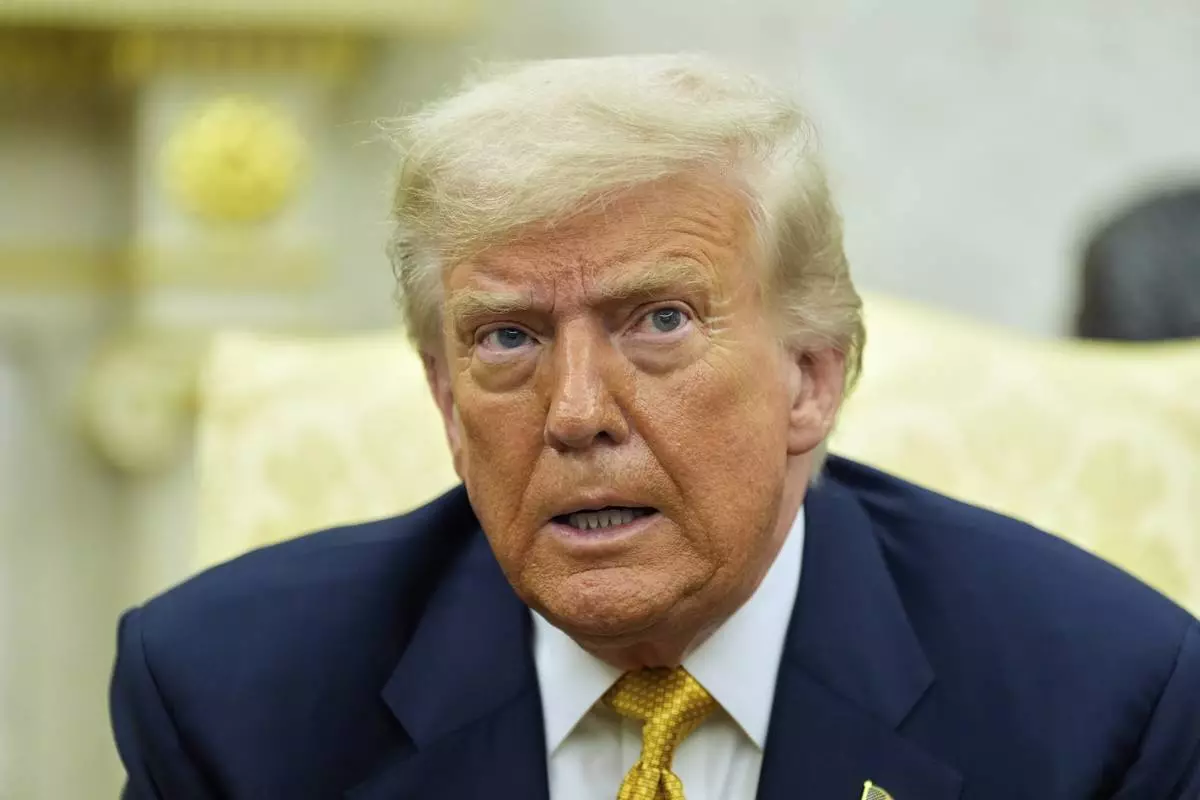
President Donald Trump speaks during a meeting with Bahrain's Crown Prince Salman bin Hamad Al Khalifa in the Oval Office of the White House, Wednesday, July 16, 2025, in Washington. (AP Photo/Alex Brandon)