WASHINGTON (AP) — The House gave final approval to President Donald Trump's request to claw back about $9 billion for public broadcasting and foreign aid early Friday as Republicans intensified their efforts to target institutions and programs they view as bloated or out of step with their agenda.
The vote marked the first time in decades that a president has successfully submitted such a rescissions request to Congress, and the White House suggested it won't be the last. Some Republicans were uncomfortable with the cuts, yet supported them anyway, wary of crossing Trump or upsetting his agenda.
Click to Gallery
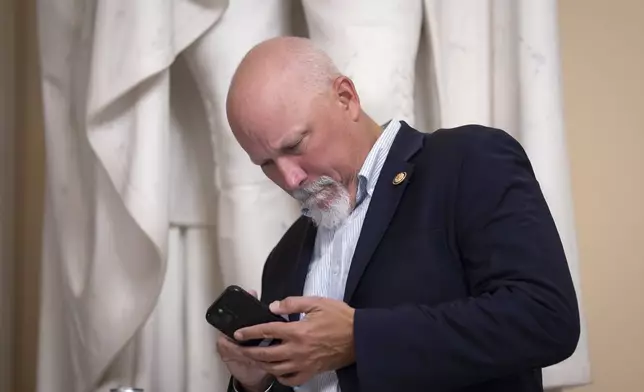
Rep. Chip Roy, R-Texas, a member of the conservative House Freedom Caucus, pauses before a TV news interviews at the Capitol in Washington, Thursday, July 17, 2025. (AP Photo/J. Scott Applewhite)
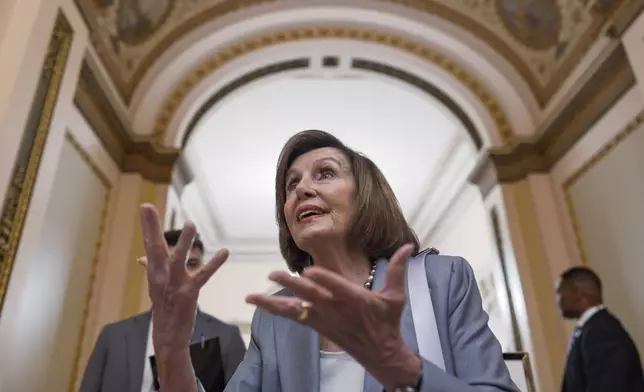
Former House Speaker Nancy Pelosi, D-Calif., pauses for a reporter's question as the Republican majority works to approve President Donald Trump's request to claw back about $9 billion for public broadcasting and foreign aid, at the Capitol in Washington, Thursday, July 17, 2025. (AP Photo/J. Scott Applewhite)
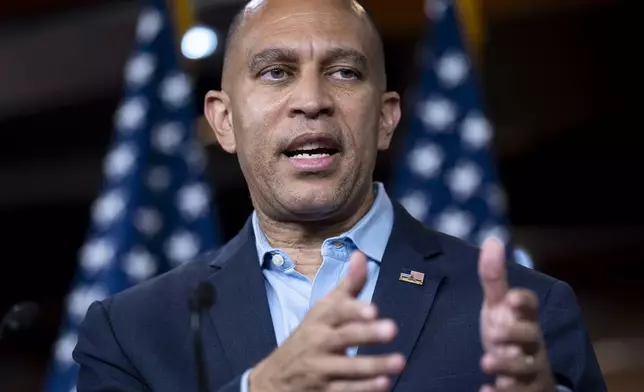
House Minority Leader Hakeem Jeffries, D-N.Y., speaks about President Donald Trump's policies and the GOP's tax and spending cut bill that passed this month, during a news conference at the Capitol in Washington, Monday, July 14, 2025. (AP Photo/J. Scott Applewhite)
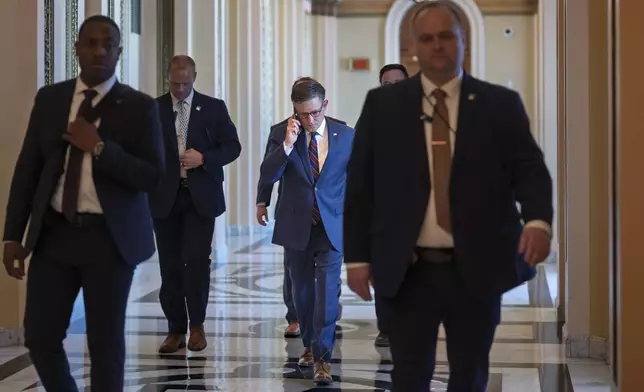
Speaker of the House Mike Johnson, R-La., leaves the chamber at the Capitol in Washington, Thursday, July 17, 2025. (AP Photo/J. Scott Applewhite)
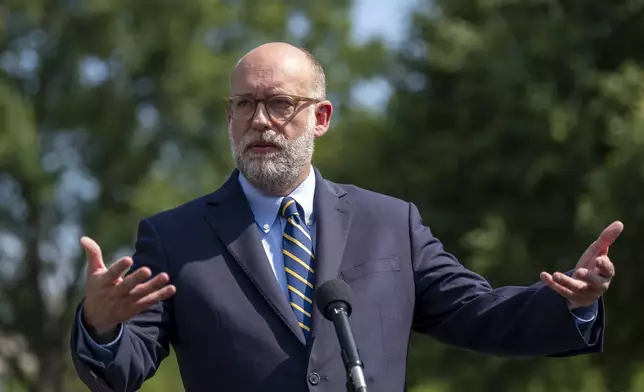
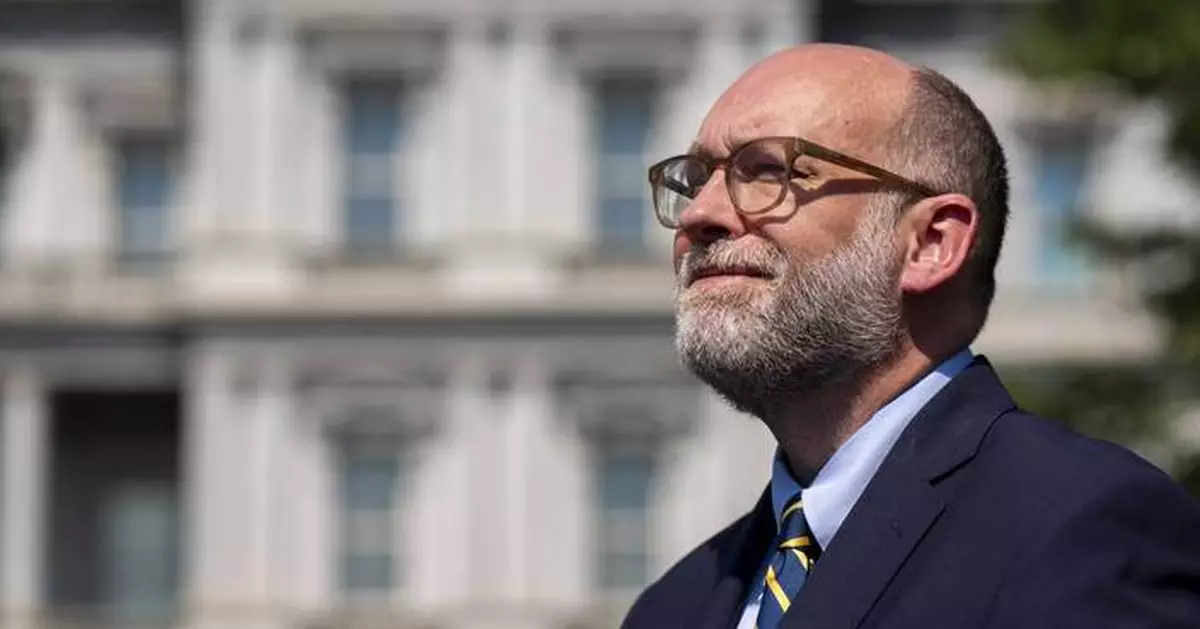
Office of Management and Budget Director Russell Vought speaks with reporters at the White House, Thursday, July 17, 2025, in Washington. (AP Photo/Alex Brandon)
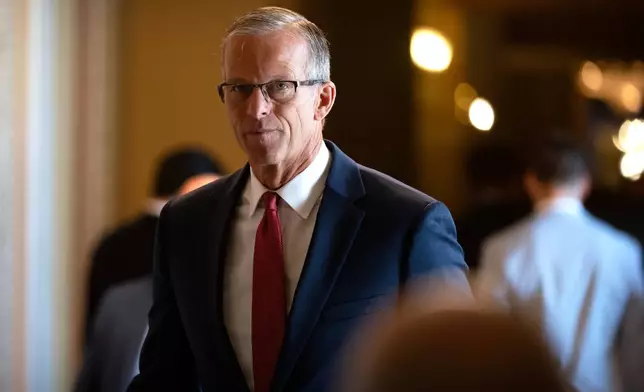
Senate Majority Leader John Thune, of S.D., walks toward the Senate chamber at the Capitol, Wednesday, July 16, 2025, in Washington. (AP Photo/Mark Schiefelbein)
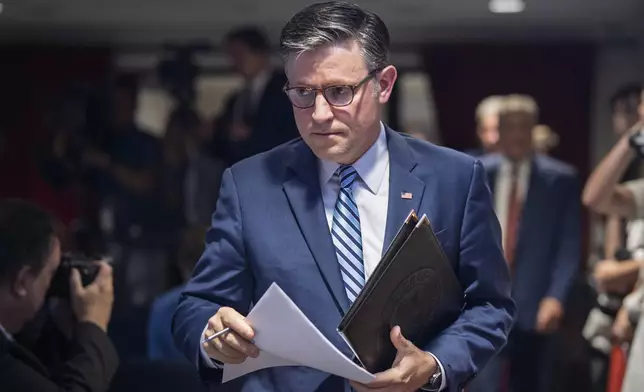
Speaker of the House Mike Johnson, R-La., arrives for a news conference at the Republican National Committee headquarters in Washington, Tuesday, July 15, 2025. (AP Photo/J. Scott Applewhite)
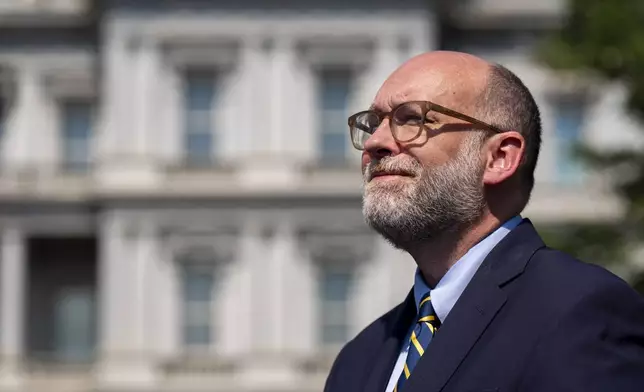
Office of Management and Budget Director Russell Vought speaks with reporters at the White House, Thursday, July 17, 2025, in Washington. (AP Photo/Alex Brandon)
The House passed the bill by a vote of 216-213. It now goes to Trump for his signature.
“We need to get back to fiscal sanity and this is an important step,” said House Speaker Mike Johnson, R-La.
Opponents voiced concerns not only about the programs targeted, but about Congress ceding its spending powers to the executive branch as investments approved on a bipartisan basis were being subsequently canceled on party-line votes. They said previous rescission efforts had at least some bipartisan buy-in and described the Republican package as unprecedented.
No Democrats supported the measure when it passed the Senate, 51-48, in the early morning hours Thursday. Final passage in the House was delayed for several hours as Republicans wrestled with their response to Democrats' push for a vote on the release of Jeffrey Epstein files.
The package cancels about $1.1 billion for the Corporation for Public Broadcasting and nearly $8 billion for a variety of foreign aid programs, many designed to help countries where drought, disease and political unrest endure.
The effort to claw back a sliver of federal spending came just weeks after Republicans also muscled through Trump’s tax and spending cut bill without any Democratic support. The Congressional Budget Office has projected that measure will increase the U.S. debt by about $3.3 trillion over the coming decade.
"No one is buying the the notion that Republicans are actually trying to improve wasteful spending,” said Democratic leader Hakeem Jeffries.
The cancellation of $1.1 billion for the CPB represents the full amount it is due to receive during the next two budget years.
The White House says the public media system is politically biased and an unnecessary expense.
The corporation distributes more than two-thirds of the money to more than 1,500 locally operated public television and radio stations, with much of the remainder assigned to National Public Radio and the Public Broadcasting Service to support national programming.
Democrats were unsuccessful in restoring the funding in the Senate.
Lawmakers with large rural constituencies voiced particular concern about what the cuts to public broadcasting could mean for some local public stations in their state.
Sen. Lisa Murkowski, R-Alaska, said the stations are "not just your news — it is your tsunami alert, it is your landslide alert, it is your volcano alert.”
As the Senate debated the bill Tuesday, a 7.3 magnitude earthquake struck off the remote Alaska Peninsula, triggering tsunami warnings on local public broadcasting stations that advised people to get to higher ground.
Sen. Mike Rounds, R-S.D., said he secured a deal from the White House that some money administered by the Interior Department would be repurposed to subsidize Native American public radio stations in about a dozen states.
But Kate Riley, president and CEO of America’s Public Television Stations, a network of locally owned and operated stations, said that deal was “at best a short-term, half-measure that will still result in cuts and reduced service at the stations it purports to save.”
Among the foreign aid cuts are $800 million for a program that provides emergency shelter, water and family reunification for refugees and $496 million to provide food, water and health care for countries hit by natural disasters and conflicts. There also is a $4.15 billion cut for programs that aim to boost economies and democratic institutions in developing nations.
Democrats argued that the Republican administration's animus toward foreign aid programs would hurt America's standing in the world and create a vacuum for China to fill.
“This is not an America first bill. It's a China first bill because of the void that's being created all across the world,” Jeffries said.
The White House argued that many of the cuts would incentivize other nations to step up and do more to respond to humanitarian crises and that the rescissions best served the American taxpayer.
“The money that we're clawing back in this rescissions package is the people's money. We ought not to forget that,” said Rep. Virginia Foxx, R-N.C., chair of the House Rules Committee.
After objections from several Republicans, Senate GOP leaders took out a $400 million cut to PEPFAR, a politically popular program to combat HIV/AIDS that is credited with saving millions of lives since its creation under Republican President George W. Bush.
Democrats say the bill upends a legislative process that typically requires lawmakers from both parties to work together to fund the nation’s priorities.
Triggered by the official rescissions request from the White House, the legislation only needed a simple majority vote to advance in the Senate instead of the 60 votes usually required to break a filibuster. That meant Republicans could use their 53-47 majority to pass it along party lines.
Two Republican senators, Murkowski and Sen. Susan Collins of Maine, joined with Democrats in voting against the bill, though a few other Republicans also raised concerns about the process.
“Let’s not make a habit of this,” said Senate Armed Services Committee Chairman Roger Wicker of Mississippi, who voted for the bill but said he was wary that the White House wasn’t providing enough information on what exactly will be cut.
Russ Vought, the director of the Office of Management and Budget, said the imminent successful passage of the rescissions shows “enthusiasm” for getting the nation’s fiscal situation under control.
“We’re happy to go to great lengths to get this thing done,” he said during a breakfast with reporters hosted by the Christian Science Monitor.
In response to questions about the relatively small size of the cuts -- $9 billion -- Vought said that was because “I knew it would be hard” to pass in Congress. Vought said another rescissions package is ’likely to come soon.”
Associated Press writers Becky Bohrer in Juneau, Alaska, and Seung Min Kim contributed to this report.
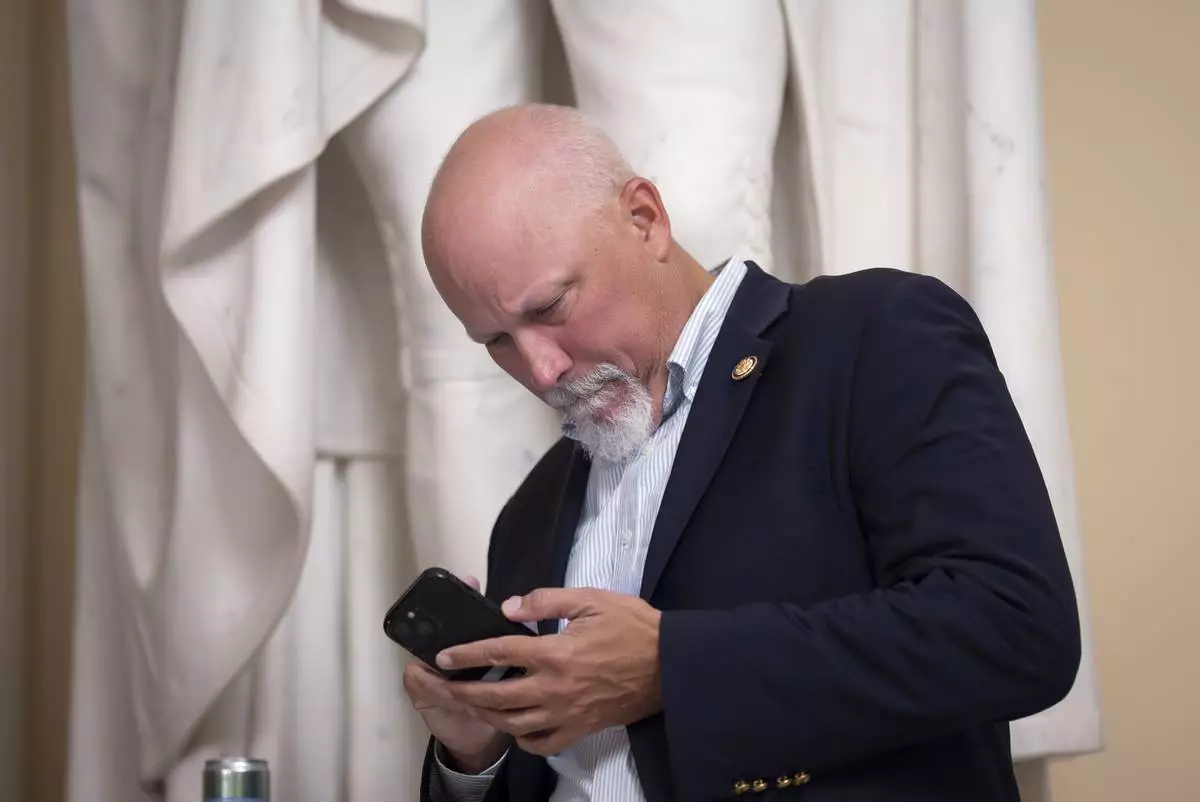
Rep. Chip Roy, R-Texas, a member of the conservative House Freedom Caucus, pauses before a TV news interviews at the Capitol in Washington, Thursday, July 17, 2025. (AP Photo/J. Scott Applewhite)
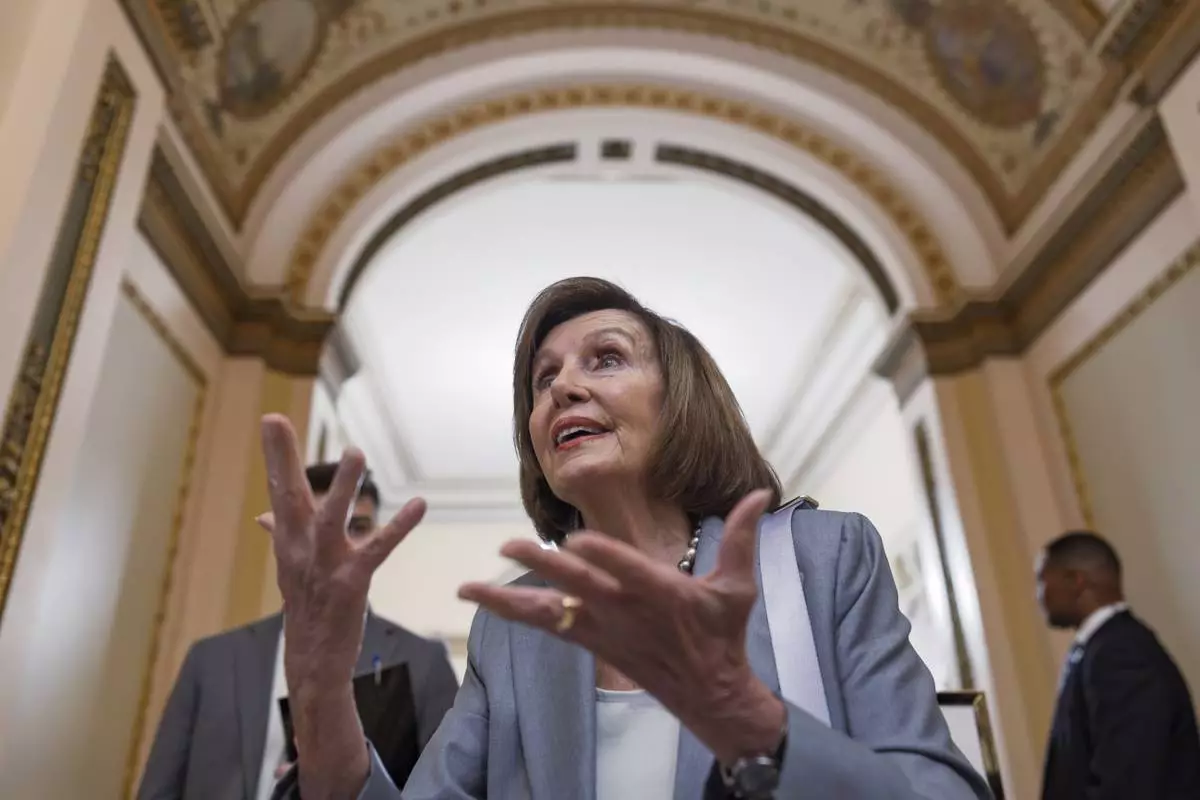
Former House Speaker Nancy Pelosi, D-Calif., pauses for a reporter's question as the Republican majority works to approve President Donald Trump's request to claw back about $9 billion for public broadcasting and foreign aid, at the Capitol in Washington, Thursday, July 17, 2025. (AP Photo/J. Scott Applewhite)
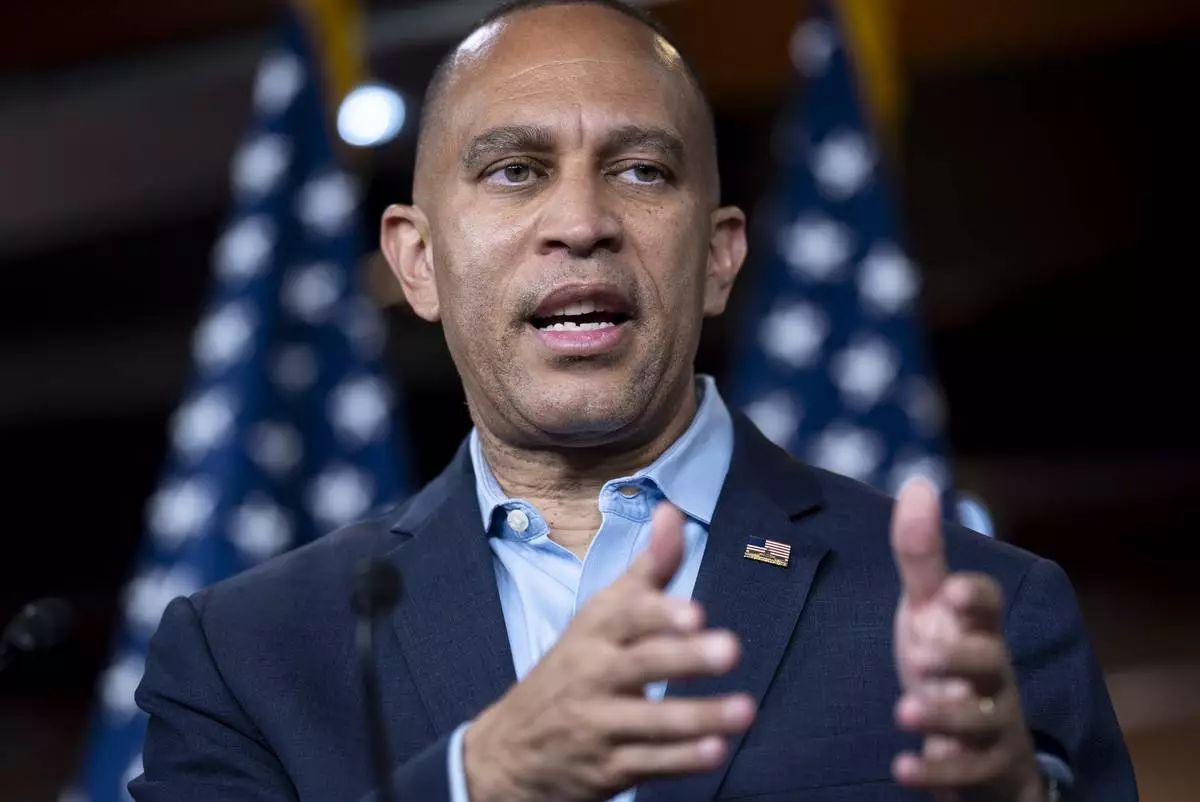
House Minority Leader Hakeem Jeffries, D-N.Y., speaks about President Donald Trump's policies and the GOP's tax and spending cut bill that passed this month, during a news conference at the Capitol in Washington, Monday, July 14, 2025. (AP Photo/J. Scott Applewhite)
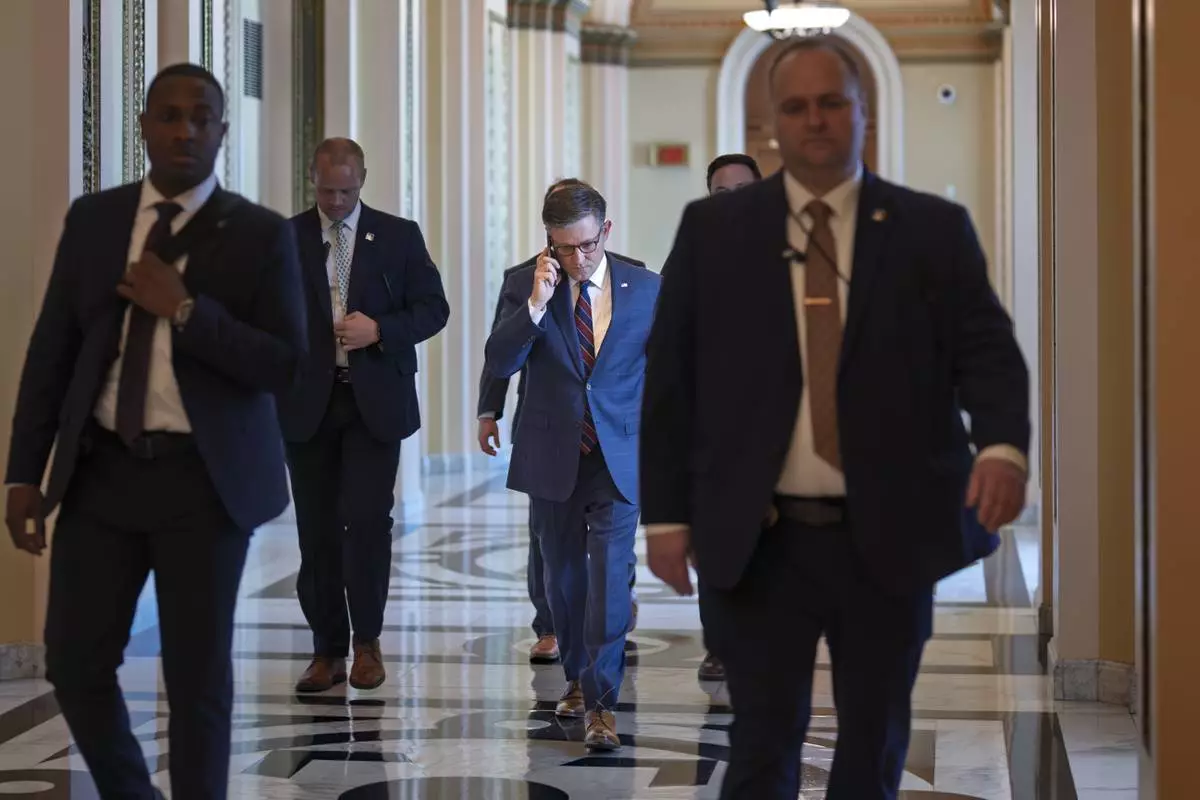
Speaker of the House Mike Johnson, R-La., leaves the chamber at the Capitol in Washington, Thursday, July 17, 2025. (AP Photo/J. Scott Applewhite)
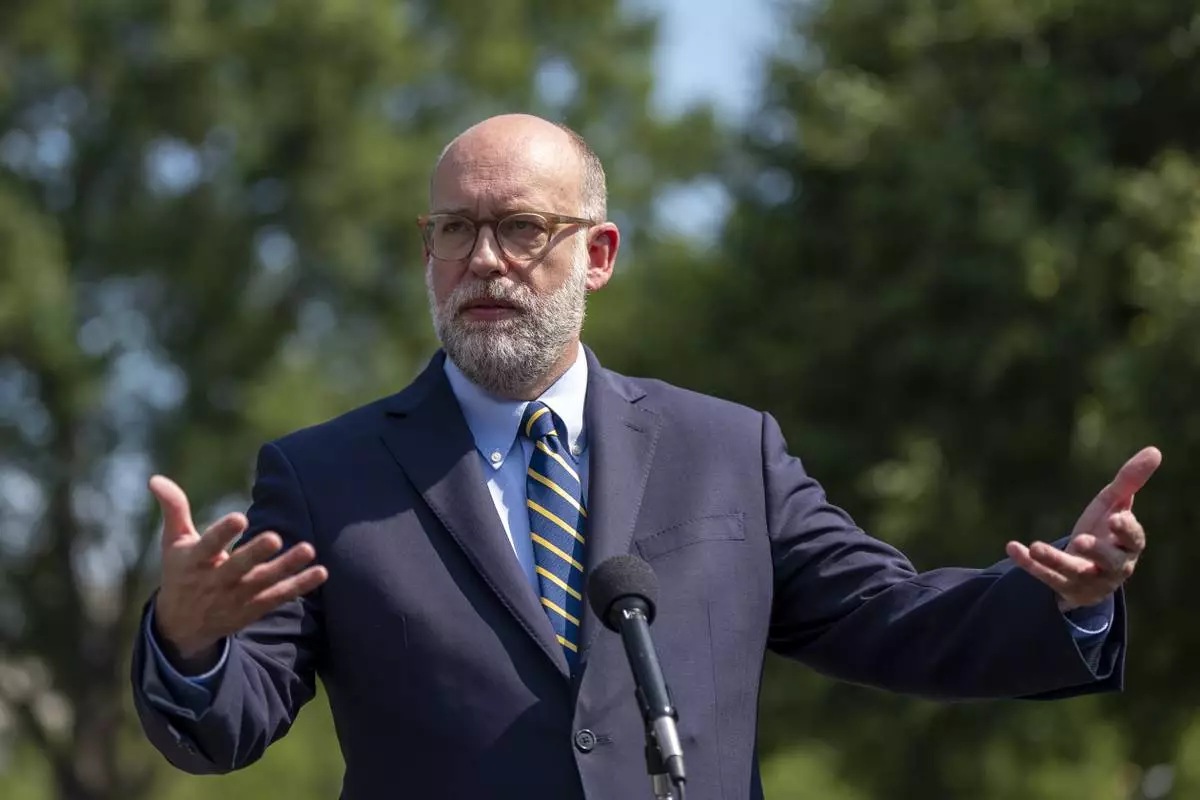
Office of Management and Budget Director Russell Vought speaks with reporters at the White House, Thursday, July 17, 2025, in Washington. (AP Photo/Alex Brandon)
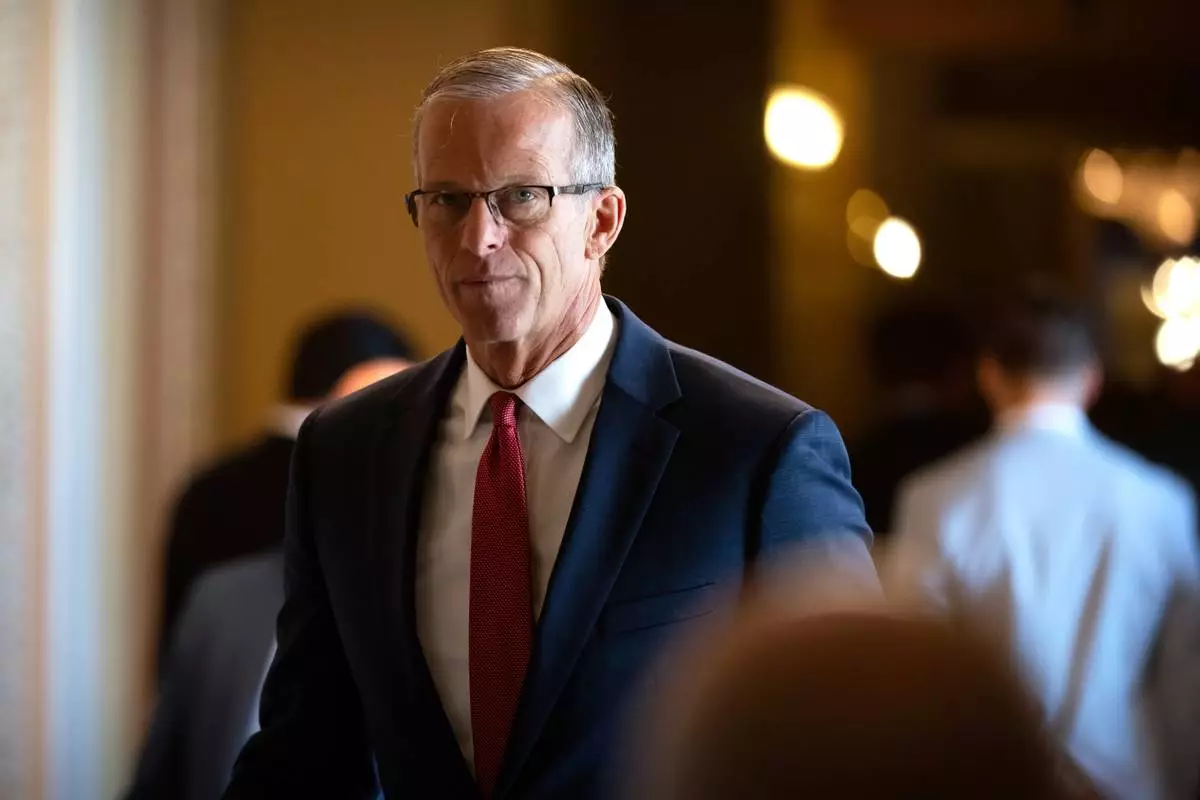
Senate Majority Leader John Thune, of S.D., walks toward the Senate chamber at the Capitol, Wednesday, July 16, 2025, in Washington. (AP Photo/Mark Schiefelbein)
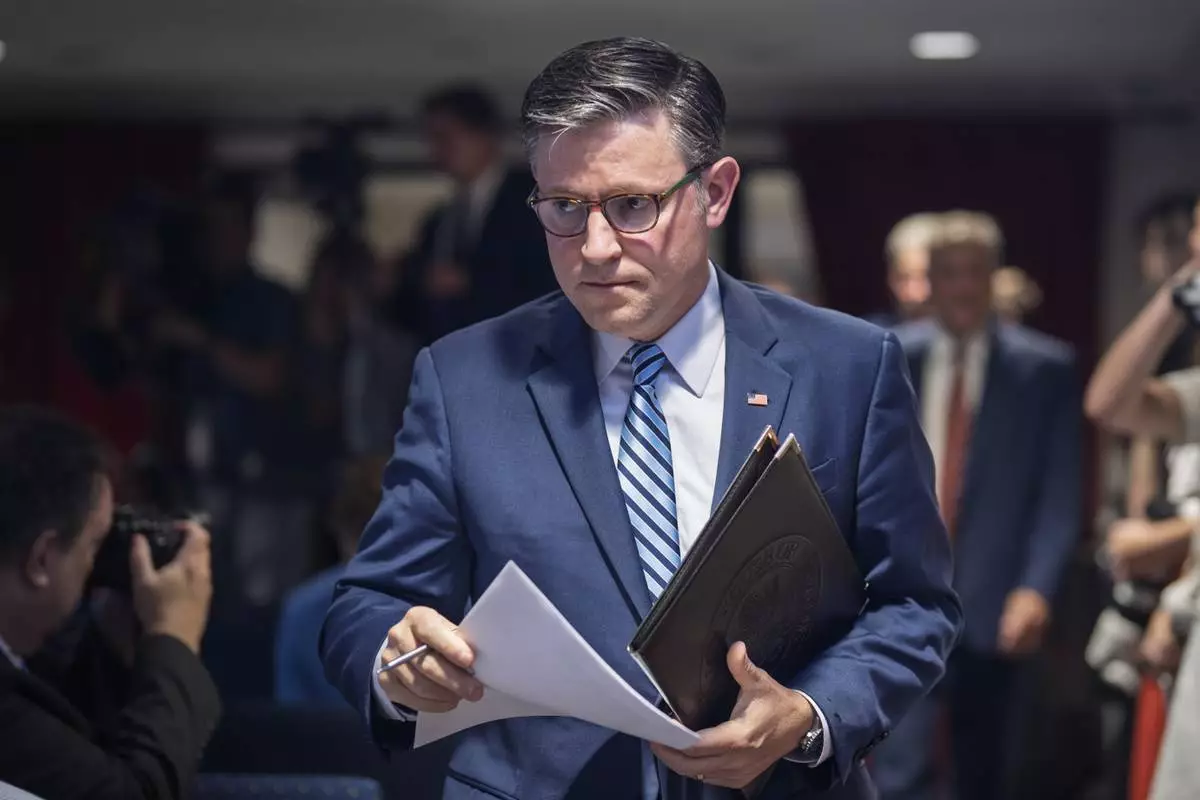
Speaker of the House Mike Johnson, R-La., arrives for a news conference at the Republican National Committee headquarters in Washington, Tuesday, July 15, 2025. (AP Photo/J. Scott Applewhite)
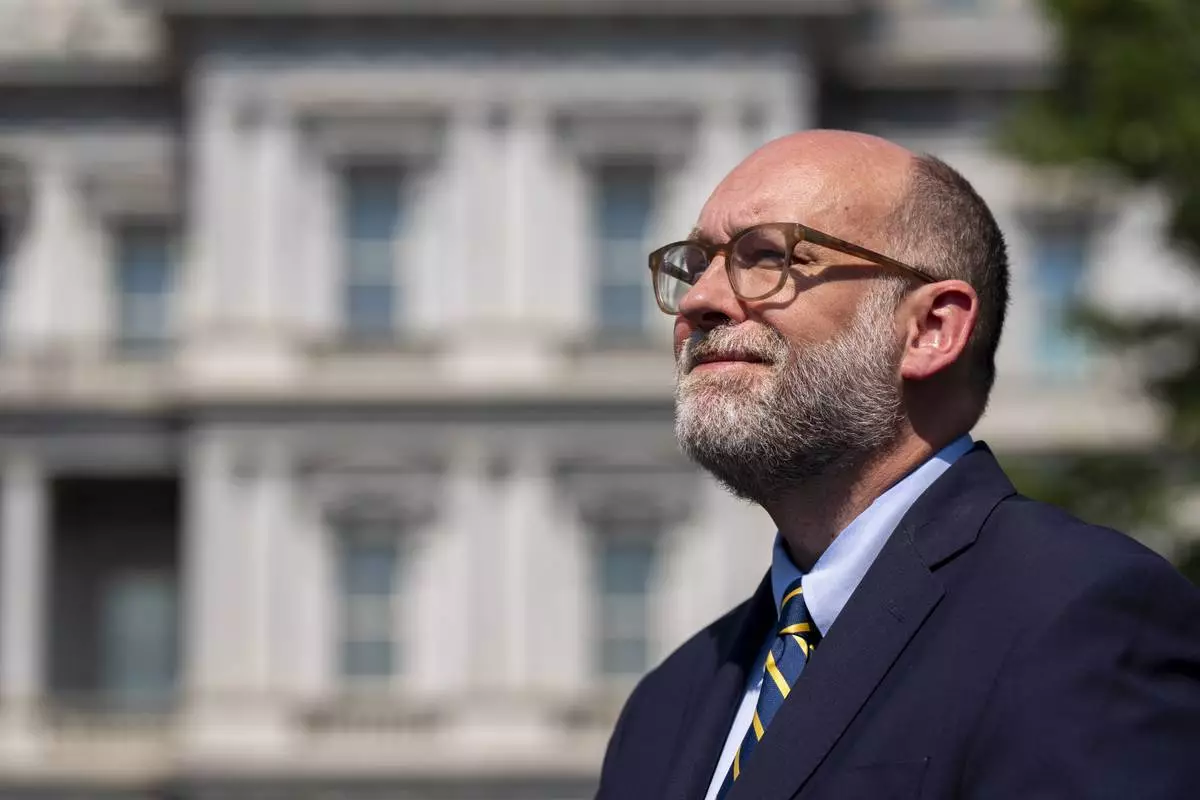
Office of Management and Budget Director Russell Vought speaks with reporters at the White House, Thursday, July 17, 2025, in Washington. (AP Photo/Alex Brandon)