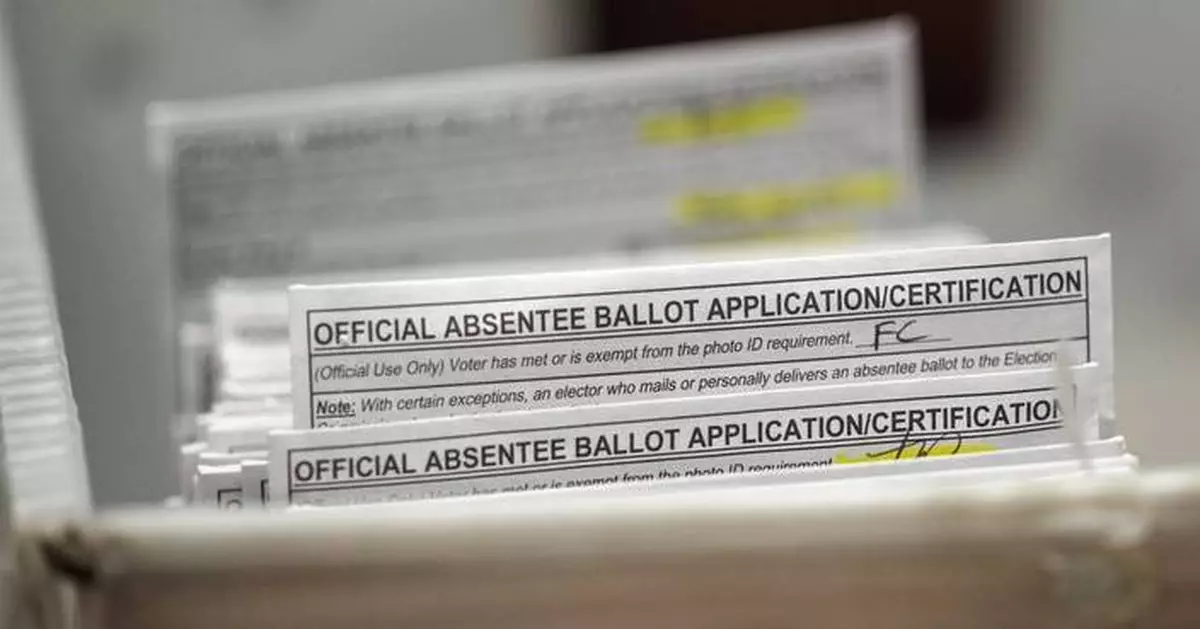
MADISON, Wis . (AP) — Wisconsin elections officials declared Thursday that the former clerk of the state's capital city broke several laws related to not counting nearly 200 absentee ballots in the November presidential election, but they stopped short of recommending criminal charges be brought.
The bipartisan Wisconsin Elections Commission voted 5-1 to accept a report finding that the former Madison clerk broke five election laws. The commission delayed a vote on ordering the city of Madison to take additional steps to improve election security.
No outcome of any race was affected by the missing ballots. Maribeth Witzel-Behl resigned as Madison city clerk in April amid investigations into the missing ballots.
The investigation was not a criminal probe and the elections commission does not have the power to bring charges. The report does not recommend that prosecutors do so.
There is no intention to refer the case to prosecutors for possible charges, commission chair Ann Jacobs said after the meeting. The goal of the probe was to find out what happened and stop it from happening again, she added.
Charges could be brought by the Dane County attorney's office or the state Department of Justice.
Dane County District Attorney Ismael Ozanne said his office would review the case if it received a referral. DOJ spokesperson Riley Vetterkind did not immediately respond to an email seeking comment.
Commissioners said they were shocked at how the Madison clerk handled the missing ballots.
The investigation determined that two bags of uncounted absentee ballots likely never made it to the poll sites where they should have been counted. The clerk’s office did not notify the elections commission of the oversight until Dec. 18, almost a month and a half after the election and well after results were certified on Nov. 29.
Jacobs, a Democrat, called the incident a “rather shocking dereliction of just ordinary responsibility."
Republican Commissioner Bob Spindell, who cast the lone vote against accepting the report, said he blamed the problem on an extremely complicated system in the clerk’s office and poor management.
“It’s not something I think the clerk should be crucified for,” he said.
The elections commission report concluded that the former clerk broke state law for failing to properly supervise an election; not providing the most recent current registration information for pollbooks in two wards; improperly handing the return of absentee ballots; not properly canvassing the returns as it pertained to the 193 uncounted ballots; and failing to provide sufficient information for the municipal board of canvassers to do its work.
The report blamed a “confluence of errors” and said that Madison did not have procedures in place to track the number of absentee ballots going to a polling place. It also said there was a “complete lack of leadership” in the clerk’s office.
“These are mistakes that could have been avoided," said Republican commissioner Don Millis.
Madison city attorney and interim clerk Michael Haas said the city did not contest the findings of the report.
“The most important asset we have is the trust of the voters and that requires complete transparency and open coordination with partners when mistakes happen,” Haas said in testimony submitted to the commission. “That did not happen in this case.”
Madison has already implemented numerous safeguards and procedures that were in place for elections earlier this year to ensure that all eligible absentee ballots are accounted for, Haas said.
The recommendations in the report for further actions exceed what is required under state law and are not within the authority of the commission to order, Hass testified. He urged the commission to delay a vote.
The commission voted unanimously to give Madison until Aug. 7 to respond before voting a week later on whether to order additional steps to be taken.
Four voters whose ballots weren’t counted have filed claims for $175,000 each, the first step toward a class-action lawsuit. Their attorney attended Thursday's hearing but did not testify.
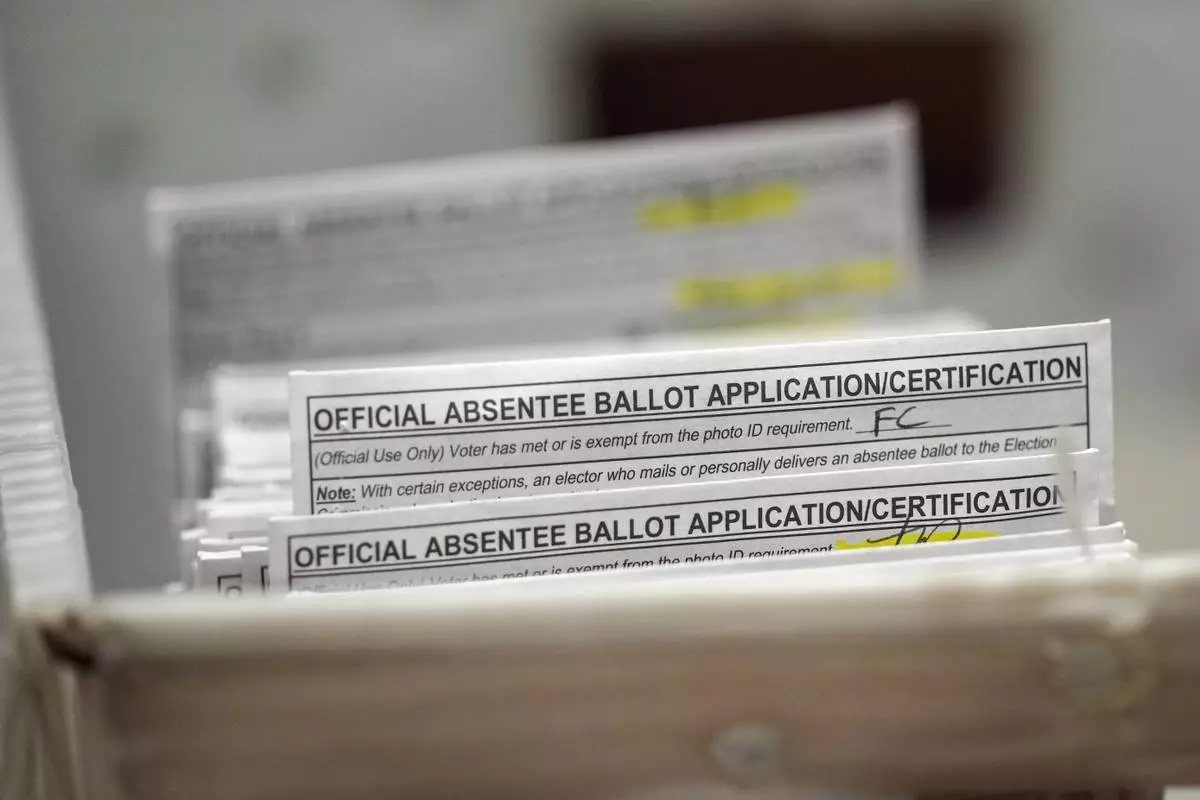
FILE - Absentee ballots during a count at the Wisconsin Center, Nov. 8, 2022, in Milwaukee. (AP Photo/Morry Gash, File)
JERUSALEM (AP) — Over two dozen families from one of the few remaining Palestinian Bedouin villages in the central West Bank have packed up and fled their homes in recent days, saying harassment by Jewish settlers living in unauthorized outposts nearby has grown unbearable.
The village, Ras Ein el-Auja, was originally home to some 700 people from more than 100 families that have lived there for decades.
Twenty-six families already left on Thursday, scattering across the territory in search of safer ground, say rights groups. Several other families were packing up and leaving on Sunday.
“We have been suffering greatly from the settlers. Every day, they come on foot, or on tractors, or on horseback with their sheep into our homes. They enter people’s homes daily,” said Nayef Zayed, a resident, as neighbors took down sheep pens and tin structures.
Israel's military and the local settler governing body in the area did not respond to requests for comment.
Other residents pledged to stay put for the time being. That makes them some of the last Palestinians left in the area, said Sarit Michaeli, international director at B’Tselem, an Israeli rights group helping the residents.
She said that mounting settler violence has already emptied neighboring Palestinian hamlets in the dusty corridor of land stretching from Ramallah in the West to Jericho, along the Jordanian border, in the east.
The area is part of the 60% of the West Bank that has remained under full Israeli control under interim peace accords signed in the 1990s. Since the war between Israel and Hamas erupted in October 2023, over 2,000 Palestinians — at least 44 entire communities — have been expelled by settler violence in the area, B'Tselem says.
The turning point for the village came in December, when settlers put up an outpost about 50 meters (yards) from Palestinian homes on the northwestern flank of the village, said Michaeli and Sam Stein, an activist who has been living in the village for a month.
Settlers strolled easily through the village at night. Sheep and laundry went missing. International activists had to begin escorting children to school to keep them safe.
“The settlers attack us day and night, they have displaced us, they harass us in every way” said Eyad Isaac, another resident. “They intimidate the children and women.”
Michaeli said she’s witnessed settlers walk around the village at night, going into homes to film women and children and tampering with the village’s electricity.
The residents said they call the police frequently to ask for help — but it seldom arrives. Settlement expansion has been promoted by successive Israeli governments over nearly six decades. But Benjamin Netanyahu’s far-right government, which has placed settler leaders in senior positions, has made it a top priority.
That growth has been accompanied by a spike in settler violence, much of it carried out by residents of unauthorized outposts. These outposts often begin with small farms or shepherding that are used to seize land, say Palestinians and anti-settlement activists. United Nations officials warn the trend is changing the map of the West Bank, entrenching Israeli presence in the area.
Some 500,000 Israelis have settled in the West Bank since Israel captured the territory, along with east Jerusalem and the Gaza Strip, in the 1967 Mideast war. Their presence is viewed by most of the international community as illegal and a major obstacle to peace. The Palestinians seek all three areas for a future state.
For now, displaced families of the village have dispersed between other villages near the city of Jericho and near Hebron further south, said residents. Some sold their sheep and are trying to move into the cities.
Others are just dismantling their structures without knowing where to go.
"Where will we go? There’s nowhere. We’re scattered,” said Zayed, the resident, “People’s situation is bad. Very bad.”
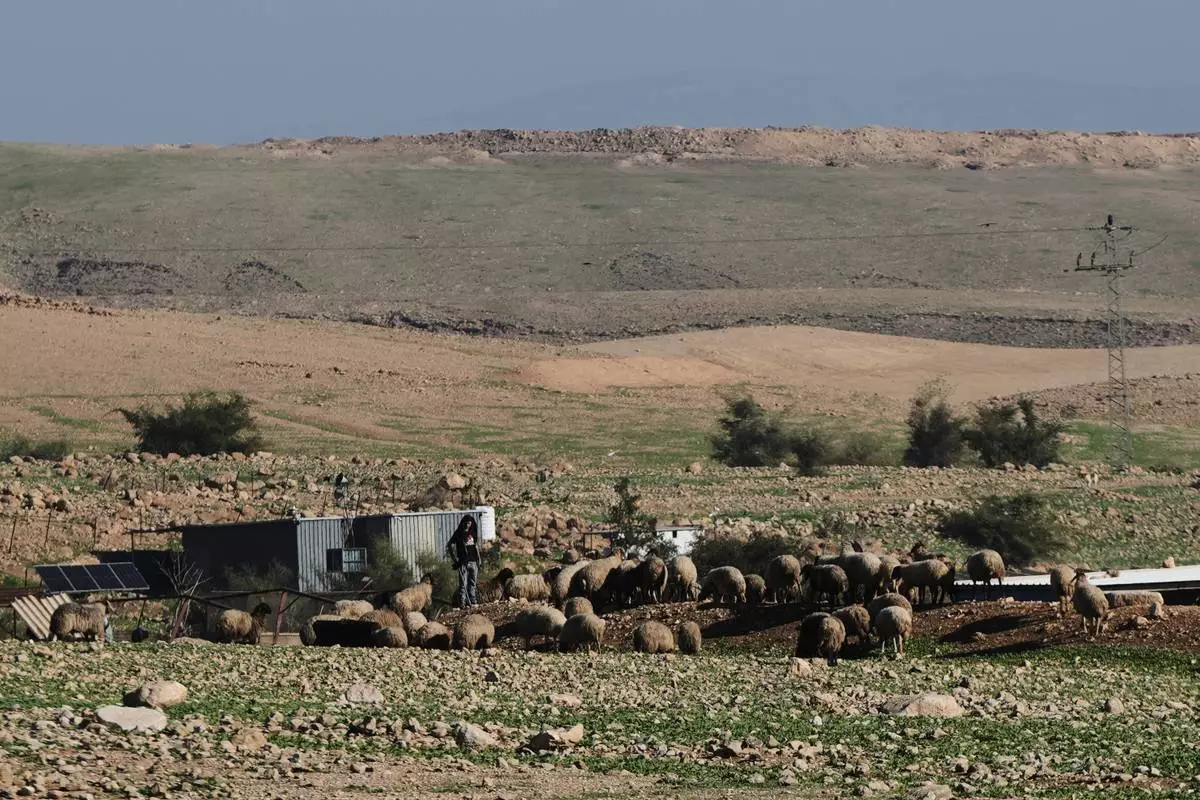
An Israeli settler herds his flock near his outpost beside the Palestinian village of Ras Ein al-Auja in the West Bank, Sunday, Jan. 11, 2026. (AP Photo/Mahmoud Illean)
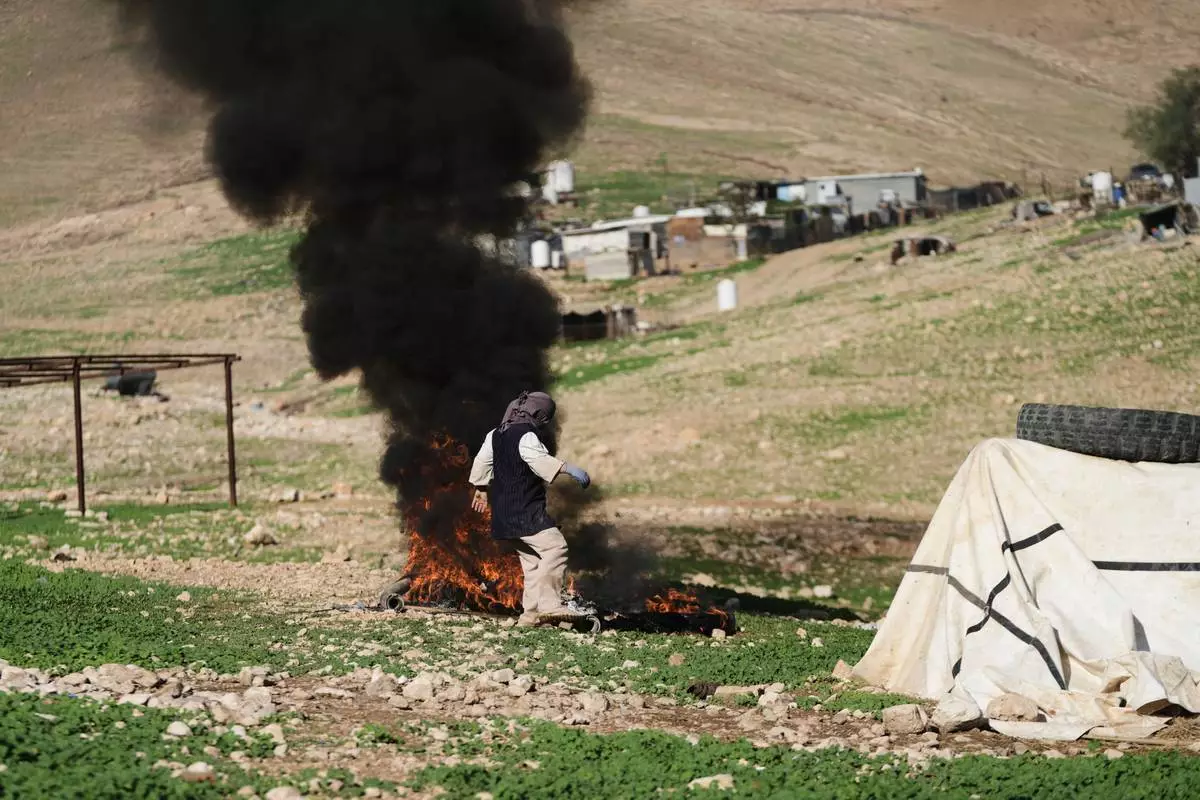
A Palestinian resident of Ras Ein al-Auja village, West Bank burns trash, Sunday, Jan. 11, 2026. (AP Photo/Mahmoud Illean)
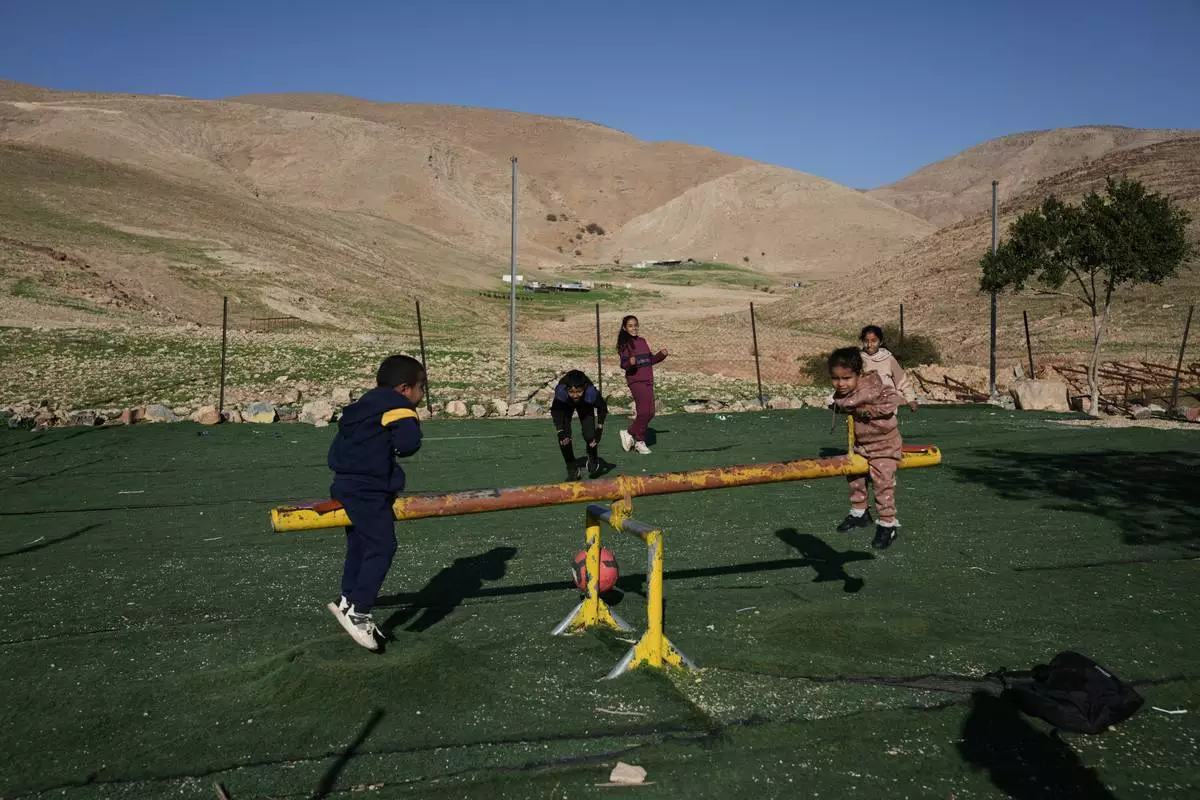
Palestinian children play in the West Bank village of Ras Ein al-Auja, Sunday, Jan. 11, 2026. (AP Photo/Mahmoud Illean)
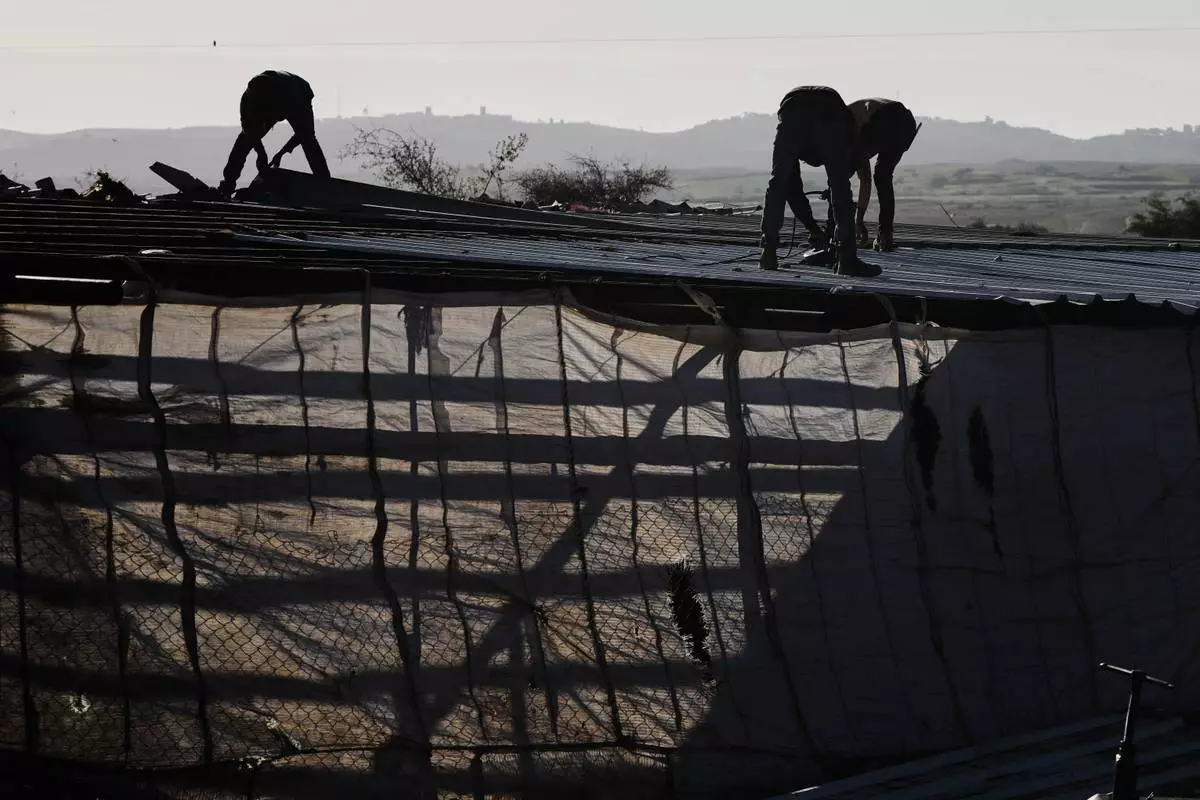
Palestinian residents of Ras Ein al-Auja village, West Bank pack up their belongings and prepare to leave their homes after deciding to flee mounting settler violence, Sunday, Jan. 11, 2026. (AP Photo/Mahmoud Illean)
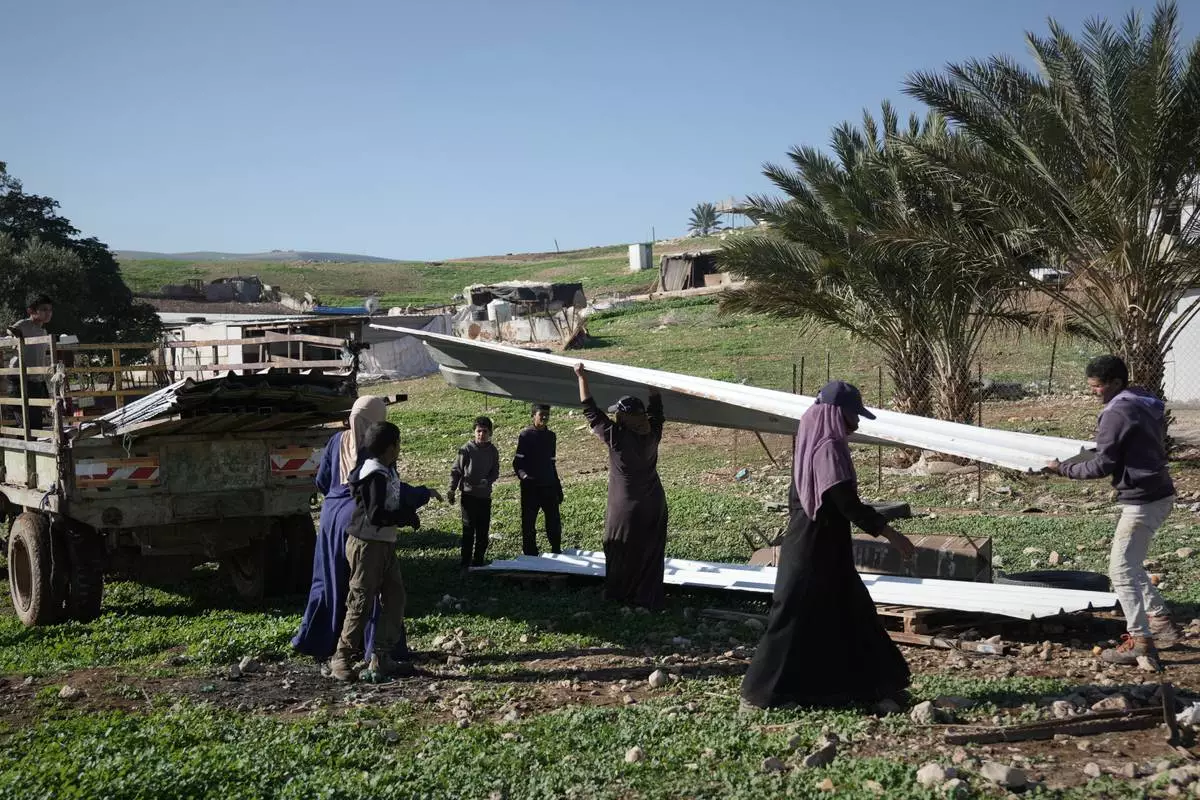
Palestinian residents of Ras Ein al-Auja village, West Bank pack up their belongings and prepare to leave their homes after deciding to flee mounting settler violence, Sunday, Jan. 11, 2026. (AP Photo/Mahmoud Illean)