NEW ORLEANS (AP) — Louisiana on Thursday canceled a $3 billion repair of disappearing Gulf coastline, funded by the 2010 Deepwater Horizon oil spill settlement, scrapping what conservationists called an urgent response to climate change but Gov. Jeff Landry viewed as a threat to the state’s way of life.
Despite years of studies and reviews, the project at the center of Louisiana's coastal protection plans grew increasingly imperiled after Landry, a Republican, took office last year. Its collapse means that the state could lose out on more than $1.5 billion in unspent funds and may even have to repay the $618 million it already used to begin building.
The Louisiana Trustee Implementation Group, a mix of federal agencies overseeing the settlement funds, said that "unused project funds will be available for future Deepwater Horizon restoration activities” but would require review and approval.
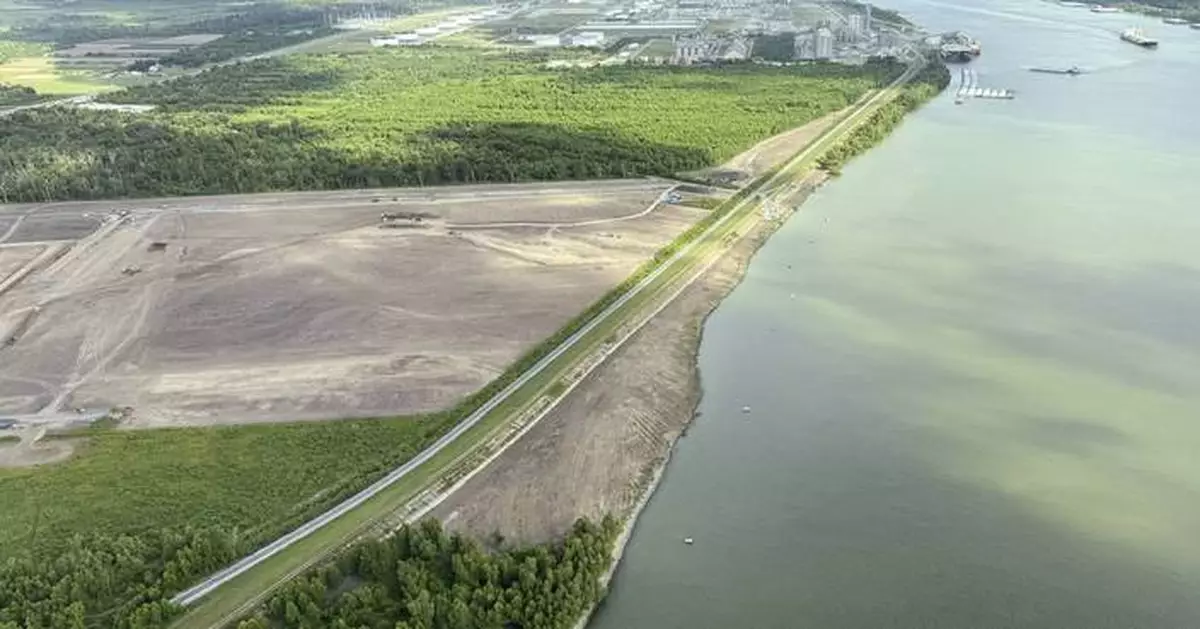
The Mid-Barataria Sediment Diversion Project aimed to rebuild upward of 20 square miles (32 kilometers) of land over a 50-year period in southeast Louisiana to combat sea level rise and erosion on the Gulf Coast. When construction stalled last year because of lawsuits, trustees warned that the state would have to return the hundreds of millions of dollars it had already spent if the project did not move forward.
Former Louisiana Rep. Garret Graves, a Republican who once led the state's coastal restoration agency, said that killing the project was “a boneheaded decision" not rooted in science.
“It is going to result in one of the largest setbacks for our coast and the protection of our communities in decades,” Graves said. “I don't know what chiropractor or palm reader they got advice from on this, but — baffling that someone thought this was a good idea.”
Project supporters stressed that it would have provided a data-driven, large-scale solution to mitigate the worst effects of an eroding coastline in a state where a football field of land is lost every 100 minutes and more than 2,000 square miles (5,180 square kilometers) of land have vanished over the past century, according to the U.S. Geological Survey.
The project, which broke ground in 2023, would have diverted sediment-laden water from the Mississippi River to restore wetlands disappearing because of a range of factors including climate-change-induced sea level rise and a vast river levee system that choked off natural land regeneration from sediment deposits.
“The science has not changed, nor has the need for urgent action,” said Kim Reyher, executive director of the Coalition to Restore Coastal Louisiana. “What has changed is the political landscape.”
The Louisiana Trustee Implementation Group last year had noted that "no other single restoration project has been planned and studied as extensively over the past decades.”
While the project had largely received bipartisan support and was championed by Democratic Gov. John Bel Edwards, his successor has been a vocal opponent. Landry recoiled at the rising price tag and amplified concerns that the massive influx of freshwater would devastate local fisheries.
Landry has said the project would “break” Louisiana’s culture of shrimp and oyster harvesting and compared it to government efforts a century ago to punish schoolchildren for speaking Cajun French.
“We fought this battle a long time, but Gov. Landry is the reason we won this battle," said Mitch Jurisich, who chairs the Louisiana Oyster Task Force and sued the state over the project's environmental impacts, including likely killing thousands of bottlenose dolphins due to the onslaught of freshwater.
Landry said in a statement that the project is “no longer financially or practically viable," noting that the cost has doubled since 2016.
“This level of spending is unsustainable,” Landry said. The project also “threatens Louisiana's seafood industry, our coastal culture, and the livelihoods of our fishermen — people who have sustained our state for generations.”
The project's budget had included more than $400 million for mitigating the costs to local communities, including to help the oyster industry build new oyster beds. Project proponents said that the rapid loss of coast meant communities would be displaced anyway if the state failed to take action to protect them.
“You either move oysters or move people, and there's only one answer to that question," Graves said.
Louisiana’s Coastal Protection and Restoration Authority, the lead agency overseeing the project, said in a statement that the project was “no longer viable at this time based on a totality of the circumstances" including costs, litigation and a federal permit suspended earlier this year after the state halted work on the project.
Chairman Gordon “Gordy” Dove said that “our commitment to coastal restoration has not wavered" and that the state plans to pursue a smaller-scale diversion nearby. Dove told lawmakers earlier this year that the state could save at least $1 billion with a different plan to channel river water into the Gulf Coast at a rate 5 to 30 times less than the Mid-Barataria project's 75,000 cubic feet per second.
Conservation groups bristled at the change in plans. The Mid-Barataria project's termination marked “a complete abandonment of science-driven decision-making and public transparency,” Restore the Mississippi River Delta, a coalition of environmental groups, said in a statement, adding that the state was “throwing away” money intended to protect its coastal residents and economy.
The coalition said alternative measures proposed by the state, such as the smaller-scale diversion or rebuilding land by dredging, were insufficient to meaningfully combat land loss and did not undergo the same level of scientific vetting as the Mid-Barataria project.
“A stopgap project with no data is not a solution," the coalition said. “We need diversion designs backed by science — not politics.”
Brook is a corps member for The Associated Press/Report for America Statehouse News Initiative. Report for America is a nonprofit national service program that places journalists in local newsrooms to report on undercovered issues.
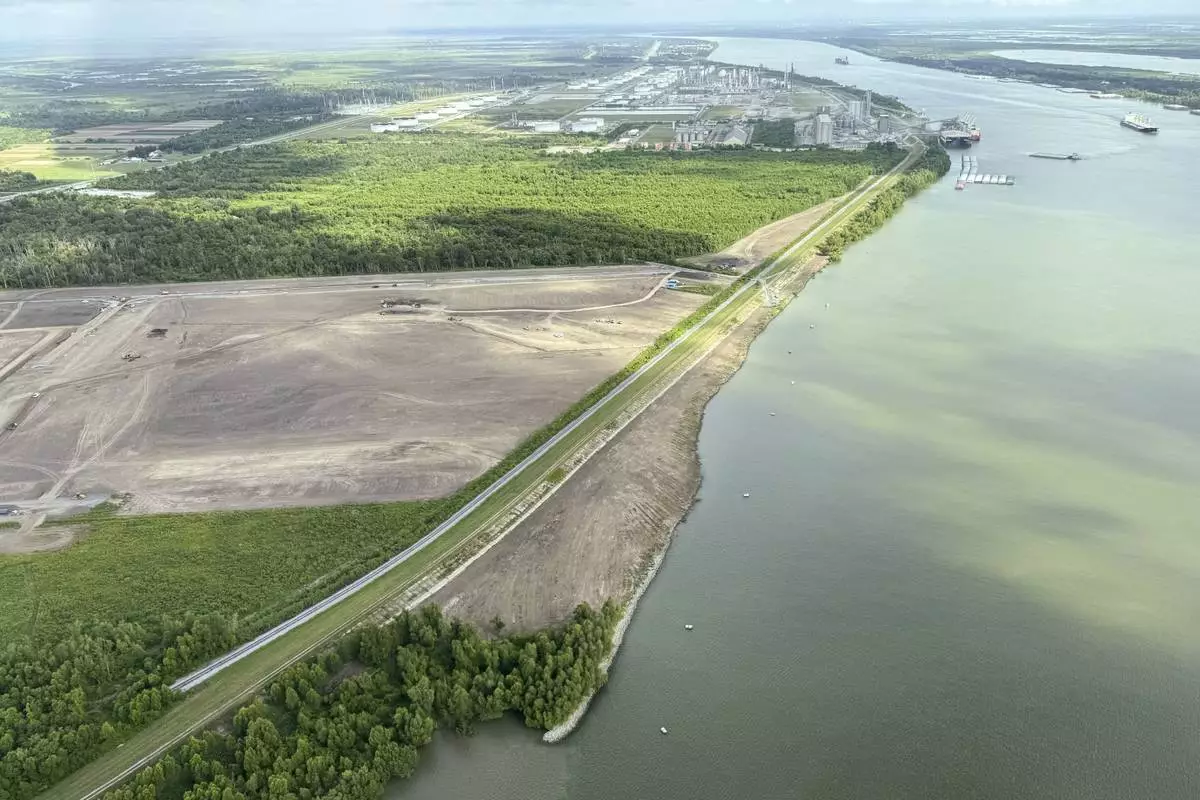
FILE - The nearly $3 billion Mid-Barataria Sediment Diversion project along the Mississippi River, intended to stave off coastal land loss in southeastern Louisiana, is seen during a flyover with the environmental coalition group Restore the Mississippi River Delta, Aug. 29, 2024. (AP Photo/Jack Brook, File)
U.S. President Donald Trump says Iran has proposed negotiations after his threat to strike the Islamic Republic as an ongoing crackdown on demonstrators has led to hundreds of deaths.
Trump said late Sunday that his administration was in talks to set up a meeting with Tehran, but cautioned that he may have to act first as reports mount of increasing deaths and the government continues to arrest protesters.
“The meeting is being set up, but we may have to act because of what’s happening before the meeting. But a meeting is being set up. Iran called, they want to negotiate,” Trump told reporters on Air Force One on Sunday night.
Iran did not acknowledge Trump’s comments immediately. It has previously warned the U.S. military and Israel would be “legitimate targets” if America uses force to protect demonstrators.
The U.S.-based Human Rights Activists News Agency, which has accurately reported on past unrest in Iran, gave the death toll. It relies on supporters in Iran cross checking information. It said at least 544 people have been killed so far, including 496 protesters and 48 people from the security forces. It said more than 10,600 people also have been detained over the two weeks of protests.
With the internet down in Iran and phone lines cut off, gauging the demonstrations from abroad has grown more difficult. Iran’s government has not offered overall casualty figures.
The Latest:
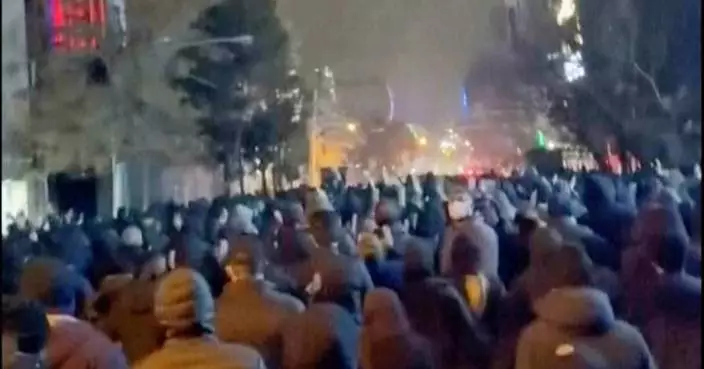
A witness told the AP that the streets of Tehran empty at the sunset call to prayers each night.
Part of that stems from the fear of getting caught in the crackdown. Police sent the public a text message that warned: “Given the presence of terrorist groups and armed individuals in some gatherings last night and their plans to cause death, and the firm decision to not tolerate any appeasement and to deal decisively with the rioters, families are strongly advised to take care of their youth and teenagers.”
Another text, addressed “Dear parents,” which claimed to come from the intelligence arm of the paramilitary Revolutionary Guard, also directly warned people not to take part in demonstrations.
The witness spoke to the AP on condition of anonymity due to the ongoing crackdown.
—- By Jon Gambrell in Dubai, United Arab Emirates
Iran drew tens of thousands of pro-government demonstrators to the streets Monday in a show of power after nationwide protests challenging the country’s theocracy.
Iranian state television showed images of demonstrators thronging Tehran toward Enghelab Square in the capital.
It called the demonstration an “Iranian uprising against American-Zionist terrorism,” without addressing the underlying anger in the country over the nation’s ailing economy. That sparked the protests over two weeks ago.
State television aired images of such demonstrations around the country, trying to signal it had overcome the protests, as claimed by Iranian Foreign Minister Abbas Araghchi earlier in the day.
China says it opposes the use of force in international relations and expressed hope the Iranian government and people are “able to overcome the current difficulties and maintain national stability.”
Chinese Foreign Ministry spokesperson Mao Ning said Monday that Beijing “always opposes interference in other countries’ internal affairs, maintains that the sovereignty and security of all countries should be fully protected under international law, and opposes the use or threat of use of force in international relations.”
German Chancellor Friedrich Merz condemned “in the strongest terms the violence that the leadership in Iran is directing against its own people.”
He said it was a sign of weakness rather than strength, adding that “this violence must end.”
Merz said during a visit to India that the demonstrators deserve “the greatest respect” for the courage with which “they are resisting the disproportional, brutal violence of Iranian security forces.”
He said: “I call on the Iranian leadership to protect its population rather than threatening it.”
Iran’s Foreign Ministry spokesman on Monday suggested that a channel remained open with the United States.
Esmail Baghaei made the comment during a news conference in Tehran.
“It is open and whenever needed, through that channel, the necessary messages are exchanged,” he said.
However, Baghaei said such talks needed to be “based on the acceptance of mutual interests and concerns, not a negotiation that is one-sided, unilateral and based on dictation.”
The semiofficial Fars news agency in Iran, which is close to the paramilitary Revolutionary Guard, on Monday began calling out Iranian celebrities and leaders on social media who have expressed support for the protests over the past two weeks, especially before the internet was shut down.
The threat comes as writers and other cultural leaders were targeted even before protests. The news agency highlighted specific celebrities who posted in solidarity with the protesters and scolded them for not condemning vandalism and destruction to public property or the deaths of security forces killed during clashes. The news agency accused those celebrities and leaders of inciting riots by expressing their support.
Canada said it “stands with the brave people of Iran” in a statement on social media that strongly condemned the killing of protesters during widespread protests that have rocked the country over the past two weeks.
“The Iranian regime must halt its horrific repression and intimidation and respect the human rights of its citizens,” Canada’s government said on Monday.
Iran’s foreign minister claimed Monday that “the situation has come under total control” after a bloody crackdown on nationwide protests in the country.
Abbas Araghchi offered no evidence for his claim.
Araghchi spoke to foreign diplomats in Tehran. The Qatar-funded Al Jazeera satellite news network, which has been allowed to work despite the internet being cut off in the country, carried his remarks.
Iran’s foreign minister alleged Monday that nationwide protests in his nation “turned violent and bloody to give an excuse” for U.S. President Donald Trump to intervene.
Abbas Araghchi offered no evidence for his claim, which comes after over 500 have been reported killed by activists -- the vast majority coming from demonstrators.
Araghchi spoke to foreign diplomats in Tehran. The Qatar-funded Al Jazeera satellite news network, which has been allowed to work despite the internet being cut off in the country, carried his remarks.
Iran has summoned the British ambassador over protesters twice taking down the Iranian flag at their embassy in London.
Iranian state television also said Monday that it complained about “certain terrorist organization that, under the guise of media, spread lies and promote violence and terrorism.” The United Kingdom is home to offices of the BBC’s Persian service and Iran International, both which long have been targeted by Iran.
A huge crowd of demonstrators, some waving the flag of Iran, gathered Sunday afternoon along Veteran Avenue in LA’s Westwood neighborhood to protest against the Iranian government. Police eventually issued a dispersal order, and by early evening only about a hundred protesters were still in the area, ABC7 reported.
Los Angeles is home to the largest Iranian community outside of Iran.
Los Angeles police responded Sunday after somebody drove a U-Haul box truck down a street crowded with the the demonstrators, causing protesters to scramble out of the way and then run after the speeding vehicle to try to attack the driver. A police statement said one person was hit by the truck but nobody was seriously hurt.
The driver, a man who was not identified, was detained “pending further investigation,” police said in a statement Sunday evening.
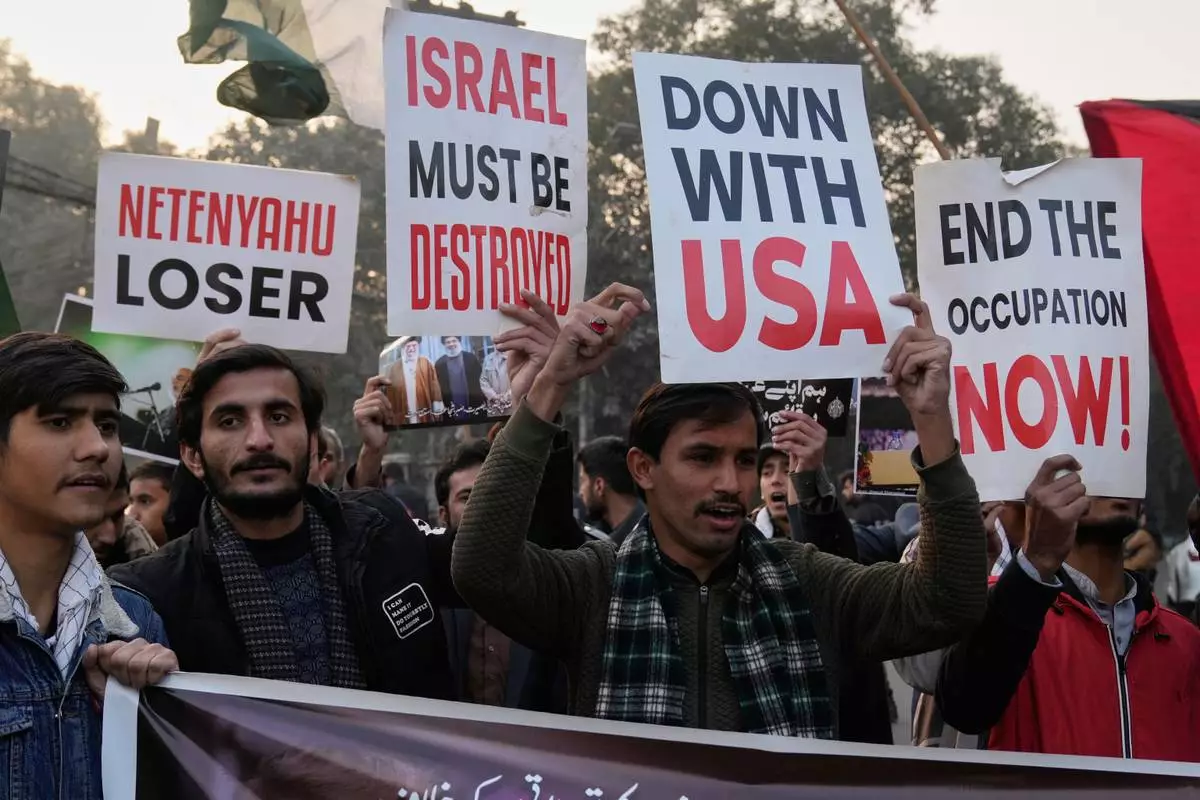
Shiite Muslims hold placards and chant slogans during a protest against the U.S. and show solidarity with Iran in Lahore, Pakistan, Sunday, Jan. 11, 2026. (AP Photo/K.M. Chaudary)
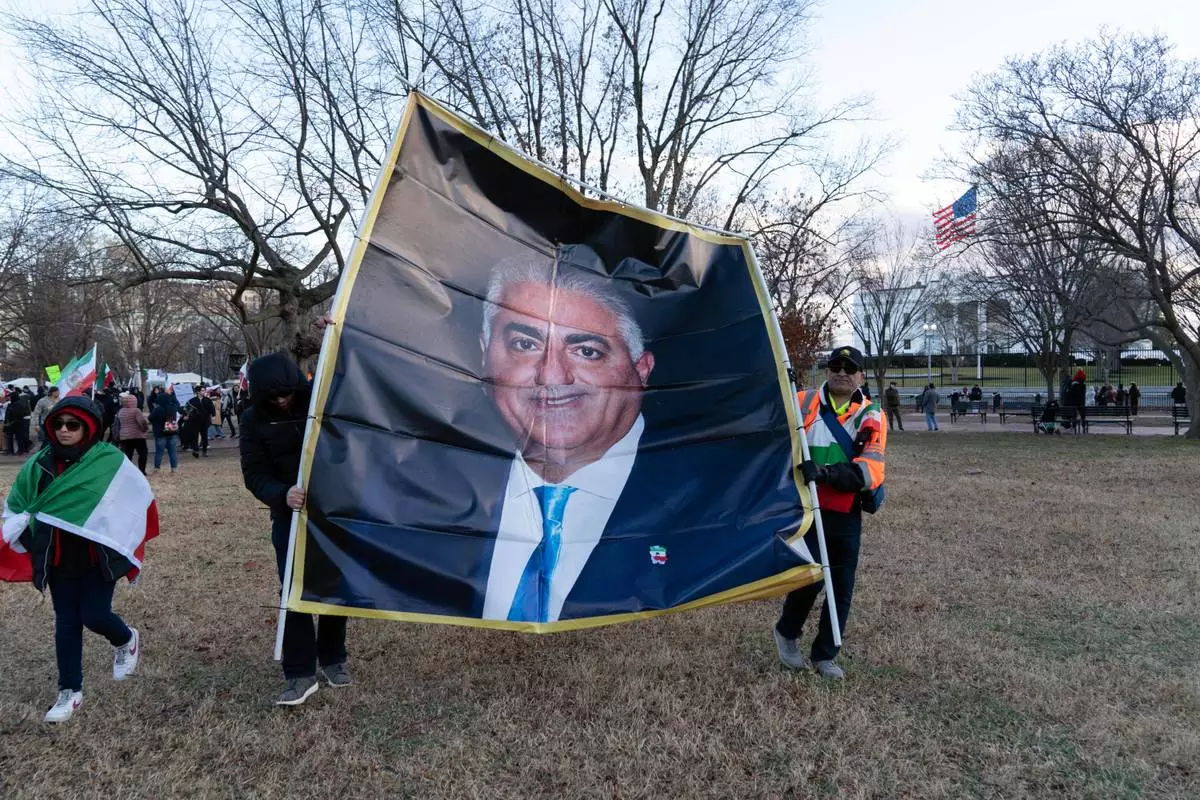
Activists carrying a photograph of Reza Pahlavi take part in a rally supporting protesters in Iran at Lafayette Park, across from the White House, in Washington, Sunday, Jan. 11, 2026. (AP Photo/Jose Luis Magana)
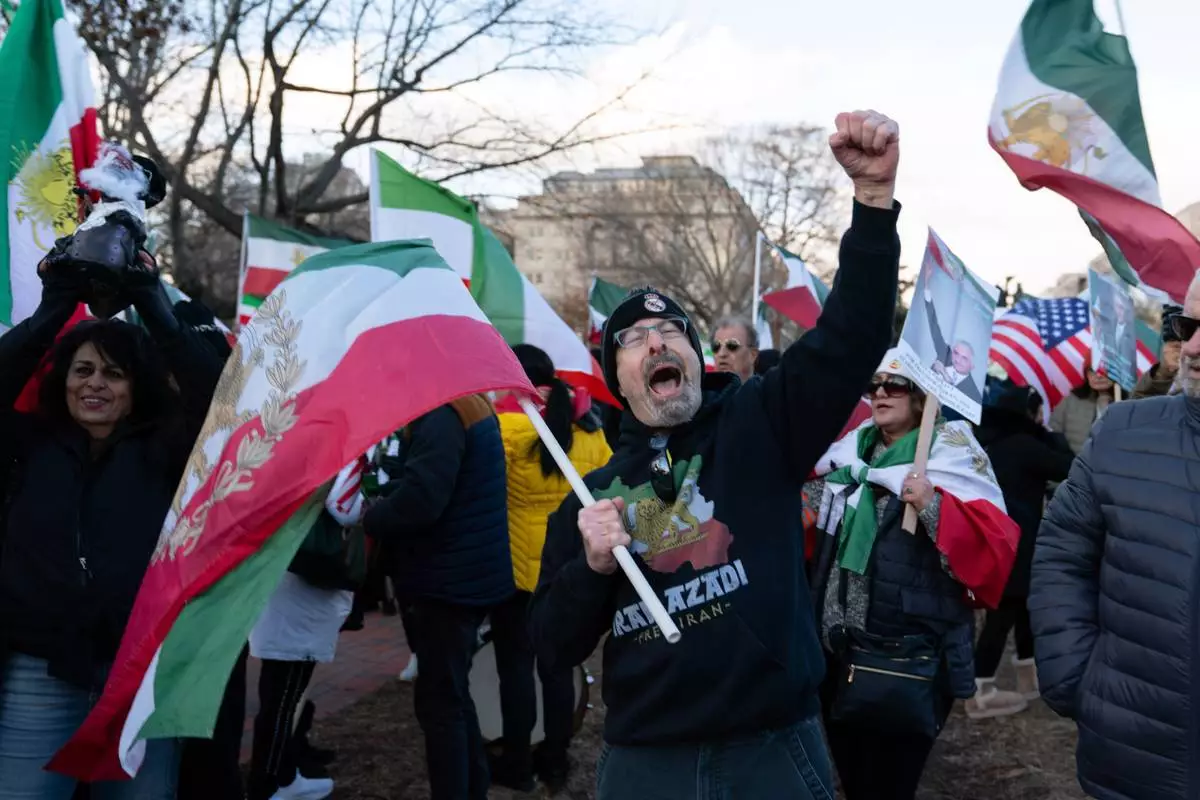
Activists take part in a rally supporting protesters in Iran at Lafayette Park, across from the White House in Washington, Sunday, Jan. 11, 2026. (AP Photo/Jose Luis Magana)
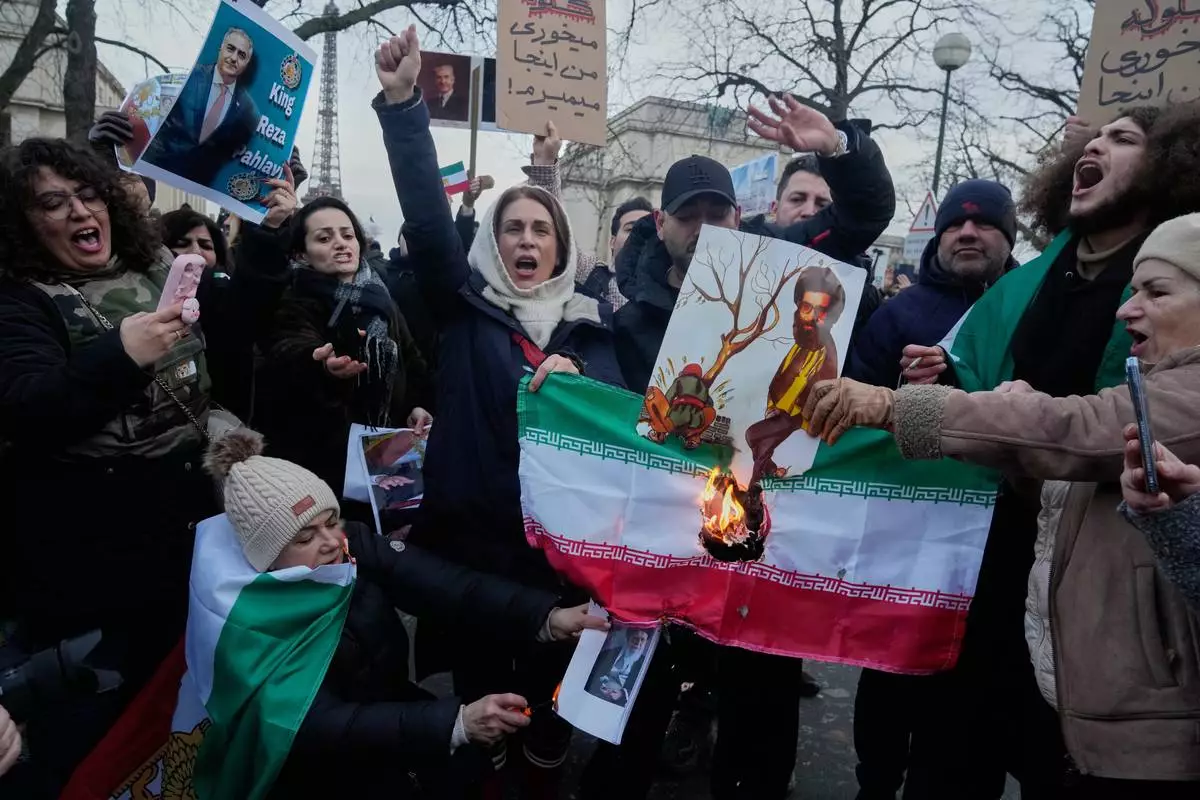
Protesters burn the Iranian national flag during a rally in support of the nationwide mass demonstrations in Iran against the government in Paris, Sunday, Jan. 11, 2026. (AP Photo/Michel Euler)