HANOI, Vietnam (AP) — Asian countries are offering to buy more U.S. liquefied natural gas in negotiations with the Trump administration as a way to alleviate tensions over U.S. trade deficits and forestall higher tariffs. Analysts warn that strategy could undermine those countries' long-term climate ambitions and energy security.
Buying more U.S. LNG has topped the list of concessions Asian countries have offered in talks with Washington over President Donald Trump's sweeping tariffs on foreign goods. Vietnam's Prime Minister underlined the need to buy more of the super-chilled fuel in a government meeting, and the government signed a deal in May with an American company to develop a gas import hub. JERA, Japan’s largest power generator, signed new 20-year contracts last month to purchase up to 5.5 million metric tons of U.S. gas annually starting around 2030.
U.S. efforts to sell more LNG to Asia predate the Trump administration, but they've gained momentum with his intense push to win trade deals.
Liquefied natural gas, or LNG, is natural gas cooled to a liquid form for easy storage and transport that is used as a fuel for transport, residential cooking and heating and industrial processes.
Trump discussed cooperation on a $44 billion Alaska LNG project with South Korea, prompting a visit by officials to the site in June. The U.S. president has promoted the project as a way to supply gas from Alaska’s vast North Slope to a liquefication plant at Nikiski in south-central Alaska, with an eye largely on exports to Asian countries while bypassing the Panama Canal Thailand has offered to commit to a long-term deal for American fuel and shown interest in the same Alaska project to build a nearly 810-mile (1,300-kilometer) pipeline that would funnel gas from
The Philippines is also considering importing gas from Alaska while India is mulling a plan to scrap import taxes on U.S. energy shipments to help narrow its trade surplus with Washington.
“Trump has put pressure on a seeming plethora of Asian trading partners to buy more U.S. LNG,” said Tim Daiss, at the APAC Energy Consultancy, pointing out that Japan had agreed to buy more despite being so “awash in the fuel” that it was being forced to cancel projects and contracts to offload the excess to Asia's growing economies.
“Not good for Southeast Asia's sustainability goals,” he said.
Experts say LNG purchasing agreements can slow adoption of renewable energy in Asia.
Locking into long-term deals could leave countries with outdated infrastructure as the world shifts rapidly toward cleaner energy sources like solar or wind that offer faster, more affordable ways to meet growing power demand, said Indra Overland, head of the Center for Energy Research at the Norwegian Institute of International Affairs.
Building pipelines, terminals, and even household gas stoves creates systems that are expensive and difficult to replace—making it harder to switch to renewables later. “And you’re more likely then to get stuck for longer,” he said.
Energy companies that profit from gas or coal are powerful vested interests, swaying policy to favor their business models, he said.
LNG burns cleaner than coal, but it’s still a fossil fuel that emits greenhouse gases and contributes to climate change.
Many LNG contracts include “take-or-pay” clauses, obliging governments to pay even if they don’t use the fuel. Christopher Doleman of the Institute for Energy Economics and Financial Analysis warns that if renewable energy grows fast, reducing the need for LNG, countries may still have to pay for gas they no longer need.
Pakistan is an example. Soaring LNG costs drove up electricity prices, pushing consumers to install rooftop solar panels. As demand for power drops and gas supply surges, the country is deferring LNG shipments and trying to resell excess fuel.
Experts said that although countries are signaling a willingness to import more U.S. LNG, they're unlikely to import enough to have a meaningful impact on U.S. trade deficits.
South Korea would need to import 121 million metric tons of LNG in a year — 50% more than the total amount of LNG the U.S. exported globally last year and triple what South Korea imported, said Doleman. Vietnam — with a trade surplus with the U.S. twice the size of Korea’s — would need to import 181 million metric tons annually, more than double what the U.S. exported last year.
Other obstacles stand in the way. The Alaska LNG project is widely considered uneconomic. Both coal and renewable energy in Asia are so much cheaper that U.S. gas would need to cost less than half its current price to compete. Tariffs on Chinese steel could make building building gas pipelines and LNG terminals more expensive, while longstanding delays to build new gas turbines mean new gas power projects may not come online until 2032. Meanwhile, a global glut in LNG will likely drive prices lower, making it even harder for countries to justify locking into long-term deals with the United States at current higher prices.
Committing to long-term U.S. LNG contracts could impact regional energy security at a time of growing geopolitical and market uncertainties, analysts said.
A core concern is over the longterm stability of the U.S. as a trading partner, said Overland. “The U.S. is not a very predictable entity. And to rely on energy from there is a very risky proposition,” he said.
LNG only contributes to energy security when it’s available and affordable, says Dario Kenner of Zero Carbon Analytics.
“That’s the bit that they leave out ... But it’s pretty important,” he said.
This was the concern during the recent potential disruptions to fuel shipments through the Strait of Hormuz and earlier during the war in Ukraine, when LNG cargoes originally destined for Asia were rerouted to Europe. Despite having contracts, Asian countries like Bangladesh and Sri Lanka were outbid by European buyers.
“Events in Europe, which can seem very far away, can have an impact on availability and prices in Asia,” Kenner said.
Asian countries can improve their energy security and make progress toward cutting carbon emissions by building more renewable energy, he said, noting there is vast room for that given that only about 1% of Southeast Asia’s solar and wind potential is being used.
“There are genuine choices to meet rising electricity demand. It is not just having to build LNG,” he said.
Jintamas Saksornchai in Bangkok contributed to this report.
Associated Press climate and environmental coverage receive support from several private foundations. See more about AP’s climate initiative here. The AP is solely responsible for all content.

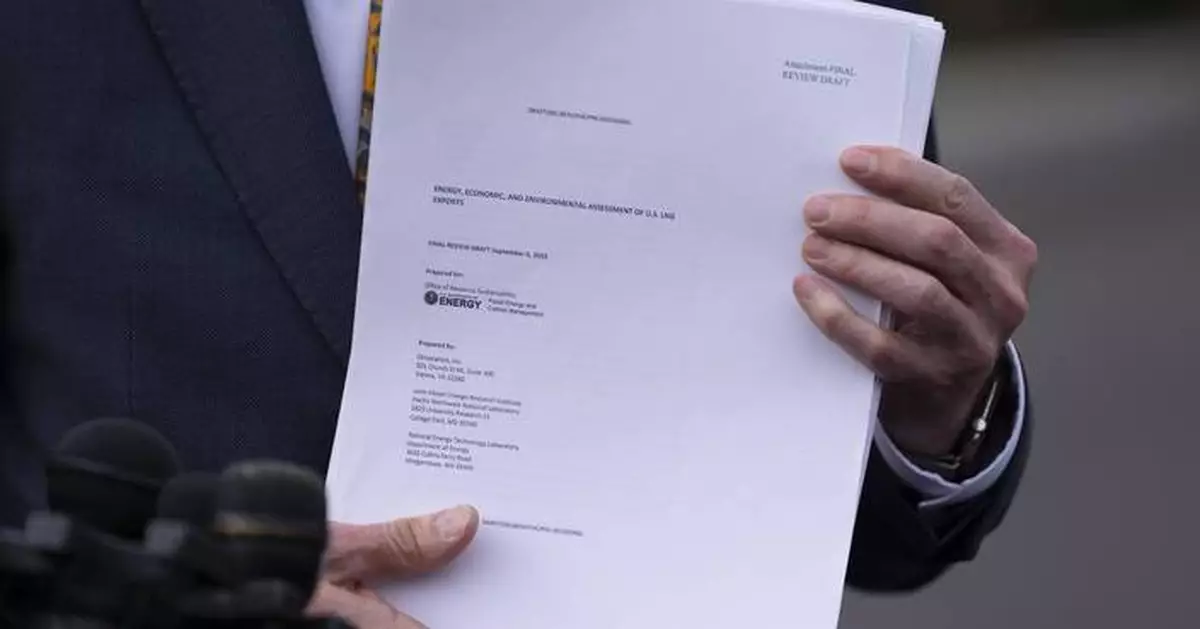
FILEL - Energy Secretary Chris Wright holds a report concerning U.S. exports of liquefied natural gas (LNG) as he speaks to reporters at the White House in Washington, on March 19, 2025. (AP Photo/Ben Curtis, File)