Skip to Content Facebook Feature Image

MEFA Provides Essential Guidance for Families Borrowing for College

News

MEFA Provides Essential Guidance for Families Borrowing for College
News

News

MEFA Provides Essential Guidance for Families Borrowing for College

2025-07-18 20:01 Last Updated At:20:11

BOSTON--(BUSINESS WIRE)--Jul 18, 2025--

For many families, a college loan bridges the gap after financial aid between the family’s ability to pay and the full cost of college. With so many options available, it’s easy to get distracted by a low-advertised interest rate, small incentive, or a catchy tagline. That’s why MEFA advises families to look at the whole picture carefully to understand the true cost of borrowing.

This press release features multimedia. View the full release here: https://www.businesswire.com/news/home/20250717136532/en/

“It’s critical to weigh not only the interest rates, but all components of any loan, to understand how much the loan will cost you in the long run,” said Thomas Graf, Executive Director of MEFA. MEFA serves a public mission to help families with higher education access and affordability by offering expert guidance, tools, and resources to help families plan and pay for college.

How can families make the best borrowing decisions for their future?

Start by doing your homework—and don’t get distracted by a low-advertised interest rate. While it’s tempting, there’s much more to consider when deciding on a college loan. Many lenders offers a range of fixed and variable interest rates, as well as different repayment options, and some may even have fees associated with the loan. A thoughtful comparison could make a significant difference in the total cost of borrowing.

Before considering private loans, families should complete the FAFSA ® to secure the maximum amount available in financial aid, including Federal Direct Student Loans. Federal Direct Student Loans offer favorable terms to the student, such as a fixed interest rate, flexible repayment options, and the ability to consolidate.

Once a student has secured the maximum available financial aid, MEFA's experts offer the following tips for families looking at private loan options for the 2025-26 school year:

1. Understand How Interest Rates Work and What Affects Them

Private education loan lenders offer both fixed and variable interest rates, however the lowest rates are typically reserved for borrowers with excellent credit histories. The type of repayment plan and loan term you choose also impacts the rate. For example, opting for a repayment plan that defers payments until after graduation typically leads to a higher cost of education.

A loan's interest rate has a direct impact on its overall cost, so it's important to understand how choices now will affect repayment. MEFA’s Undergraduate Loan Payment Calculator shows how different repayment options impact the total cost of a MEFA Loan.

2. Carefully Compare Private Loan Offers

All private lenders are required to provide an Application and Solicitation Disclosure that outlines the cost of the loan, including fees. Take time to review this document for each lender to understand the full cost of any loan you’re considering. MEFA’s Comparing College Loan Options webinar offers the basics to help borrowers read and understand these disclosures.

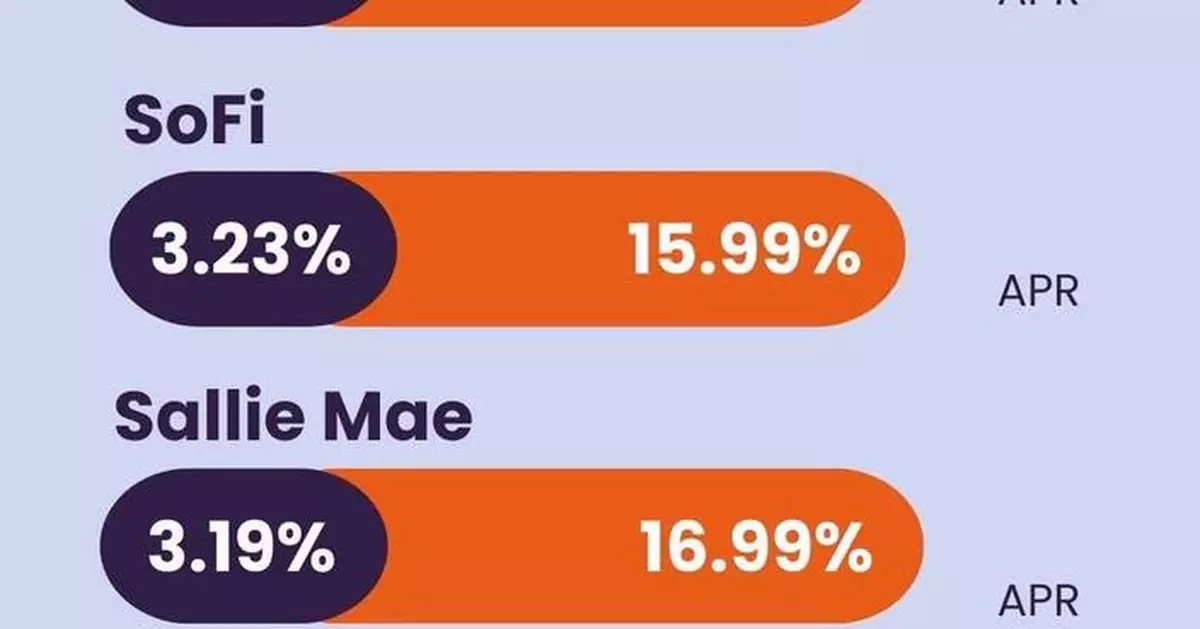
Currently, MEFA’s Undergraduate Application and Solicitation Disclosure shows fixed interest rates between 3.29% and 8.89% APR* —with no application fees, no origination fees, and no late charges. Compare these costs to the Federal PLUS Loan, which carries a fixed interest rate of 8.94% plus a 4.228% fee. And MEFA’s top rate is much lower than the top rates of other private lender loan options. Additionally, MEFA’s undergraduate loans require both the student and a parent or other creditworthy co-borrower to be on the loan. This shared responsibility helps instill smart borrowing habits.

The disclosure includes scenarios for each of MEFA’s repayment options, including immediate repayment, interest-only repayment while enrolled, and deferred repayment.

MEFA undergraduate, graduate, and refinancing loans are available to qualifying borrowers nationwide.

3. Know the Ins and Outs of the PLUS Loan

The Parent PLUS Loan is a federal loan option available exclusively to parents to help pay for education expenses not covered by other financial aid. Offered by the U.S. Department of Education with a 2025-26 interest rate of 8.94%, plus a 4.228% origination fee, the PLUS Loan requires the submission of the FAFSA and can be a costly borrowing option. For some families, this combination of high costs and lack of shared responsibility may make the Parent PLUS Loan a less attractive option.

4. Get Expert Guidance Every Step of the Way

MEFA’s team of college planning experts is available to help families navigate the process of finding and applying for a college loan. Whether providing help on comparing loan options, understanding the terms, or exploring repayment strategies, MEFA is equipped to listen and advise. Reach out to MEFA at (800) 449-6332 or via email at collegeplanning@mefa.org.

For additional resources, visit mefa.org, for free live and recorded webinars, helpful videos, and expert articles covering a full range of topics, including Tips for Private Student Loans.

About MEFA

MEFA is a state authority, not reliant on state or federal appropriations, established under Massachusetts General Laws, Chapter 15C. MEFA’s mission, since its founding in 1982, has been to help Massachusetts students and families access and afford higher education and reach financial goals through education programs, tax-advantaged savings plans, competitive loans, and expert guidance. All MEFA’s work aligns with the ever-present goal to support the independence, growth, and success of Massachusetts students and families. Visitmefa.orgto learn more.
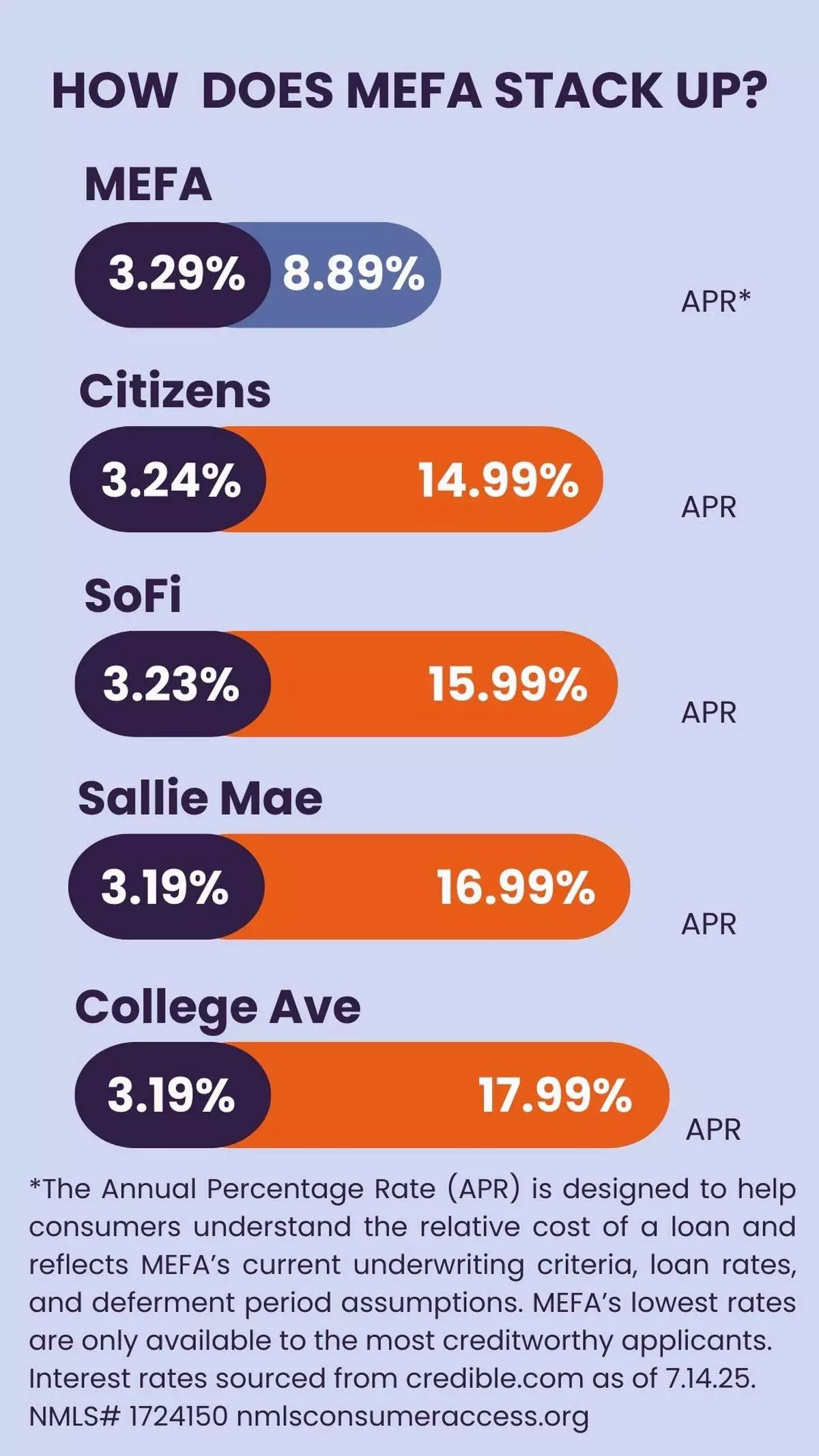
A comparison of the MEFA College Loan against other private college lenders as of July 14, 2025.

A comparison of the MEFA College Loan against other private college lenders as of July 14, 2025.

SOUTHAMPTON, N.Y. (AP) — The smashed-up locker at Oakmont last year is as much a part of Wyndham Clark’s resume as the U.S. Open title he won two years before that.

Such is life in a world teeming with cell phone cameras and viral video. Such is life in professional golf, a sport built on managing failure and harnessing emotions — and where success one week, or one year, doesn’t always carry over to the next.

Clark’s spot at the top of the U.S. Open leaderboard after his second round at Shinnecock on Friday brought up expected reminders of his emotion-filled journey through a sport — a life, really — that Clark himself acknowledged nobody truly ever masters.

“I was on top of the world in my game, at least when I won the U.S. Open, and then had some good years,” the 32-year-old said. “Then, next thing you know, I’m apologizing for breaking a locker."

Much as tennis great John McEnroe will always have “You cannot be serious!” alongside the seven grand slam singles titles he won in another of sports' biggest pressure cookers, Clark will always have the broken locker at Oakmont. He will always have the underhanded fling of the driver that smashed an advertising board and snapped off the clubhead at the PGA Championship, a few months before the locker debacle.

Because of that, he’ll probably also always have his share of detractors and critics — people watching for his next burst of brilliance on the golf course, but also waiting for the next big blowup.

“I’m fierce, competitive, love the game, respect the game, and I just had a bad moment,” Clark said. “Hopefully, I can win those people back.”

His breakthrough three years ago at LA Country Club was tinged with tears and stories of the personal growth Clark had to make to reach that point.

Much of it had to do with the emotional residue left from his mom’s death in 2013 — a family tragedy that he conceded had left him spiraling.

“I didn’t show any emotion off the course," Clark explained after his victory that day. “But when I was on the golf course, I couldn’t have been angrier.”

The easy way for the armchair psychologists (and sports pundits) to explain things after that win was to conclude that Clark’s victory proved he had harnessed the emotion, turned the page and beaten back all the demons.

It’s never that simple.

“For any of us, this is a process,” Clark’s sports psychologist, Julie Elion, wrote in her new book ’Mastering Your Mental Game.” “Golfers don’t reach the top and then stay there forever.”

Clark followed the U.S. Open win with 18 months of good golf, including a win at Pebble Beach. Last year was something different — he only had two top-10 finishes, did not make the FedEx Cup playoffs and was nowhere to be seen at the Ryder Cup.

“Mastering our mental game in golf or reaching a state of growth or self-improvement in life isn’t always a permanent condition,” Elion wrote. “It takes more work over more years, and there are frequently hills and valleys.”

At Shinnecock, where Clark will head into the weekend at 7-under par, four shots ahead of Xander Schauffele and three others, he finds himself back on the rise again. He recently took to social media to tell the world he had a new girlfriend, Emily Tanner, who held hands with him as they exited the 18th green after Friday’s round of 1-under 69.

Four weeks ago, Clark won the Byron Nelson for his first victory in 28 months.

“I kind of looked at it objectively and took a bird’s-eye view on it and said, ‘OK, I’m not hitting it good off the tee, I’m not putting as good as I was,’” he explained about his turnaround. “And I said, ‘All right, I’ve got to attack that.’”

He hired a swing coach, Pat Coyner at Cherry Hills, near where Clark grew up outside of Denver.

He's been hitting his driver straighter of late. His iron game has improved dramatically (up 110 spots in the analytic-driven stat: strokes gained on approach shots). He found a new putter, which has helped him dial in dramatically over the past four weeks, during which he also finished third at the Memorial and played in the final group last Sunday at the Canadian Open.

Never more did it look in sync than Friday on No. 18, where he sank a 35-footer to finish the day in red numbers.

Now, a chance for another breakthrough. With a win, he would celebrate again. But he knows as well as anyone that it wouldn't mean the work — both on and off the course — is behind him.

“I just think with the mental game there’s ebbs and flows,” Clark said. “If you think of it as climbing Everest, sometimes you go up, sometimes you have to go down to go back up. I think that’s kind of what happens both on the golf course and off the golf course. Right now I’m trending back up, which is nice.”

AP golf: https://apnews.com/hub/golf

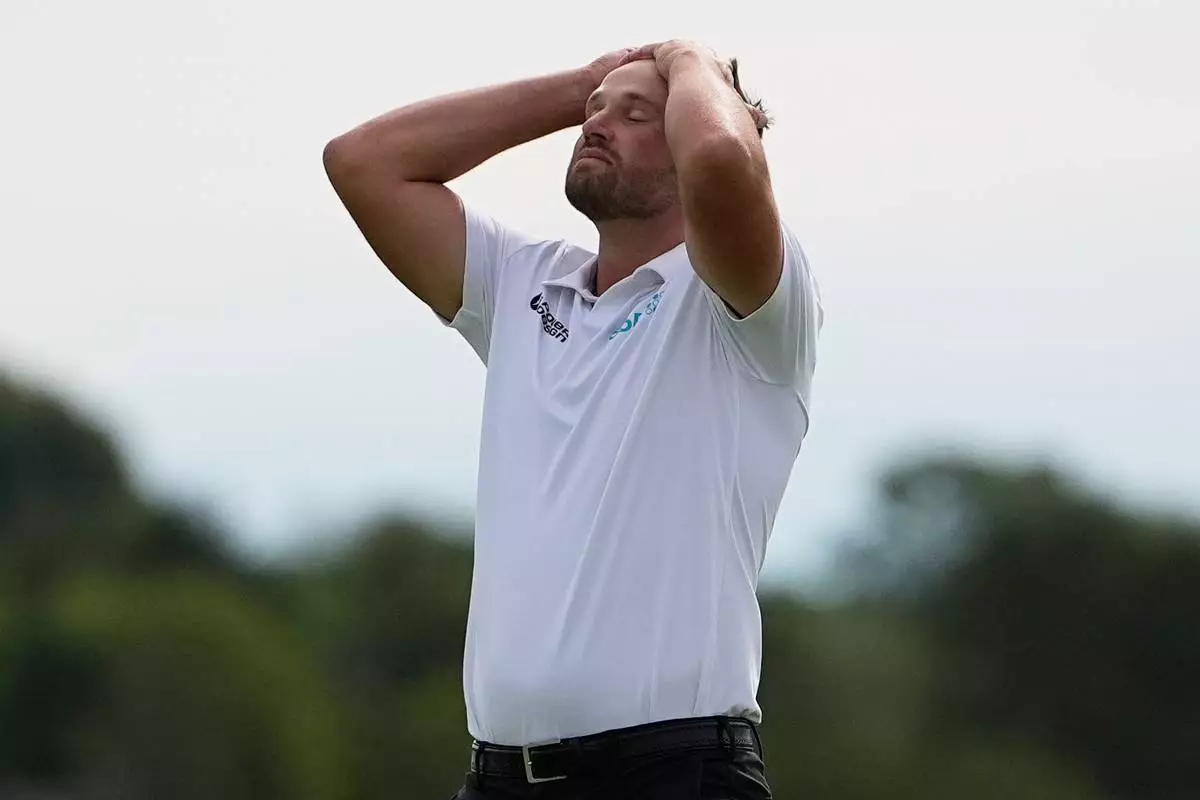
Wyndham Clark reacts after missing a putt on the 14th hole during the second round of the U.S. Open golf tournament at Shinnecock Hills Golf Club in Southampton, N.Y., Friday, June 19, 2026.(AP Photo/Gerald Herbert)

Wyndham Clark reacts after missing a putt on the 14th hole during the second round of the U.S. Open golf tournament at Shinnecock Hills Golf Club in Southampton, N.Y., Friday, June 19, 2026.(AP Photo/Gerald Herbert)

Wyndham Clark hits from the bunker on the 16th hole during the second round of the U.S. Open golf tournament at Shinnecock Hills Golf Club in Southampton, N.Y., Friday, June 19, 2026.(AP Photo/David J. Phillip)

Wyndham Clark hits from the bunker on the 16th hole during the second round of the U.S. Open golf tournament at Shinnecock Hills Golf Club in Southampton, N.Y., Friday, June 19, 2026.(AP Photo/David J. Phillip)

Wyndham Clark celebrates after a birdie on the 12th hole during the second round of the U.S. Open golf tournament at Shinnecock Hills Golf Club in Southampton, N.Y., Friday, June 19, 2026.(AP Photo/David J. Phillip)

Wyndham Clark celebrates after a birdie on the 12th hole during the second round of the U.S. Open golf tournament at Shinnecock Hills Golf Club in Southampton, N.Y., Friday, June 19, 2026.(AP Photo/David J. Phillip)

Recommended Articles