Skip to Content Facebook Feature Image

Alan Bergman, Oscar-winning lyricist who helped write 'The Way We Were,' dies at 99

ENT

Alan Bergman, Oscar-winning lyricist who helped write 'The Way We Were,' dies at 99
ENT

ENT

Alan Bergman, Oscar-winning lyricist who helped write 'The Way We Were,' dies at 99

2025-07-19 05:38 Last Updated At:05:40

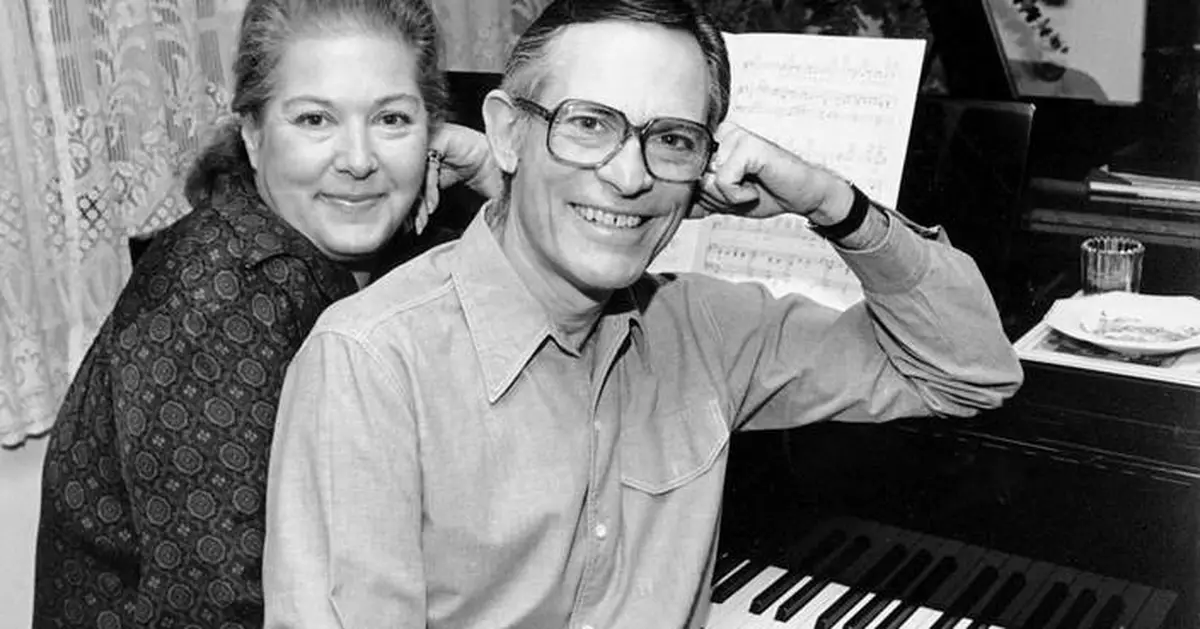
Alan Bergman, the Oscar-winning lyricist who teamed with his wife, Marilyn, for an enduring and loving partnership that produced such old-fashioned hits as “How Do You Keep the Music Playing?,” “It Might Be You” and the classic “The Way We Were,” has died at 99.

Bergman died late Thursday at his home in Los Angeles, family spokesperson Ken Sunshine said in a statement Friday. The statement said Bergman had, in recent months, suffered from respiratory issues “but continued to write songs till the very end.”

The Bergmans married in 1958 and remained together until her death, in 2022. With collaborators ranging from Marvin Hamlisch and Quincy Jones to Michel Legrand and Cy Coleman, they were among the most successful and prolific partnerships of their time, providing words and occasional music for hundreds of songs, including movie themes that became as famous as the films themselves. Frank Sinatra, Michael Jackson, Tony Bennett and many other artists performed their material, and Barbra Streisand became a frequent collaborator and close friend.

Sunshine said that there will still be a centennial celebration of Alan Bergman as planned at Santa Monica's Broad Stage, with guests including Michael Feinstein, Jackson Browne and Patti Austin. Feinstein, among the many artists who posted tributes Friday, wrote that the Bergmans were “kind, talented and principled artists” who “lived from a place called Love.”

Blending Tin Pan Alley sentiment and contemporary pop, the Bergmans crafted lyrics known by millions, many of whom would not have recognized the writers had they walked right past them. Among their most famous works: the Streisand-Neil Diamond duet “You Don’t Bring Me Flowers,” the well-named Sinatra favorite “Nice ’n’ Easy” and the topical themes to the 1970s sitcoms “Maude” and “Good Times.” Their film compositions included Ray Charles’ “In the Heat of the Night” from the movie of the same name; Noel Harrison’s “The Windmills of Your Mind,” from “The Thomas Crown Affair”; and Stephen Bishop’s “It Might Be You,” from “Tootsie.”

The whole world seemed to sing and cry along to “The Way We Were,” an instant favorite recorded by Streisand for the 1973 romantic drama of the same name that co-starred Streisand and Robert Redford. Set to Hamlisch’s tender, bittersweet melody, it was essentially a song about itself — a nostalgic ballad about nostalgia, an indelible ode to the uncertainty of the past, starting with one of history’s most famous opening stanzas: “Memories / light the corners of my mind / misty watercolor memories / of the way we were.”

“The Way We Were” was the top-selling song of 1974 and brought the Bergmans one of their three Oscars, the others coming for “Windmills of Your Mind” and the soundtrack to “Yentl,” the Streisand-directed movie from 1983. At times, the Academy Awards could be mistaken for a Bergman showcase. In 1983, three of the nominees for best song featured lyrics by the Bergmans, who received 16 nominations in all.

The Bergmans also won two Grammys, four Emmys, were presented numerous lifetime achievement honors and received tributes from individual artists, including Streisand’s 2011 album of Bergman songs, “What Matters Most.” On “Lyrically, Alan Bergman,” Bergman handled the vocals himself. Although best known for their movie work, the Bergmans wrote the Broadway musical “Ballroom” and provided lyrics for the symphony “Visions of America.”

Their very lives seemed to rhyme. They didn’t meet until they were adults, but were born in the same Brooklyn hospital, four years apart; raised in the same Brooklyn neighborhood, attended the same children’s concerts at Carnegie Hall and moved to California in the same year, 1950. They were introduced in Los Angeles while working for the same composer, but at different times of the day. Their actual courtship was in part a story of music. Fred Astaire was Marilyn’s favorite singer at the time and Alan Bergman co-wrote a song, “That Face,” which Astaire agreed to record. Acetate in hand, Bergman rushed home to tell Marilyn the news, then proposed.

Bergman is survived by a daughter, Julie Bergman, and granddaughter.

Bergman had wanted to be a songwriter since he was a boy. He majored in music and theater at the University of North Carolina, and received a master’s from the University of California, Los Angeles, where he befriended Johnny Mercer and became a protege. He and Marilyn at first wrote children’s songs together, and broke through commercially in the late 1950s with the calypso hit “Yellowbird.” Their friendship with Streisand began soon after, when they visited her backstage during one of her early New York club appearances. “Do you know how wonderful you are?” was how Marilyn Bergman greeted the young singer.

The Bergmans worked so closely together that they often found themselves coming up with the same word at the same time. Alan likened their partnership to housework: one washes, one dries, the title of a song they eventually devised for a Hamlisch melody. Bergman was reluctant to name a favorite song, but cited “A Love Like Ours” as among their most personal:

“When love like ours arrives / We guard it with our lives / Whatever goes astray / When a rainy day comes around / A love like ours will keep us safe and sound.”
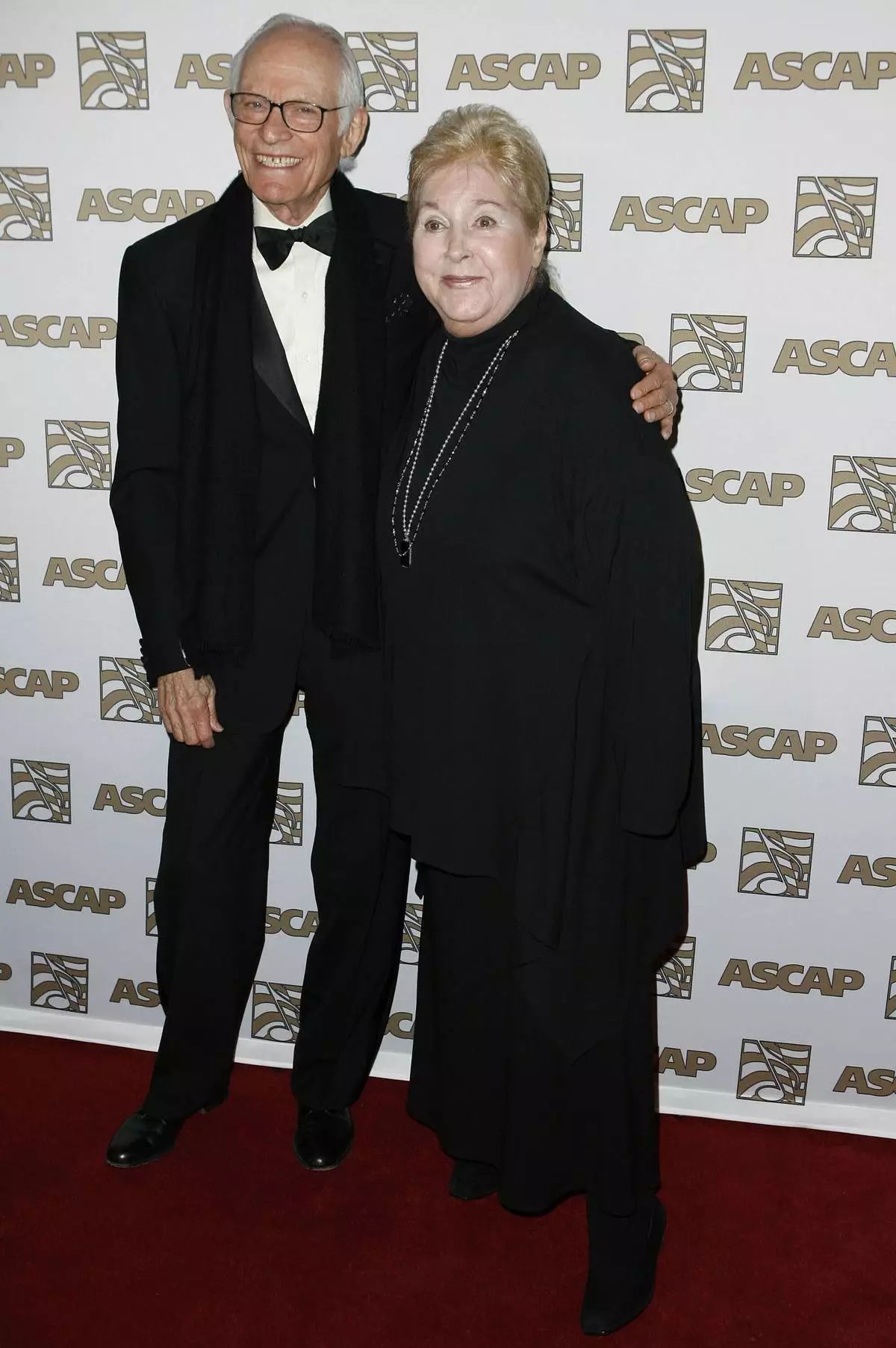
FILE - Honorees Alan, left, and Marilyn Bergman arrive at the ASCAP Film and Television music awards in Beverly Hills, Calif. on Tuesday, May 6, 2008. (AP Photo/Matt Sayles, File)

FILE - Honorees Alan, left, and Marilyn Bergman arrive at the ASCAP Film and Television music awards in Beverly Hills, Calif. on Tuesday, May 6, 2008. (AP Photo/Matt Sayles, File)
FILE - Honorees Alan, left, and Marilyn Bergman arrive at the ASCAP Film and Television music awards in Beverly Hills, Calif. on Tuesday, May 6, 2008. (AP Photo/Matt Sayles, File)

FILE - Honorees Alan, left, and Marilyn Bergman arrive at the ASCAP Film and Television music awards in Beverly Hills, Calif. on Tuesday, May 6, 2008. (AP Photo/Matt Sayles, File)

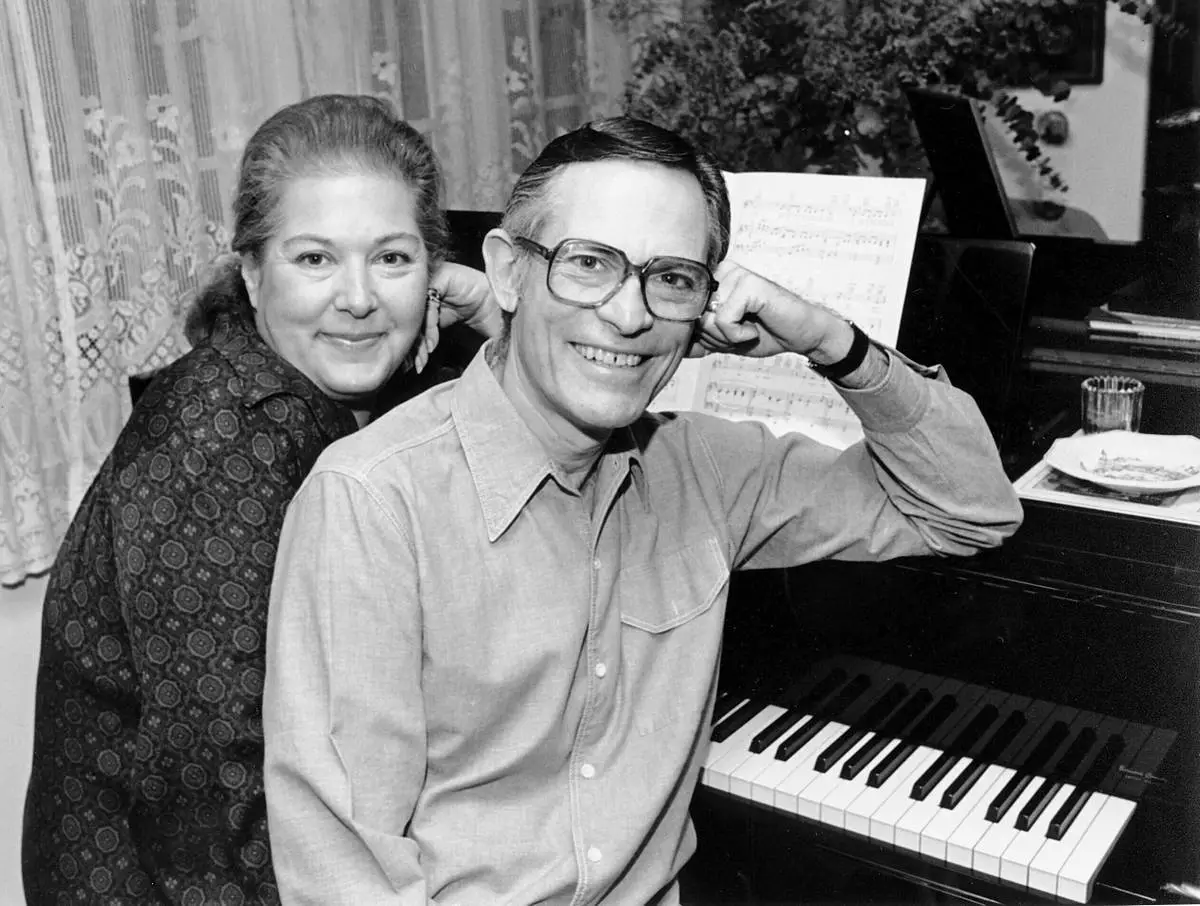
FILE - Marilyn and Alan Bergman pose at their piano in their Beverly Hills home on March 17, 1980. (AP Photo/Lennox McLendon, File)
FILE - Marilyn and Alan Bergman pose at their piano in their Beverly Hills home on March 17, 1980. (AP Photo/Lennox McLendon, File)
DUBAI, United Arab Emirates (AP) — U.S. President Donald Trump said Iran wants to negotiate with Washington after his threat to strike the Islamic Republic over its bloody crackdown on protesters, a move coming as activists said Monday the death toll in the nationwide demonstrations rose to at least 544.

Iran had no immediate reaction to the news, which came after the foreign minister of Oman — long an interlocutor between Washington and Tehran — traveled to Iran this weekend. It also remains unclear just what Iran could promise, particularly as Trump has set strict demands over its nuclear program and its ballistic missile arsenal, which Tehran insists is crucial for its national defense.

Meanwhile Monday, Iran called for pro-government demonstrators to head to the streets in support of the theocracy, a show of force after days of protests directly challenging the rule of 86-year-old Supreme Leader Ayatollah Ali Khamenei. Iranian state television aired chants from the crowd, who shouted “Death to America!” and “Death to Israel!”

Trump and his national security team have been weighing a range of potential responses against Iran including cyberattacks and direct strikes by the U.S. or Israel, according to two people familiar with internal White House discussions who were not authorized to comment publicly and spoke on condition of anonymity.

“The military is looking at it, and we’re looking at some very strong options,” Trump told reporters on Air Force One on Sunday night. Asked about Iran’s threats of retaliation, he said: “If they do that, we will hit them at levels that they’ve never been hit before.”

Trump said that his administration was in talks to set up a meeting with Tehran, but cautioned that he may have to act first as reports of the death toll in Iran mount and the government continues to arrest protesters.

“I think they’re tired of being beat up by the United States,” Trump said. “Iran wants to negotiate.”

He added: “The meeting is being set up, but we may have to act because of what’s happening before the meeting. But a meeting is being set up. Iran called, they want to negotiate.”

Iran through country's parliamentary speaker warned Sunday that the U.S. military and Israel would be “legitimate targets” if America uses force to protect demonstrators.

More than 10,600 people also have been detained over the two weeks of protests, said the U.S.-based Human Rights Activists News Agency, which has been accurate in previous unrest in recent years and gave the death toll. It relies on supporters in Iran crosschecking information. It said 496 of the dead were protesters and 48 were with security forces.

With the internet down in Iran and phone lines cut off, gauging the demonstrations from abroad has grown more difficult. The Associated Press has been unable to independently assess the toll. Iran’s government has not offered overall casualty figures.

Those abroad fear the information blackout is emboldening hard-liners within Iran’s security services to launch a bloody crackdown. Protesters flooded the streets in the country’s capital and its second-largest city on Saturday night into Sunday morning. Online videos purported to show more demonstrations Sunday night into Monday, with a Tehran official acknowledging them in state media.

In Tehran, a witness told the AP that the streets of the capital empty at the sunset call to prayers each night. By the Isha, or nighttime prayer, the streets are deserted.

Part of that stems from the fear of getting caught in the crackdown. Police sent the public a text message that warned: “Given the presence of terrorist groups and armed individuals in some gatherings last night and their plans to cause death, and the firm decision to not tolerate any appeasement and to deal decisively with the rioters, families are strongly advised to take care of their youth and teenagers.”

Another text, which claimed to come from the intelligence arm of the paramilitary Revolutionary Guard, also directly warned people not to take part in demonstrations.

“Dear parents, in view of the enemy’s plan to increase the level of naked violence and the decision to kill people, ... refrain from being on the streets and gathering in places involved in violence, and inform your children about the consequences of cooperating with terrorist mercenaries, which is an example of treason against the country,” the text warned.

The witness spoke to the AP on condition of anonymity due to the ongoing crackdown.

The demonstrations began Dec. 28 over the collapse of the Iranian rial currency, which trades at over 1.4 million to $1, as the country’s economy is squeezed by international sanctions in part levied over its nuclear program. The protests intensified and grew into calls directly challenging Iran’s theocracy.

Nikhinson reported from aboard Air Force One.

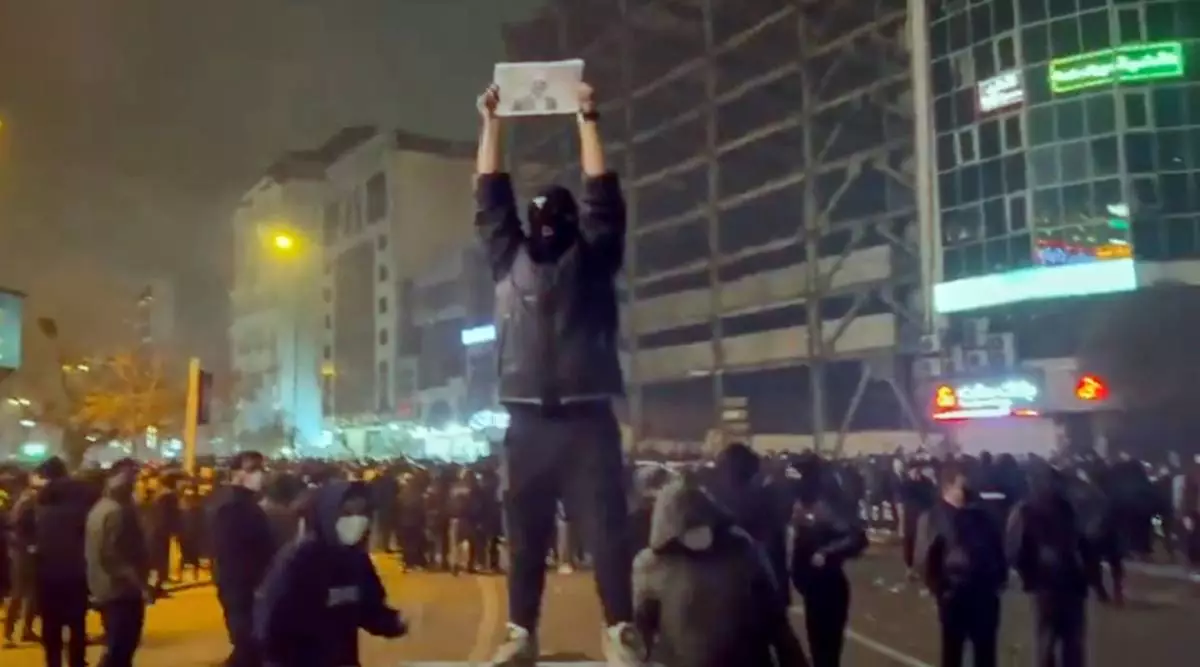
In this frame grab from video obtained by the AP outside Iran, a masked demonstrator holds a picture of Iran's Crown Prince Reza Pahlavi during a protest in Tehran, Iran, Friday, January. 9, 2026. (UGC via AP)

In this frame grab from video obtained by the AP outside Iran, a masked demonstrator holds a picture of Iran's Crown Prince Reza Pahlavi during a protest in Tehran, Iran, Friday, January. 9, 2026. (UGC via AP)

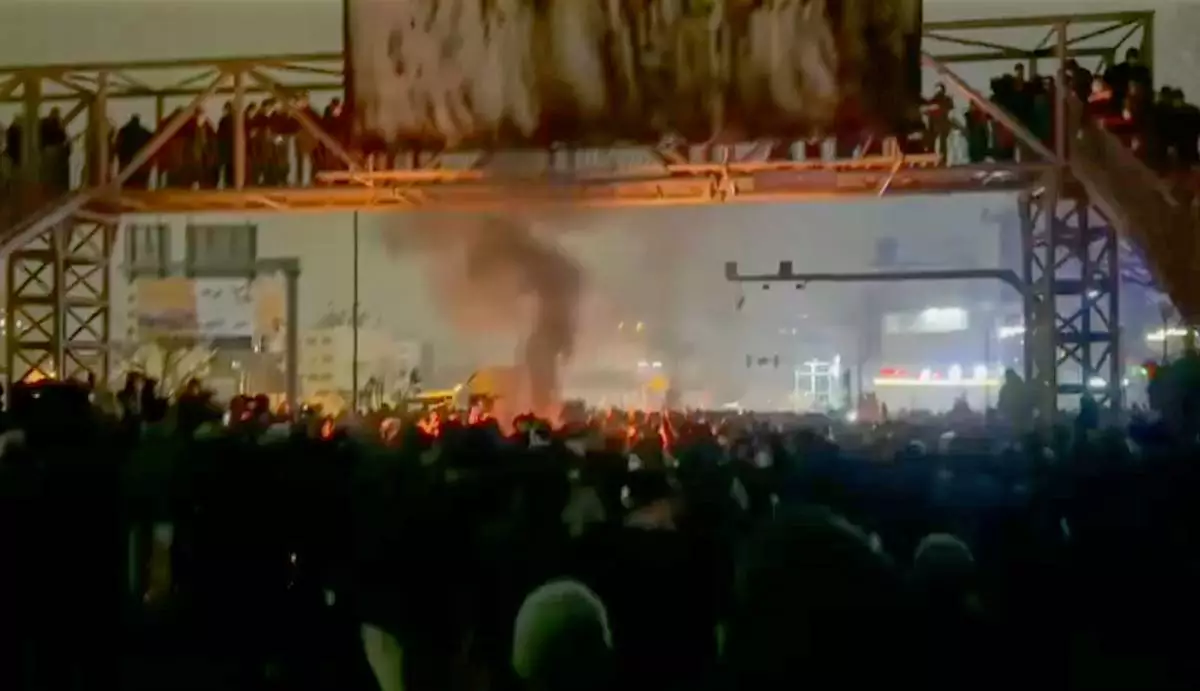
In this frame grab from footage circulating on social media from Iran shows protesters taking to the streets despite an intensifying crackdown as the Islamic Republic remains cut off from the rest of the world in Tehran, Iran, Friday, Jan. 9, 2026.(UGC via AP)

In this frame grab from footage circulating on social media from Iran shows protesters taking to the streets despite an intensifying crackdown as the Islamic Republic remains cut off from the rest of the world in Tehran, Iran, Friday, Jan. 9, 2026.(UGC via AP)

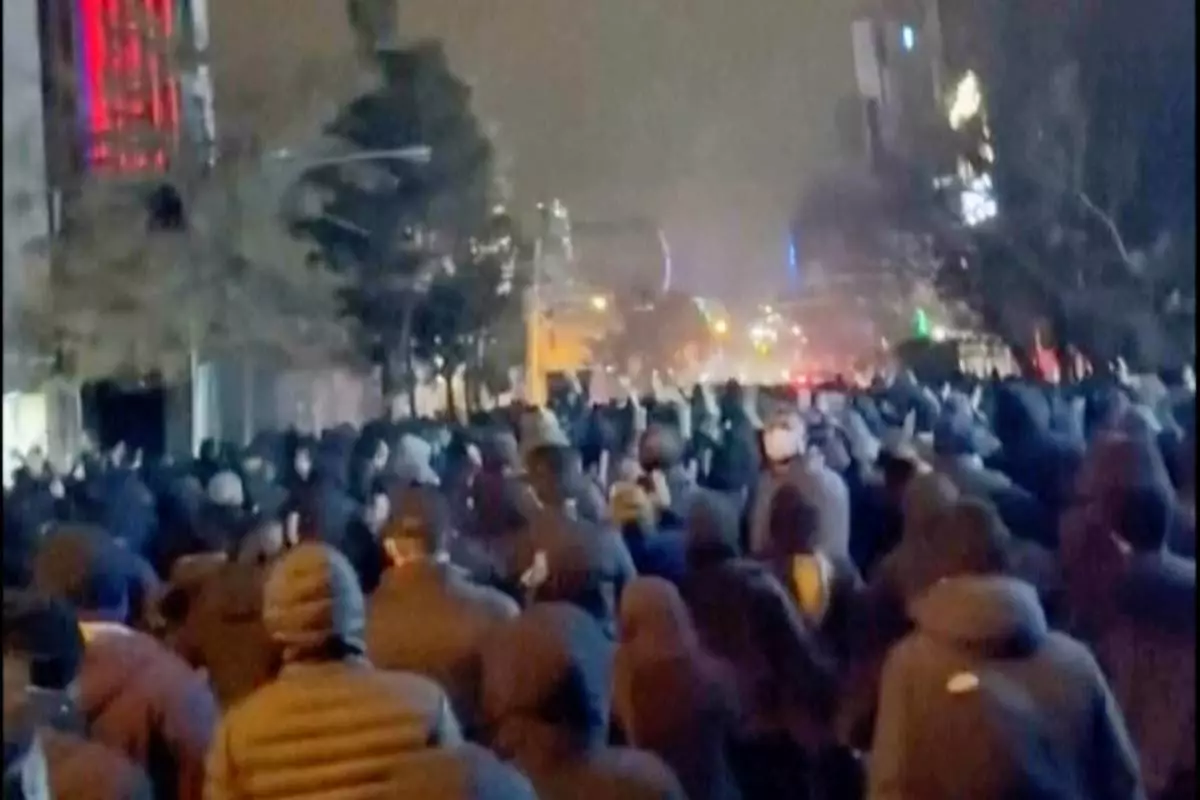
In this frame grab from footage circulating on social media from Iran showed protesters once again taking to the streets of Tehran despite an intensifying crackdown as the Islamic Republic remains cut off from the rest of the world in Tehran, Iran, Saturday Jan. 10, 2026. (UGC via AP)

In this frame grab from footage circulating on social media from Iran showed protesters once again taking to the streets of Tehran despite an intensifying crackdown as the Islamic Republic remains cut off from the rest of the world in Tehran, Iran, Saturday Jan. 10, 2026. (UGC via AP)

Recommended Articles