Skip to Content Facebook Feature Image

A loss for Ishiba could worsen Japan's instability in the face of US tariffs and rising prices

News

A loss for Ishiba could worsen Japan's instability in the face of US tariffs and rising prices
News

News

A loss for Ishiba could worsen Japan's instability in the face of US tariffs and rising prices

2025-07-19 17:13 Last Updated At:17:20

TOKYO (AP) — Japan’s Prime Minister Shigeru Ishiba faces an increasingly uphill battle in Sunday’s upper house election, and a loss could worsen political instability at a time of daunting challenges, such as rising prices and high U.S. tariffs.

A poor performance would not immediately trigger a change of government but it would deepen uncertainty over his fate and Japan’s future path.

More Images
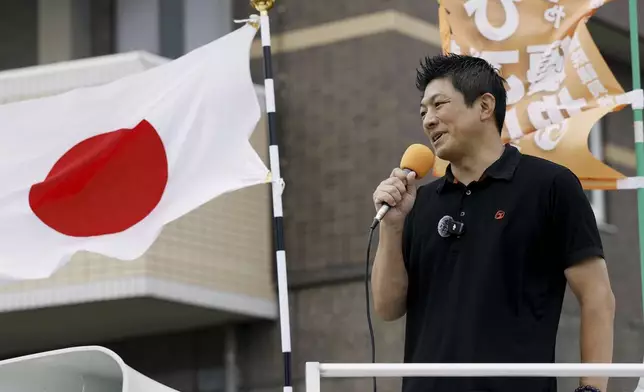
Sohei Kamiya, leader of the Sanseito party, speaks during an election campaign in Tosu, Saga prefecture, southwestern Japan, on July 12, 2025. (Kyodo News via AP)
Sohei Kamiya, leader of the Sanseito party, speaks during an election campaign in Tosu, Saga prefecture, southwestern Japan, on July 12, 2025. (Kyodo News via AP)

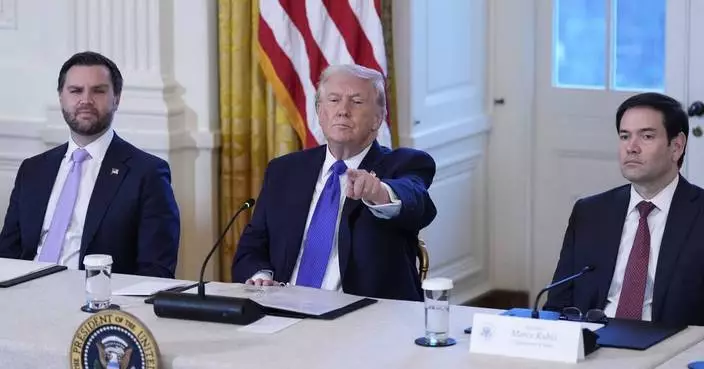
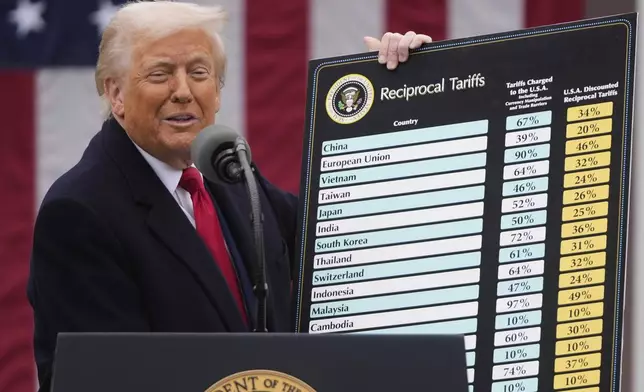
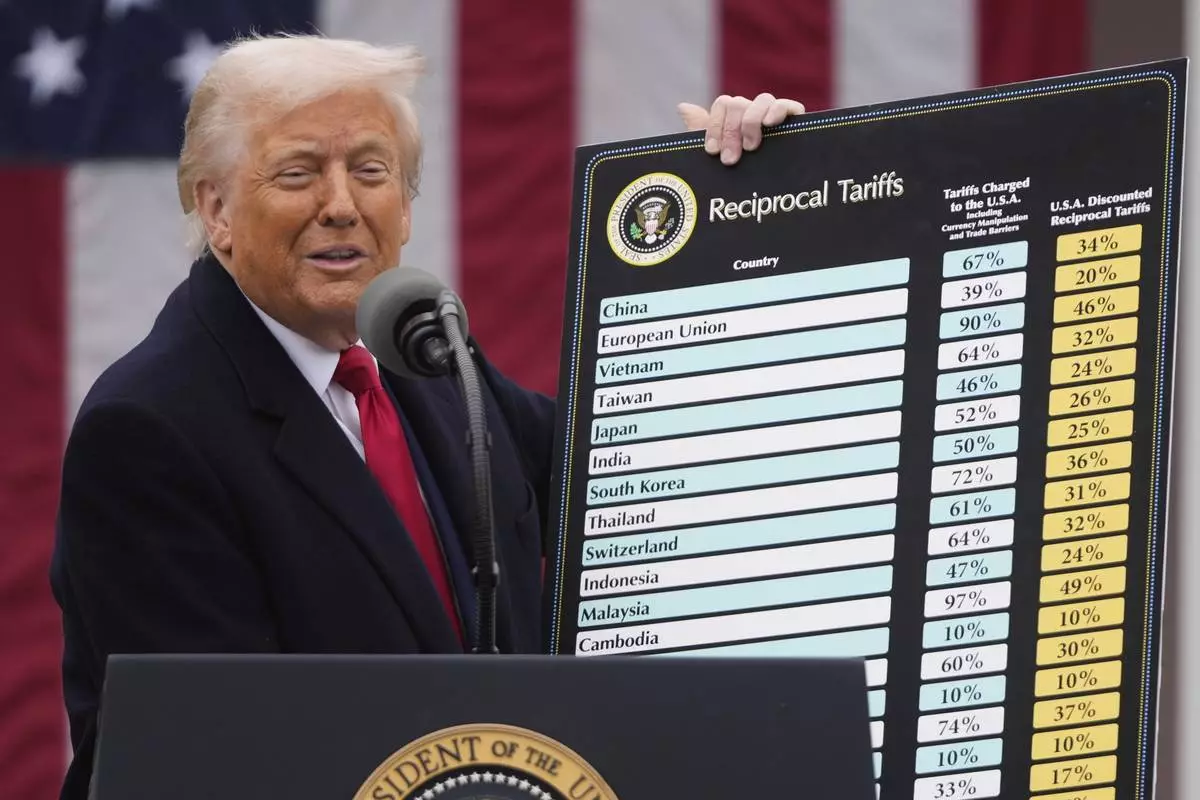
FILE - President Donald Trump speaks during an event to announce new tariffs in the Rose Garden at the White House, on April 2, 2025, in Washington. (AP Photo/Mark Schiefelbein, File)
FILE - President Donald Trump speaks during an event to announce new tariffs in the Rose Garden at the White House, on April 2, 2025, in Washington. (AP Photo/Mark Schiefelbein, File)

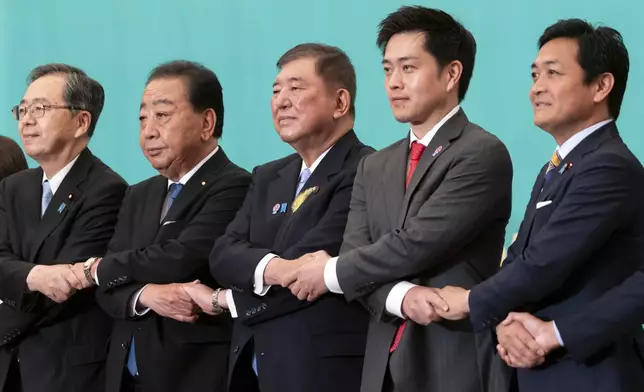
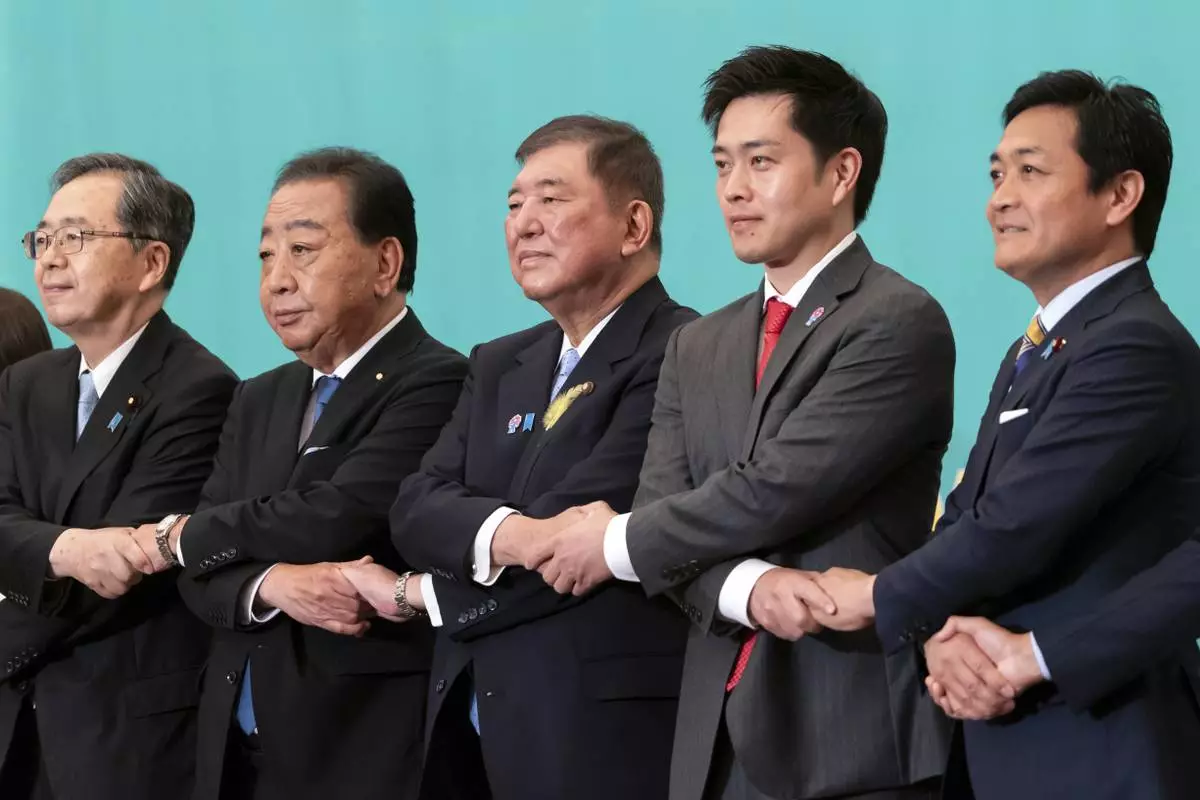
FILE - Leaders of eight political parties, from left to right, Komeito Chief Representative Tetsuo Saito, Constitutional Democratic Party of Japan leader Yoshihiko Noda, Japan's Prime Minister and Liberal Democratic Party leader Shigeru Ishiba, Japan Innovation Party Co-Representative Hirofumi Yoshimura and Democratic Party For the People Representative Yuichiro Tamaki pose before a debate at the Japan National Press Club in Tokyo, July 2, 2025. (Tomohiro Ohsumi/Pool Photo via AP, File)
FILE - Leaders of eight political parties, from left to right, Komeito Chief Representative Tetsuo Saito, Constitutional Democratic Party of Japan leader Yoshihiko Noda, Japan's Prime Minister and Liberal Democratic Party leader Shigeru Ishiba, Japan Innovation Party Co-Representative Hirofumi Yoshimura and Democratic Party For the People Representative Yuichiro Tamaki pose before a debate at the Japan National Press Club in Tokyo, July 2, 2025. (Tomohiro Ohsumi/Pool Photo via AP, File)
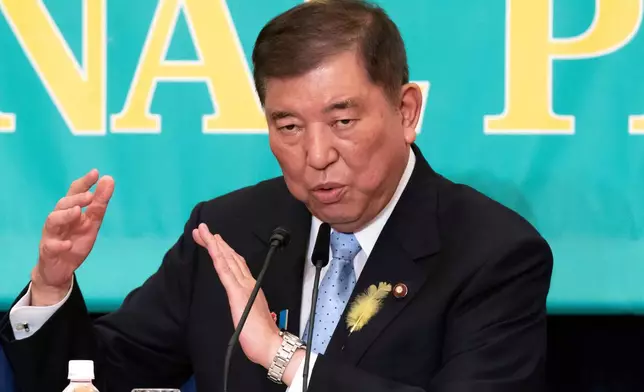
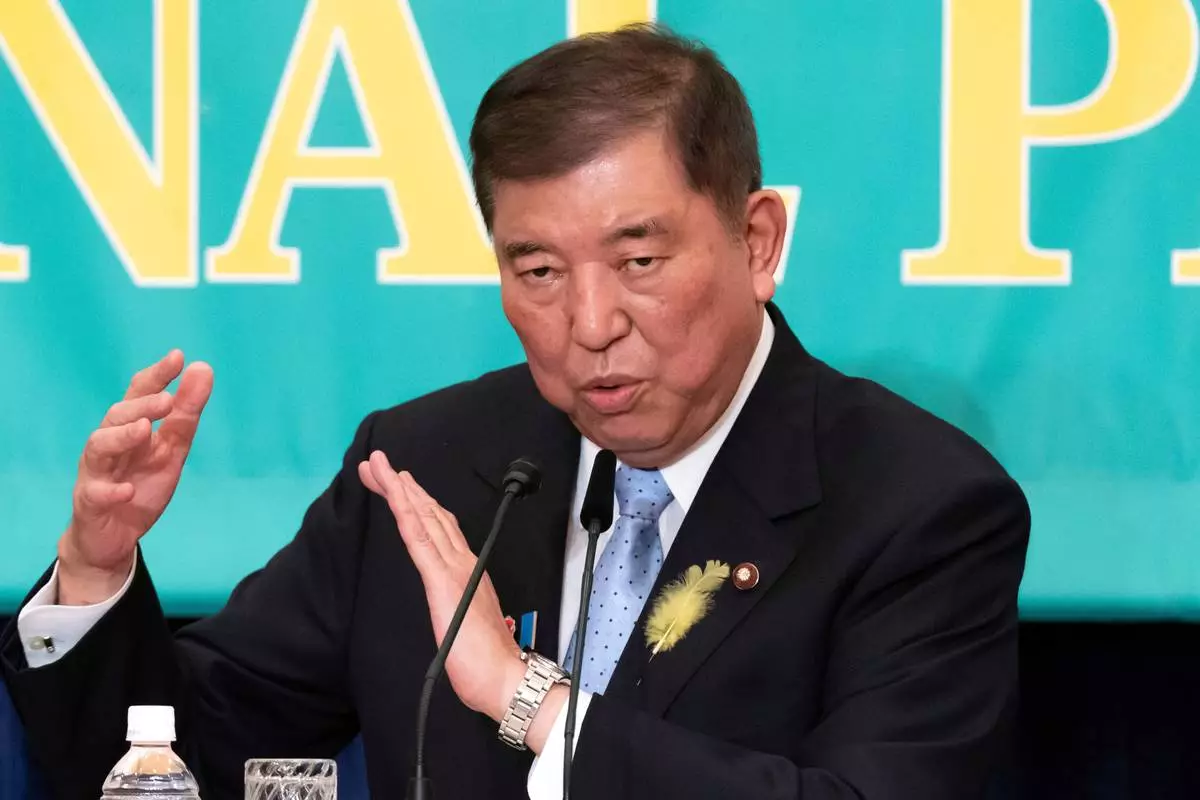
FILE - Japan's Prime Minister and Liberal Democratic Party President Shigeru Ishiba speaks during a debate with leaders of other political parties at the Japan National Press Club in Tokyo, July 2, 2025. (Tomohiro Ohsumi/Pool Photo via AP, File)

FILE - Japan's Prime Minister and Liberal Democratic Party President Shigeru Ishiba speaks during a debate with leaders of other political parties at the Japan National Press Club in Tokyo, July 2, 2025. (Tomohiro Ohsumi/Pool Photo via AP, File)

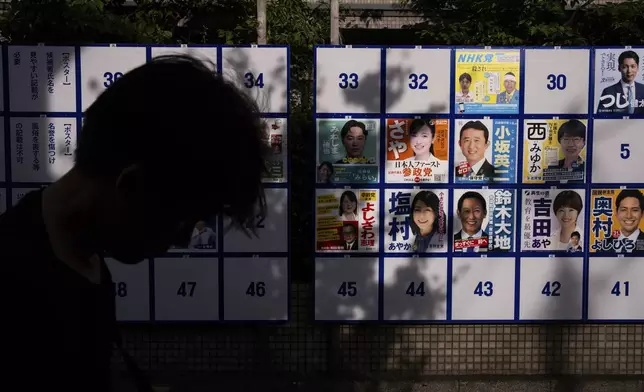
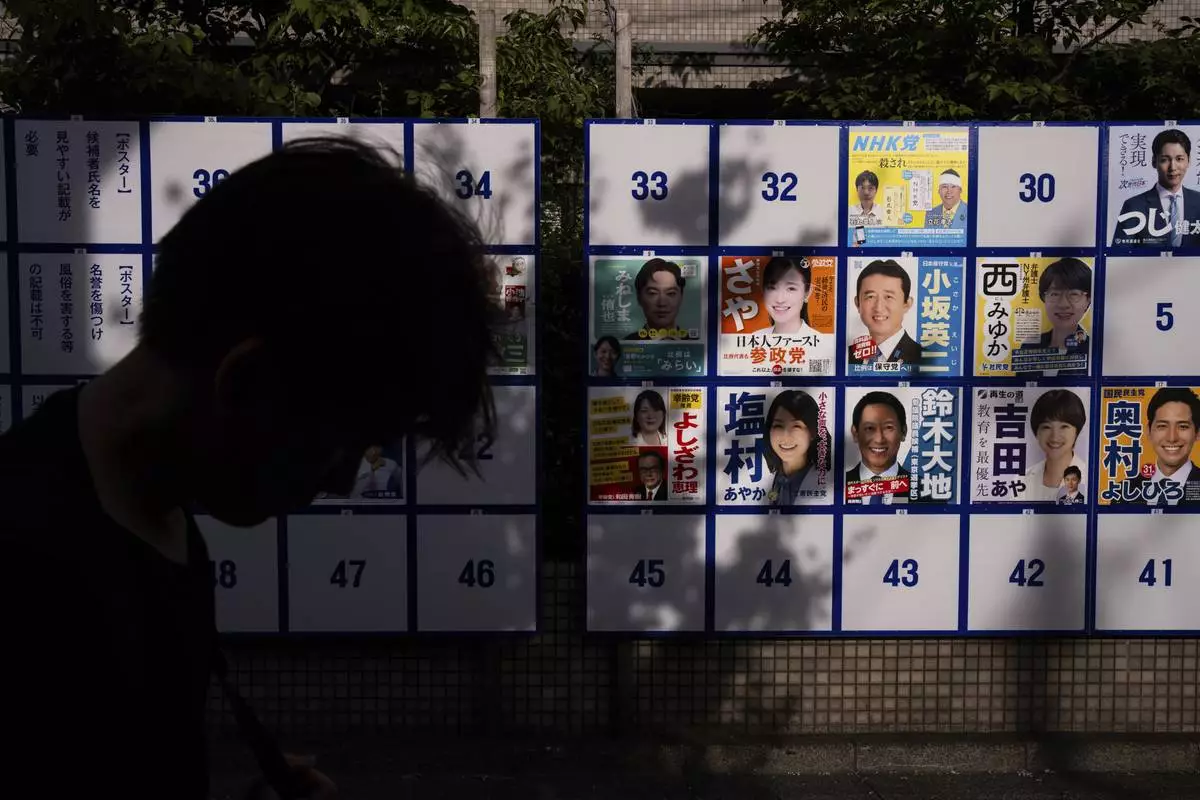
A pedestrian passes an election board displaying posters of candidates for the upcoming July 20 upper house election in Tokyo, Friday, July 18, 2025. (AP Photo/Louise Delmotte)
A pedestrian passes an election board displaying posters of candidates for the upcoming July 20 upper house election in Tokyo, Friday, July 18, 2025. (AP Photo/Louise Delmotte)
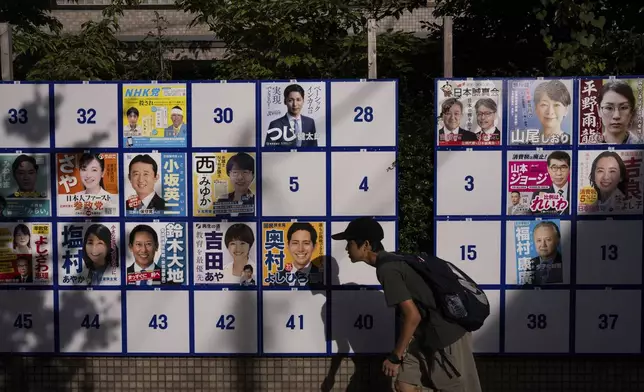
A pedestrian passes an election board displaying posters of candidates for the upcoming July 20 upper house election in Tokyo, Friday, July 18, 2025. (AP Photo/Louise Delmotte)
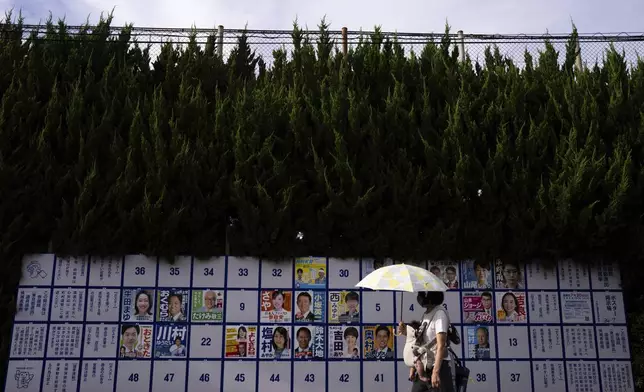
A pedestrian passes an election board displaying posters of candidates for the upcoming July 20 upper house election in Tokyo, Friday, July 18, 2025. (AP Photo/Louise Delmotte)
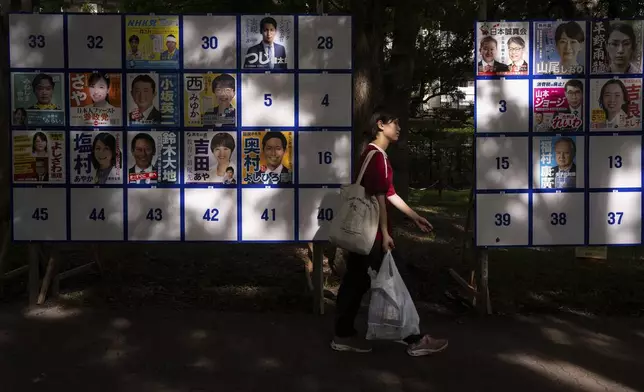
A pedestrian passes an election board displaying posters of candidates for the upcoming July 20 upper house election in Tokyo, Friday, July 18, 2025. (AP Photo/Louise Delmotte)

A pedestrian passes an election board displaying posters of candidates for the upcoming July 20 upper house election in Tokyo, Friday, July 18, 2025. (AP Photo/Louise Delmotte)

A pedestrian passes an election board displaying posters of candidates for the upcoming July 20 upper house election in Tokyo, Friday, July 18, 2025. (AP Photo/Louise Delmotte)

A pedestrian passes an election board displaying posters of candidates for the upcoming July 20 upper house election in Tokyo, Friday, July 18, 2025. (AP Photo/Louise Delmotte)

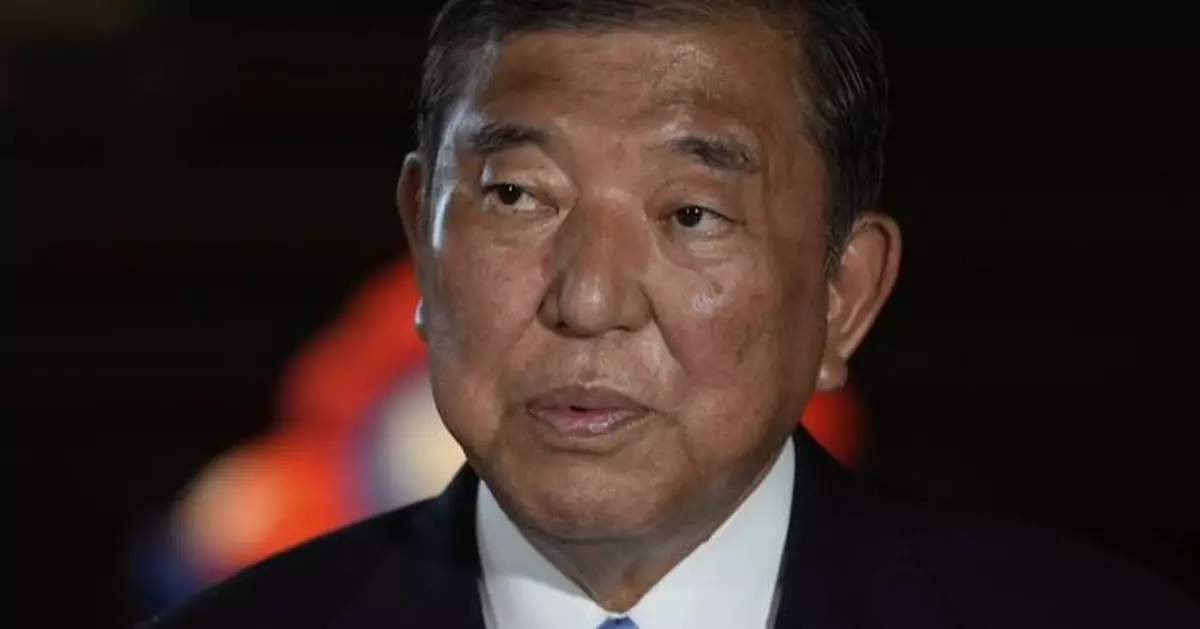
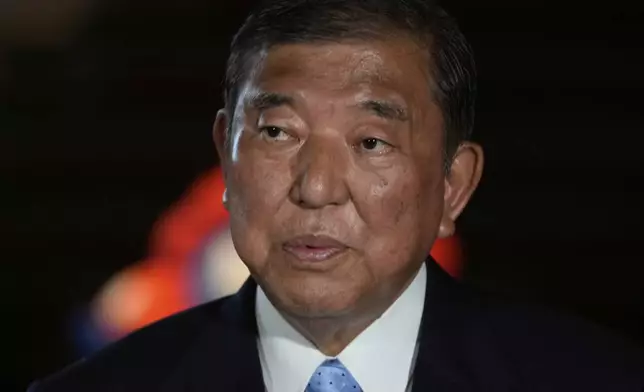
Japanese Prime Minister Shigeru Ishiba speaks to the media after meeting with U.S. Treasury Secretary Scott Bessent at the prime minister's office in Tokyo, Japan, Friday, July 18, 2025.(AP Photo/Shuji Kajiyama, Pool)

Japanese Prime Minister Shigeru Ishiba speaks to the media after meeting with U.S. Treasury Secretary Scott Bessent at the prime minister's office in Tokyo, Japan, Friday, July 18, 2025.(AP Photo/Shuji Kajiyama, Pool)

The ruling Liberal Democratic Party suffered a humiliating loss in a lower house election in October as its usual supporters registered their unhappiness over past corruption scandals and high prices. Ishiba is struggling to regain voter confidence.

His minority government has since been forced into making concessions to the opposition to get legislation through the Diet, or parliament. That has hindered its ability to quickly deliver effective measures to curb rising prices and win wage increases. On top of shortages and soaring prices for rice, a traditional staple, Ishiba has been stymied by President Donald Trump’s tariff demands.

Frustrated voters are rapidly turning to emerging populist parties, including one that is promoting anti-foreign policies and backpedaling on gender equality and diversity.

Here's a look at Sunday's election:

Ishiba has set a low bar for the vote — a simple majority. Half of the 248 seats for six-year terms in the upper house are being decided, and the LDP and its junior coalition partner Komeito would need to win a combined 50. Added to the 75 coalition-held seats that are not being contested in this election, it would be a big retreat from the 141 seats the coalition held before the election.

If the ruling coalition fails to secure a majority, “there will be a move within the LDP to dump Ishiba,” said Yu Uchiyama, a University of Tokyo professor of political science. “It makes a leadership very unstable.” Under any successor, the ruling coalition would be a minority in both houses, he said.

If Ishiba's coalition secures a majority and he stays on, his leadership will remain weak, with little hope of improved support ratings, Uchiyama said. “Either way, it is essential for the minority government to seek opposition parties’ cooperation to achieve any policy.”

Measures to mitigate soaring prices, lagging incomes and burdensome social security payments are the top focus of frustrated, cash-strapped voters.

Rice prices have doubled since last year due to supply shortages, overly complex distribution systems and other reasons related to Japan’s farming, causing panic buying as Ishiba has struggled to resolve the crisis.

Trump has added to that pressure, complaining about a lack of progress in trade negotiations, blaming a lack of sales of U.S. autos and American-grown rice to Japan despite a shortfall in domestic stocks of the grain. A 25% tariff due to take effect Aug. 1 has been another blow for Ishiba.

Ishiba has resisted any compromise before the election, but the prospect for a breakthrough after the election is just as unclear because the minority government would have difficulty forming a consensus with the opposition.

The rice issue has cost Ishiba one farm minister. Rice prices remain high even after the farm minister's replacement, Shinjiro Koizumi, moved quickly and boldly to address the problem by ordering the emergency release of stored rice from reserves, helping to refill grocery store shelves in time for the election.

Koizumi, son of popular former Prime Minister Junichiro Koizumi, is a potential challenger to Ishiba.

Stricter measures targeting foreign residents and visitors have suddenly emerged as a key issue.

The Sanseito party stands out with the toughest anti-foreigner stance with its “Japanese First” platform that proposes a new agency to centralize policies related to foreigners. It wants stricter screening for allowing Japanese citizenship and to exclude non-Japanese from welfare benefits. The party's populist platform is also anti-vaccine, anti-globalism and favors traditional gender roles.

Its stance has encouraged the spread of xenophobic rhetoric in the election campaign and on social media, critics say. A typical claim is that a rapid increase in foreign workers has hurt Japanese workers’ wages and that foreigners use a large share of welfare benefits and have made Japanese society unsafe.

“Foreigners are used as targets to vent their discontent and unease,” Uchiyama said, comparing the scapegoating to that in Europe and the United States under Trump.

Experts say most of the rhetoric is disinformation aimed at frustrations among Japanese struggling to get by. Government statistics show foreign residents account for about 3% of both Japan’s total population and of welfare benefit recipients.

The Liberal Democrats, under a slogan “zero illegal immigrants,” have pledged to crack down on growing illegal employment of foreigners and against allowing them to default on social insurance payments or medical bills. The party also set up a task force to promote an orderly society, a move aimed at enforcing stricter measures on foreigners to address growing public unease. The rising conservative Democratic Party for the People, or the DPP, also is calling to restrict foreign ownership of Japanese real estate.

The move triggered protests by human rights activists and alarmed foreign residents.

Given that its population is rapidly aging and shrinking, Japan needs foreign workers. It should discuss immigration policy more strategically, Takahide Kiuchi, an executive economist at Nomura Research Institute, wrote in a recent analysis.

Conservative to centrist opposition groups, including the main opposition Constitutional Democratic Party of Japan, or CDPJ, the DPP, and Sanseito have gained significant ground at the Liberal Democrats' expense. Headed by charismatic Sohei Kamiya, a former local assembly member and a member of the defense reserve, Sanseito ranked as second favorite in the opposition after the CDPJ in some recent surveys.

They are believed to be raking in conservative supporters of the ruling party who are disappointed by Ishiba's leadership and flip-flops on policies. Ishiba is caught between his party's ultraconservatives and mainstream opposition leaders.

Still, the eight main opposition groups are too fractured to forge a common platform as a united front and gain voter support as a viable alternative.

When Ishiba lost big in October, there was speculation about a trilateral coalition government with the Komeito and the DPP or another conservative group, the Japan Innovation Party. But they've since cooperated only on certain legislation. If the ruling coalition loses its upper house majority, that could spark a regrouping among coalitions.

Yoshihiko Noda, a former prime minister and head of the opposition CDPJ, said the loss of ruling coalition majorities in both houses of parliament would enable opposition parties to push policies blocked by the LDP. Those include cuts in the consumption tax, recognition of same-sex marriages, and a law allowing married couples the option of each keeping their own names.
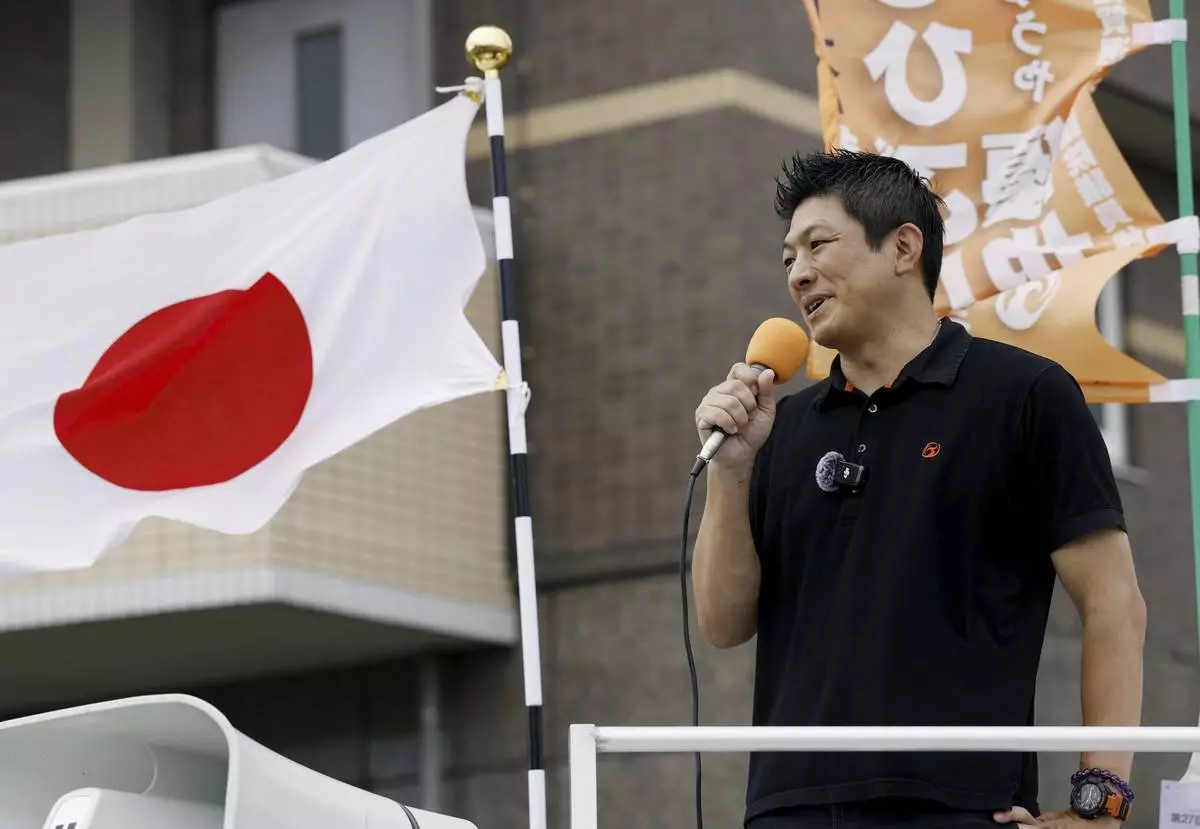
Sohei Kamiya, leader of the Sanseito party, speaks during an election campaign in Tosu, Saga prefecture, southwestern Japan, on July 12, 2025. (Kyodo News via AP)
Sohei Kamiya, leader of the Sanseito party, speaks during an election campaign in Tosu, Saga prefecture, southwestern Japan, on July 12, 2025. (Kyodo News via AP)

FILE - President Donald Trump speaks during an event to announce new tariffs in the Rose Garden at the White House, on April 2, 2025, in Washington. (AP Photo/Mark Schiefelbein, File)
FILE - President Donald Trump speaks during an event to announce new tariffs in the Rose Garden at the White House, on April 2, 2025, in Washington. (AP Photo/Mark Schiefelbein, File)

FILE - Leaders of eight political parties, from left to right, Komeito Chief Representative Tetsuo Saito, Constitutional Democratic Party of Japan leader Yoshihiko Noda, Japan's Prime Minister and Liberal Democratic Party leader Shigeru Ishiba, Japan Innovation Party Co-Representative Hirofumi Yoshimura and Democratic Party For the People Representative Yuichiro Tamaki pose before a debate at the Japan National Press Club in Tokyo, July 2, 2025. (Tomohiro Ohsumi/Pool Photo via AP, File)
FILE - Leaders of eight political parties, from left to right, Komeito Chief Representative Tetsuo Saito, Constitutional Democratic Party of Japan leader Yoshihiko Noda, Japan's Prime Minister and Liberal Democratic Party leader Shigeru Ishiba, Japan Innovation Party Co-Representative Hirofumi Yoshimura and Democratic Party For the People Representative Yuichiro Tamaki pose before a debate at the Japan National Press Club in Tokyo, July 2, 2025. (Tomohiro Ohsumi/Pool Photo via AP, File)
FILE - Japan's Prime Minister and Liberal Democratic Party President Shigeru Ishiba speaks during a debate with leaders of other political parties at the Japan National Press Club in Tokyo, July 2, 2025. (Tomohiro Ohsumi/Pool Photo via AP, File)

FILE - Japan's Prime Minister and Liberal Democratic Party President Shigeru Ishiba speaks during a debate with leaders of other political parties at the Japan National Press Club in Tokyo, July 2, 2025. (Tomohiro Ohsumi/Pool Photo via AP, File)

A pedestrian passes an election board displaying posters of candidates for the upcoming July 20 upper house election in Tokyo, Friday, July 18, 2025. (AP Photo/Louise Delmotte)
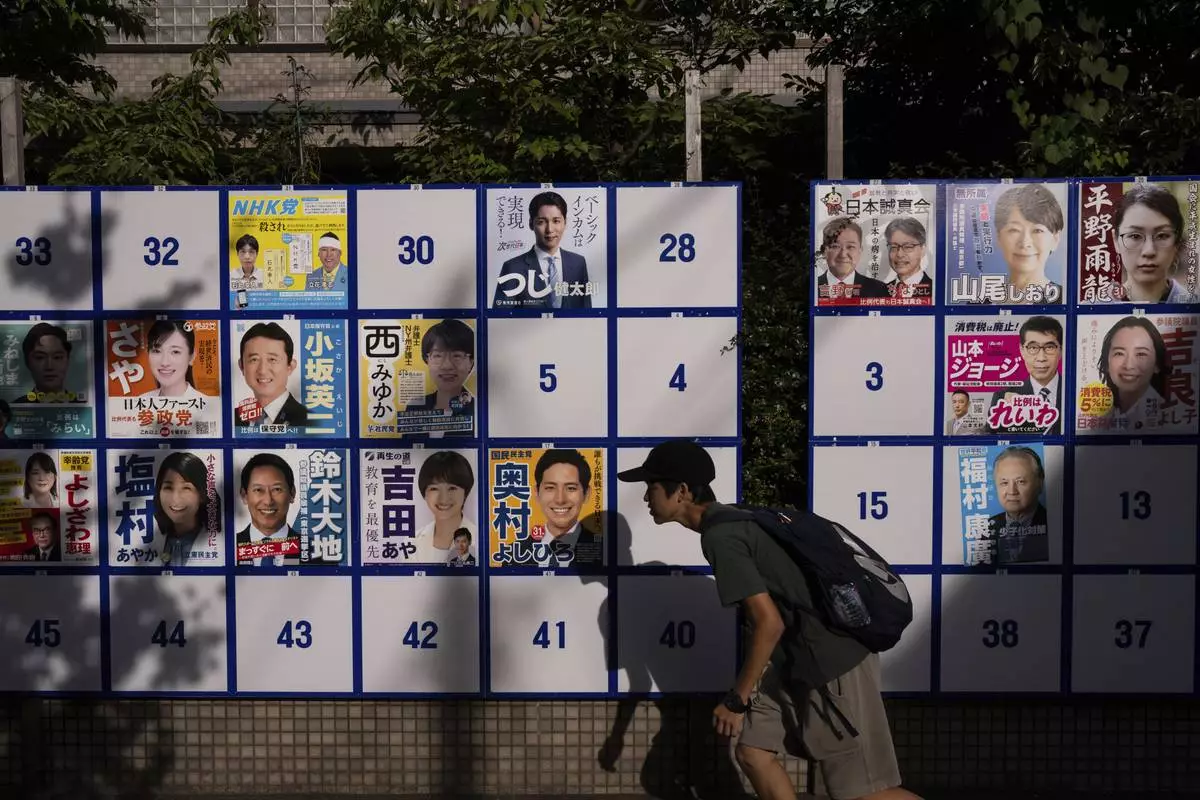
A pedestrian passes an election board displaying posters of candidates for the upcoming July 20 upper house election in Tokyo, Friday, July 18, 2025. (AP Photo/Louise Delmotte)
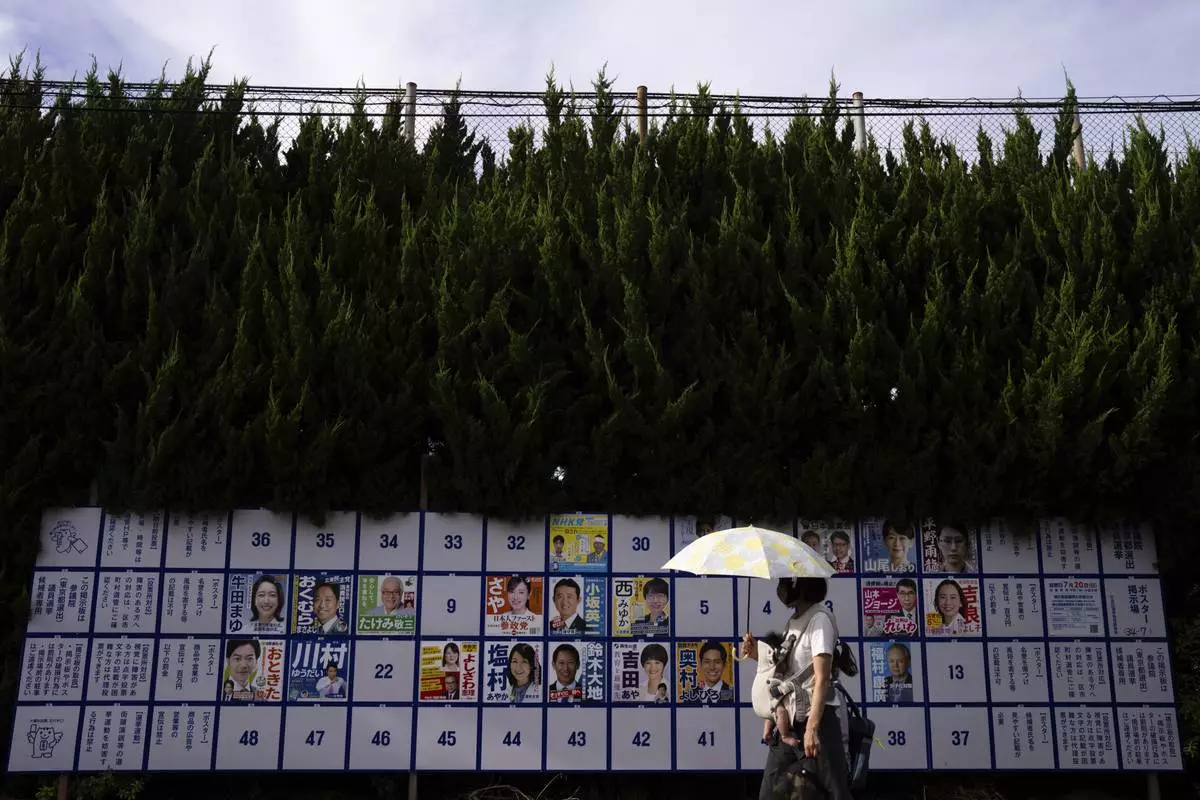
A pedestrian passes an election board displaying posters of candidates for the upcoming July 20 upper house election in Tokyo, Friday, July 18, 2025. (AP Photo/Louise Delmotte)
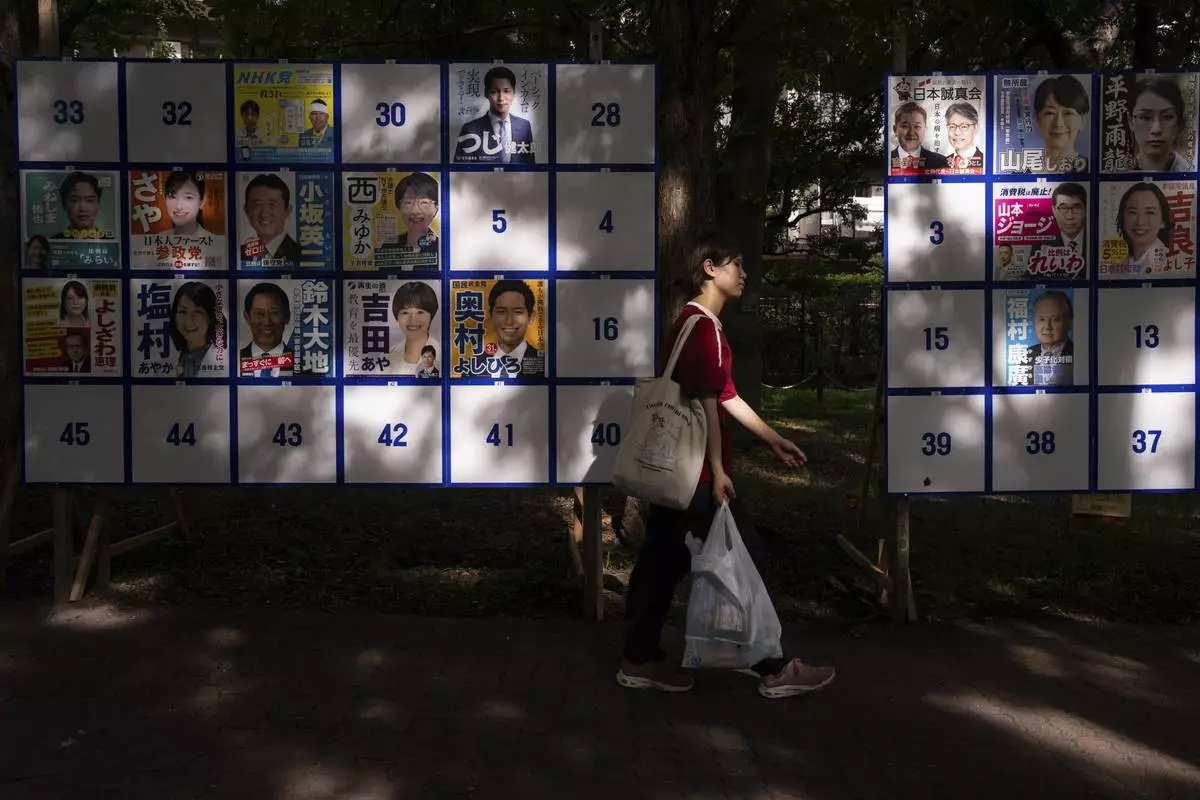
A pedestrian passes an election board displaying posters of candidates for the upcoming July 20 upper house election in Tokyo, Friday, July 18, 2025. (AP Photo/Louise Delmotte)
A pedestrian passes an election board displaying posters of candidates for the upcoming July 20 upper house election in Tokyo, Friday, July 18, 2025. (AP Photo/Louise Delmotte)

A pedestrian passes an election board displaying posters of candidates for the upcoming July 20 upper house election in Tokyo, Friday, July 18, 2025. (AP Photo/Louise Delmotte)

A pedestrian passes an election board displaying posters of candidates for the upcoming July 20 upper house election in Tokyo, Friday, July 18, 2025. (AP Photo/Louise Delmotte)

A pedestrian passes an election board displaying posters of candidates for the upcoming July 20 upper house election in Tokyo, Friday, July 18, 2025. (AP Photo/Louise Delmotte)

Japanese Prime Minister Shigeru Ishiba speaks to the media after meeting with U.S. Treasury Secretary Scott Bessent at the prime minister's office in Tokyo, Japan, Friday, July 18, 2025.(AP Photo/Shuji Kajiyama, Pool)
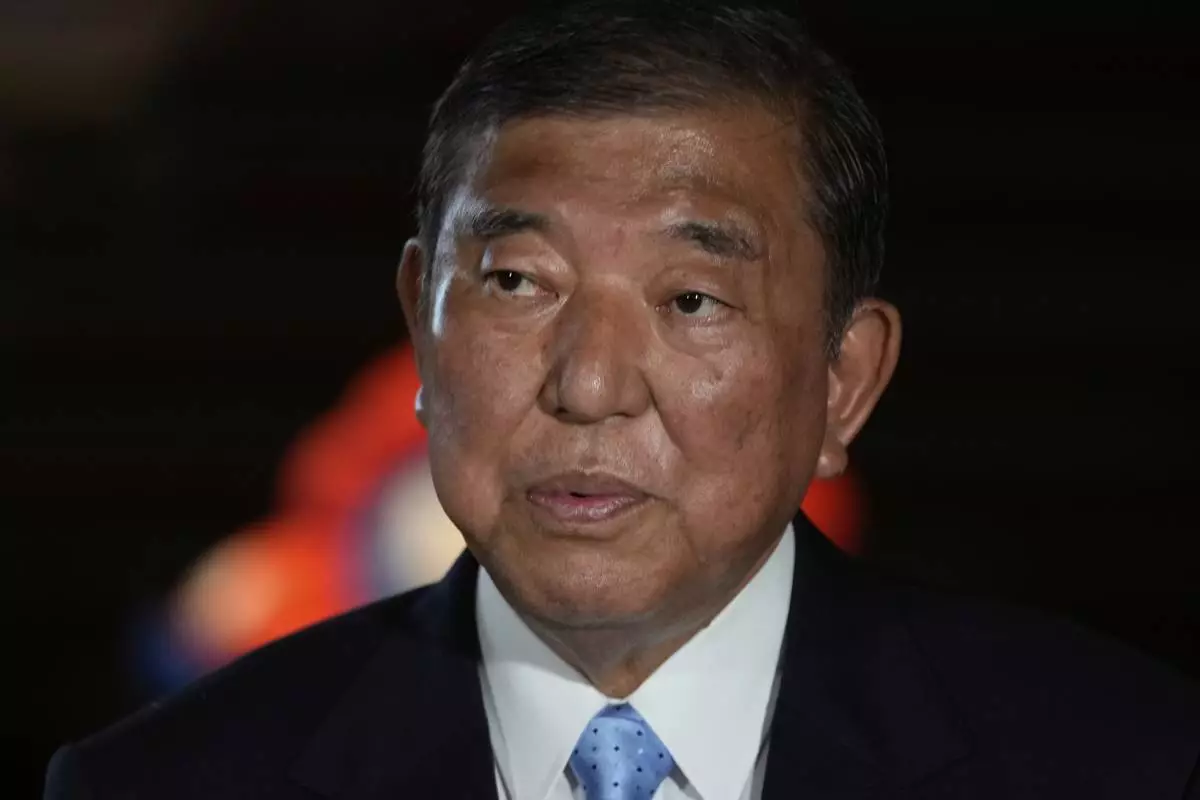
Japanese Prime Minister Shigeru Ishiba speaks to the media after meeting with U.S. Treasury Secretary Scott Bessent at the prime minister's office in Tokyo, Japan, Friday, July 18, 2025.(AP Photo/Shuji Kajiyama, Pool)
NEW YORK (AP) — Reviving a campaign pledge, President Donald Trump wants a one-year, 10% cap on credit card interest rates, a move that could save Americans tens of billions of dollars but drew immediate opposition from an industry that has been in his corner.

Trump was not clear in his social media post Friday night whether a cap might take effect through executive action or legislation, though one Republican senator said he had spoken with the president and would work on a bill with his “full support.” Trump said he hoped it would be in place Jan. 20, one year after he took office.

Strong opposition is certain from Wall Street in addition to the credit card companies, which donated heavily to his 2024 campaign and have supported Trump's second-term agenda. Banks are making the argument that such a plan would most hurt poor people, at a time of economic concern, by curtailing or eliminating credit lines, driving them to high-cost alternatives like payday loans or pawnshops.

“We will no longer let the American Public be ripped off by Credit Card Companies that are charging Interest Rates of 20 to 30%,” Trump wrote on his Truth Social platform.

Researchers who studied Trump’s campaign pledge after it was first announced found that Americans would save roughly $100 billion in interest a year if credit card rates were capped at 10%. The same researchers found that while the credit card industry would take a major hit, it would still be profitable, although credit card rewards and other perks might be scaled back.

About 195 million people in the United States had credit cards in 2024 and were assessed $160 billion in interest charges, the Consumer Financial Protection Bureau says. Americans are now carrying more credit card debt than ever, to the tune of about $1.23 trillion, according to figures from the New York Federal Reserve for the third quarter last year.

Further, Americans are paying, on average, between 19.65% and 21.5% in interest on credit cards according to the Federal Reserve and other industry tracking sources. That has come down in the past year as the central bank lowered benchmark rates, but is near the highs since federal regulators started tracking credit card rates in the mid-1990s. That’s significantly higher than a decade ago, when the average credit card interest rate was roughly 12%.

The Republican administration has proved particularly friendly until now to the credit card industry.

Capital One got little resistance from the White House when it finalized its purchase and merger with Discover Financial in early 2025, a deal that created the nation’s largest credit card company. The Consumer Financial Protection Bureau, which is largely tasked with going after credit card companies for alleged wrongdoing, has been largely nonfunctional since Trump took office.

In a joint statement, the banking industry was opposed to Trump's proposal.

“If enacted, this cap would only drive consumers toward less regulated, more costly alternatives," the American Bankers Association and allied groups said.

Bank lobbyists have long argued that lowering interest rates on their credit card products would require the banks to lend less to high-risk borrowers. When Congress enacted a cap on the fee that stores pay large banks when customers use a debit card, banks responded by removing all rewards and perks from those cards. Debit card rewards only recently have trickled back into consumers' hands. For example, United Airlines now has a debit card that gives miles with purchases.

The U.S. already places interest rate caps on some financial products and for some demographics. The Military Lending Act makes it illegal to charge active-duty service members more than 36% for any financial product. The national regulator for credit unions has capped interest rates on credit union credit cards at 18%.

Credit card companies earn three streams of revenue from their products: fees charged to merchants, fees charged to customers and the interest charged on balances. The argument from some researchers and left-leaning policymakers is that the banks earn enough revenue from merchants to keep them profitable if interest rates were capped.

"A 10% credit card interest cap would save Americans $100 billion a year without causing massive account closures, as banks claim. That’s because the few large banks that dominate the credit card market are making absolutely massive profits on customers at all income levels," said Brian Shearer, director of competition and regulatory policy at the Vanderbilt Policy Accelerator, who wrote the research on the industry's impact of Trump's proposal last year.

There are some historic examples that interest rate caps do cut off the less creditworthy to financial products because banks are not able to price risk correctly. Arkansas has a strictly enforced interest rate cap of 17% and evidence points to the poor and less creditworthy being cut out of consumer credit markets in the state. Shearer's research showed that an interest rate cap of 10% would likely result in banks lending less to those with credit scores below 600.

The White House did not respond to questions about how the president seeks to cap the rate or whether he has spoken with credit card companies about the idea.

Sen. Roger Marshall, R-Kan., who said he talked with Trump on Friday night, said the effort is meant to “lower costs for American families and to reign in greedy credit card companies who have been ripping off hardworking Americans for too long."

Legislation in both the House and the Senate would do what Trump is seeking.

Sens. Bernie Sanders, I-Vt., and Josh Hawley, R-Mo., released a plan in February that would immediately cap interest rates at 10% for five years, hoping to use Trump’s campaign promise to build momentum for their measure.

Hours before Trump's post, Sanders said that the president, rather than working to cap interest rates, had taken steps to deregulate big banks that allowed them to charge much higher credit card fees.

Reps. Alexandria Ocasio-Cortez, D-N.Y., and Anna Paulina Luna, R-Fla., have proposed similar legislation. Ocasio-Cortez is a frequent political target of Trump, while Luna is a close ally of the president.

Seung Min Kim reported from West Palm Beach, Fla.

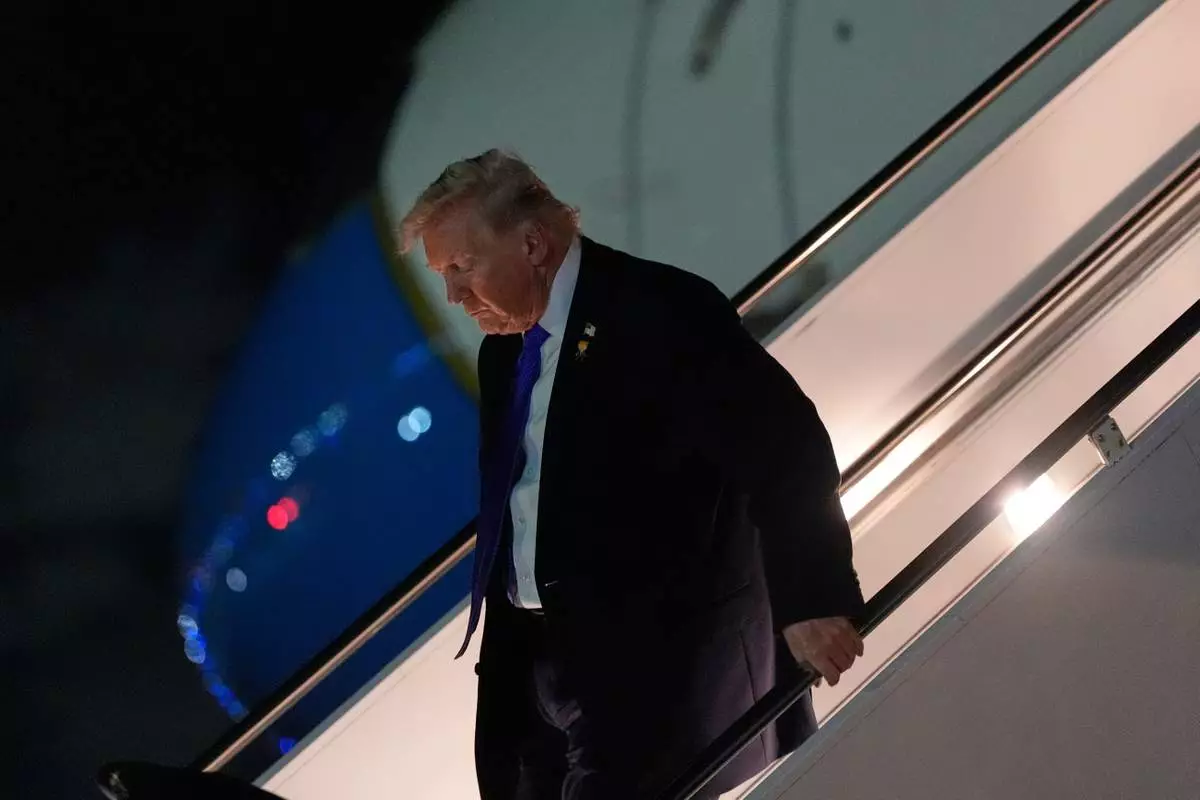
President Donald Trump arrives on Air Force One at Palm Beach International Airport, Friday, Jan. 9, 2025, in West Palm Beach, Fla. (AP Photo/Julia Demaree Nikhinson)

President Donald Trump arrives on Air Force One at Palm Beach International Airport, Friday, Jan. 9, 2025, in West Palm Beach, Fla. (AP Photo/Julia Demaree Nikhinson)

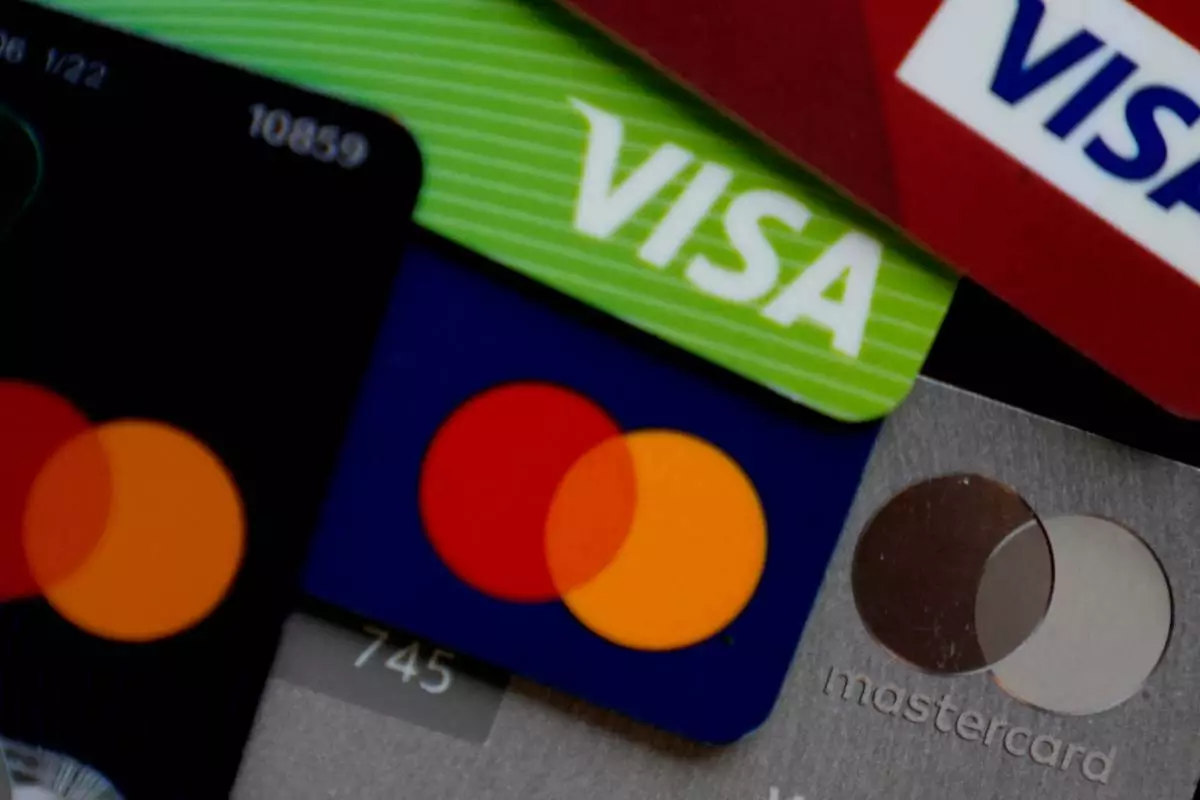
FILE - Visa and Mastercard credit cards are shown in Buffalo Grove, Ill., Feb. 8, 2024. (AP Photo/Nam Y. Huh, File)

FILE - Visa and Mastercard credit cards are shown in Buffalo Grove, Ill., Feb. 8, 2024. (AP Photo/Nam Y. Huh, File)

Recommended Articles