Skip to Content Facebook Feature Image

Trump's tariff threat pushes Lula's popularity and worsens legal troubles for Brazil's ex-leader

News

Trump's tariff threat pushes Lula's popularity and worsens legal troubles for Brazil's ex-leader
News

News

Trump's tariff threat pushes Lula's popularity and worsens legal troubles for Brazil's ex-leader

2025-07-19 13:00 Last Updated At:13:11

SAO PAULO (AP) — U.S. President Donald Trump may have thought that pressuring Brazil with higher tariffs would help his ally, the country's former President Jair Bolsonaro, but the move apparently backfired.

Last week, Trump sent a letter to Brazilian President Luiz Inácio Lula da Silva threatening a 50% import tax and directly linking the decision to Bolsonaro’s trial, which he called a “witch hunt.”

More Images
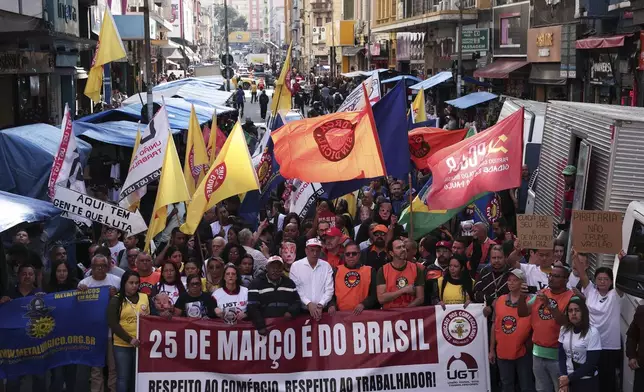
Merchants march on 25 de Marco street to protest U.S. President Donald Trump's announcement of 50% tariffs on Brazilian goods, and against U.S. report that cited this street as a center of counterfeit product sales in Brazil, in Sao Paulo, Friday, July 18, 2025. (AP Photo/Ettore Chiereguini)
Merchants march on 25 de Marco street to protest U.S. President Donald Trump's announcement of 50% tariffs on Brazilian goods, and against U.S. report that cited this street as a center of counterfeit product sales in Brazil, in Sao Paulo, Friday, July 18, 2025. (AP Photo/Ettore Chiereguini)
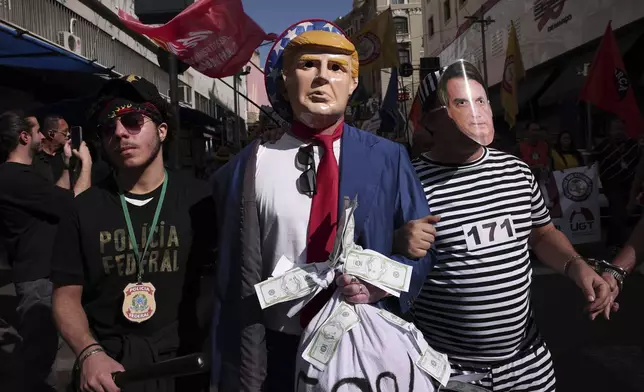
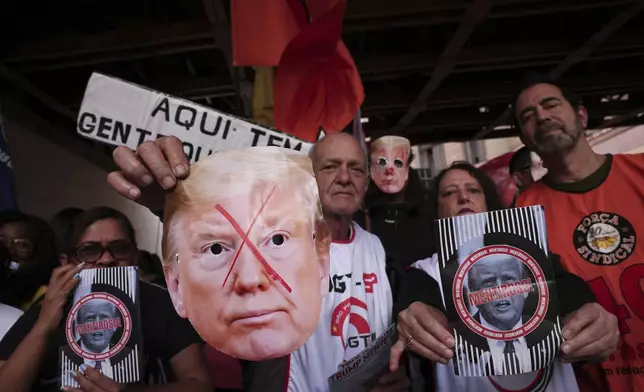
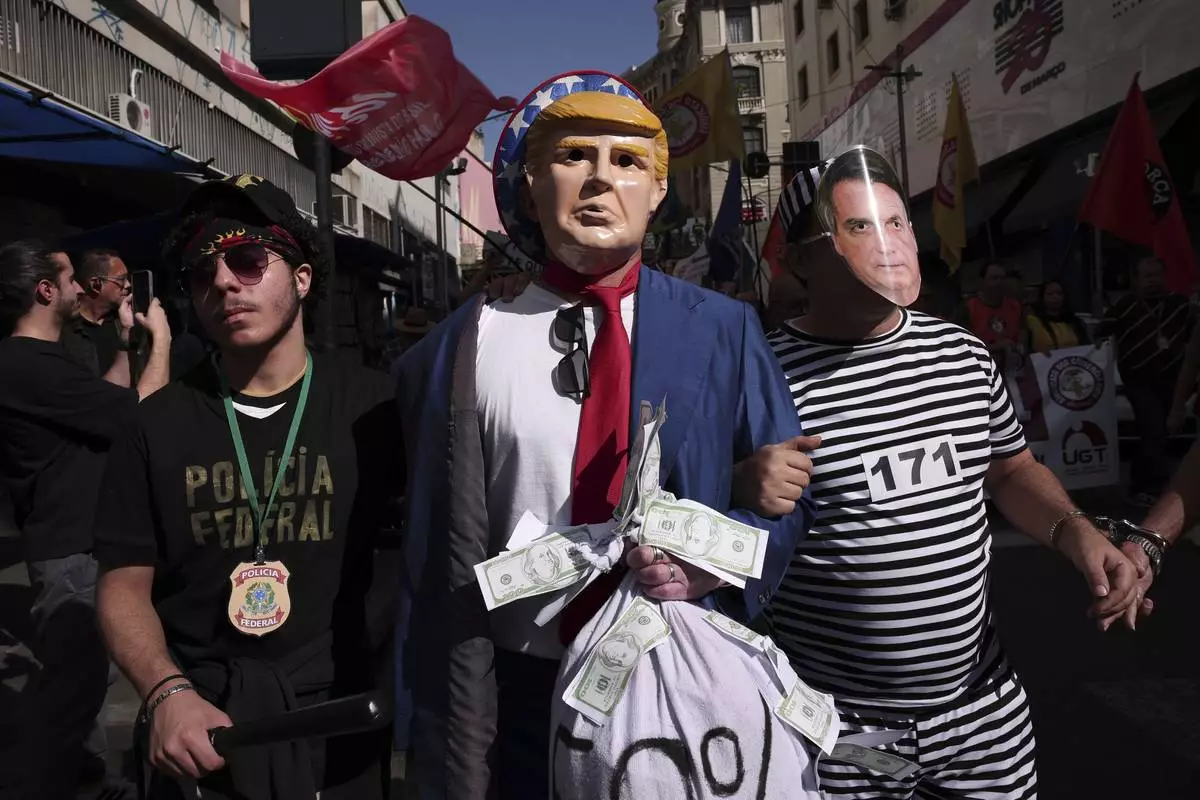
Protesters dressed as police escorting U.S. President Donald Trump and former president of Brazil Jair Bolsonaro demonstrate against Trump's announcement of 50% tariffs on Brazilian goods and against U.S. report that cited counterfeit product sales in Brazil, in Sao Paulo, Friday, July 18, 2025. (AP Photo/Ettore Chiereguini)

Protesters dressed as police escorting U.S. President Donald Trump and former president of Brazil Jair Bolsonaro demonstrate against Trump's announcement of 50% tariffs on Brazilian goods and against U.S. report that cited counterfeit product sales in Brazil, in Sao Paulo, Friday, July 18, 2025. (AP Photo/Ettore Chiereguini)

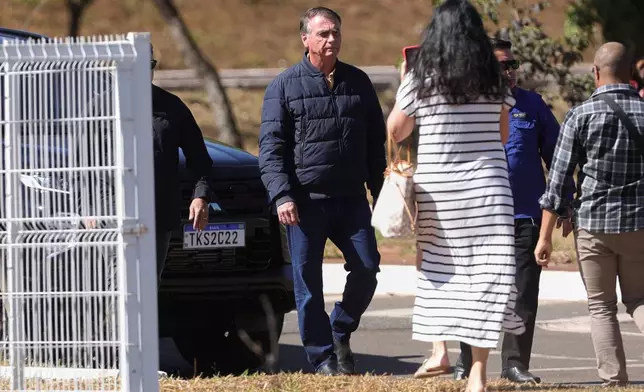
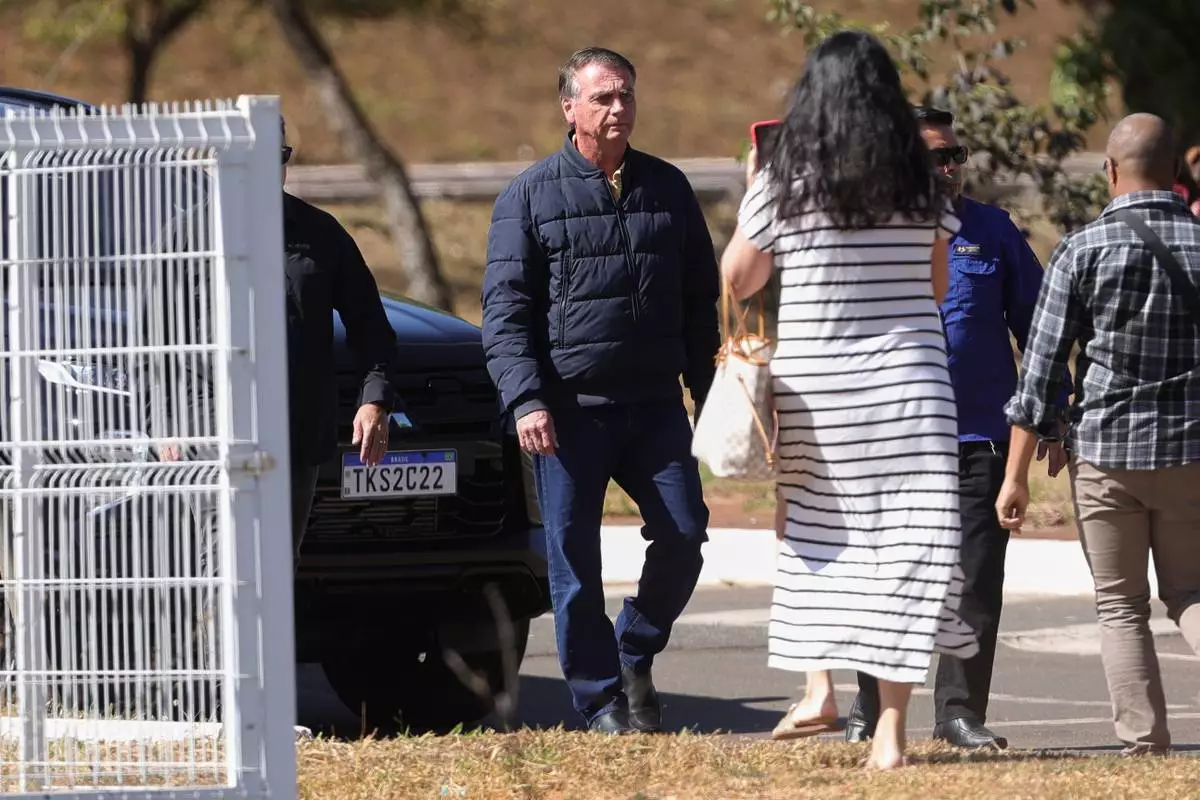
Brazil's former President Jair Bolsonaro leaves the Secretariat of Penitentiary Administration where he arrived after the Supreme Court ordered him to be fitted with an electronic ankle monitor in Brasilia, Brazil, Friday, July 18, 2025. (AP Photo/Luis Nova)
Brazil's former President Jair Bolsonaro leaves the Secretariat of Penitentiary Administration where he arrived after the Supreme Court ordered him to be fitted with an electronic ankle monitor in Brasilia, Brazil, Friday, July 18, 2025. (AP Photo/Luis Nova)

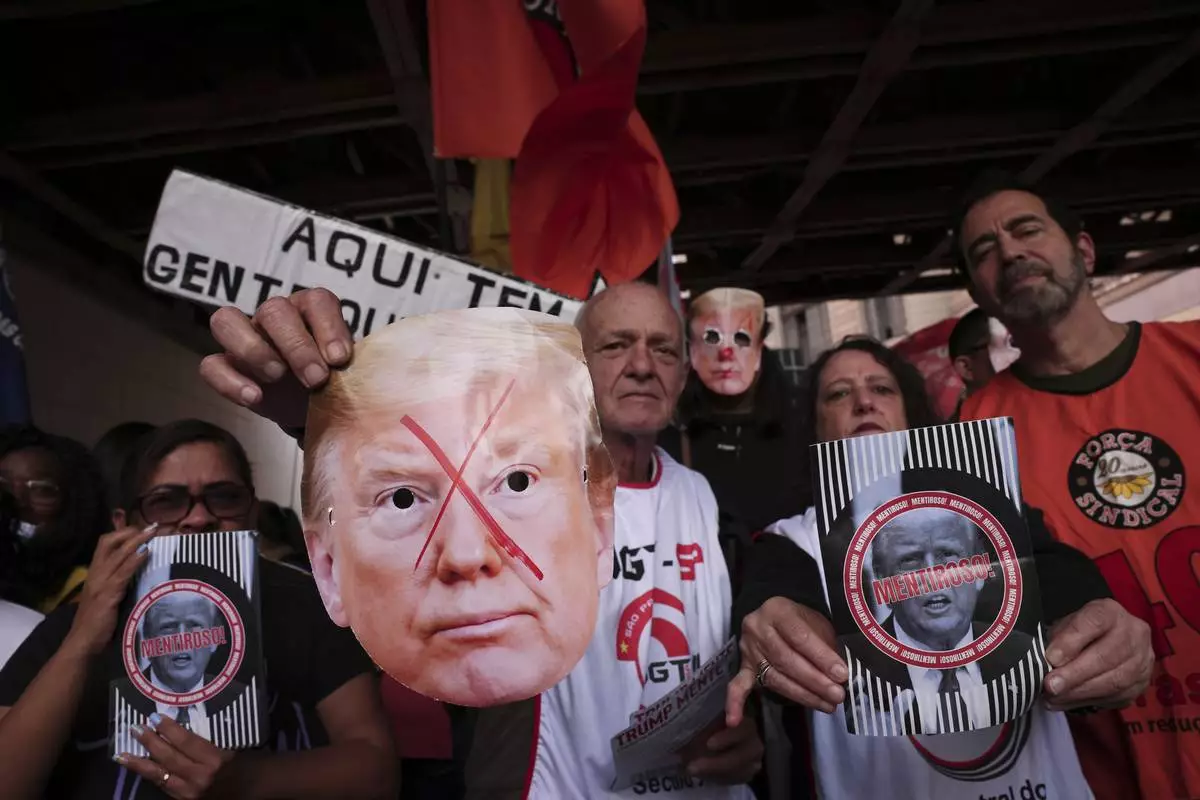
Demonstrators protest U.S. President Donald Trump's announcement of 50% tariffs on Brazilian goods and against U.S. report that cited counterfeit product sales in Brazil, in Sao Paulo, Friday, July 18, 2025. (AP Photo/Ettore Chiereguini)
Demonstrators protest U.S. President Donald Trump's announcement of 50% tariffs on Brazilian goods and against U.S. report that cited counterfeit product sales in Brazil, in Sao Paulo, Friday, July 18, 2025. (AP Photo/Ettore Chiereguini)

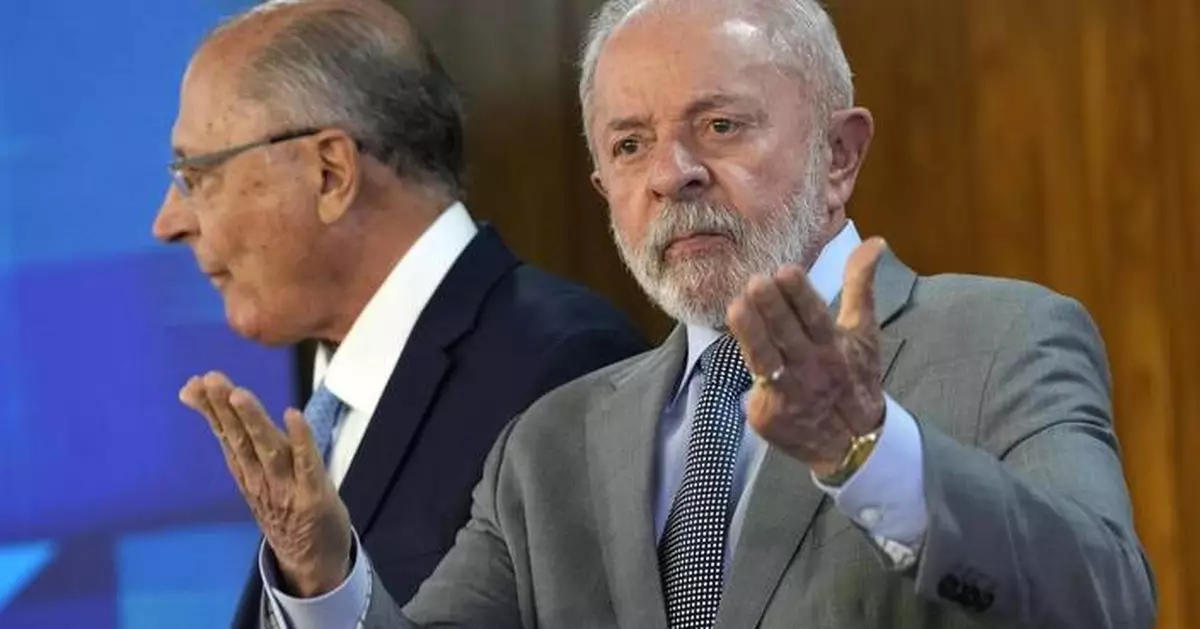
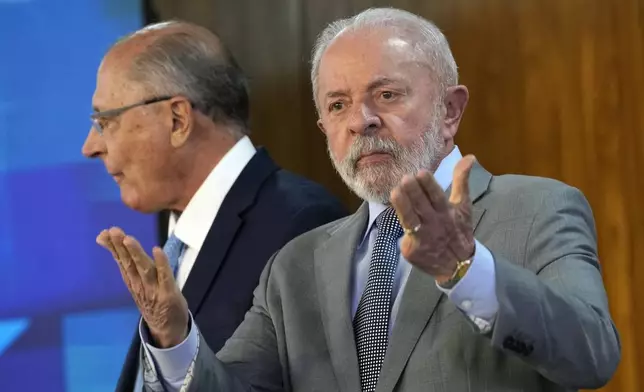
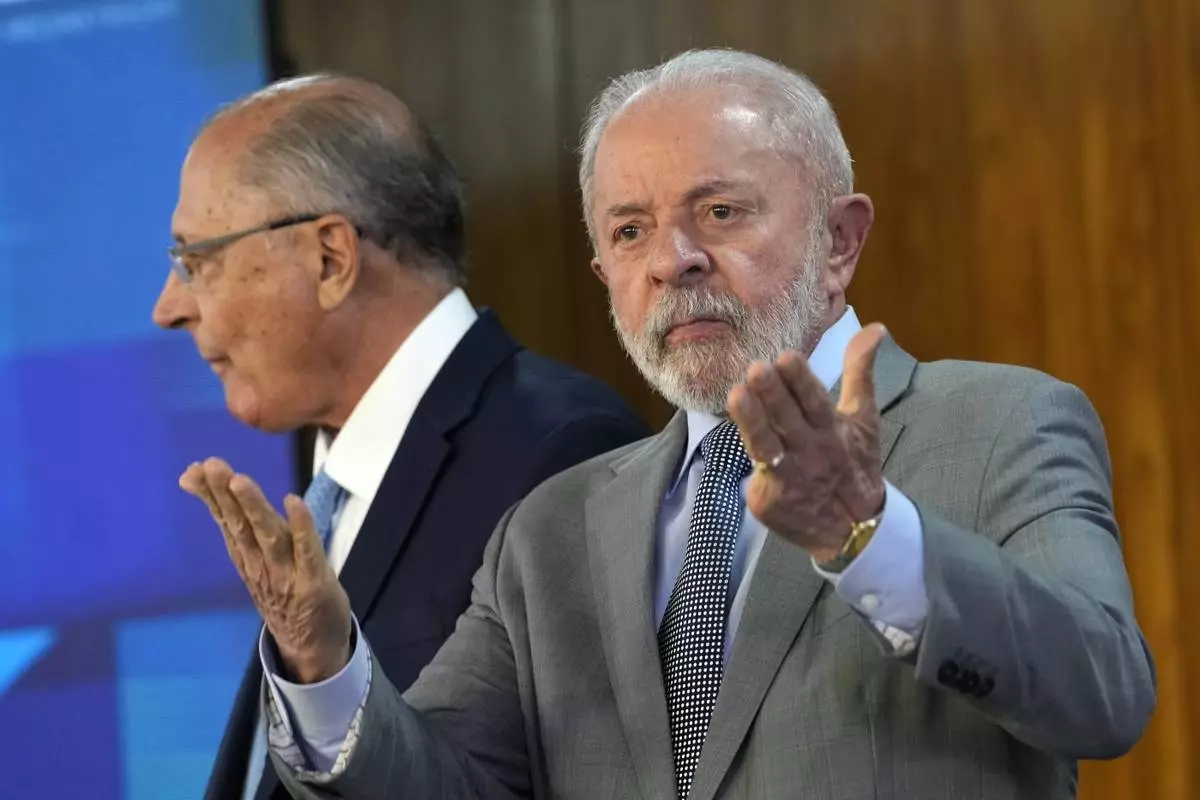
Brazil's President Luiz Inácio Lula da Silva gestures upon arriving at an event on the economy at the Planalto presidential palace in Brasilia, Brazil, Monday, July 14, 2025. (AP Photo/Eraldo Peres)

Brazil's President Luiz Inácio Lula da Silva gestures upon arriving at an event on the economy at the Planalto presidential palace in Brasilia, Brazil, Monday, July 14, 2025. (AP Photo/Eraldo Peres)

“This trial should end immediately!” Trump wrote Thursday evening in a second letter, this one addressed to Bolsonaro. He added that he had “strongly voiced” his disapproval through his tariff policy.

Rather than backing down, Brazil’s Supreme Court escalated the case, worsening Bolsonaro’s legal troubles. On Friday morning, federal police raided Bolsonaro’s home and political office. The former president was ordered to wear an ankle monitor, banned from using social media, and hit with other restrictions.

Meanwhile, President Lula — who was facing higher unpopularity, growing opposition in Congress and increasing risks to his likely reelection bid — seems to have gained politically from the situation.

Now the 79-year-old leftist Lula, in office for the third non-consecutive term of his long political career, is seeing renewed acceptance, congressional support against Trump and pleas to run one last time to defend Brazil's sovereignty.

Lula has appeared more energized in public since Trump's announcement. At a national students assembly Thursday, he wore a blue cap reading “Sovereign Brazil Unites Us" — a contrast to MAGA's red cap.

“A gringo will not give orders to this president," he told the crowd, and called the tariff hike “unacceptable blackmail.”

The impact on Lula is not a first. Trump's actions targeting other countries have boosted ideological rivals in Canada and Australia instead of strengthening his allies at a local level.

Private pollster Atlas said Tuesday that Lula’s unpopularity had reversed course after his spat with Trump. Lula's job approval went from at 47.3% in June to 49.7% since the tariffs battle began. The poll of more than 2,800 people was conducted July 11-13, with a margin of error of 2 percentage points. The study also said 62.2% of Brazilians think the higher tariffs are unjustified while 36.8% agree with the measure.

Even Bolsonaro’s former vice president, Sen. Hamilton Mourão, criticized Trump’s move as undue interference in Brazil’s politics, though he said he agreed the trial against the far-right leader is biased against him.

Social media analytics firm Palver analyzed 20,000 messages about Trump on WhatsApp, Brazil’s most widely used communication platform, a day after Trump's announcement. Its analysis said right-wing users dominated viral content, but spontaneous conversations leaned left, mocking Bolsonaro as submissive and defending Brazil’s sovereignty.

“Trump has put Lula back in the game,” said Thomas Traumann, an independent political consultant and former spokesman for the Brazilian presidency who only weeks ago argued that Lula had lost his front-runner status in the presidential race as he struggled to deliver on his promises on the economy.

“Trump handed it to Lula on a silver platter,” Traumann said.

Business leaders who until recently sided with Bolsonaro are having to court Lula to negotiate with Trump. Agribusiness, Brazil’s largest economic sector and a traditional right-wing stronghold, united to criticize the U.S. president's move. Industry groups were quick to denounce the tariffs as politically motivated and lacking any commercial justification.

“In general, with the major exception of a more radical conservative wing, (Trump’s move) generated national outrage for violating Brazil’s sovereignty,” lawmaker Arnaldo Jardim, a member of the congressional agricultural caucus, told The Associated Press.

Jardim, who pushed for the approval of a reciprocity bill that could be used by Lula if there’s no agreement until the Aug. 1 deadline, hardly sides with the president.

“Even among sectors that initially thought this could benefit Bolsonaro, many had to reconsider their positions,” he said.

Top congressional leaders who recently helped nix a Lula decree to raise a transactions tax were moving toward a head-on collision with him. After Trump’s announcement, they signed a joint statement agreeing with Lula's promise to use the reciprocity law against the U.S.

In another change, Brazil’s Congress decided to start moving on Lula’s plan to give an income tax break to millions of poorer Brazilians. Many politicians said that such initiative was dead after Lula became the first president in three decades to have a decree annulled by lawmakers.

At the Supreme Court, Bolsonaro is only getting deeper into trouble as his trial continues.

Earlier this week, Brazil’s chief prosecutor called for a guilty verdict, accusing the former president of leading an armed criminal organization, attempting to stage a coup and attempting violent abolition of the democratic rule of law, among other charges.

The defense will next likely present its case in the coming weeks, after which the panel of Supreme Court justices in the trial will vote on whether to convict or acquit him.

The former president also suffered more consequences — the court's latest restrictions on Bolsonaro, including the ankle monitor, are part of a second investigation against one of his sons, Eduardo Bolsonaro, a Brazilian lawmaker who currently lives in the United States and is known for his close ties to Trump. He has been under scrutiny for allegedly working with U.S. authorities to impose sanctions against Brazilian officials.

Supreme Court Justice Alexandre de Moraes, who oversees criminal cases against Bolsonaro, said his and his son’s actions attempted to pressure the Brazilian judiciary by involving the U.S.

The court’s decision cited both Trump's letter to Lula and several social media posts by the Bolsonaros in support of sanctions against Brazilian officials and speaking favorably about tariffs.

“A sovereign country like Brazil will always know how to defend its democracy and sovereignty,” de Moraes said. “The judiciary will not allow any attempt to subject the functioning of the Supreme Court to the scrutiny of another state through hostile acts.”

Jair Bolsonaro told journalists in Brasilia, the country's capital, that the ankle monitoring was a “supreme humiliation.”

“I never thought about leaving Brazil, I never thought about going to an embassy, but the precautionary measures are because of that,” the former president said.

In a statement, Eduardo Bolsonaro accused de Moraes of trying to criminalize Trump and the U.S. government.

“Since he has no power over them, he decided to make my father a hostage,” the younger Bolsonaro said of the judge.

Follow AP’s coverage of Latin America and the Caribbean at https://apnews.com/hub/latin-america
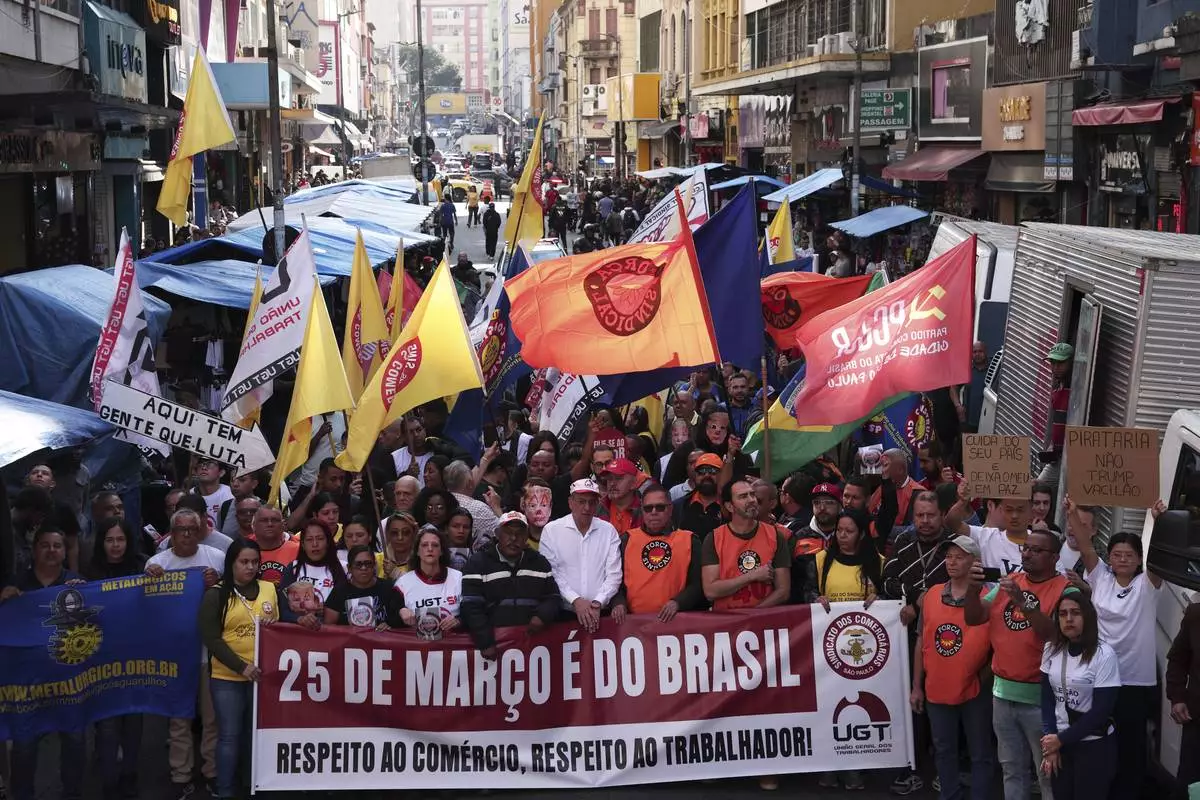
Merchants march on 25 de Marco street to protest U.S. President Donald Trump's announcement of 50% tariffs on Brazilian goods, and against U.S. report that cited this street as a center of counterfeit product sales in Brazil, in Sao Paulo, Friday, July 18, 2025. (AP Photo/Ettore Chiereguini)
Merchants march on 25 de Marco street to protest U.S. President Donald Trump's announcement of 50% tariffs on Brazilian goods, and against U.S. report that cited this street as a center of counterfeit product sales in Brazil, in Sao Paulo, Friday, July 18, 2025. (AP Photo/Ettore Chiereguini)
Protesters dressed as police escorting U.S. President Donald Trump and former president of Brazil Jair Bolsonaro demonstrate against Trump's announcement of 50% tariffs on Brazilian goods and against U.S. report that cited counterfeit product sales in Brazil, in Sao Paulo, Friday, July 18, 2025. (AP Photo/Ettore Chiereguini)

Protesters dressed as police escorting U.S. President Donald Trump and former president of Brazil Jair Bolsonaro demonstrate against Trump's announcement of 50% tariffs on Brazilian goods and against U.S. report that cited counterfeit product sales in Brazil, in Sao Paulo, Friday, July 18, 2025. (AP Photo/Ettore Chiereguini)

Brazil's former President Jair Bolsonaro leaves the Secretariat of Penitentiary Administration where he arrived after the Supreme Court ordered him to be fitted with an electronic ankle monitor in Brasilia, Brazil, Friday, July 18, 2025. (AP Photo/Luis Nova)
Brazil's former President Jair Bolsonaro leaves the Secretariat of Penitentiary Administration where he arrived after the Supreme Court ordered him to be fitted with an electronic ankle monitor in Brasilia, Brazil, Friday, July 18, 2025. (AP Photo/Luis Nova)

Demonstrators protest U.S. President Donald Trump's announcement of 50% tariffs on Brazilian goods and against U.S. report that cited counterfeit product sales in Brazil, in Sao Paulo, Friday, July 18, 2025. (AP Photo/Ettore Chiereguini)
Demonstrators protest U.S. President Donald Trump's announcement of 50% tariffs on Brazilian goods and against U.S. report that cited counterfeit product sales in Brazil, in Sao Paulo, Friday, July 18, 2025. (AP Photo/Ettore Chiereguini)

Brazil's President Luiz Inácio Lula da Silva gestures upon arriving at an event on the economy at the Planalto presidential palace in Brasilia, Brazil, Monday, July 14, 2025. (AP Photo/Eraldo Peres)
Brazil's President Luiz Inácio Lula da Silva gestures upon arriving at an event on the economy at the Planalto presidential palace in Brasilia, Brazil, Monday, July 14, 2025. (AP Photo/Eraldo Peres)
NEW YORK (AP) — Reviving a campaign pledge, President Donald Trump wants a one-year, 10% cap on credit card interest rates, a move that could save Americans tens of billions of dollars but drew immediate opposition from an industry that has been in his corner.

Trump was not clear in his social media post Friday night whether a cap might take effect through executive action or legislation, though one Republican senator said he had spoken with the president and would work on a bill with his “full support.” Trump said he hoped it would be in place Jan. 20, one year after he took office.

Strong opposition is certain from Wall Street in addition to the credit card companies, which donated heavily to his 2024 campaign and have supported Trump's second-term agenda. Banks are making the argument that such a plan would most hurt poor people, at a time of economic concern, by curtailing or eliminating credit lines, driving them to high-cost alternatives like payday loans or pawnshops.

“We will no longer let the American Public be ripped off by Credit Card Companies that are charging Interest Rates of 20 to 30%,” Trump wrote on his Truth Social platform.

Researchers who studied Trump’s campaign pledge after it was first announced found that Americans would save roughly $100 billion in interest a year if credit card rates were capped at 10%. The same researchers found that while the credit card industry would take a major hit, it would still be profitable, although credit card rewards and other perks might be scaled back.

About 195 million people in the United States had credit cards in 2024 and were assessed $160 billion in interest charges, the Consumer Financial Protection Bureau says. Americans are now carrying more credit card debt than ever, to the tune of about $1.23 trillion, according to figures from the New York Federal Reserve for the third quarter last year.

Further, Americans are paying, on average, between 19.65% and 21.5% in interest on credit cards according to the Federal Reserve and other industry tracking sources. That has come down in the past year as the central bank lowered benchmark rates, but is near the highs since federal regulators started tracking credit card rates in the mid-1990s. That’s significantly higher than a decade ago, when the average credit card interest rate was roughly 12%.

The Republican administration has proved particularly friendly until now to the credit card industry.

Capital One got little resistance from the White House when it finalized its purchase and merger with Discover Financial in early 2025, a deal that created the nation’s largest credit card company. The Consumer Financial Protection Bureau, which is largely tasked with going after credit card companies for alleged wrongdoing, has been largely nonfunctional since Trump took office.

In a joint statement, the banking industry was opposed to Trump's proposal.

“If enacted, this cap would only drive consumers toward less regulated, more costly alternatives," the American Bankers Association and allied groups said.

Bank lobbyists have long argued that lowering interest rates on their credit card products would require the banks to lend less to high-risk borrowers. When Congress enacted a cap on the fee that stores pay large banks when customers use a debit card, banks responded by removing all rewards and perks from those cards. Debit card rewards only recently have trickled back into consumers' hands. For example, United Airlines now has a debit card that gives miles with purchases.

The U.S. already places interest rate caps on some financial products and for some demographics. The Military Lending Act makes it illegal to charge active-duty service members more than 36% for any financial product. The national regulator for credit unions has capped interest rates on credit union credit cards at 18%.

Credit card companies earn three streams of revenue from their products: fees charged to merchants, fees charged to customers and the interest charged on balances. The argument from some researchers and left-leaning policymakers is that the banks earn enough revenue from merchants to keep them profitable if interest rates were capped.

"A 10% credit card interest cap would save Americans $100 billion a year without causing massive account closures, as banks claim. That’s because the few large banks that dominate the credit card market are making absolutely massive profits on customers at all income levels," said Brian Shearer, director of competition and regulatory policy at the Vanderbilt Policy Accelerator, who wrote the research on the industry's impact of Trump's proposal last year.

There are some historic examples that interest rate caps do cut off the less creditworthy to financial products because banks are not able to price risk correctly. Arkansas has a strictly enforced interest rate cap of 17% and evidence points to the poor and less creditworthy being cut out of consumer credit markets in the state. Shearer's research showed that an interest rate cap of 10% would likely result in banks lending less to those with credit scores below 600.

The White House did not respond to questions about how the president seeks to cap the rate or whether he has spoken with credit card companies about the idea.

Sen. Roger Marshall, R-Kan., who said he talked with Trump on Friday night, said the effort is meant to “lower costs for American families and to reign in greedy credit card companies who have been ripping off hardworking Americans for too long."

Legislation in both the House and the Senate would do what Trump is seeking.

Sens. Bernie Sanders, I-Vt., and Josh Hawley, R-Mo., released a plan in February that would immediately cap interest rates at 10% for five years, hoping to use Trump’s campaign promise to build momentum for their measure.

Hours before Trump's post, Sanders said that the president, rather than working to cap interest rates, had taken steps to deregulate big banks that allowed them to charge much higher credit card fees.

Reps. Alexandria Ocasio-Cortez, D-N.Y., and Anna Paulina Luna, R-Fla., have proposed similar legislation. Ocasio-Cortez is a frequent political target of Trump, while Luna is a close ally of the president.

Seung Min Kim reported from West Palm Beach, Fla.

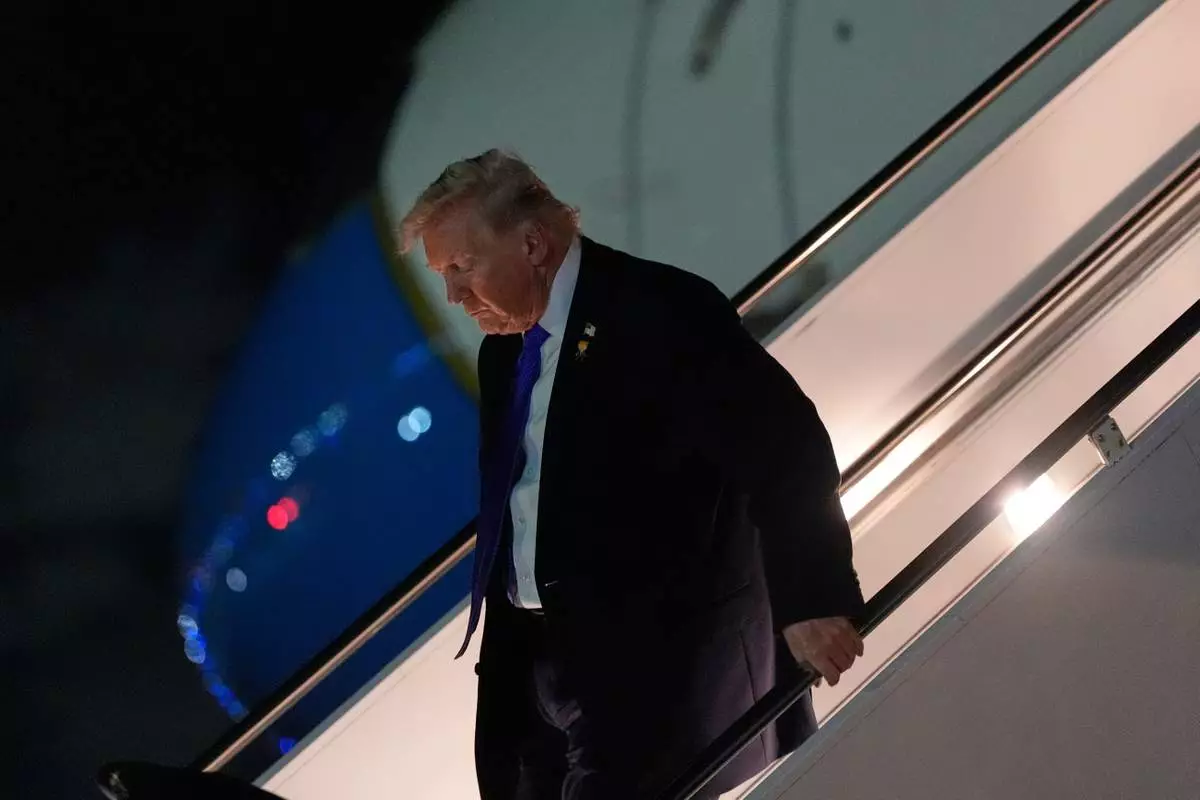
President Donald Trump arrives on Air Force One at Palm Beach International Airport, Friday, Jan. 9, 2025, in West Palm Beach, Fla. (AP Photo/Julia Demaree Nikhinson)

President Donald Trump arrives on Air Force One at Palm Beach International Airport, Friday, Jan. 9, 2025, in West Palm Beach, Fla. (AP Photo/Julia Demaree Nikhinson)

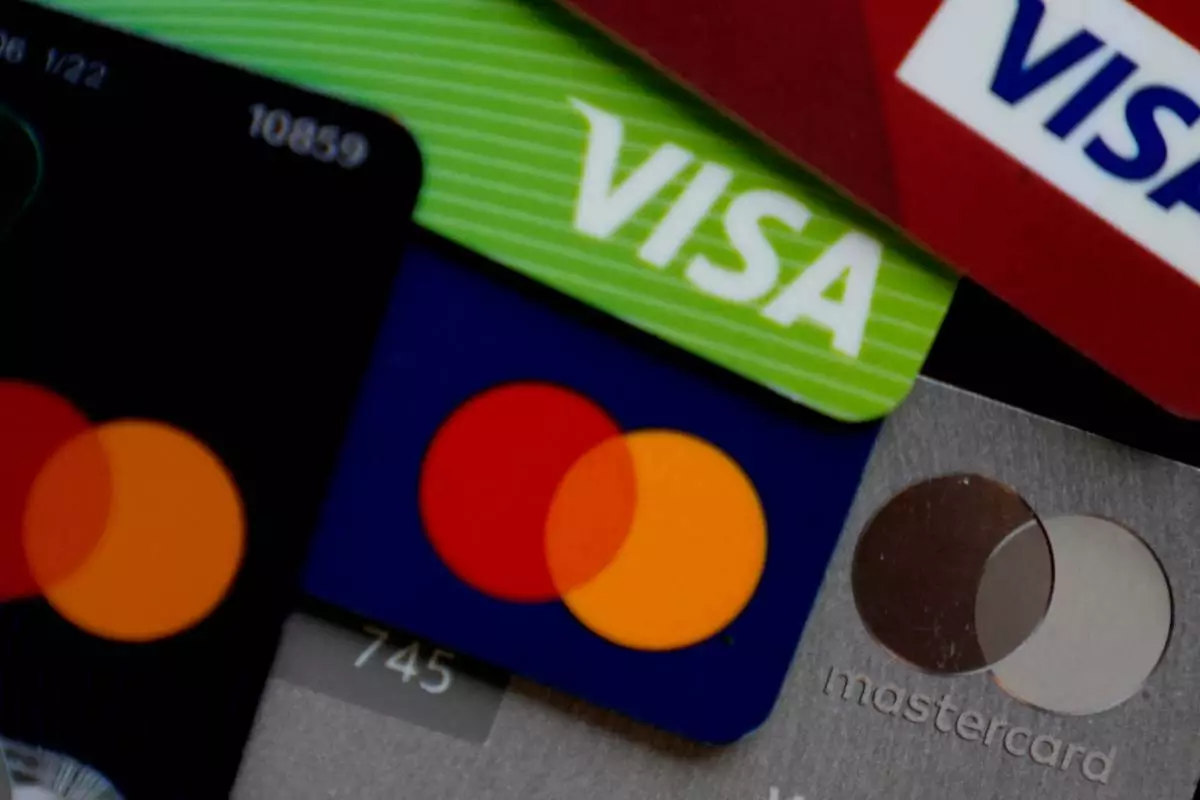
FILE - Visa and Mastercard credit cards are shown in Buffalo Grove, Ill., Feb. 8, 2024. (AP Photo/Nam Y. Huh, File)

FILE - Visa and Mastercard credit cards are shown in Buffalo Grove, Ill., Feb. 8, 2024. (AP Photo/Nam Y. Huh, File)

Recommended Articles