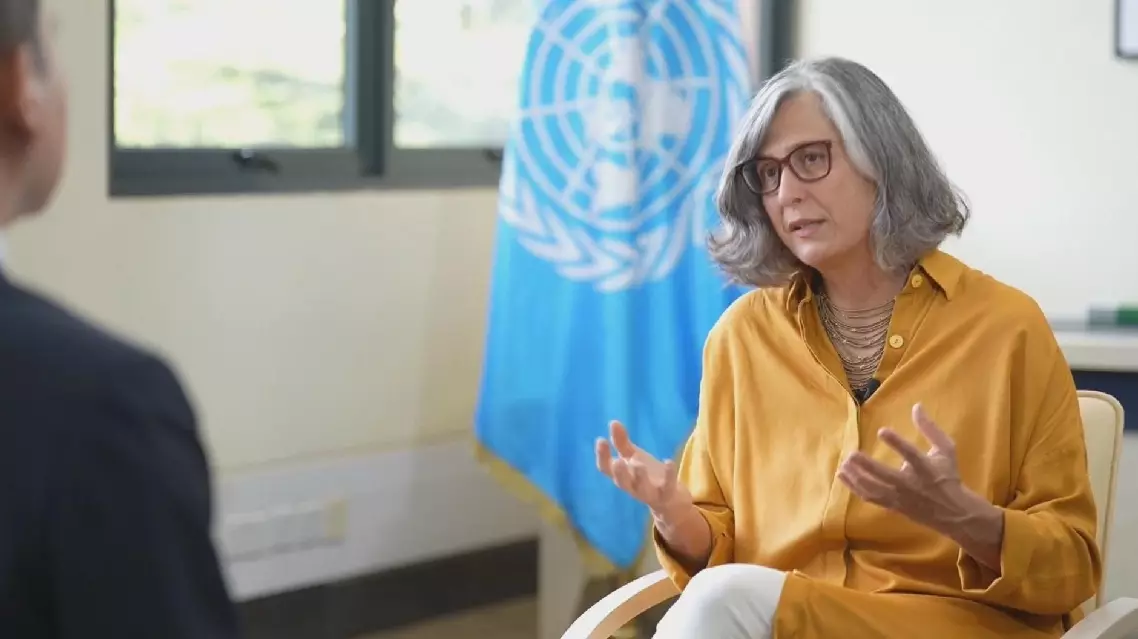
Anaclaudia Rossbach, executive director of the UN Human Settlements Program (UN-Habitat), sounded the alarm over the growing global housing crisis, highlighting that more than 300 million people are currently homeless worldwide, in an interview released by China Media Group (CMG) on Friday.
From May 29 to 30, 2025, the resumed second session of the United Nations Habitat Assembly convened in Nairobi, the Kenyan capital. During the event, Rossbach revealed staggering statistics, while over 2.8 billion people worldwide currently live in inadequate housing, more than 1.1 billion reside in slums or informal settlements, and over 300 million people have no home at all.
Rossbach emphasized that in many parts of the world, especially in Africa, 62 percent of urban housing is informal, while in the Asia-Pacific region, over 500 million people lack access to basic water services, and sanitation needs remain unmet for over a billion.
She provided further insight into the complexity and visibility of global housing challenges.
"Many times the inadequacy of housing is invisible. So you have people living in overcrowded apartments or houses that don't really correspond to the minimum standards of a healthy environment, let's say so. But many times it's visible. You see people living on the streets almost everywhere these days. Imagine 300 million people homeless. These are the numbers that we have. Eventually there are even more because there is some under subreporting," said Rossbach.
"In the Global South in cities like Nairobi where we are or in Brazilian cities where I come from, you can see the slums, the informal settlements, the favelas and these generated situations that are very precarious, with lack of access to water, sanitation, electricity - the most basic services, and in many times not even recognized by the cities, by the countries and living really in kind of marginalized situation," she said.
Global homeless population tops 300 mln: UN official
Political observers from across the Taiwan Strait have applauded the policy measures newly unveiled by the Chinese central government to boost exchanges and cooperation between the mainland and the island region.
The central government on April 12 rolled out 10 policies and measures -- spanning inter-party communication, infrastructure, travel, trade and culture -- aimed at boosting cross-Strait exchanges and cooperation.
The announcement by the Taiwan Work Office of the Communist Party of China (CPC) Central Committee followed a meeting between Xi Jinping, general secretary of the CPC Central Committee, and Cheng Li-wun, chairwoman of the Chinese Kuomintang (KMT) party, the first such top-level meeting between the two political parties across the Taiwan Strait in a decade.
Atop the 10 initiatives announced by the mainland is a proposal to explore a regular communication mechanism between the CPC and the KMT.
In addition to exploring the establishment of a regularized communication mechanism between the CPC and the KMT, more of these policy measures concern specific issues related to people's livelihood, precisely addressing the actual needs of various sectors in Taiwan, especially grassroots communities, youth, and small and medium-sized enterprises.
"For example, the catches of Taiwan's deepsea fishing vessels can be shipped directly to the mainland, and Taiwan's agricultural products can also enter the mainland market, which are both cases of expanded integrated development. In addition, Kinmen and Matsu can be connected with the coastal areas of Fujian Province in terms of access to water, electricity and gas supply, and construction of cross-sea bridges. There are also plans for Xiamen's Xiang'an airport to be jointly used with Kinmen. All these are concrete steps that further deepen integrated development," said Wu Yongping, dean of the Institute for Taiwan Studies at Tsinghua University.
Among the 10 policy measures is one for resuming individual travel to Taiwan for residents of Shanghai and Fujian. Taiwanese tourism and business operators believe that compared to approving group tours earlier, the mainland's willingness to directly promote the resumption of individual travel pilot programs sends a stronger signal of openness and demonstrates greater goodwill.
Recent data indicate increasing cross-Strait exchanges. In the first quarter of this year, applications for travel passes for Taiwan residents to enter or leave the mainland rose by 11.8 percent year on year, while visits by Taiwan residents to the mainland increased by 27.6 percent. First-time applicants -- many under the age of 45 -- have also grown in number.
"The Democratic Progressive Party (DPP) has gone too far in manipulating its so-called 'anti-China,' 'resentment toward China,' and 'resistance to China" tricks, which has backfired. More and more young people feel that there's no need to deliberately 'demonize' the mainland -- they want to see for themselves what the mainland is really like. Over the past couple of years, we've seen many people go to the mainland and use various forms of audio-visual media to share the truth about the mainland's progress with more Taiwan people around them," said Wang Bing-chung, a political commentator in Taiwan.
"Many of these individuals are Taiwan youth who previously supported the DPP. Because they were deceived in the past, they now carry a strong sense of anger and feel compelled to take personal action to debunk the lies they were fed. Under these circumstances, I believe it is an inevitable historical trend for compatriots on both sides of the strait to grow closer," he said.
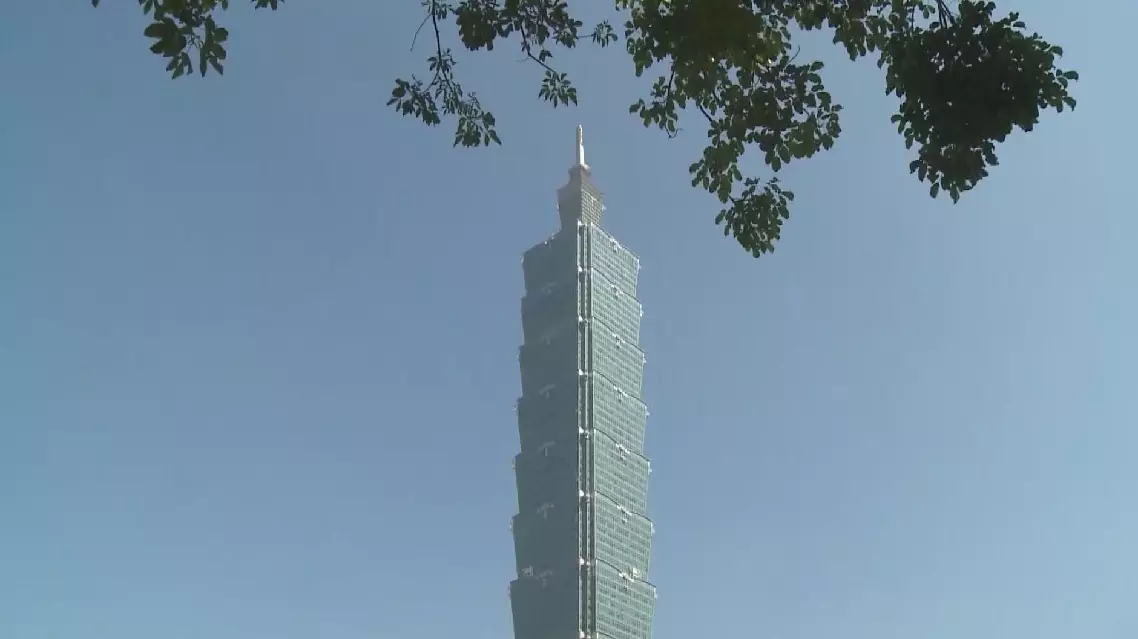
Political observers across Taiwan Strait laud central gov't policies on boosting ties