The use of artificial intelligence (AI) in the medical field is expanding rapidly, yielding significant breakthroughs.
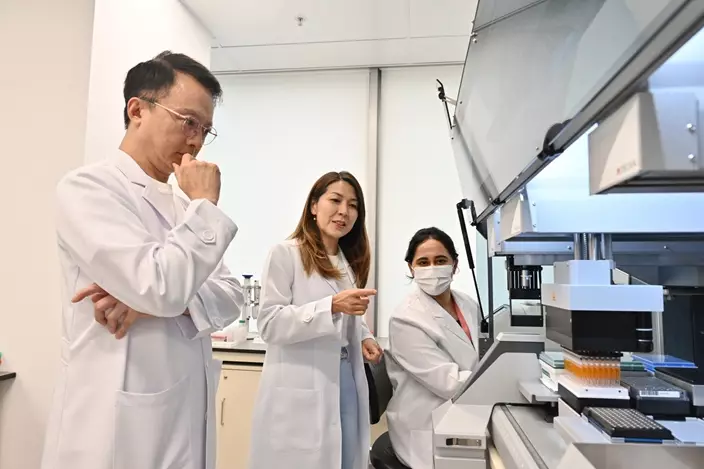
Microbial matching: Microbiota I-Center Co-Director Prof Francis Chan (left) explains that MOZAIC uses artificial intelligence to match microbiota and patients more quickly and accurately. Source from news.gov.hk
One example of this is the patented MOZAIC technology developed by the Chinese University of Hong Kong’s Microbiota I-Center with funding from InnoHK. This innovative solution combines faecal microbiota transplantation with AI, matching suitable microbiota to patients who have Clostridioides difficile infection (CDI).
Click to Gallery
Microbial matching: Microbiota I-Center Co-Director Prof Francis Chan (left) explains that MOZAIC uses artificial intelligence to match microbiota and patients more quickly and accurately. Source from news.gov.hk
Data collection: With funding from InnoHK, the Microbiota I-Center has established one of Asia’s largest stool sample banks at the Hong Kong Science Park. Source from news.gov.hk
Full recovery: Chow Yee-mei has remained free from recurrence of her illness for over three years after undergoing the MOZAIC treatment. Source from news.gov.hk
Impactful solutions: Ivan Lee says InnoHK is committed to helping research teams turn their breakthroughs into real-world applications. Source from news.gov.hk
Sixty-nine-year-old Chow Yee-mei recalled how she previously suffered with the disease: “I pooped over ten times a day, to the point that I could barely stand. It was not a sharp pain, but an unwell feeling that made you feel an urgent need to go to the toilet. And I was excreting blood. The entire toilet bowl was filled with blood. I cried every day.”
After seeking treatment from multiple doctors and spending hundreds of thousands of dollars on various antibiotics and other medications, without success, she finally recovered when she underwent MOZAIC.
The procedure involves selecting beneficial bacteria from the stools of healthy donors and injecting them into a patient’s gut via endoscope to rebuild their gut microbiome.
“I received the treatment at 8 or 9 o’clock in the morning,” said Ms Chow. “By 5 or 6 o’clock in the evening, I had stopped excreting blood. It was miraculous. It has now been over three years without any recurrence.”
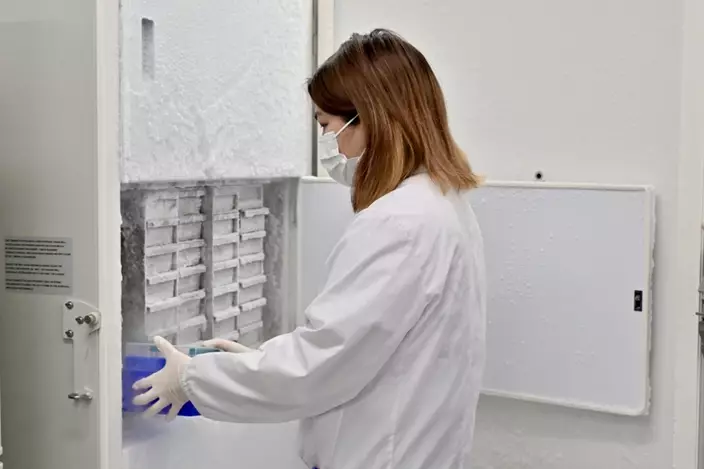
Data collection: With funding from InnoHK, the Microbiota I-Center has established one of Asia’s largest stool sample banks at the Hong Kong Science Park. Source from news.gov.hk
Growing caseload
Over the past three years, Hong Kong has recorded more than 3,000 cases of CDI annually.
Microbiota I-Center Co-Director Prof Francis Chan, a gastroenterology and hepatology specialist, highlighted that the elderly, people with chronic illnesses or inflammatory bowel disease, and frequent users of antibiotics are all high-risk groups. Treatment with standard antibiotics is often ineffective, and the recurrence and mortality rates of the disease are as high as 35% and 40%, respectively.
“Long-term use of high-dose antibiotics wipes out the beneficial bacteria in the gut, allowing Clostridioides difficile to take hold," Prof Chan said. “With an ageing population and frequent antibiotic use for various infections, this problem is only set to grow.”
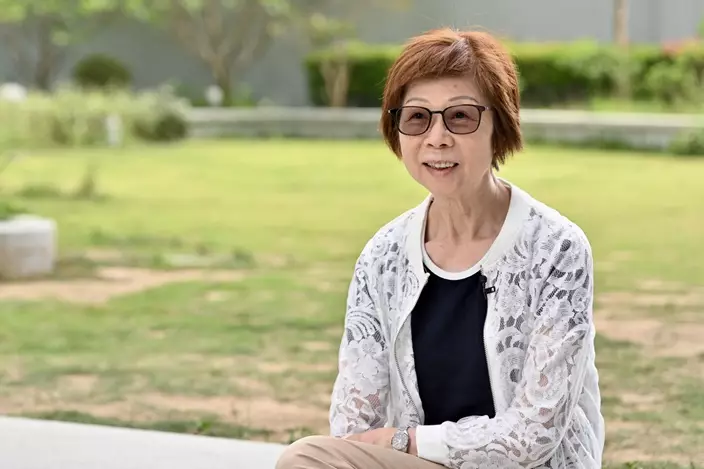
Full recovery: Chow Yee-mei has remained free from recurrence of her illness for over three years after undergoing the MOZAIC treatment. Source from news.gov.hk
Microbial matching
In 2020, the Microbiota I-Center received InnoHK funding to establish one of Asia’s largest stool sample banks at the Hong Kong Science Park. Its samples are from people of all different ages, nationalities and health conditions. The centre’s MOZAIC solution draws on this bank of samples, leveraging AI to match patients with suitable microbiota.
“We make use of our huge bio-bank, collected over the years in Asia, including our Chinese population,” Prof Chan explained “Then, with the use of AI, we optimise the matching between the donor and the recipient. Therefore, our success rate, in terms of curing CDI, has approached over 90%.”
The centre has successfully applied this research in both public and private hospitals in Hong Kong, and the MOZAIC service has now been expanded to all Hospital Authority clusters. As of May this year, the authority had performed over 50 treatments, benefiting 48 patients.
Recently, the centre received a second round of InnoHK funding. This will allow it to operate for another five years and to expand its research into diagnosing autism and dementia through the gut microbiome, in addition to developing new drugs.
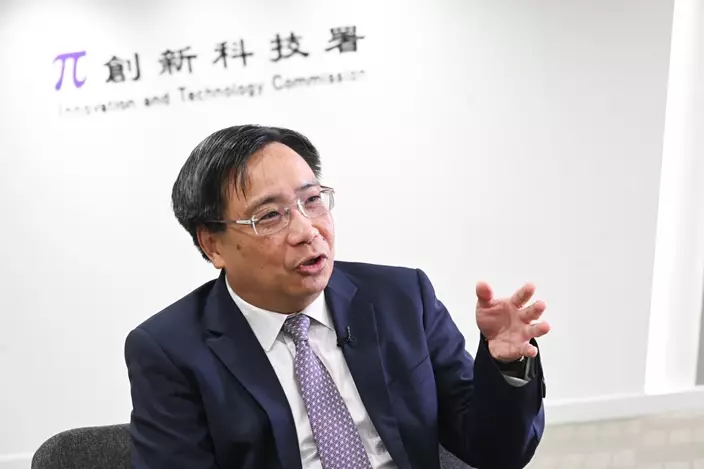
Impactful solutions: Ivan Lee says InnoHK is committed to helping research teams turn their breakthroughs into real-world applications. Source from news.gov.hk
Research ecosystem
InnoHK’s two research clusters comprise 29 laboratories and centres focused on healthcare and AI & robotics technologies. They span collaborations with over 30 leading universities and research institutions worldwide and engage more than 2,500 local and international researchers working across nearly 500 research projects.
Commissioner for Innovation & Technology Ivan Lee said InnoHK is committed to helping research teams translate their findings into practical applications.
“Hong Kong’s university professors are outstanding researchers. By giving additional resources, we hope that our research teams can get a more focused platform to carry out their research and development (R&D).
“We expect that the complete ecosystem at the Science Park will help them establish networks and connect with potential investors, users of their R&D outcomes, as well as other business partners.”
Mr Lee described research outcomes to date as successful, with over 1,200 patents being granted or filed.
A frantic search for the suspect in last weekend’s mass shooting at Brown University ended Thursday at a New Hampshire storage facility where authorities discovered the man dead inside and then revealed he also was suspected of killing a Massachusetts Institute of Technology professor.
Claudio Neves Valente, 48, a former Brown student and Portuguese national, was found dead Thursday evening from a self-inflicted gunshot wound, said Col. Oscar Perez, the Providence police chief.
Investigators believe he is responsible for fatally shooting two students and wounding nine other people in a Brown University lecture hall last Saturday, then killing Portuguese MIT professor Nuno F.G. Loureiro two days later at his Brookline home, nearly 50 miles (80 kilometers) from Providence. Perez said as far as investigators know, Neves Valente acted alone.
Brown University President Christina Paxson said Neves Valente was enrolled there as a graduate student studying physics from the fall of 2000 to the spring of 2001.
“He has no current affiliation with the university,” she said.
Neves Valente and Loureiro previously attended the same academic program at a university in Portugal between 1995 and 2000, U.S. attorney for Massachusetts Leah B. Foley said. Loureiro graduated from the physics program at Instituto Superior Técnico, Portugal’s premier engineering school, in 2000, according to his MIT faculty page. The same year, Neves Valente was let go from a position at the Lisbon university, according to an archive of a termination notice from the school’s then-president in February 2000.
Neves Valente had studied at Brown on a student visa. He eventually obtained legal permanent residence status in September 2017, Foley said. It was not immediately clear where he was between taking a leave of absence from the school in 2001 and getting the visa in 2017. His last known residence was in Miami.
After officials revealed the suspect's identity, President Donald Trump suspended the green card lottery program that allowed Neves Valente to stay in the United States.
There are still “a lot of unknowns” in regard to motive, Rhode Island Attorney General Peter Neronha said. “We don’t know why now, why Brown, why these students and why this classroom,” he said.
Police credited a person who had several encounters with Neves Valente as providing the crucial tip that led to the shooter.
“When you do crack it, you crack it. And that person led us to the car, which led us to the name,” Neronha said.
After police posted images of a person of interest, the witness recognized him and posted his suspicions on the social media forum Reddit.
But it took days before police say they interviewed him and only after publicizing a video where Neves Valente appeared to run away from the other man. The Reddit commenter didn’t respond to questions from The Associated Press earlier week but returned to the forum on Wednesday night to say that he was just interviewed by investigators.
His tip gave investigators a key detail: a Nissan sedan with Florida plates. That enabled Providence police officers to tap into a network of more than 70 street cameras operated around the city by surveillance company Flock Safety. Those cameras track license plates and other vehicle details.
After leaving Rhode Island, Providence officials said Neves Valente stuck a Maine license plate over the rental car’s plate to help conceal his identity.
Video footage showed Neves Valente entering an apartment building near Loureiro's in a Boston suburb. About an hour later, Neves Valente was seen entering the Salem, New Hampshire, storage facility where he was found dead, Foley said. He had with him a satchel and two firearms, Neronha said.
Loureiro joined MIT in 2016 and was named last year to lead the school’s Plasma Science and Fusion Center, one of its largest laboratories. He had been working to explain the physics behind astronomical phenomena such as solar flares.
The FBI previously said it knew of no links between the two shootings.
Although Brown officials say there are 1,200 cameras on campus, the attack happened in an older part of the engineering building that has few, if any, cameras. And investigators believe the shooter entered and left through a door that faces a residential street bordering campus, which might explain why the cameras Brown does have didn’t capture footage of the person.
In such targeted and highly public attacks, the shooters typically kill themselves or are killed or arrested by police, said Katherine Schweit, a retired FBI agent and expert on mass shootings. When they do get away, searches can take time.
In the 2013 Boston Marathon bombing, it took investigators four days to catch up to the two brothers who carried it out. In a 2023 case, Army reservist Robert Card was found dead of an apparent suicide two days after he killed 18 people and wounded 13 others in Lewiston, Maine.
The man accused of killing conservative political figure Charlie Kirk in September turned himself in about a day and a half after the attack on Utah Valley University's campus. And Luigi Mangione, who has pleaded not guilty to murder charges in the killing of UnitedHealthcare CEO Brian Thompson in Manhattan last year, was arrested five days later at a McDonald's in Pennsylvania.
This story was updated to delete references to MIT being an Ivy League school and to a janitor helping authorities locate the suspect.
Richer and Tucker reported from Washington. Associated Press reporters Mark Scolforo in Harrisburg, Pennsylvania, Hannah Schoenbaum in Salt Lake City, Audrey McAvoy in Honolulu, Hallie Golden in Seattle, and Matt O'Brien in Providence contributed.
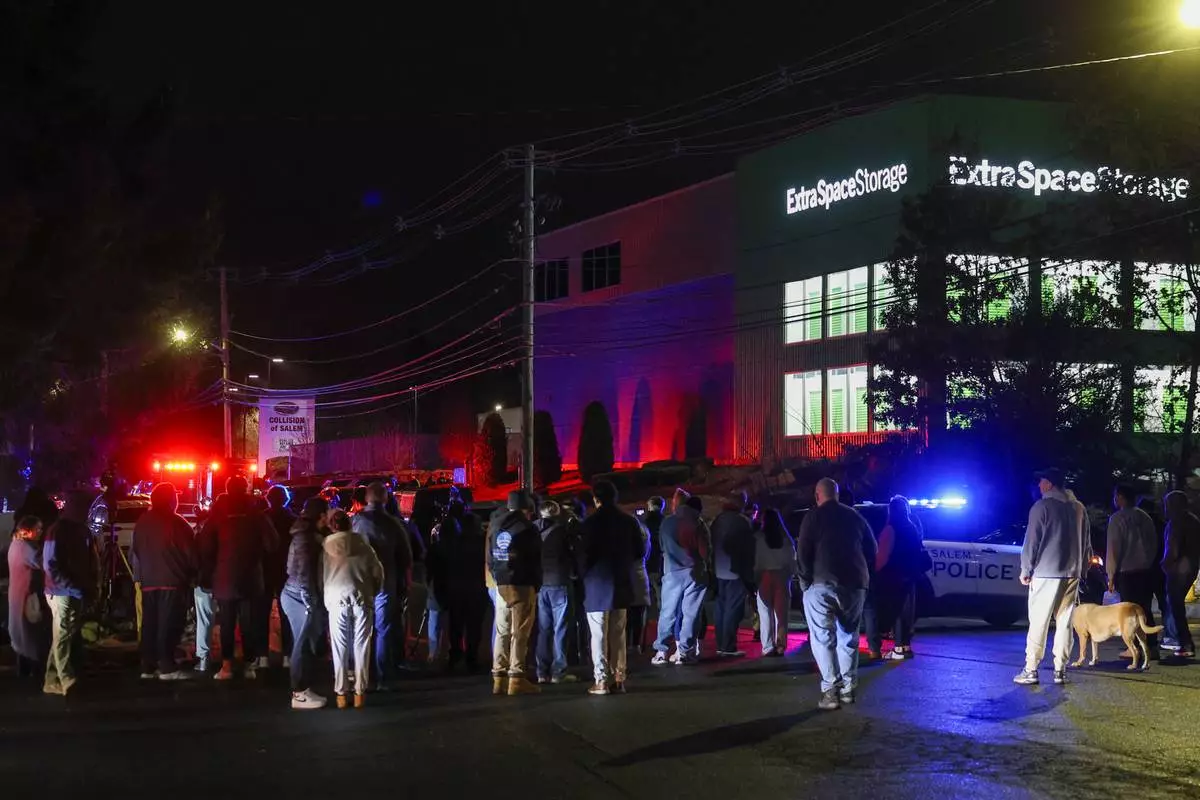
People gather outside a storage facility where a suspect in the shooting at Brown University was found dead, Thursday, Dec. 18, 2025, in Salem, N.H. (AP Photo/Reba Saldanha)
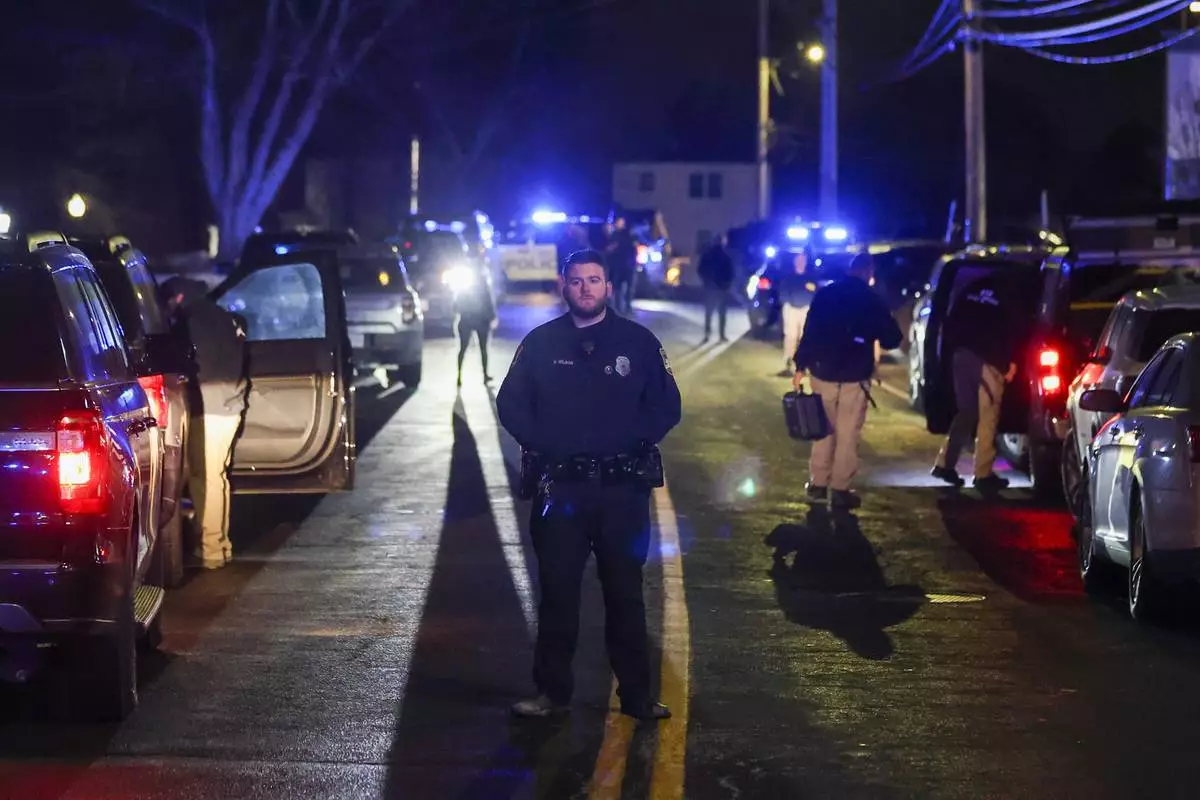
Law enforcement officers are seen outside a storage facility where a suspect in the shooting at Brown University was found dead, Thursday, Dec. 18, 2025, in Salem, N.H. (AP Photo/Reba Saldanha)
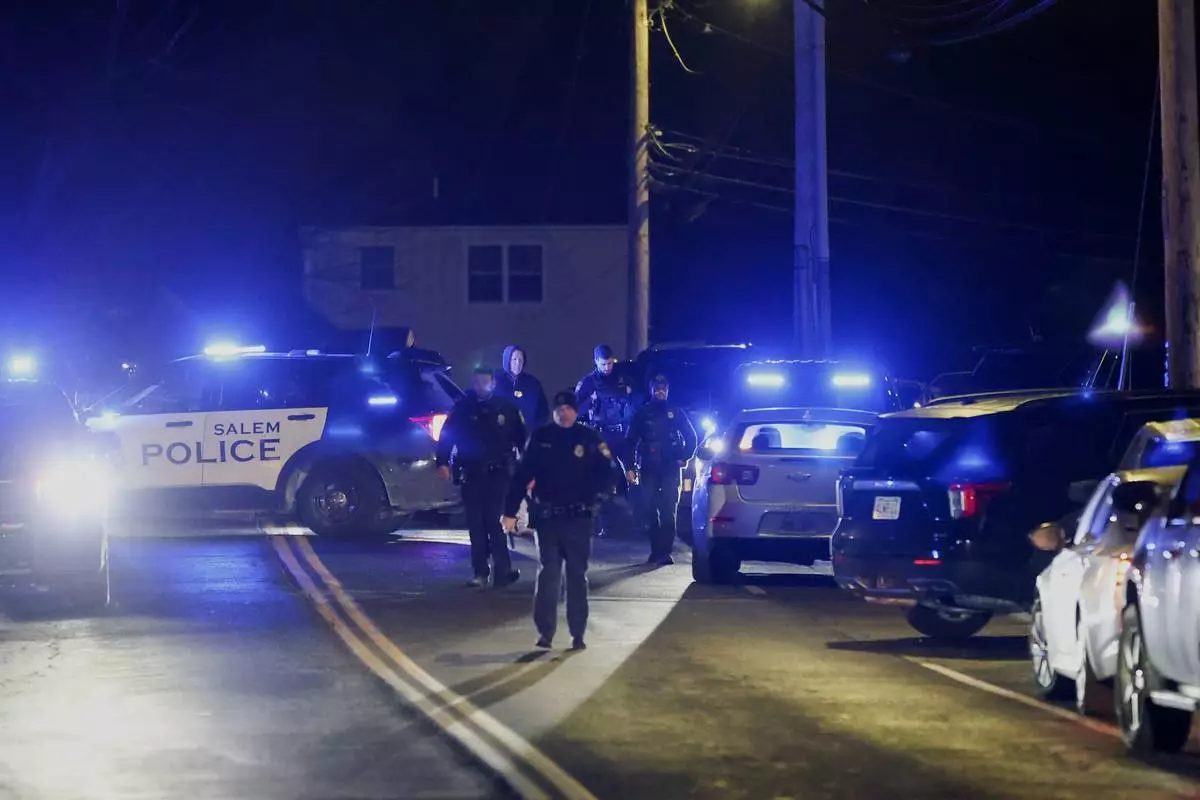
Law enforcement officers search the area for the Brown University shooting suspect, Thursday, Dec. 18, 2025, in Salem, N.H. (AP Photo/Reba Saldanha)
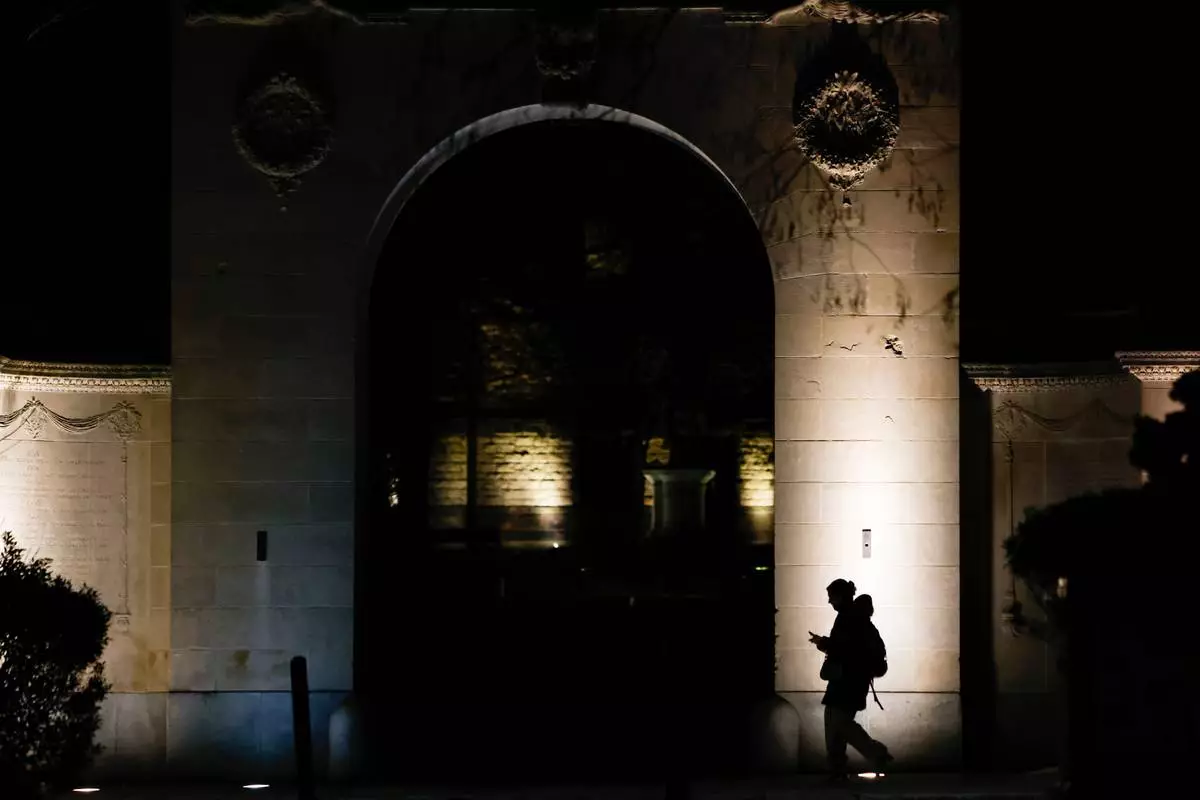
A pedestrian walks along Brown University's campus on Thayer St. in Providence, R.I., Wednesday, Dec. 17, 2025. (Lily Speredelozzi/The Sun Chronicle via AP)
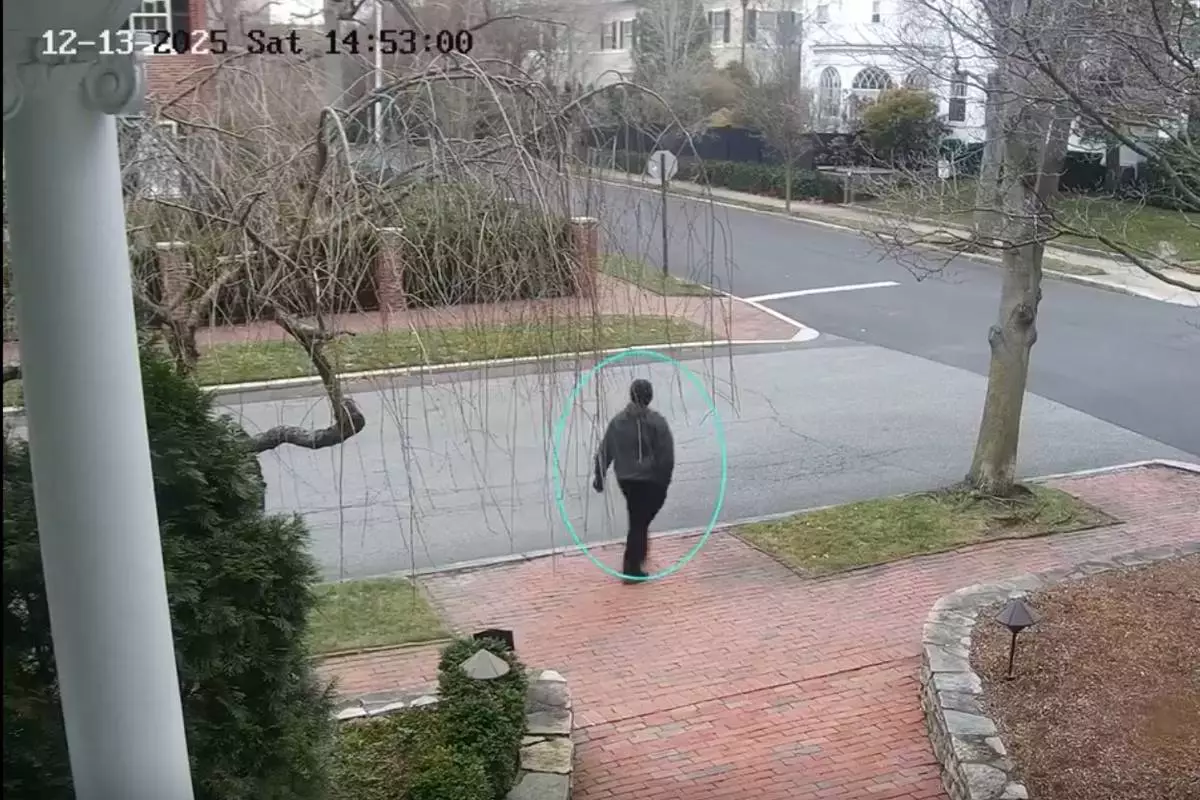
This image taken from video provided by the FBI shows a person of interest in the investigation of the shooting that occurred at Brown University, in Providence, R.I., Saturday, Dec. 13, 2025. (FBI via AP)
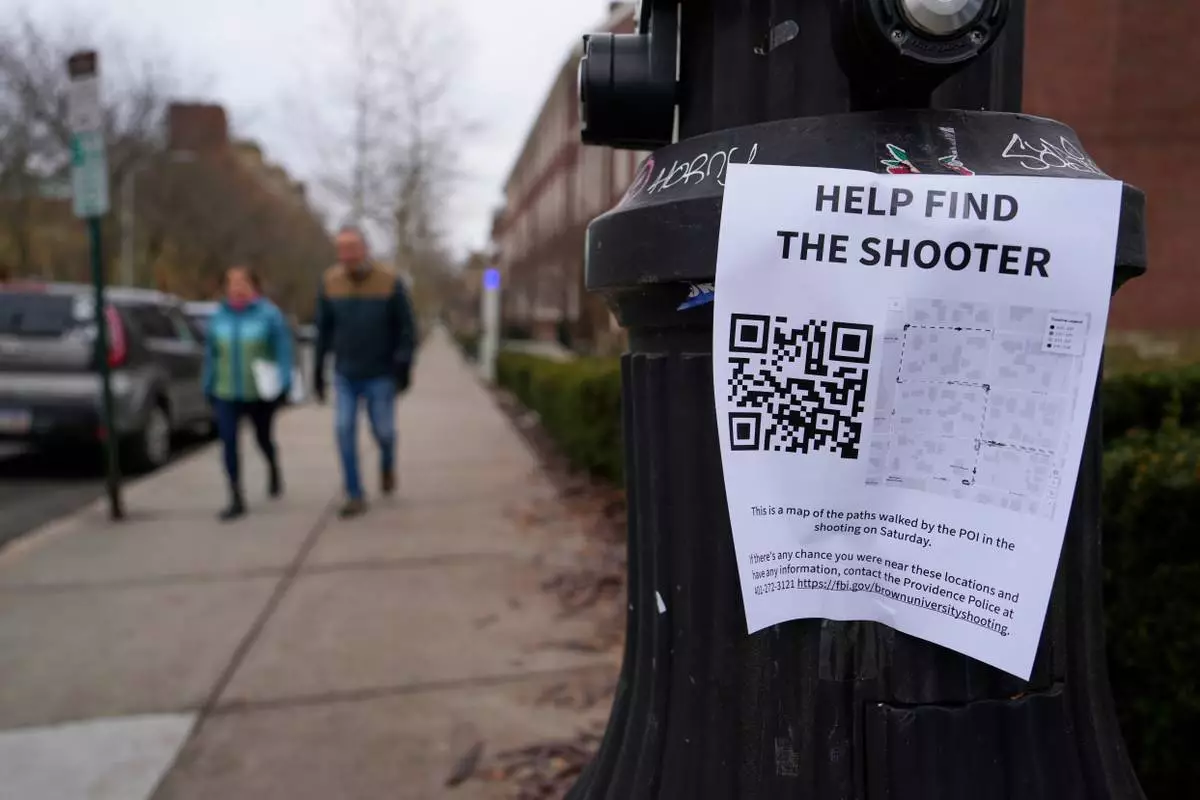
A poster seeking information about the campus shooting suspect is seen on the campus of Brown University, Wednesday, Dec. 17, 2025, in Providence, R.I. (AP Photo/Robert F. Bukaty)
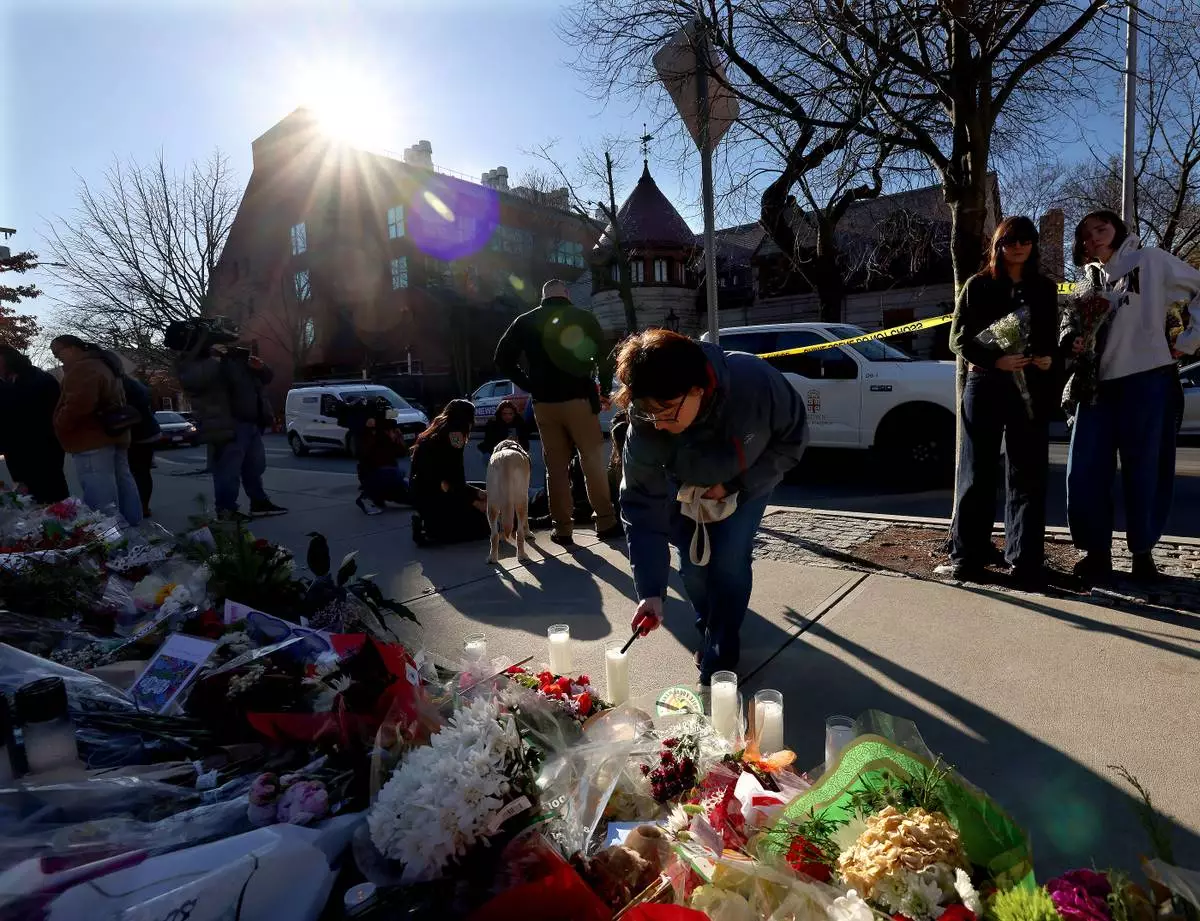
A woman lights a candle at a memorial set up in front of the Barus and Holley engineering building at Brown University in Providence, RI, Thursday, Dec. 18, 2025. (AP Photo/ Mark Stockwell)
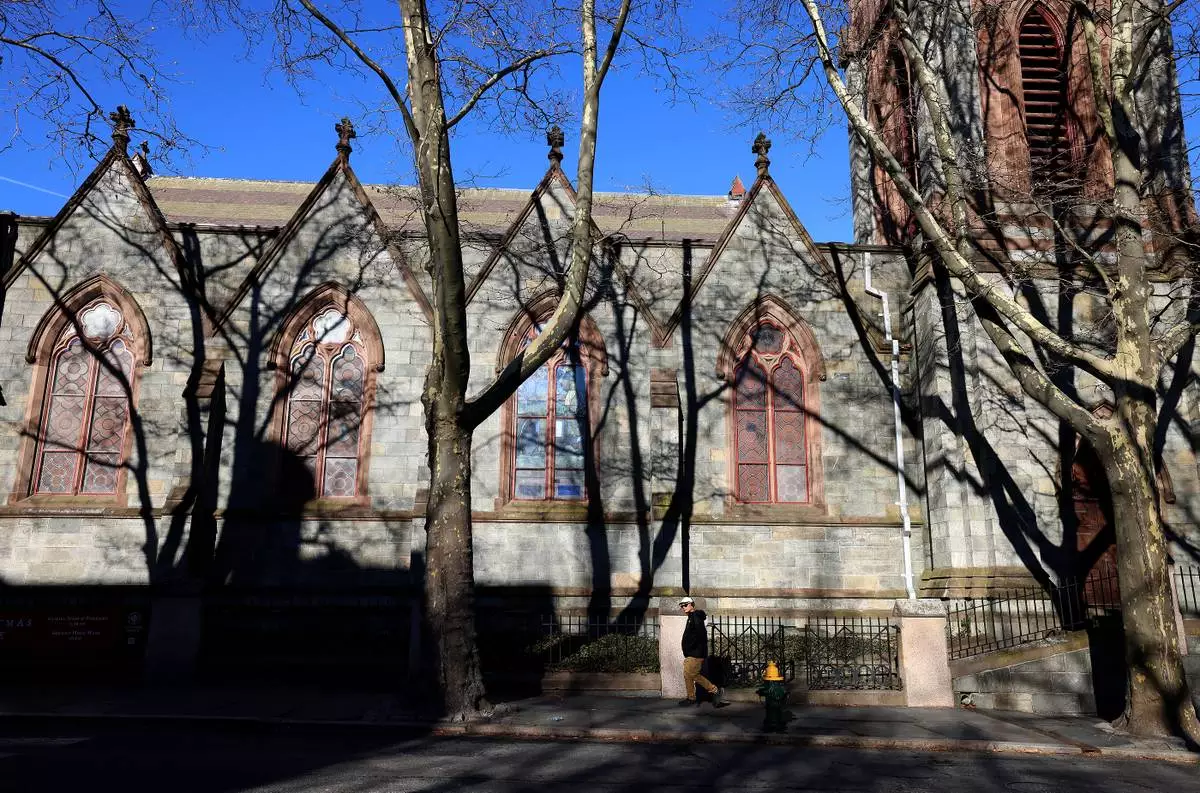
A Brown University student walks past a church on the Providence, RI, campus, Thursday, Dec. 18, 2025. (AP Photo/ Mark Stockwell)