China's solar giants are helping to rewrite the energy map with a haul of solar power projects in Kazakhstan where coal still dominates the national power grid.
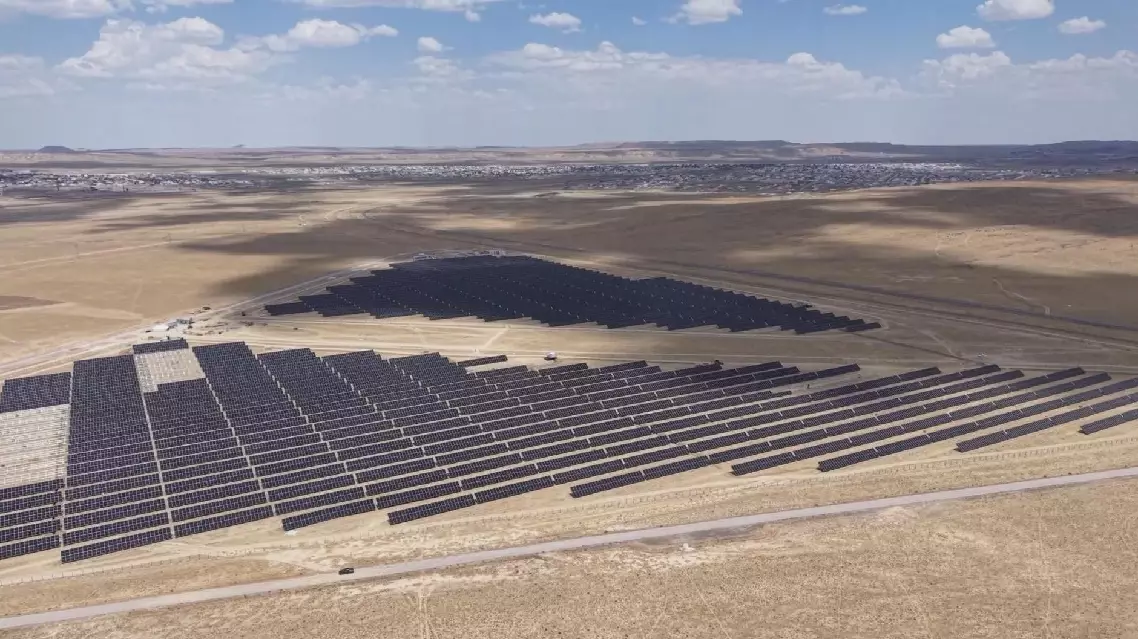
On the arid steppe near the Caspian Sea, the village of Shetpe in Mangystau Region is being transformed.
Since March 2025, parts of the semi-desert have been carpeted with solar panels that will deliver 20 MW of clean power to western Kazakhstan.
The project, with an investment of 5.678 billion tenge (about 10.59 million U.S. dollars), spans about 44 hectares of land.
It will create more than 100 jobs during its construction period and more jobs when the plant goes into commercial operation.
"The photovoltaic array is located near the Caspian Cement Plant. The area has relatively long average sunshine hours. The power station can generate electricity for about 13 hours a day. This is the largest foreign-invested project in our region. It is one of the key cooperation projects between Kazakhstan and China," said Askar Akkulov, deputy head of Mangystau District.
Engineers have minimized possible ecological disturbance by project since the stage of designing, and an automated thermal-imaging system will monitor soiling or overheating once the plant is completed, ensuring long-term efficiency of the power plant. Kazakh technicians will be trained to run the facility.
"The plant is expected to generate 25 million kWh of electricity annually. It will cut local carbon dioxide emissions by 2,500 tons each year, effectively protecting the environment. Since construction began in March 2025, we have now completed 80 percent of the work, and the plant is scheduled to go into commercial operation on September 30, 2025," said Zhang Peng, manager of the power project.
Across Kazakhstan, 48 solar plants totaling more than 1.2 GW have already been built.
Chinese firms have built seven of them and have two more under construction, adding another 120 MW of green power capacity. Negotiations between China and Kazakhstan are under way for even larger projects.
"At present, China-Kazakhstan cooperation in the photovoltaic sector is no longer confined to equipment supply. It has been upgraded to a comprehensive model that jointly develops infrastructure projects, builds energy systems together, and shares technological know-how. For Kazakhstan, this approach not only attracts investment and brings in new technologies, but also creates jobs locally," said Kazhymukhan Amangaliev, Kazak representative of a Chinese solar panel supplier.
China helps Kazakhstan rewrite energy map with solar power projects