Indian-controlled Kashmir faces unprecedented climate impacts -- from vanishing glaciers to drought-stricken farmlands -- prompting urgent warnings from scientists and residents alike.
The Sindh River, whose glacial waters flow from Ladakh's Machoi Glacier through Kashmir's Ganderbal district, serves as a vital lifeline for irrigation, drinking water, and hydropower before joining the Jhelum River and entering Pakistan. Fed by key glaciers including Kolahoi, Amarnath, and Thajiwas, its sources are now disappearing at an alarming rate -- studies reveal Jammu and Kashmir has lost 30 percent of its glacier mass since the 1960s. Scientists project up to 70 percent could vanish by 2100, risking catastrophic water shortages for the region.
"This is the cause of concern for the Kashmir valley and the main reason for that is the climate change that is taking place. We have not been able to limit the rise in temperature as was anticipated by global world body," said Aljaz Rasool, an environmentalist.
In June, Kashmir recorded its highest temperatures in over seven decades. The extreme heat triggered a drought-like situation: paddy fields cracked open, crops began to wither, and drinking water supplies came under severe stress.
Aquatic ecosystems also suffered, as shrinking water levels and reduced oxygen left fish and other species gasping for survival.
Irshad Ahmad Dar, a farmer who cultivates both saffron and paddy, is feeling the impact of climate change firsthand. He said the production of both "red gold" and rice has sharply declined over the past five years due to inadequate snowfall and rainfall.
"To ensure food security, there's a dire need to conserve water sources in the valley. If these resources disappear, our entire farming sector will collapse," said Irshad Ahmad Dar.
Researchers believe that the concentration of greenhouse gases has played a critical role in the interaction between Third Pole glaciers and the changing climate.
They added that smaller standalone glaciers, particularly those in the Pir Panjal range, have been among the most affected.
"One of the main reasons, if we look about the various studies which has basically aligned the glacier recession in the Kashmir Valley with this increase in greenhouse gases, which ultimately leads to climate change. And climate change ultimately heats our atmosphere, and when the atmosphere heats up, then various interactions happen," said Khalid Omar Murtaza, Assistant Professor Geoinformatics at the University of Kashmir.
While governments and institutions have a role to play, many believe that real change also begins at the local level -- with people, especially the youth, stepping up to protect what remains.
"The youth of Kashmir need to gear up, go into local communities, carry out plantation drives, protect water bodies, and make people aware of the impact of burning of fossil fuels on our environment," said Raja Muzafar Bhat, a climate activist.
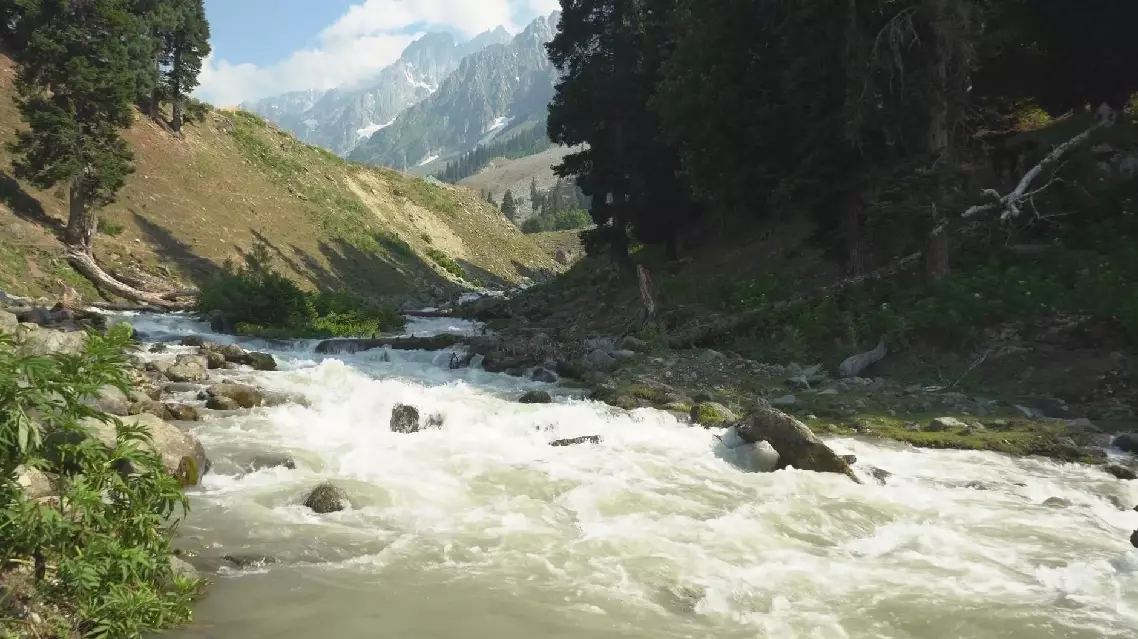
Indian-controlled Kashmir's melting glaciers trigger water security alarm
Indian-controlled Kashmir's melting glaciers trigger water security alarm
Indian-controlled Kashmir's melting glaciers trigger water security alarm