Skip to Content Facebook Feature Image

South China's coastal areas maintain emergency responses as typhoon Wipha moves away

China

China

China

South China's coastal areas maintain emergency responses as typhoon Wipha moves away

2025-07-21 02:01 Last Updated At:07:17

South China's coastal regions are maintaining emergency responses to battle the lingering impacts of Typhoon Wipha, as it gradually moves away from the area.

Typhoon Wipha, the sixth typhoon of the year, made a second landfall near Hailing Island in Yangjiang, south China's Guangdong Province at around 20:15 on Sunday as a strong tropical storm, with a maximum wind speed near its center of 25 meters per second, according to the provincial meteorological observatory.

It is expected to move west-southwestward at about 20 kilometers per hour while gradually weakening in intensity.

Earlier on Sunday at around 17:50, Wipha first landed near Haiyan Town of Jiangmen City in Guangdong, with a 33-meters-per-second maximum wind speed near its center.

On Sunday afternoon, rainfall in Shenzhen, a major city in Guangdong, had weakened. The city's meteorological observatory issued a notice stating that although Typhoon Wipha is moving away from Shenzhen, the city is expected to experience continuous rain from Sunday night through Monday.

Currently, all emergency shelters in Shenzhen are open to residents affected by the typhoon-triggered bad weather.

"Since Saturday, 85 workers from the Subway Line 15 project have been relocated to this emergency shelter. We provided them with water, instant noodles, and moisture-proof bedding so they can stay safely and comfortably while sheltering from the severe weather," said Zhou Yu, Communist Party secretary of Shenzhen's Fuzhongfu residential community.

In nearby Zhuhai City and the Guangdong-Macao In-Depth Cooperation Zone in Hengqin, 257 shelters were opened to protect residents from strong winds. In total, 64,799 people were evacuated, and 7,973 were relocated to safer areas.

"We arrived here on Saturday night. The conditions are good. For example, the bedding is soft and the temperature here is comfortable," said a relocated resident surnamed Feng.

Zhuhai downgraded its typhoon alert on Monday, and the city's wind-prevention emergency response level was also lowered. Classes, work, industrial production, transportation services, and commercial activities resumed as part of efforts to return life and production to normal.

China on Sunday activated a national Level IV disaster relief emergency response to address the severe impact Typhoon Wipha had on Guangdong Province.

As part of the response, special work groups were dispatched to affected areas to assess the damage and coordinate with local authorities on disaster relief efforts, including the provision of basic necessities to affected residents.

As Wipha moved away, the Hong Kong and Macao special administrative regions (SAR) each lowered their typhoon warnings from the previous hurricane signal No. 10, the top-level warning.

The Hong Kong Observatory downgraded the typhoon to signal No. 8 on Sunday afternoon and then lower the typhoon to signal No. 3 on 19:40.

The Macao SAR declared to end the "state of immediate prevention" on Sunday evening as Typhoon Wipha swept across the city during the day and moved away.

The Macao Meteorological and Geophysical Bureau downgraded the typhoon to signal No. 3 at 22:30, with social life gradually returning to normal. A blue storm surge warning was still in force.

Previously, the signals No. 8 and No. 9 were issued at 04:00 and 11:00, respectively.

According to the SAR's Civil Protection Operations Center, immigration clearance services at border points linking Macao to its neighboring mainland city of Zhuhai were resumed. The Macao Transport Bureau noted that public bus services were also available.

South China's coastal areas maintain emergency responses as typhoon Wipha moves away

South China's coastal areas maintain emergency responses as typhoon Wipha moves away
South China's coastal areas maintain emergency responses as typhoon Wipha moves away

South China's coastal areas maintain emergency responses as typhoon Wipha moves away

South China's coastal areas maintain emergency responses as typhoon Wipha moves away

South China's coastal areas maintain emergency responses as typhoon Wipha moves away

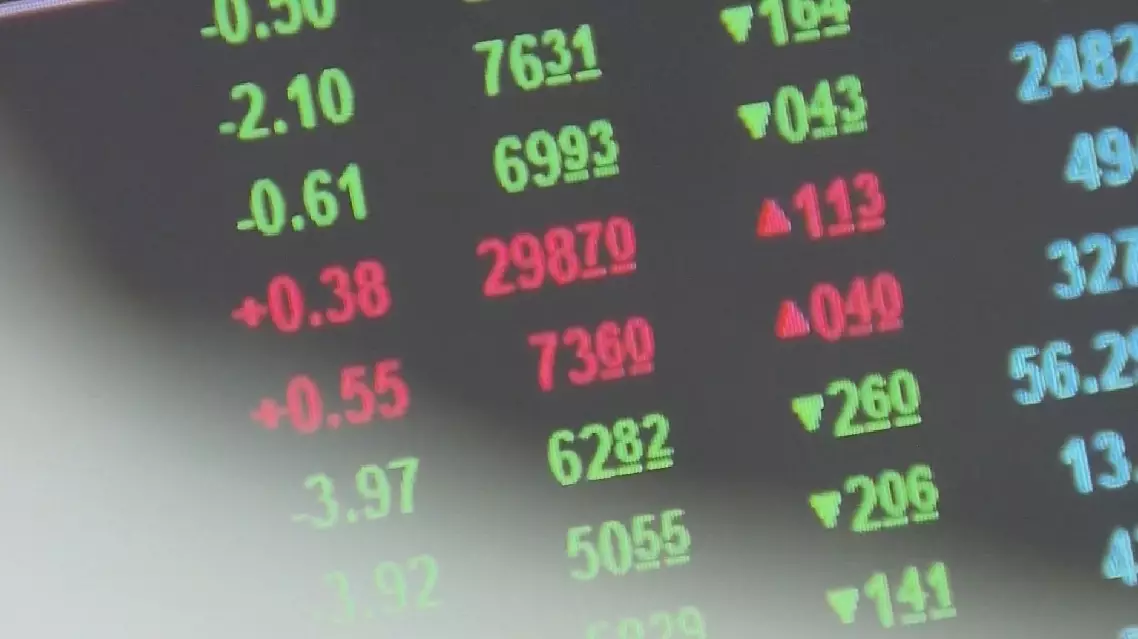
China's stock market demonstrated robust performance in 2025 with new records in various sectors.

Against the backdrop of global liquidity easing and evolving industrial policies, the A-share market experienced a landmark year. Multiple key metrics - including total market capitalization, trading volume, as well as margin trading and short selling balances - achieved historic breakthroughs, demonstrating remarkable vitality and resilience.

In terms of overall performance, as of Dec. 31, 2025, the total market capitalization of A-shares reached approximately 118.91 trillion yuan, marking a net increase of 25.30 trillion yuan from the year's opening level of 93.61 trillion yuan. This represents a growth rate of 27.03 percent, according to data from financial information provider Wind.

In 2025, major A-share indices extended their annual gains compared to 2024.

On Dec. 31, 2025, the Shanghai Composite Index stood at 3,968.84 points, marking an annual increase of 18.41 percent - the largest annual gain since 2020. The Shenzhen Component Index rose 29.87 percent for the year, while the ChiNext Index surged 49.57 percent. The Beijing Stock Exchange 50 Index recorded an annual gain of 38.80 percent, while the STAR Market 50 Index rose 35.92 percent for the year.

As major indices rose, market trading activity intensified. Throughout 2025, the A-share market recorded a total trading value of approximately 420 trillion yuan, marking a growth of over 60 percent compared to the previous year and nearly doubling the 2023 annual value. It also marked the first time in history that the annual trading value surpassed the 400 trillion yuan threshold.

The margin trading and short selling scale in the A-share market expanded rapidly in 2025. As of the year end, the outstanding margin trading and short selling balance in the A-share market increased by 690.7 billion yuan during the year to reach 2.5 trillion yuan, setting a new historical high.

Notably, the growth in the balance was primarily driven by the increase in the financing balance. Although the short selling balance also increased in 2025, its cumulative growth for the year was less than 10 billion yuan, with the absolute value of the short selling balance remaining at a low level in recent years.

As market sentiment continued to heat up, major sectors in the A-share market saw increases. Key industry sectors rose to varying degrees, with over half posting annual increases exceeding 30 percent.

Boosted by sharp rises in precious metal prices, the nonferrous metals sector delivered standout performance throughout 2025. Defense and military, telecommunications, machinery and equipment, automotive, power equipment, and electronics sectors also ranked among the top annual gainers. Sectors like food and beverages, coal, and banking showed relatively weaker annual performance but still managed modest gains.

Against the backdrop of a broad market rally, individual stocks also rose, with many delivering standout performances. Data indicates that over 4,200 A-shares saw price increases in 2025, accounting for more than three-quarters of the total. Specifically, after excluding newly listed stocks, over 500 A-shares still doubled in value, with more than 100 stocks achieving annual gains exceeding 200 percent.

China's stock market demonstrates strong performance with multiple new records in 2025

China's stock market demonstrates strong performance with multiple new records in 2025

Recommended Articles