Skip to Content Facebook Feature Image

Republicans can't stop talking about Joe Biden. That may be a problem

News

Republicans can't stop talking about Joe Biden. That may be a problem
News

News

Republicans can't stop talking about Joe Biden. That may be a problem

2025-07-21 22:04 Last Updated At:22:10

ATLANTA (AP) — It’s been six months since Joe Biden left the Oval Office. Republicans, including President Donald Trump, can’t stop talking about him.

The House has launched investigations asserting that Biden’s closest advisers covered up a physical and mental decline during the 82-year-old Democrat’s presidency. The Senate has started a series of hearings focused on his mental fitness. And Trump’s White House has opened its own investigation into the Biden administration’s use of the presidential autopen, which Trump has called “one of the biggest scandals in the history of our country.”

It all fits with Trump’s practice of blaming his predecessors for the nation's ills. Just last week, he tried to deflect criticism of his administration's handling of the Jeffrey Epstein sex trafficking case by casting blame on others, including Biden.

Turning the spotlight back on the former president carries risks for both parties heading into the 2026 midterms. The more Republicans or Democrats talk about Biden, the less they can make arguments about the impact of Trump’s presidency — positive or negative — especially his sweeping new tax cut and spending law that is reshaping the federal government.

“Most Americans consider Joe Biden to be yesterday’s news,” Republican pollster Whit Ayres said.

Seeking to avenge his 2020 loss to Biden, Trump mocked his rival’s age and fitness incessantly in 2024, even after Biden dropped his reelection bid and yielded to then-Vice President Kamala Harris.

He and other Republicans seemed poised to spend the summer touting their new tax, spending and policy package. But Trump, now 79 and facing his own health challenges, has refused to let up on Biden, and his allies in the party have followed suit.

Republican Rep. Derrick Van Orden of Wisconsin called the Biden White House's use of the autopen “a massive scandal,” while Republican Rep. Nick Lalota insists his New York constituents “are curious as to what was happening during President Biden’s days.”

White House press secretary Karoline Leavitt recently confirmed the administration would pursue an investigation of the Biden administration’s use of the presidential autopen. Trump and other Republicans have questioned whether Biden was actually running the country and suggested aides abused a tool that has long been a routine part of signing presidentially approved actions.

“We deserve to get to the bottom of it,” Leavitt said.

Biden has responded to the criticism by issuing a statement saying he was, in fact, making the decisions during his presidency and that any suggestion otherwise "is ridiculous and false."

On Capitol Hill, the House Oversight Committee has convened hearings on use of the autopen and Biden’s fitness for office. Van Orden cited the Constitution’s Article II vesting authority solely with the president.

“It doesn’t say chief of staff. It doesn’t say an autopen,” he said.

The House panel subpoenaed Biden’s physician and a top aide to former first lady Jill Biden. Both invoked Fifth Amendment protections that prevent people from being forced to testify against themselves in government proceedings.

“There was no there there,” said Democratic Rep. Wesley Bell of Missouri, a member of the committee who called the effort “an extraordinary waste of time.”

The committee's chairman, Rep. James Comer, wants to hear from former White House chiefs of staff Ron Klain and Jeff Zients; former senior advisers Mike Donilon and Anita Dunn; and other former top aides Bruce Reed, Steve Ricchetti and Annie Tomasini, among others. Republicans confirmed multiple dates for the sessions through late September, ensuring it will remain in the headlines.

That GOP schedule comes as both parties work feverishly to define Trump’s start to his second term.

His so-called “One Big Beautiful Bill” is a mix of tax cuts, border security measures and cuts to safety net programs such as Medicaid, a joint state-federal insurance program for lower-income Americans. Polls suggest some individual measures are popular while others are not and that the GOP faces headwinds on tilting the public in favor of the overall effort.

A recent poll from The Associated Press-NORC Center for Public Affairs Research found that about two-thirds of U.S. adults view the bill as a win for the wealthy and another found that only about one-quarter of U.S. adults felt Trump’s policies have helped them. In the policy survey, he failed to earn majority support on any of the major issues, including the economy, immigration, government spending and health care. Immigration, especially, had been considered a major strength for Trump politically.

It is “rather tone deaf,” said Bell, for Republicans to go after Biden given those circumstances.

“Americans want us to deal with the issues that are plaguing our country now … the high cost of living, cost of food, the cost of housing, health care,” Bell said, as he blasted the GOP for a deliberate “distraction" from what challenges most U.S. households.

The effort also comes with Trump battling his own supporters over the Justice Department's decision not to publicly release additional records related to the Epstein case.

“The Epstein saga is more important to his base than whatever happened to Joe Biden,” said Ayres, the GOP pollster.

Even Lalota, the New York congressman, acknowledged a balancing act with the Biden inquiries.

“My constituents care most about affordability and public safety,” Lalota said. “But this is an important issue nonetheless.”

With Republicans protecting a narrow House majority, every hotly contested issue could be seen as determinative in the 2026 midterm elections.

That puts added pressure on Republicans to retain Trump’s expanded 2024 coalition, when he increased support among Black and Hispanic voters, especially men, over the usual Republican levels. But that’s considerably harder without Trump himself on the ballot. That could explain Republican efforts to keep going after Biden given how unpopular he is with Trump’s core supporters.

Democrats, meanwhile, point to their success in the 2018 midterms during Trump’s first presidency, when they reclaimed the House majority on the strength of moderate voters, including disaffected Republicans. They seem confident that Republicans’ aggressiveness about Biden does not appeal to that swath of the electorate.

But even as they praise Biden’s accomplishments as president, Democrats quietly admit they don’t want to spend time talking about a figure who left office with lagging approval ratings and forced his party into a late, difficult change at the top of the ticket.

Democratic Rep. Don Beyer of Virginia said Biden was productive while acknowledging he "was not at the top of his game because of his age.” He said Democrats want to look forward, most immediately on trying to win control of the House and make gains in the Senate.

“And then who’s our standard bearer in 2028?” Beyer said. "And how do we minimize the Trump damage with what we have right now?”

Brown reported from Washington.
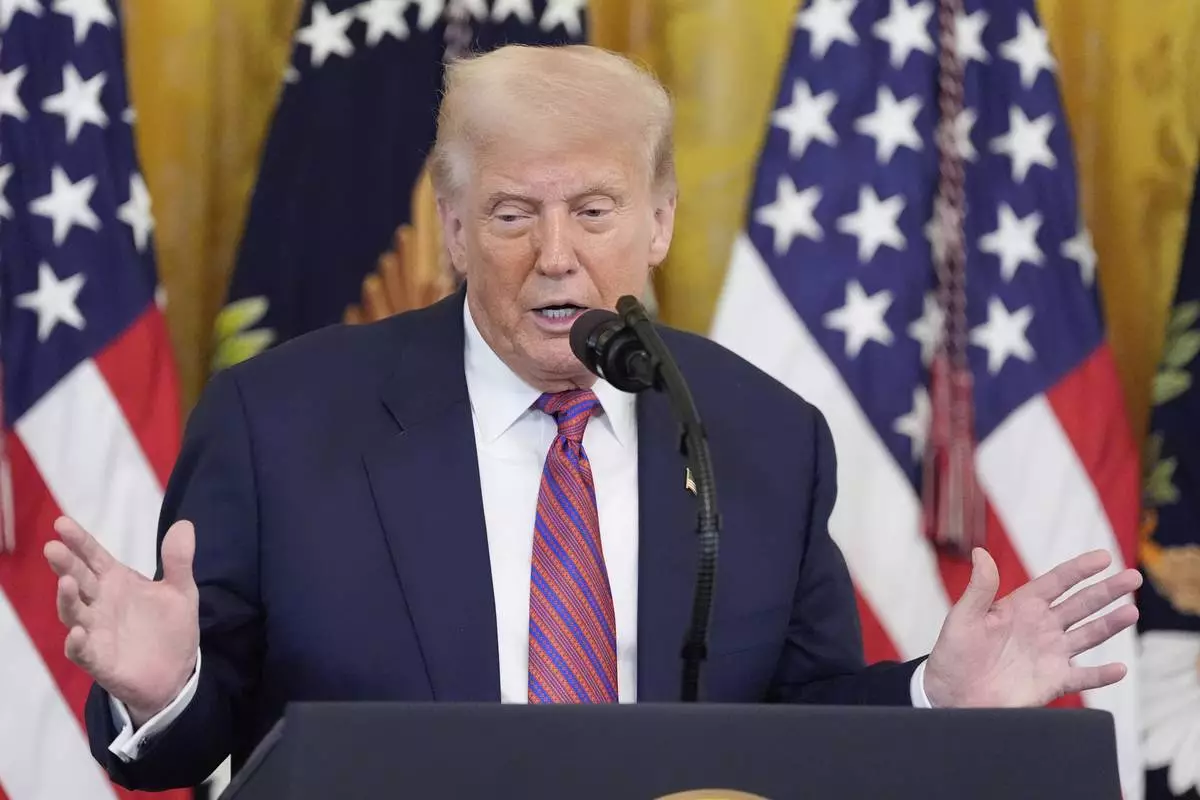
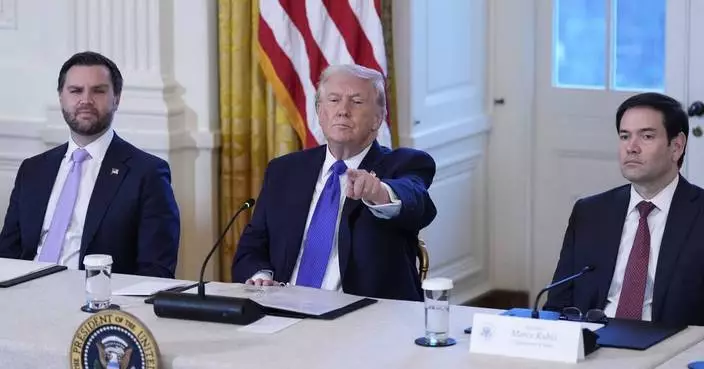
President Donald Trump speaks at an event for the signing of the GENIUS Act, a bill that regulates stablecoins, a type of cryptocurrency, in the East Room of the White House, Friday, July 18, 2025, in Washington. (AP Photo/Alex Brandon)
President Donald Trump speaks at an event for the signing of the GENIUS Act, a bill that regulates stablecoins, a type of cryptocurrency, in the East Room of the White House, Friday, July 18, 2025, in Washington. (AP Photo/Alex Brandon)

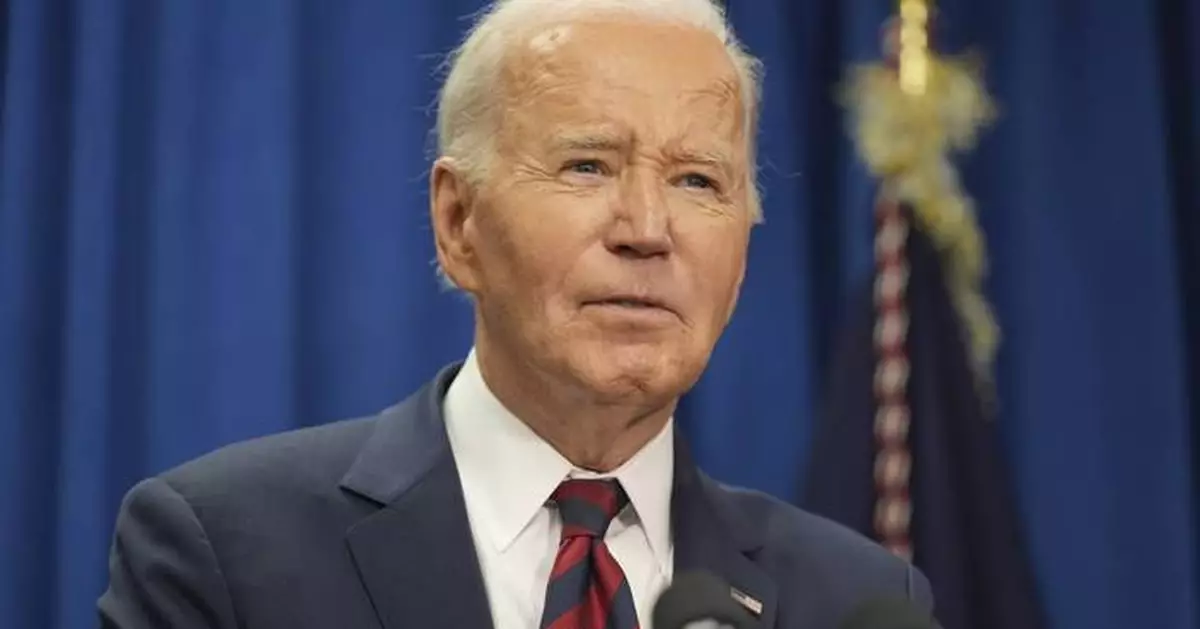
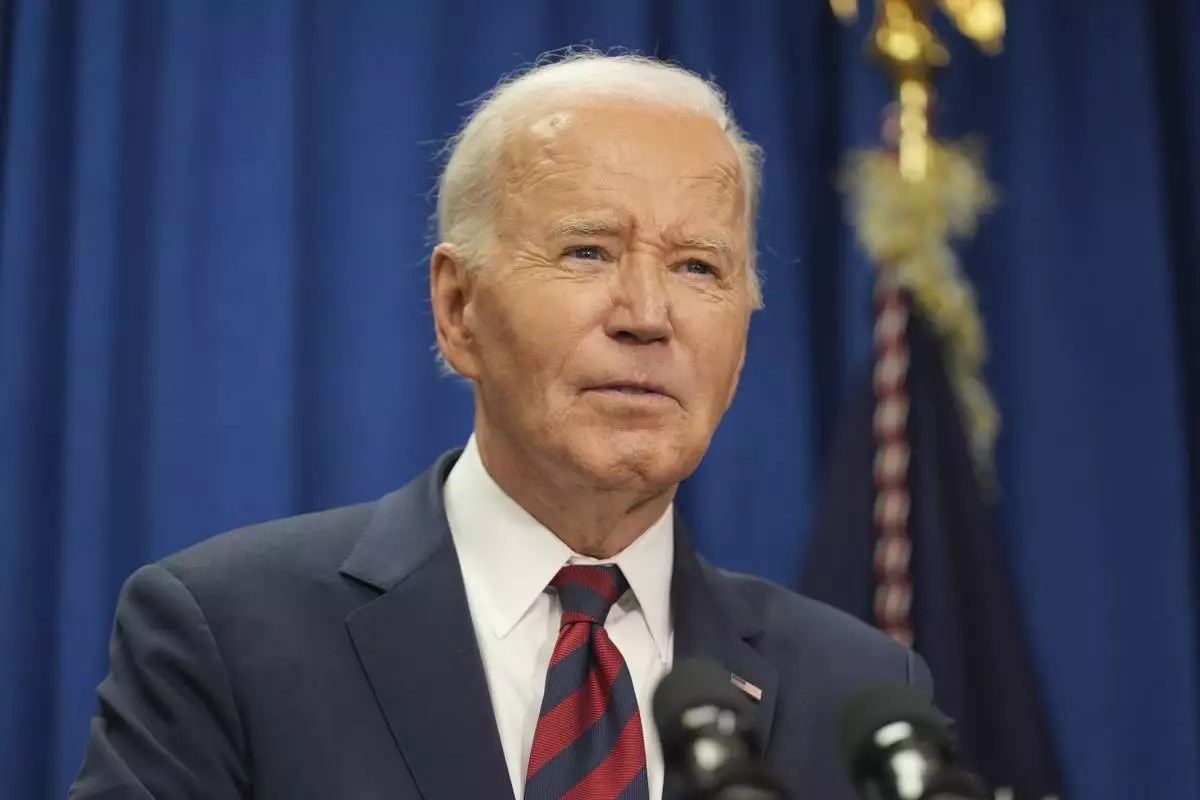
FILE - President Joe Biden speaks to the media in North Charleston, S.C., Jan. 19, 2025. (AP Photo/Stephanie Scarbrough, File)
FILE - President Joe Biden speaks to the media in North Charleston, S.C., Jan. 19, 2025. (AP Photo/Stephanie Scarbrough, File)

NEW YORK (AP) — Reviving a campaign pledge, President Donald Trump wants a one-year, 10% cap on credit card interest rates, a move that could save Americans tens of billions of dollars but drew immediate opposition from an industry that has been in his corner.

Trump was not clear in his social media post Friday night whether a cap might take effect through executive action or legislation, though one Republican senator said he had spoken with the president and would work on a bill with his “full support.” Trump said he hoped it would be in place Jan. 20, one year after he took office.

Strong opposition is certain from Wall Street in addition to the credit card companies, which donated heavily to his 2024 campaign and have supported Trump's second-term agenda. Banks are making the argument that such a plan would most hurt poor people, at a time of economic concern, by curtailing or eliminating credit lines, driving them to high-cost alternatives like payday loans or pawnshops.

“We will no longer let the American Public be ripped off by Credit Card Companies that are charging Interest Rates of 20 to 30%,” Trump wrote on his Truth Social platform.

Researchers who studied Trump’s campaign pledge after it was first announced found that Americans would save roughly $100 billion in interest a year if credit card rates were capped at 10%. The same researchers found that while the credit card industry would take a major hit, it would still be profitable, although credit card rewards and other perks might be scaled back.

About 195 million people in the United States had credit cards in 2024 and were assessed $160 billion in interest charges, the Consumer Financial Protection Bureau says. Americans are now carrying more credit card debt than ever, to the tune of about $1.23 trillion, according to figures from the New York Federal Reserve for the third quarter last year.

Further, Americans are paying, on average, between 19.65% and 21.5% in interest on credit cards according to the Federal Reserve and other industry tracking sources. That has come down in the past year as the central bank lowered benchmark rates, but is near the highs since federal regulators started tracking credit card rates in the mid-1990s. That’s significantly higher than a decade ago, when the average credit card interest rate was roughly 12%.

The Republican administration has proved particularly friendly until now to the credit card industry.

Capital One got little resistance from the White House when it finalized its purchase and merger with Discover Financial in early 2025, a deal that created the nation’s largest credit card company. The Consumer Financial Protection Bureau, which is largely tasked with going after credit card companies for alleged wrongdoing, has been largely nonfunctional since Trump took office.

In a joint statement, the banking industry was opposed to Trump's proposal.

“If enacted, this cap would only drive consumers toward less regulated, more costly alternatives," the American Bankers Association and allied groups said.

Bank lobbyists have long argued that lowering interest rates on their credit card products would require the banks to lend less to high-risk borrowers. When Congress enacted a cap on the fee that stores pay large banks when customers use a debit card, banks responded by removing all rewards and perks from those cards. Debit card rewards only recently have trickled back into consumers' hands. For example, United Airlines now has a debit card that gives miles with purchases.

The U.S. already places interest rate caps on some financial products and for some demographics. The Military Lending Act makes it illegal to charge active-duty service members more than 36% for any financial product. The national regulator for credit unions has capped interest rates on credit union credit cards at 18%.

Credit card companies earn three streams of revenue from their products: fees charged to merchants, fees charged to customers and the interest charged on balances. The argument from some researchers and left-leaning policymakers is that the banks earn enough revenue from merchants to keep them profitable if interest rates were capped.

"A 10% credit card interest cap would save Americans $100 billion a year without causing massive account closures, as banks claim. That’s because the few large banks that dominate the credit card market are making absolutely massive profits on customers at all income levels," said Brian Shearer, director of competition and regulatory policy at the Vanderbilt Policy Accelerator, who wrote the research on the industry's impact of Trump's proposal last year.

There are some historic examples that interest rate caps do cut off the less creditworthy to financial products because banks are not able to price risk correctly. Arkansas has a strictly enforced interest rate cap of 17% and evidence points to the poor and less creditworthy being cut out of consumer credit markets in the state. Shearer's research showed that an interest rate cap of 10% would likely result in banks lending less to those with credit scores below 600.

The White House did not respond to questions about how the president seeks to cap the rate or whether he has spoken with credit card companies about the idea.

Sen. Roger Marshall, R-Kan., who said he talked with Trump on Friday night, said the effort is meant to “lower costs for American families and to reign in greedy credit card companies who have been ripping off hardworking Americans for too long."

Legislation in both the House and the Senate would do what Trump is seeking.

Sens. Bernie Sanders, I-Vt., and Josh Hawley, R-Mo., released a plan in February that would immediately cap interest rates at 10% for five years, hoping to use Trump’s campaign promise to build momentum for their measure.

Hours before Trump's post, Sanders said that the president, rather than working to cap interest rates, had taken steps to deregulate big banks that allowed them to charge much higher credit card fees.

Reps. Alexandria Ocasio-Cortez, D-N.Y., and Anna Paulina Luna, R-Fla., have proposed similar legislation. Ocasio-Cortez is a frequent political target of Trump, while Luna is a close ally of the president.

Seung Min Kim reported from West Palm Beach, Fla.

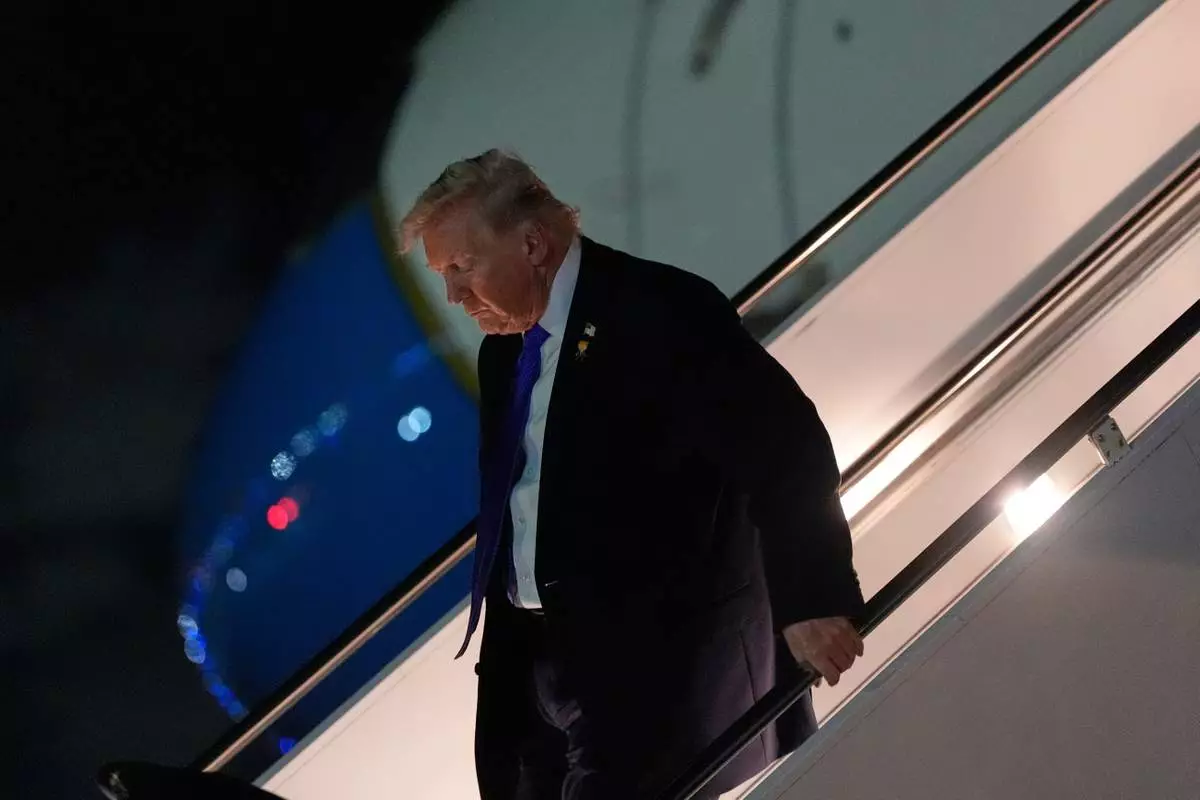
President Donald Trump arrives on Air Force One at Palm Beach International Airport, Friday, Jan. 9, 2025, in West Palm Beach, Fla. (AP Photo/Julia Demaree Nikhinson)

President Donald Trump arrives on Air Force One at Palm Beach International Airport, Friday, Jan. 9, 2025, in West Palm Beach, Fla. (AP Photo/Julia Demaree Nikhinson)

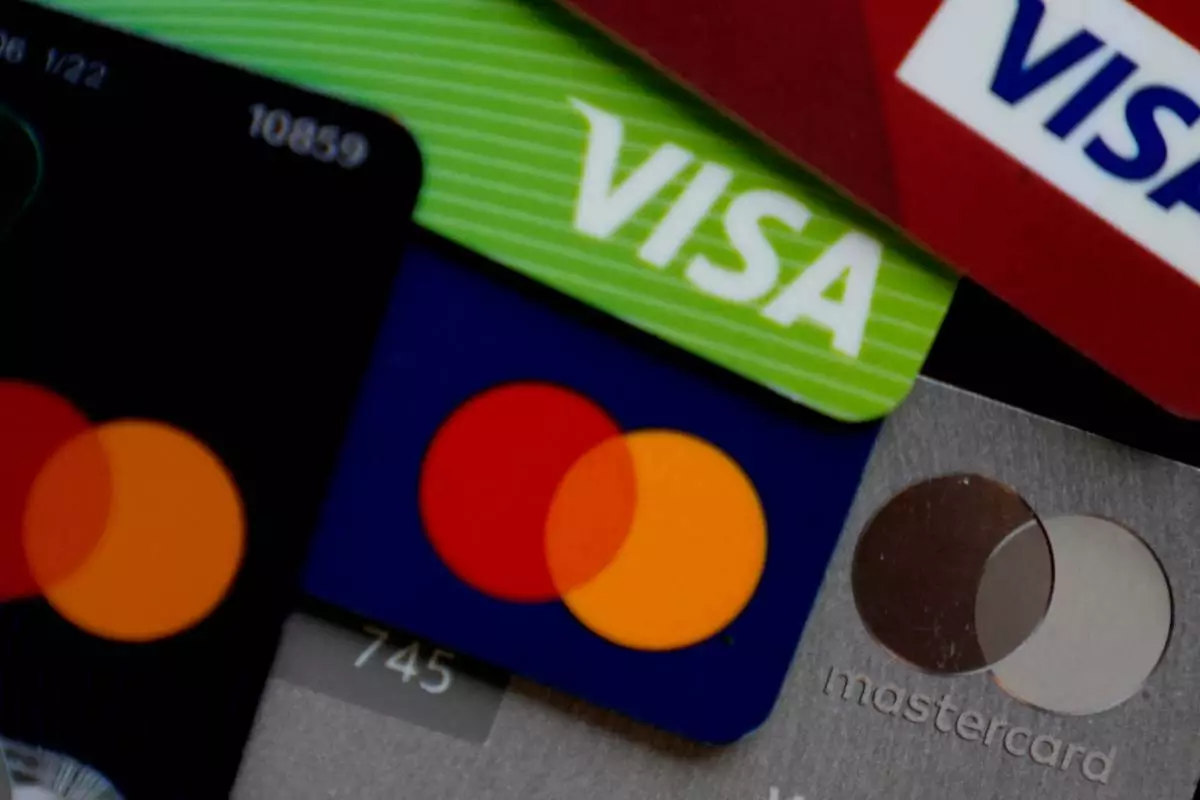
FILE - Visa and Mastercard credit cards are shown in Buffalo Grove, Ill., Feb. 8, 2024. (AP Photo/Nam Y. Huh, File)

FILE - Visa and Mastercard credit cards are shown in Buffalo Grove, Ill., Feb. 8, 2024. (AP Photo/Nam Y. Huh, File)

Recommended Articles