As cryptocurrencies become more intertwined with the traditional financial system, industry heavyweights are racing for a long-sought goal of turning real-world assets into digital tokens.
“Tokenization is going to open the door to a massive trading revolution,” said Vlad Tenev, the CEO of the trading platform Robinhood at a recent James Bond-themed tokenization launch event in the south of France.
Advocates say tokenization is the next leap forward in crypto and can help break down walls that have advantaged the wealthy and make trading cheaper, more transparent and more accessible for everyday investors.
But critics say tokenization threatens to undermine a century’s worth of securities law and investor protections that have made the U.S. financial system the envy of the world. And Robinhood’s push into tokenizing shares of private companies quickly faced pushback from one of the world’s most popular startups.
The basic idea behind tokenization: Use blockchain technology that powers cryptocurrencies to create digital tokens as stand-ins for things like bonds, real estate or even fractional ownership of a piece of art and that can be traded like crypto by virtually anyone, anywhere at any time.
The massive growth of stablecoins, which are a type of cryptocurrency typically bought and sold for $1, has helped fuel the appetite to tokenize other financial assets, crypto venture capitalist Katie Haun said on a recent podcast.
She said tokenization will upend investing in ways similar to how streamers radically changed how people watch television.
“You used to have to sit there on a Thursday night and watch Seinfeld,” Haun said. “You tune in at a specific time, you don’t get to choose your program, you couldn’t be watching a program like Squid Games from Korea. Netflix was market-expanding. In the same way, I think the tokenization of real-world assets will be market expanding.”
Robinhood began offering tokenized stock trading of major U.S. public companies for its European customers earlier this month and gave away tokens to some customers meant to represent shares in OpenAI and SpaceX, two highly valued private companies.
Several other firms are diving in. Crypto exchange Kraken also allows customers outside the U.S. to trade tokenized stocks while Coinbase has petitioned regulators to open the market to its U.S. customers. Wall Street giants BlackRock and Franklin Templeton currently offer tokenized money market funds. McKinsey projects that tokenized assets could reach $2 trillion by 2030.
The push for tokenization comes at a heady time in crypto, an industry that’s seen enormous growth from the creation and early development of bitcoin more than 15 years ago by libertarian-leaning computer enthusiasts to a growing acceptance in mainstream finance.
The world’s most popular cryptocurrency is now regularly setting all-time highs — more than $123,000 on Monday — while other forms of crypto like stablecoins are exploding in use and the Trump administration has pledged to usher in what’s been called the “golden age” for digital assets.
Lee Reiners, a lecturing fellow at Duke University, said the biggest winners in the push for tokenization could be a small handful of exchanges like Robinhood that see their trading volumes and influence spike.
“Which is kind of ironic given the origins of crypto, which was to bypass intermediaries,” Reiners said.
Interest in tokenization has also gotten a boost thanks to the election of President Donald Trump, who has made enacting more crypto-friendly regulations a top priority of his administration and signed a new law regulating stablecoins on Friday.
“Tokenization is an innovation and we at the SEC should be focused on how do we advance innovation at the marketplace,” said Securities and Exchange Commission Chairman Paul Atkins.
Securities law can be complex and even defining what is a security can be a hotly debated question, particularly in crypto. The crypto exchange Binance pulled back offerings of tokenized securities in 2021 after German regulators raised questions about potential violations of that country’s securities law.
Under Trump, the SEC has taken a much less expansive view than the previous administration and dropped or paused litigation against crypto companies that the agency had previously accused of violating securities law.
Hilary Allen, a professor at the American University Washington College of Law, said crypto companies have been emboldened by Trump's victory to be more aggressive in pushing what they can offer.
“The most pressing risk is (tokenization) being used as a regulatory arbitrage play as a way of getting around the rules,” she said.
However, the SEC has struck a cautionary tone when it comes to tokens. Shortly after Robinhood’s announcement, SEC Commissioner Hester Peirce, who has been an outspoken crypto supporter, issued a statement saying companies issuing tokenized stock should consider “their disclosure obligations” under federal law.
“As powerful as blockchain technology is, it does not have magical abilities to transform the nature of the underlying asset,” Peirce said.
One of the most closely watched areas of tokenization involves private companies, which aren’t subject to strict financial reporting requirements like publicly traded ones.
Many hot startups are not going public as often as they used to and instead are increasingly relying on wealthy and institutional investors to raise large sums of money and stay private.
That’s unfair to the little guy, say advocates of tokenization.
“These are massive wealth generators for a very small group of rich, well-connected insiders who get access to these deals early,” said Robinhood executive Johann Kerbrat. “Crypto has the power to solve this inequality.”
But Robinhood’s giveaway of tokens meant to represent an investment in OpenAI immediately drew pushback from the company itself, which said it was not involved in Robinhood’s plan and did not endorse it.
“Any transfer of OpenAI equity requires our approval—we did not approve any transfer,” OpenAI said on social media. “Please be careful.”
Public companies have strict public reporting requirements about their financial health that private companies don’t have to produce. Such reporting requirements have helped protect investors and give a legitimacy to the U.S. financial system, said Allen, who said the push for tokenized sales of shares in private companies is “eerily familiar” to how things played out before the creation of the SEC nearly a century ago.
“Where we’re headed is where we were in the 1920s,” she said. “Door-to-door salesmen offering stocks and bonds, half of it had nothing behind it, people losing their life savings betting on stuff they didn’t understand.”
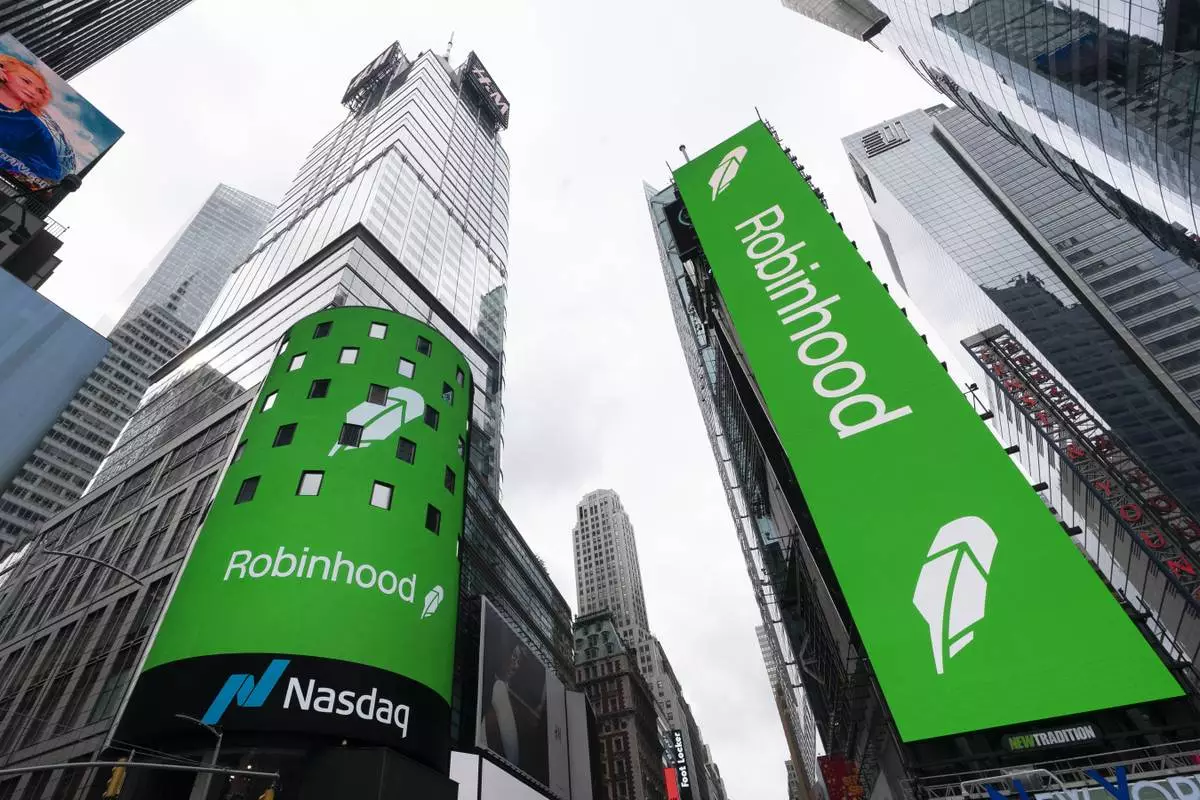
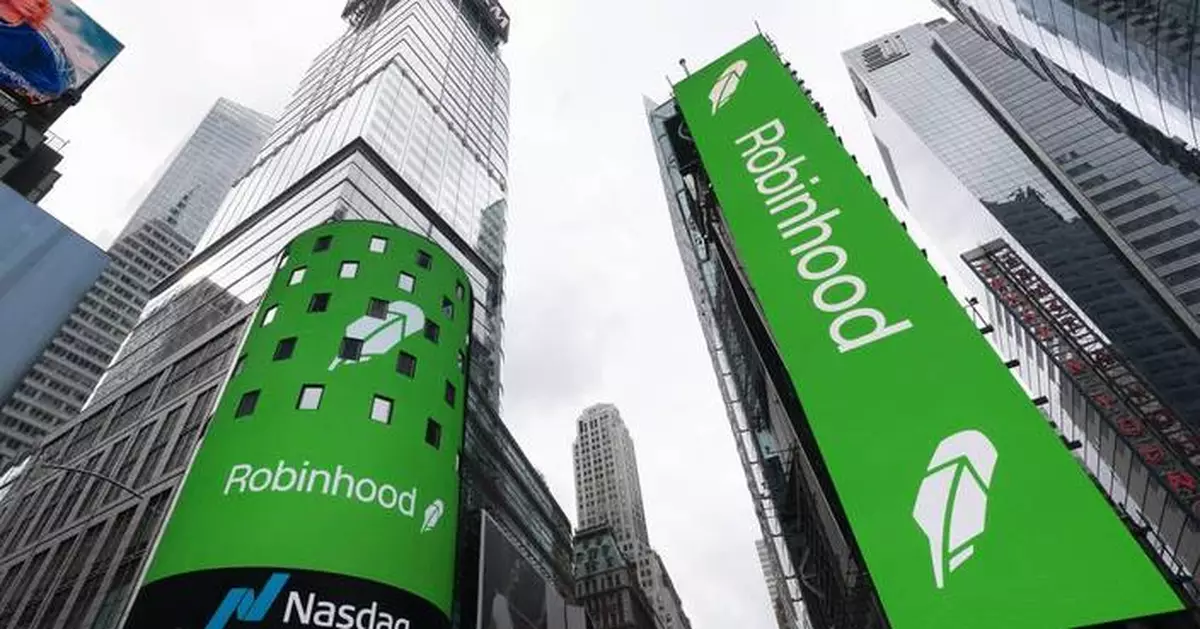
FILE - Electronic screens in New York's Times Square announce the Robinhood IPO, July 29, 2021. (AP Photo/Mark Lennihan, File)
SYDNEY (AP) — Two gunmen opened fire during a Hanukkah celebration on Sydney's Bondi beach, killing 15 people, including a child, officials said Monday, in what Prime Minister Anthony Albanese called an act of antisemitic terrorism that struck at the heart of the nation.
The massacre at one of Australia’s most popular beaches followed a wave of antisemitic attacks that have roiled the country over the past year, although the authorities didn’t suggest those and the shooting Sunday were connected. It was the deadliest shooting in almost three decades in a country with strict gun control laws.
One gunman, a 50-year-old man, was fatally shot by police. The other shooter, his 24-year-old son, was wounded and was being treated at a hospital, said Mal Lanyon, New South Wales police commissioner.
Police said one gunman was known to security services, but Lanyon said authorities had no indication of a planned attack.
Those killed were aged between 10- and 87-years-old, New South Wales Premier Chris Minns told reporters. At least 38 others were injured in the attack.
“What we saw yesterday was an act of pure evil, an act of antisemitism, an act of terrorism on our shores in an iconic Australian location, Bondi Beach, that is associated with joy, associated with families gathering, associated with celebrations,” Australian Prime Minister Anthony Albanese said Monday.
“It is forever tarnished by what has occurred.”
Police pledged a “thorough” investigation, Lanyon said. Authorities were not looking for anyone else in connection with the massacre.
The violence erupted at the end of a summer day when thousands had flocked to Bondi Beach, including hundreds gathered for the Chanukah by the Sea event celebrating the start of the eight-day Hanukkah festival.
Chabad, an Orthodox Jewish movement that runs outreach worldwide and sponsors events during major Jewish holidays, identified one of the dead as Rabbi Eli Schlanger, assistant rabbi at Chabad of Bondi and an organizer of the event.
Israel’s Foreign Ministry confirmed the death of an Israeli citizen, but gave no further details.
Police said emergency services were called at about 6:45 p.m., responding to reports of shots being fired. Video by onlookers showed people in bathing suits running from the water as shots rang out. Separate footage showed two men in black shirts firing with long guns from a footbridge leading to the beach.
One dramatic clip broadcast on Australian television showed a man appearing to tackle and disarm one gunman, before pointing the man’s weapon at him, then setting the gun on the ground.
Minns called the man, identified by relatives to Australian media as fruit shop owner Ahmed al Ahmed, a “genuine hero.”
Arsen Ostrovsky, a lawyer attending the Hanukkah ceremony with his wife and daughters, was grazed in the head by a bullet. Ostrovsky said he moved from Israel to Australia two weeks ago to work for a Jewish advocacy group.
“What I saw today was pure evil, just an absolute bloodbath. Bodies strewn everywhere,” he told The Associated Press in an email from the hospital. "I never thought would be possible here in Australia."
Lachlan Moran, 32, from Melbourne, told the AP he was waiting for his family when he heard shots.
"I sprinted as quickly as I could," Moran said. He said he heard shooting off and on for about five minutes. “Everyone just dropped all their possessions and everything and were running and people were crying and it was just horrible."
Albanese vowed the violence would be met with “a moment of national unity where Australians across the board will embrace their fellow Australians of Jewish faith.”
King Charles III said he and Queen Camilla were “appalled and saddened by the most dreadful antisemitic terrorist attack.” United Nations Secretary-General António Guterres said on X he was horrified, and his “heart is with the Jewish community worldwide.”
U.S. Secretary of State Marco Rubio said in a post on X: “The United States strongly condemns the terrorist attack in Australia targeting a Jewish celebration. Antisemitism has no place in this world.”
Police in cities around the world, including London, said they would step up security at Jewish sites.
Australia, a country of 28 million people, is home to about 117,000 Jews, according to official figures. Antisemitic incidents, including assaults, vandalism, threats and intimidation, surged more than threefold in the country during the year after Hamas attacked Israel on Oct. 7, 2023, and Israel launched a war on Hamas in Gaza in response, the government's Special Envoy to Combat Antisemitism Jillian Segal reported in July.
Last year, the country was rocked by antisemitic attacks in Sydney and Melbourne. Synagogues and cars were torched, businesses and homes graffitied and Jews attacked in those cities, where 85% of the nation’s Jewish population lives.
Albanese in August blamed Iran for two of the attacks and cut diplomatic ties to Tehran.
Pastor Matt Graham, who was conducting a service at Bondi Anglican Church when panicked people began entering for shelter, said antisemitism has been brewing in Sydney’s eastern suburbs including Bondi, where the Jewish community is centered.
“I’m surrounded by antisemitic graffiti constantly,” Graham told the Australian Broadcasting Corp. "As a Christian, I just want to declare I stand with the people of Israel.”
Israel urged Australia's government to address crimes targeting Jews. Prime Minister Benjamin Netanyahu said he warned Australia’s leaders months ago about the dangers of failing to take action against antisemitism. He claimed Australia's decision — in line with scores of other countries — to recognize a Palestinian state “pours fuel on the antisemitic fire.”
“Your government did nothing to stop the spread of antisemitism in Australia ... and the result is the horrific attacks on Jews we saw today,” Netanyahu said.
His office released safety recommendations Monday for Israelis traveling abroad, including avoiding large gatherings that don’t have security, especially events at synagogues and Hanukkah gatherings. It also called for heightened awareness at Jewish and Israeli sites.
Mass shootings in Australia are extremely rare. A 1996 massacre in the Tasmanian town of Port Arthur, where a lone gunman killed 35 people, prompted the government to drastically tighten gun laws, making it much more difficult to acquire firearms.
Significant mass shootings this century included two murder-suicides with death tolls of five people in 2014 and seven in 2018, in which gunmen killed their own families and themselves.
In 2022, six people were killed in a shootout between police and Christian extremists at a rural property in Queensland state.
McGuirk reported from Melbourne, Australia, and Graham-McLay from Wellington, New Zealand. Associated Press writers Melanie Lidman in Tel Aviv, Israel, and Mustakim Hasnath in London contributed to this report.
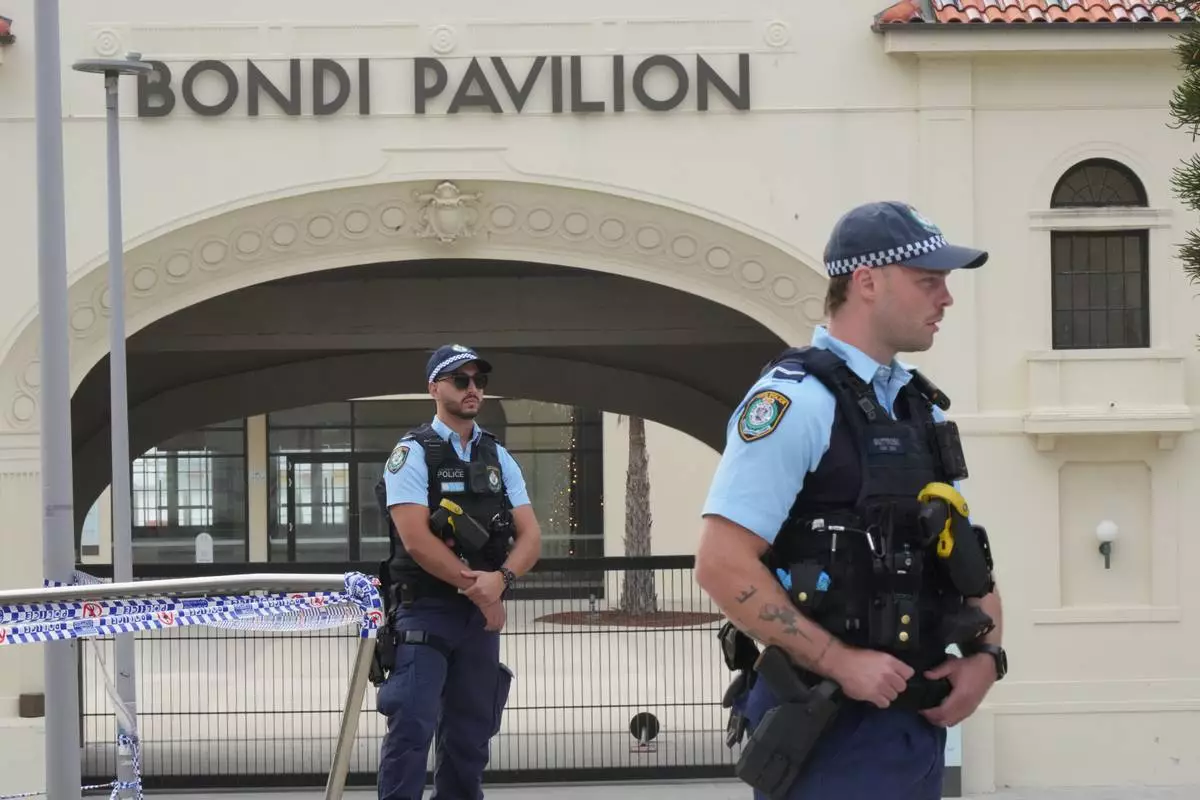
Police patrol in the early morning following a shooting Sunday at Sydney's Bondi Beach, Monday, Dec. 15, 2025. (AP Photo/Mark Baker)
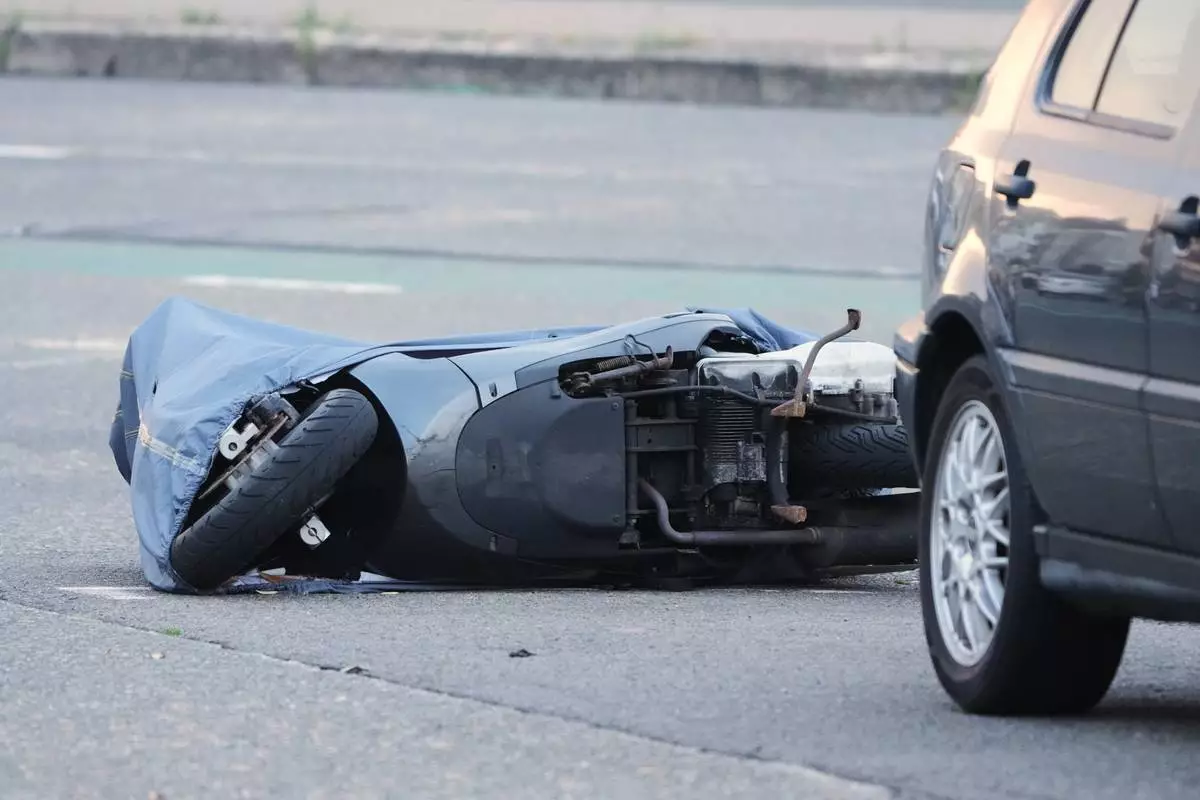
A motorcycle lies on the ground in the early morning near the site of a shooting Sunday at Sydney's Bondi Beach, Monday, Dec. 15, 2025. (AP Photo/Mark Baker)
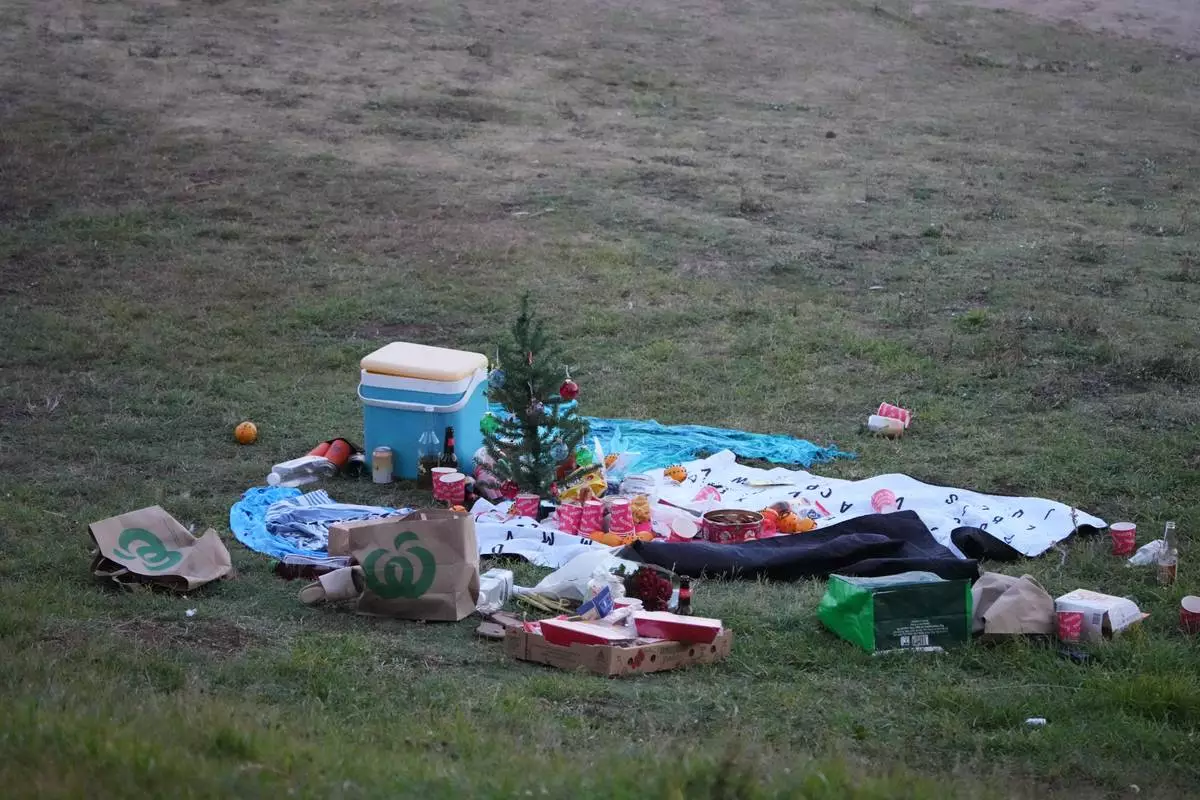
A small Christmas tree is at the center of an abandoned holiday picnic at Bondi Beach after a reported shooting in Sydney, Sunday, Dec. 14, 2025. (AP Photo/Mark Baker)
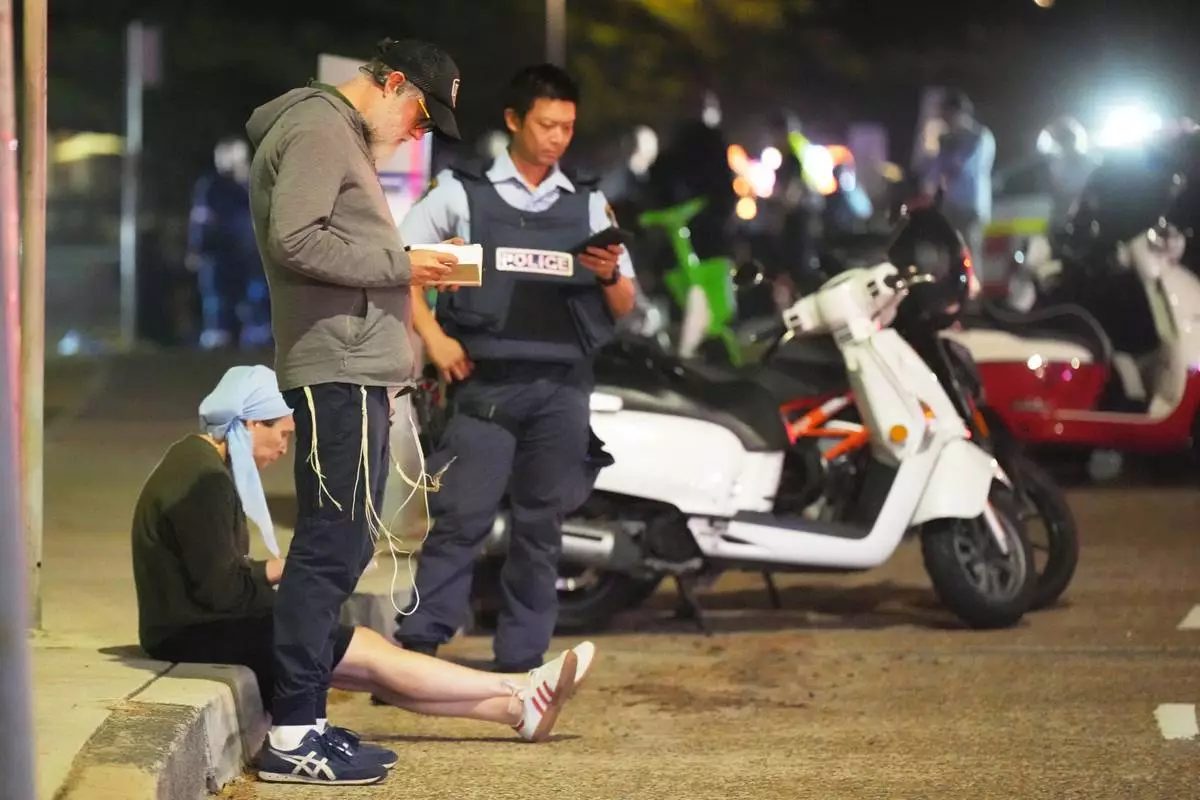
Bystanders stay where police cordon off an area at Bondi Beach after a reported shooting in Sydney, Sunday, Dec. 14, 2025. (AP Photo/Mark Baker)
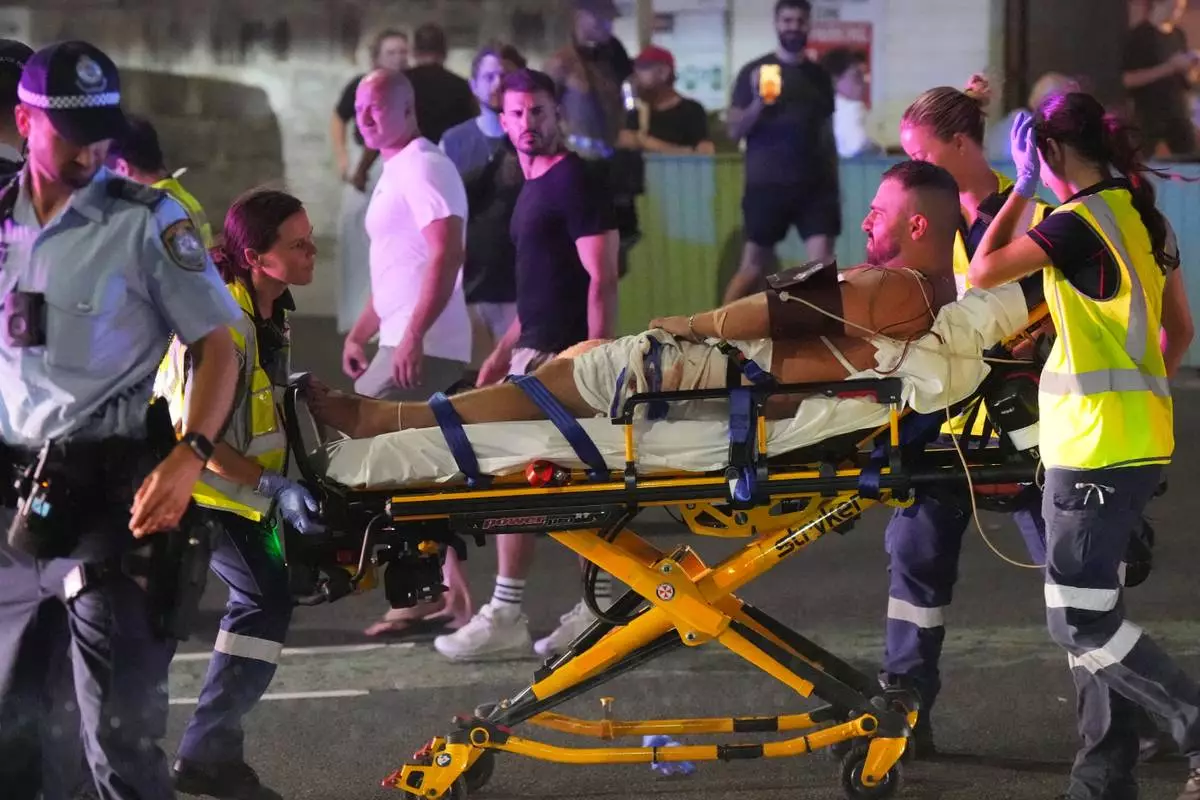
Emergency workers transport a person on a stretcher after a reported shooting at Bondi Beach in Sydney, Sunday, Dec. 14, 2025. (AP Photo/Mark Baker)
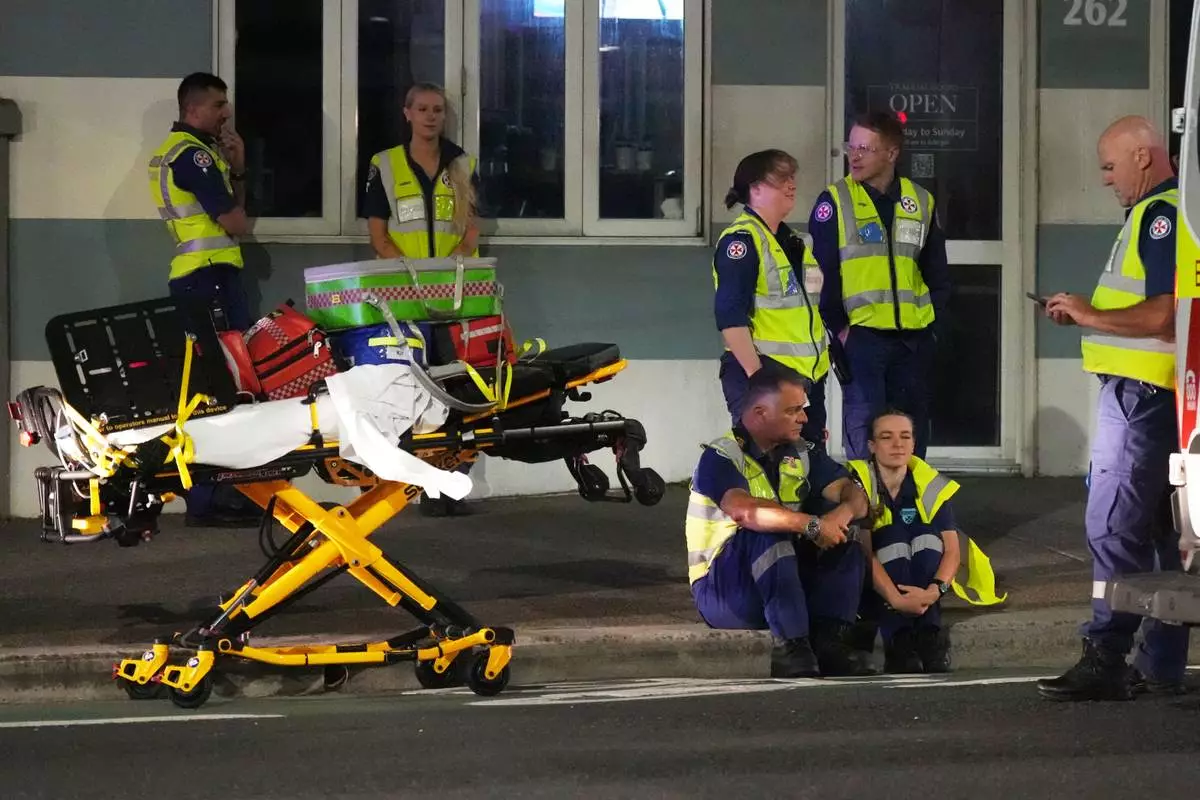
Emergency workers standby at Bondi Beach after a reported shooting in Sydney, Sunday, Dec. 14, 2025. (AP Photo/Mark Baker)
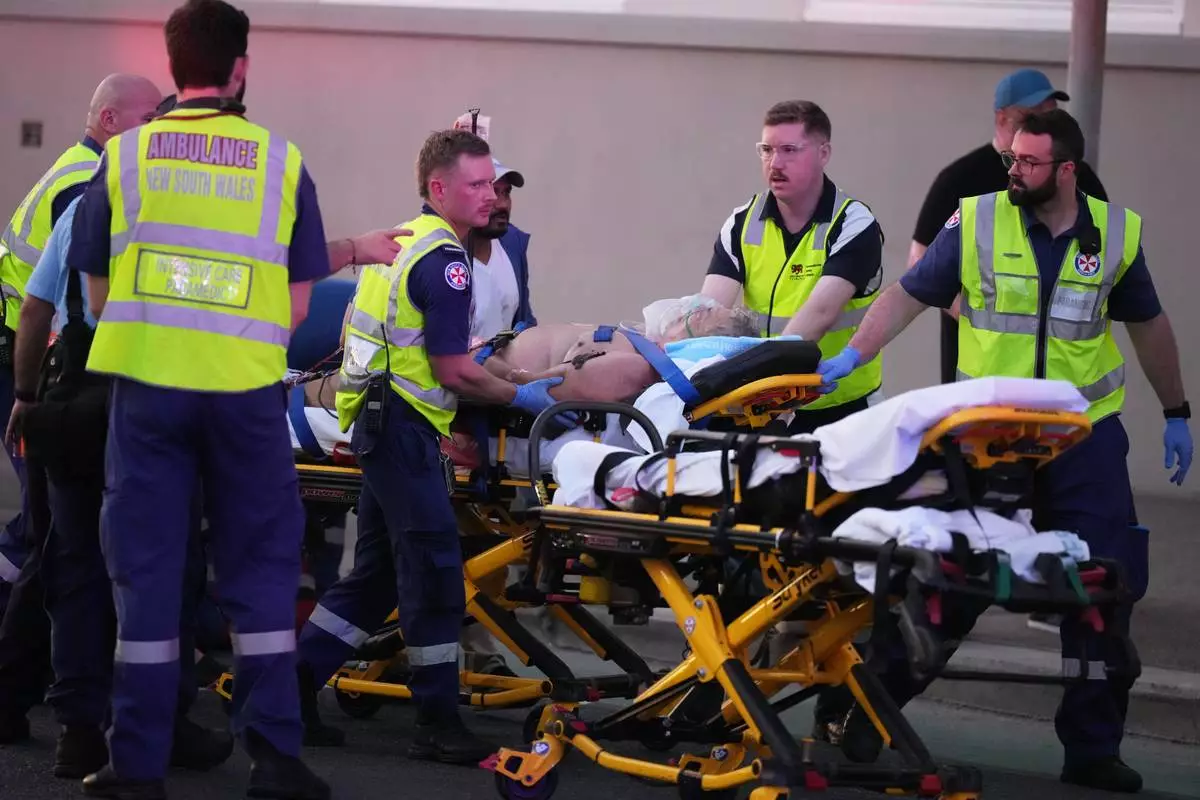
Emergency workers transport a person on a stretcher after a reported shooting at Bondi Beach in Sydney, Sunday, Dec. 14, 2025. (AP Photo/Mark Baker)
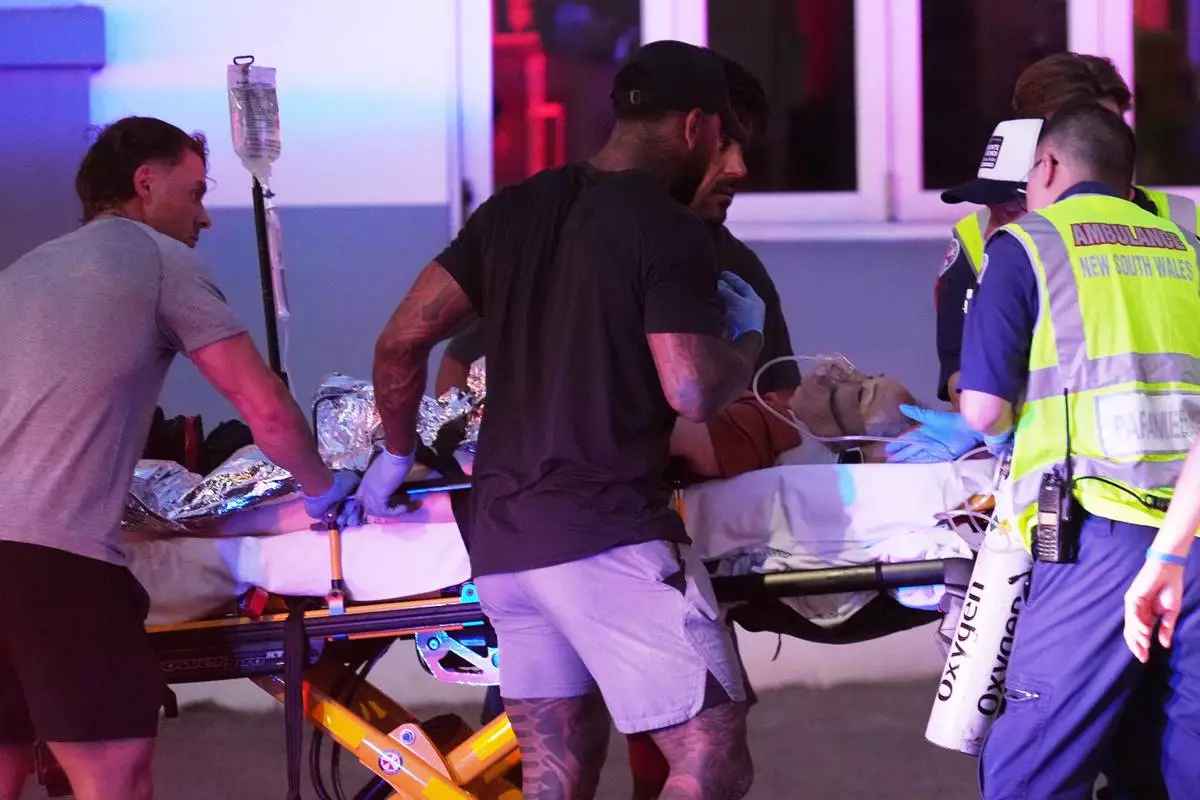
Emergency workers transport a person on a stretcher after a reported shooting at Bondi Beach in Sydney, Sunday, Dec. 14, 2025. (AP Photo/Mark Baker)
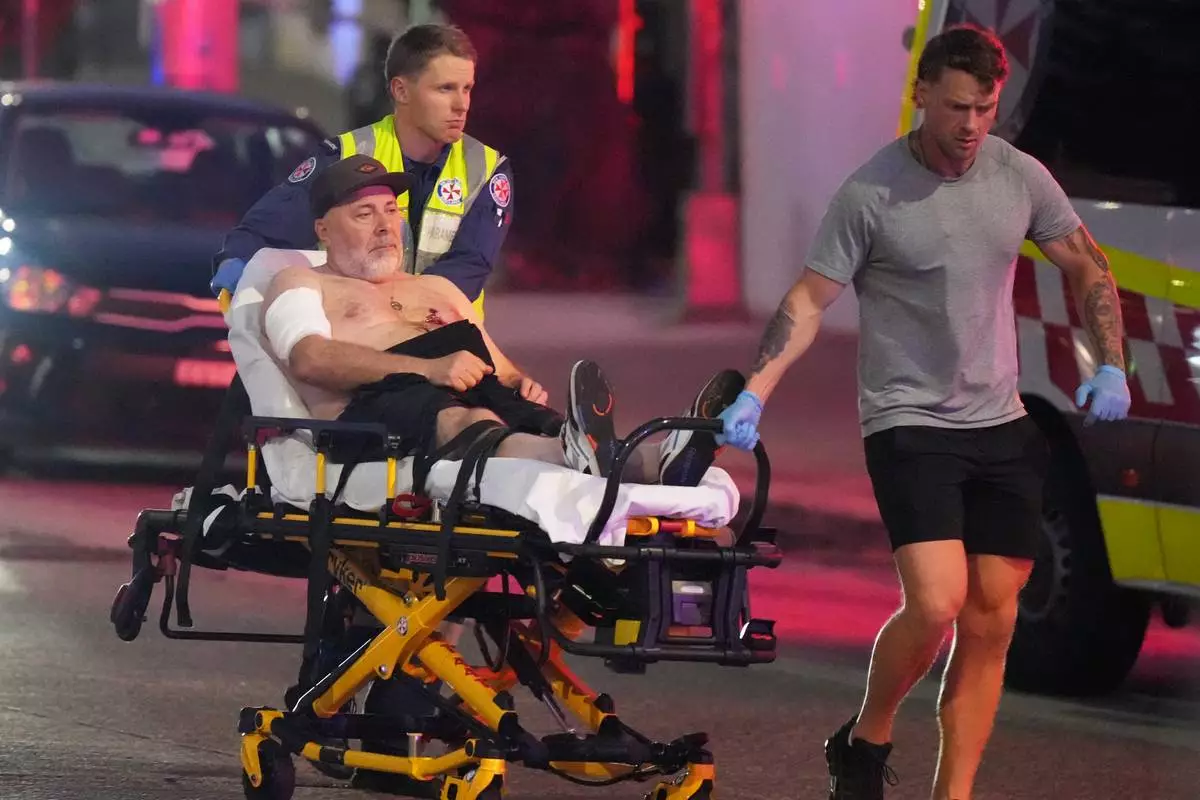
Emergency workers transport a person on a stretcher after a reported shooting at Bondi Beach in Sydney, Sunday, Dec. 14, 2025. (AP Photo/Mark Baker)
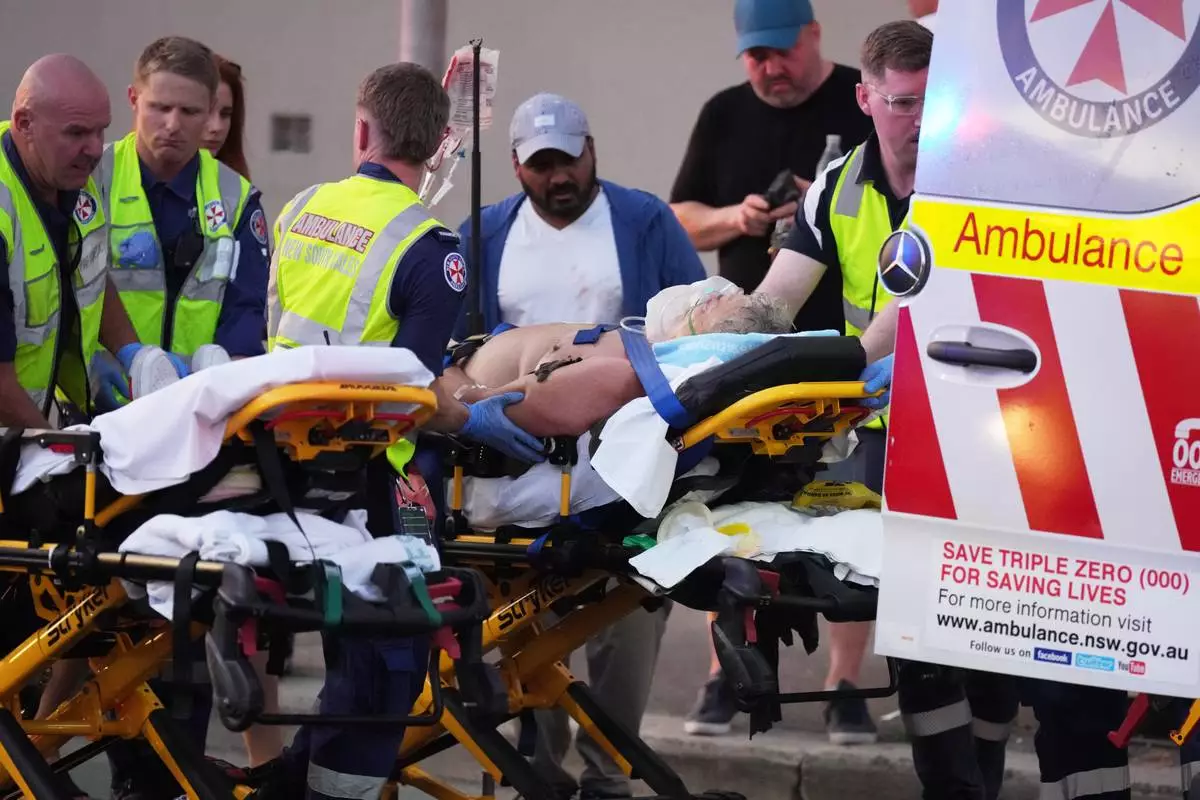
Emergency workers transport a person on a stretcher after a reported shooting at Bondi Beach in Sydney, Sunday, Dec. 14, 2025. (AP Photo/Mark Baker)
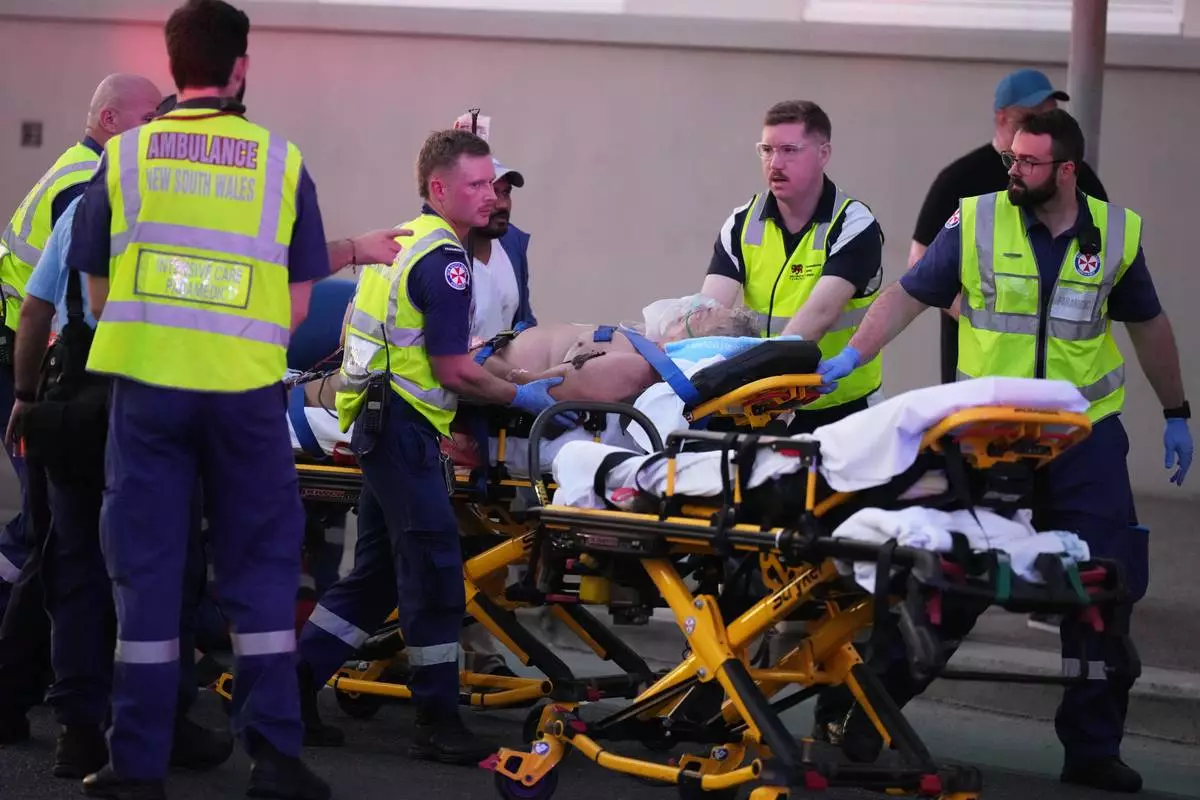
Emergency workers transport a person on a stretcher after a reported shooting at Bondi Beach in Sydney, Sunday, Dec. 14, 2025. (AP Photo/Mark Baker)
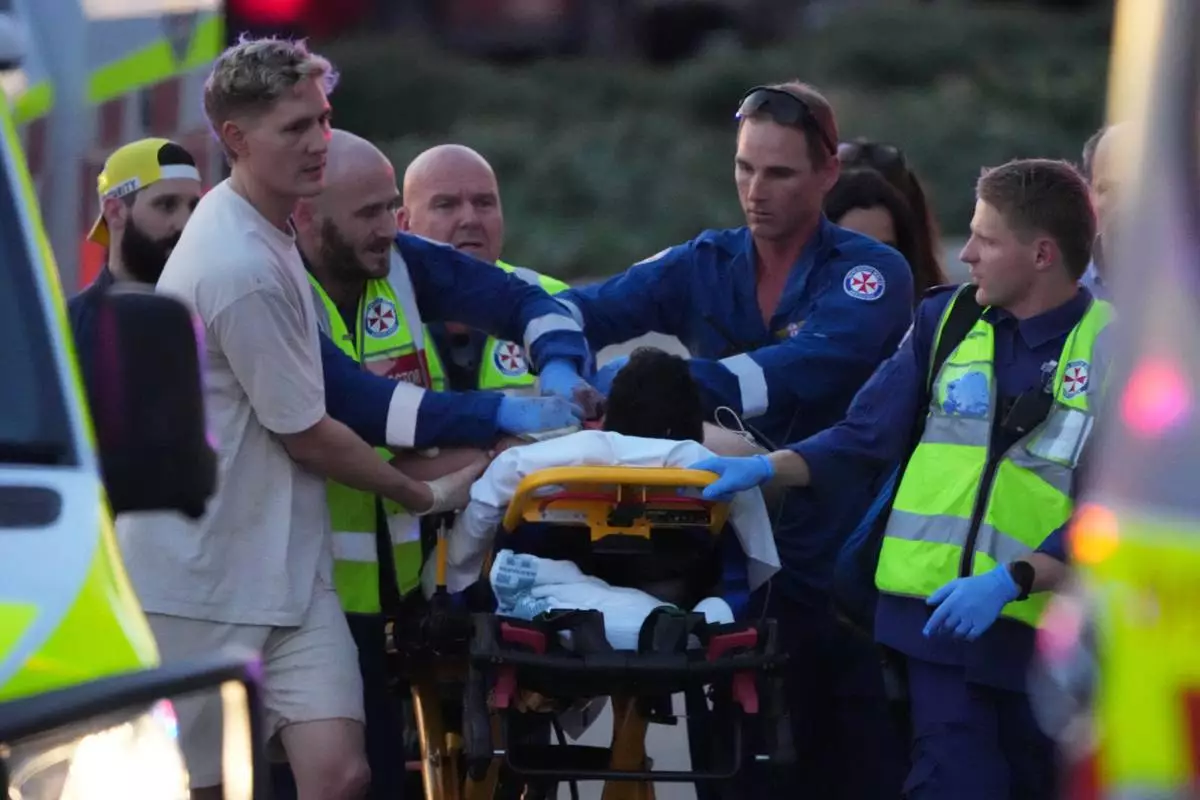
Emergency workers transport a person on a stretcher after a reported shooting at Bondi Beach, in Sydney, Sunday, Dec. 14, 2025. (AP Photo/Mark Baker)