Skip to Content Facebook Feature Image

Texas GOP lawmakers lead summer sprint to redraw US House maps and address deadly floods

News

Texas GOP lawmakers lead summer sprint to redraw US House maps and address deadly floods
News

News

Texas GOP lawmakers lead summer sprint to redraw US House maps and address deadly floods

2025-07-22 06:45 Last Updated At:06:50

AUSTIN, Texas (AP) — Texas Democrats showed up Monday for a special session but left open the possibility of walking out as a means to derail an unusual summer redrawing of U.S. House maps that would help protect Republicans’ slim majority in the 2026 elections.

President Donald Trump wants Republicans in the coming weeks to engineer as many as five more winnable congressional districts in Texas — a high-risk, high-reward redraw that would put them on better footing before the midterm elections, when the party of the incumbent president often loses House seats.

More Images
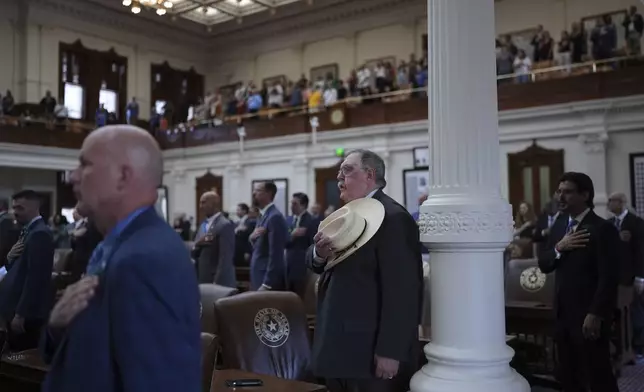
Texas State Rep. Cecil Bell, Jr., R-Magnolia, center and other house member stand for the pledge as the House calls a Special Session, Monday, July 21, 2025, in Austin. (AP Photo/Eric Gay)
Texas State Rep. Cecil Bell, Jr., R-Magnolia, center and other house member stand for the pledge as the House calls a Special Session, Monday, July 21, 2025, in Austin. (AP Photo/Eric Gay)

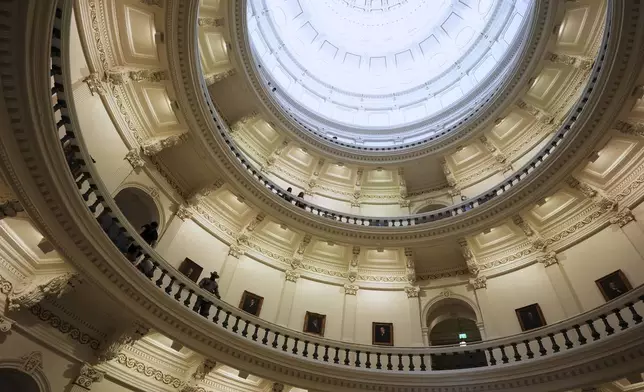
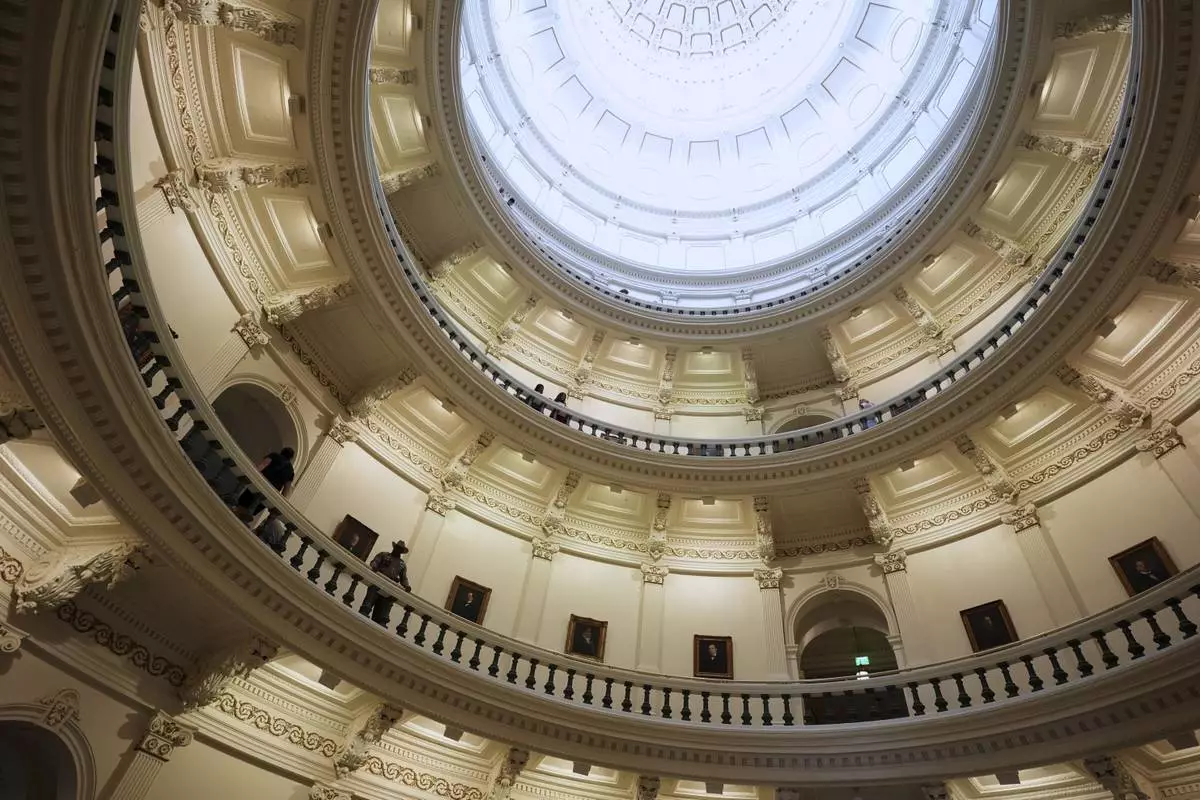
A state trooper keeps watch over the Rotunda at the Texas Capitol as the House calls a Special Session, Monday, July 21, 2025, in Austin. (AP Photo/Eric Gay)
A state trooper keeps watch over the Rotunda at the Texas Capitol as the House calls a Special Session, Monday, July 21, 2025, in Austin. (AP Photo/Eric Gay)
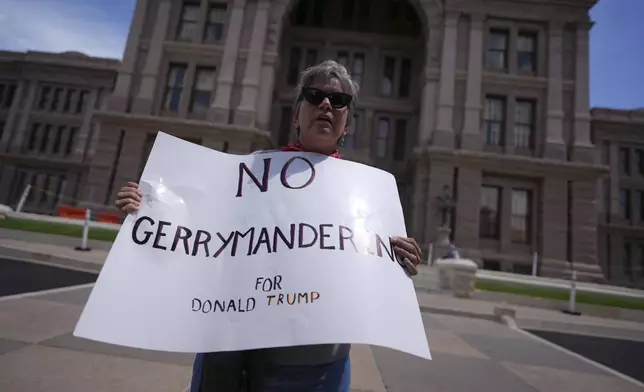
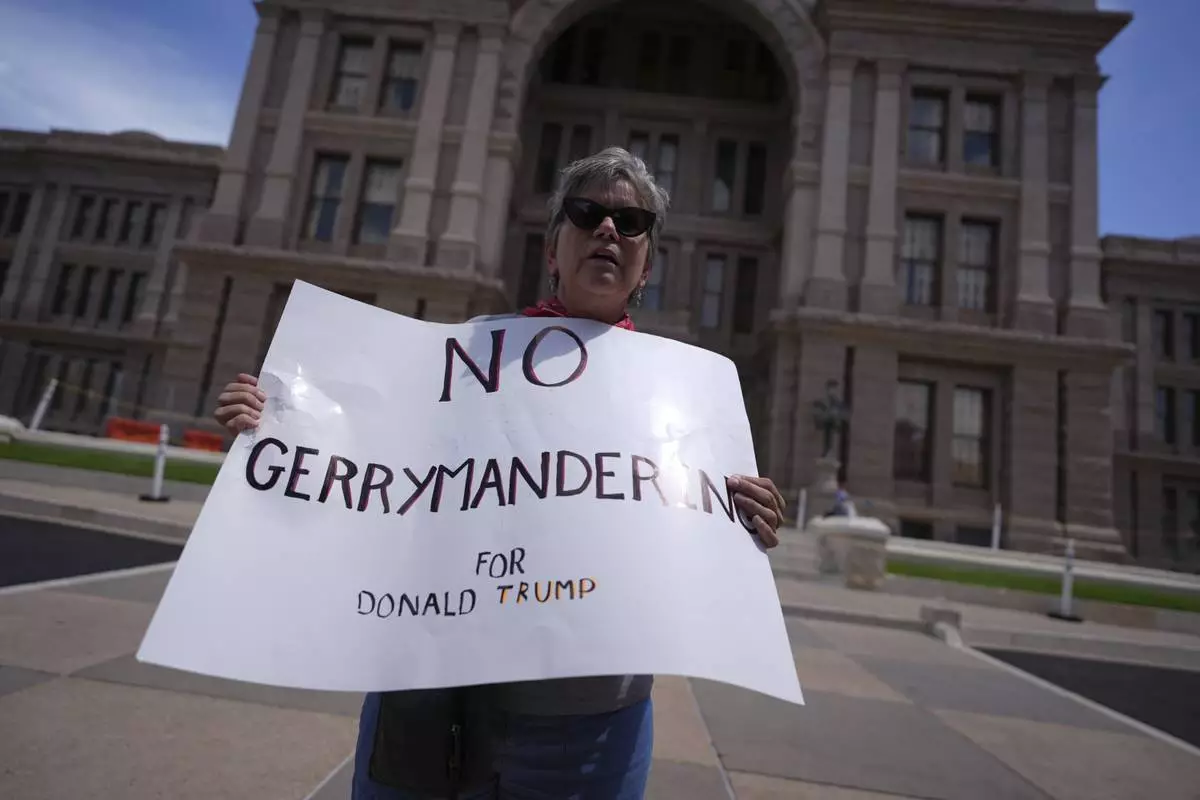
Demonstrators gather outside the Texas Capitol as the House calls a Special Session, Monday, July 21, 2025, in Austin. (AP Photo/Eric Gay)

Demonstrators gather outside the Texas Capitol as the House calls a Special Session, Monday, July 21, 2025, in Austin. (AP Photo/Eric Gay)

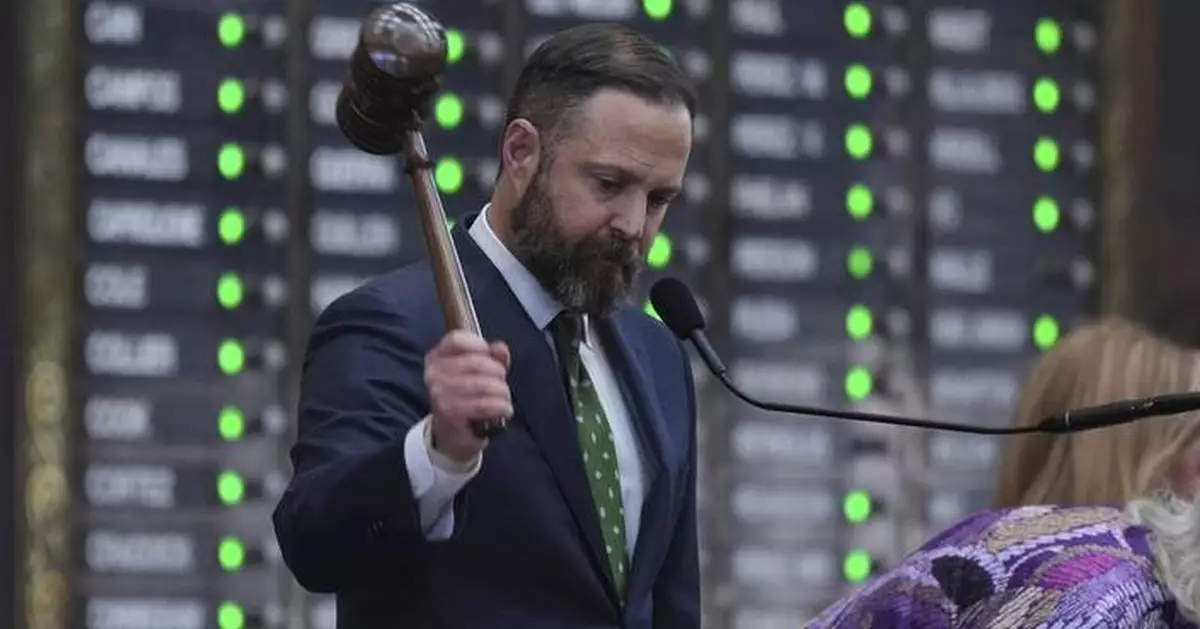
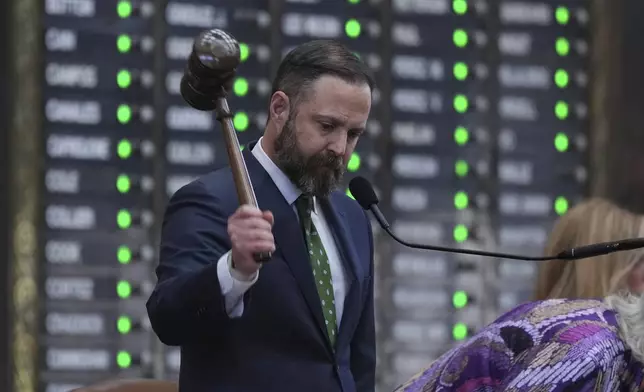
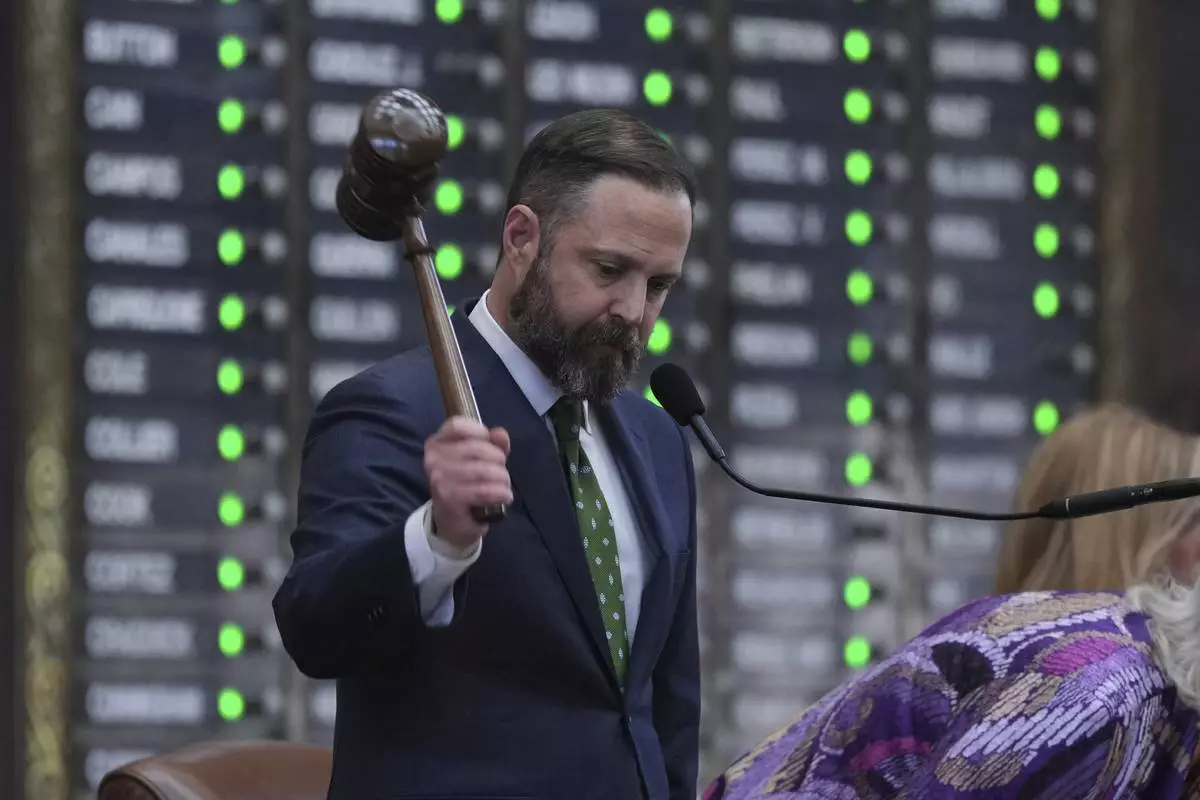
Texas Speaker of the House Dustin Burrows strikes the gavel as the House calls a Special Session, Monday, July 21, 2025, in Austin. (AP Photo/Eric Gay)

Texas Speaker of the House Dustin Burrows strikes the gavel as the House calls a Special Session, Monday, July 21, 2025, in Austin. (AP Photo/Eric Gay)

At the Texas Capitol, Republican House Speaker Dustin Burrows gaveled in a 30-day session and appointed a committee to oversee what is already escalating into a contentious battle over the state’s voting maps. Democrats promised to fight the redraw but they are heavily outnumbered in the Texas Legislature, leaving them with few paths of resistance.

“Democrats are going to keep all options open and will do whatever is necessary to protect our communities,” said Democratic state Rep. Gene Wu of Houston, the House Democratic leader.

Republican Gov. Greg Abbott added redistricting to a lengthy agenda he gave to lawmakers in ordering them back to the Texas Capitol. That list includes addressing Texas' catastrophic floods that killed at least 135 people and has put Kerr County officials under scrutiny over why residents were not given more warning.

Abbott, a three-term governor, cited “constitutional concerns" brought by the Justice Department for redrawing the maps, which is typically done once every 10 years. The letter claims four districts in the Houston and Dallas metro areas, key Democratic strongholds, were racially gerrymandered the last time the maps were drawn in 2021.

During a debate to begin the redistricting process, Republican Sen. Phil King, who is chair of the committee, fielded queries from Democrats who questioned the purpose of creating new maps.

“The intent that we are here about today is to respond to the governor’s call that we take up congressional redistricting in this special session," he said. “I have the highest level of confidence that we’re not going to pass a bill out of the committee or off this floor that violates the Voting Rights Act."

Democratic party leaders on Monday identified filibusters or walking out — which would deny Republicans enough members for a quorum — as some of their limited options to block redistricting efforts, which they said will disenfranchise Democratic voters.

Texas Democrats in 2021 gridlocked the state Capitol for 38 days by refusing to come to work in protest of proposed voting restrictions. When they returned, the measure passed.

Republican Attorney General Ken Paxton has threatened to arrest those who attempt to walk out on top of the $500 a day fines lawmakers face for breaking a quorum.

Andrew Mahaleris, an Abbott spokesperson, did not comment on redistricting in a statement Monday.

“While partisan activists focus solely on political issues, Governor Abbott is dedicated to delivering results on issues important to Texans, such as flood relief, property tax cuts, and the elimination of the STAAR test,” he said, referring to a standardized exam for Texas students.

There are some concerns that rigging the map too much, known as gerrymandering, could backfire on Republicans. If too many Democratic voters are sifted into Republican districts, it could make them more competitive than they otherwise would be.

The state is also tangled in litigation with civil rights groups who allege the maps were racially gerrymandered in 2021.

Texas currently holds 38 seats in the House, of which 25 are held by Republicans and 12 by Democrats, while one seat remains vacant from the late Democratic Rep. Sylvester Turner and will be filled in a special election later this year.

Ohio Republicans are also considering redrawing their House maps and California Gov. Gavin Newsom floated the idea of his state doing the same, although that authority rests with an independent commission, rather than the legislature, in the Democratic-controlled state.

Lathan is a corps member for the Associated Press/Report for America Statehouse News Initiative. Report for America is a nonprofit national service program that places journalists in local newsrooms to report on undercovered issues.
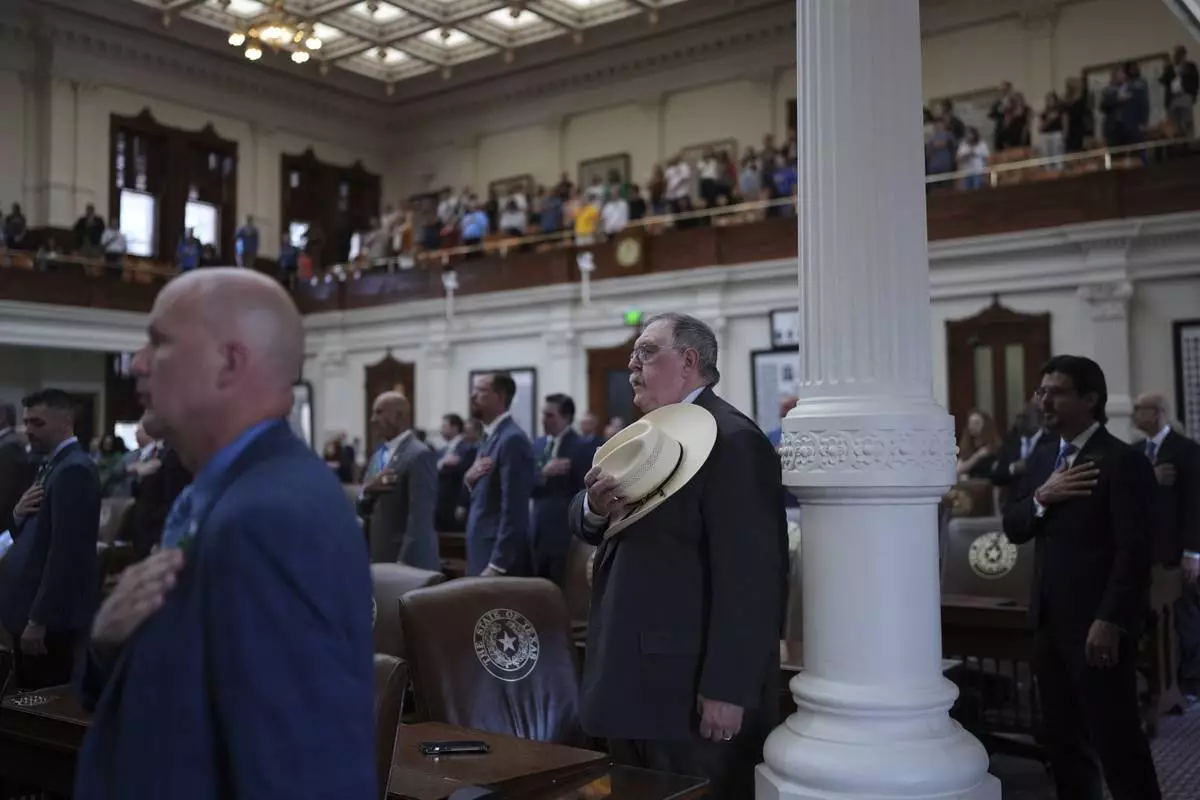
Texas State Rep. Cecil Bell, Jr., R-Magnolia, center and other house member stand for the pledge as the House calls a Special Session, Monday, July 21, 2025, in Austin. (AP Photo/Eric Gay)
Texas State Rep. Cecil Bell, Jr., R-Magnolia, center and other house member stand for the pledge as the House calls a Special Session, Monday, July 21, 2025, in Austin. (AP Photo/Eric Gay)

A state trooper keeps watch over the Rotunda at the Texas Capitol as the House calls a Special Session, Monday, July 21, 2025, in Austin. (AP Photo/Eric Gay)
A state trooper keeps watch over the Rotunda at the Texas Capitol as the House calls a Special Session, Monday, July 21, 2025, in Austin. (AP Photo/Eric Gay)
Demonstrators gather outside the Texas Capitol as the House calls a Special Session, Monday, July 21, 2025, in Austin. (AP Photo/Eric Gay)

Demonstrators gather outside the Texas Capitol as the House calls a Special Session, Monday, July 21, 2025, in Austin. (AP Photo/Eric Gay)

Texas Speaker of the House Dustin Burrows strikes the gavel as the House calls a Special Session, Monday, July 21, 2025, in Austin. (AP Photo/Eric Gay)
Texas Speaker of the House Dustin Burrows strikes the gavel as the House calls a Special Session, Monday, July 21, 2025, in Austin. (AP Photo/Eric Gay)
WASHINGTON (AP) — In a lightning military strike, the U.S. captured Venezuelan President Nicolás Maduro and his wife, Cilia Flores, and spirited them out of the country to face justice in the United States.

Now President Donald Trump says the U.S. is “going to run” Venezuela until a transition of power can take place, but it's not clear what that will mean on the ground in the South American country.

The overnight operation left Venezuela reeling, with its leadership uncertain and details of casualties and the impact on its military still to emerge. Much is still unknown about how the U.S. ouster of Maduro will ricochet across the country and the region.

Here’s what we know — and what we don’t.

Explosions rang out and low-flying aircraft swept through Venezuela’s capital, Caracas, early Saturday. At least seven blasts were heard in an attack that lasted less than 30 minutes. The targets appeared to include military infrastructure.

Venezuelan ruling party leader Nahum Fernández said Maduro and Flores were captured at their home within the Ft. Tiuna military installation outside Caracas.

Venezuelan officials said people had been killed, but the scale of casualties was unclear.

The attack followed months of escalating pressure by the Trump administration, which has built up naval forces in the waters off South America and since early September has carried out deadly strikes on alleged drug-smuggling boats in the eastern Pacific and Caribbean. Late last month, the CIA carried out a drone strike at a docking area alleged to have been used by drug cartels.

Trump said during a news conference Saturday the U.S. would run the country and gestured to officials arrayed behind him, including Secretary of State Marco Rubio, Defense Secretary Pete Hegseth and Dan Caine, chairman of the Joint Chiefs of Staff, and said they’d be the ones doing it “for a period of time.”

Trump claimed the American presence was already in place, although across Venezuela's capital there were no signs that the U.S. had taken control of the government or military forces.

Trump claimed that Venezuelan Vice President Delcy Rodríguez had been sworn in as president shortly before he spoke to reporters and added she had spoken with Rubio.

“She is essentially willing to do what we think is necessary to make Venezuela great again. Very simple,” Trump said.

Rodriquez made no mention of talking to Rubio or being sworn in during a televised address after Trump's news conference.

Instead, she demanded the U.S. free Maduro and called him the country’s rightful leader. Rodriquez left open the door for dialogue with the U.S., while seeking to calm ruling party supporters.

“Here, we have a government with clarity, and I repeat and repeat again … we are willing to have respectful relations,” she said, referring to the Trump administration. “It is the only thing we will accept for a type of relationship after having attacked (Venezuela).”

Armed individuals and uniformed members of a civilian militia took to the streets of a Caracas neighborhood long considered a stronghold of the ruling party. But in other areas of the city, the streets remained empty hours after the attack. Parts of the city remained without power, but vehicles moved freely.

Trump offered no details on what U.S. leadership in Venezuela would mean or specify whether it would involve more military involvement.

The State Department did not immediately respond to questions about how the U.S. would run Venezuela, what authority it would use to administer it or whether it would involve any American personnel — either civilian or military — on the ground in Caracas or other areas of Venezuela.

Trump mentioned the country's oil infrastructure repeatedly during the news conference. He suggested there would be a substantial U.S. role in Venezuela's oil industry, saying that U.S. oil companies would go in and fix the broken infrastructure.

And Trump said the U.S. would use revenues from oil sales to pay for running the country.

“We’re going to get reimbursed for everything that we spend,” he said.

According to an indictment made public Saturday, Maduro is charged alongside his wife, his son and three others. Maduro is indicted on four counts: narco-terrorism conspiracy, cocaine importation conspiracy, possession of machine guns and destructive devices and conspiracy to possess machine guns and destructive devices.

Authorities allege powerful and violent drug trafficking organizations, such as the Sinaloa Cartel and Tren de Aragua gang, worked directly with the Venezuelan government and then sent profits to high-ranking officials who helped and protected them in exchange.

It was not immediately clear when Maduro and his wife would make their first court appearance in New York or where they would be detained once in the U.S.

Trump gave some details of the operation during a Saturday morning interview on “Fox and Friends," and he and Caine went into more depth during the news conference.

Trump said a few U.S. members of the operation were injured but he believed no one was killed.

He said Maduro was “highly guarded” in a presidential palace akin to a “fortress” and he tried to get to a safe room but wasn’t able to get there in time.

Trump said U.S. forces practiced the operation ahead of time on a replica building, and the U.S. turned off “almost all of the lights in Caracas,” although he didn’t detail how they accomplished that.

Caine said the mission had been “meticulously planned” for months, relying on work by the U.S. intelligence community to find Maduro and detail how he moved, lived, ate and what he wore.

The mission involved more than 150 aircraft launched across the Western Hemisphere, Caine said. Helicopters came under fire as they approached “the target area,” he said, and responded with “overwhelming force.”

The U.S. does not recognize the jurisdiction of the International Criminal Court, and the legal implications of the strike under U.S. law were not immediately clear.

The Trump administration maintains that Maduro is not the legitimate leader of Venezuela and claims he has effectively turned Venezuela into a criminal enterprise at the service of drug traffickers and terrorist groups.

Mike Lee, a U.S. senator from Utah, said on X that the action “likely falls within the president’s inherent authority under Article II of the Constitution to protect U.S. personnel from an actual or imminent attack.”

But some Democrats were more critical.

Sen. Tim Kaine, a Virginia Democrat, said in a statement, “President Trump’s unauthorized military attack on Venezuela to arrest Maduro — however terrible he is — is a sickening return to a day when the United States asserted the right to dominate the internal political affairs of all nations in the Western Hemisphere.”

Venezuelan opposition leader and Nobel Peace Prize winner María Corina Machado had intended to run against Maduro in the 2024 presidential election, but the government barred her from running for office. She went into hiding and wasn't seen for nearly a year.

Trump said Saturday that he hadn't been in touch with Machado and said it would be “very tough” for her to lead Venezuela.

“She doesn’t have the support within or the respect within the country. She’s a very nice woman, but she doesn’t have the respect,” Trump said.

Lawless reported from London. Associated Press Writer Danica Kirka in London contributed to this story.

FILE - President Nicolas Maduro acknowledges supporters alongside first lady Cilia Flores during his closing election campaign rally in Caracas, Venezuela, July 25, 2024. (AP Photo/Fernando Vergara, File)

FILE - President Nicolas Maduro acknowledges supporters alongside first lady Cilia Flores during his closing election campaign rally in Caracas, Venezuela, July 25, 2024. (AP Photo/Fernando Vergara, File)

Pro-government armed civilians patrol in La Guaira, Venezuela, Saturday, Jan. 3, 2026, after U.S. President Donald Trump announced that President Nicolás Maduro had been captured and flown out of the country. (AP Photo/Matias Delacroix)

Pro-government armed civilians patrol in La Guaira, Venezuela, Saturday, Jan. 3, 2026, after U.S. President Donald Trump announced that President Nicolás Maduro had been captured and flown out of the country. (AP Photo/Matias Delacroix)

Supporters of Venezuelan President Nicolás Maduro embrace in downtown Caracas, Venezuela, Saturday, Jan. 3, 2026, after U.S. President Donald Trump announced that Maduro had been captured and flown out of the country. (AP Photo/Cristian Hernandez)

Supporters of Venezuelan President Nicolás Maduro embrace in downtown Caracas, Venezuela, Saturday, Jan. 3, 2026, after U.S. President Donald Trump announced that Maduro had been captured and flown out of the country. (AP Photo/Cristian Hernandez)

Men watch smoke rising from a dock after explosions were heard at La Guaira port, Venezuela, Saturday, Jan. 3, 2026. (AP Photo/Matias Delacroix)

Men watch smoke rising from a dock after explosions were heard at La Guaira port, Venezuela, Saturday, Jan. 3, 2026. (AP Photo/Matias Delacroix)

Smoke raises at La Carlota airport after explosions and low-flying aircraft were heard in Caracas, Venezuela, Saturday, Jan. 3, 2026. (AP Photo/Matias Delacroix)

Smoke raises at La Carlota airport after explosions and low-flying aircraft were heard in Caracas, Venezuela, Saturday, Jan. 3, 2026. (AP Photo/Matias Delacroix)

Recommended Articles