Coca-Cola said Tuesday it will add a cane-sugar version of its trademark cola to its U.S. lineup this fall, confirming a recent announcement by President Donald Trump.
Trump said in a social media post last week that Coca-Cola had agreed to use real cane sugar in its flagship product in the U.S., which has been sweetened with high fructose corn syrup since the 1980s. Coke didn't immediately confirm the change, but promised new offerings soon.
On Tuesday, Coca-Cola Chairman and CEO James Quincey said Coke will expand its product range “to reflect consumer interest in differentiated experiences.”
“We appreciate the president’s enthusiasm for our Coca-Cola brand,” Quincey said in a conference call with investors Tuesday. “We are definitely looking to use the whole tool kit of available sweetening options."
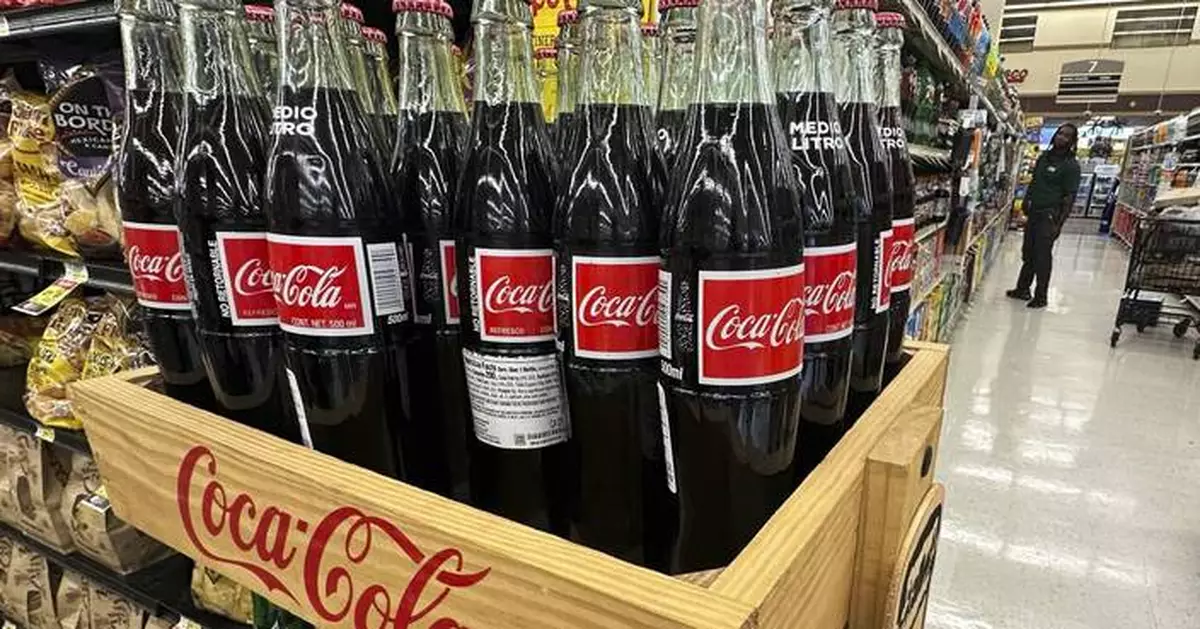
Quincey noted that Coke uses cane sugar in some other U.S. drinks, like its Simply brand lemonade and Honest Tea. Coke has also sold Mexican Coke, which is made with cane sugar, in the U.S. since 2005.
“We’re always looking for opportunities to innovate and see whether there’s an intersection of new ideas and where consumer preferences are evolving,” Quincey said. “It’s a good sign that the industry, including ourselves, are trying lots of different things.”
Rivals PepsiCo and Dr Pepper have been selling versions of their trademark colas sweetened with cane sugar in the U.S. since 2009.
Asked if Coke would also consider introducing a prebiotic version of its trademark cola — as PepsiCo did this week — Quincey said the company is currently selling a Coke with added fiber in Japan and is studying consumer response to it.
Quincey said consumer demand for its products improved in the second quarter in many markets, including China, Europe, Africa and North America.
“I would I would say overall that the global economy and the global consumer remains resilient,” Quincey said.
But early monsoons and conflict hurt demand in India, and Quincey said demand in Thailand and Indonesia was also weaker than expected. Quincey also said lower-income consumers in the U.S. and elsewhere have also pulled back on spending.
Global case volumes of Coca-Cola fell 1%. Juice, dairy and plant-based beverages fell 4%, Coke said. Sports drink case volumes were down 3%, as higher demand in North America was offset by declines in Latin America.
One bright spot was Coca-Cola Zero Sugar, which saw case volumes grow 14%. Traditional Coca-Cola still far outsells the zero-sugar variety, but consumer demand for zero-sugar versions is growing much more quickly.
In North America, case volumes fell 1%, but that was an improvement from the first quarter, when they were down 3%.
Quincey said Hispanic sales in the U.S. returned to normal levels by the end of June. They had plummeted starting in February, when a social media video began circulating that claimed Coke was reporting its own workers to U.S. Immigration and Customs Enforcement officers.
Quincey said the claim was false. The company has been trying to win back Hispanic consumers with targeted deals and ads touting the company’s local economic impact.
“It was still a headwind in the second quarter but the issue is now largely resolved,” Quincey said Tuesday.
Coca-Cola reported better-than-expected earnings in the second quarter as higher prices offset the weaker volumes. Coke said pricing rose 6% globally.
Revenue for the Atlanta company rose 1% to $12.5 billion. Adjusted for one-time items, quarterly revenue was $12.6 billion. That was in line with Wall Street’s forecast, according to analysts polled by FactSet.
Net income jumped 58% to $3.8 billion. Coke's adjusted net income was 87 cents, which was higher than the 83 cents Wall Street forecast.
Coke said it now expects full-year adjusted earnings to grow 8%. At the start of the year, Coke had expected earnings to grow 8% to 10%, but in April it lowered that range to 7% to 9%. Coke earned $2.88 per share in 2024.
Shares of Coca-Cola Co. were down 1% in early trading Tuesday.
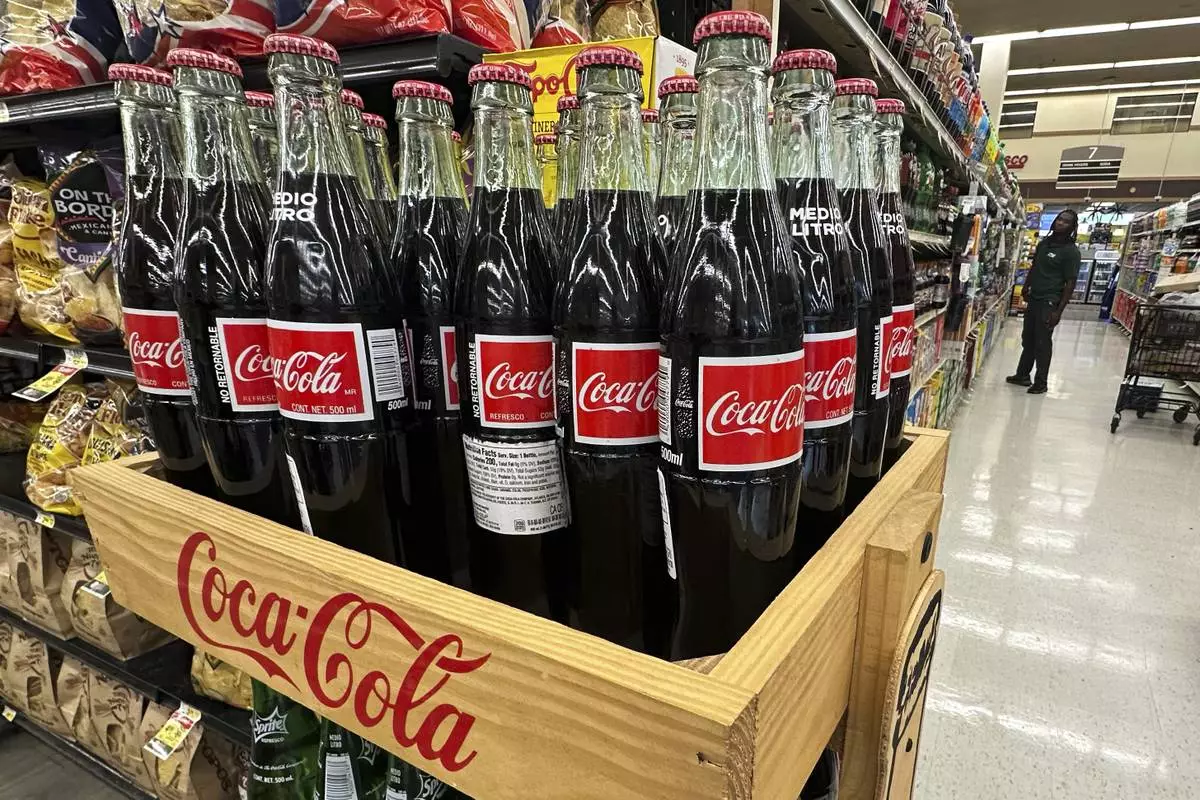
Bottles of Mexican Coca-Cola are displayed at a grocery store in Mount Prospect, Ill., Thursday, July 17, 2025. (AP Photo/Nam Y. Huh)
DUBAI, United Arab Emirates (AP) — Iran hit a tanker off the coast of Qatar and Kuwait International Airport early Wednesday as Tehran remained unrelenting in its attacks on its Gulf Arab neighbors, while acknowledging for the first time that Washington had been in direct contact about a possible ceasefire.
Israel sounded warnings of incoming fire from both Yemen and Iran, while launching its own attacks in Lebanon that killed at least five people.
An airstrike on Tehran appeared to have hit the former U.S. Embassy compound, which has been controlled by Iran’s Revolutionary Guard since the 1979 hostage crisis. Witnesses said buildings outside the massive compound had their windows blown out and that it appears the strike happened inside the walled facility.
With no sign of the war abating and more than 3,000 lives already lost, U.S. President Donald Trump suggested it could be over within two weeks even as he moved to bring thousands more troops to the region.
Trump has been under growing pressure to end the war as Iran’s grip on shipping through the Strait of Hormuz and its attacks on regional energy infrastructure have sent gas prices skyrocketing to their highest level since 2022 and caused broad stock market fluctuations.
Iran throttled ship traffic through the strait, which leads from the Persian Gulf to the open ocean, after it was attacked by the U.S. and Israel on Feb. 28. In peacetime, a fifth of the world’s oil transits the strait and the spot price of Brent crude, the international standard, is up more than 40% since the start of the war, trading at more than $104 a barrel.
The U.S. has presented Iran with a 15-point plan aimed at bringing about a ceasefire, which includes a demand for the strait to be reopened. Iran’s own five-point response includes it retaining sovereignty over the waterway, and Trump on Tuesday suggested that the war could be brought to an end even with Iran still controlling the strait.
The U.S. “will not have anything to do with” what happens in the Strait of Hormuz, instead telling reporters that the responsibility for keeping the vital waterway open would belong with countries that rely on it.
“That’s not for us. That’ll be for France. That’ll be for whoever’s using the strait,” Trump said.
It was not clear why Trump brought up France, since Europe receives very little oil shipped through the strait, with most going to Asian countries. The president plans a prime-time address on Wednesday.
Trump, who has vacillated between insisting there is progress in diplomatic talks with Iran and threatening to widen the war, added that the U.S. is “finishing the job” in Iran and predicted it will be “maybe two weeks, maybe a couple of days longer to do the job.”
Trump has warned that if a ceasefire is not reached “shortly,” and if the strait is not reopened, the U.S. would broaden its offensive, including by attacking the Kharg Island oil export hub and possibly desalination plants.
Thousands of Marines and paratroopers have been ordered to the region in possible preparation for an assault in Kharg, though to reach the island by ship would mean transiting the Strait of Hormuz and the Persian Gulf, which Iran has threatened to mine.
In an interview with pan-Arab broadcaster Al Jazeera, Iranian Foreign Minister Abbas Araghchi acknowledged receiving direct messages from U.S. Mideast envoy Steve Witkoff. He insisted, however, that there were no direct negotiations and said Iran has no faith that talks with the U.S. could yield any results, saying “the trust level is at zero.”
He warned against any attempt to launch a ground offensive, saying “we are waiting for them.”
“We know very well how to defend ourselves,” Araghchi said.
Early Wednesday a tanker off the coast of Qatar was hit with a projectile, the British military’s United Kingdom Maritime Trade Operations center said. The crew was reportedly unharmed. A fully-loaded Kuwaiti oil tanker came under attack off Dubai the day before, one of more than 20 ships attacked by Iran during the war.
Bahrain sounded two alerts for incoming missiles, and said an Iranian attack had caused a fire at a business facility.
In Kuwait, the state-run KUNA news agency said a drone had hit a fuel tank at Kuwait International Airport, sparking a “large fire” that crews were working to control.
Two drones were also intercepted in Saudi Arabia, which has come under repeated Iranian attack, and air raid sirens sounded in Israel though there were no immediate reports of damage or casualties.
In Iran, Israel said it had hit a plant producing fentanyl, a powerful synthetic opioid, to allegedly be used in a chemical weapons program. Iran acknowledged the strike on Tofigh Daru factory, but insisted it only supplied “hospital drugs” used for medical purposes.
The strike happened Tuesday, both the Israelis and the Iranians said.
Hospitals extensively use fentanyl to treat severe pain. But a small amount of the drug can be fatal.
Both Israel and the United States have alleged in recent years that Iran was experimenting with fentanyl in munitions.
In Beirut, at least five people were killed in an Israeli strike on a Beirut neighborhood. Lebanon’s Health Ministry said another 21 people were wounded.
Israel invaded southern Lebanon after the Iran-linked Hezbollah militant group began launching missiles into northern Israel days after the outbreak of the wider war. Many Lebanese fear another prolonged military occupation.
More than 1,200 people have been killed in Lebanon and more than 1 million displaced, according to authorities. Ten Israeli soldiers have also died there.
In Iran, authorities say more than 1,900 people have been killed, while 19 have been reported dead in Israel.
Since the Iran war began, 13 U.S. service members have been killed and 348 wounded, six seriously, according to U.S. Central Command.
More than two dozen people have died in Gulf states and the occupied West Bank.
Rising reported from Bangkok. AP writer Giovanna Dell’Orto in Miami, Florida contributed to this report.
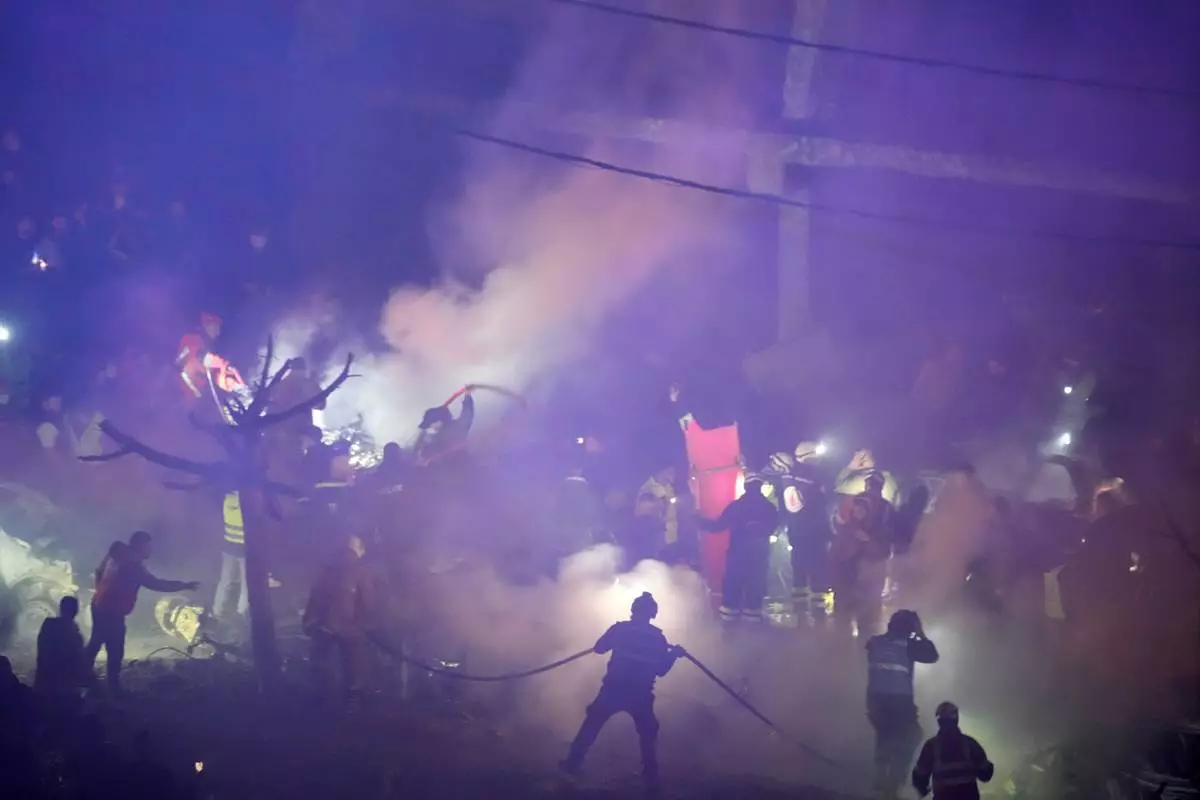
Firefighters and rescue workers work at the site of Israeli airstrikes, in Beirut, Lebanon, Wednesday, April 1, 2026. (AP Photo/Hussein Malla)
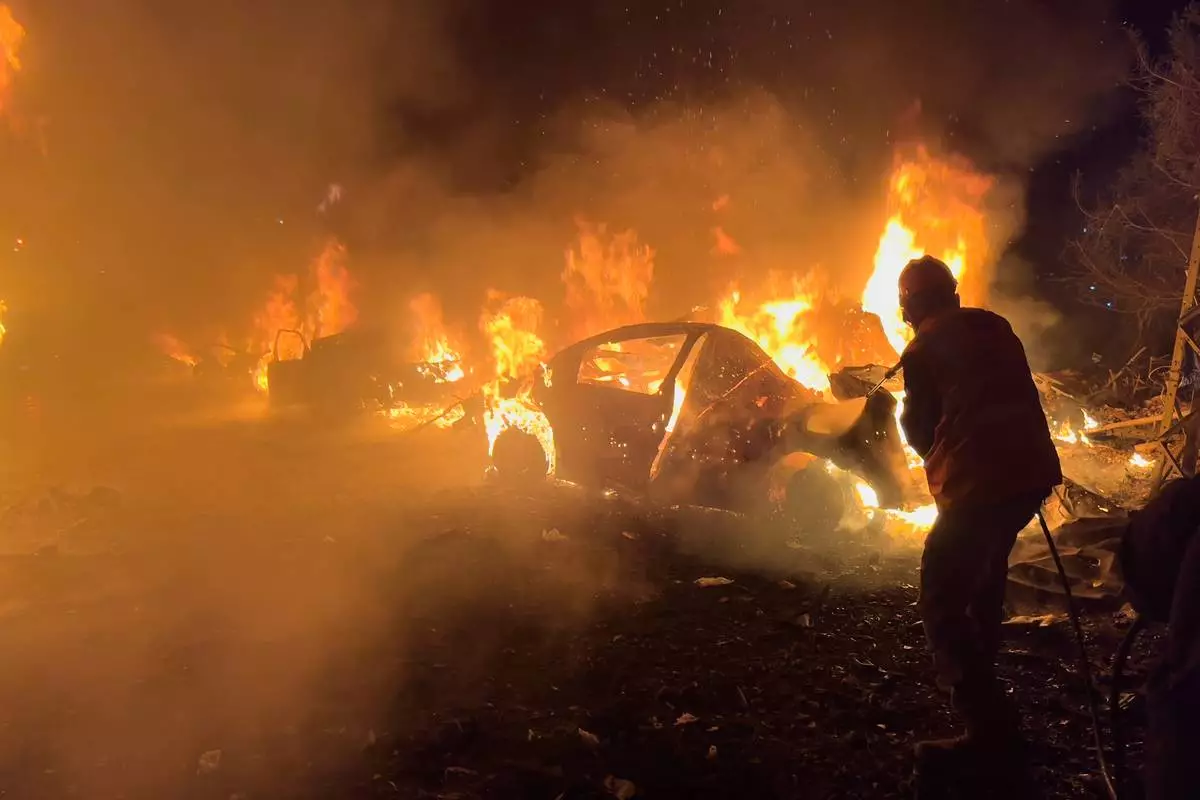
A firefighter extinguishes a car at the site of Israeli airstrikes, in Beirut, Lebanon, Wednesday, April 1, 2026. (AP Photo/Hussein Malla)
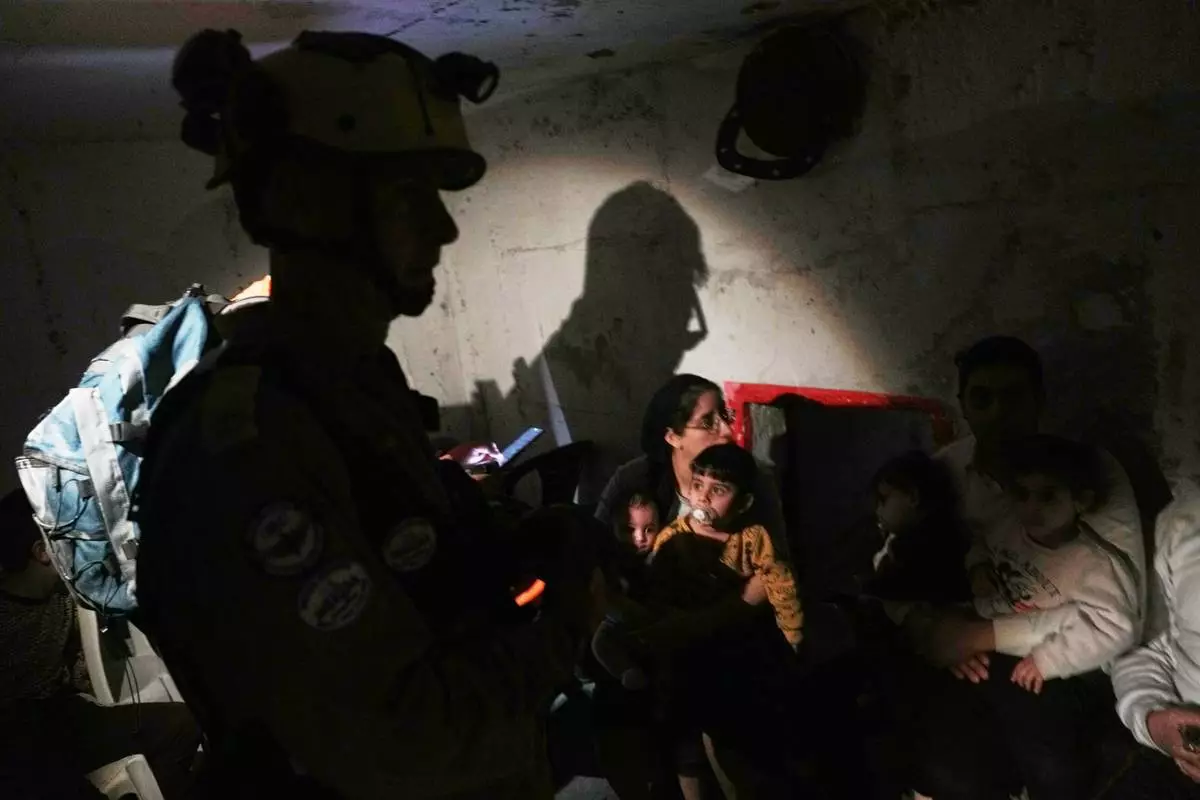
Israel's rescue teams and residents take shelter as sirens sounds next to a site struck by an Iranian missile in Bnei Brak, Wednesday, April 1, 2026. (AP Photo/Oded Balilty)

A police vehicle is seen through a shattered windshield at the site of an Israeli strike in Beirut, Lebanon, Wednesday, April 1, 2026. (AP Photo/Hassan Ammar)
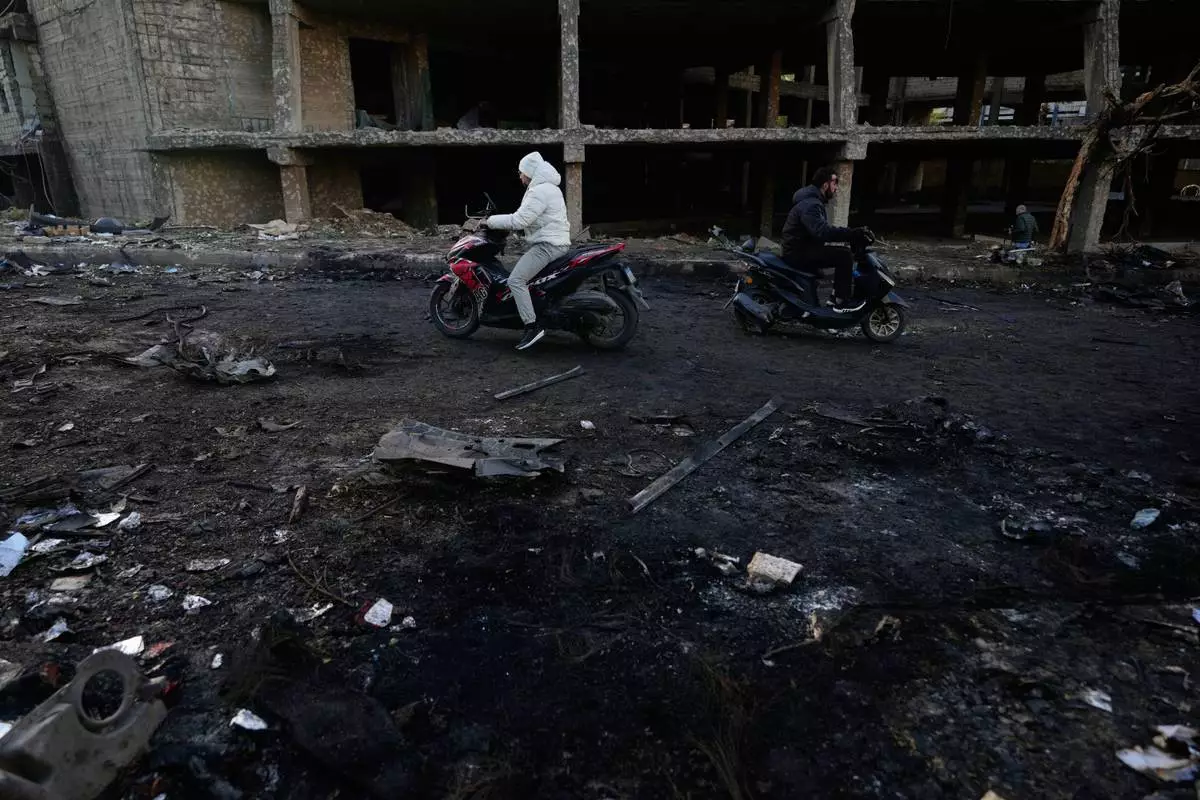
Two men ride scooters past charred debris at the site of an Israeli strike in Beirut, Lebanon, Wednesday, April 1, 2026. (AP Photo/Hassan Ammar)