MELBOURNE, Australia (AP) — The British and Irish Lions held off the First Nations and Pasifika XV 24-19 in a tough, physical contest on Tuesday in the last of their midweek games on the Australian tour.
The Lions can now focus on trying to clinch the three-test series against the Wallabies on Saturday in Melbourne after winning the first match 27-19 last weekend in Brisbane.
Click to Gallery
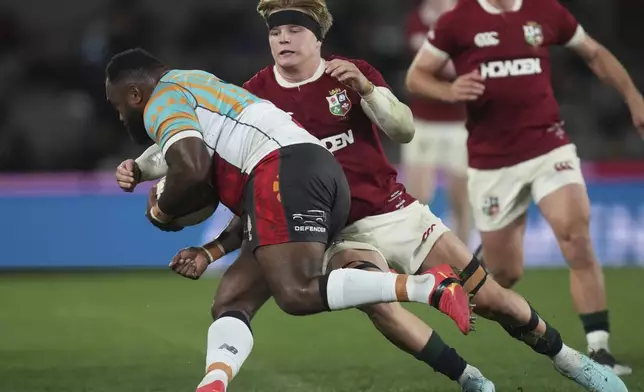
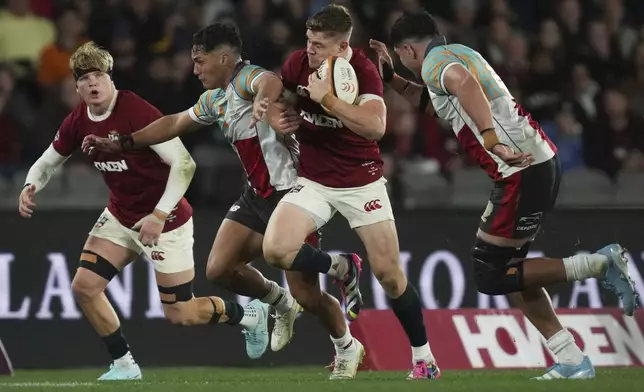
Henry Pollock of the British & Irish Lions, right, tackles First Nations & Pacifika XV's Mesake Doge during their rugby union match in Melbourne, Australia, Tuesday, July 22, 2025. (AP Photo/Asanka Brendon Ratnayake)
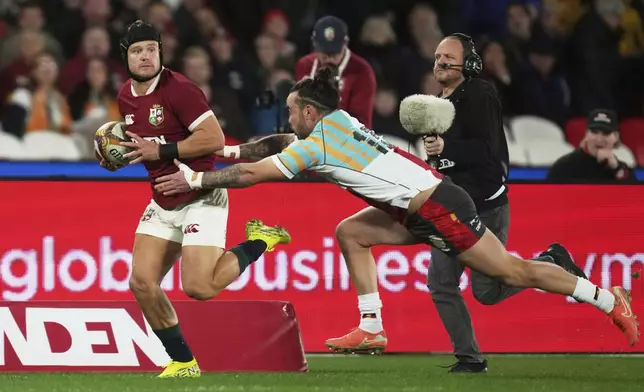
THIS CORRECTS TO ANDY MUIRHEAD, NOT TRISTON REILLY - Darcy Graham British & Irish Lions, left, is tackled by First Nations & Pacifika XV's Andy Muirhead during their rugby union match in Melbourne, Australia, Tuesday, July 22, 2025. (AP Photo/Asanka Brendon Ratnayake)
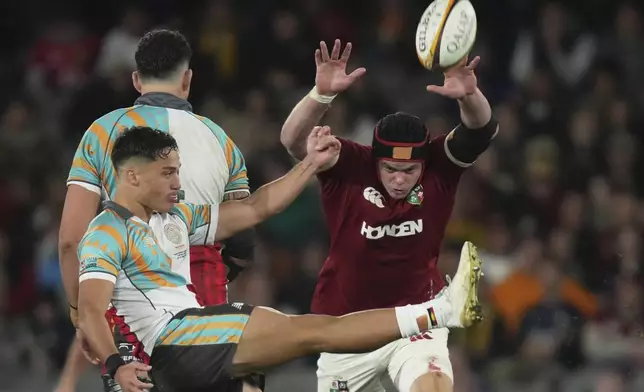
James Ryan of the British & Irish Lions, right, attempts to block a kick by First Nations & Pacifika XV's Kalani Thomas during their rugby union match in Melbourne, Australia, Tuesday, July 22, 2025. (AP Photo/Asanka Brendon Ratnayake)
Garry Ringrose of the British & Irish Lions, second right, attempts to get past First Nations & Pacifika XV's Kalani Thomas, second left, during their rugby union match in Melbourne, Australia, Tuesday, July 22, 2025. (AP Photo/Asanka Brendon Ratnayake)
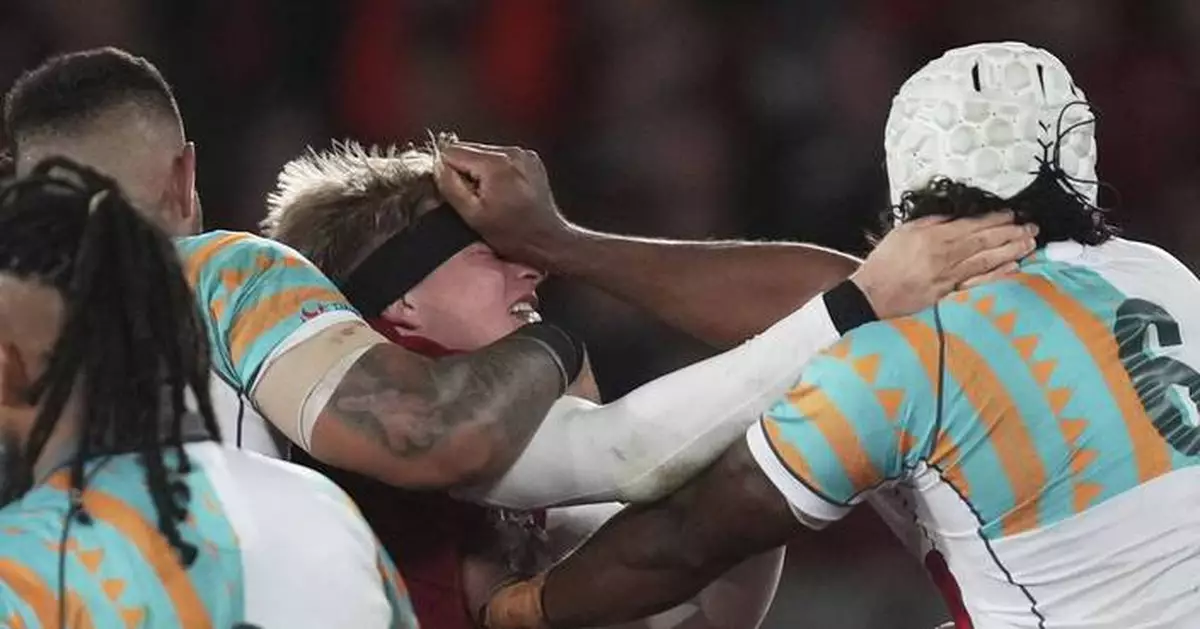
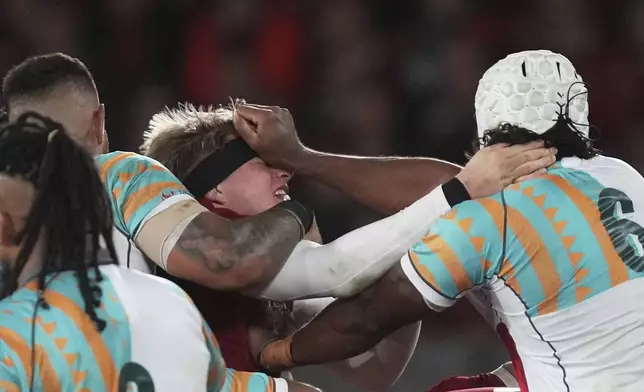
Henry Pollock of the British & Irish Lions, center, is pushed in the head by First Nations & Pacifika XV's Seru Uru during their rugby union match in Melbourne, Australia, Tuesday, July 22, 2025. (AP Photo/Asanka Brendon Ratnayake)
“We've given ourselves a bit of a fright," Lions head coach Andy Farrell said. “Congratulations to the First Nations and Pasifika team, (they) made it a hard-fought contest that's for sure.”
The Lions are now 7-0 in Australia, including the test match, victories over Super Rugby franchises Western Force,Queensland Reds, Waratahs and Brumbies and two invitational teams.
Jamie Osborne scored the opening tries of each half Tuesday and the Lions twice had big leads before being pinned back by the First Nations and Pasifika team, which was drawn from players with Indigenous Australia and Pacific Islands heritage.
Making the most of a penalty advantage, the Lions took a 24-14 lead with 15 minutes to play when Owen Farrell dummied a pass to unsettle the defense and send an unmarked Duhan van der Merwe over in the left corner.
But the invitational team rallied again, cutting the lead to five points in the 71st when Rob Leota scored a try from close range and finishing the match hard in attack just as they did in the first half.
Backrower Charlie Gamble was awarded player of the match despite being on the losing side, helping combat the Lions' superior field position and possession with his relentless work at the breakdown.
“It’s pretty tough when you see (critics saying) we’re going to get smashed by 50,” Gamble said of the lopsided expectations ahead of the game. “But you know, we showed that we deserved to be out there, and we played very hard for each other.”
It had been 14-14 at halftime after each team scored two converted tries and spent 10 minutes giving up a numerical advantage because of yellow cards.
The Lions races to 14-0 after center Osborne chased through Fin Smith's chip kick and touched down, while winger Darcy Graham crossed out wide.
From a lineout win by Henry Pollock, the Lions created an overlap with players looping in midfield and sent a long, floating pass to the unmarked Scottish winger. But Graham had to leave the field soon after with an injury.
The last hour was much more of a grinding contest, with the First Nations and Pasifika team at times outmuscling the Lions, forcing mistakes.
Triston Reilly, who was yellow-carded early, returned to score the First Nations and Pasifika's opening try after an intercept.
Blindside flanker Seru Uru picked up and reached over amid three tacklers in the 23rd minute and Kurtley Beale converted to level the score, ensuring the touring Lions knew they were in a contest.
As tempers flared, Pollock and Uru were warned by the referee for a pushing and shoving episode that the young Lions No. 8 would certainly have learned from. The match remained intensely physical but didn't get out of hand.
“If you look at the game, how we started, we started on fire ... but they (First Nations and Pasifika) tightened back up and took the most of their opportunities,” Andy Farrell said. “It shows how much it means to them.”
AP rugby: https://apnews.com/hub/rugby
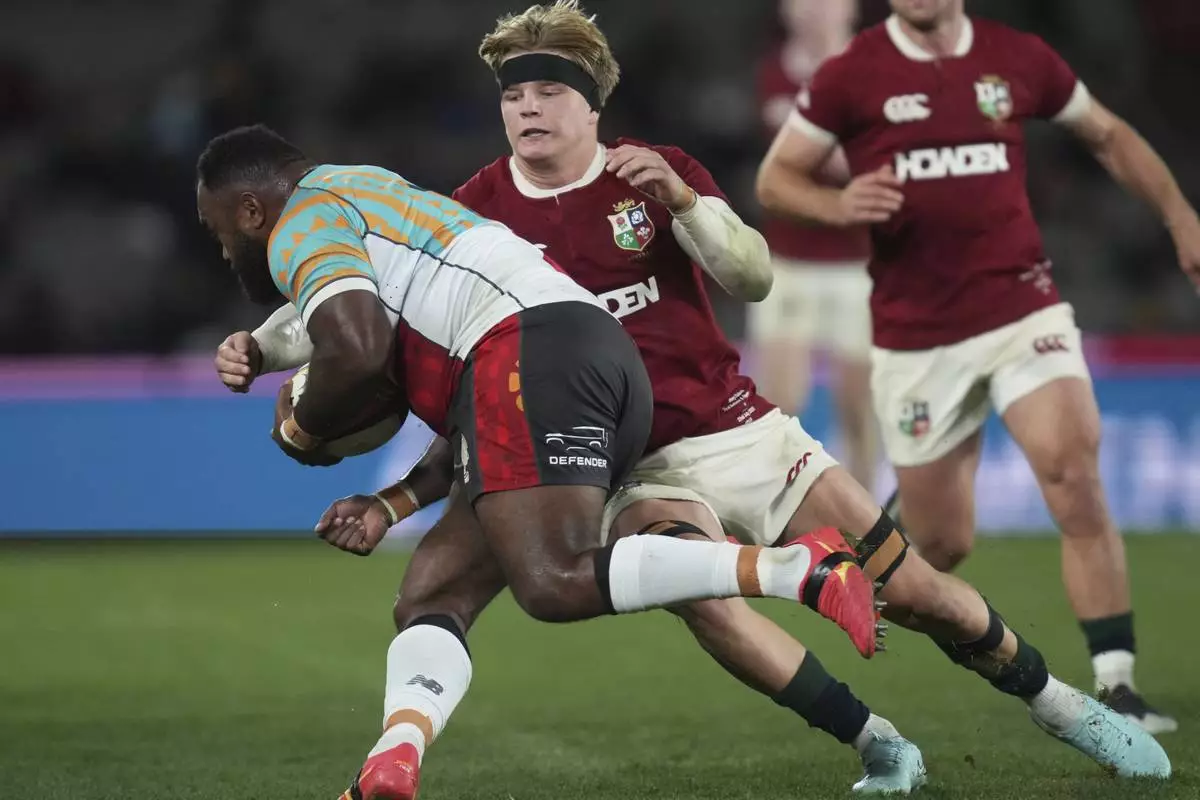
Henry Pollock of the British & Irish Lions, right, tackles First Nations & Pacifika XV's Mesake Doge during their rugby union match in Melbourne, Australia, Tuesday, July 22, 2025. (AP Photo/Asanka Brendon Ratnayake)
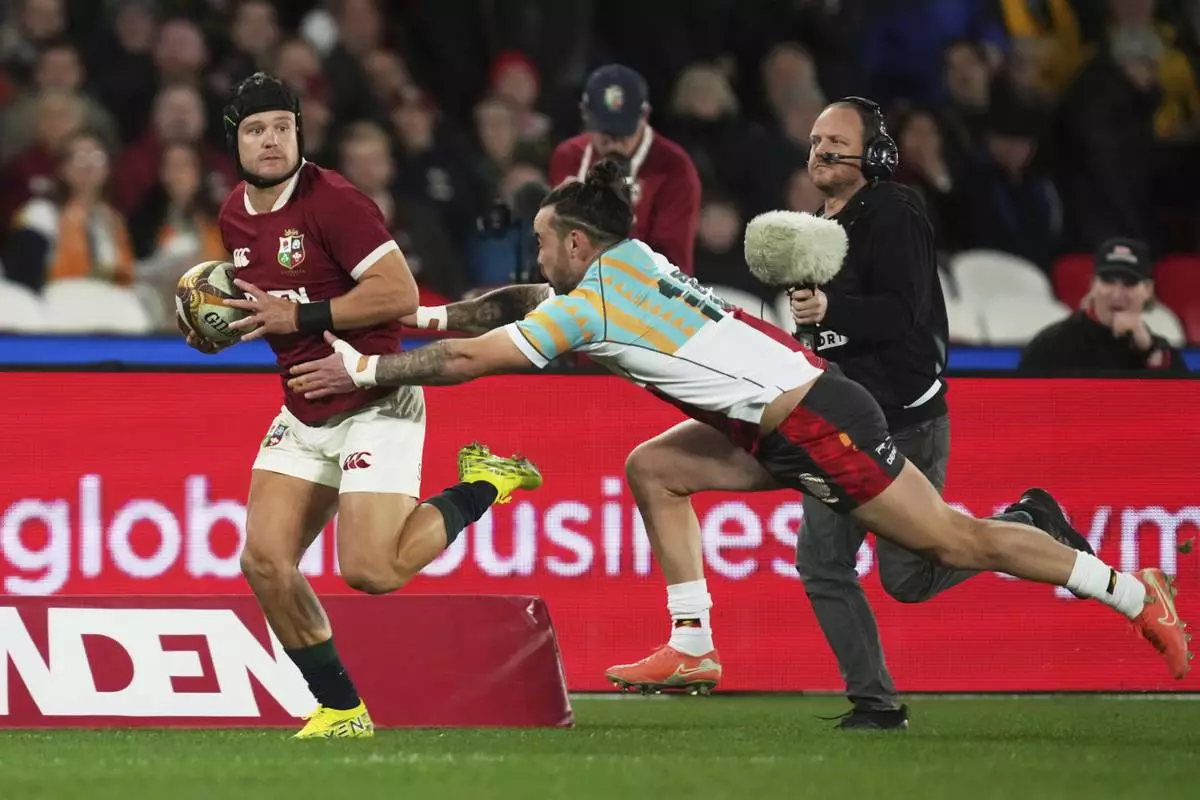
THIS CORRECTS TO ANDY MUIRHEAD, NOT TRISTON REILLY - Darcy Graham British & Irish Lions, left, is tackled by First Nations & Pacifika XV's Andy Muirhead during their rugby union match in Melbourne, Australia, Tuesday, July 22, 2025. (AP Photo/Asanka Brendon Ratnayake)
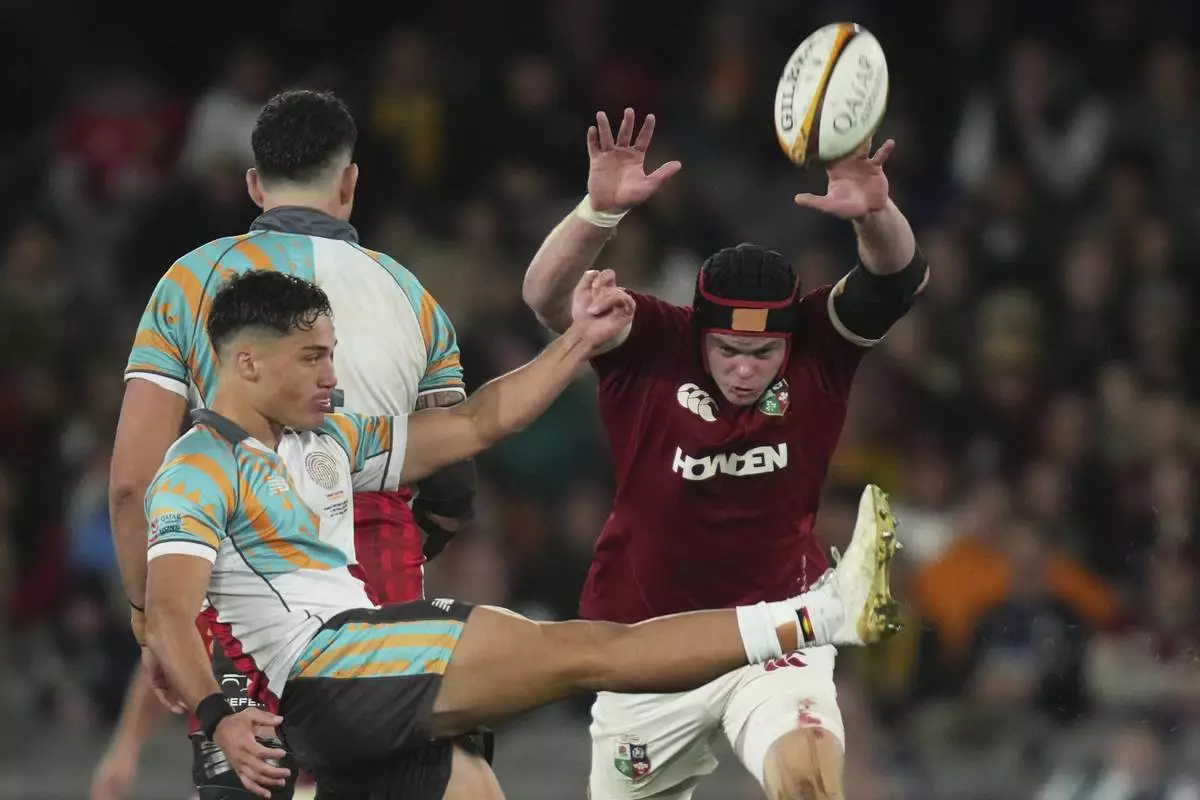
James Ryan of the British & Irish Lions, right, attempts to block a kick by First Nations & Pacifika XV's Kalani Thomas during their rugby union match in Melbourne, Australia, Tuesday, July 22, 2025. (AP Photo/Asanka Brendon Ratnayake)
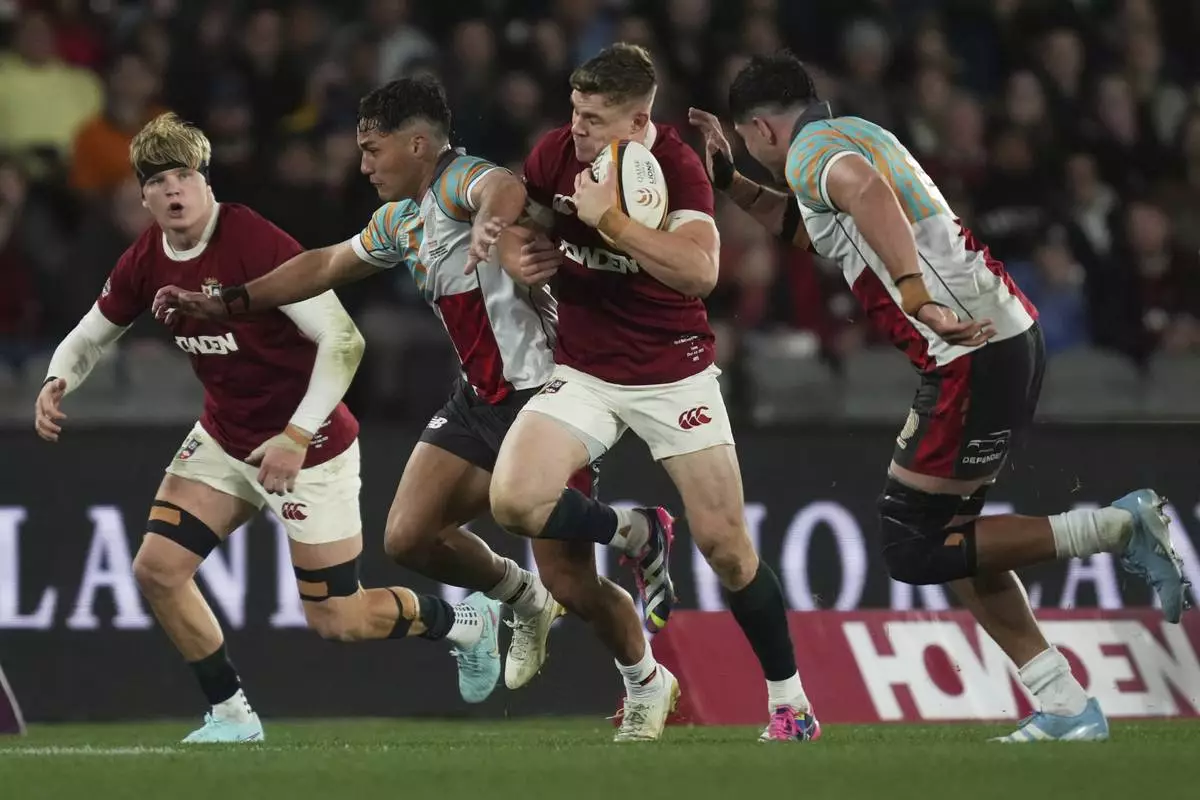
Garry Ringrose of the British & Irish Lions, second right, attempts to get past First Nations & Pacifika XV's Kalani Thomas, second left, during their rugby union match in Melbourne, Australia, Tuesday, July 22, 2025. (AP Photo/Asanka Brendon Ratnayake)
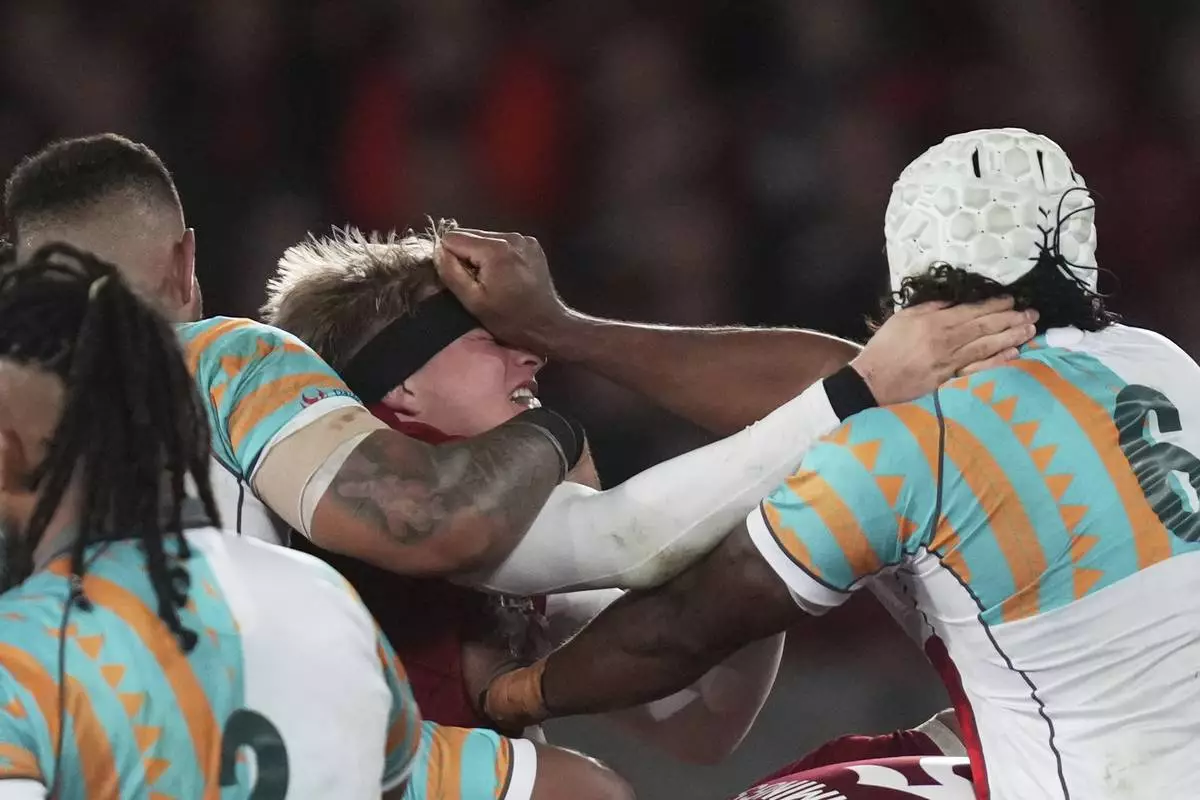
Henry Pollock of the British & Irish Lions, center, is pushed in the head by First Nations & Pacifika XV's Seru Uru during their rugby union match in Melbourne, Australia, Tuesday, July 22, 2025. (AP Photo/Asanka Brendon Ratnayake)
DUBAI, United Arab Emirates (AP) — The United States launched a second round of airstrikes into Thursday morning on Iran after President Donald Trump warned that Tehran would “pay the price” for stalled negotiations.
The new assault across multiple cities comes as efforts to negotiate an end the war again appeared stuck, with Iran insisting it would maintain its chokehold on the Strait of Hormuz, which has disrupted global energy supplies and sent oil prices higher.
Iran threatened to retaliate for the strikes, and missile sirens sounded Thursday morning in Bahrain, home to the headquarters of the U.S. Navy’s 5th Fleet. However, any immediate Iranian response appeared more muted than the one that came after the first round of American strikes on Wednesday, when it launched missiles at Bahrain, Kuwait and Jordan.
The U.S. Central Command said it had “completed” its latest round of airstrikes just before sunrise in Iran. The military command said the stirkes came “in response to Iran’s unwarranted and continued aggression” and targeted “Iranian military surveillance capabilities, communication systems and air defense sites.” It did not elaborate on the damage done by the strikes, which it said were carried out by the U.S. Air Force, Marines and Navy.
Explosions from the strikes echoed around Iran’s capital, Tehran, as well as in the port city of Bandar Abbas and other southern areas along the strait.
It was the third time this week that back-and-forth strikes have tested a two-month ceasefire. The strikes took place after a day of Iranian fire in Bahrain, Kuwait and Jordan, all of which host U.S. troops.
Trump has urged Iran to sign a deal to end the war and suggested earlier this week that an agreement could be reached in days.
Iran’s United Nations envoy said the U.S. should refrain from threats of force if it wants a deal.
“Iran has never negotiated under threats and pressure and will never submit to pressure or question,” Ambassador Amir Saeid Iravani told the U.N. Security Council on Wednesday.
Still, both countries seem to be looking for a way to end the conflict — if they can manage to sell it as a win at home.
Iran has proved resilient despite weeks of heavy bombing. It is betting that its ability to effectively close the Strait of Hormuz — a crucial passageway for oil and natural gas — gives it a strong bargaining chip.
Israeli Prime Minister Benjamin Netanyahu appears intent on pursuing goals that make compromise harder: the collapse of Iran’s theocratic government, the elimination of its nuclear program, and the destruction of the Iranian-allied Hezbollah militant group in Lebanon. On Monday, Iran and Israel targeted each other.
Since the U.S. and Israel started the war with Feb. 28 attacks on Iran, the conflict has shaken the global economy, driven up energy prices worldwide, and made food and other basics more expensive.
The international benchmark for crude oil traded above $93 a barrel on Wednesday, up more than 25% since the start of the war.
Trump said the U.S. military has since last month undertaken a “secret mission” to sneak oil shipments past Iran’s forces in the Strait of Hormuz. He said ships were slipping through at night, aided by the destruction of Iranian radar equipment.
Trump said as a result more than 100 million barrels of oil have evaded Iran’s chokehold on the strait. There was no immediate confirmation of that figure, which roughly equals five days of oil shipments through the waterway before the war began.
The military’s role was not immediately clear. Capt. Tim Hawkins, a Central Command spokesman, said U.S. forces “communicate and coordinate” with commercial ships in the area, but gave no details on military support being offered.
The U.S. Central Command on Wednesday refuted Iran’s claims that the Strait of Hormuz is closed, saying commercial ships are continuing to transit in and out.
Earlier Wednesday, the U.S. military said an American aircraft fired “precision munitions” into the engine room of the Palau-flagged vessel M/T Settebello as it attempted to breach the naval blockade with a shipment of Iranian oil. It was the eighth merchant vessel disabled by U.S. forces in waters off Iran.
India’s foreign ministry said three Indian sailors were missing after the Settebello was struck, while 21 others were rescued. Its statement did not mention the U.S. military or the blockade.
Hawkins of the U.S. Central Command said American forces warned the crew before firing on the ship.
The U.S. military said strikes earlier Wednesday targeted “air defense, ground control stations, and surveillance radar sites."
Iran said U.S. strikes hit two water reservoirs in the southern city of Sirik, temporarily cutting off water to thousands of people. U.S. Central Command had no immediate comment. Tehran later claimed attacks in Kuwait, Bahrain and Jordan.
Iranian Foreign Minister Abbas Araghchi condemned the American attacks as a violation of Iranian sovereignty.
Still, efforts to mediate a deal continued. Following consultations with the U.S., a delegation from Qatar arrived in Tehran for talks earlier Wednesday, according to an official with knowledge of the visit who requested anonymity due to the sensitivity of the talks.
The exchanges of fire came a day after a U.S. Army attack helicopter crashed near the Strait of Hormuz. The helicopter collided with an Iranian drone, according to a U.S. official speaking on condition of anonymity to discuss an ongoing investigation. It wasn’t clear whether the collision was intentional.
A drone boat rescued the helicopter’s two crew. Trump said they were uninjured.
Wary of high gas prices in the run-up to congressional elections in November, Trump seems to be looking for a quick win. But he is also making demands that will be tough for Iran to swallow.
The U.S. wants to see Iran give up its stockpile of highly enriched uranium. While Iran insists its nuclear program is peaceful, that uranium is a short technical step from weapons-grade levels.
Iran is refusing to give up the uranium and demanding relief from sanctions. It also wants the release of frozen assets even before a final agreement is in place, something Trump rejected.
Iran has insisted that any deal to end the war must also end fighting between its ally Hezbollah and Israel. Israel has instead intensified its military campaign against the Lebanon-based militant group.
Price reported from Washington. Associated Press writers Konstantin Toropin and Will Weissert in Washington; Edith M. Lederer at the United Nations; Natalie Melzer in Nahariya, Israel; David Rising in Bangkok; Bassem Mroue in Beirut; Michelle L. Price in New York; Russ Bynum in Savannah, Georgia; and Hannah Schoenbaum in Salt Lake City contributed to this report.
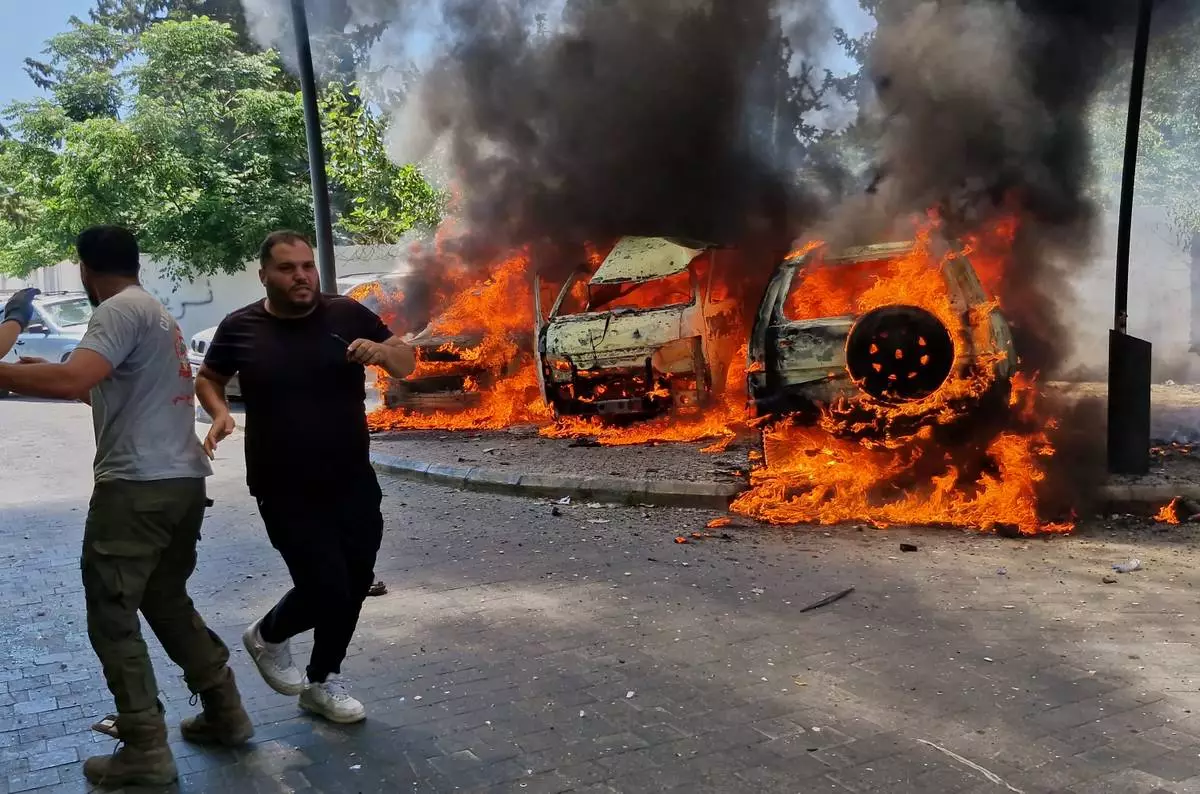
A man runs past burning cars following an Israeli airstrike in the southern port city of Sidon, Lebanon, Wednesday, June 10, 2026. (AP Photo/Mohammed Zaatari)
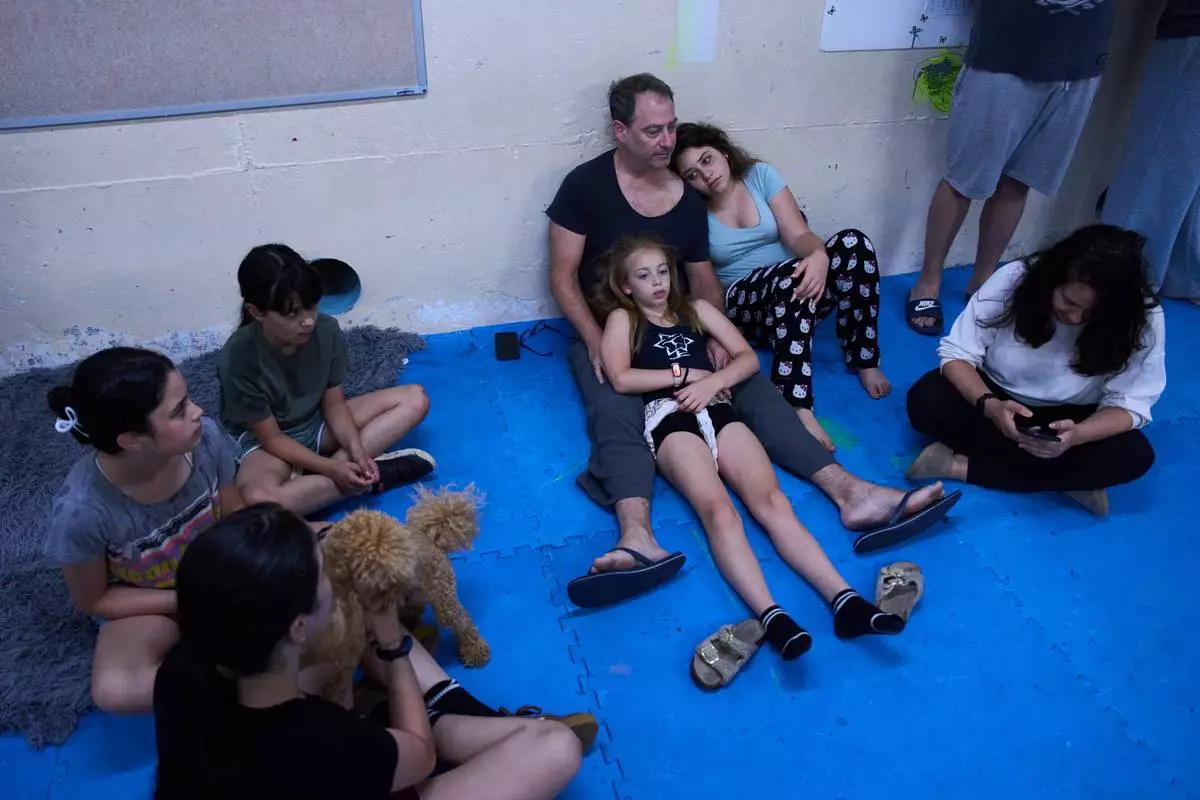
People take shelter as air raid sirens warn of incoming Iranian missiles in Ramat Gan, Israel, Monday, June 8, 2026. (AP Photo/Oded Balilty)
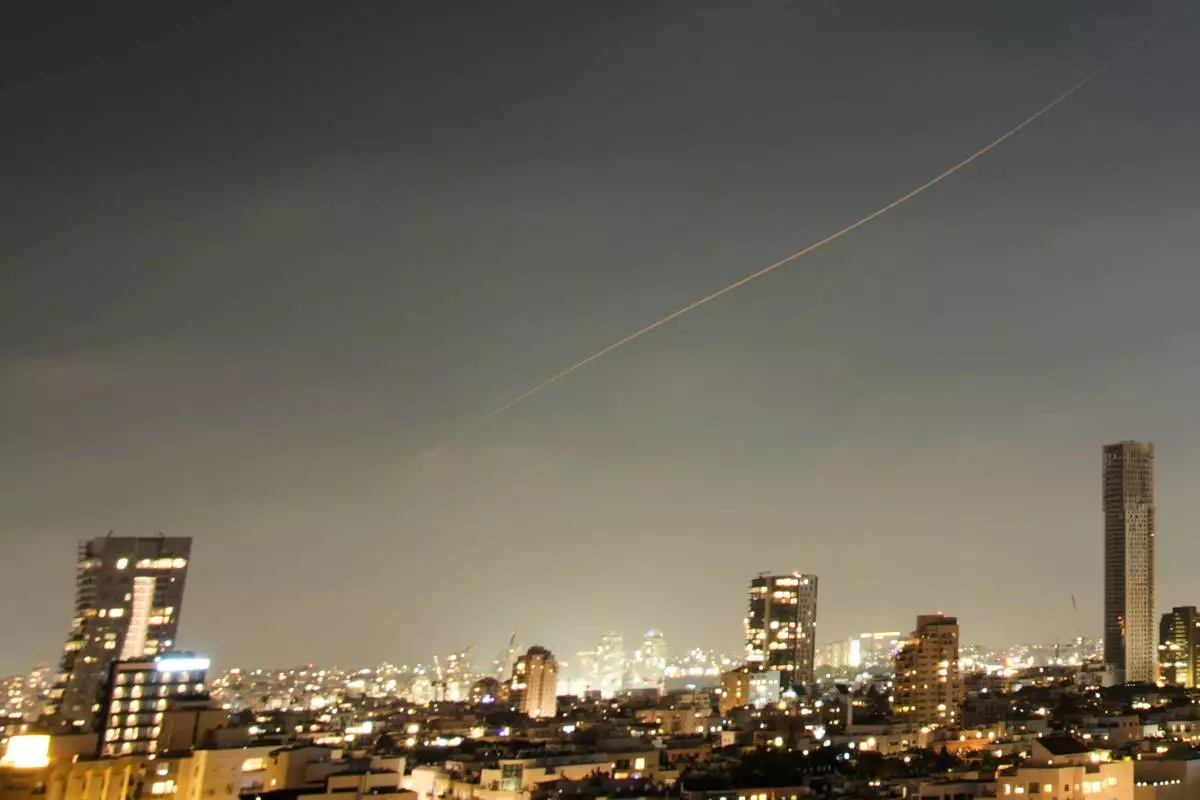
A projectile streaks through the sky over central Israel during an Iranian missile attack, Sunday, June 7, 2026. (AP Photo/Ohad Zwigenberg)
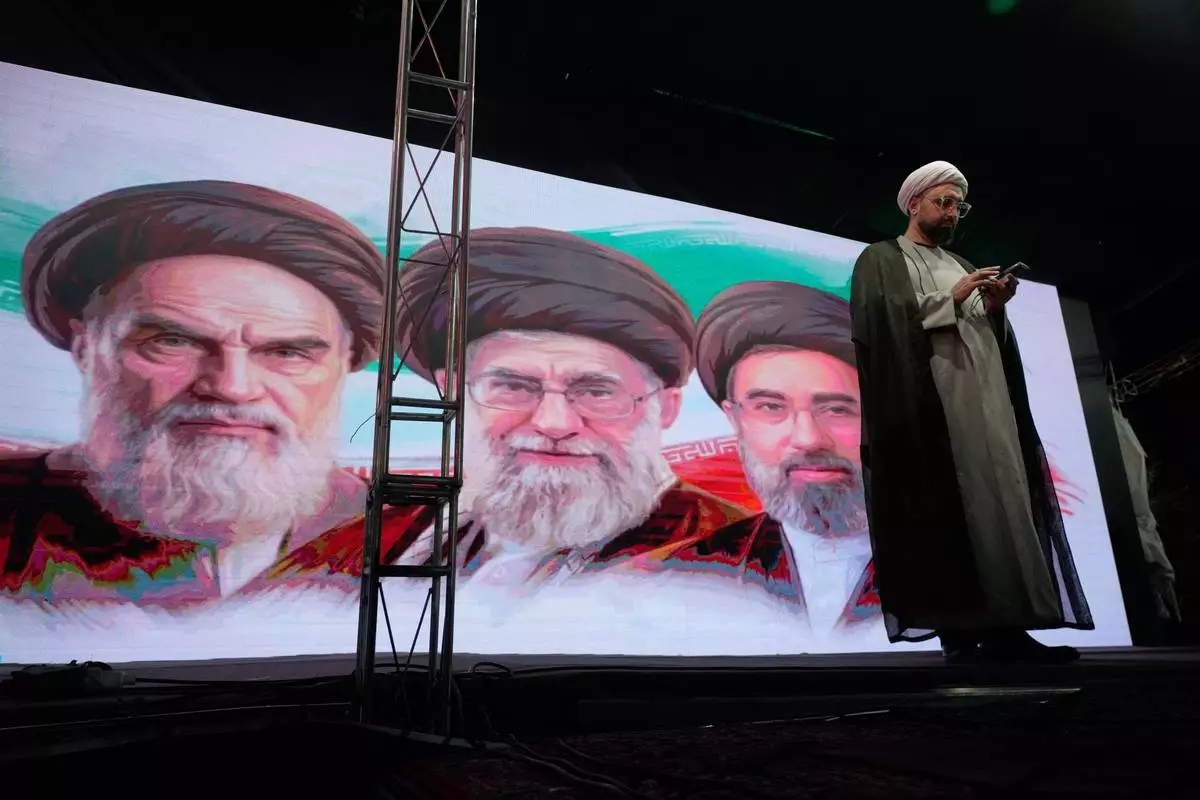
A cleric checks his cell phone on stage in front of a screen displaying portraits of the late Iranian revolutionary founder Ayatollah Khomeini, left, late Supreme Leader Ayatollah Ali Khamenei, center, and Supreme Leader Ayatollah Mojtaba Khamenei, during a pro-government gathering in Tehran, Iran, Sunday, June 7, 2026. (AP Photo/Vahid Salemi)
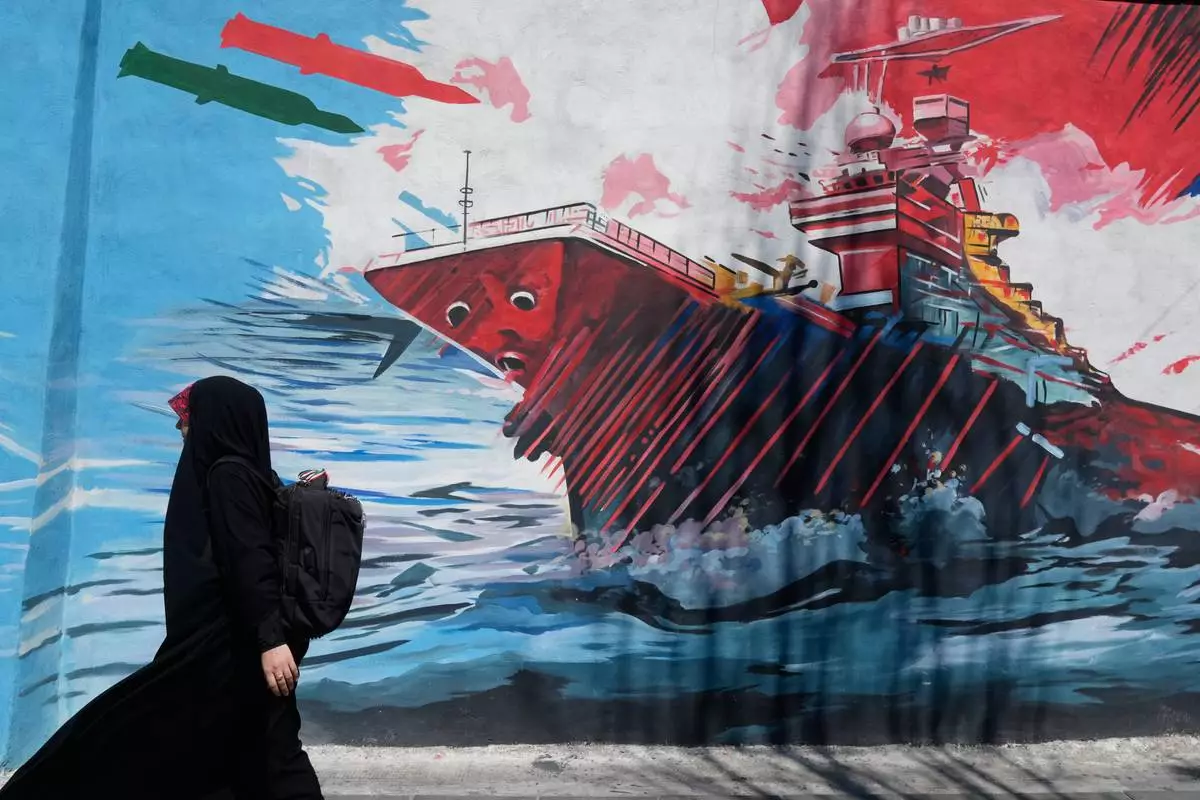
A woman walks past a mural depicting a U.S. aircraft carrier under missile attack in downtown Tehran, Iran, Monday, June 8, 2026. (AP Photo/Vahid Salemi)