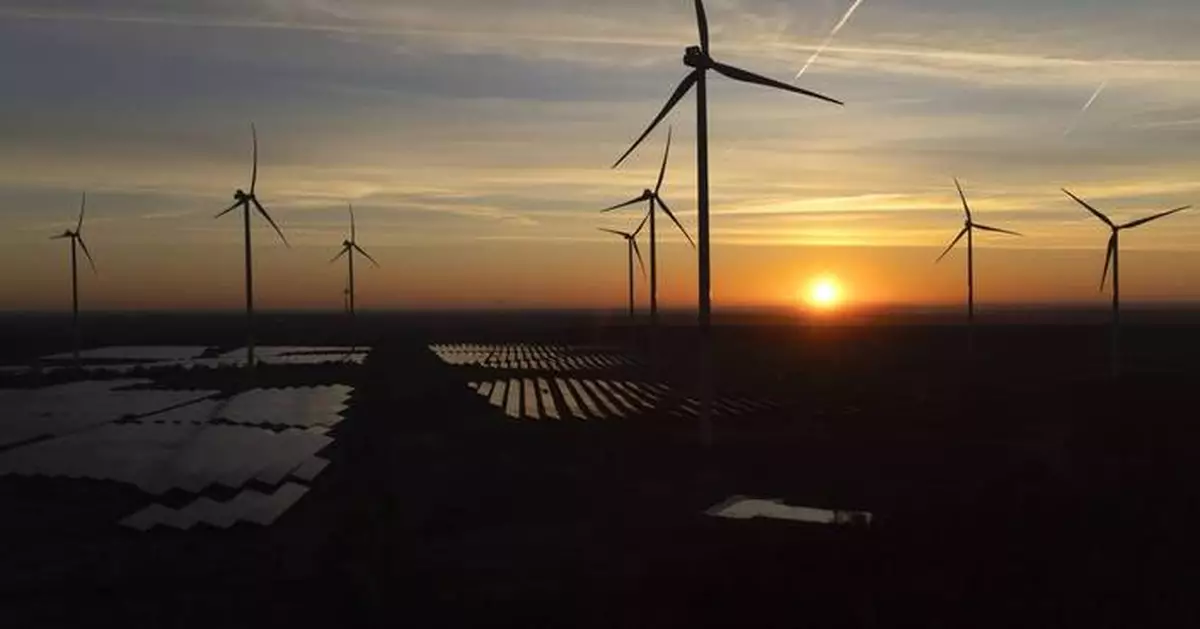
NEW YORK (AP) — The global switch to renewable energy has passed a “positive tipping point” where solar and wind power will become even cheaper and more widespread, according to two United Nations reports released Tuesday, describing a bright spot amid otherwise gloomy progress to curb climate change.
Last year, 74% of the growth in electricity generated worldwide was from wind, solar and other green sources, according to the U.N.’s multiagency report, called Seizing the Moment of Opportunity. It found that 92.5% of all new electricity capacity added to the grid worldwide in that time period came from renewables. Meanwhile, sales of electric vehicles are up from 500,000 in 2015 to more than 17 million in 2024.
Click to Gallery
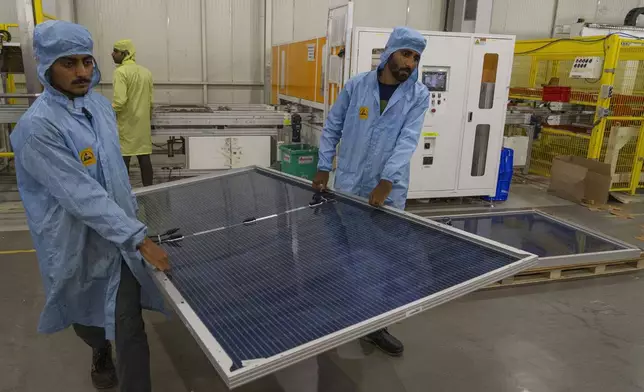
FILE - Employees carry solar panels at the Adani New Industries Limited in the port town of Mundra in Western India's Gujarat state, India, Sept. 20, 2023. (AP Photo/Rafiq Maqbool, File)

Sheep graze under solar panels in Hainan prefecture of western China's Qinghai province on Tuesday, July 1, 2025. (AP Photo/Ng Han Guan)
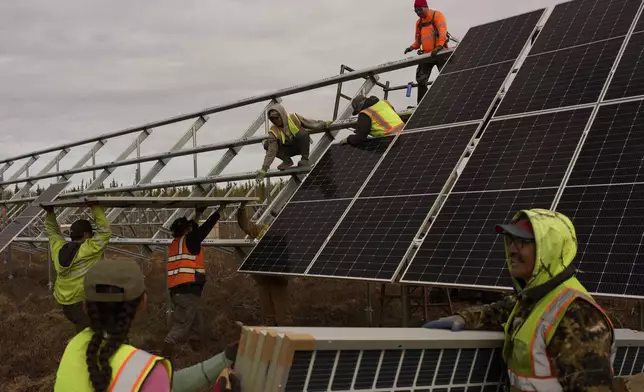
FILE - Workers install panels at a solar project May 21, 2025, in Galena, Alaska. (AP Photo/John Locher, File)
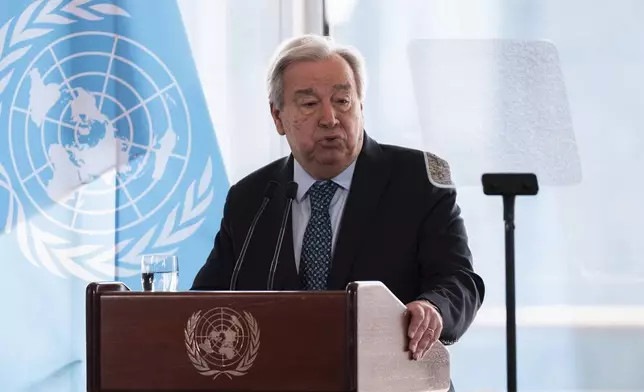
United Nations Secretary-General Antonio Guterres delivers a speech on climate action "A Moment of Opportunity: Supercharging the New Energy Era" at the United Nations headquarters on Tuesday, July 22, 2025, in New York. (AP Photo/Adam Gray)
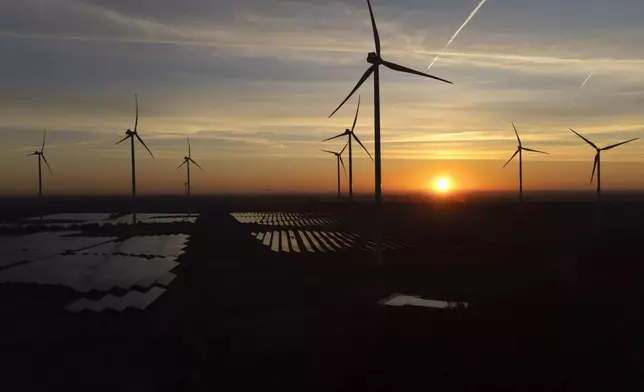
FILE - Wind turbines operate as the sun rises at the Klettwitz Nord solar energy park near Klettwitz, Germany, Oct. 16, 2024. (AP Photo/Matthias Schrader, File)
The three cheapest electricity sources globally last year were onshore wind, solar panels and new hydropower, according to an energy cost report by the International Renewable Energy Agency (IRENA). Solar power now is 41% cheaper and wind power is 53% cheaper globally than the lowest-cost fossil fuel, the reports said. Fossil fuels, which are the chief cause of climate change, include coal, oil and natural gas.
“The fossil fuel age is flailing and failing,” United Nations Secretary-General Antonio Guterres said in Tuesday morning speech unveiling the reports. “We are in the dawn of a new energy era. An era where cheap, clean, abundant energy powers a world rich in economic opportunity.”
“Just follow the money,” Guterres said, quoting the reports that showed last year there was $2 trillion in investment in green energy, which is about $800 billion more than in fossil fuels.
Still, United Nations officials said the switch to renewable energy, while remarkable compared to 10 years ago, is not happening fast enough.
The global renewables growth has been mostly in developed countries such as China — where one-tenth of the economy is tied up in green energy — as well as countries such as India and Brazil.
Yet Africa represented less than 2% of the new green energy capacity installed last year despite having great electrification needs, the reports said. United Nations officials blamed the high cost of capital for the Global South.
“The Global South must be empowered to generate its own electricity without adding to already unsustainable level of debts,” said Bahamian climate scientist Adelle Thomas of the Natural Resources Defense Council. Thomas, who did not work on the reports, added that they debunk the myth that clean energy cannot compete with fossil fuels, instead showing a clean energy future is not just possible but likely inevitable.
The U.N. reports are “right on the money," said University of Michigan environment dean Jonathan Overpeck, who also wasn't part of the studies. He said the economic tipping point leads to a cycle that keeps driving renewable costs down and makes fossil fuel power less and less desirable.
And renewables are booming despite fossil fuels getting nearly nine times the government consumption subsidies as they do, Guterres and the reports said. In 2023, global fossil fuel subsidies amounted to $620 billion, compared to $70 billion for renewables, the U.N. report said.
But just as renewables are booming, fossil fuel production globally is still increasing, instead of going down in response. United Nations officials said that's because power demand is increasing overall, spurred by developing countries, artificial intelligence data centers and the need for cooling in an ever warmer world.
“A typical AI data center eats up as much electricity as 100,000 homes,” Guterres said. “By 2030 data centers could consume as much electricity as all of Japan does today.”
So Guterres called on the world's major tech firms to power data centers completely with renewables by 2030.
In the United States, solar and wind power had been growing at a rate of 12.3% per year from 2018 to 2023, the IRENA report said. But since President Donald Trump took office earlier this year, his administration has withdrawn the nation from the landmark Paris climate accord and cut many federal renewable energy programs, with a renewed emphasis on fossil fuels.
Guterres warned nations hanging on to fossil fuels that they were heading down a dangerous path that would make them poorer not richer, without naming the United States specifically.
“Countries that cling to fossil fuels are not protecting their economies, they sabotaging them. Driving up costs. Undermining competitiveness. Locking in stranded assets,” Guterres said.
Renewables are the smart way to go for energy security, Guterres said. With renewables, he said, “there are no price spikes for sunlight. No embargoes on wind.”
David Waskow of the World Resources Institute said the message of problems mixed with optimism makes sense. He compared Tuesday's assessment to climbing a mountain and taking time halfway through to look down and appreciate how far you've come. But a look up shows the trek is getting steeper.
Guterres said he understands how young people could have a sense of “doom and gloom,” and regrets what his generation has left them — but all is not lost.
“This is not inevitable. We have the tools, the instruments, the capacity to change course,” Guterres said. “There are reasons to be hopeful.”
The Associated Press’ climate and environmental coverage receives financial support from multiple private foundations. AP is solely responsible for all content. Find AP’s standards for working with philanthropies, a list of supporters and funded coverage areas at AP.org.
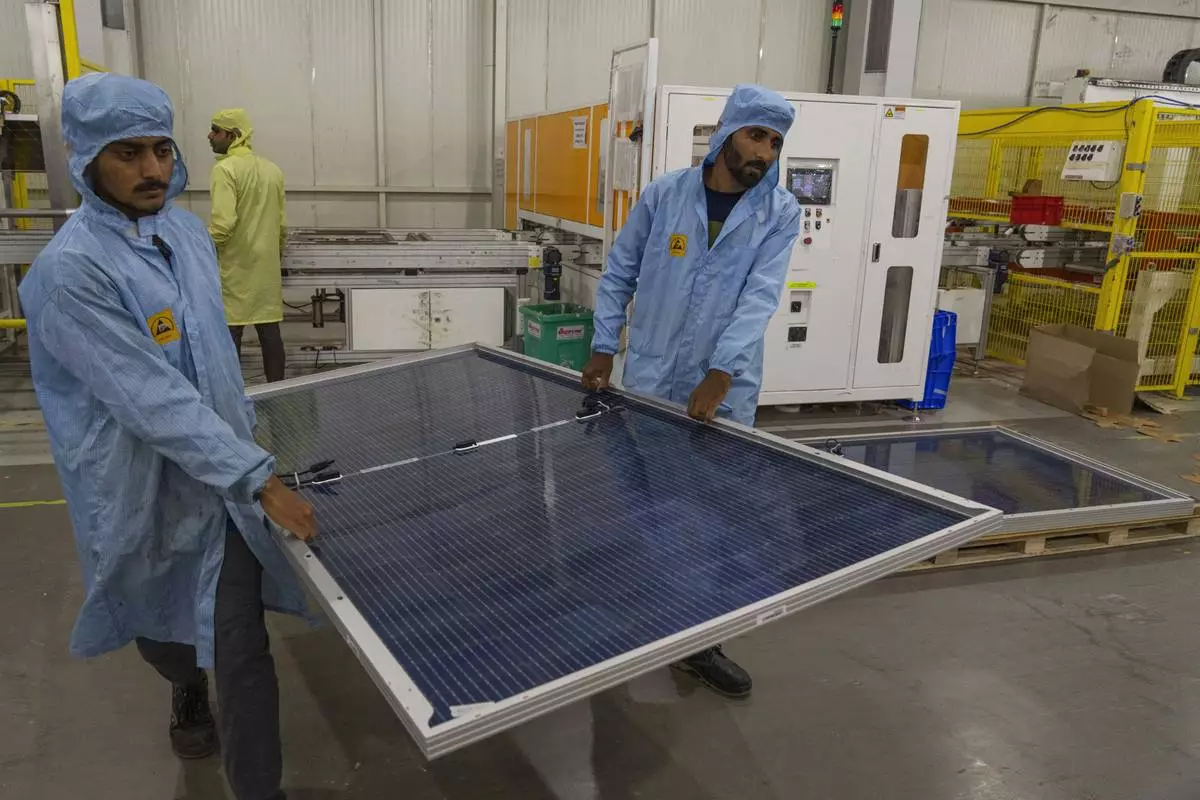
FILE - Employees carry solar panels at the Adani New Industries Limited in the port town of Mundra in Western India's Gujarat state, India, Sept. 20, 2023. (AP Photo/Rafiq Maqbool, File)
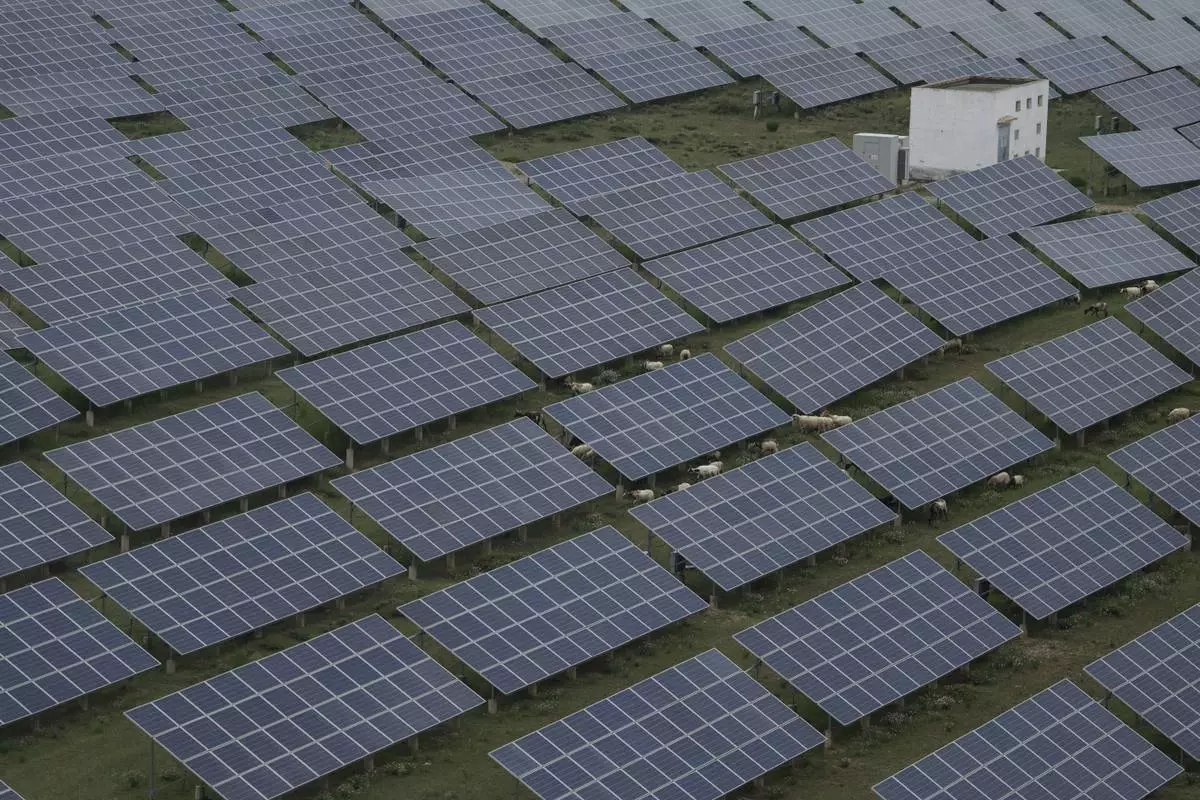
Sheep graze under solar panels in Hainan prefecture of western China's Qinghai province on Tuesday, July 1, 2025. (AP Photo/Ng Han Guan)
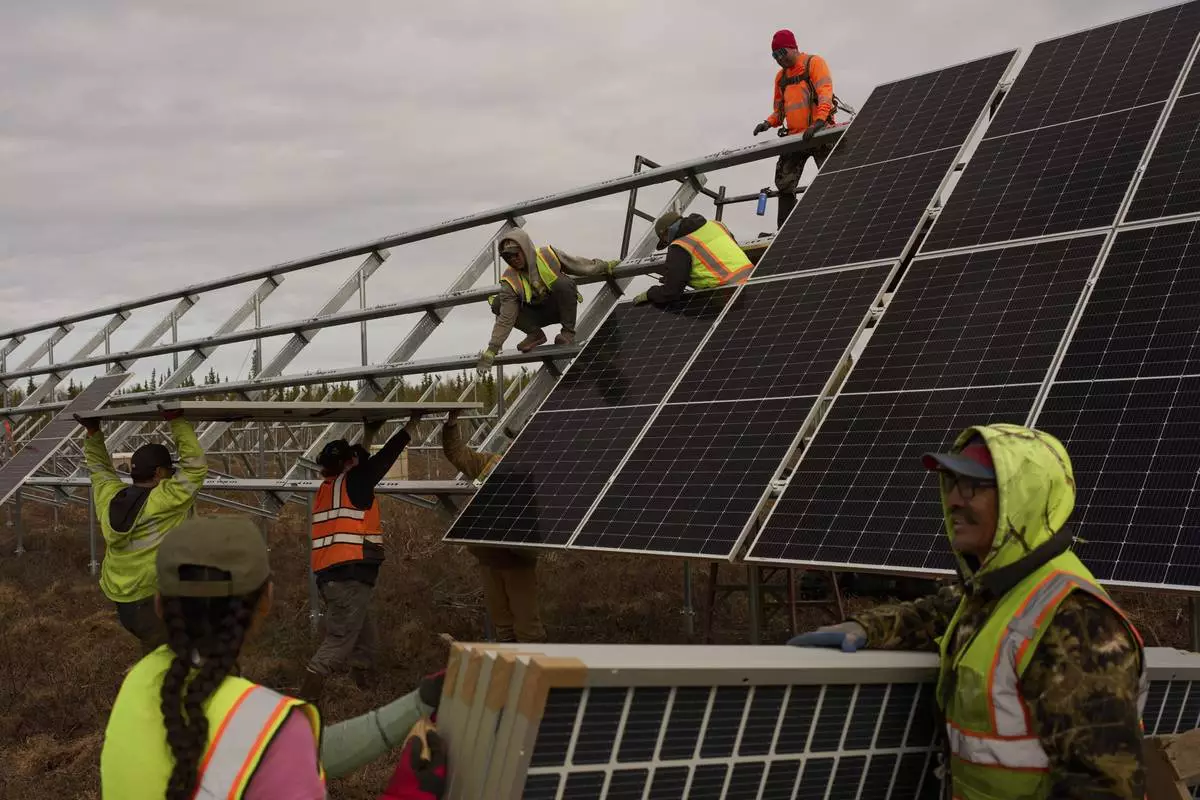
FILE - Workers install panels at a solar project May 21, 2025, in Galena, Alaska. (AP Photo/John Locher, File)
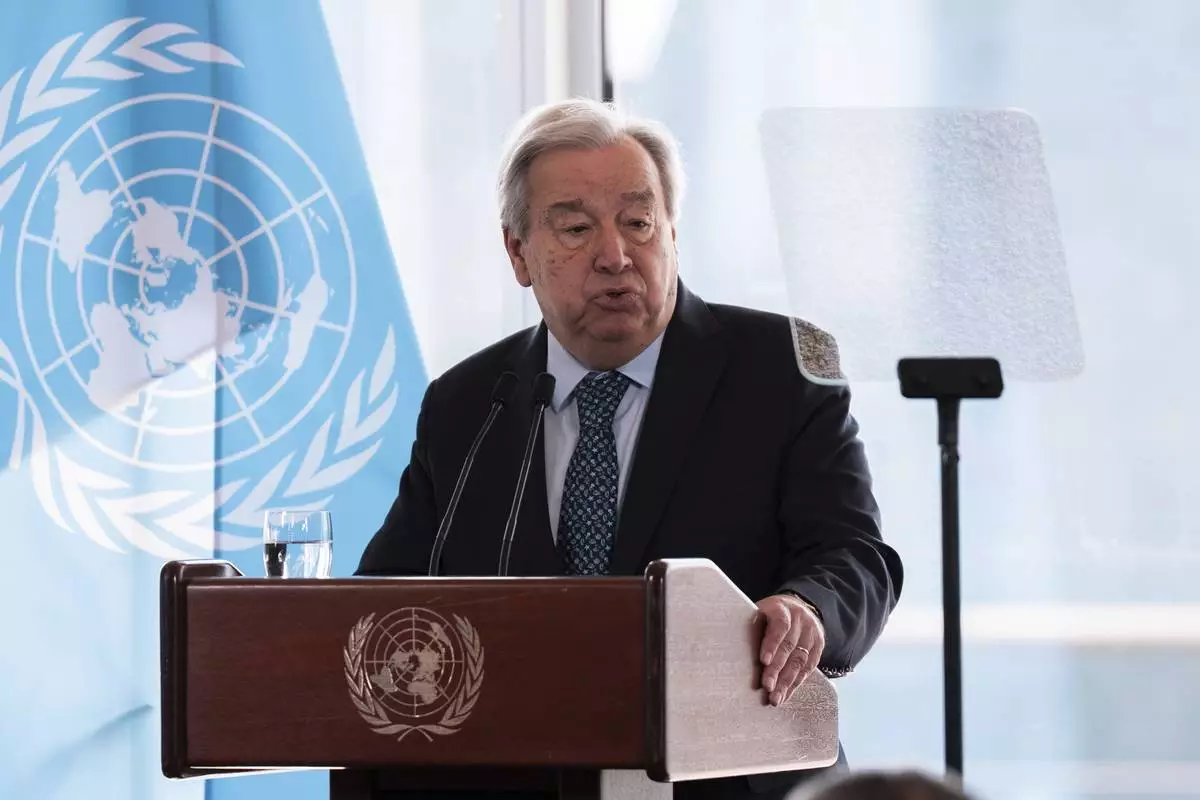
United Nations Secretary-General Antonio Guterres delivers a speech on climate action "A Moment of Opportunity: Supercharging the New Energy Era" at the United Nations headquarters on Tuesday, July 22, 2025, in New York. (AP Photo/Adam Gray)
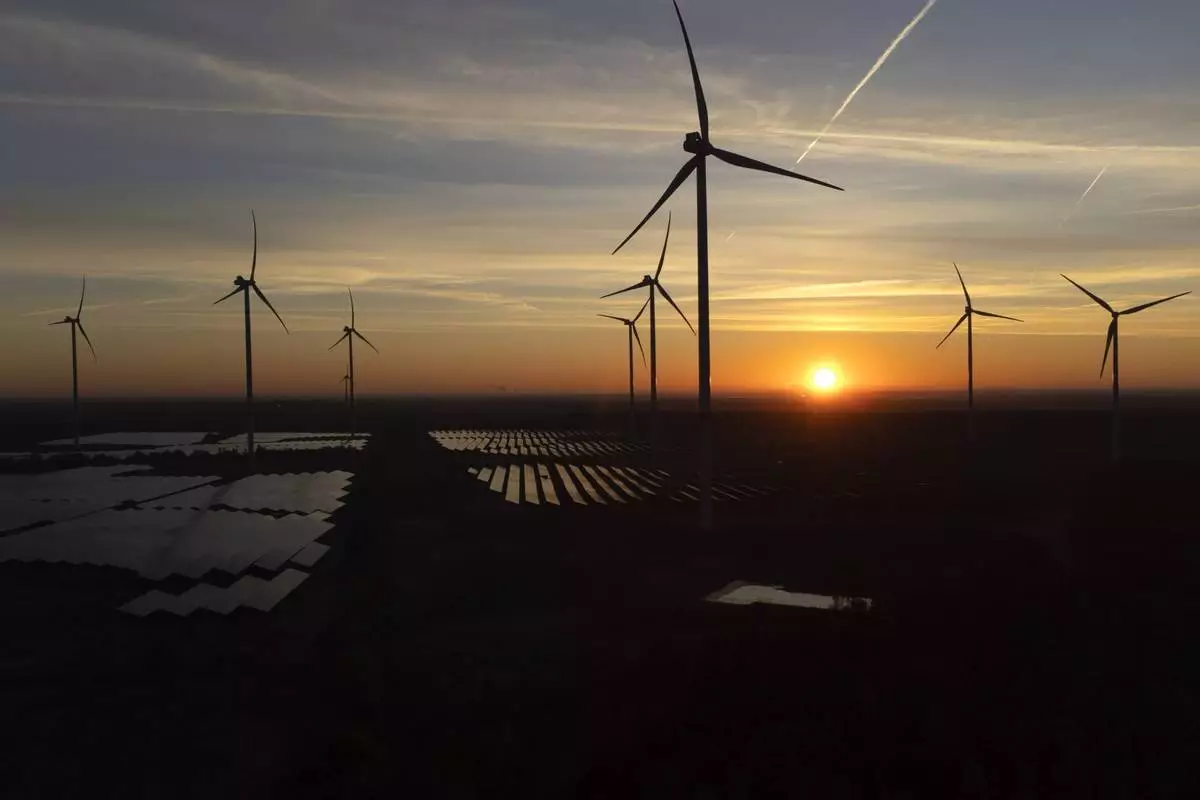
FILE - Wind turbines operate as the sun rises at the Klettwitz Nord solar energy park near Klettwitz, Germany, Oct. 16, 2024. (AP Photo/Matthias Schrader, File)