DAMASCUS, Syria (AP) — More than 1,400 people were killed in several days of sectarian violence on Syria ’s coast earlier this year, a government investigating committee said Tuesday.
The violence followed the ouster of longtime President Bashar Assad in December. The inquiry said there was no evidence that Syria's new military leaders ordered attacks on the Alawite community there, to which Assad belonged.
Click to Gallery
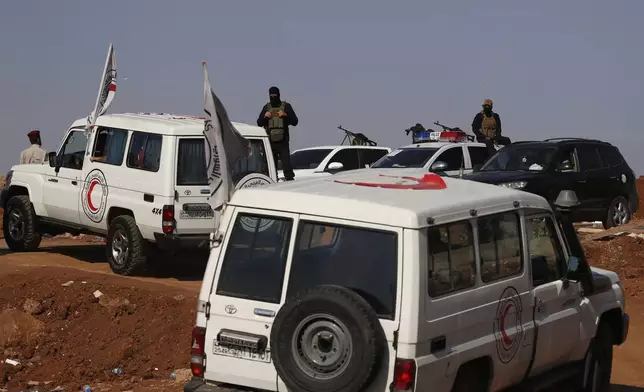
A convoy of ambulances and buses arrives at a checkpoint in the village of Busra al-Harir, southern Syria, on its way to Sweida province, as security forces cordon off the area to block Bedouin fighters from entering the province, Tuesday, July 22, 2025. (AP Photo/Omar Sanadiki)
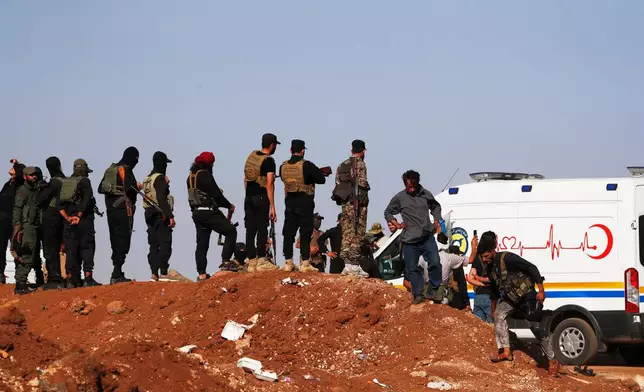
A convoy of ambulances and buses arrives at a checkpoint in the village of Busra al-Harir, southern Syria, on its way to Sweida province, as security forces cordon off the area to block Bedouin fighters from entering the province, Tuesday, July 22, 2025. (AP Photo/Omar Sanadiki)
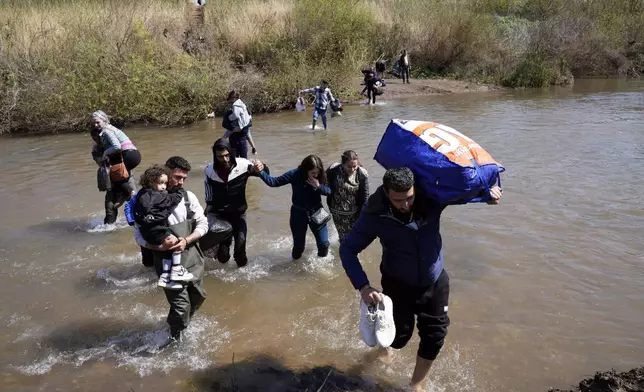
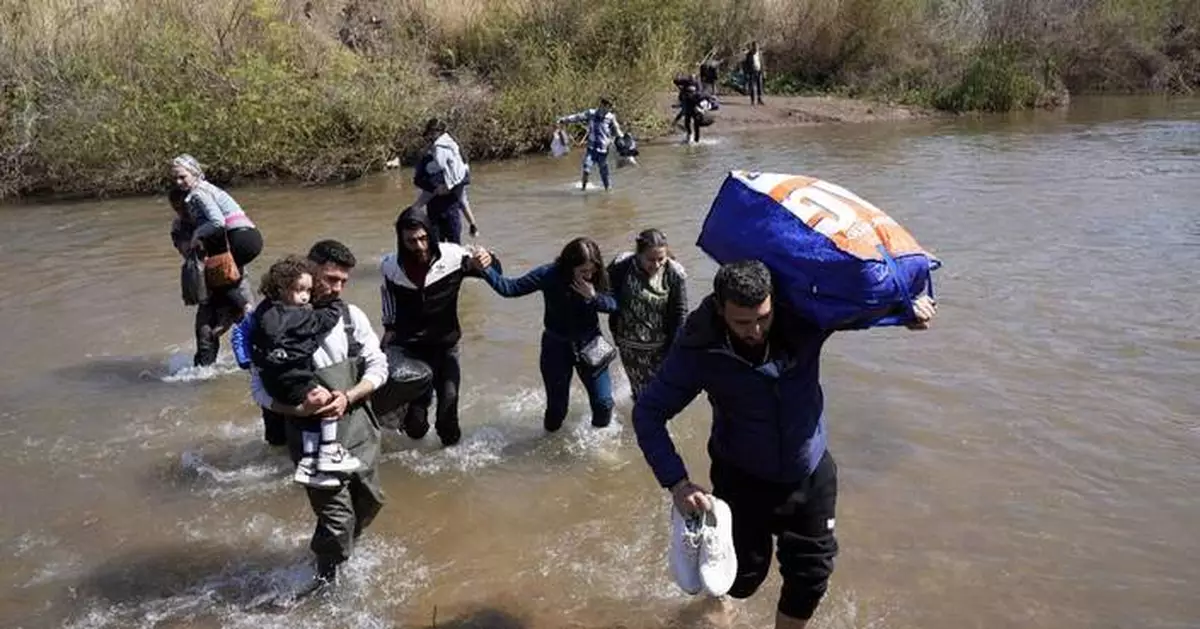
FILE - Syrian Alawite families who fled the clashes in Syria carry their luggage as they cross a river marking the border between Syria and northern Lebanon near the village of Heker al-Daher in Akkar province, Lebanon, March 11, 2025. (AP Photo/Hussein Malla, File)
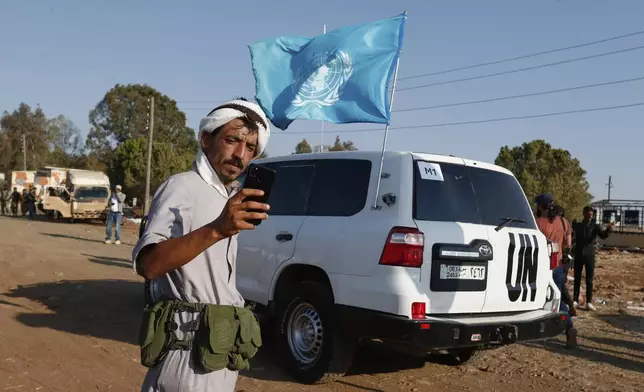
A Bedouin fighter takes a selfie in front of a U.N. vehicle as a convoy of ambulances and buses arrives at a checkpoint in the village of Busra al-Harir, southern Syria, on its way to Sweida province, as security forces cordon off the area to block Bedouin fighters from entering the province, Tuesday, July 22, 2025. (AP Photo/Omar Sanadiki)
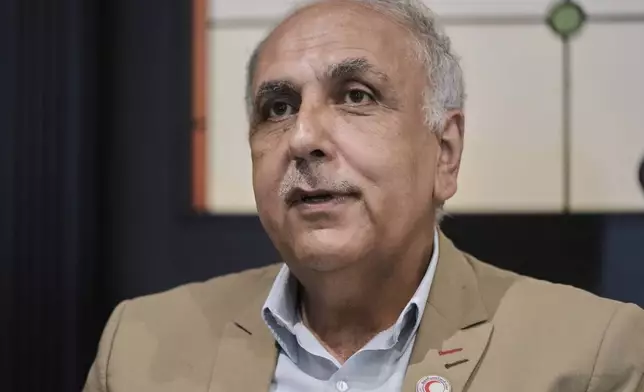
Dr. Mohammed Hazem Baqleh, president of the Syrian Arab Red Crescent, speaks during an interview with The Associated Press at the Habtoor Grand Hotel in the Sin el-Fil suburb of Beirut, Lebanon, Tuesday, July 22, 2025. (AP Photo/Bilal Hussein)
A convoy of ambulances and buses arrives at a checkpoint in the village of Busra al-Harir, southern Syria, on its way to Sweida province, as security forces cordon off the area to block Bedouin fighters from entering the province, Tuesday, July 22, 2025. (AP Photo/Omar Sanadiki)
A convoy of ambulances and buses arrives at a checkpoint in the village of Busra al-Harir, southern Syria, on its way to Sweida province, as security forces cordon off the area to block Bedouin fighters from entering the province, Tuesday, July 22, 2025. (AP Photo/Omar Sanadiki)
FILE - Syrian Alawite families who fled the clashes in Syria carry their luggage as they cross a river marking the border between Syria and northern Lebanon near the village of Heker al-Daher in Akkar province, Lebanon, March 11, 2025. (AP Photo/Hussein Malla, File)
Nearly 300 people suspected of committing crimes, including murder, robbery, torture and looting and burning of homes and businesses, were identified during the four-month investigation and referred for prosecution, and 37 people have been arrested, officials said, without disclosing how many suspects were members of the security forces.
The committee's report came as Syria reels from a new round of sectarian violence in the south, which threatens to upend the country’s fragile recovery after nearly 14 years of civil war.
The coastal violence began on March 6 when armed groups loyal to Assad attacked security forces of the new government, killing 238, the committee said. In response, security forces descended on the coast from other areas of the country, joined by thousands of armed civilians. In total, some 200,000 armed men mobilized, the committee said.
As they entered neighborhoods and villages, some — including members of military factions — committed “widespread, serious violations against civilians,” committee spokesperson Yasser al-Farhan said. In some cases, armed men asked civilians whether they belonged to the Alawite sect and “committed violations based on this,” he said.
The committee, however, found that the “sectarian motives were mostly based on revenge, not ideology,” he said.
Judge Jumaa al-Anzi, the committee’s chair, said: “We have no evidence that the (military) leaders gave orders to commit violations.”
He also said investigators had not received reports of girls or women being kidnapped. Some rights groups, including a United Nations commission, have documented cases of Alawite women being kidnapped in the months since the violence.
There also have been scattered reports of Alawites being killed, robbed and extorted since then. Tens of thousands of members of the minority sect have fled to neighboring Lebanon.
Echoes of the coastal violence resonated in the new clashes in southern Sweida province over the past two weeks.
Those clashes broke out between Sunni Muslim Bedouin clans and armed groups of the Druze religious minority, and government security forces who intervened to restore order ended up siding with the Bedouins.
Members of the security forces allegedly killed Druze civilians and looted and burned homes. Druze armed groups launched revenge attacks on Bedouin communities.
Hundreds have been killed, and the U.N. says more than 130,000 people have been displaced. The violence has largely stopped as a ceasefire takes told.
The committee chair said the violence in Sweida is “painful for all Syrians” but “beyond the jurisdiction” of his committee. “Time will reveal what happened and who is responsible for it,” he said.
The head of the Syrian Arab Red Crescent, Mohammed Hazem Baqleh, told The Associated Press on Tuesday that the situation in the city of Sweida was grim, particularly in the main hospital, where some 300 bodies piled up during the clashes. The city had been almost entirely cut off from supplies during the two-week fighting.
A Red Crescent team worked with the hospital's forensics to document the dead and prepare them for burial, he said.
Baqleh said that with electricity and water largely cut off during the fighting, "there is a significant shortage of materials and a shortage of human resources” in the hospital.
“The markets, in general, were closed and services have almost completely stopped” during the fighting, he said.
The Red Crescent brought in one aid convoy on Sunday, the first to enter the city since the violence started, and is preparing to send another on Wednesday carrying some 66 tons of flour, along with other foodstuffs, fuel and medical items, Baqleh said.
The group was registering names of civilians who want to leave the city to give them safe passage out, he said.
During the fighting, Red Crescent teams came under attack. One of their vehicles was shot at, and a warehouse burned down after being hit by shelling, he said.
Evacuation of Bedouin families from Druze-majority areas has already begun.
Syrian state media on Sunday said the government had coordinated with officials in Sweida to bring buses to evacuate some 1,500 Bedouins. Many of them are now staying in crowded shelters in neighboring Daraa province.
Security forces were manning checkpoints on the roads leading into Sweida city Tuesday and prevented groups of Bedouin fighters from approaching the city, AP photographers at the scene said. Late in the evening, state-run news agency SANA reported that a convoy of families was evacuated from Sweida, escorted by Syrian Red Crescent and Syrian Civil Defense teams.
Some worried that the displacement for those who leave will become permanent, a familiar scenario from the days of Syria's civil war.
Human Rights Watch said in a statement Tuesday that “while officials have said the relocation is temporary, concerns remain that these families may be unable to safely return without clear guarantees.”
Sweida's provincial governor, Mustafa al-Bakour, reiterated promises that the displacement will not be long term.
“There can be no permanent displacement in Syria,” he told The Associated Press. “Nobody will accept to leave the house his lives in and was raised in, except as a temporary solution until things calm down.”
Human Rights Watch said that all parties in the conflict had reportedly committed “serious abuses” and that the violence had also “ignited sectarian hate speech and the risk of reprisals against Druze communities across the country.”
Sewell reported from Beirut. Associated Press writer Malak Harb in Dubai, United Arab Emirates, contributed to this report.

A convoy of ambulances and buses arrives at a checkpoint in the village of Busra al-Harir, southern Syria, on its way to Sweida province, as security forces cordon off the area to block Bedouin fighters from entering the province, Tuesday, July 22, 2025. (AP Photo/Omar Sanadiki)
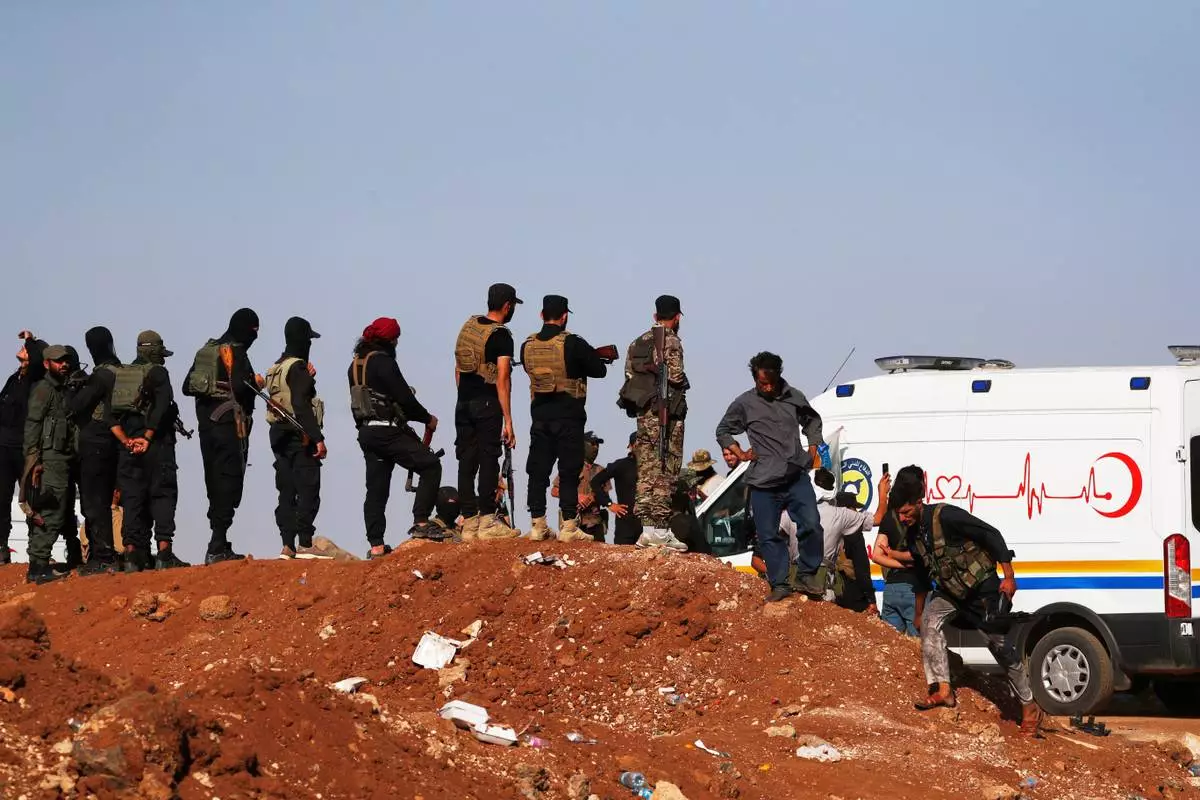
A convoy of ambulances and buses arrives at a checkpoint in the village of Busra al-Harir, southern Syria, on its way to Sweida province, as security forces cordon off the area to block Bedouin fighters from entering the province, Tuesday, July 22, 2025. (AP Photo/Omar Sanadiki)
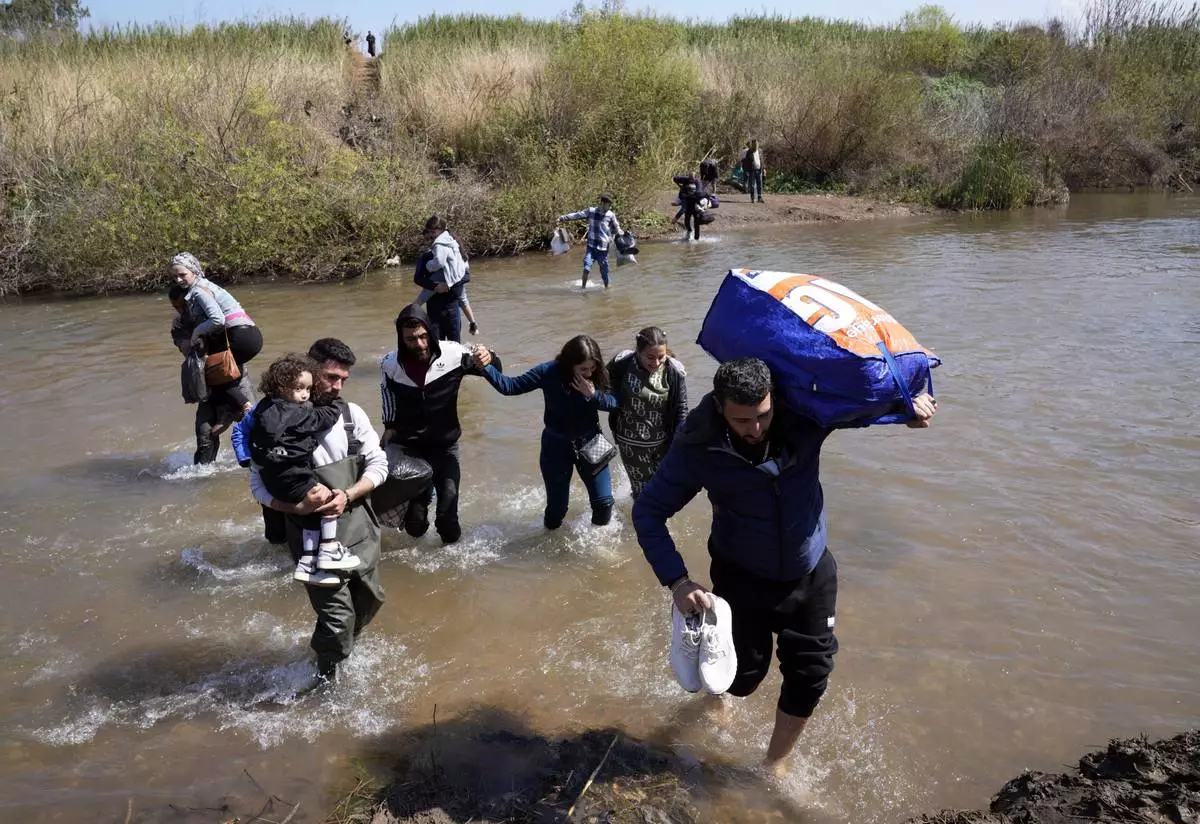
FILE - Syrian Alawite families who fled the clashes in Syria carry their luggage as they cross a river marking the border between Syria and northern Lebanon near the village of Heker al-Daher in Akkar province, Lebanon, March 11, 2025. (AP Photo/Hussein Malla, File)

A Bedouin fighter takes a selfie in front of a U.N. vehicle as a convoy of ambulances and buses arrives at a checkpoint in the village of Busra al-Harir, southern Syria, on its way to Sweida province, as security forces cordon off the area to block Bedouin fighters from entering the province, Tuesday, July 22, 2025. (AP Photo/Omar Sanadiki)
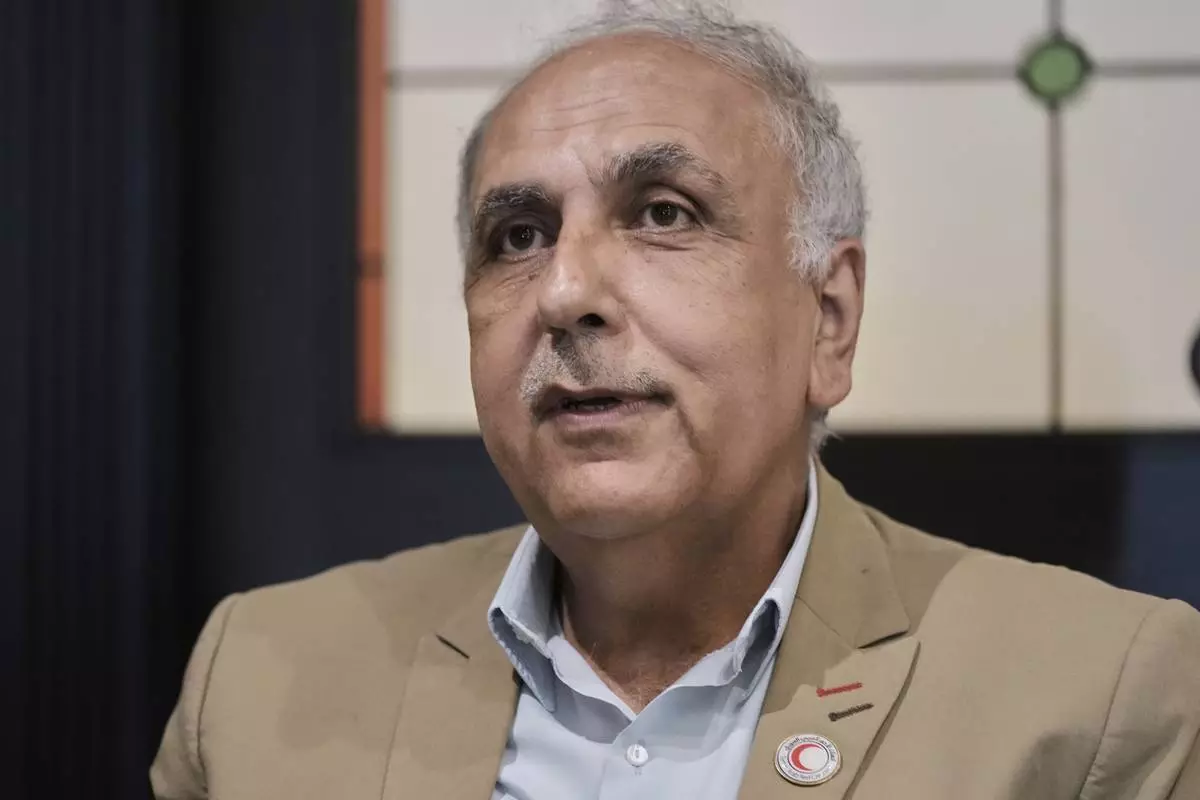
Dr. Mohammed Hazem Baqleh, president of the Syrian Arab Red Crescent, speaks during an interview with The Associated Press at the Habtoor Grand Hotel in the Sin el-Fil suburb of Beirut, Lebanon, Tuesday, July 22, 2025. (AP Photo/Bilal Hussein)
A convoy of ambulances and buses arrives at a checkpoint in the village of Busra al-Harir, southern Syria, on its way to Sweida province, as security forces cordon off the area to block Bedouin fighters from entering the province, Tuesday, July 22, 2025. (AP Photo/Omar Sanadiki)
A convoy of ambulances and buses arrives at a checkpoint in the village of Busra al-Harir, southern Syria, on its way to Sweida province, as security forces cordon off the area to block Bedouin fighters from entering the province, Tuesday, July 22, 2025. (AP Photo/Omar Sanadiki)
FILE - Syrian Alawite families who fled the clashes in Syria carry their luggage as they cross a river marking the border between Syria and northern Lebanon near the village of Heker al-Daher in Akkar province, Lebanon, March 11, 2025. (AP Photo/Hussein Malla, File)