For months, U.N. officials, aid groups and experts have warned that Palestinians in the Gaza Strip are on the brink of famine without formally declaring one.
Even though Israel eased a 2 1/2-month blockade on the territory in May, aid groups say only a trickle of assistance is getting into the enclave and that Palestinians face catastrophic levels of hunger 21 months into the Israeli offensive launched after Hamas' Oct. 7 attack.
Click to Gallery
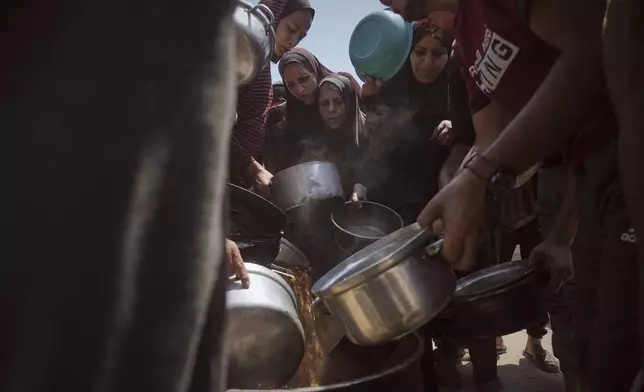
Displaced Palestinians receive donated food at a community kitchen in Gaza City, northern Gaza Strip, Tuesday, July 22, 2025. (AP Photo/Jehad Alshrafi)
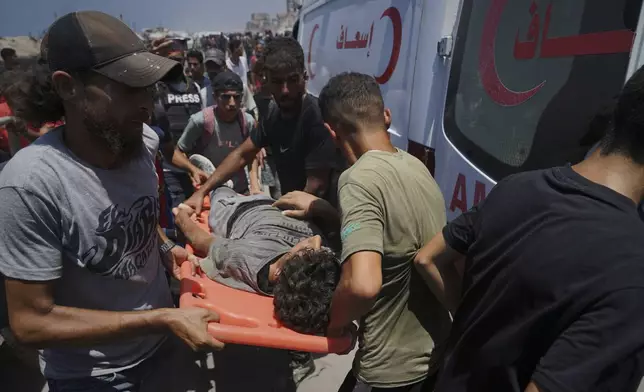
Injured Palestinians are transferred to an ambulance after being wounded while waiting for aid arriving from the northern Gaza Strip, in Gaza City, Tuesday, July 22, 2025. (AP Photo/Jehad Alshrafi)
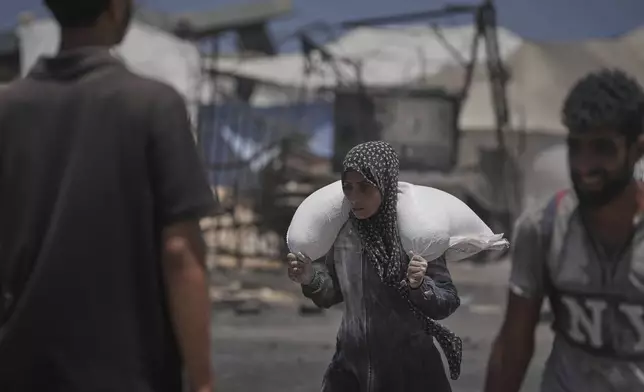
Palestinians carry sacks of flour unloaded from a humanitarian aid convoy that reached Gaza City from the northern Gaza Strip, Tuesday, July 22, 2025. (AP Photo/Jehad Alshrafi)
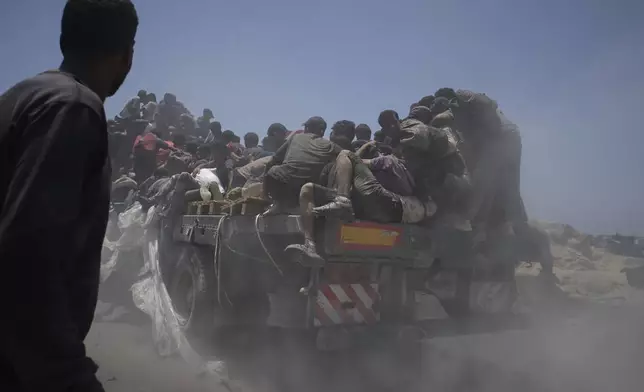
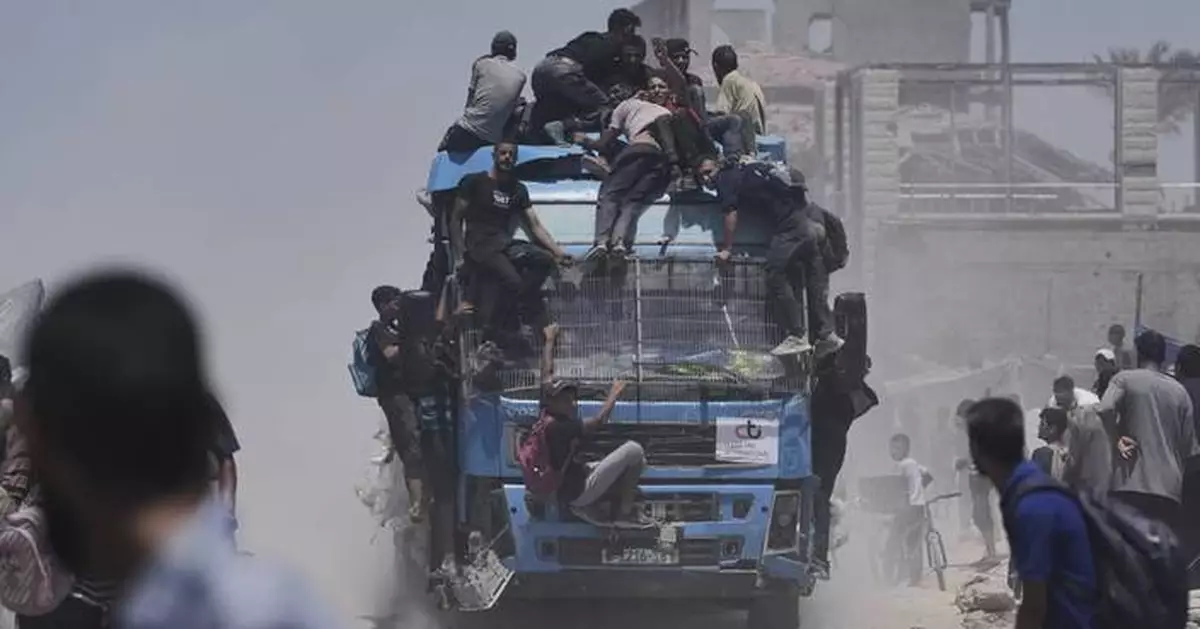
Palestinians hold onto an aid truck returning to Gaza City from the northern Gaza Strip on Tuesday, July 22, 2025. (AP Photo/Jehad Alshrafi)
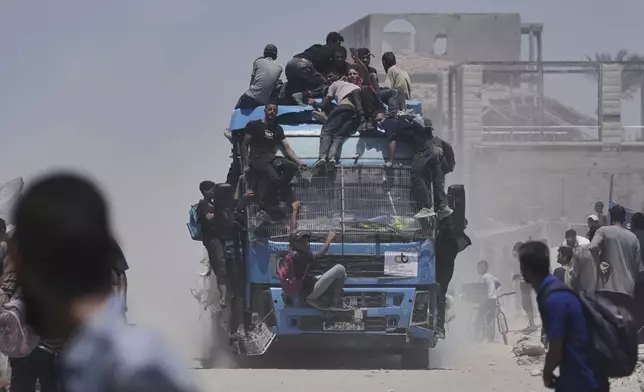
Palestinians hold onto an aid truck returning to Gaza City from the northern Gaza Strip on Tuesday, July 22, 2025. (AP Photo/Jehad Alshrafi)
Hundreds have been killed by Israeli forces as they try to reach aid sites or convoys, according to witnesses, health officials and the United Nations' human rights office. The military says it has only fired warning shots.
Despite the mounting desperation, there's been no formal declaration of famine. Here's why:
Gaza’s population of roughly 2 million Palestinians relies almost entirely on outside aid. Israel's offensive has wiped out what was already limited local food production. Israel's blockade, along with ongoing fighting and chaos inside the territory, has further limited people's access to food.
The U.N. World Food Program says Gaza’s hunger crisis has reached “new and astonishing levels of desperation." Nearly 100,000 women and children are suffering from severe acute malnutrition, and a third of Gaza’s population is going days without eating, Ross Smith, the agency’s director for emergencies, said Monday.
Gaza's Health Ministry said Tuesday that more than 100 people have died while showing signs of hunger and malnutrition, mostly children.
It did not give their exact cause of death. The ministry, part of the Hamas-run government, is staffed by medical professionals and its figures on war deaths are seen by the U.N. and other experts as the most reliable estimate of casualties.
The leading international authority on food crises is the Integrated Food Security Phase Classification, or IPC, first set up in 2004 during the famine in Somalia. It includes more than a dozen U.N. agencies, aid groups, governments and other bodies.
Famine can appear in pockets — sometimes small ones — and a formal classification requires caution.
The IPC has only declared famine a few times — in Somalia in 2011, and South Sudan in 2017 and 2020, and last year in parts of Sudan’s western Darfur region. Tens of thousands are believed to have died in Somalia and South Sudan.
It rates an area as in famine when all three of these conditions are confirmed:
— 20% of households have an extreme lack of food, or are essentially starving.
— At least 30% of children six months to five years old suffer from acute malnutrition or wasting, meaning they’re too thin for their height.
— At least two people or four children under five per 10,000 are dying daily due to starvation or the interaction of malnutrition and disease.
Gaza poses a major challenge for experts because Israel severely limits access to the territory, making it difficult and in some cases impossible to gather data.
While the IPC says it is the “primary mechanism” used by the international community to conclude whether a famine is happening or projected, it typically doesn’t make such a declaration itself.
Often, U.N. officials together with governments will make a formal statement based on an analysis from the IPC.
But the IPC says once a famine is declared it's already too late. While it can prevent further deaths, it means many people will have died by the time a famine is declared.
Most cases of severe malnutrition in children arise through a combination of lack of nutrients along with an infection, leading to diarrhea and other symptoms that cause dehydration, said Alex de Waal, author of “Mass Starvation: The History and Future of Famine” and executive director of the World Peace Foundation.
“There are no standard guidelines for physicians to classify cause of death as ‘malnutrition’ as opposed to infection," he said.
When famine occurs, there are often relatively few deaths from hunger alone, with far more people dying from a combination of malnutrition, disease and other forms of deprivation. All of these count as excess deaths — separate from violence — that can be attributed to a food crisis or famine, he said.
Israel's offensive has gutted Gaza's health system and displaced some 90% of its population. With hospitals damaged and overwhelmed by war casualties, it can be difficult to screen people for malnutrition and collect precise data on deaths.
“Data and surveillance systems are incomplete and eroded," said James Smith, an emergency doctor and lecturer in humanitarian policy at the University College London who spent more than two months in Gaza.
“Which means that all health indicators — and the death toll — are known to be an underestimation,” he said.
A declaration of famine should in theory galvanize the international community to rush food to those who need it. But with aid budgets already stretched, and war and politics throwing up obstacles, that doesn't always happen.
“There is not a big, huge bank account” to draw on, said OCHA’s Laerke. “The fundamental problem is that we build the fire engine as we respond.”
Aid groups say plenty of food and other aid has been gathered on Gaza's borders, but Israel is allowing only a small amount to enter. Within Gaza, gunfire, chaos and looting have plagued the distribution of food.
The Israeli military says it has facilitated the entry of some 4,500 aid trucks since mid-May. That’s far below the 600 trucks a day that aid groups say are needed, and which entered during a six-week ceasefire earlier this year. An Israeli-backed American contractor is also distributing food.
U.N. agencies say Israeli restrictions, and the breakdown of law and order, make it difficult to distribute the food that does come in.
“Only a massive scale-up in food aid distributions can stabilize this spiraling situation, calm anxieties and rebuild the trust within communities that more food is coming,” the World Food Program said over the weekend. “An agreed ceasefire is long overdue.”
This story was first published on July 22, 2025. It was updated on July 23, 2025, to correct that an area is in famine when all three of the Integrated Food Security Phase Classification’s conditions are confirmed.
Associated Press writers Bassem Mroue in Beirut and Edith M. Lederer at the United Nations contributed.
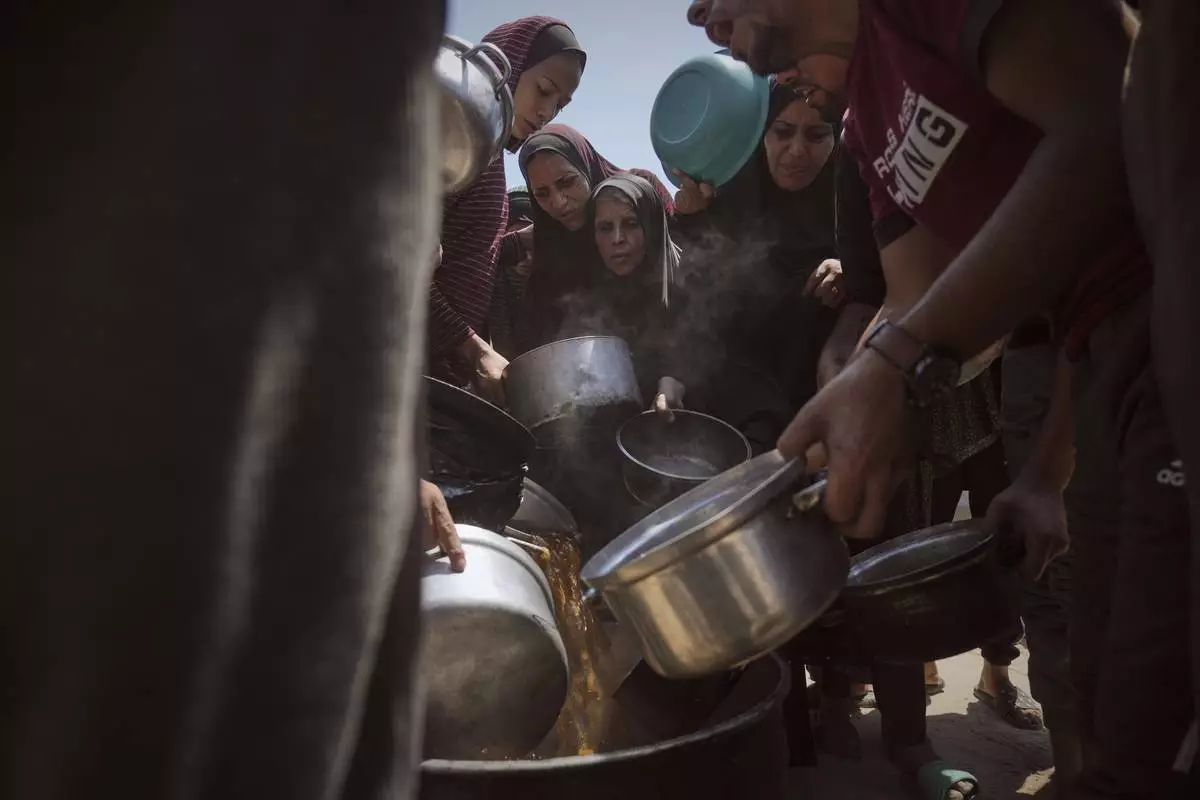
Displaced Palestinians receive donated food at a community kitchen in Gaza City, northern Gaza Strip, Tuesday, July 22, 2025. (AP Photo/Jehad Alshrafi)
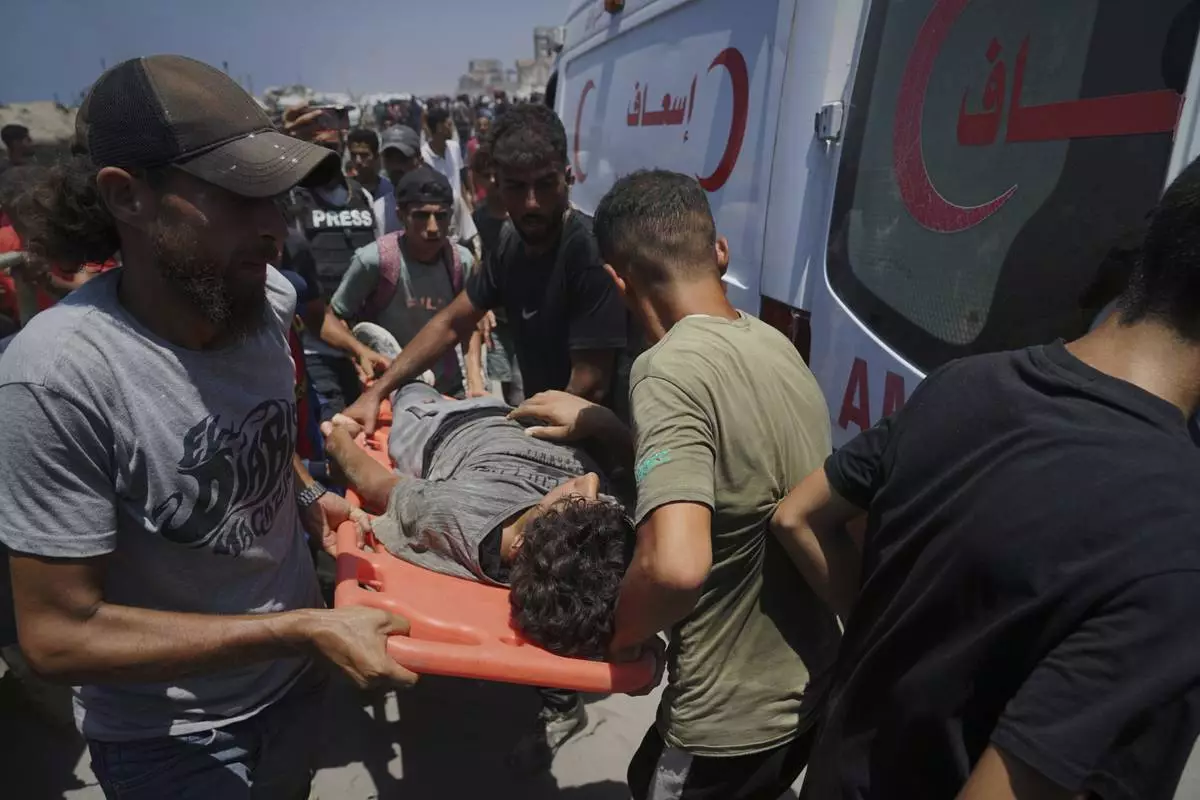
Injured Palestinians are transferred to an ambulance after being wounded while waiting for aid arriving from the northern Gaza Strip, in Gaza City, Tuesday, July 22, 2025. (AP Photo/Jehad Alshrafi)
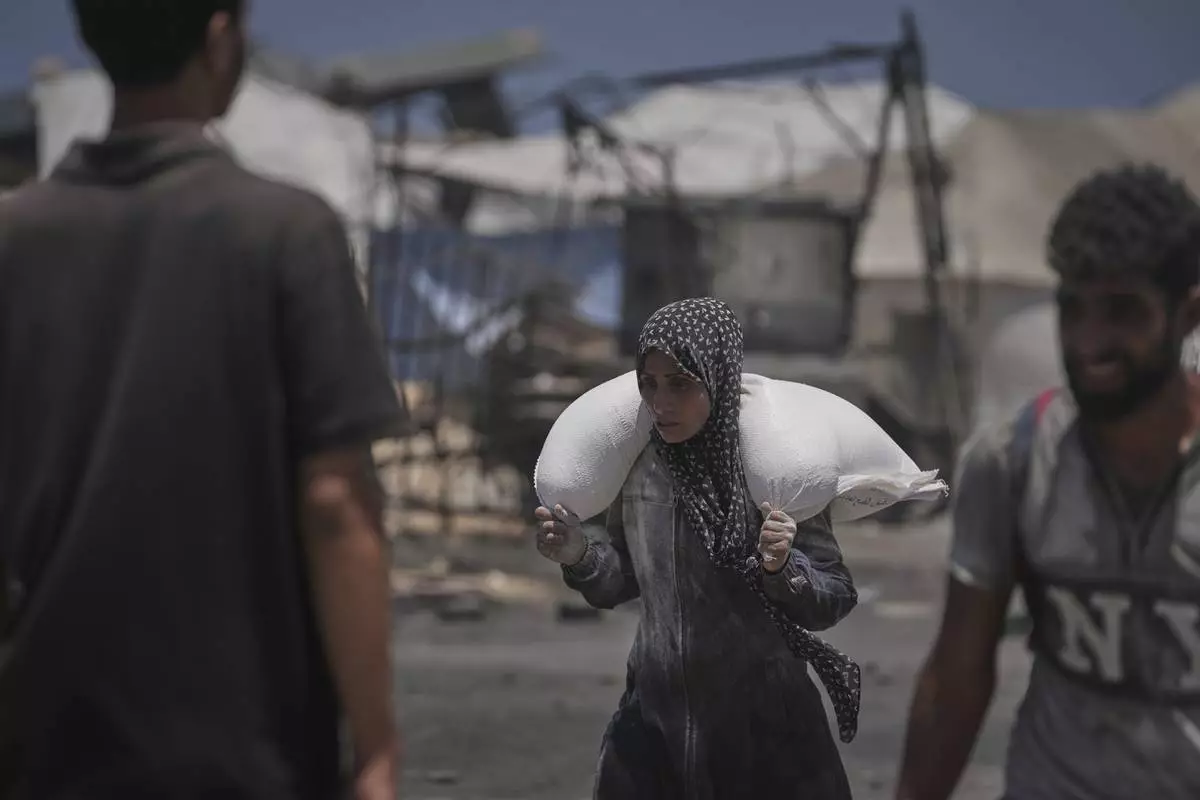
Palestinians carry sacks of flour unloaded from a humanitarian aid convoy that reached Gaza City from the northern Gaza Strip, Tuesday, July 22, 2025. (AP Photo/Jehad Alshrafi)
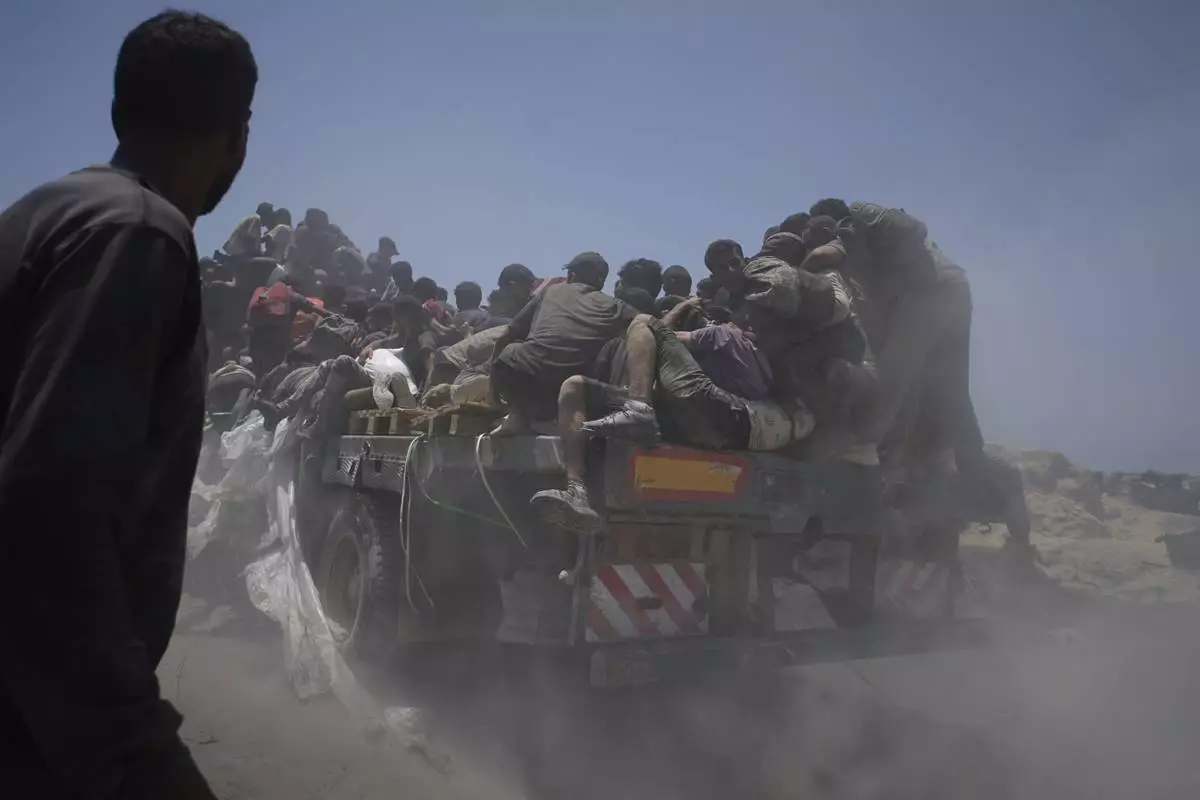
Palestinians hold onto an aid truck returning to Gaza City from the northern Gaza Strip on Tuesday, July 22, 2025. (AP Photo/Jehad Alshrafi)
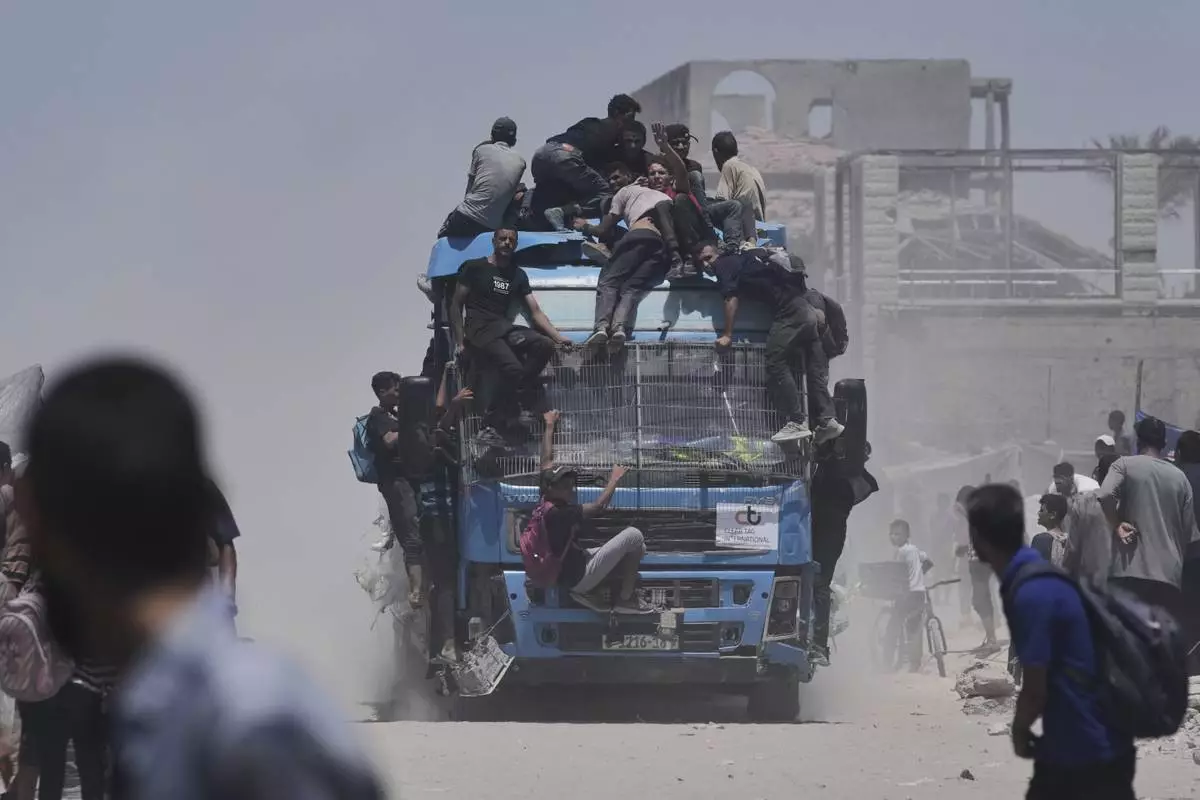
Palestinians hold onto an aid truck returning to Gaza City from the northern Gaza Strip on Tuesday, July 22, 2025. (AP Photo/Jehad Alshrafi)