Thousands of Afghans in the U.S. are no longer protected from deportation after a federal appeals court refused to postpone the Trump administration's decision to end their legal status.
A three-judge panel of the Fourth U.S. Circuit Court of Appeals in Virginia said in a ruling late Monday there was “insufficient evidence to warrant the extraordinary remedy of a postponement" of the administration's decision not to extend Temporary Protected Status for people from Afghanistan and Cameroon.
TPS for Afghans ended July 14, but was briefly extended by the appeals court through July 21 while it considered an emergency request for a longer postponement.
The Department of Homeland Security in May said it was ending Temporary Protected Status for 11,700 people from Afghanistan in 60 days. That status — in place since 2022 — had allowed them to work and meant the government couldn’t deport them.
CASA, a nonprofit immigrant advocacy group, sued the administration over the TPS revocation for Afghans as well as for people from Cameroon, which expire August 4. It said the decisions were racially motivated and failed to follow a process laid out by Congress.
A federal judge allowed the lawsuit to go forward but didn’t grant CASA’s request to keep the protections in place while the lawsuit plays out.
A phone message for CASA on Tuesday was not immediately returned. Without an extension, TPS holders from Afghanistan and Cameroon face a “devastating choice - abandoning their homes, relinquishing their employment, and uprooting their lives to return to a country where they face the threat of severe physical harm or even death, or remaining in the United States in a state of legal uncertainty while they wait for other immigration processes to play out," CASA warned in court documents.
In its decision on Monday, the appeals court said CASA had made a “plausible” legal claim against the administration, and urged the lower court to move the case forward expeditiously.
It also said many of the TPS holders from the two countries may be eligible for other legal protections that remain available to them.
Temporary Protected Status can be granted by the Homeland Security secretary to people who face safety concerns in their home countries because of armed conflict, environmental disaster or other conditions. They can’t be deported and can work legally in the U.S., but they don’t have a pathway to citizenship.
The status, however, is inherently precarious because it is up to the Homeland Security secretary to renew the protections regularly — usually every 18 months. The Trump administration has pushed to remove Temporary Protected Status from people from seven countries, with Venezuela and Haiti making up the biggest chunk of the hundreds of thousands of people affected.
Homeland Security officials said in their decision to end the Temporary Protected Status for Afghans that the situation in their home country was getting better.
Groups that help Afghan TPS holders say the country is still extremely dangerous.
“Ending TPS does not align with the reality of circumstances on the ground in Afghanistan,” Global Refuge President and CEO Krish O’Mara Vignarajah said in a statement. “Conditions remain dire, especially for allies who supported the U.S. mission, as well as women, girls, religious minorities, and ethnic groups targeted by the Taliban.”
He called on Congress to provide Afghan TPS holders with a “permanent path to safety and stability.”
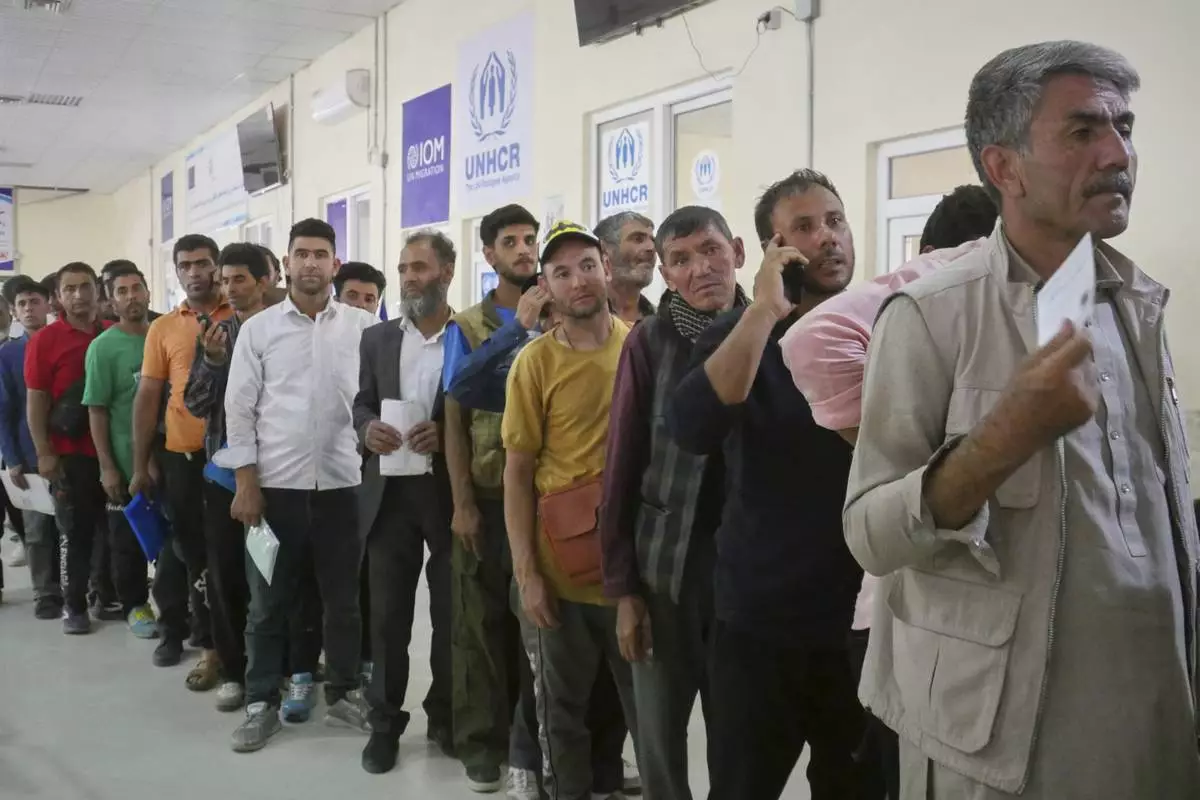
FILE - Afghan refugees who returned after fleeing Iran to escape deportation and conflict line up at a UNHCR facility near the Islam Qala crossing in western Herat province, Afghanistan, June 20, 2025. (AP Photo/Omid Haqjoo, file)
WASHINGTON (AP) — Sluggish December hiring concluded a year of weak employment gains that have frustrated job seekers even though layoffs and unemployment have remained low.
Employers added just 50,000 jobs last month, nearly unchanged from a downwardly revised figure of 56,000 in November, the Labor Department said Friday. The unemployment rate slipped to 4.4%, its first decline since June, from 4.5% in November, a figure also revised lower.
The data suggests that businesses are reluctant to add workers even as economic growth has picked up. Many companies hired aggressively after the pandemic and no longer need to fill more jobs. Others have held back due to widespread uncertainty caused by President Donald Trump’s shifting tariff policies, elevated inflation, and the spread of artificial intelligence, which could alter or even replace some jobs.
Still, economists were encouraged by the drop in the unemployment rate, which had risen in the previous four straight reports. It had also alarmed officials at the Federal Reserve, prompting three cuts to the central bank's key interest rate last year. The decline lowered the odds of another rate reduction in January, economists said.
“The labor market looks to have stabilized, but at a slower pace of employment growth,” Blerina Uruci, chief economist at T. Rowe Price, said. There is no urgency for the Fed to cut rates further, for now."
Some Federal Reserve officials are concerned that inflation remains above their target of 2% annual growth, and hasn't improved since 2024. They support keeping rates where they are to combat inflation. Others, however, are more worried that hiring has nearly ground to a halt and have supported lowering borrowing costs to spur spending and growth.
November's job gain was revised slightly lower, from 64,000 to 56,000, while October's now shows a much steeper drop, with a loss of 173,000 positions, down from previous estimates of a 105,000 decline. The government revises the jobs figures as it receives more survey responses from businesses.
The economy has now lost an average of 22,000 jobs a month in the past three months, the government said. A year ago, in December 2024, it had gained 209,000 a month. Most of those losses reflect the purge of government workers by Elon Musk's Department of Government Efficiency.
Nearly all the jobs added in December were in the health care and restaurant and hotel industries. Health care added 38,500 jobs, while restaurants and hotels gained 47,000. Governments — mostly at the state and local level — added 13,000.
Manufacturing, construction and retail companies all shed jobs. Retailers cut 25,000 positions, a sign that holiday hiring has been weaker than previous years. Manufacturers have shed jobs every month since April, when Trump announced sweeping tariffs intended to boost manufacturing.
Wall Street and Washington are looking closely at Friday's report as it's the first clean reading on the labor market in three months. The government didn’t issue a report in October because of the six-week government shutdown, and November’s data was distorted by the closure, which lasted until Nov. 12.
The hiring slowdown reflects more than just a reluctance by companies to add jobs. With an aging population and a sharp drop in immigration, the economy doesn't need to create as many jobs as it has in the past to keep the unemployment rate steady. As a result, a gain of 50,000 jobs is not as clear a sign of weakness as it would have been in previous years.
And layoffs are still low, a sign firms aren't rapidly cutting jobs, as typically happens in a recession. The “low-hire, low-fire” job market does mean current workers have some job security, though those without jobs can have a tougher time.
Ernesto Castro, 44, has applied for hundreds of jobs since leaving his last in May. Yet the Los Angeles resident has gotten just three initial interviews, and only one follow-up, after which he heard nothing.
With nearly a decade of experience providing customer support for software companies, Castro expected to find a new job pretty quickly as he did in 2024.
“I should be in a good position,” Castro said. “It’s been awful.”
He worries that more companies are turning to artificial intelligence to help clients learn to use new software. He hears ads from tech companies that urge companies to slash workers that provide the kind of services he has in his previous jobs. His contacts in the industry say that employees are increasingly reluctant to switch jobs amid all the uncertainty, which leaves fewer open jobs for others.
He is now looking into starting his own software company, and is also exploring project management roles.
December’s report caps a year of sluggish hiring, particularly after April's “liberation day” tariff announcement by Trump. The economy generated an average of 111,000 jobs a month in the first three months of 2025. But that pace dropped to just 11,000 in the three months ended in August, before rebounding slightly to 22,000 in November.
Last year, the economy gained just 584,000 jobs, sharply lower than that more than 2 million added in 2024. It's the smallest annual gain since the COVID-19 pandemic decimated the job market in 2020.
Subdued hiring underscores a key conundrum surrounding the economy as it enters 2026: Growth has picked up to healthy levels, yet hiring has weakened noticeably and the unemployment rate has increased in the last four jobs reports.
Most economists expect hiring will accelerate this year as growth remains solid, and Trump's tax cut legislation is expected to produce large tax refunds this spring. Yet economists acknowledge there are other possibilities: Weak job gains could drag down future growth. Or the economy could keep expanding at a healthy clip, while automation and the spread of artificial intelligence reduces the need for more jobs.
Productivity, or output per hour worked, a measure of worker efficiency, has improved in the past three years and jumped nearly 5% in the July-September quarter. That means companies can produce more without adding jobs. Over time, it should also boost worker pay.
Even with such sluggish job gains, the economy has continued to expand, with growth reaching a 4.3% annual rate in last year's July-September quarter, the best in two years. Strong consumer spending helped drive the gain. The Federal Reserve Bank of Atlanta forecasts that growth could slow to a still-solid 2.7% in the final three months of last year.
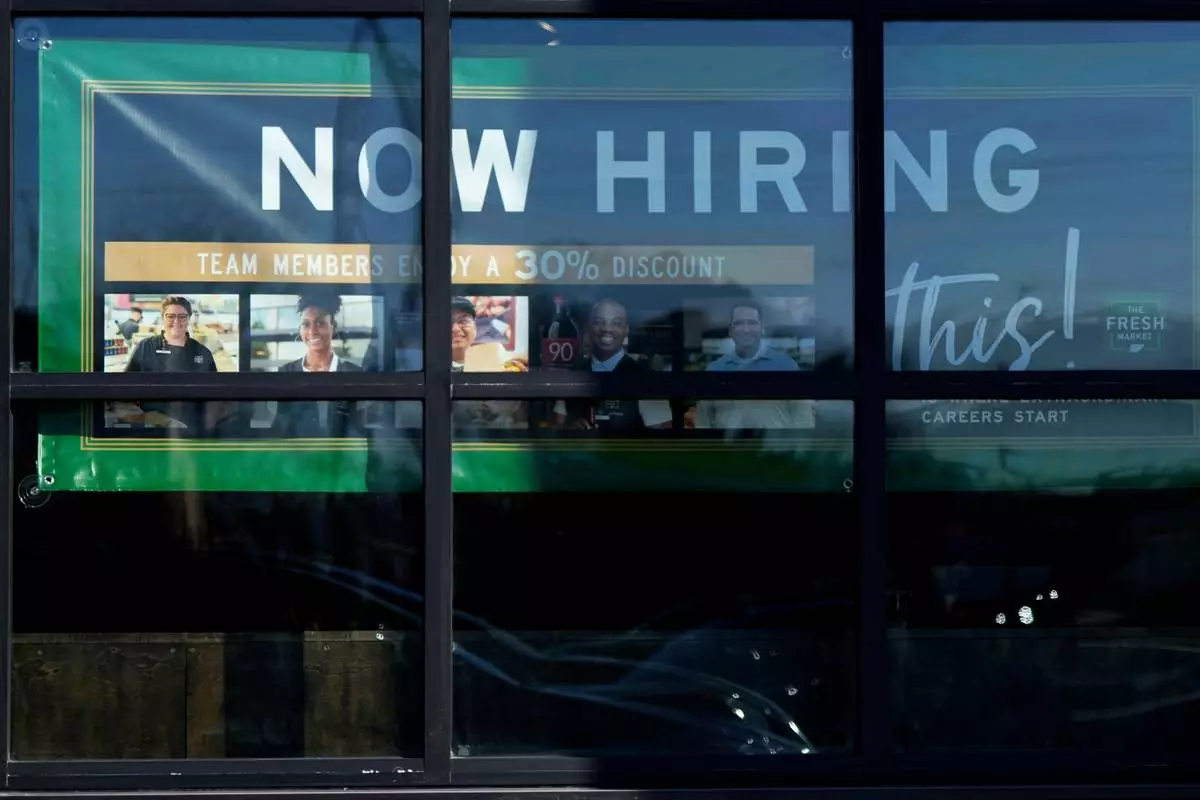
FILE - A hiring sign is displayed at a grocery store in Northbrook, Ill., Tuesday, Jan. 21, 2025. (AP Photo/Nam Y. Huh)