Skip to Content Facebook Feature Image

War in Gaza tests ties between Israel and traditional European allies

News

War in Gaza tests ties between Israel and traditional European allies
News

News

War in Gaza tests ties between Israel and traditional European allies

2025-07-23 01:02 Last Updated At:01:10

LONDON (AP) — Britain threatened Tuesday to take further action against Israel if it does not agree to end the war in Gaza, a day after two dozen mostly European countries condemned Israel’s restrictions on aid shipments into the territory and the killings of hundreds of Palestinians trying to reach food.

Despite the increasingly strong words, many are skeptical that Israel will yield to such pressure without more significant punitive action — and especially without the backing of Germany and the U.S., Israel’s strongest Western allies.

More Images
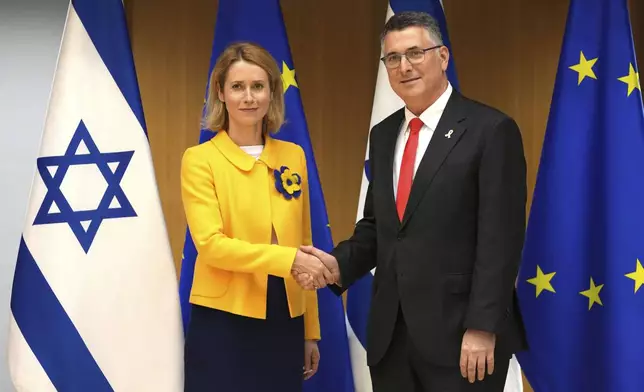
FILE - European Union foreign policy chief Kaja Kallas, left, shakes hands with Israel's Foreign Minister Gideon Sa'ar during the EU-Israel Association Council at the European Council building in Brussels, Feb. 24, 2025. (AP Photo/Virginia Mayo, File)
FILE - European Union foreign policy chief Kaja Kallas, left, shakes hands with Israel's Foreign Minister Gideon Sa'ar during the EU-Israel Association Council at the European Council building in Brussels, Feb. 24, 2025. (AP Photo/Virginia Mayo, File)

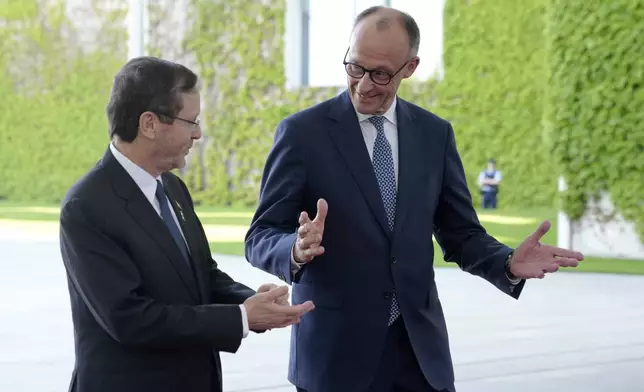
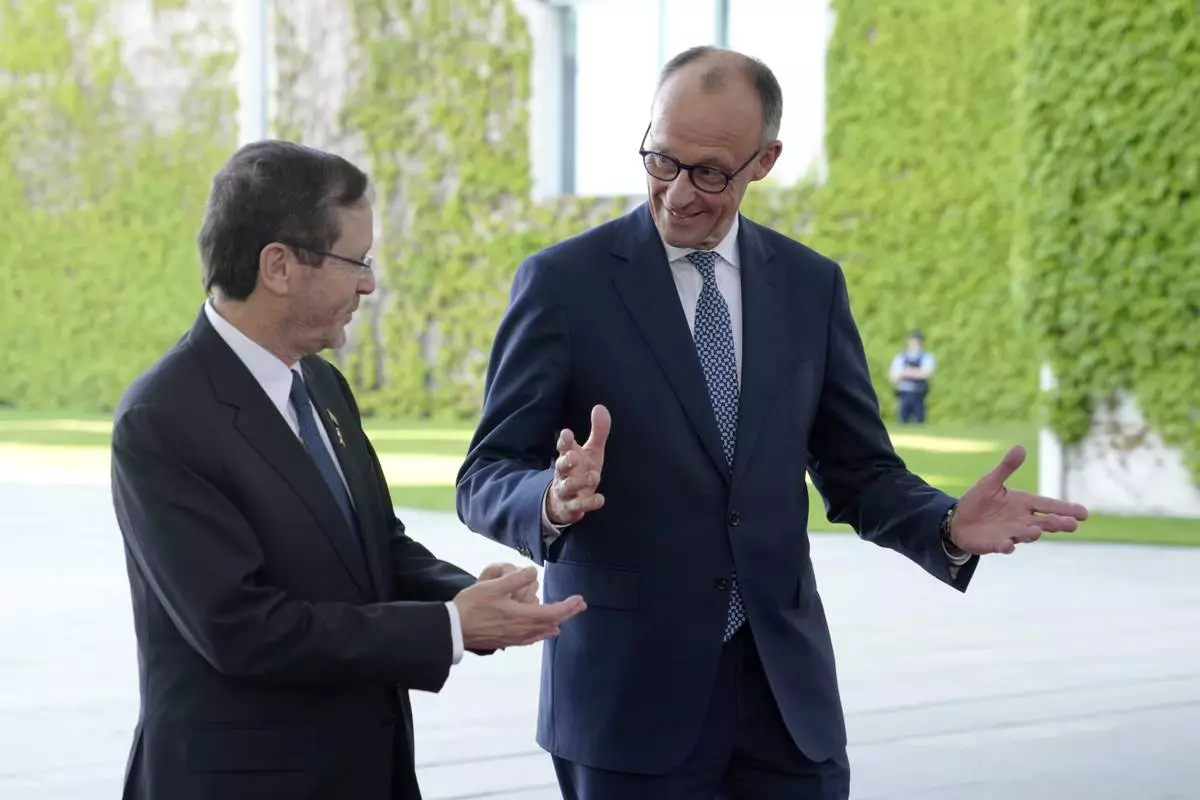
FILE - German Chancellor Friedrich Merz, right, welcomes Israeli President Isaac Herzog for a meeting at the chancellery in Berlin, Germany, on May 12, 2025. (AP Photo/Markus Schreiber, File)
FILE - German Chancellor Friedrich Merz, right, welcomes Israeli President Isaac Herzog for a meeting at the chancellery in Berlin, Germany, on May 12, 2025. (AP Photo/Markus Schreiber, File)

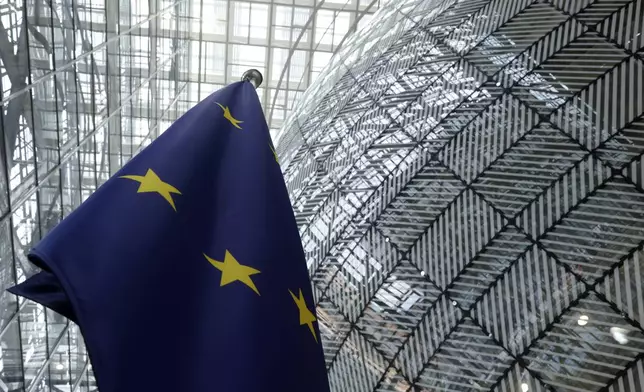
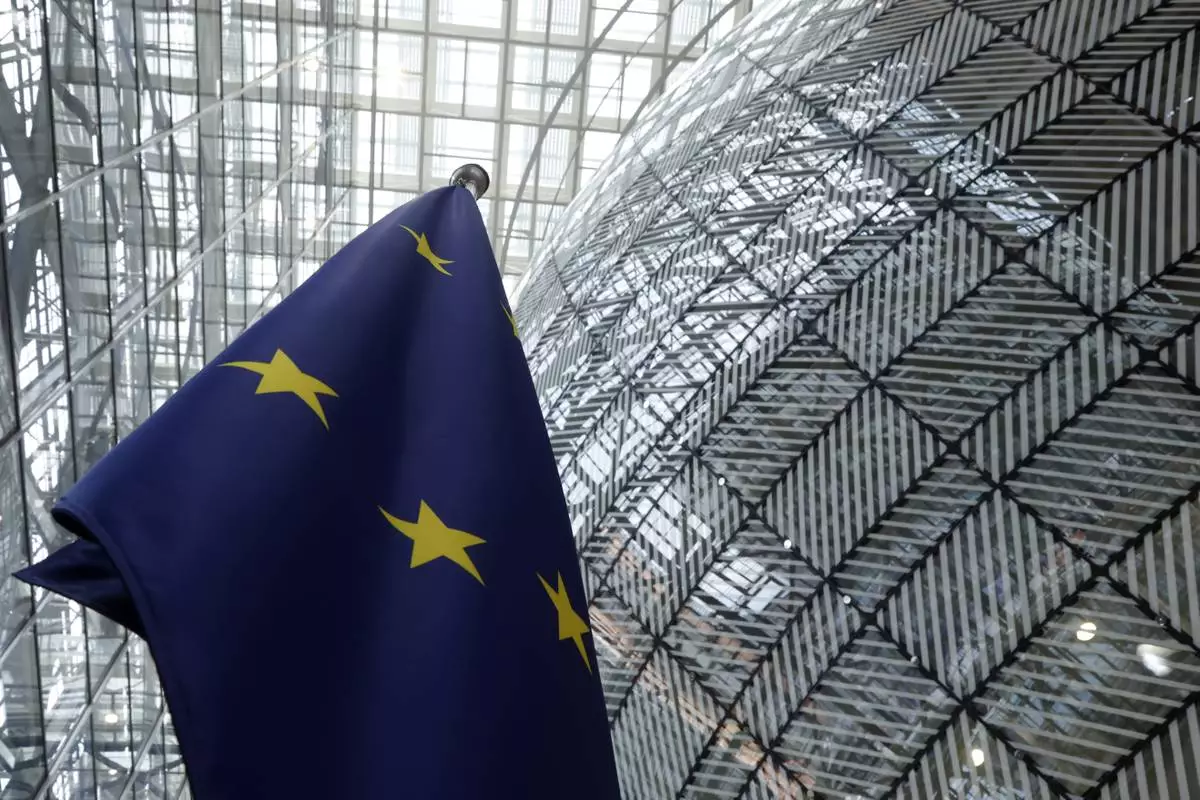
FILE - The European Union flag stands inside the atrium at the European Council building in Brussels on June 17, 2024. (AP Photo/Omar Havana, File)

FILE - The European Union flag stands inside the atrium at the European Council building in Brussels on June 17, 2024. (AP Photo/Omar Havana, File)

Members of the public wearing red demonstrate outside Parliament to protest the treatment of people in Gaza on the final day before summer recess at Parliament Square in London, Tuesday, July 22, 2025. (AP Photo/Frank Augstein)

Members of the public wearing red demonstrate outside Parliament to protest the treatment of people in Gaza on the final day before summer recess at Parliament Square in London, Tuesday, July 22, 2025. (AP Photo/Frank Augstein)

Outrage over Israel’s actions in Gaza has grown in Europe as images of suffering Palestinians have driven protests in London, Berlin, Brussels and other capitals. More recently, the almost daily killings of Palestinians while seeking aid have tested the EU's friendly relationship with Israel like never before.

But Europe remains divided on its stance toward Israel, and its limited sanctions and condemnations so far have had little effect.

Here's a look at what Europe can do or has done — and why it hasn’t done more.

The EU has been reviewing its diplomatic and trade ties with Israel over its conduct in Gaza. An internal report recently found indications that Israel has violated its human rights obligations under the EU-Israel Association Agreement, a 25-year-old legal framework governing the political relationship and trade cooperation between the two sides. But so far the EU has taken no action to suspend such ties.

Some have criticized the EU — Israel’s biggest trading partner — for a lack of political courage and for underestimating its leverage on Israel.

“What we can see is mounting pressure, but those are words, those are not actions,” said Yossi Mekelberg, a senior consulting fellow at London’s Chatham House think tank.

Individual countries, such as Britain, Canada and Australia, have slapped sanctions on Israeli settlers in connection with violence against Palestinians, including asset freezes and travel bans. But such measures have yielded few results.

In addition, Australia, Canada, New Zealand and Norway have sanctioned two far-right Israeli ministers for allegedly “inciting extremist violence” against Palestinians in the West Bank.

The U.K. said in May that it would suspend free trade talks with Israel, also over the West Bank. British Foreign Secretary David Lammy hinted at stronger action Tuesday, saying he felt “sickened” by the suffering in Gaza, but he did not specify what measures were being considered.

“We will continue to pressure. We will continue to act,” Lammy told British media, stressing the need to work with allies to get the “maximum result.”

Speaking Tuesday on X, European Commissioner Ursula von der Leyen reiterated the EU's call for “the free, safe and swift flow of humanitarian aid. And for the full respect of international and humanitarian law. Civilians in Gaza have suffered too much, for too long.”

If Israel does not change course, options could include fully or partially suspending the EU-Israel Association Agreement, which would require a unanimous agreement by all 27 members of the EU.

Other steps could be suspending an aviation agreement, blocking imports from settlements, limiting scientific and technological cooperation, and curtailing travel for Israelis in the visa-free zone known as Schengen, according to a leaked document sent by the EU's top diplomat, Kaja Kallas, to member states. The document was seen by The Associated Press and verified by two EU diplomats.

Nations could act on their own, including sanctioning specific companies or individuals in Israel or the occupied West Bank.

The short answer is that Europe remains divided, and it is highly unlikely that the entire EU would reach unanimity to drastically dial up pressure on Israel.

European nations such as Ireland, the Netherlands and Spain have publicly urged the EU to reassess its ties with Israel, charging that Israel has violated human rights conditions in its agreement with Brussels.

But Germany and Hungary have staunchly defended Israel, along with Romania, which just bought air-defense systems from Israel. Suspending EU ties with Israel would require a unanimous decision, which is likely impossible to obtain.

Monday's joint statement by 25 countries was rejected by the U.S. ambassador to Israel, Mike Huckabee, who called it “disgusting.” Western allies should instead pressure the “savages of Hamas," he said.

Israel condemned the countries' stance and said Hamas was the sole party responsible for prolonging the war. Hamas triggered the ongoing 21-month war with its Oct. 7, 2023, attack on southern Israel, and continues to hold some 50 Israeli hostages.

One significant outlier in Europe is Germany, traditionally a staunch ally of Israel in Europe, with relations rooted in the memory of the Holocaust. The country has vehemently rejected the idea of suspending the EU’s association agreement with Israel.

Chancellor Friedrich Merz and other officials have gradually sharpened their criticism of Israel's actions in Gaza in recent months. But they still appear to favor trying to influence Israel by conveying their concerns directly. Germany did not join allies in signing Monday's letter condemning Israeli restrictions on aid.

There were signs of pushback within the German government Tuesday, when the parliamentary leader of Merz’s junior coalition partner, the Social Democrats, said Germany should join Britain’s initiative and that “double standards undermine our international credibility.”

Merz said Monday that he had spoken at length with Netanyahu last week and “told him very clearly that we do not share the Israeli government’s Gaza policy.”

“The way the Israeli army is acting there is unacceptable,” he said.

Nomi Bar-Yaacov, an expert on diplomacy in the Middle East, said any EU action must go beyond words.

“Israel doesn’t listen to language," Bar-Yaacov said. "I mean, language doesn’t go anywhere with the current Israeli government. Unless a mechanism is agreed and enforced promptly, then the words have no meaning whatsoever.”

McNeil reported from Brussels. Associated Press Writer Geir Moulson in Berlin contributed to this report.
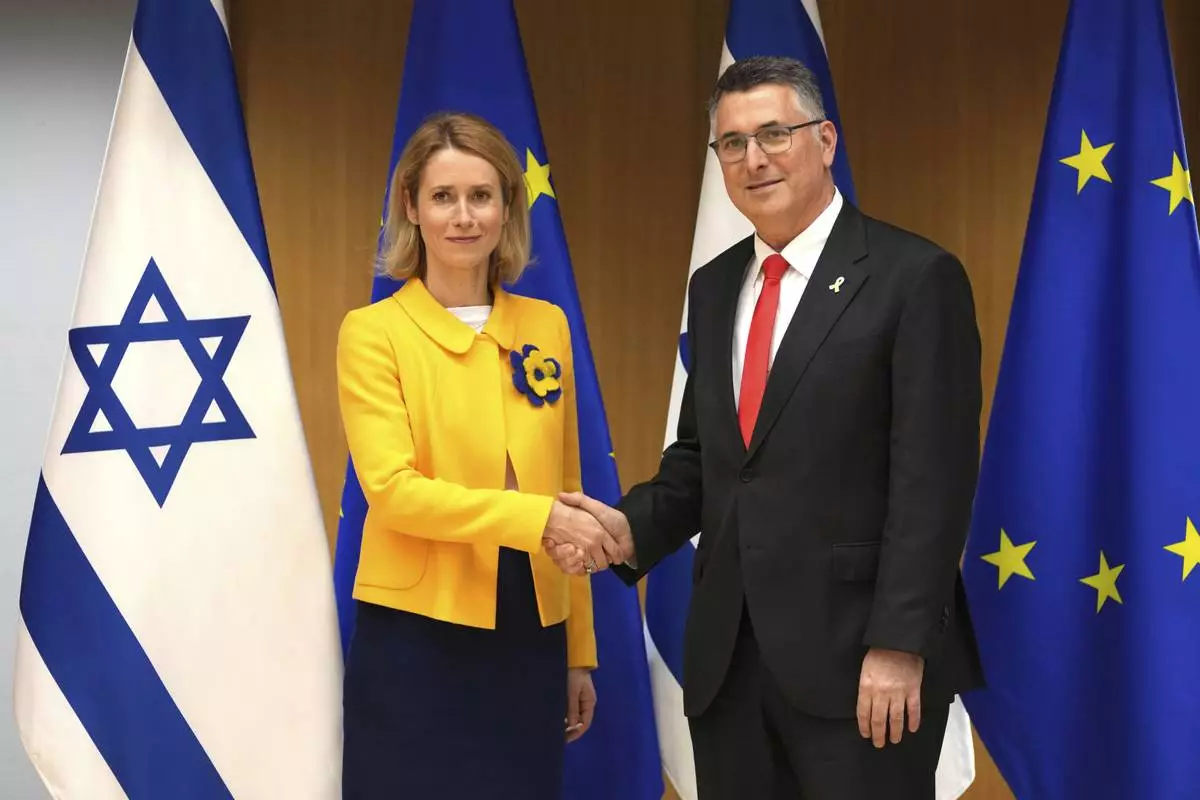
FILE - European Union foreign policy chief Kaja Kallas, left, shakes hands with Israel's Foreign Minister Gideon Sa'ar during the EU-Israel Association Council at the European Council building in Brussels, Feb. 24, 2025. (AP Photo/Virginia Mayo, File)
FILE - European Union foreign policy chief Kaja Kallas, left, shakes hands with Israel's Foreign Minister Gideon Sa'ar during the EU-Israel Association Council at the European Council building in Brussels, Feb. 24, 2025. (AP Photo/Virginia Mayo, File)

FILE - German Chancellor Friedrich Merz, right, welcomes Israeli President Isaac Herzog for a meeting at the chancellery in Berlin, Germany, on May 12, 2025. (AP Photo/Markus Schreiber, File)
FILE - German Chancellor Friedrich Merz, right, welcomes Israeli President Isaac Herzog for a meeting at the chancellery in Berlin, Germany, on May 12, 2025. (AP Photo/Markus Schreiber, File)

FILE - The European Union flag stands inside the atrium at the European Council building in Brussels on June 17, 2024. (AP Photo/Omar Havana, File)

FILE - The European Union flag stands inside the atrium at the European Council building in Brussels on June 17, 2024. (AP Photo/Omar Havana, File)

Members of the public wearing red demonstrate outside Parliament to protest the treatment of people in Gaza on the final day before summer recess at Parliament Square in London, Tuesday, July 22, 2025. (AP Photo/Frank Augstein)
Members of the public wearing red demonstrate outside Parliament to protest the treatment of people in Gaza on the final day before summer recess at Parliament Square in London, Tuesday, July 22, 2025. (AP Photo/Frank Augstein)
DUBAI, United Arab Emirates (AP) — U.S. President Donald Trump said Iran wants to negotiate with Washington after his threat to strike the Islamic Republic over its bloody crackdown on protesters, a move coming as activists said Monday the death toll in the nationwide demonstrations rose to at least 544.

Iran had no immediate reaction to the news, which came after the foreign minister of Oman — long an interlocutor between Washington and Tehran — traveled to Iran this weekend. It also remains unclear just what Iran could promise, particularly as Trump has set strict demands over its nuclear program and its ballistic missile arsenal, which Tehran insists is crucial for its national defense.

Meanwhile Monday, Iran called for pro-government demonstrators to head to the streets in support of the theocracy, a show of force after days of protests directly challenging the rule of 86-year-old Supreme Leader Ayatollah Ali Khamenei. Iranian state television aired chants from the crowd, who shouted “Death to America!” and “Death to Israel!”

Trump and his national security team have been weighing a range of potential responses against Iran including cyberattacks and direct strikes by the U.S. or Israel, according to two people familiar with internal White House discussions who were not authorized to comment publicly and spoke on condition of anonymity.

“The military is looking at it, and we’re looking at some very strong options,” Trump told reporters on Air Force One on Sunday night. Asked about Iran’s threats of retaliation, he said: “If they do that, we will hit them at levels that they’ve never been hit before.”

Trump said that his administration was in talks to set up a meeting with Tehran, but cautioned that he may have to act first as reports of the death toll in Iran mount and the government continues to arrest protesters.

“I think they’re tired of being beat up by the United States,” Trump said. “Iran wants to negotiate.”

He added: “The meeting is being set up, but we may have to act because of what’s happening before the meeting. But a meeting is being set up. Iran called, they want to negotiate.”

Iran through country's parliamentary speaker warned Sunday that the U.S. military and Israel would be “legitimate targets” if America uses force to protect demonstrators.

More than 10,600 people also have been detained over the two weeks of protests, said the U.S.-based Human Rights Activists News Agency, which has been accurate in previous unrest in recent years and gave the death toll. It relies on supporters in Iran crosschecking information. It said 496 of the dead were protesters and 48 were with security forces.

With the internet down in Iran and phone lines cut off, gauging the demonstrations from abroad has grown more difficult. The Associated Press has been unable to independently assess the toll. Iran’s government has not offered overall casualty figures.

Those abroad fear the information blackout is emboldening hard-liners within Iran’s security services to launch a bloody crackdown. Protesters flooded the streets in the country’s capital and its second-largest city on Saturday night into Sunday morning. Online videos purported to show more demonstrations Sunday night into Monday, with a Tehran official acknowledging them in state media.

In Tehran, a witness told the AP that the streets of the capital empty at the sunset call to prayers each night. By the Isha, or nighttime prayer, the streets are deserted.

Part of that stems from the fear of getting caught in the crackdown. Police sent the public a text message that warned: “Given the presence of terrorist groups and armed individuals in some gatherings last night and their plans to cause death, and the firm decision to not tolerate any appeasement and to deal decisively with the rioters, families are strongly advised to take care of their youth and teenagers.”

Another text, which claimed to come from the intelligence arm of the paramilitary Revolutionary Guard, also directly warned people not to take part in demonstrations.

“Dear parents, in view of the enemy’s plan to increase the level of naked violence and the decision to kill people, ... refrain from being on the streets and gathering in places involved in violence, and inform your children about the consequences of cooperating with terrorist mercenaries, which is an example of treason against the country,” the text warned.

The witness spoke to the AP on condition of anonymity due to the ongoing crackdown.

The demonstrations began Dec. 28 over the collapse of the Iranian rial currency, which trades at over 1.4 million to $1, as the country’s economy is squeezed by international sanctions in part levied over its nuclear program. The protests intensified and grew into calls directly challenging Iran’s theocracy.

Nikhinson reported from aboard Air Force One.

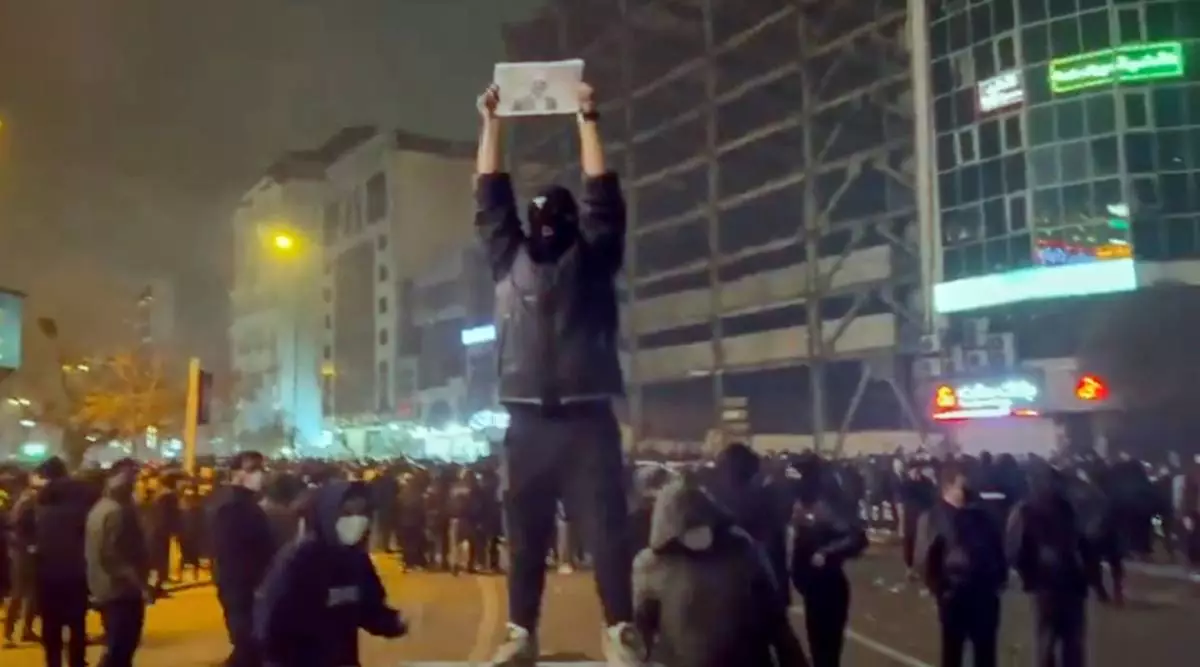
In this frame grab from video obtained by the AP outside Iran, a masked demonstrator holds a picture of Iran's Crown Prince Reza Pahlavi during a protest in Tehran, Iran, Friday, January. 9, 2026. (UGC via AP)

In this frame grab from video obtained by the AP outside Iran, a masked demonstrator holds a picture of Iran's Crown Prince Reza Pahlavi during a protest in Tehran, Iran, Friday, January. 9, 2026. (UGC via AP)

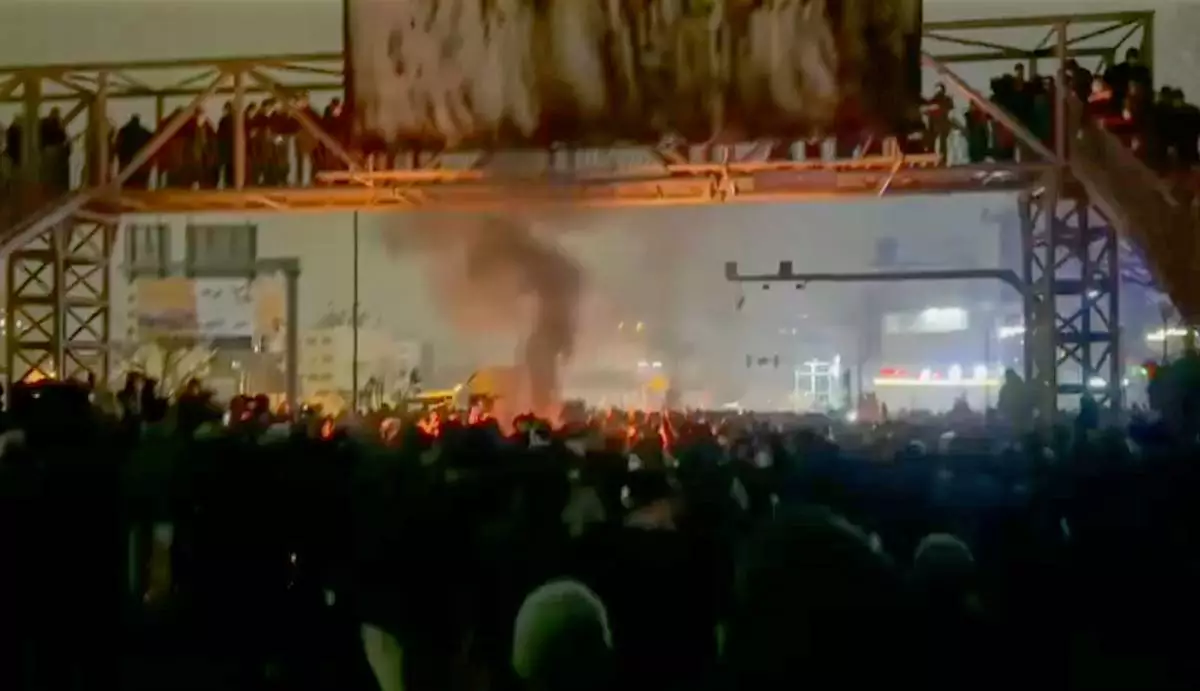
In this frame grab from footage circulating on social media from Iran shows protesters taking to the streets despite an intensifying crackdown as the Islamic Republic remains cut off from the rest of the world in Tehran, Iran, Friday, Jan. 9, 2026.(UGC via AP)

In this frame grab from footage circulating on social media from Iran shows protesters taking to the streets despite an intensifying crackdown as the Islamic Republic remains cut off from the rest of the world in Tehran, Iran, Friday, Jan. 9, 2026.(UGC via AP)

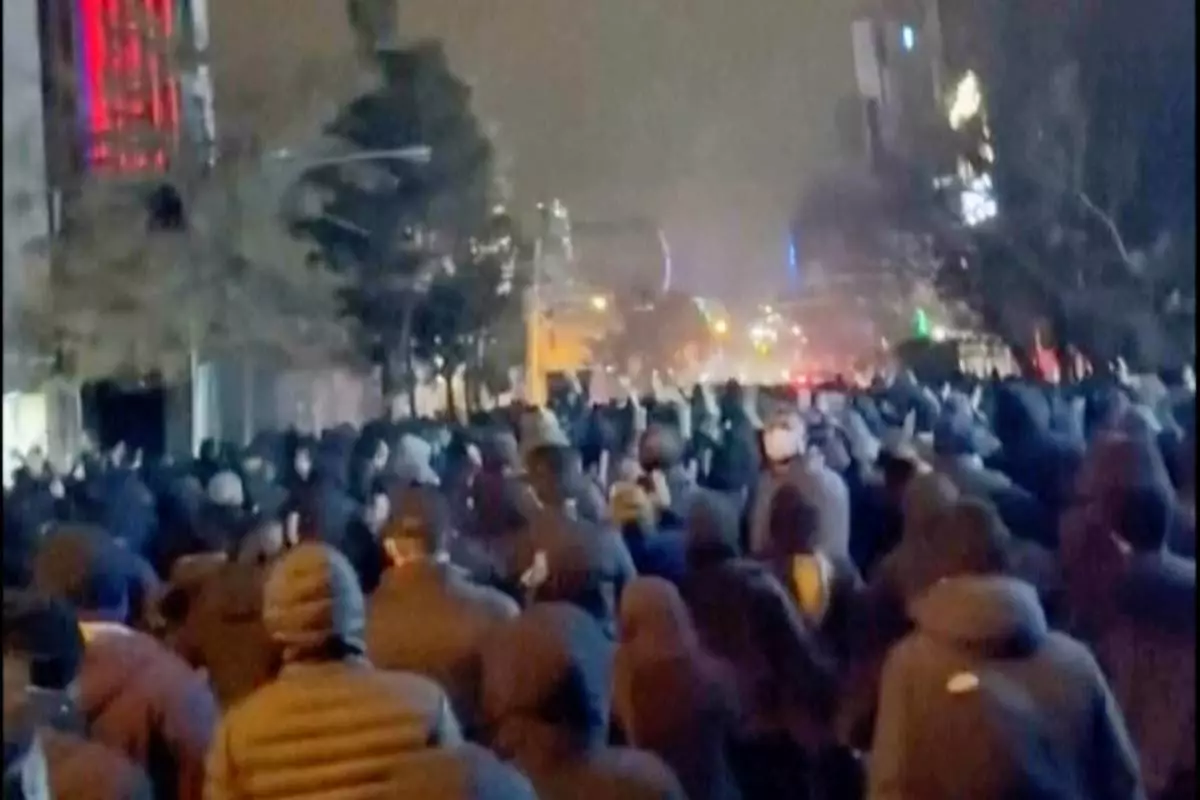
In this frame grab from footage circulating on social media from Iran showed protesters once again taking to the streets of Tehran despite an intensifying crackdown as the Islamic Republic remains cut off from the rest of the world in Tehran, Iran, Saturday Jan. 10, 2026. (UGC via AP)

In this frame grab from footage circulating on social media from Iran showed protesters once again taking to the streets of Tehran despite an intensifying crackdown as the Islamic Republic remains cut off from the rest of the world in Tehran, Iran, Saturday Jan. 10, 2026. (UGC via AP)

Recommended Articles