Dawn Price signs rent checks worth about $160,000 every month for 79 people that her nonprofit helps house in Laguna Beach, California.
Usually, she logs into an online portal to withdraw enough from an account funded by a grant from the federal housing agency. But in February, she couldn't. Access had been temporarily cut off for many housing organizations as part of the Trump administration’s cuts and funding freezes.
Click to Gallery
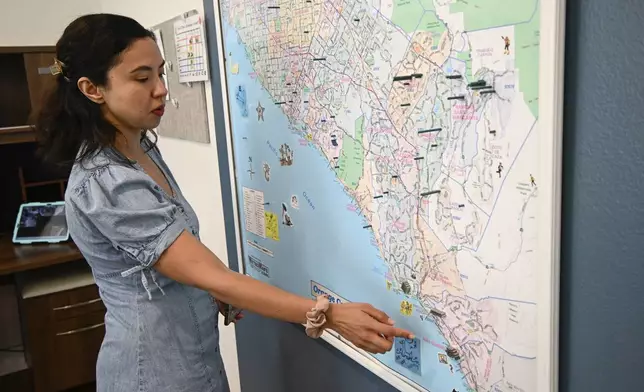
Megan Tambio, community engagement manager for the Friendship Shelter, points out the units in Orange County that the organization provides for homeless people during a tour of the organization's headquarters Monday, July 7, 2025, in San Clemente, Calif. (AP Photo/Denis Poroy)
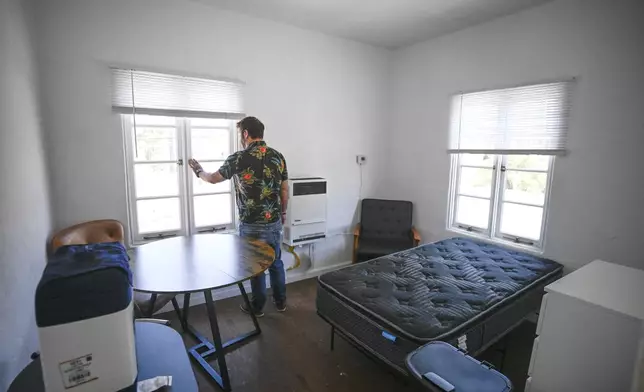
James Carey, housing director for the Friendship Shelter, gives a tour of the one of the apartments that the organization provides for homeless people, Monday, July 7, 2025, in San Clemente, Calif. (AP Photo/Denis Poroy)

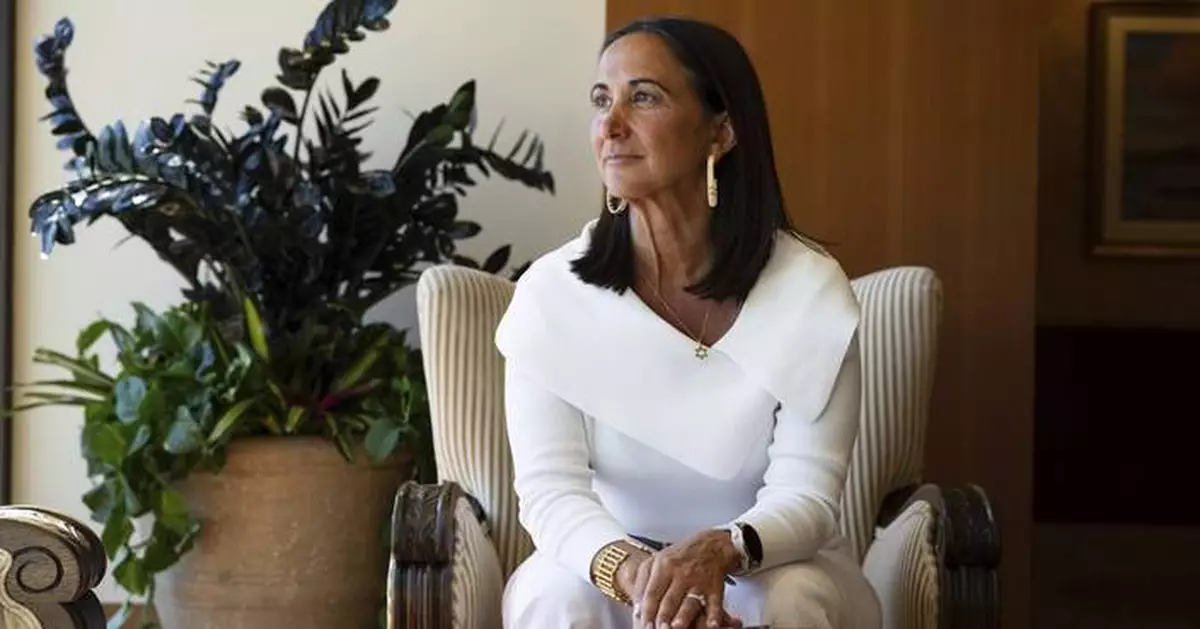
President of Samueli Family Philanthropies Lindsey Spindle stands outside her office in Corona Del Mar, Calif., Monday, July 7, 2025. (AP Photo/Zoë Meyers)
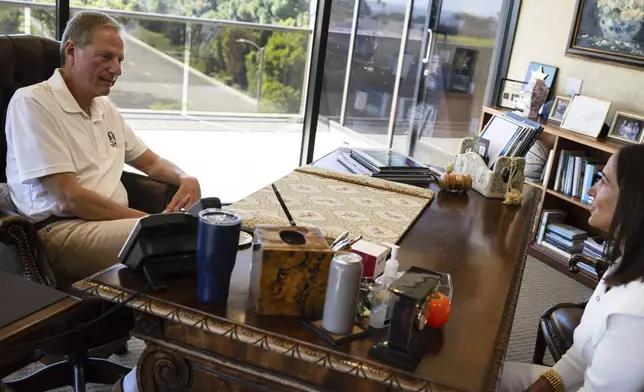
President of Samueli Family Philanthropies Lindsey Spindle speaks with cofounder Henry Samueli at the foundation's offices in Corona Del Mar, Calif., Monday, July 7, 2025. (AP Photo/Zoë Meyers)
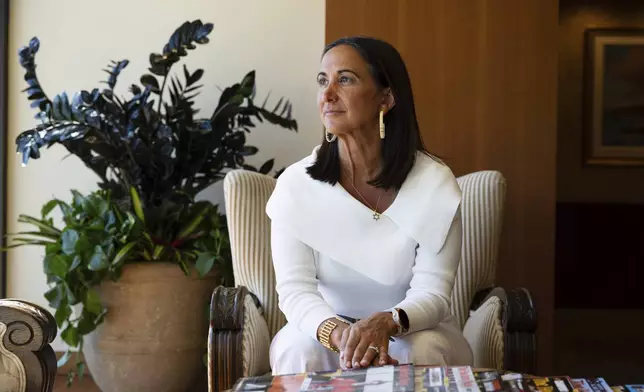
President of Samueli Family Philanthropies Lindsey Spindle sits outside of her office in Corona Del Mar, Calif., Monday, July 7, 2025. (AP Photo/Zoë Meyers)
“That was just a sea change for us for those dollars to be so immediately at risk,” said Price, the executive director of Friendship Shelter, which started in 1987 as a community organization. Access was eventually restored but the episode took a toll.
“Government moves slowly usually, and I think what was so disorienting early on was government was moving really fast,” she said.
In the early days of his second term, President Donald Trump froze, cut or threatened to cut a huge range of social services programs from public safety to early childhood education to food assistance and services for refugee resettlement. Staffing cuts to federal agencies have also contributed to delays and uncertainty around future grant funds. Altogether, his policies are poised to upend decades of partnerships the federal government has built with nonprofits to help people in their communities.
This vast and interconnected set of programs funded by taxpayers has been significantly dismantled in just months, nonprofit leaders, researchers and funders say. And even deeper, permanent cuts are still possible. That uncertainty is also taking a toll on their staff and communities, the leaders said.
In response to questions about the cuts to grant funding, White House spokesperson Kush Desai said, “Instead of government largesse that’s often riddled with corruption, waste, fraud, and abuse, the Trump administration is focused on unleashing America’s economic resurgence to fuel Americans’ individual generosity.”
He pointed to a new deduction for charitable giving included in the recently passed tax and spending law that he said encourages Americans’ “innate altruism.”
But experts say private donations will not be enough to meet the needs.
In 2021, $267 billion was granted to nonprofits from all levels of government, according to an analysis by the Urban Institute published in February. While the data includes tax-exempt organizations like local food pantries as well as universities and nonprofit hospitals, it underestimates the total funding that nonprofits receive from the government. It includes grants, but not contracts for services nor reimbursements from programs like Medicare. It also excludes the smallest nonprofits, which file a different, abbreviated tax form.
However, the figure does give a sense of the scale of the historic — and, until now, solid — relationship between the public sector and nonprofits over the last 50 years. Now, this system is at risk and leaders like Price say the cost of undoing it will be “catastrophic.”
The Urban Institute’s analysis shows more than half of nonprofits in every state received government grants in 2021.
In the vast majority of the country, the typical nonprofit would run a deficit without government funding. Only in two Congressional districts — one including parts of Orange County, California, and another in the suburbs west of Atlanta — would a typical nonprofit not be in the red if they lost all of their public grant funding, the analysis found.
But in Orange County, famous for its stunning beaches, mansions and extraordinary wealth, funders, nonprofits and researchers said that finding surprised them. In part, that's because of major economic inequalities in the county and its high cost of living.
Taryn Palumbo, executive director of Orange County Grantmakers, said nonprofits are not as optimistic about their resiliency.
“They are seeing their budgets getting slashed by 50% or 40%,” she said. “Or they’re having to look to restructure programs that they are running or how they’re serving or the number of people that they’re serving.”
Last year, the local Samueli Foundation commissioned a study of nonprofit needs in part because they were significantly increasing their grantmaking from $18.8 million in 2022 to an estimated $125 million in 2025. They found local nonprofits reported problems maintaining staff, a deep lack of investment in their operations and a dearth of flexible reserve funds.
The foundation responded by opening applications for both unrestricted grants and to support investments in buildings or land. Against this $10 million in potential awards, they received 1,242 applications for more than $250 million, said Lindsey Spindle, the foundation’s president.
“It tells a really stark picture of how unbelievably deep and broad the need is,” Spindle said. “There is not a single part of the nonprofit sector that has not responded to these funds. Every topic you can think of: poverty, animal welfare, arts and culture, civil rights, domestic abuse... They’re telling us loud and clear that they are struggling to stay alive.”
One of the founding stories of the United States is the importance of the voluntary sector, of neighbors helping neighbors and of individuals solving social problems. While other liberal democracies built strong welfare states, the U.S. has preferred to look to the charitable sector to provide a substantial part of social services.
Since the 1960s, the federal government has largely funded those social services by giving money to nonprofits, universities, hospitals and companies. Several new policies converged at that time to create this system, including the expansion of the federal income tax during World War II and the codification of tax-exempt charitable organizations in 1954. Then, the Kennedy and Johnson administrations started to fund nonprofits directly with federal money as part of urban renewal and Great Society programs.
“It was a key approach of midcentury liberalism of addressing issues of poverty, sort of making a reference to civil rights and racial inequality, but not growing the size of government,” said Claire Dunning, an assistant professor of public policy at the University of Maryland, College Park. Conservatives also tended to support working through local, private, nonprofit organizations, though for different reasons than liberals, she said.
With various expansions and cuts during different presidencies, the federal government has continued to fund nonprofits at significant levels, essentially hiding the government in plain sight, Dunning said. The size and importance of the nonprofit apparatus became suddenly visible in January when the Trump administration sought to freeze federal grants and loans.
Dunning said the speed, hostility and scale of the proposed cuts broke with the long legacy of bipartisan support for nonprofits.
“People had no idea that the public health information or services they are receiving, their Meals on Wheels program, their afterschool tutoring program, the local park cleanup were actually enabled by public government dollars,” she said.
A coalition of nonprofits challenged the freeze in court in a case that is ongoing, but in the six months since, the administration has cut, paused or discontinued a vast array of programs and grants. The impacts of some of those policy changes have been felt immediately, but many will not hit the ground until current grant funding runs out, which could be in months or years depending on the programs.
Friendship Shelter in Laguna Beach has an annual budget of about $15 million, $11.5 million of which comes from government sources. Price said the government funding is “braided” in complex ways to house and support 330 people. They've already lost a rental reimbursement grant from the U.S. Department of Housing and Urban Development. But the Samueli Foundation stepped in to backfill those lost funds for three years.
That kind of support is extremely unusual, she said.
“We don’t know of any large-scale private philanthropy response to keeping people housed because it’s a forever commitment,” Price said. “That person is in housing and is going to need the subsidy for the rest of their lives. These are seriously disabled people with multiple issues that they’re facing that they need help with.”
She also believes that even in a wealthy place like Orange County, private donors are not prepared to give five, six or eight times as much as they do currently. Donors already subsidize their government grants, which she said pay for 69% of the actual program costs.
“We are providing this service to our government at a loss, at a business loss, and then making up that loss with these Medicaid dollars and also the private fundraising,” she said.
She said her organization has discussed having to put people out of housing back on to the streets if the government funding is cut further.
“That would be, I think, a signal to me that something is deeply, deeply wrong with how we’re looking at these issues,” said Price, adding, “If I was placing a bet, I would bet that we have enough good still in government to prevent that.”
Associated Press coverage of philanthropy and nonprofits receives support through the AP’s collaboration with The Conversation US, with funding from Lilly Endowment Inc. The AP is solely responsible for this content. For all of AP’s philanthropy coverage, visit https://apnews.com/hub/philanthropy.
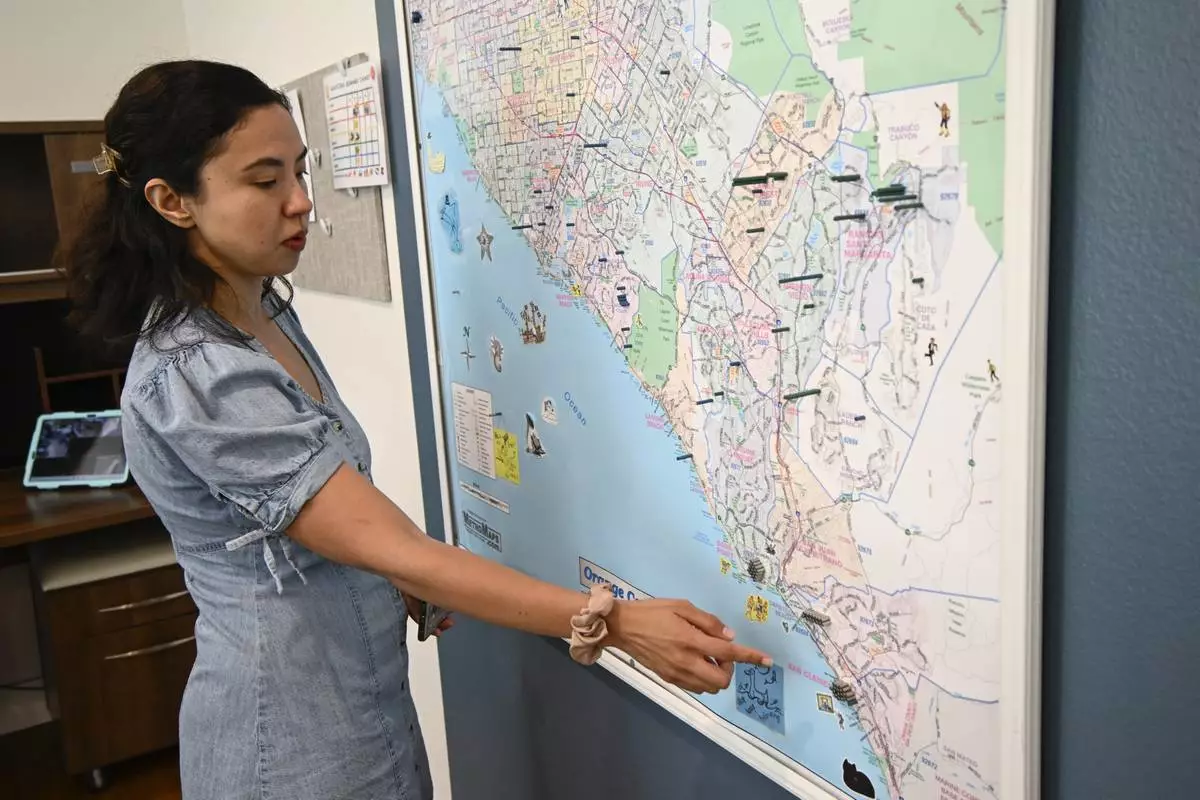
Megan Tambio, community engagement manager for the Friendship Shelter, points out the units in Orange County that the organization provides for homeless people during a tour of the organization's headquarters Monday, July 7, 2025, in San Clemente, Calif. (AP Photo/Denis Poroy)
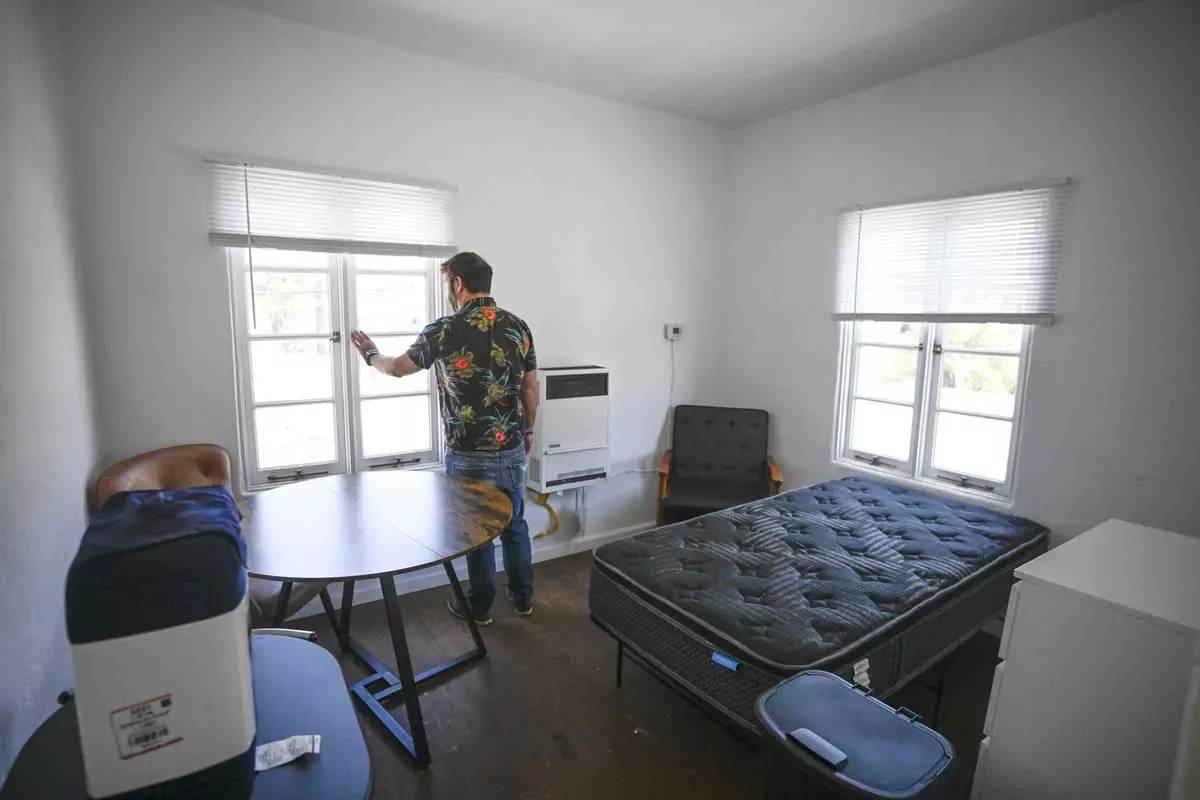
James Carey, housing director for the Friendship Shelter, gives a tour of the one of the apartments that the organization provides for homeless people, Monday, July 7, 2025, in San Clemente, Calif. (AP Photo/Denis Poroy)
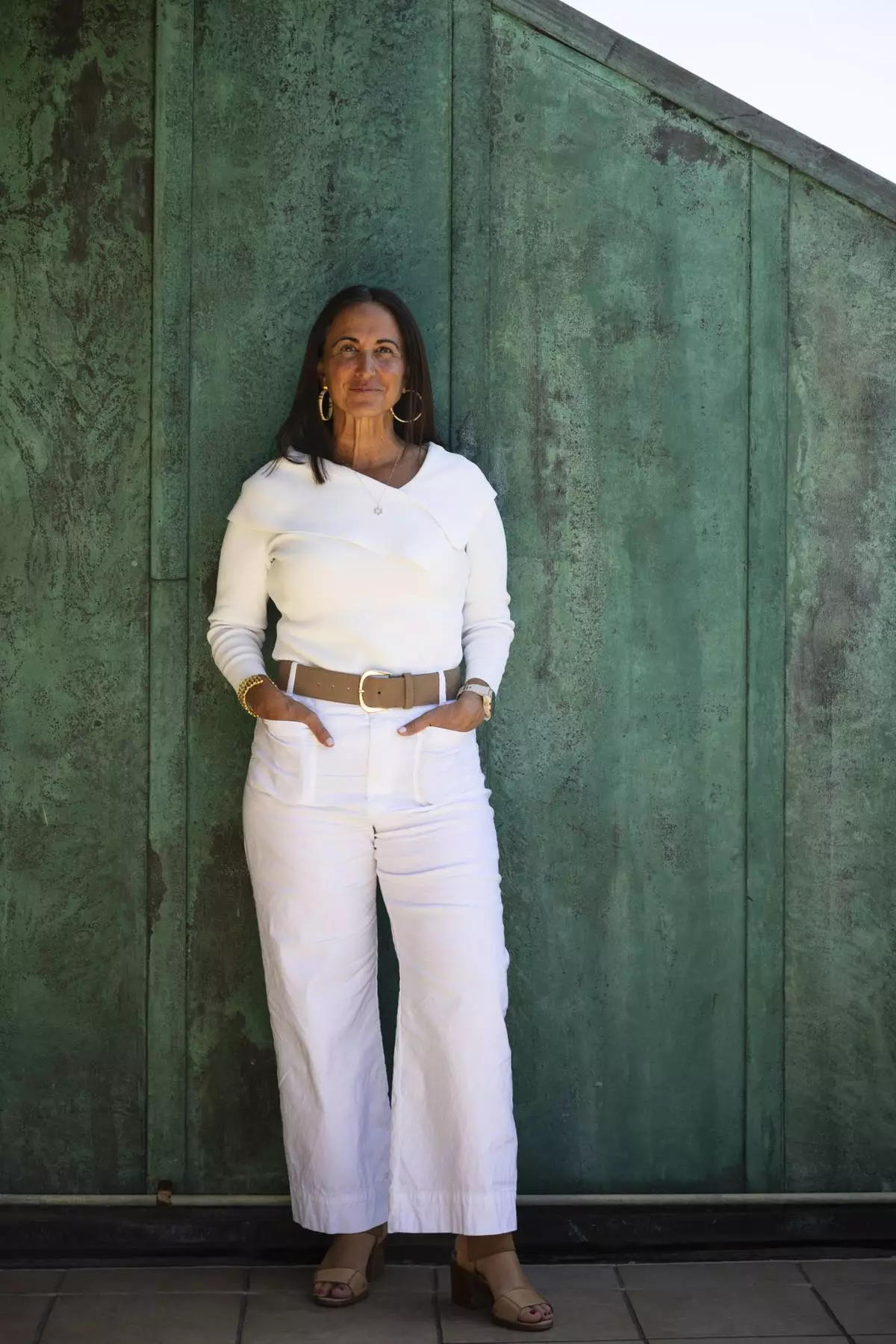
President of Samueli Family Philanthropies Lindsey Spindle stands outside her office in Corona Del Mar, Calif., Monday, July 7, 2025. (AP Photo/Zoë Meyers)
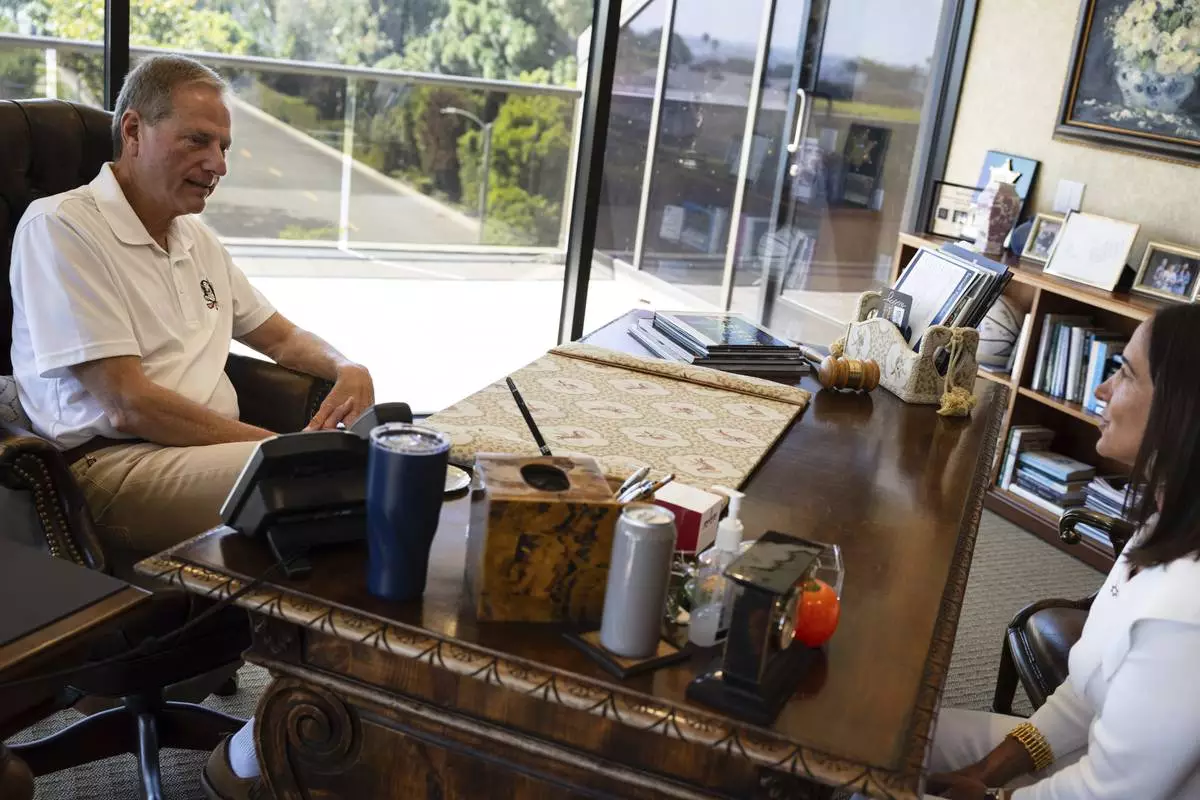
President of Samueli Family Philanthropies Lindsey Spindle speaks with cofounder Henry Samueli at the foundation's offices in Corona Del Mar, Calif., Monday, July 7, 2025. (AP Photo/Zoë Meyers)
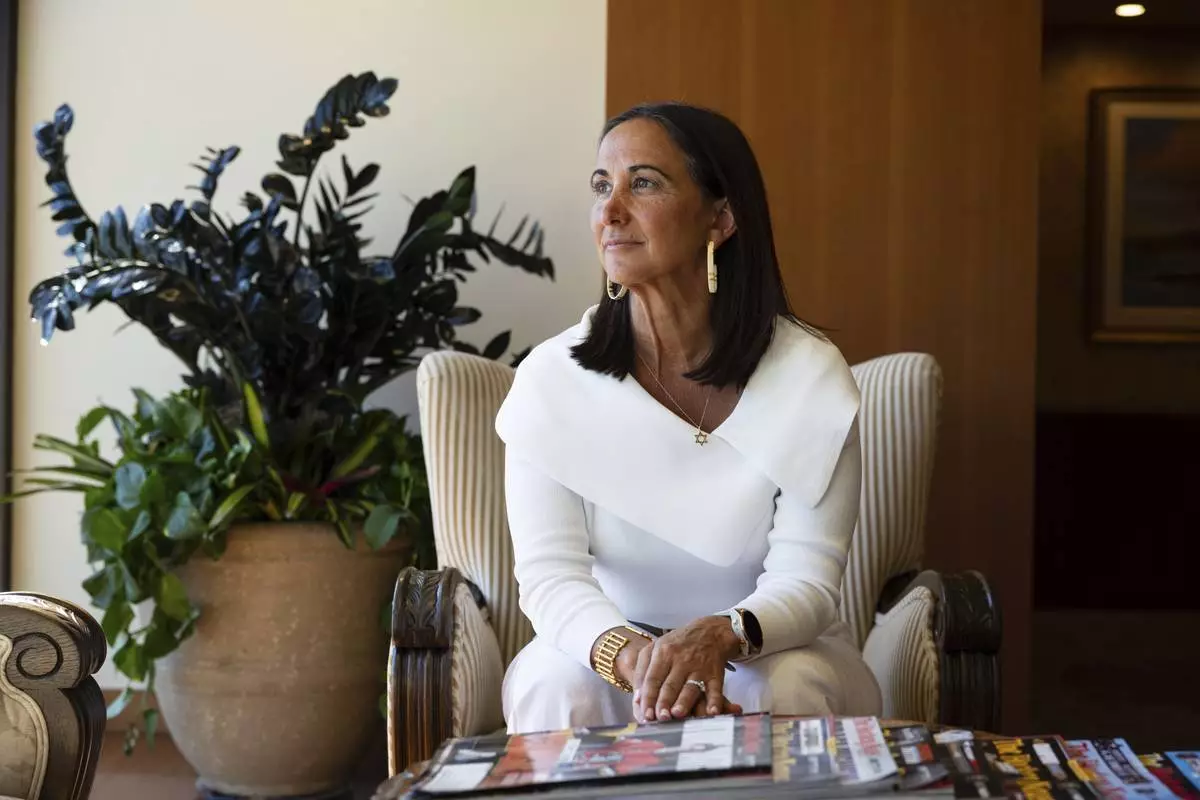
President of Samueli Family Philanthropies Lindsey Spindle sits outside of her office in Corona Del Mar, Calif., Monday, July 7, 2025. (AP Photo/Zoë Meyers)