The European Union (EU) must implement countermeasures if it fails to reach an agreement regarding tariffs with the U.S. by Aug 1, France's Industry Minister Marc Ferracci said at a press conference on Tuesday.
France hopes that the European Commission will continue to proceed with developing the list of countermeasures, assuring that the country will fully support the EU's position in the negotiations, according to Ferracci.
"In particular, we stated that a number of countermeasures must be implemented if an agreement cannot be reached by Aug 1. This could impact more than 90 billion euros worth of American products, which would then be subject to taxation by the European Commission. This also means activating tools that have not been utilized yet, particularly what is known as the anti-coercion tool. Although this is a non-tariff tool, it can take the form of export controls or restrictions on online advertising for digital platforms, as well as other necessary means. These tools are essential for adopting a stronger and more credible negotiating position," he said.
Trump announced on early this month that 30 percent tariffs will be imposed on the European Union as of Aug 1.
Following Trump's announcement, the EU proposed a new round of tariffs on U.S. goods worth 72 billion euros, noting that the bloc is prepared to respond if talks with the U.S. fail to produce a viable outcome.
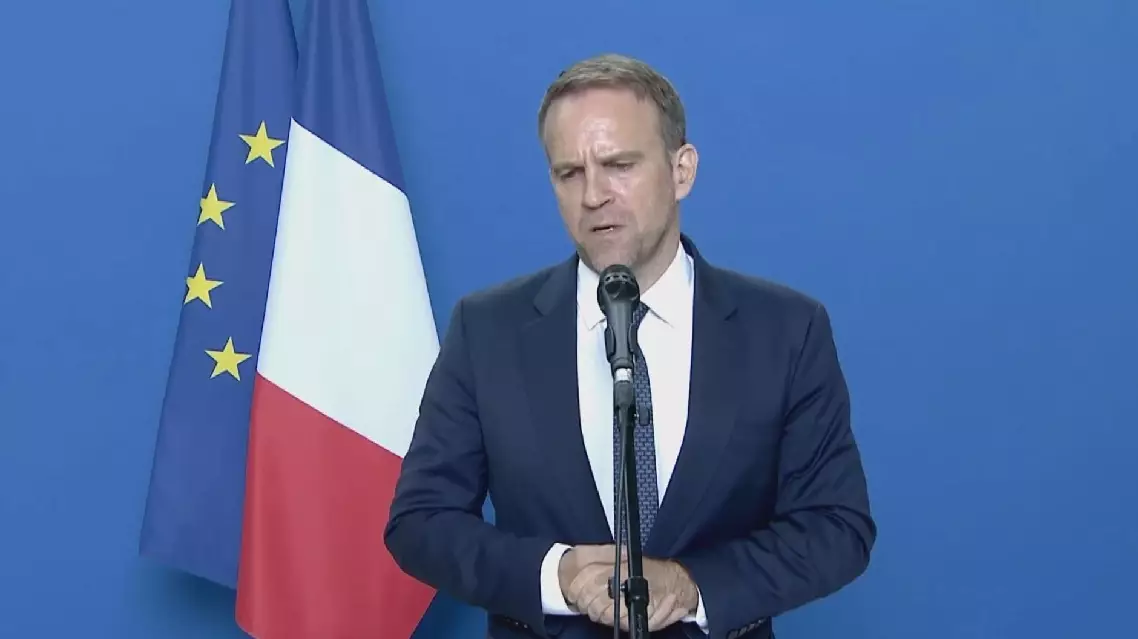
EU must be prepared to implement countermeasures against US tariffs: French minister
EU must be prepared to implement countermeasures against US tariffs: French minister
EU must be prepared to implement countermeasures against US tariffs: French minister
Voting for the second phase of Myanmar's multi-party democratic general election concluded on Sunday afternoon.
Voting began at 06:00 local time on Sunday. At 16:00, an election official at a polling station in Yangon's Latha township announced the closure of the polling station.
Following the closure, election staff at the polling station, in the presence of domestic and international media, candidates, and observers, counted the votes, including advance votes, for seats in the Pyithu Hluttaw (Lower House), Amyotha Hluttaw (Upper House), and State and Region Hluttaws (State and Region Parliaments).
The second phase of the election was held in 100 townships across 12 of the 14 regions and states. In the Yangon region, it was held in 16 townships, including the townships of Latha, Bahan, Kyimyindaing and Kawhmu.
"We welcome the election, which is expected to bring new changes to the country," said a Yangon resident.
"I hope the parties can lead us and make it a better country, which is why I support the election," said another voter.
Myanmar's multi-party democratic general election is being held in three phases, with the first phase held in 102 townships on Dec 28 last year, and the third phase scheduled for Jan 25 this year in 63 townships.
"The parliament is scheduled to convene in March. Following the conclusion of the session, the new government will officially take office in April. We hope that more foreign investment will flow into Myanmar, enabling the public to enjoy the opportunities generated by the country's economic development more fully," said Zaw Min Tun, leader of the Information Team of Myanmar's National Defense and Security Council.
The Union Election Commission (UEC) said that about 5,000 candidates from 57 political parties are competing in the three phases of the election, adding that it plans to set up over 21,000 polling stations across the country for all three phases of the general election.
The election will produce the elected members of the Union Parliament (Pyithu Hluttaw and Amyotha Hluttaw) and State and Region Parliaments; the new Union Parliament will then elect a new president, who will form a new Union Government.

Voting for 2nd phase of Myanmar's general election concludes