Authorities in Foshan, a city in south China's Guangdong Province, have swiftly ramped up efforts in mosquito control amid a sharp rise in Chikungunya fever cases, with over 2,600 infections reported since early July.
The outbreak can be traced to an imported case detected on July 8 in a densely populated community in Shunde District, home to over 3,600 residents. Since then, more than 230 infections have been confirmed within that neighborhood.
In response, authorities have launched daily mosquito-control operations, focusing on eliminating mosquito breeding grounds in residential areas and public spaces to curb further transmission.
Professional teams have been deployed during peak mosquito activity hours to spray insecticides and eliminate standing water, and residents have been urged to use mosquito repellents for personal precautions.
All communities where the mosquito-borne disease in Foshan is reported now are marked as outbreak zones and sorted into high, medium, or low risk categories based on the mosquito density.
Local disease control officials said that 90 percent of affected communities have reduced mosquito density to medium or low risk levels, with one-third reaching safe thresholds, and the neighborhood where the first case happened is now considered low risk.
"After a mosquito bites an infected person, the virus will enter the mosquito's body and begin to multiply. This replication phase can last anywhere from one to several days. If it bites a healthy person, the mosquito can then spread the virus to the healthy person. If the viral load is high enough, the mosquito may bite multiple people and spread the virus to multiple people too. This is a reason why the disease is difficult to contain," said Guo Yuhong, a researcher with the Chinese Center for Disease Control and Prevention.
Chikungunya fever is transmitted by Aedes mosquitoes, commonly known as tiger mosquitoes. Symptoms typically include high fever, rash, and severe joint pain. There is currently no vaccine or specific antiviral treatment available.
The local government has designated 53 hospitals as treatment centers and prepared over 3,600 mosquito-proof isolation beds. Medical staff have been trained to conduct nucleic acid testing, and 35 hospitals have been authorized to perform diagnostics.
"The joint pain [from Chikungunya fever] is most commonly observed in small joints, such as those of the palms, fingers, wrists, and ankles. Larger joints, like the hips and shoulders, are rarely affected. The pain is typically described as swelling and soreness," said Lin Qun, director of the Infectious Disease of Lecong Hospital.
As of Monday, 2,659 cases of Chikungunya fever have been confirmed in Foshan, all of them mild, with no severe cases or deaths.
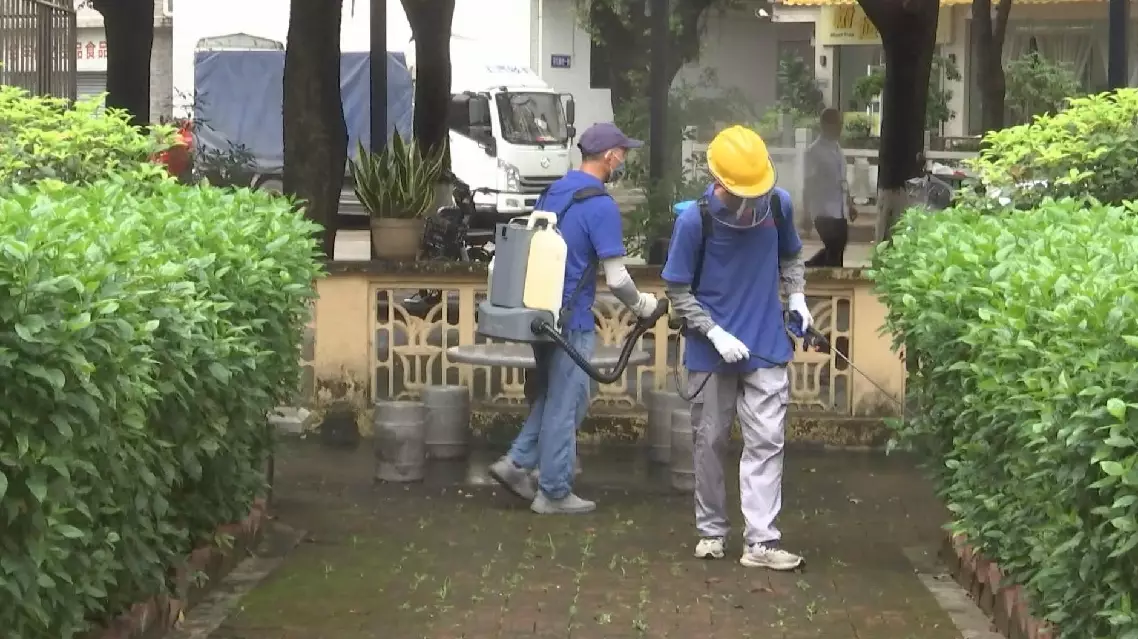
South China city beefing up mosquito control as Chikungunya cases surge past 2,600
South China city beefing up mosquito control as Chikungunya cases surge past 2,600
South China city beefing up mosquito control as Chikungunya cases surge past 2,600