Skip to Content Facebook Feature Image

Union Pacific and Norfolk Southern confirm merger talks to create coast to coast railroad

News

Union Pacific and Norfolk Southern confirm merger talks to create coast to coast railroad
News

News

Union Pacific and Norfolk Southern confirm merger talks to create coast to coast railroad

2025-07-25 01:50 Last Updated At:02:00

Union Pacific and Norfolk Southern confirmed that they are in “advanced” merger talks that would create a single U.S railroad with service stretching from the East to the West Coast.

The Associated Press reported last week that the companies were discussing a tie-up but neither company acknowledged that until Thursday morning.

The potential merger would combine the largest and smallest of the country’s six major freight railroads.

Independent railroad analyst Tony Hatch said that the disclosure by the railroads suggests that negotiations are further along than previously thought.

“What people will interpret out of that is that they have, one way or another, figured out what the benefits are,” Hatch said, adding that those benefits, such as efficiency, would be passed on to customers. That will be key for getting regulatory approval under the Surface Transportation Board’s enhanced competition clause.

There's widespread debate over whether such a merger would be approved by the STB, which has established a high bar for consolidation in the crucial industry.

That's largely because of the aftermath of an industry consolidation nearly 30 years ago that involved Union Pacific. Union Pacific merged with Southern Pacific in 1996 and the tie-up led to an extended period of snarled traffic on U.S. rails. Three years later, Conrail was divvied up by Norfolk Southern and CSX, which led to more backups on rails in the East.

However, just two years ago, the STB approved the first major rail merger in more than two decades. In that deal, which was supported by big shippers, Canadian Pacific acquired Kansas City Southern for $31 billion to create the CPKC railroad.

Still, some of the reasoning behind the approval was that it involved two of the smallest major railroads, and Kansas City Southern was the only operator with direct lines into Mexico. The combined railroad, regulators reasoned, would benefit trade across North America.

The deal left only six major freight railroads, which could become an issue when regulators consider whether to approve any deal between Norfolk Southern and Union Pacific.

To be approved, any major rail merger must show it will enhance competition and serve the public interest under rules established in 2001, in the wake of that pair of mergers.

Hatch also said that big shippers like Amazon, Dow and U.S. Steel — who use massive amounts of freight capacity — will likely weigh in with regulators as the merger process develops. Those shippers will first have to determine if a merger would improve their ability to move equipment and products, or harm it.

“If the shippers want this this merger, they'll make it clear,” Hatch said. “They really hold the cards.”

Jeff Windau, an industry analyst with Edward Jones, expects a protracted regulatory process as the STB tries to determine whether the merger will meet its standard of enhancing competition.

“While we believe there could be benefits to a transcontinental railroad, we do feel that the regulatory approval process would be long and challenging,” Windau said, noting that the last major railroad merger — between Canadian Pacific and Kansas City Southern — took 18 months to be completed.

Also Thursday, Union Pacific reported that its adjusted profit grew to $1.8 billion in the second quarter.

The Omaha, Nebraska company's, per-share earnings rose rose to $3.03, beating Wall Street expectations and easily topping the $2.71 per-share profit it reported in the same period last year. Analysts were expecting profit of $2.91 per share for the recent quarter.

Operating revenue grew 2% over last year, to $6.2 billion, the company said.

Union Pacific shares fell 2% just at the opening bell Thursday, to $226.70 each. They had slumped to around $208 in early April, their lowest level of 2025, as President Donald Trump rolled out sweeping tariffs that threatened to upend global trade.

FILE - Union Pacific CEO Jim Vena talks in front of a locomotive simulator used to train engineers at the company's headquarters in Omaha, Neb., Dec. 15, 2023. (AP Photo/Josh Funk, File)
FILE - Union Pacific CEO Jim Vena talks in front of a locomotive simulator used to train engineers at the company's headquarters in Omaha, Neb., Dec. 15, 2023. (AP Photo/Josh Funk, File)

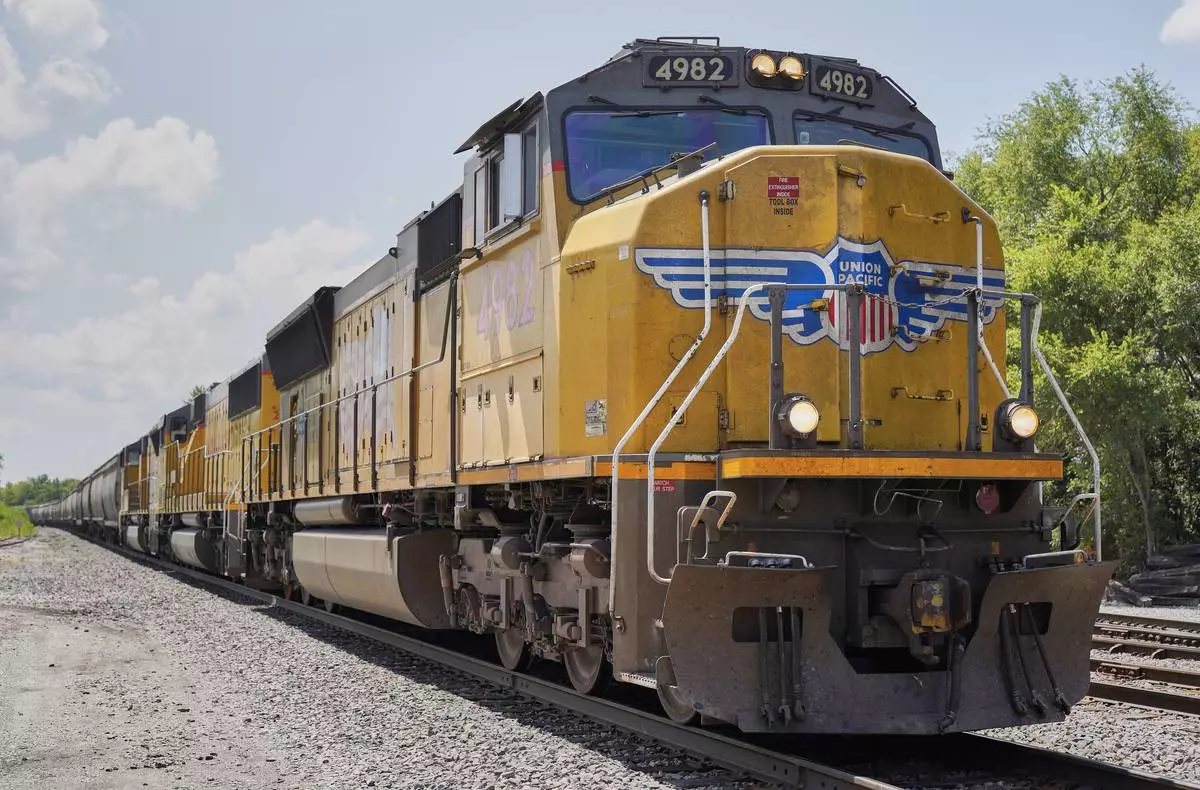
FILE - A Union Pacific train travels through Union, Neb., July 31, 2018. (AP Photo/Nati Harnik, File)

FILE - A Union Pacific train travels through Union, Neb., July 31, 2018. (AP Photo/Nati Harnik, File)
SEOUL, South Korea (AP) — A South Korean court sentenced former President Yoon Suk Yeol to five years in prison Friday in the first verdict from eight criminal trials over the martial law debacle that forced him out of office and other allegations.

Yoon was impeached, arrested and dismissed as president after his short-lived imposition of martial law in December 2024 triggered huge public protests calling for his ouster.

The most significant criminal charge against him alleges that his martial law enforcement amounted to a rebellion, and the independent counsel has requested the death sentence in the case that is to be decided in a ruling next month.

In Friday's case, the Seoul Central District Court sentenced Yoon for defying attempts to detain him, fabricating the martial law proclamation and sidestepping a legally mandated full Cabinet meeting.

Yoon has maintained he didn’t intend to place the country under military rule for an extended period, saying his decree was only meant to inform the people about the danger of the liberal-controlled parliament obstructing his agenda. But investigators have viewed Yoon’s decree as an attempt to bolster and prolong his rule, charging him with rebellion, abuse of power and other criminal offenses.

Judge Baek Dae-hyun said in the televised ruling that imposing “a grave punishment” was necessary because Yoon hasn’t shown remorse and has only repeated “hard-to-comprehend excuses.” The judge also restoring legal systems damaged by Yoon’s action was necessary.

Yoon, who can appeal the ruling, hasn’t immediately publicly responded to the ruling. But when the independent counsel demanded a 10-year prison term in the case, Yoon’s defense team accused them of being politically driven and lacking legal grounds to demand such “an excessive” sentence.

Prison sentences in the multiple, smaller trials Yoon faces would matter if he is spared the death penalty or life imprisonment at the rebellion trial.

Park SungBae, a lawyer who specializes in criminal law, said there is little chance the court would decide Yoon should face the death penalty in the rebellion case. He said the court will likely issue a life sentence or a sentence of 30 years or more in prison.

South Korea has maintained a de facto moratorium on executions since 1997 and courts rarely hand down death sentences. Park said the court would take into account that Yoon’s decree didn’t cause casualties and didn’t last long, although Yoon hasn’t shown genuine remorse for his action.

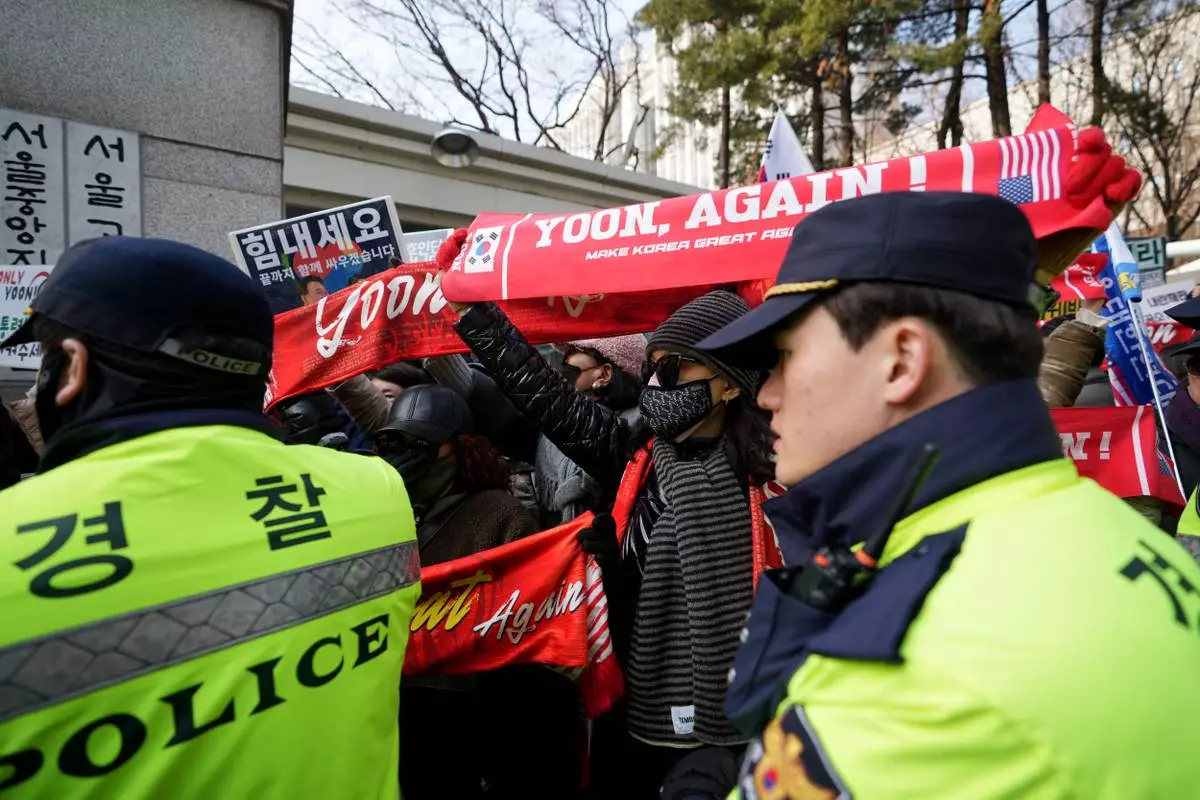
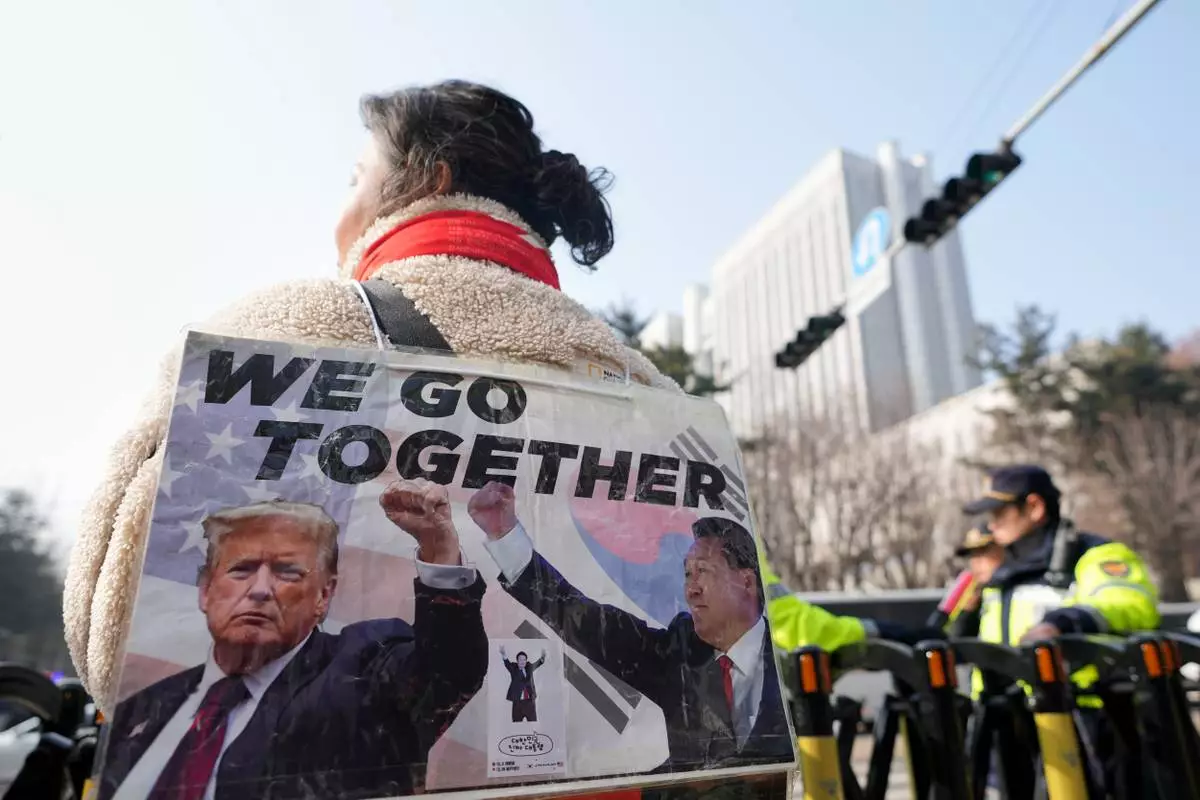
A supporter of former South Korean President Yoon Suk Yeol shouts slogans outside Seoul Central District Court, in Seoul, South Korea, Friday, Jan. 16, 2026. (AP Photo/Lee Jin-man)

A supporter of former South Korean President Yoon Suk Yeol shouts slogans outside Seoul Central District Court, in Seoul, South Korea, Friday, Jan. 16, 2026. (AP Photo/Lee Jin-man)

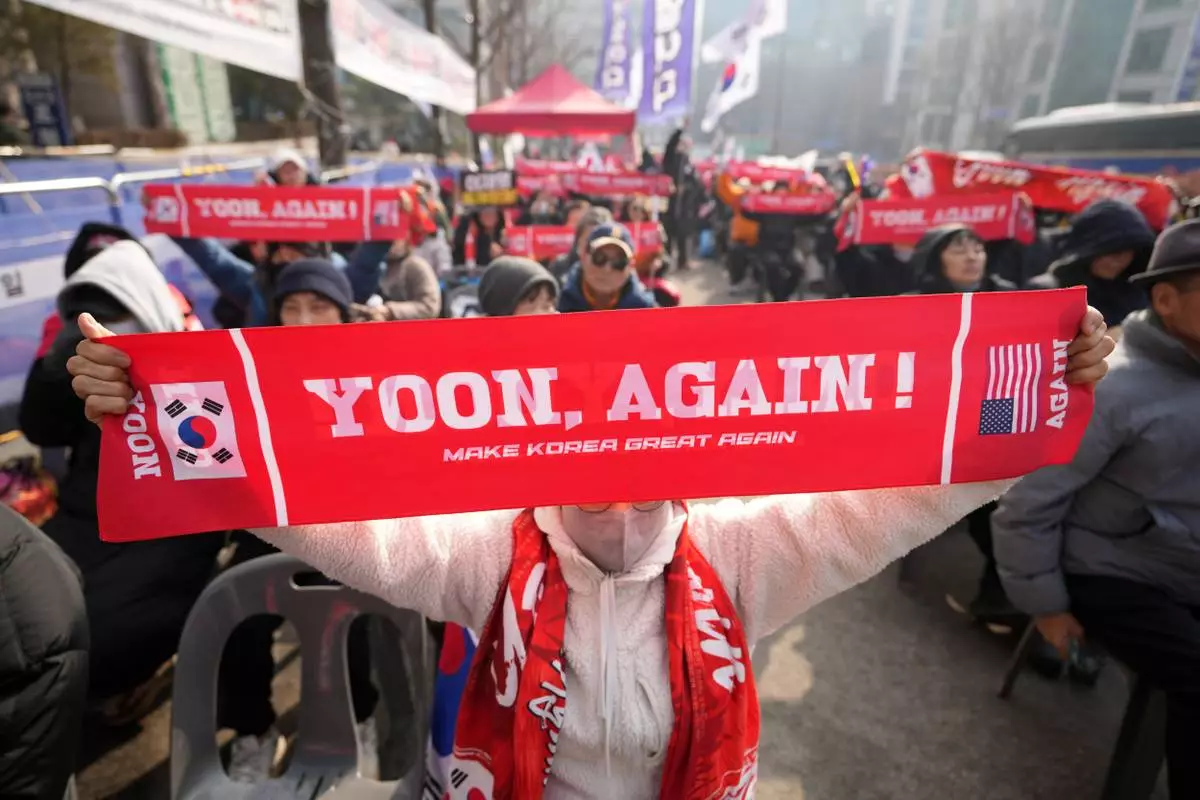
Supporters of former South Korean President Yoon Suk Yeol hold signs and flags outside Seoul Central District Court, in Seoul, South Korea, Friday, Jan. 16, 2026. (AP Photo/Lee Jin-man)

Supporters of former South Korean President Yoon Suk Yeol hold signs and flags outside Seoul Central District Court, in Seoul, South Korea, Friday, Jan. 16, 2026. (AP Photo/Lee Jin-man)

A supporter of former South Korean President Yoon Suk Yeol waits for a bus carrying former South Korean President Yoon Suk Yeol outside Seoul Central District Court, in Seoul, South Korea, Friday, Jan. 16, 2026. (AP Photo/Lee Jin-man)

A supporter of former South Korean President Yoon Suk Yeol waits for a bus carrying former South Korean President Yoon Suk Yeol outside Seoul Central District Court, in Seoul, South Korea, Friday, Jan. 16, 2026. (AP Photo/Lee Jin-man)

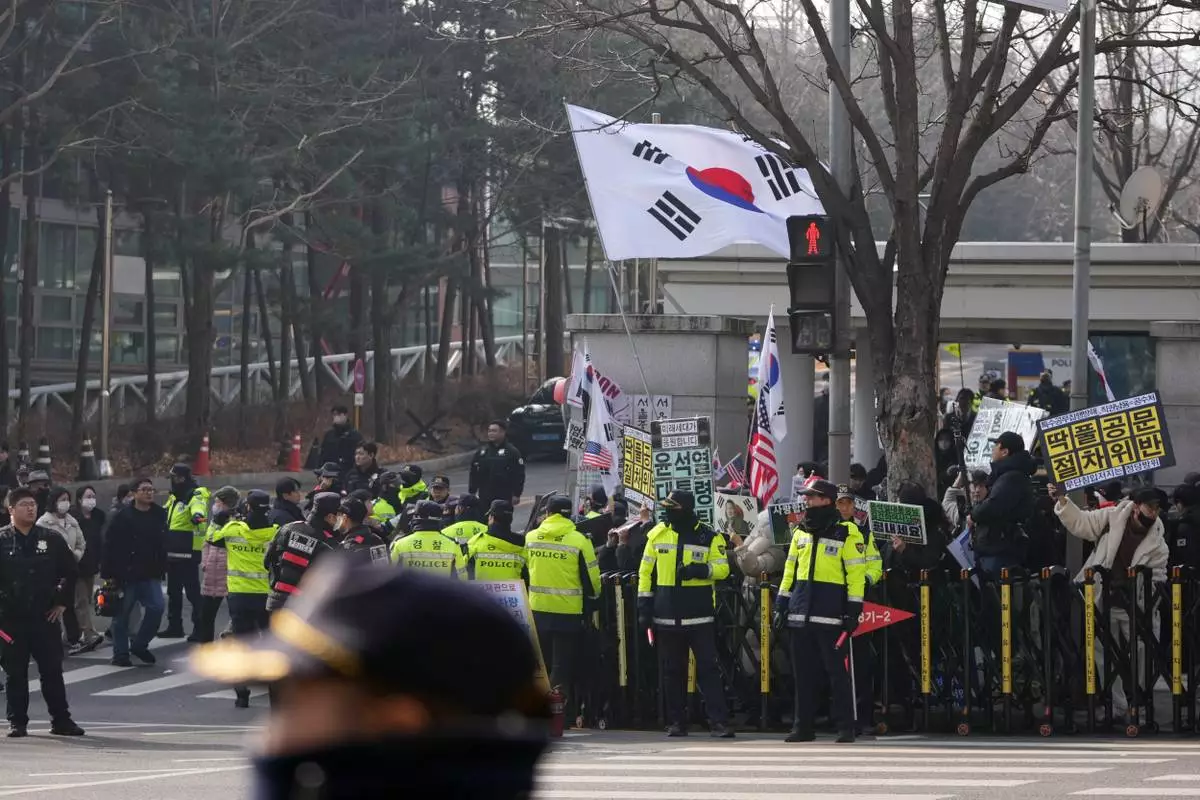
Supporters of former South Korean President Yoon Suk Yeol hold signs as police officers stand guard outside Seoul Central District Court, in Seoul, South Korea, Friday, Jan. 16, 2026. (AP Photo/Lee Jin-man)

Supporters of former South Korean President Yoon Suk Yeol hold signs as police officers stand guard outside Seoul Central District Court, in Seoul, South Korea, Friday, Jan. 16, 2026. (AP Photo/Lee Jin-man)

Supporters of former South Korean President Yoon Suk Yeol hold signs and flags outside Seoul Central District Court, in Seoul, South Korea, Friday, Jan. 16, 2026. (AP Photo/Lee Jin-man)

Supporters of former South Korean President Yoon Suk Yeol hold signs and flags outside Seoul Central District Court, in Seoul, South Korea, Friday, Jan. 16, 2026. (AP Photo/Lee Jin-man)

Supporters of former South Korean President Yoon Suk Yeol hold signs outside Seoul Central District Court, in Seoul, South Korea, Friday, Jan. 16, 2026. (AP Photo/Lee Jin-man)

Supporters of former South Korean President Yoon Suk Yeol hold signs outside Seoul Central District Court, in Seoul, South Korea, Friday, Jan. 16, 2026. (AP Photo/Lee Jin-man)

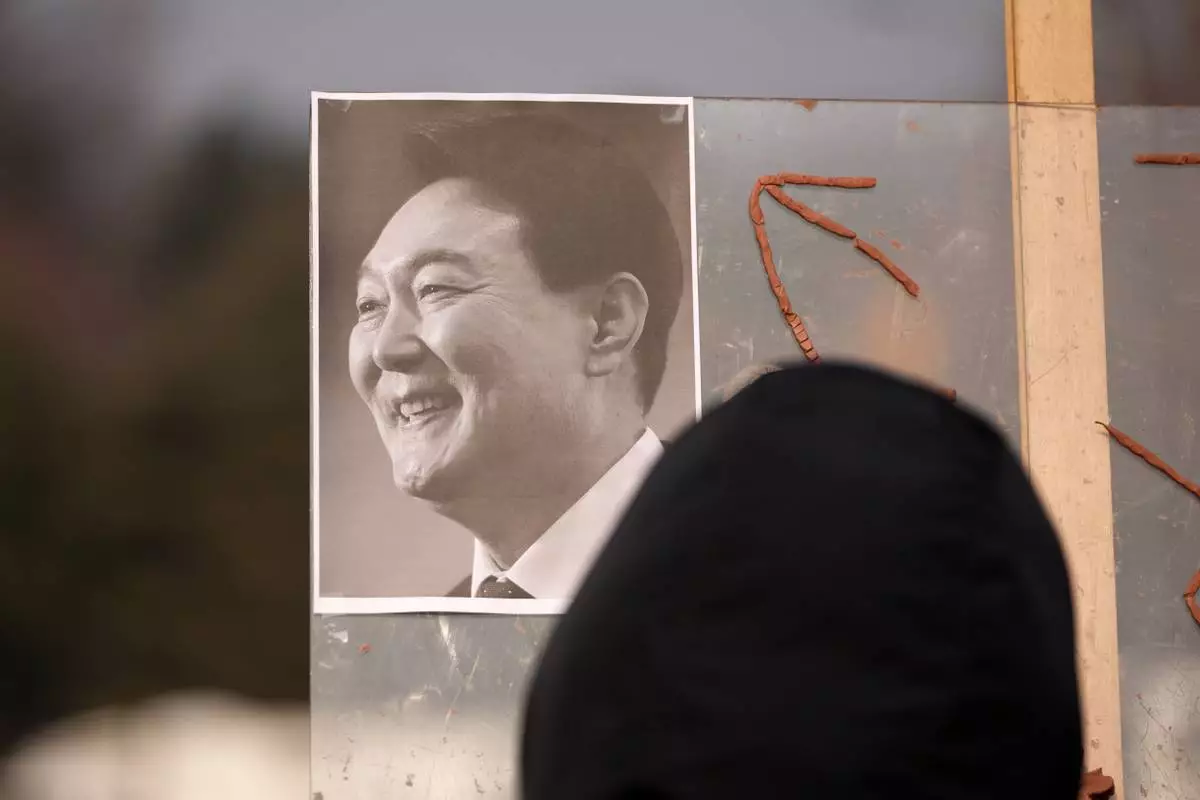
A picture of former South Korean President Yoon Suk Yeol is placed on a board as supporters gather outside Seoul Central District Court, in Seoul, South Korea, Friday, Jan. 16, 2026. (AP Photo/Lee Jin-man)

A picture of former South Korean President Yoon Suk Yeol is placed on a board as supporters gather outside Seoul Central District Court, in Seoul, South Korea, Friday, Jan. 16, 2026. (AP Photo/Lee Jin-man)

Recommended Articles