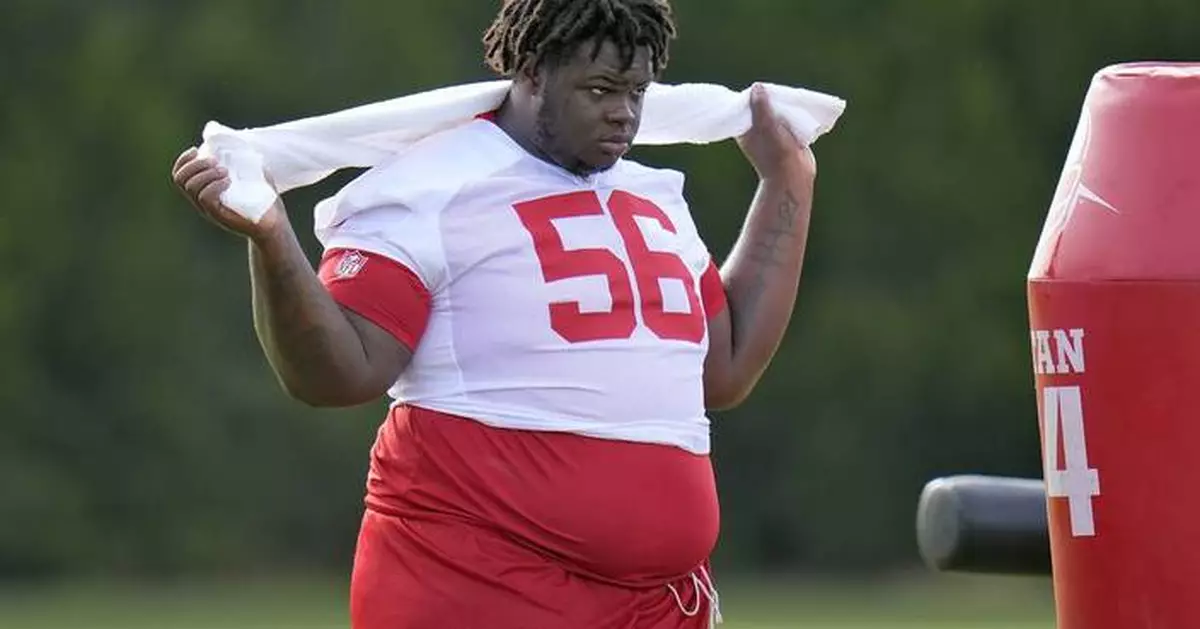
TAMPA, Fla. (AP) — Desmond Watson’s quest to make the Tampa Bay Buccaneers will get a late start.
Buccaneers coach Todd Bowles said the heaviest player in NFL history is day to day after starting camp on non-football injury list due to his weight.
“It’s just about trying to get him better, to be a healthier player and getting him on the field a little more,” Bowles said Wednesday. “That’s kind of where I’m at right now. He’s working at it and we’re working with him and that’s all you can ask right now.”
Watson, who played at Florida, was signed after going undrafted in April. He weighed 464 pounds at the school's pro day and lost 25 to 30 pounds before the draft.
“I don’t have a timetable on what we can get him down to or when that comes,” Bowles said. “He’s from Armwood, he went to Florida, so he’s used to the heat. That’s not a big factor in it. We’ve just got to see what happens.”
The 6-foot-6 defensive tackle has been working with a team nutritionist and the team hasn’t said what would be an ideal playing weight for him.
AP NFL: https://apnews.com/hub/nfl
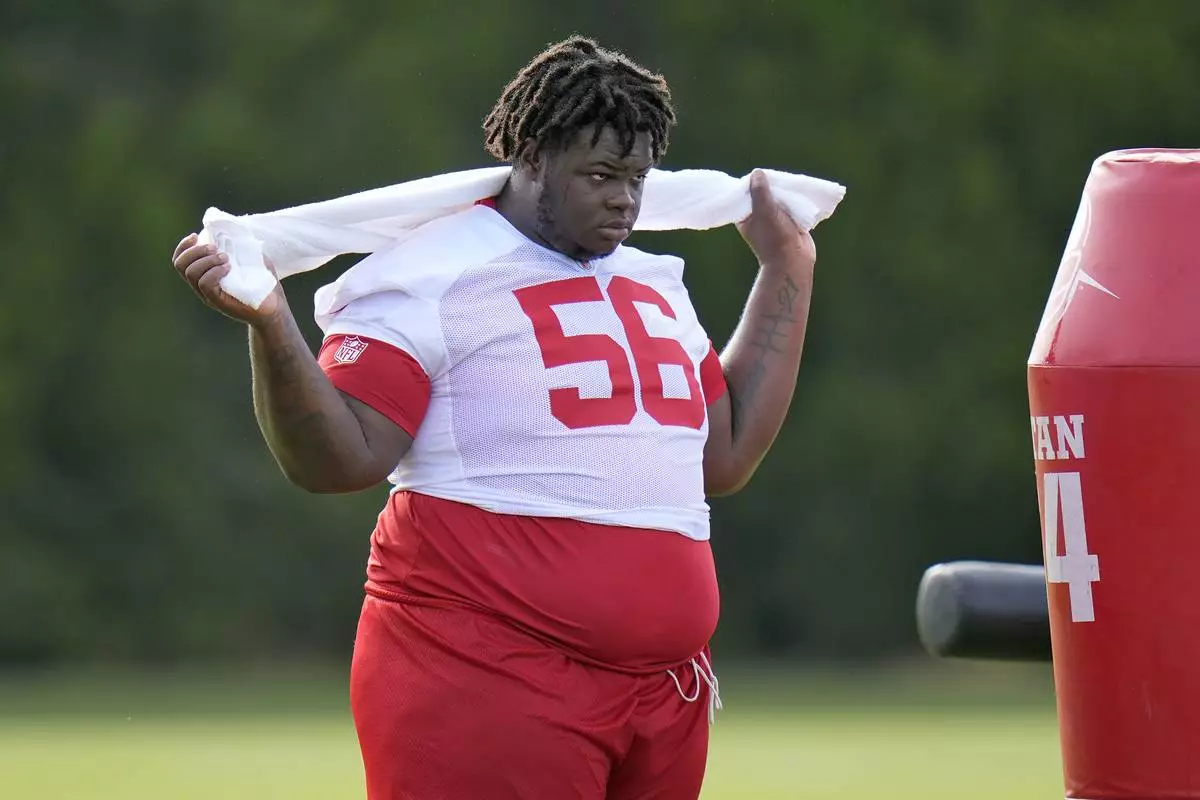
Tampa Bay Buccaneers defensive tackle Desmond Watson watches from the sideline during practice at NFL football training camp, Wednesday, July 23, 2025, in Tampa, Fla. (AP Photo/Chris O'Meara)
BERLIN (AP) — Standing on an open truck making its way through Berlin, Anahita Safarnejad turned to the crowd of Iranian protesters marching behind her and took the microphone.
“No more dictatorship in Iran, the mullahs must go!” she shouted. Hundreds of voices echoed her slogan with the same sense of urgency and desperation.
Across Europe, thousands of exiled Iranians have taken to the streets to shout out their rage at the government of the Islamic Republic which has cracked down on protests in their homeland, reportedly killing thousands of people.
Women have taken a prominent role in organizing the protests abroad, raising their voices against the theocratic government that discriminates against them.
But beyond the anger, there’s also a sense of fear and paralysis. Iran's government has been shutting down the internet and limiting phone calls for days, making it nearly impossible for Iranians in the diaspora to find out if their families back home are safe.
Safarnejad, 34, fled Iran seven years ago. She came to Berlin to study theater but now works in a bar when she's not attending one of the almost-daily protests in the German capital.
Since the demonstrations broke out in Iran in late December, Safarnejad said she's been living in two different realities that are almost impossible to combine. The easygoing hipster life of her new hometown is a jarring contrast to the bloody protests in Iran that she's been following every minute she doesn't have to work, glued to her phone for the latest updates.
While she was initially almost euphoric that the current uprising would finally bring freedom to Iran and she'd be able to go back home, her sense of hope has turned into horror.
Safarnejad hasn't spoken to her brother, also a protester, since communications with Iran were cut off. She's been scouring video on social media showing piles of dead bodies to see if he's among the corpses.
“I'm desperate and don't know how to keep going anymore,” she cried, tears rolling down her cheeks, as she spoke to The Associated Press during Wednesday's Berlin protest.
“I can’t really switch off. I can’t really stop reading the news either," she added, her voice breaking. “Because I’m waiting all the time for the internet to be available so I can get some answers from my family.”
The young woman's horror is felt by many of the more than 300,000 Iranians living in Germany — one of the biggest exile communities in Europe and similar in numbers to France and Britain. Many of them still have family ties to their homeland, even if they left decades ago.
Mehregan Maroufi's Persian cafe and bookstore in Berlin has become a place of solace for Iranians to share their grief without many words — because they know they are all living through the same nightmare.
Maroufi, the daughter of the late Iranian author Abbas Maroufi, welcomes Iranians and everyone else at the Hedayat Cafe, where she serves Persian tea with sweets such as chocolate cake topped with barberries. She lends an ear to anyone who has to get worries off their chest.
“For some, the emotions are still too high and too strong, so to speak, and it’s impossible to talk," the 44-year-old says, adding that she, too, had to force herself to open the cafe on some mornings because the violent images coming out of Iran sucked away all her energy.
“But at least you can find compatriots here. You can talk to a little, and that helps,” she said.
She says she's been listening to and learning from the convictions her fellow Iranians express when they talk about their dreams of an Iran after Supreme Leader Ayatollah Ali Khamenei that — due to the uprising — now seems closer that ever before.
While most in the diaspora agree that the theocracy has to be toppled, ideas of what a new Iran should look like differ widely.
Adeleh Tavakoli, 62, joined a demonstration outside Britain’s Parliament in London earlier this week. She hasn't been back to Iran in 17 years but has spent decades protesting from afar against the Islamic Republic.
But with the latest wave of protests, she hopes that the Iran’s exiled Crown Prince Reza Pahlavi, the son of the shah ousted by the Islamic Revolution in 1979, will return to power. If he does, she said, she has her bag packed and is ready to get on the first flight.
“For 47 years, our country has been captured by a terrorist regime,” she said. “We’ve been the voice of Iran. All we want is our freedom and to get rid of this horrible dictatorship.”
For Maral Salmassi, who came to Germany as a child in the 1980s, history explains the calls by exiled Iranians for Pahlavi to lead the country.
“As an Iranian, as someone who comes from this culture and knows its culture and history, I can only say that we have had kings and queens for thousands of years. It is our culture," said Salmassi. She is the chairwoman and founder of the Zera Institute think tank in Berlin, which researches democracy, radicalization and extremism.
She added that Iranians make up a multi-ethnic country and "to bring them all together again, we need a constitutional monarchy that symbolically and traditionally represents our identity and reunites everyone ... and then a democratic, federal parliament where everyone is represented equally.”
However, not everyone is convinced by Pahlavi. Maryam Nejatipur, 32, who also joined the protest in Berlin, thinks her country should avoid a cult of personality.
“We don’t need something like Khamenei again. We don’t need one person,” to lead us, she said, as she burnt a portrait of the Ayatollah and used the flames to light a cigarette — an act that's become a symbol of Iranian resistance.
Safarnejad, who led the recent Berlin protest, agrees.
“I don’t belong to the left, I’m not a liberal, I’m not a monarchist,” she stressed. “I’ve been there for women’s rights, I’m for human rights, I’m for freedom.”
Fanny Brodersen and Ebrahim Noroozi, in Berlin, and Brian Melley in London contributed reporting.
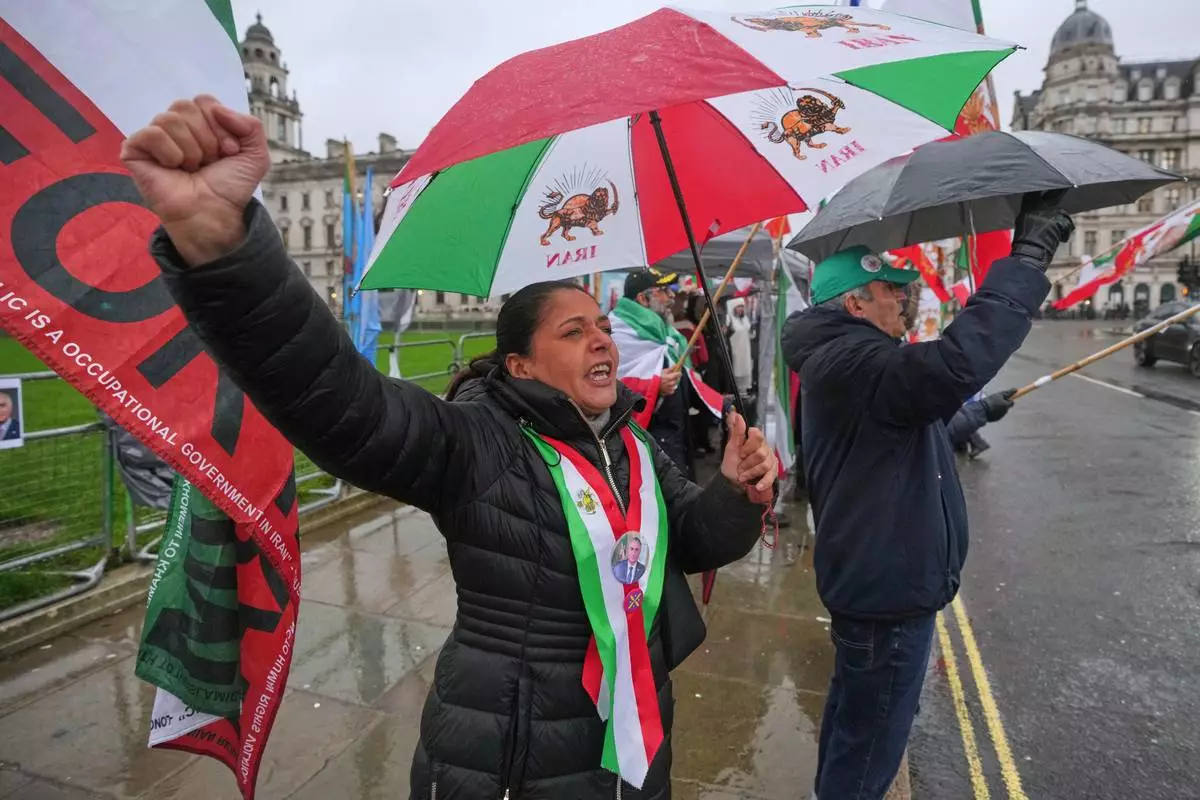
Protester Adeleh Tavakoli, left, demonstrates outside the House of Parliament, in London, Tuesday, Jan. 13, 2026. (AP Photo/Kin Cheung)
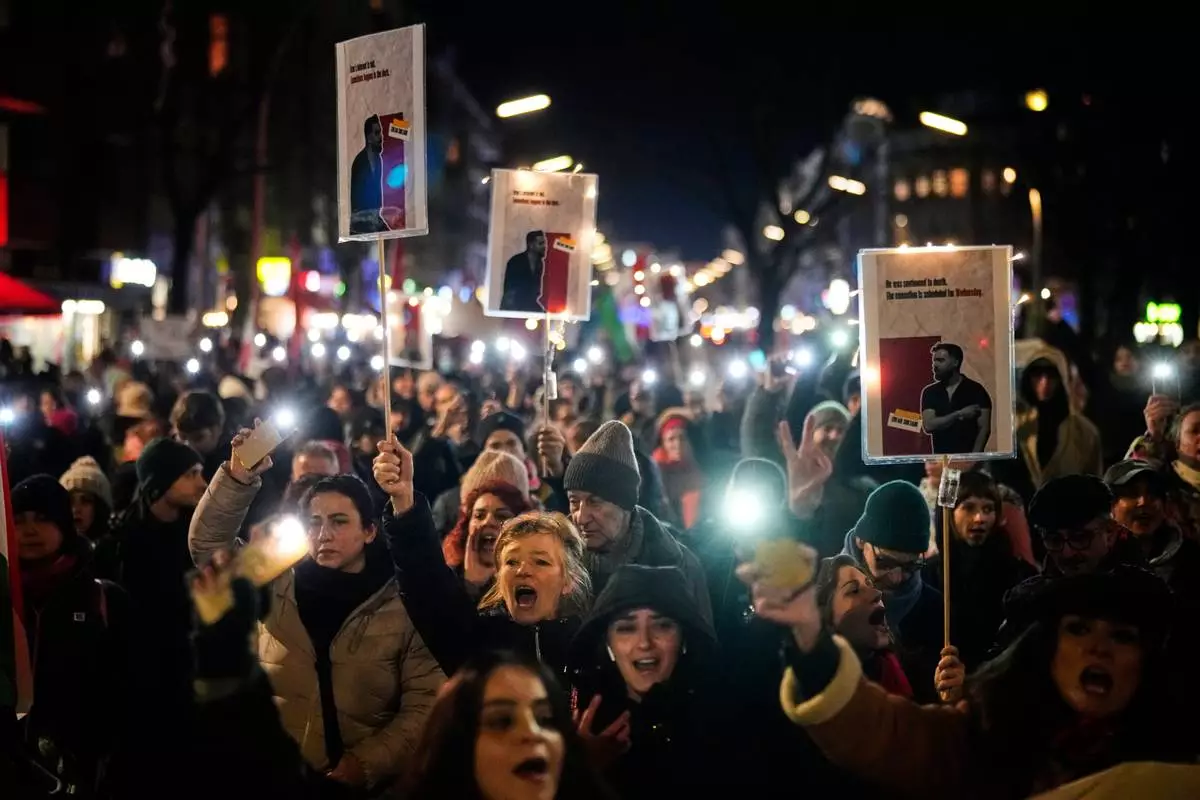
People take part in a rally in support of anti-government protests in Iran, Berlin Germany, Wednesday, June 14, 2026. (AP Photo/Ebrahim Noroozi)
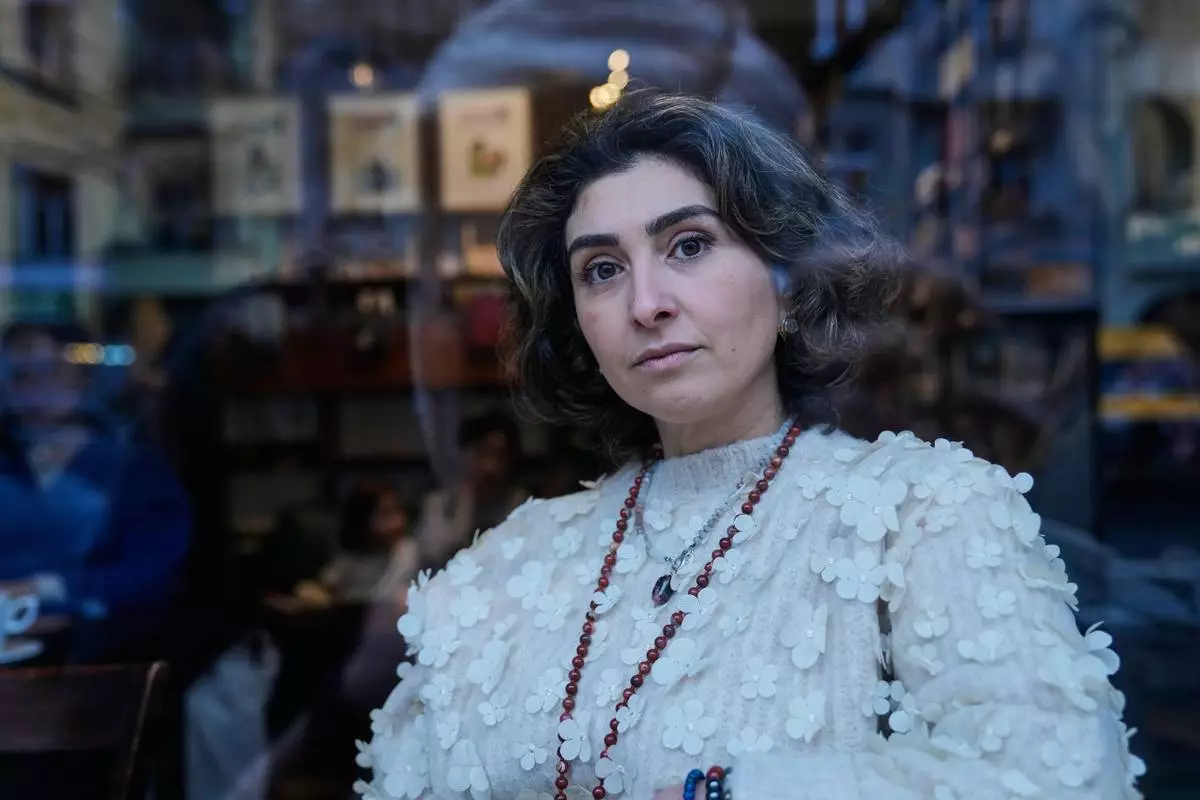
Iranian Mehregan Maroufi poses for a photo before an interview with the Associated Press in her cafe in Berlin, Germany, Thursday, Jan. 15, 2026. (AP Photo/Ebrahim Noroozi)
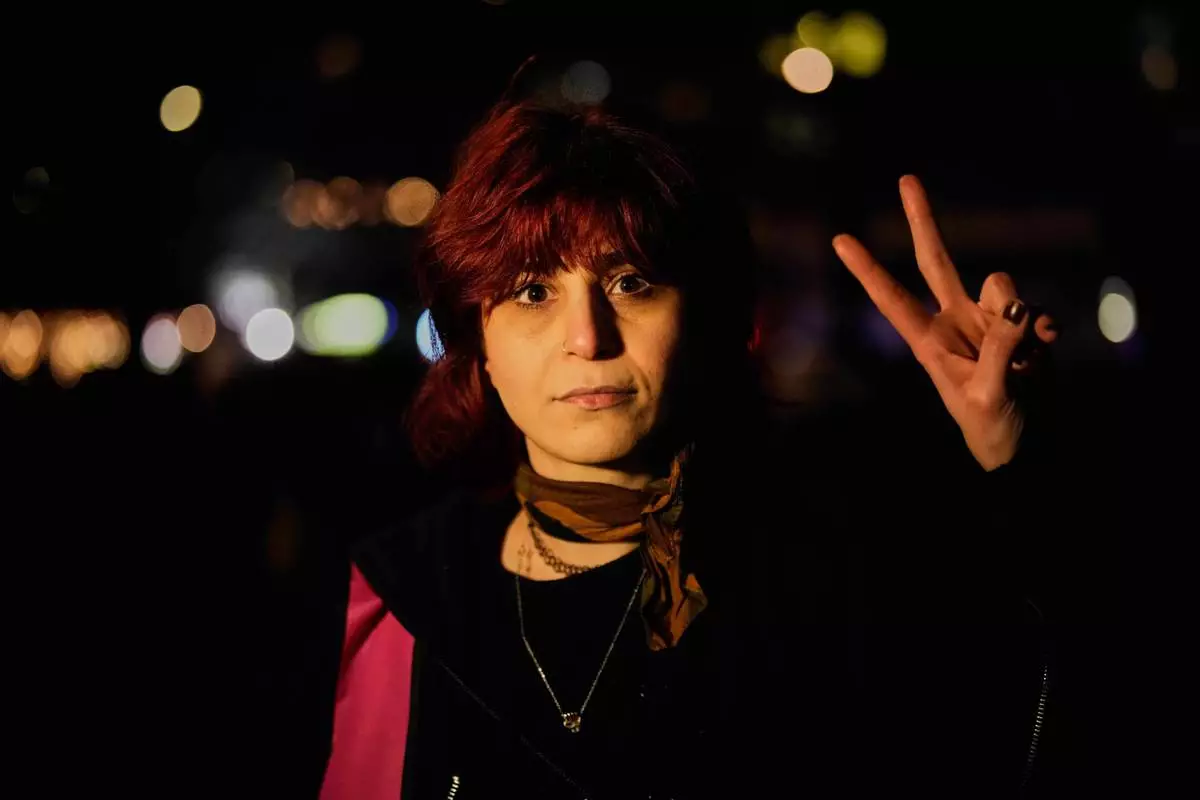
Iranian Maryam Nejatipur 32, poses for a photo after a demonstration in support of the nationwide mass protests in Iran against the government, in Berlin, Germany, Wednesday, Jan. 14, 2026. (AP Photo/Ebrahim Noroozi)
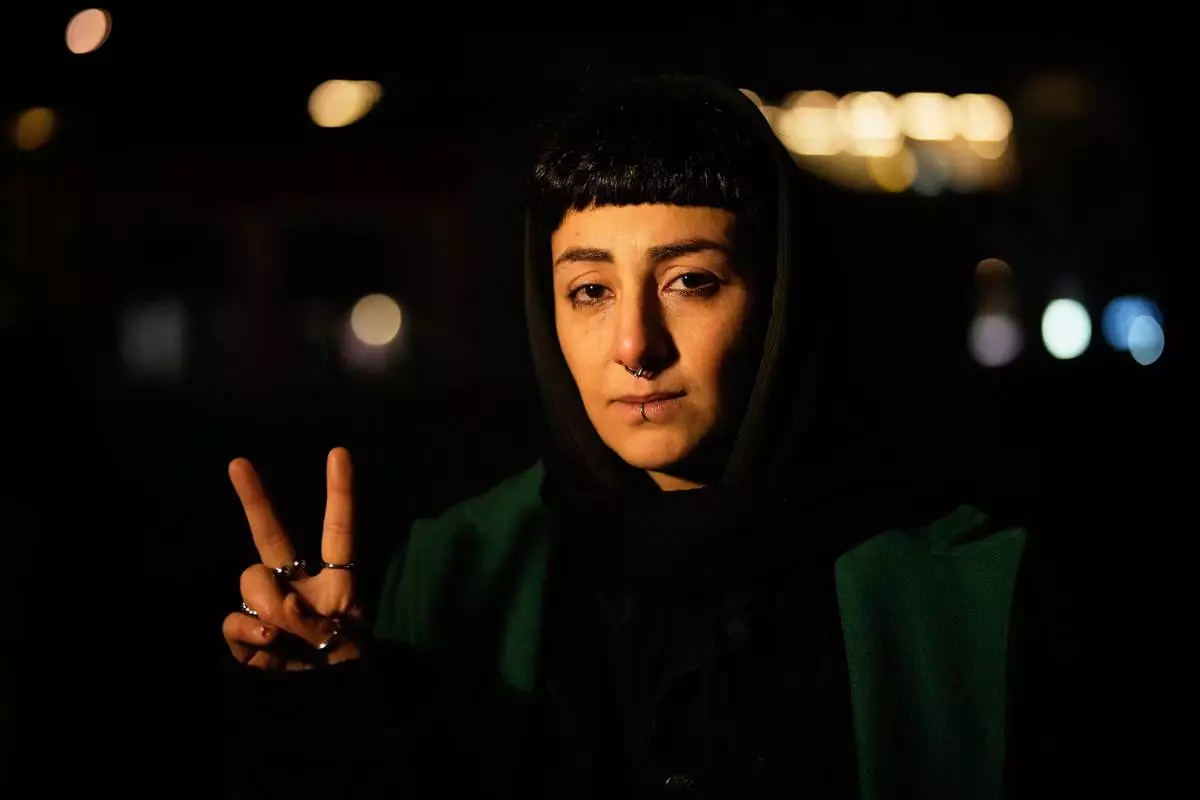
Iranian Anahita Safarnejad, 34, poses for a photo after a demonstration in support of the nationwide mass protests in Iran against the government, in Berlin, Germany, Wednesday, Jan. 14, 2026. (AP Photo/Ebrahim Noroozi)