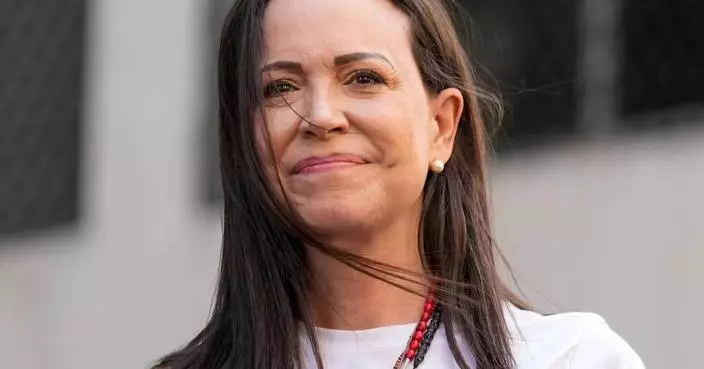
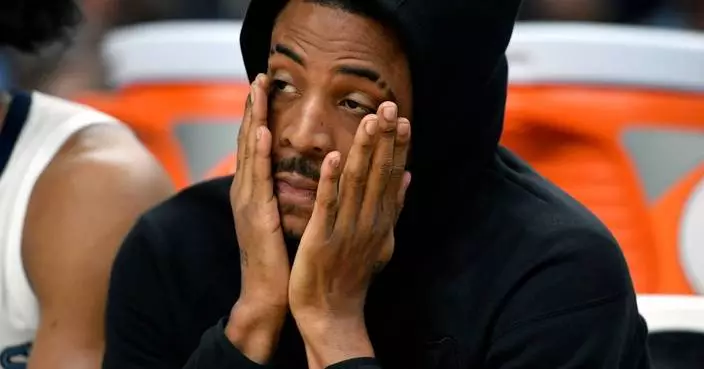
Venus Williams’ recent singles win at the D.C. Open showcased her longevity and brought attention to health coverage for aging athletes following a joking comment she made in an on-court interview.
“I had to come back for the insurance,” the five-time Wimbledon champion said after Tuesday’s match, her first in 16 months. “They informed me this year that I’m on COBRA, so it’s like, I got to get my benefits on.”
The 45-year-old Williams, who has won seven major singles titles, became the second-oldest woman to win a tour-level singles match in professional tennis with Tuesday’s victory. After losing on Thursday, she acknowledged that her comment on health insurance was a “fun and funny moment.”
The Consolidated Omnibus Budget Reconciliation Act, more commonly referred to as COBRA, allows Americans to stay on their employer’s insurance plan for a limited amount of time after leaving their job. It comes with high costs.
Williams’ comment led to questions about health insurance in the sports world.
For most active professional athletes, partially or fully subsidized health insurance is provided by their league or governing body and guaranteed in their collective bargaining agreement. A CBA is an agreement reached between a league and its players that guarantees certain levels of player compensation and benefits, and can be renegotiated every few years.
So when athletes are playing, they’re usually covered. But Williams, coming back to the sport after a 16-month hiatus, brought to light how long that insurance lasts — or doesn’t last — for athletes when they’re not playing.
In the WTA, the governing body of the women’s tour, players are eligible to enroll in the health insurance plan if they are ranked in the top 500 in singles or top 175 in doubles and have played a minimum of three WTA 250 level or above tournaments that year. If players are in the top 150 in singles or top 50 in doubles, the WTA will pay a portion of the premiums.
If a player is no longer eligible under those requirements, they can enroll in COBRA for up to 18 months, which is likely the situation that Williams was referencing. That is also the WTA’s only option for retiring players.
“Nobody wants to be on COBRA, right?” Williams said after her second-round loss on Thursday night. “That remains an issue in my life. ... Obviously (the interview was) a fun and funny moment, but it’s an issue that people are dealing with, so it is serious.”
The ATP provides health insurance to men's tennis players who rank in the top 250 in singles or top 50 in doubles. All other players with a ranking point are given the opportunity to purchase health insurance through the ATP’s provider.
For retired players, the only option is COBRA for up to three years.
As an individual sport without a CBA, golf tours vary. They do have a group insurance plan that is available to active members of the PGA Tour, the PGA Tour Champions (the tour for golfers over 50) and the Korn Ferry Tour (the feeder circuit for the PGA Tour). For players who meet certain “performance criteria,” including how many tournaments they played and how often they won, the PGA Tour will partially subsidize the plan.
In retirement, players are responsible for their own insurance. Some players join the PGA Tour Champions after the PGA Tour and play into their mid-60s, during which they maintain coverage. Top players can receive a subsidy from the PGA Tour in retirement.
The LPGA Tour, the women’s professional golf tour, started offering its players fully funded health insurance for the first time this year. Before this year, players were given a $4,000 stipend.
NBA players have access to one of the most inclusive insurance plans in retirement. If they played at least three years in the league, retired NBA players are eligible for fully funded health insurance in retirement, and if they played at least 10 years, they will have health care covered for their entire family.
WNBA players are fighting for retirement health care as part of their new CBA, which they are currently negotiating with the league. Those negotiations have been heated, and the most recent meeting between the two sides last weekend did not result in an agreement.
One unique facet of the WNBA's healthcare is that athletes who have spent more than eight years in the league can be reimbursed up to $20,000 a year for costs related to adoption, surrogacy, egg freezing or additional fertility treatments.
The NFL has less long-term coverage for retirees than most other leagues — athletes who played in the league for at least three years can remain on the NFL health insurance plan, but only for five years into retirement.
NHL players who have played more than 160 games with the league, which is about two seasons, are eligible to buy NHL health insurance for their retirement. The retirement insurance plan is eligible for partial subsidization from the league.
Baseball players who spent at least four years in the majors have the option to pay premiums to stay on the MLB’s health care plan indefinitely.
Minor league baseball has its own separate CBA, which also guarantees health insurance for active players. In the minors, however, players who get cut or leave the league lose coverage at the end of that month.
AP sports: https://apnews.com/hub/sports

Venus Williams returns the ball against Magdalena Frech, of Poland, during a match at the Citi Open tennis tournament Thursday, July 24, 2025, in Washington. (AP Photo/Nick Wass)

Venus Williams reacts during a match against Magdalena Frech, of Poland, at the Citi Open tennis tournament Thursday, July 24, 2025, in Washington. (AP Photo/Nick Wass)