China's trade-in program has effectively boosted consumption and industrial upgrading in the first half of this year, a Ministry of Finance official said on Friday, noting that more special bond will be issued to continue the program.
During a press conference held in Beijing, Wu Gai, Deputy Director of the Department of Economic Construction at the Ministry of Finance, said that the nationwide trade-in program for consumer goods has shown significant progress, and China plans to issue 300 billion yuan (about 42 billion U.S. dollars) of ultra-long special treasury bonds in 2025 to support the program, aiming to stimulate domestic consumption while accelerating the transformation and upgrading of key industries.
"In January and April this year, the Ministry of Finance pre-allocated a total of 162 billion yuan of ultra-long special treasury bond funds in two batches. Recently, in coordination with the National Development and Reform Commission, the Ministry calculated and determined the funding scale for each region for 2025, and issued a third batch of 69 billion yuan. The remaining funds will be allocated in October to support local efforts in carrying out the trade-in program for consumer goods," said Wu.
Backed by this financial support, China's trade-in campaign has delivered encouraging results in the first six months of the year.
"In the first half of the year, sales of automobiles, home appliances, home furnishings, and mobile phones reached 1.6 trillion yuan. Among entities above designated sizes, year-on-year retail sales of home appliances and audiovisual equipment, cultural and office supplies, communication devices, and furniture rose by 30.7, 25.4, 24.1, and 22.9 percent, respectively. These increases contributed to a 5 percent year-on-year growth in total retail sales of consumer goods, 1.5 percentage points higher than the full-year growth rate of last year," Wu said.
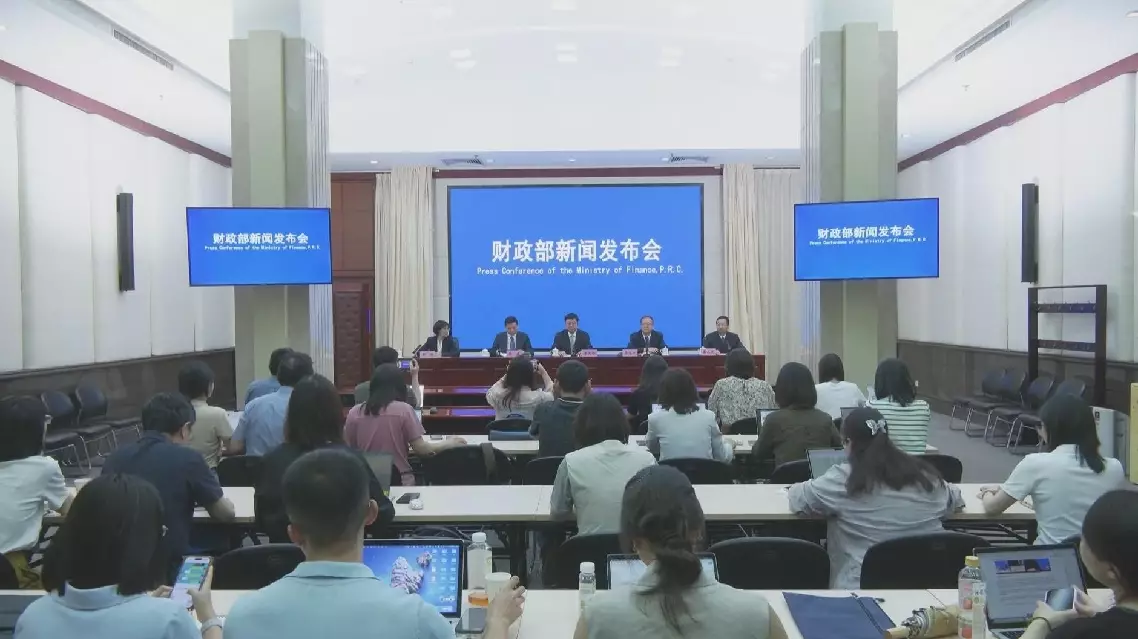
China’s trade-in program makes significant progress in H1: official
Attempts to curb China's scientific and technological advancement are futile, a fact that has already been proven, said Kishore Mahbubani, former permanent representative of Singapore to the United Nations, in an interview aired Friday.
In an exclusive interview with China Central Television (CCTV) in Beijing, Mahbubani said he had stated this position in one of his articles published in the United States.
"Actually, I published an article, you know the two, I guess two leading journals in the United States on international relations. One is Foreign Affairs and the other is Foreign Policy. And last year I co-authored an article with two other co-authors, saying that all the efforts to stop China's scientific and technological development will fail. And it has failed always. You know, for example, the Soviet Union tried to prevent the spread of nuclear technology to China, China develops its own. The United States didn't want to share its technology on international space station with China. China develops its own space station. So clearly, efforts to stop China in the area of scientific innovation and technological development have failed. And so it'd be wiser for the West, including United States, to work with China other than to try and stop China seek development," he said.
Regarding China's progress on robots, Mahbubani said China is leading the world in the sector and hopes the country will share its expertise with the rest of the world.
"If there's one country that is preparing for the future well, it is China, because one in six human beings in the world is Chinese. But one in three robots in the world is Chinese, and one in two baby robots being born every day is Chinese. So China is producing far more robots than any other country is. So clearly it's preparing for the world of the future when we will have, for example, labor shortages, as you know, as you develop an aging society. So China is wisely investing in robots. But I hope that China will also share its learning and expertise with other countries. Also because the robots like that can also be helpful even to developing countries cause you can enhance the productivity of their populations, of their factories and so on so forth. So the world should be happy that China is leading the world in manufacturing, producing robots," he said.

Attempts to stop China's sci-tech development doomed to fail: former Singaporean diplomat