Troubleshooting is key to uncovering the hidden culprit behind dripping air conditioners.
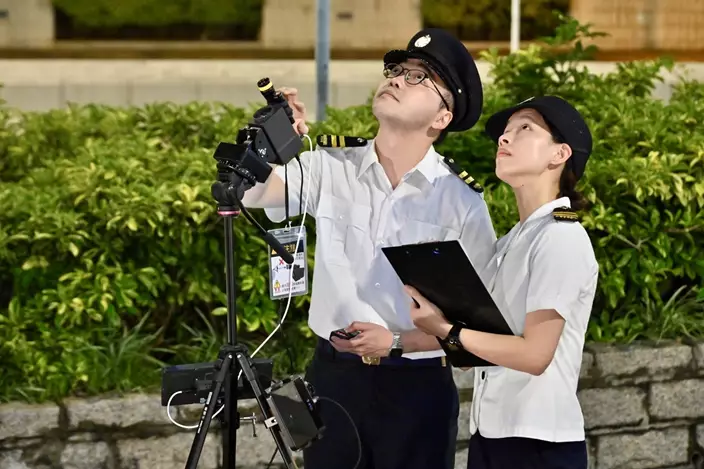
Vital help: Food & Environmental Hygiene Department (FEHD) Health Inspector Tam Yee-wan (right) describes the cameras with infrared night-vision function as key to assisting teams in tracking down the source of the dripping during nighttime. Source from news.gov.hk
In the scorching summer, people turn on their air conditioner for comfort. But if they are not maintained properly, this can lead to environmental problems such as dripping water, especially during the evening when most people are home. This not only causes noise but also poses potential health risks.
Click to Gallery
Vital help: Food & Environmental Hygiene Department (FEHD) Health Inspector Tam Yee-wan (right) describes the cameras with infrared night-vision function as key to assisting teams in tracking down the source of the dripping during nighttime. Source from news.gov.hk
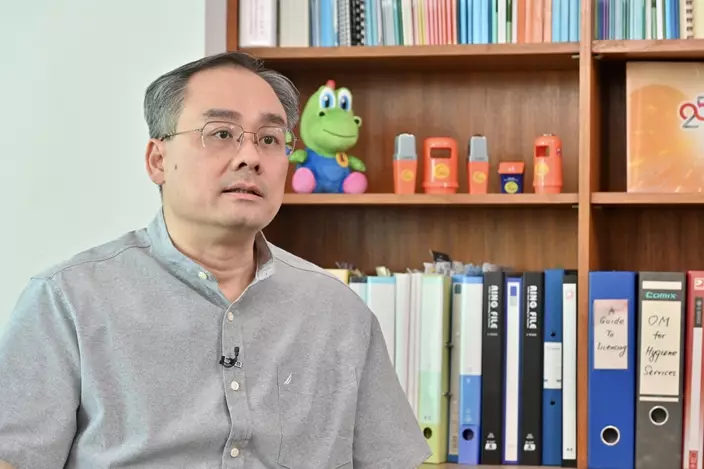
Critical operation: Assistant Director of Food & Environmental Hygiene (Operations) Wan Chi-shun says to step up efforts to address this environmental issue, a city-wide operation, launched between May and September, has so far identified 30 black spots where enforcement action will be conducted at least once a week. Source from news.gov.hk
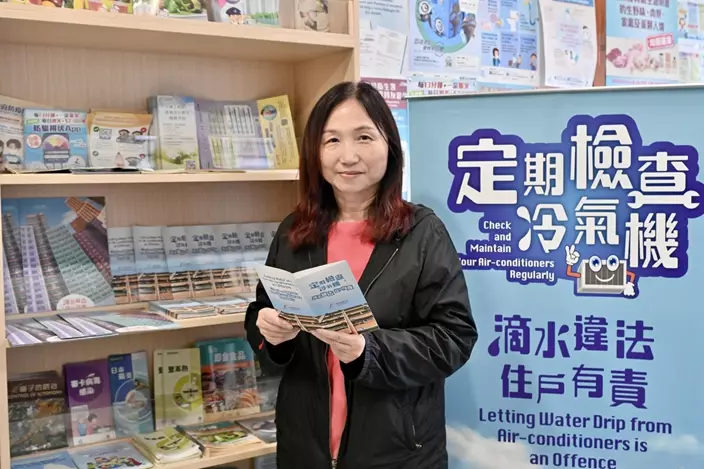
Widespread problem: Yau Tsim Mong District Councillor Ann Au explains that old urban districts face serious problems concerning air conditioning leaks due to ageing buildings and facilities. Source from news.gov.hk

Intensified publicity: Yau Tsim Mong District Councillor Chung Chak-fai (left) stresses that the district council is willing to serve as a bridge, co-ordinating residents, community organisations and the FEHD in tackling dripping air conditioners. Source from news.gov.hk
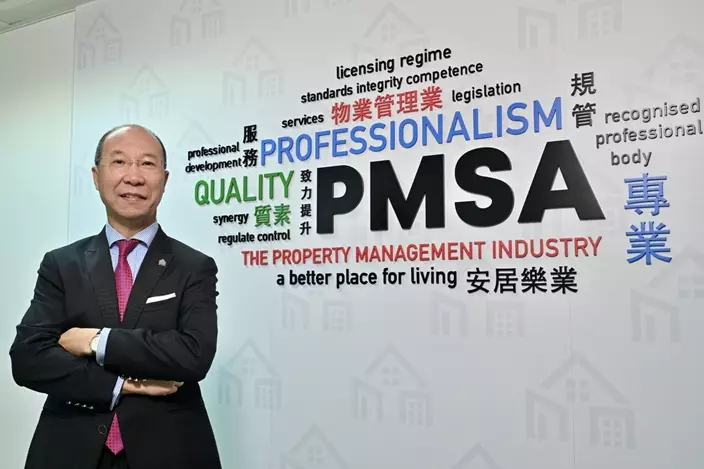
Preventive actions: Property Management Services Authority Chairperson James Wong encourages the industry to actively collaborate with the FEHD to address such complaints. Source from news.gov.hk
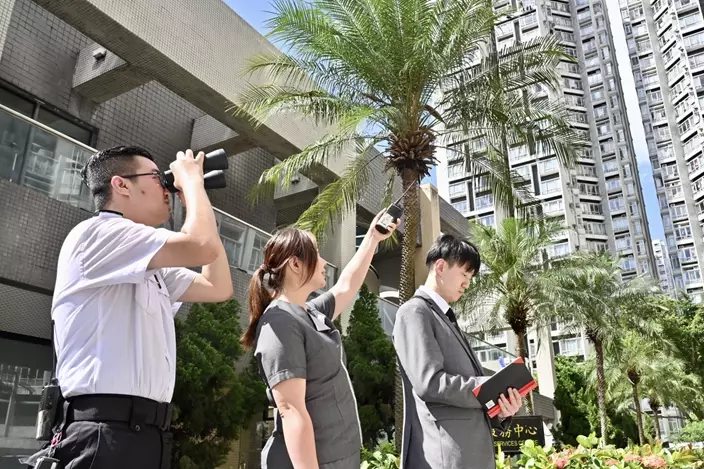
Essential participation: The FEHD is working with property management agents, inviting them to participate in a scheme to assist in handling water dripping complaints. Source from news.gov.hk
Investigation-enhancing tool
The Food & Environmental Hygiene Department (FEHD) has recently introduced new technology using cameras with infrared night-vision function to assist teams in tracking down the source of the dripping during nighttime.
Food & Environmental Hygiene Department Health Inspector Tam Yee-wan describes the challenges inspectors face during nighttime investigations:
“When our team conduct investigations during the night, sometimes we face difficulties due to insufficient lighting or air conditioners being blocked by clothes drying racks. Our new series of infrared night-vision cameras can clearly capture the source of dripping water from high-rise buildings in dark environments, significantly improving the efficiency of nighttime investigations.”
Critical operation: Assistant Director of Food & Environmental Hygiene (Operations) Wan Chi-shun says to step up efforts to address this environmental issue, a city-wide operation, launched between May and September, has so far identified 30 black spots where enforcement action will be conducted at least once a week. Source from news.gov.hk
Currently, the FEHD has equipped all its 19 district offices with these devices, capable of detecting the source of dripping water up to 20 floors high. The newly introduced second-generation device can observe such problems up to 40 floors high.
Widespread problem
According to the data from the FEHD, complaints about dripping air conditioners have been on the rise in recent years, increasing from approximately 31,000 cases in 2023 to about 34,000 last year, especially in old urban districts like Sham Shui Po and Yau Tsim Mong.
Yau Tsim Mong District Councillor Ann Au stated that such areas face significant challenges due to ageing buildings and facilities. As there is no communal drainage system for many of these old buildings, wastewater from the air conditioners drips directly onto the streets below, which not only affects environmental hygiene but also causes nuisances to citizens.
Widespread problem: Yau Tsim Mong District Councillor Ann Au explains that old urban districts face serious problems concerning air conditioning leaks due to ageing buildings and facilities. Source from news.gov.hk
City-wide operation
To step up the FEHD’s efforts to address this environmental issue, it has conducted a city-wide operation from May to September.
Assistant Director of Food & Environmental Hygiene (Operations) Wan Chi-shun shared more information on how the operation works.
“We have adopted a multipronged approach, including publicity and education as well as law enforcement. We have also selected 30 black spots of dripping air conditioners in various districts which are affecting citizens who queue up for buses on the streets. Our staff will conduct enforcement actions at these black spots at least once a week at different times of the day.”
He highlighted that such stringent enforcement will be maintained throughout the summer and extra manpower will be deployed to support areas with more black spots.
As of mid-July, the FEHD has issued about 700 nuisance notices in this targeted operation.
Intensified publicity: Yau Tsim Mong District Councillor Chung Chak-fai (left) stresses that the district council is willing to serve as a bridge, co-ordinating residents, community organisations and the FEHD in tackling dripping air conditioners. Source from news.gov.hk
Public education
In addition to law enforcement, public education is also important. As such, the FEHD actively collaborates with the Home Affairs Department and district councillors to enhance awareness about the matter through community networks.
Yau Tsim Mong District Councillor Chung Chak-fai stressed that the district council is willing to serve as a bridge, co-ordinating residents, community organisations and the FEHD in tackling the issue.
Preventive actions: Property Management Services Authority Chairperson James Wong encourages the industry to actively collaborate with the FEHD to address such complaints. Source from news.gov.hk
Industry participation
For private housing estates, the FEHD has been working with property management agents, inviting them to participate in a scheme to assist in handling such complaints. If the property management agents cannot resolve the complaints, the FEHD will intervene by taking up the case for follow-up action.
An average of more than 80 property management agents and over 200 private housing estates participate in the scheme each year. The scheme has successfully handled over 4,000 related complaints in five years.
Property Management Services Authority Chairperson James Wong encourages the industry to actively participate in the scheme as there are clear advantages to having property management agents follow up on these key issues.
“As property management agents thoroughly understand residential facilities, they can identify the issues quickly. Plus, their familiarity with the residents can enhance communication and reduce conflicts.”
Essential participation: The FEHD is working with property management agents, inviting them to participate in a scheme to assist in handling water dripping complaints. Source from news.gov.hk
Preventive measures
Mr Wong also pointed out that the property management agents should proactively conduct inspections, post notices and promote regular maintenance to prevent leaking air conditioners.