Skip to Content Facebook Feature Image

Here's how a major Mexican tomato exporter is affected by Trump’s 17% tariff

News

Here's how a major Mexican tomato exporter is affected by Trump’s 17% tariff
News

News

Here's how a major Mexican tomato exporter is affected by Trump’s 17% tariff

2025-07-27 12:23 Last Updated At:12:30

AJUCHITLAN, Mexico (AP) — The Trump administration’s decision to impose a 17% duty on fresh tomatoes imported from Mexico has created a dilemma for the country providing more tomatoes to U.S. consumers than any other.

The import tax that began July 14 is just the latest protectionist move by an administration that has threatened dozens of countries with tariffs, including its critical trading partner Mexico. It comes as the Mexican government tries to also negotiate its way out of a 30% general tariff scheduled to take effect Aug. 1.

More Images
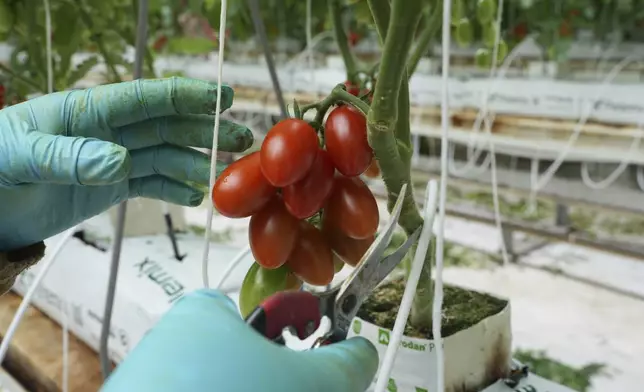
A worker prunes plants inside a greenhouse at the Veggie Prime tomato farm, which exports to the United States, in Ajuchitlan, Mexico, Wednesday, July 23, 2025. (AP Photo/Marco Ugarte)
A worker prunes plants inside a greenhouse at the Veggie Prime tomato farm, which exports to the United States, in Ajuchitlan, Mexico, Wednesday, July 23, 2025. (AP Photo/Marco Ugarte)
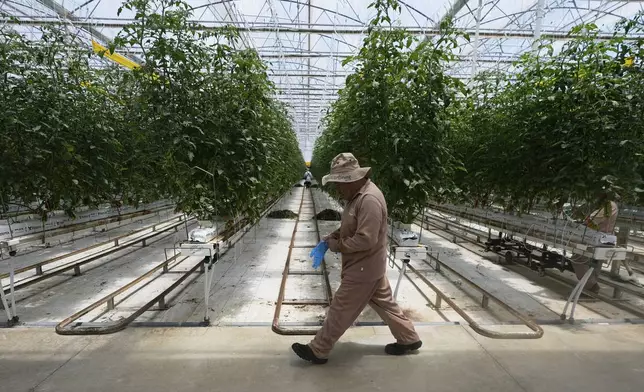
A worker walks along tomato plants at a greenhouse of the Veggie Prime tomato farm, which exports to the United States, in Ajuchitlan, Mexico, Wednesday, July 23, 2025. (AP Photo/Marco Ugarte)
A worker walks along tomato plants at a greenhouse of the Veggie Prime tomato farm, which exports to the United States, in Ajuchitlan, Mexico, Wednesday, July 23, 2025. (AP Photo/Marco Ugarte)

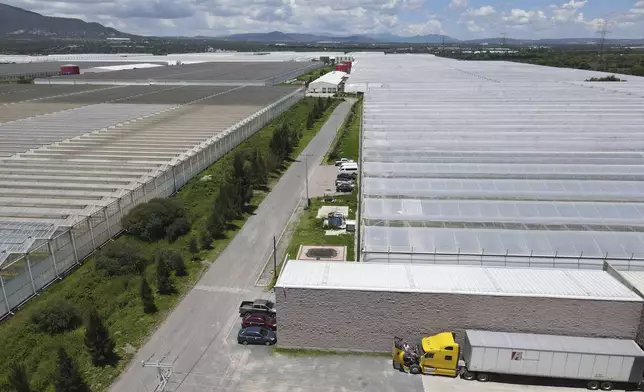
Greenhouses at the Veggie Prime tomato farm, which exports to the United States, in Ajuchitlan, Mexico, Wednesday, July 23, 2025. (AP Photo/Marco Ugarte)

Greenhouses at the Veggie Prime tomato farm, which exports to the United States, in Ajuchitlan, Mexico, Wednesday, July 23, 2025. (AP Photo/Marco Ugarte)

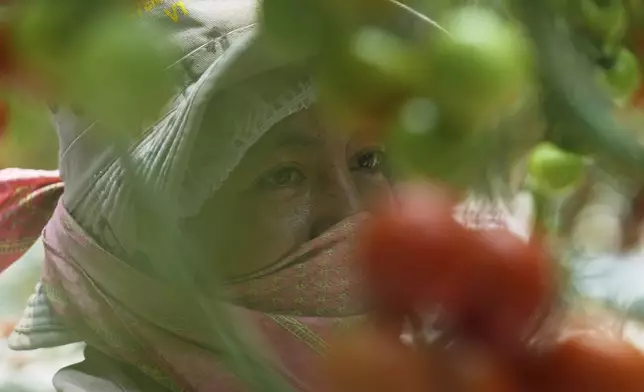
A worker tends to plants inside a greenhouse at the Veggie Prime tomato farm, which exports to the United States, in Ajuchitlan, Mexico, Wednesday, July 23, 2025. (AP Photo/Marco Ugarte)

A worker tends to plants inside a greenhouse at the Veggie Prime tomato farm, which exports to the United States, in Ajuchitlan, Mexico, Wednesday, July 23, 2025. (AP Photo/Marco Ugarte)

While the impacts of the tomato tariff are still in their infancy, a major grower and exporter in central Mexico shows how a tariff targeting a single product can destabilize the sector.

Green tomato plants stretch upward row after row in sprawling high-tech greenhouses covering nearly six acres in the central state of Queretaro, among the top 10 tomato producing states in Mexico.

Climate controlled and pest free, Veggie Prime’s greenhouses in Ajuchitlan send some 100 tons of fresh tomatoes every week to Mastronardi Produce. The Canadian company is the leading distributor of fresh tomatoes in the U.S. with clients that include Costco and Walmart.

Moisés Atri, Veggie Prime’s export director, says they’ve been exporting tomatoes to the U.S. for 13 years and their substantial investment and the cost to produce their tomatoes won’t allow them to make any immediate changes. They’re also contractually obligated to sell everything they produce to Mastronardi until 2026.

“None of us (producers) can afford it," Atri said. "We have to approach our client to adjust the prices because we’re nowhere near making that kind of profit.”

In the tariff’s first week, Veggie Prime ate the entire charge. In the second, its share of the new cost lowered when its client agreed to increase the price of their tomatoes by 10%. The 56-year-old Atri hopes that Mastronardi will eventually pass all of the tariff’s cost onto its retail clients.

Experts say the tariff could cause a 5% to 10% drop in tomato exports, which last year amounted to more than $3 billion for Mexico.

The Mexican Association of Tomato Producers says the industry generates some 500,000 jobs.

Juan Carlos Anaya, director general of the consulting firm Grupo Consultor de Mercados Agrícolas, said a drop in tomato exports, which last year amounted to more than 2 billion tons, could lead to the loss of some 200,000 jobs

When the Trump administration announced the tariff, the Commerce Department justified it as a measure to protect U.S. producers from artificially cheap Mexican imports.

California and Florida growers that produce about 11 million tons would stand to benefit most, though most of that production is for processed tomatoes. Experts believe the U.S. would find it difficult to replace Mexico’s fresh tomato imports.

Atri and other producers are waiting for a scheduled review of the measure in two months, when the U.S. heads into fall and fresh tomato production there begins to decline.

In reaction to the tariff, the Mexican government has floated the idea of looking for other, more stable, international markets.

Mexican Agriculture Secretary Julio Berdegué said Thursday that the government is looking at possibilities like Japan, but producers quickly cast doubt on that idea, noting the tomatoes would have to be sent by plane, raising the cost even more.

Atri said the company is starting to experiment with peppers, to see if they would provide an option at scale.

President Claudia Sheinbaum said recently her administration would survey tomato growers to figure out what support they need, especially small producers who are already feeling the effects of a drop of more than 10% in the price of tomatoes domestically over fears there will be a glut in Mexico.
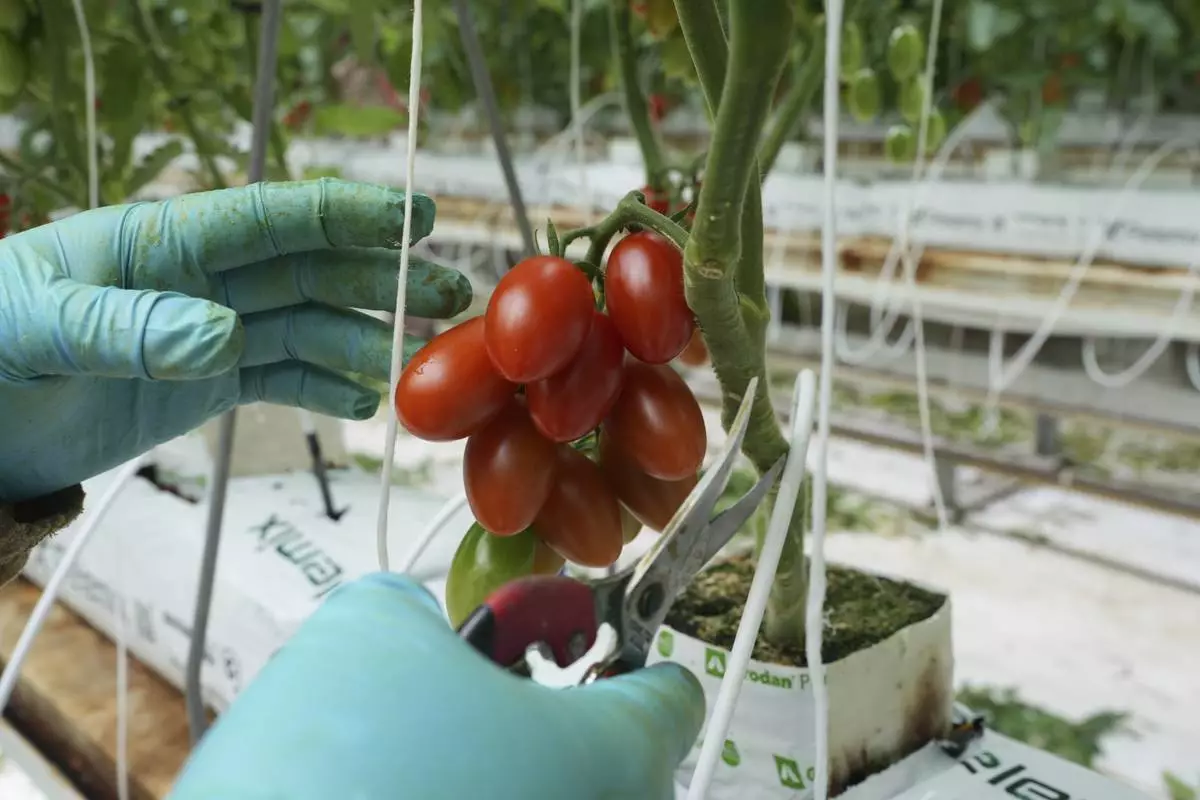
A worker prunes plants inside a greenhouse at the Veggie Prime tomato farm, which exports to the United States, in Ajuchitlan, Mexico, Wednesday, July 23, 2025. (AP Photo/Marco Ugarte)
A worker prunes plants inside a greenhouse at the Veggie Prime tomato farm, which exports to the United States, in Ajuchitlan, Mexico, Wednesday, July 23, 2025. (AP Photo/Marco Ugarte)
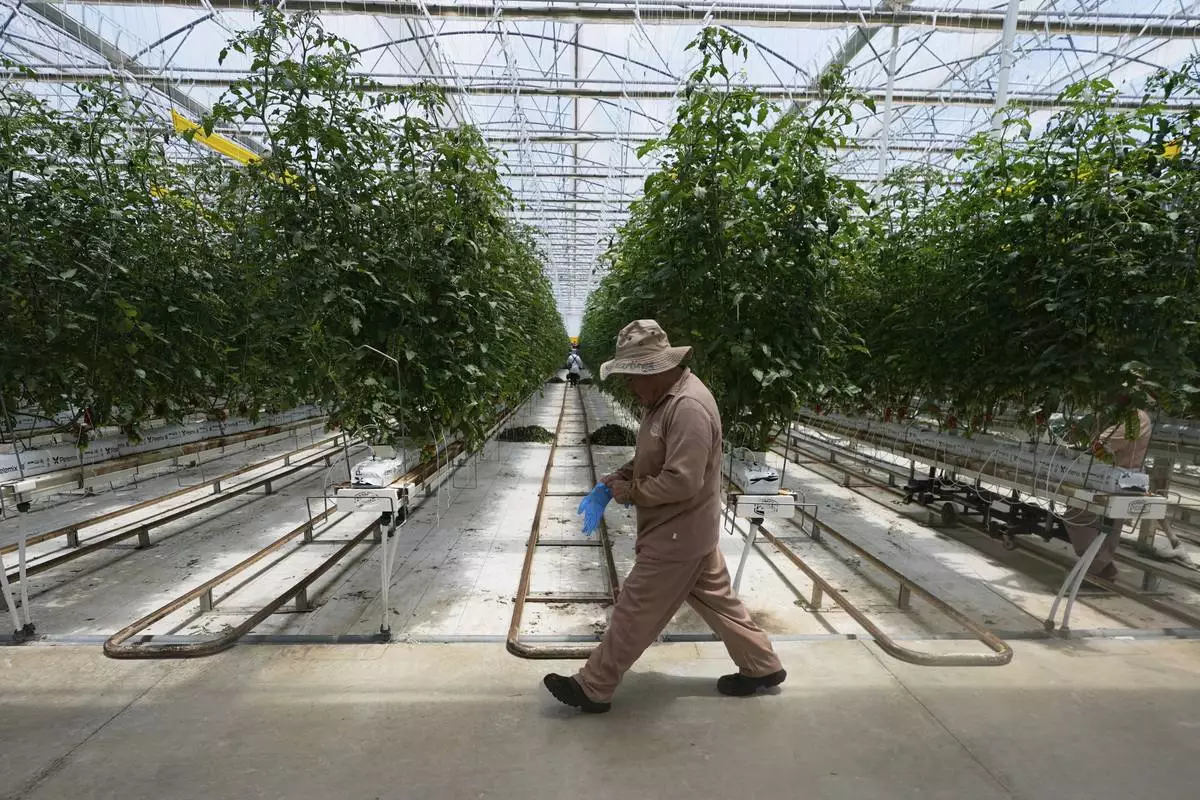
A worker walks along tomato plants at a greenhouse of the Veggie Prime tomato farm, which exports to the United States, in Ajuchitlan, Mexico, Wednesday, July 23, 2025. (AP Photo/Marco Ugarte)
A worker walks along tomato plants at a greenhouse of the Veggie Prime tomato farm, which exports to the United States, in Ajuchitlan, Mexico, Wednesday, July 23, 2025. (AP Photo/Marco Ugarte)
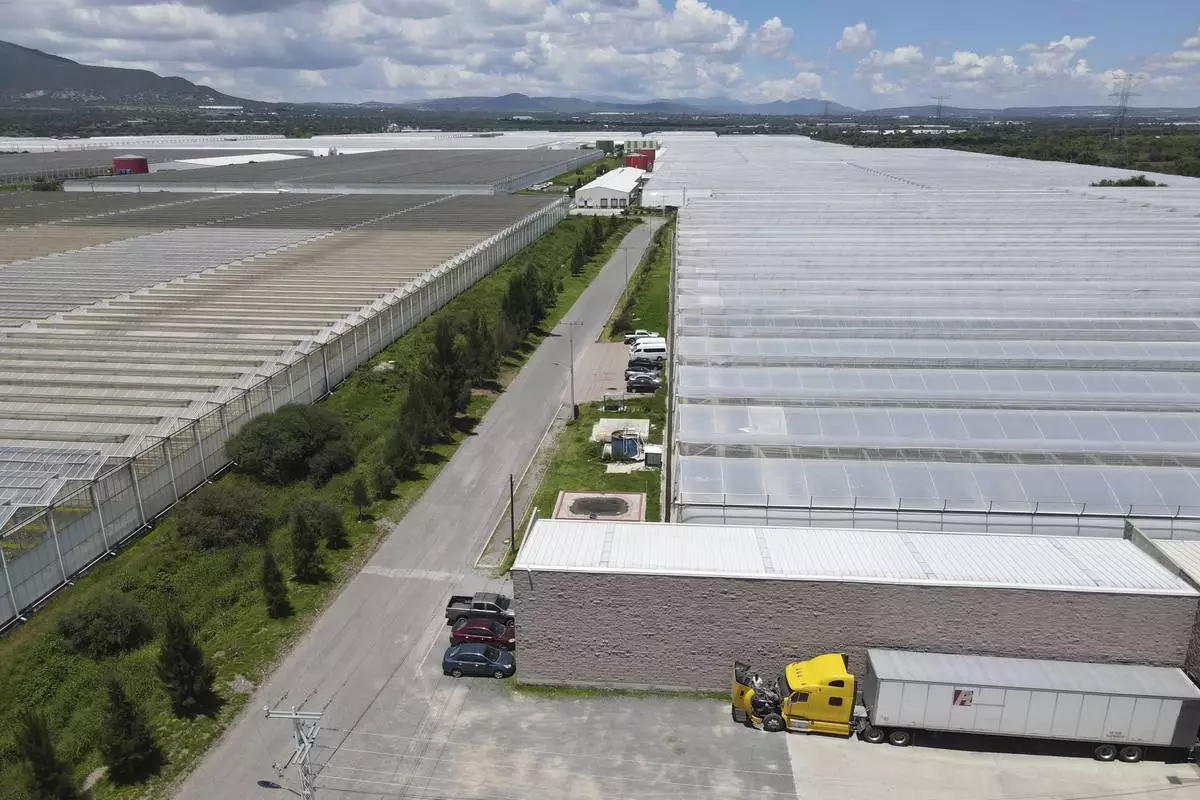
Greenhouses at the Veggie Prime tomato farm, which exports to the United States, in Ajuchitlan, Mexico, Wednesday, July 23, 2025. (AP Photo/Marco Ugarte)
Greenhouses at the Veggie Prime tomato farm, which exports to the United States, in Ajuchitlan, Mexico, Wednesday, July 23, 2025. (AP Photo/Marco Ugarte)
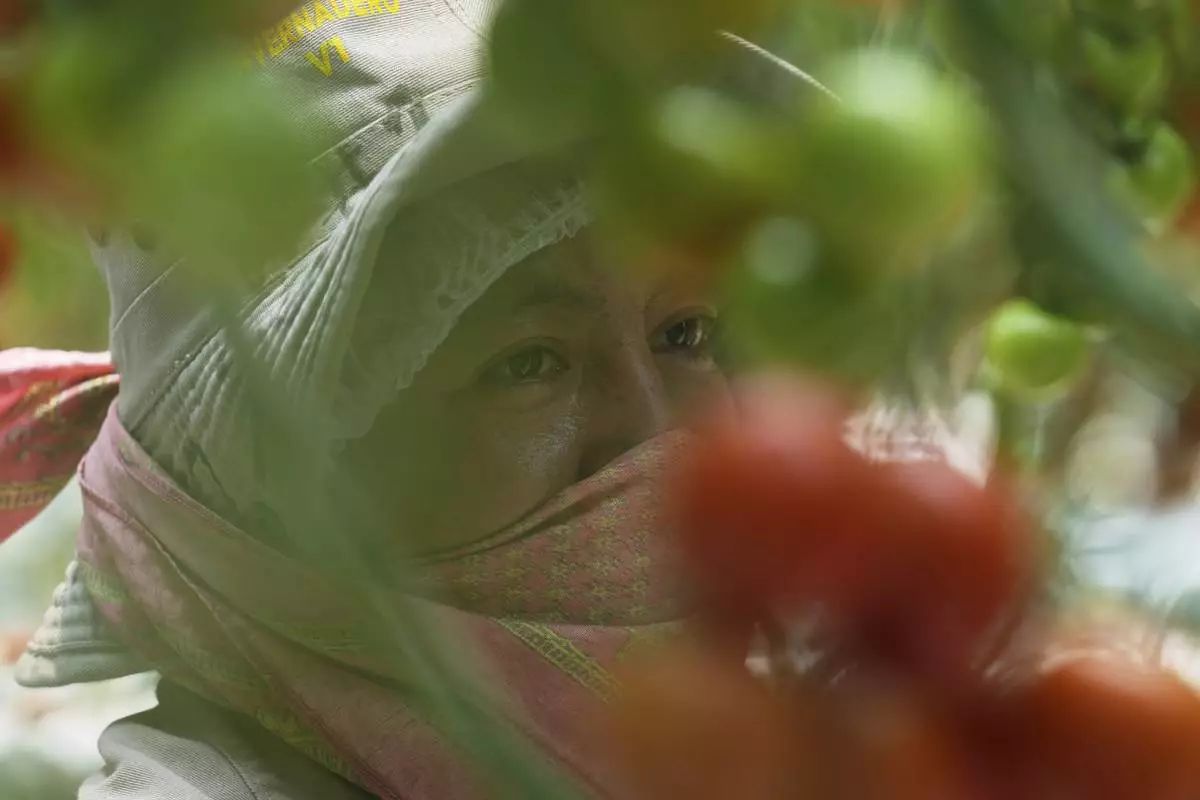
A worker tends to plants inside a greenhouse at the Veggie Prime tomato farm, which exports to the United States, in Ajuchitlan, Mexico, Wednesday, July 23, 2025. (AP Photo/Marco Ugarte)
A worker tends to plants inside a greenhouse at the Veggie Prime tomato farm, which exports to the United States, in Ajuchitlan, Mexico, Wednesday, July 23, 2025. (AP Photo/Marco Ugarte)

KAMPALA, Uganda (AP) — Vote counting was underway Friday in Uganda’s tense presidential election, which was held a day earlier amid an internet shutdown, voting delays and complaints by an opposition leader who said some of his polling agents had been detained by the authorities.

Opposition leader Bobi Wine said Thursday he was unable to leave his house and that his polling agents in rural areas were abducted before voting started, undermining his efforts to prevent electoral offenses such as ballot stuffing.

Wine is hoping to end President Yoweri Museveni's four-decade rule in an election during which the military was deployed and heavy security was posted outside his house near Kampala, the Ugandan capital, after the vote.

The musician-turned-politician wrote on X on Thursday that a senior party official in charge of the western region had been arrested, adding there was “massive ballot stuffing everywhere.”

Rural Uganda, especially the western part of the country, is a ruling-party stronghold, and the opposition would be disadvantaged by not having polling agents present during vote counting.

To try to improve his chances of winning, Wine had urged his supporters to “protect the vote” by having witnesses document alleged offenses at polling stations, in addition to deploying official polling agents.

Wine faced similar setbacks when he first ran for president five years ago. Museveni took 58% of the vote, while Wine got 35%, according to official results. Wine said at the time that the election had been rigged in favor of Museveni, who has spoken disparagingly of his rival.

Museveni, after voting on Thursday, said the opposition had infiltrated the 2021 election and defended the use of biometric machines as a way of securing the vote in this election.

Museveni has served the third-longest tenure of any African leader and is seeking to extend his rule into a fifth decade. The aging president’s authority has become increasingly dependent on the military, which is led by his son, Muhoozi Kainerugaba.

Uganda has not witnessed a peaceful transfer of presidential power since independence from British colonial rule six decades ago.

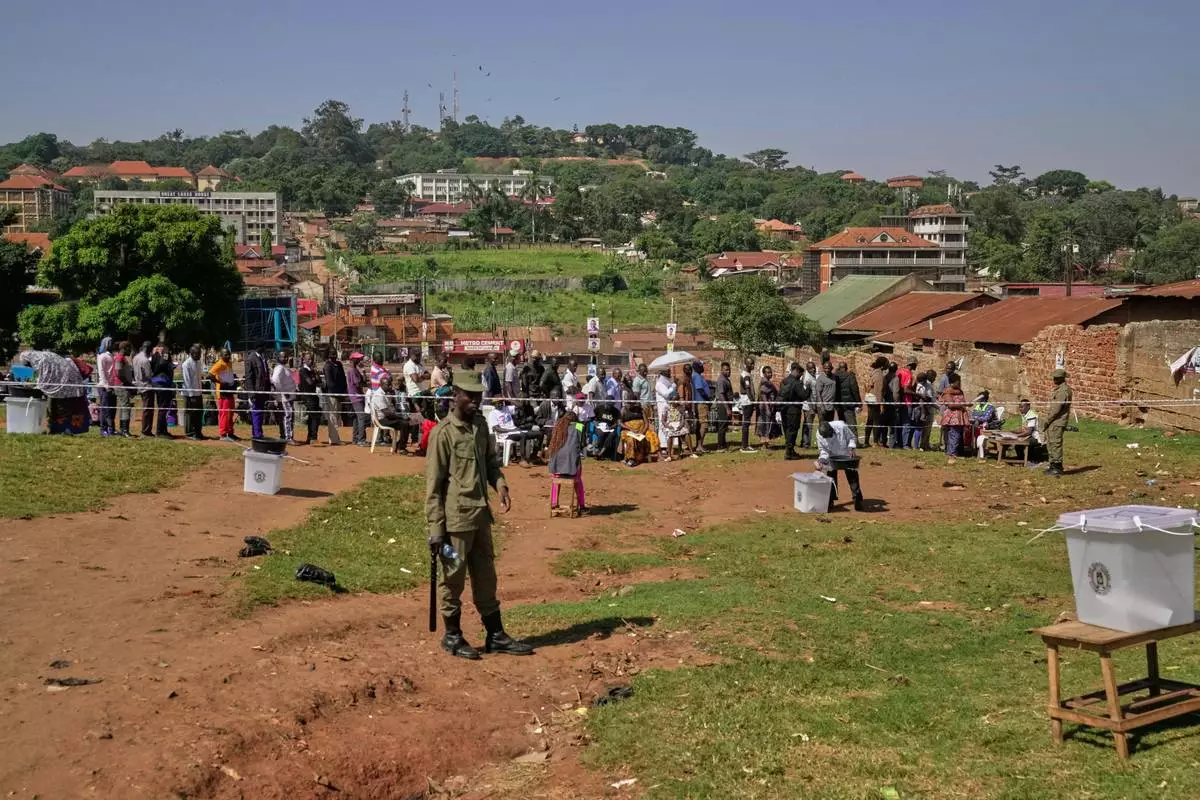
Voters line up to cast their ballots at a polling station, during the presidential election, in the capital, Kampala, Uganda, Thursday, Jan. 15, 2026. (AP Photo/Brian Inganga)

Voters line up to cast their ballots at a polling station, during the presidential election, in the capital, Kampala, Uganda, Thursday, Jan. 15, 2026. (AP Photo/Brian Inganga)

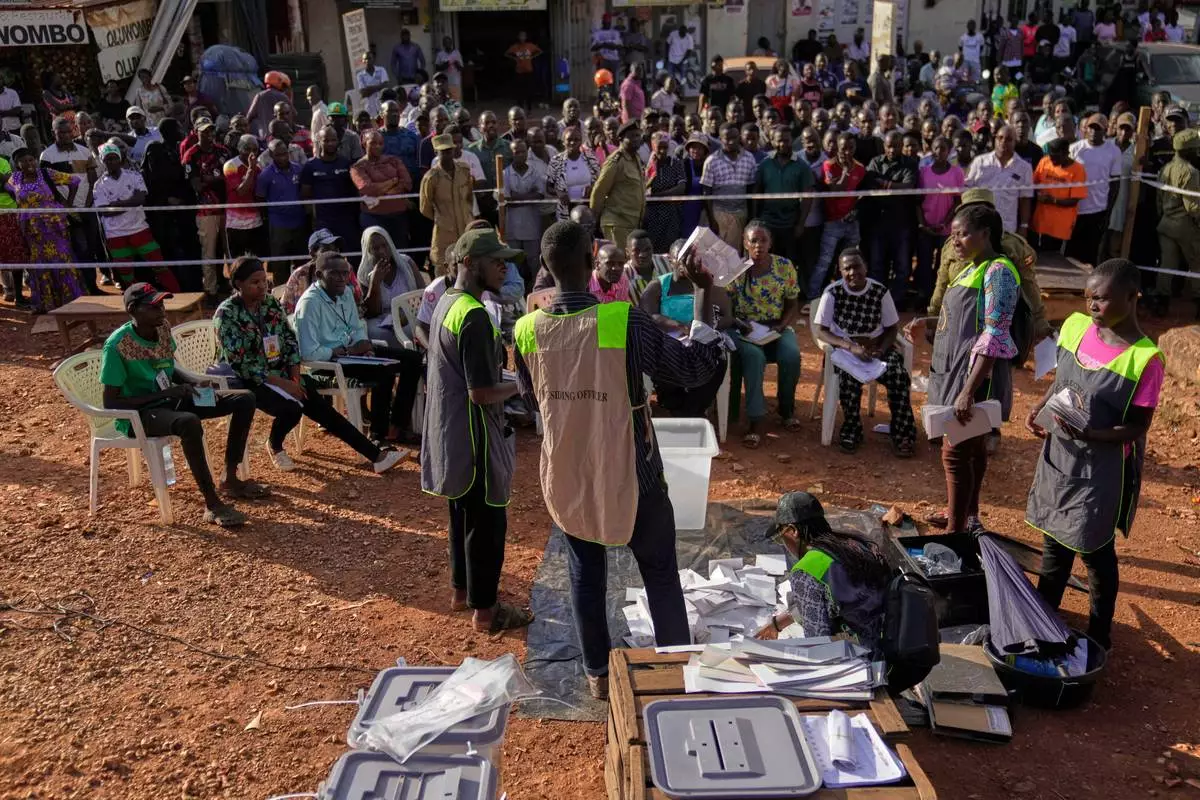
Election officials count ballots after the polls closed for the presidential election at a polling station in Kampala, Uganda, Thursday, Jan. 15, 2026. (AP Photo/Brian Inganga)

Election officials count ballots after the polls closed for the presidential election at a polling station in Kampala, Uganda, Thursday, Jan. 15, 2026. (AP Photo/Brian Inganga)

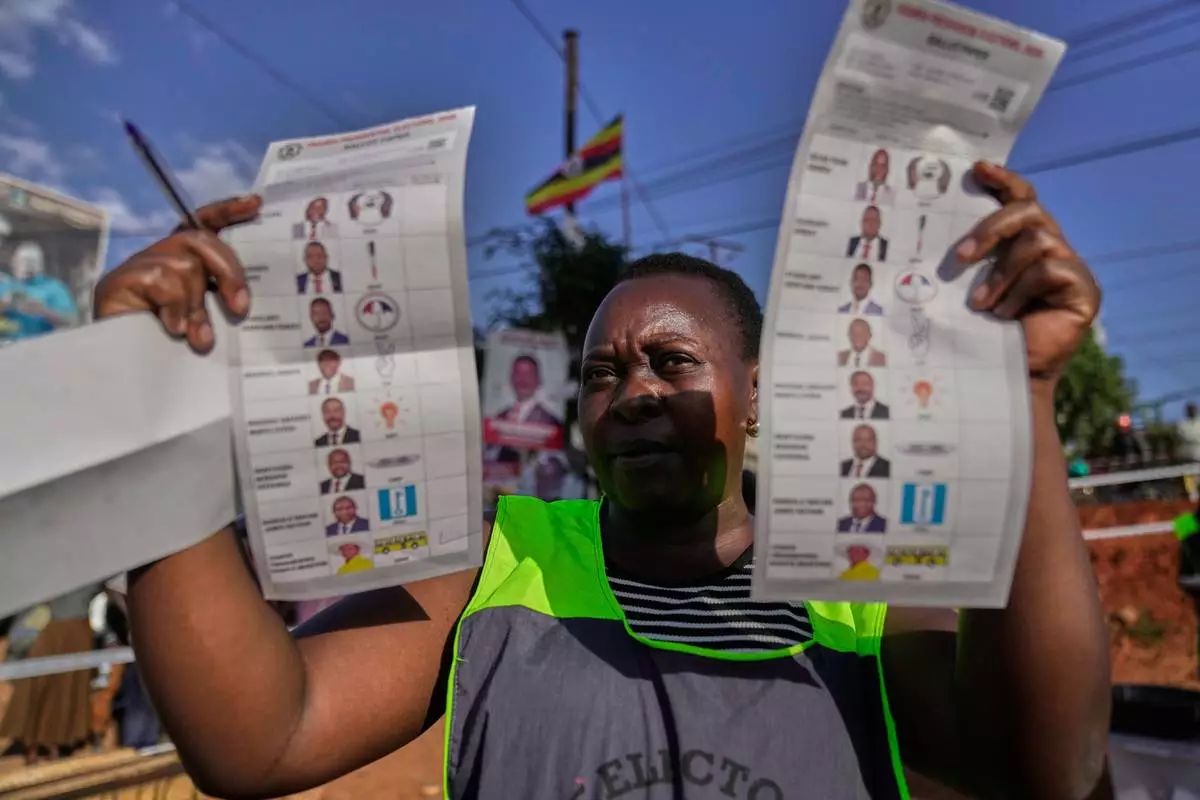
An election official holds up unmarked ballots during the vote count after polls closed for the presidential election, at a polling center in Kampala, Uganda, Thursday, Jan. 15, 2026. (AP Photo/Brian Inganga)

An election official holds up unmarked ballots during the vote count after polls closed for the presidential election, at a polling center in Kampala, Uganda, Thursday, Jan. 15, 2026. (AP Photo/Brian Inganga)

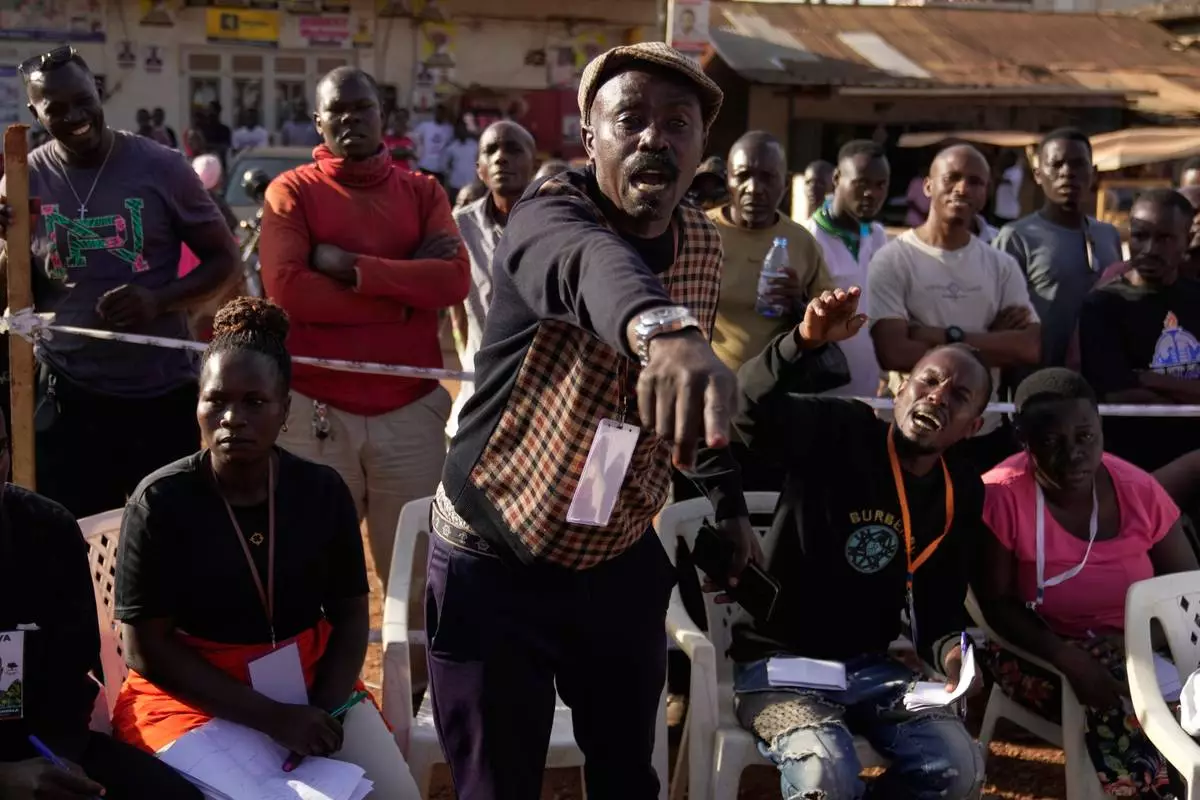
A political representative speaks as he works to observe and verify the counting of ballots after polls closed in the presidential election at a polling station in Kampala, Uganda, Thursday, Jan. 15, 2026. (AP Photo/Brian Inganga)

A political representative speaks as he works to observe and verify the counting of ballots after polls closed in the presidential election at a polling station in Kampala, Uganda, Thursday, Jan. 15, 2026. (AP Photo/Brian Inganga)

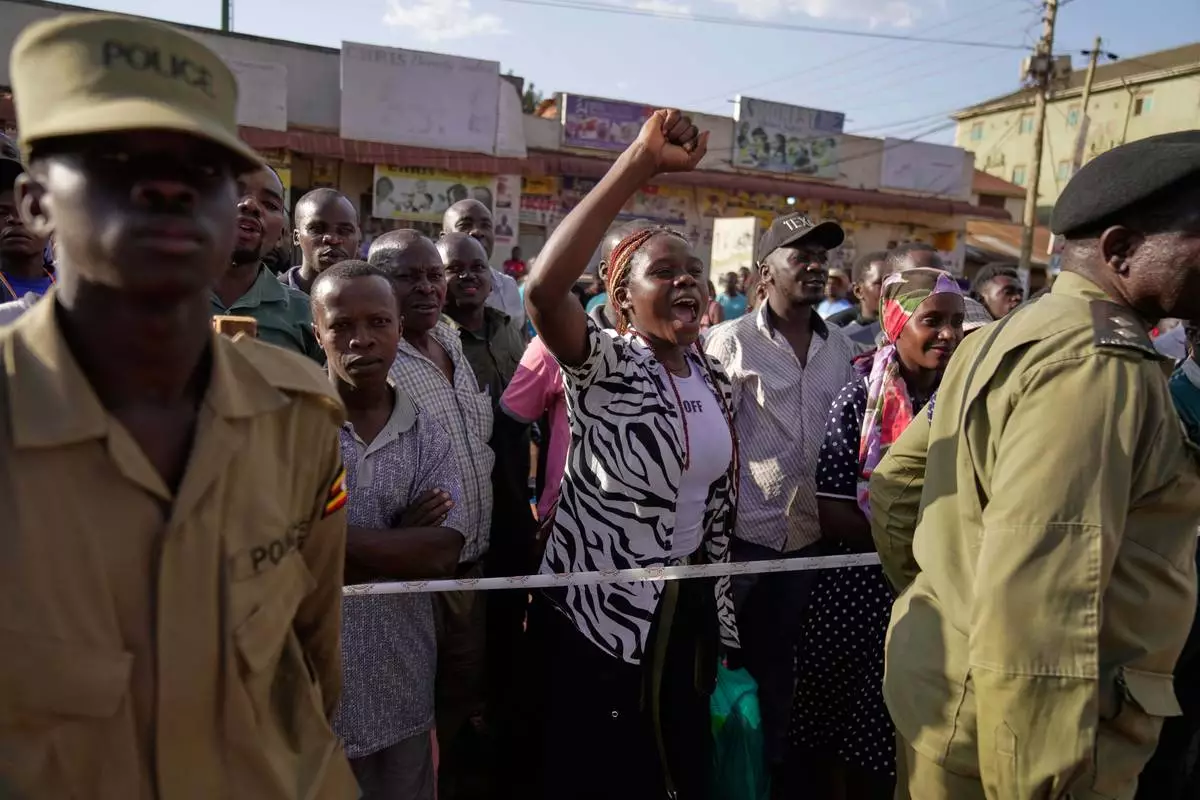
A supporter of leading opposition candidate Bobi Wine cheers while watching election officials count ballots, after polls closed at a polling station in Kampala, Uganda, Thursday, Jan. 15, 2026. (AP Photo/Brian Inganga)

A supporter of leading opposition candidate Bobi Wine cheers while watching election officials count ballots, after polls closed at a polling station in Kampala, Uganda, Thursday, Jan. 15, 2026. (AP Photo/Brian Inganga)

Recommended Articles