The newly released Chinese film "Dead to Rights" dramatizes a little-known true story of how a photo album, secretly preserved by two patriotic youths in Nanjing after the then Chinese capital city was occupied by Japanese aggressor troops in December 1937, became key evidence in the prosecution of Japanese war criminals, particularly Lieutenant General Hisao Tani.
The film, released in Chinese theaters on July 25, exposes the crimes committed by Japanese aggressor troops during the Nanjing Massacre through the story of a photo studio set.
The film reconstructs the real-life ordeal of Luo Jin, a 15-year-old photo studio apprentice who in January 1938 discovered horrifying images of Japanese atrocities to Chinese civilians -- beheadings, live burials, and sexual violence -- while developing film for a Japanese officer.
"For the Japanese officers, they shot these photos just for fun and bloodlust. He (Luo Jin) selected 16 of the photos and bound them into an album. He drew a cover for the album showing a bleeding heart pierced by a dagger. His intension was to preserve the photos of Japanese soldiers massacring Chinese civilians as historical evidence," said Ma Zhendu, former director of China's Second Historical Archives.
Luo risked his life to keep the album for more than two years before it vanished mysteriously.
"He hollowed out a wall in a latrine, hid the album into the wall cavity, and sealed it back with clods. But later he discovered that the clods had been moved and the album was gone," Ma said.
Luo fled Nanjing following the disappearance of the album.
The album resurfaced in a twist of fate. Wu Xuan, Luo's classmate, found it abandoned in grass near the Pilu Temple.
"Wu Xuan took the album home and was shocked by its contents. He concealed it first inside the belly of the giant Buddha statue at the Pilu Temple [in Nanjing], then at his home, and in several other locations to preserve it until the victory against Japanese aggression in 1945," Ma said.
In 1946, Wu submitted the album to the Nanjing Military Tribunal for the Trial of War Criminals. It played an important role in the prosecution of Japanese war criminals.
The album, now housed at the Second Historical Archives in Nanjing, east China's Jiangsu Province, was inscribed in 2015 into UNESCO's Memory of the World Register alongside other documents regarding the Nanjing Massacre.
The massacre, which lasted for more than 40 days following the Japanese aggressor troops' capture of Nanjing on Dec 13, 1937, left more than 300,000 Chinese civilians and unarmed soldiers dead and 20,000 women raped.
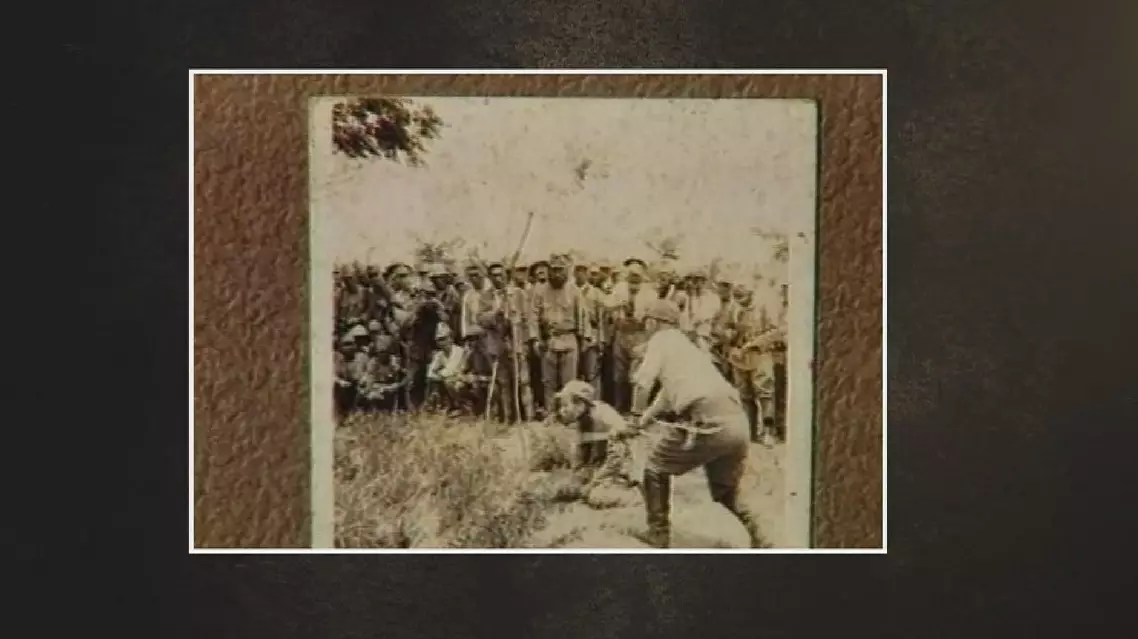
Film dramatizes true story of Chinese youths' efforts to preserve Nanjing Massacre evidence