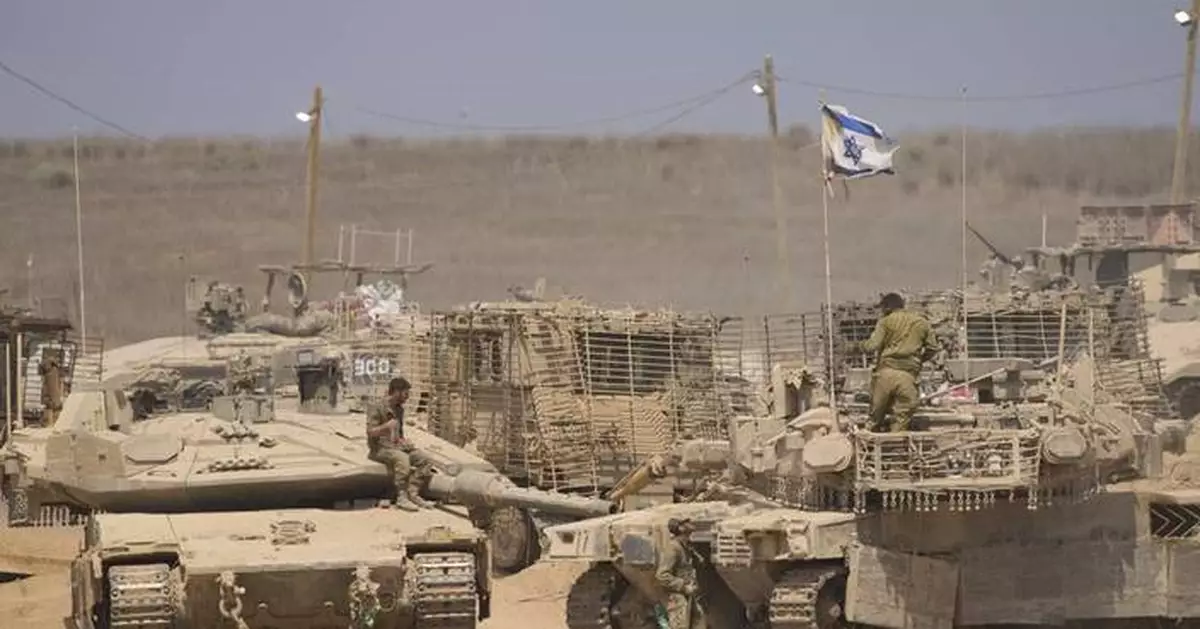
Skip to Content Facebook Feature Image

Palestinian death toll in Israel-Hamas war passes 60,000, Gaza Health Ministry says

News

Palestinian death toll in Israel-Hamas war passes 60,000, Gaza Health Ministry says
News

News

Palestinian death toll in Israel-Hamas war passes 60,000, Gaza Health Ministry says

2025-07-30 00:07 Last Updated At:00:10

DEIR AL-BALAH, Gaza Strip (AP) — More than 60,000 Palestinians have been killed during the Israel-Hamas war, Gaza’s Health Ministry said Tuesday. Israeli strikes overnight killed more than two dozen people, mostly women and children, according to health officials.

The Israeli offensive, launched in response to Hamas' attack on southern Israel on Oct. 7, 2023, has destroyed vast areas of Gaza, displaced around 90% of the population and fueled a catastrophic humanitarian crisis.

More Images
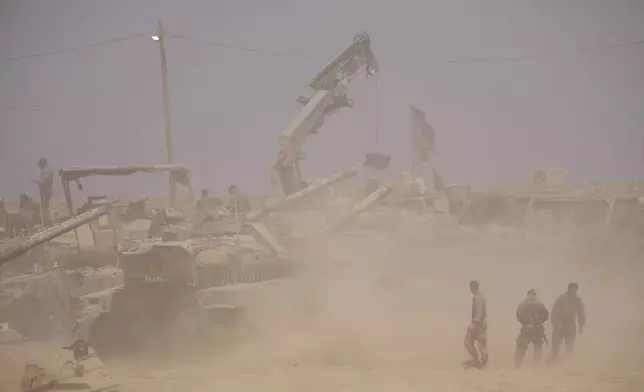
Israeli soldiers work on their tanks in a staging area on the border with Gaza Strip, in southern Israel, Tuesday, July 29, 2025. (AP Photo/Ariel Schalit)
Israeli soldiers work on their tanks in a staging area on the border with Gaza Strip, in southern Israel, Tuesday, July 29, 2025. (AP Photo/Ariel Schalit)

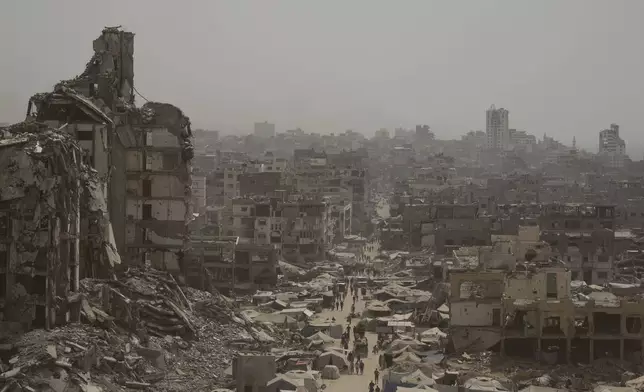
People walk along a street lined with destroyed buildings following Israeli bombardments during the Israel-Hamas war in the Gaza Strip, Tuesday, July 29, 2025. (AP Photo/Jehad Alshrafi)
People walk along a street lined with destroyed buildings following Israeli bombardments during the Israel-Hamas war in the Gaza Strip, Tuesday, July 29, 2025. (AP Photo/Jehad Alshrafi)

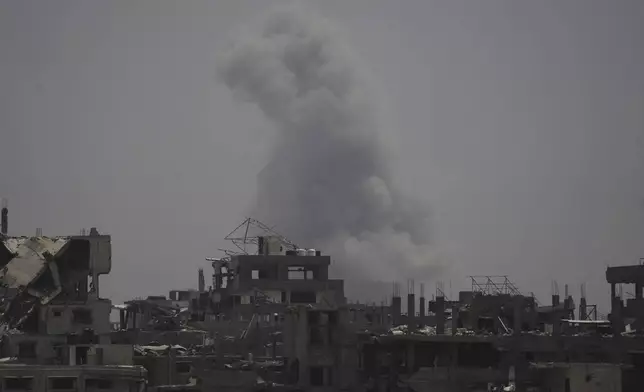
Smoke rises following an Israeli airstrike in northern Gaza Strip, Tuesday, July 29, 2025. (AP Photo/Jehad Alshrafi)
Smoke rises following an Israeli airstrike in northern Gaza Strip, Tuesday, July 29, 2025. (AP Photo/Jehad Alshrafi)

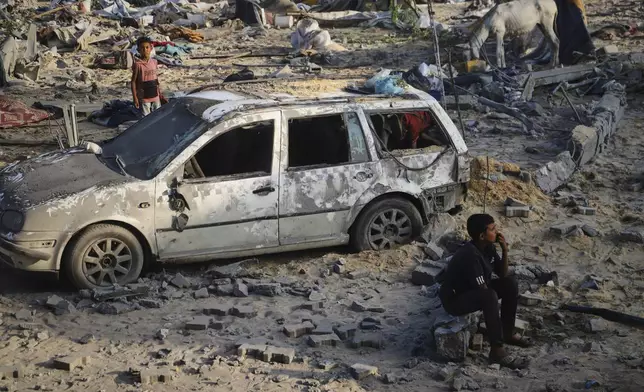
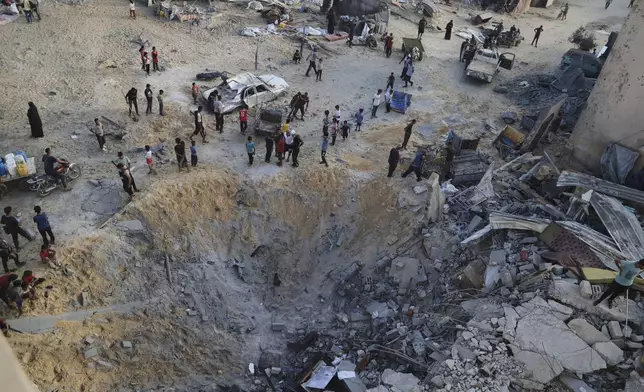
Palestinians inspect the site struck by an Israeli bombardment in Muwasi, Khan Younis, Gaza Strip, Monday, July 28, 2025. (AP Photo/Mariam Dagga)
Palestinians inspect the site struck by an Israeli bombardment in Muwasi, Khan Younis, Gaza Strip, Monday, July 28, 2025. (AP Photo/Mariam Dagga)

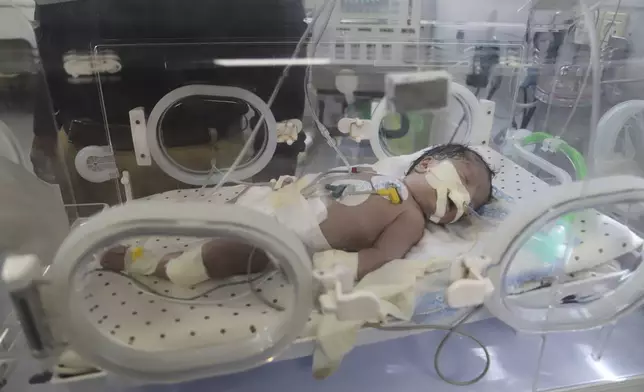
Newborn Soad Qeshtah seen in an incubator in Nasser Hospital in Khan Younis, hours before she died. Her mother, who was seven months pregnant, was killed in an Israeli airstrike in the Gaza Strip and the baby was delivered by emergency cesarean section, Monday, July 28, 2025. (AP Photo/Mariam Dagga)
Newborn Soad Qeshtah seen in an incubator in Nasser Hospital in Khan Younis, hours before she died. Her mother, who was seven months pregnant, was killed in an Israeli airstrike in the Gaza Strip and the baby was delivered by emergency cesarean section, Monday, July 28, 2025. (AP Photo/Mariam Dagga)

Palestinians inspect the site struck by an Israeli bombardment in Muwasi, Khan Younis, Gaza Strip, Monday, July 28, 2025. (AP Photo/Mariam Dagga)
Palestinians inspect the site struck by an Israeli bombardment in Muwasi, Khan Younis, Gaza Strip, Monday, July 28, 2025. (AP Photo/Mariam Dagga)

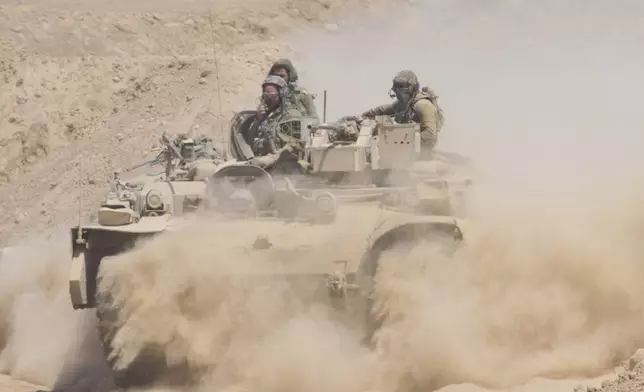
Israeli soldiers drive on their armored personnel carrier back from inside the northern Gaza Strip into southern Israel, Tuesday, July 29, 2025. (AP Photo/Ariel Schalit)
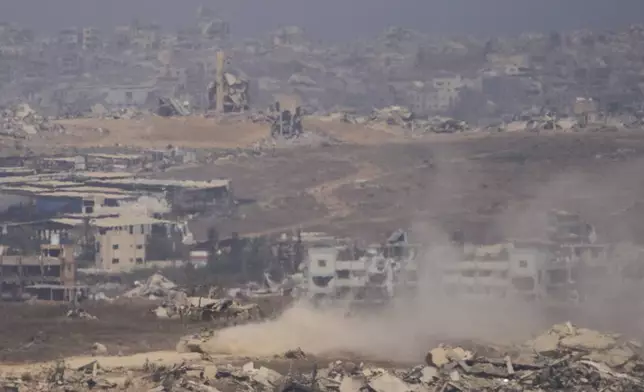
Israeli soldiers drive on their armored personnel carrier back from inside the northern Gaza Strip into southern Israel, Tuesday, July 29, 2025. (AP Photo/Ariel Schalit)

Israeli soldiers drive on their armored personnel carrier inside the northern Gaza Strip, as seen from southern Israel, Tuesday, July 29, 2025. (AP Photo/Ariel Schalit)
Israeli soldiers drive on their armored personnel carrier inside the northern Gaza Strip, as seen from southern Israel, Tuesday, July 29, 2025. (AP Photo/Ariel Schalit)

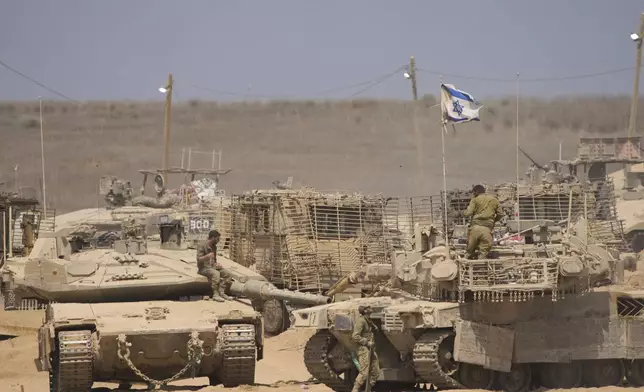
Israeli soldiers work on their tanks in a staging area on the border with Gaza Strip, in southern Israel, Tuesday, July 29, 2025. (AP Photo/Ariel Schalit)

Israeli soldiers work on their tanks in a staging area on the border with Gaza Strip, in southern Israel, Tuesday, July 29, 2025. (AP Photo/Ariel Schalit)

Experts warned Tuesday that the territory of about 2 million Palestinians is on the brink of famine after Israeli restrictions and a breakdown of security have made it nearly impossible to safely deliver aid.

The Health Ministry, part of the Hamas-run government, said that the death toll has climbed to 60,034, with 145,870 others wounded since the war started. The victims include 18,592 children and 9,782 women. Together, they make up nearly half the dead.

The ministry, which doesn’t distinguish between civilians and combatants in its count, is staffed by medical professionals. The United Nations and other independent experts view its figures as the most reliable count of casualties. Israel has disputed its figures, but hasn't provided its own account of casualties.

Airstrikes on tents housing displaced people in the built-up Nuseirat refugee camp late Monday killed 30 people, including 12 children and 14 women, according to Al-Awda Hspital.

There was no immediate comment from the Israeli military.

Israel says it only targets militants and blames civilian deaths on Hamas, saying the militants operate in populated areas. The military said that it targeted Hamas military infrastructure over the past day, including rocket launchers, weapons storage facilities and tunnels.

Hospital officials, meanwhile, said that they received the bodies of an additional 33 people who were killed by gunfire around an aid convoy in southern Gaza on Monday, bringing the toll to 58. Witnesses said that Israeli forces fired toward the crowd.

Another 14 Palestinians were killed on Tuesday near a site in central Gaza run by the Gaza Humanitarian Foundation, or GHF, an Israeli-backed American contractor, according to local hospitals. GHF said that there were no violent incidents near its sites on Tuesday.

The Israeli military said it was “not aware of casualties” as a result of Israeli gunfire near the GHF site. There was no comment from the military on the shooting near the aid convoy on Monday.

More than 1,000 Palestinians have been killed by Israeli fire while seeking aid since May, according to witnesses, health officials and the U.N. human rights office. Israel, which controls large areas of Gaza where aid is distributed, says that it has only fired warning shots at those who approach its forces.

The Integrated Food Security Phase Classification, or IPC, the foremost international authority on food crises, said that Gaza has teetered on the brink of famine for two years. But it said that recent developments, including Israeli restrictions, have “dramatically worsened” the situation.

“The facts are in — and they are undeniable,” U.N. Secretary-General António Guterres said. “Palestinians in Gaza are enduring a humanitarian catastrophe of epic proportions … The trickle of aid must become an ocean.”

Israeli Foreign Minister Gideon Saar denied that Israel was deliberately starving Gaza, and said that the focus on hunger was part of a “distorted campaign of international pressure.”

“This pressure is directly sabotaging the chances for a ceasefire and hostage deal. It is only pushing towards military escalation by hardening Hamas’s stance,” he said Tuesday.

The U.S. and Israel have both recalled their negotiating teams over the past week as long-running negotiations over a ceasefire and hostage release seem to have stalled.

Under mounting international pressure, Israel announced a series of measures over the weekend to increase the flow of aid, including expanded humanitarian corridors and international aid drops. U.N. officials say there has been little change on the ground so far, and much more is needed.

Air force cargo planes from Jordan and the United Arab Emirates have dropped aid over Gaza in recent days, and France and Germany have announced plans to join that effort.

But Associated Press reporters in Gaza said that much of the aid has fallen in so-called red zones that Israel has ordered people to evacuate from.

Dozens of Palestinians raced into the Mediterranean Sea on Tuesday to try and retrieve food from airdropped parcels that went off course. Some could be seen returning with soaked bags of tea and flour. One man held a can of beans.

Momen Abu Etayya said that his son had told him to “catch the plane” when they saw it flying in the distance.

“I came to try to get aid from the sea. I almost drowned,” he said, adding that he had only managed to get three packets of biscuits.

U.N. agencies and aid groups have long expressed skepticism about airdrops over Gaza, saying they are far costlier and deliver much less aid than land shipments. Parcels can land on desperate crowds, causing injuries or deaths, and can also spark deadly stampedes as thousands try to reach them.

The World Health Organization says more than 60 people have died this month from malnutrition-related causes, including 24 children under age 5.

Overall, 88 children died of causes related to malnutrition since the start of the war, while 58 adults died this month from malnutrition-related causes, according to the Gaza Health Ministry.

During hunger crises, people can die from malnutrition or from common illnesses or injuries that the body isn't strong enough to fight. The ministry doesn’t include hunger-related deaths in its overall toll.

Hamas-led militants killed about 1,200 people, mostly civilians, in the attack that sparked the war, and abducted another 251. They are still holding 50 captives, around 20 believed to be alive, after most of the rest were released in ceasefires or other deals.

The war took a major turn in early March when Israel imposed a complete 2½-month blockade, barring the entry of all food, medicine, fuel and other goods. Weeks later, Israel ended a ceasefire with a surprise bombardment and began seizing large areas of Gaza, measures it said were aimed at pressuring Hamas to release more hostages.

At least 8,867 Palestinians have been killed since then.

Israel eased the blockade in May, but U.N. agencies say it hasn’t allowed nearly enough aid to enter and that they have struggled to deliver it because of Israeli restrictions and the breakdown of law and order. An alternative Israeli-backed system run by GHF has been marred by violence and controversy.

Samy Magdy reported from Cairo. Associated Press writer Melanie Lidman in Tel Aviv, Israel contributed.

Follow AP’s war coverage at https://apnews.com/hub/israel-hamas-war
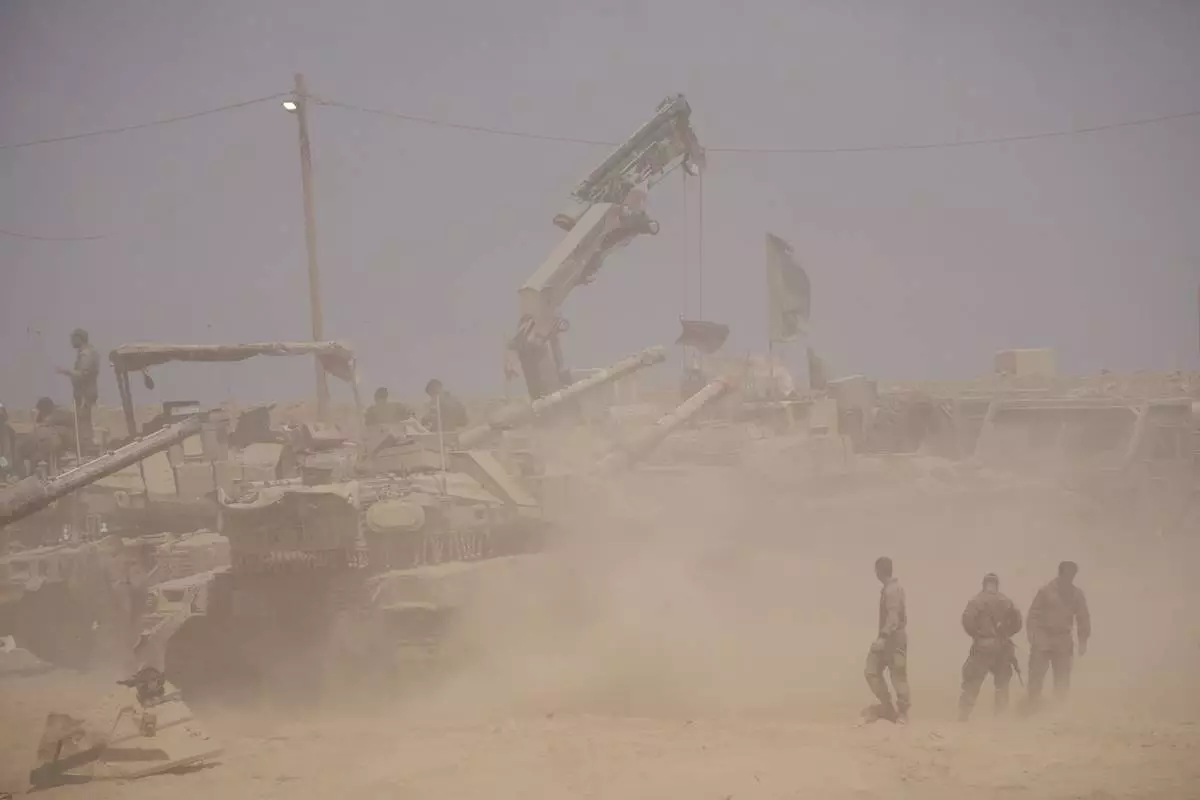
Israeli soldiers work on their tanks in a staging area on the border with Gaza Strip, in southern Israel, Tuesday, July 29, 2025. (AP Photo/Ariel Schalit)
Israeli soldiers work on their tanks in a staging area on the border with Gaza Strip, in southern Israel, Tuesday, July 29, 2025. (AP Photo/Ariel Schalit)

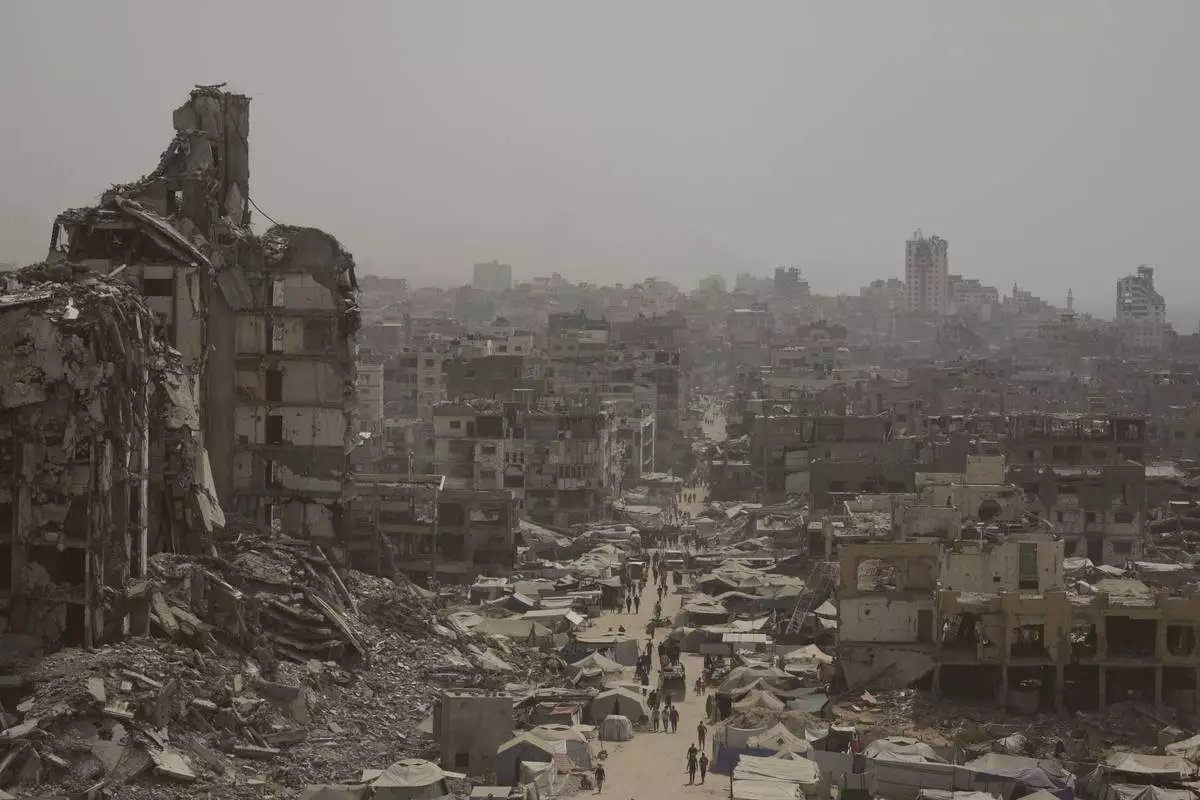
People walk along a street lined with destroyed buildings following Israeli bombardments during the Israel-Hamas war in the Gaza Strip, Tuesday, July 29, 2025. (AP Photo/Jehad Alshrafi)
People walk along a street lined with destroyed buildings following Israeli bombardments during the Israel-Hamas war in the Gaza Strip, Tuesday, July 29, 2025. (AP Photo/Jehad Alshrafi)

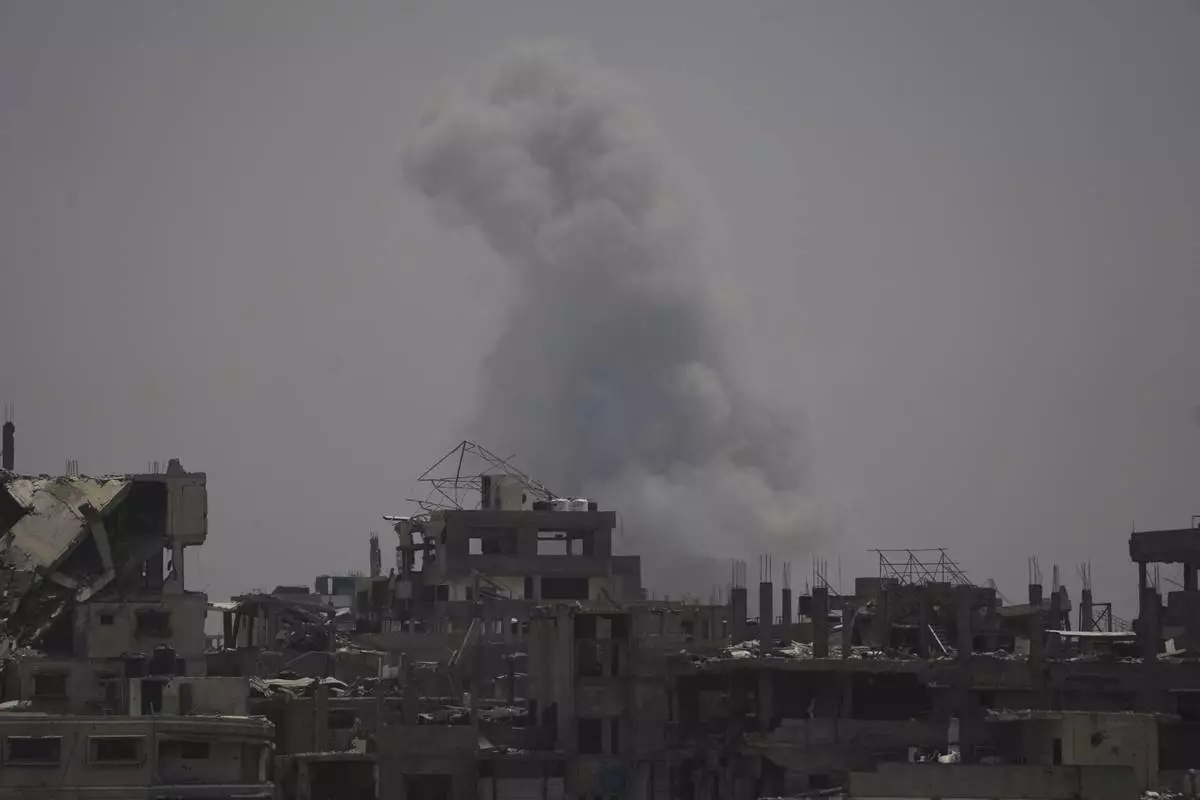
Smoke rises following an Israeli airstrike in northern Gaza Strip, Tuesday, July 29, 2025. (AP Photo/Jehad Alshrafi)
Smoke rises following an Israeli airstrike in northern Gaza Strip, Tuesday, July 29, 2025. (AP Photo/Jehad Alshrafi)

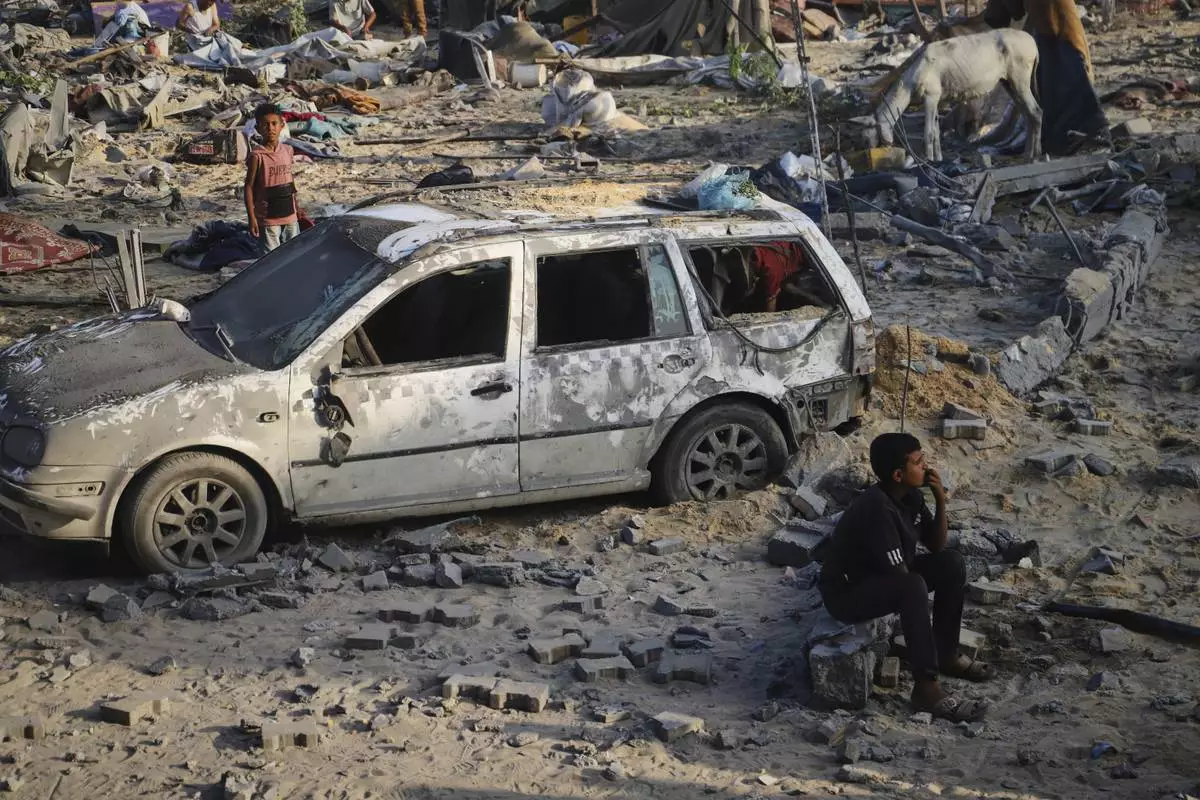
Palestinians inspect the site struck by an Israeli bombardment in Muwasi, Khan Younis, Gaza Strip, Monday, July 28, 2025. (AP Photo/Mariam Dagga)
Palestinians inspect the site struck by an Israeli bombardment in Muwasi, Khan Younis, Gaza Strip, Monday, July 28, 2025. (AP Photo/Mariam Dagga)

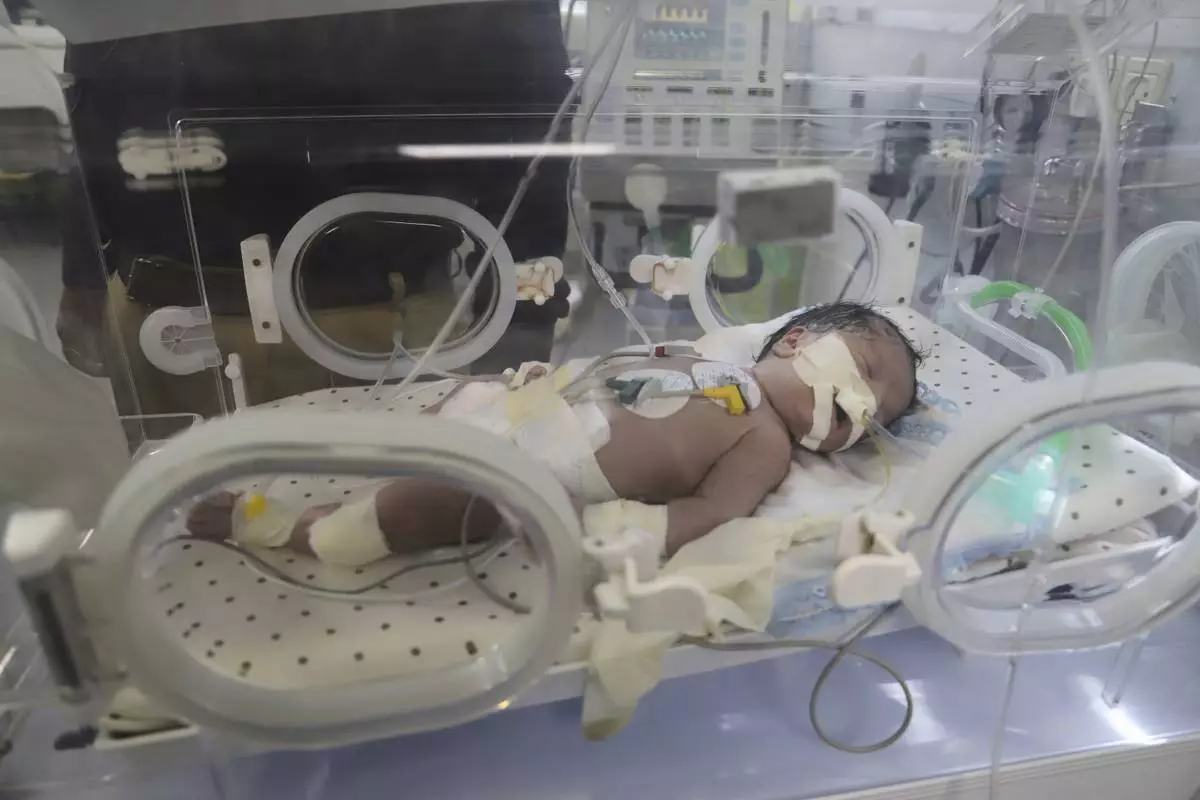
Newborn Soad Qeshtah seen in an incubator in Nasser Hospital in Khan Younis, hours before she died. Her mother, who was seven months pregnant, was killed in an Israeli airstrike in the Gaza Strip and the baby was delivered by emergency cesarean section, Monday, July 28, 2025. (AP Photo/Mariam Dagga)
Newborn Soad Qeshtah seen in an incubator in Nasser Hospital in Khan Younis, hours before she died. Her mother, who was seven months pregnant, was killed in an Israeli airstrike in the Gaza Strip and the baby was delivered by emergency cesarean section, Monday, July 28, 2025. (AP Photo/Mariam Dagga)

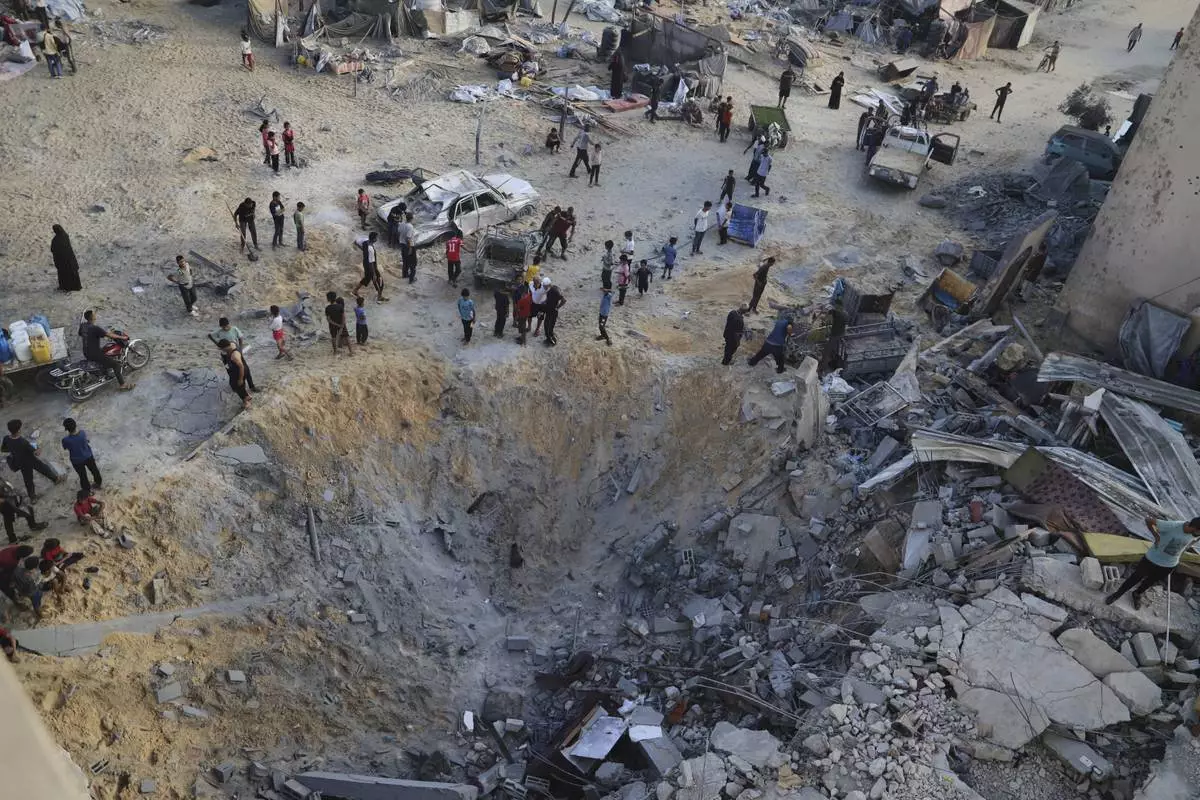
Palestinians inspect the site struck by an Israeli bombardment in Muwasi, Khan Younis, Gaza Strip, Monday, July 28, 2025. (AP Photo/Mariam Dagga)
Palestinians inspect the site struck by an Israeli bombardment in Muwasi, Khan Younis, Gaza Strip, Monday, July 28, 2025. (AP Photo/Mariam Dagga)

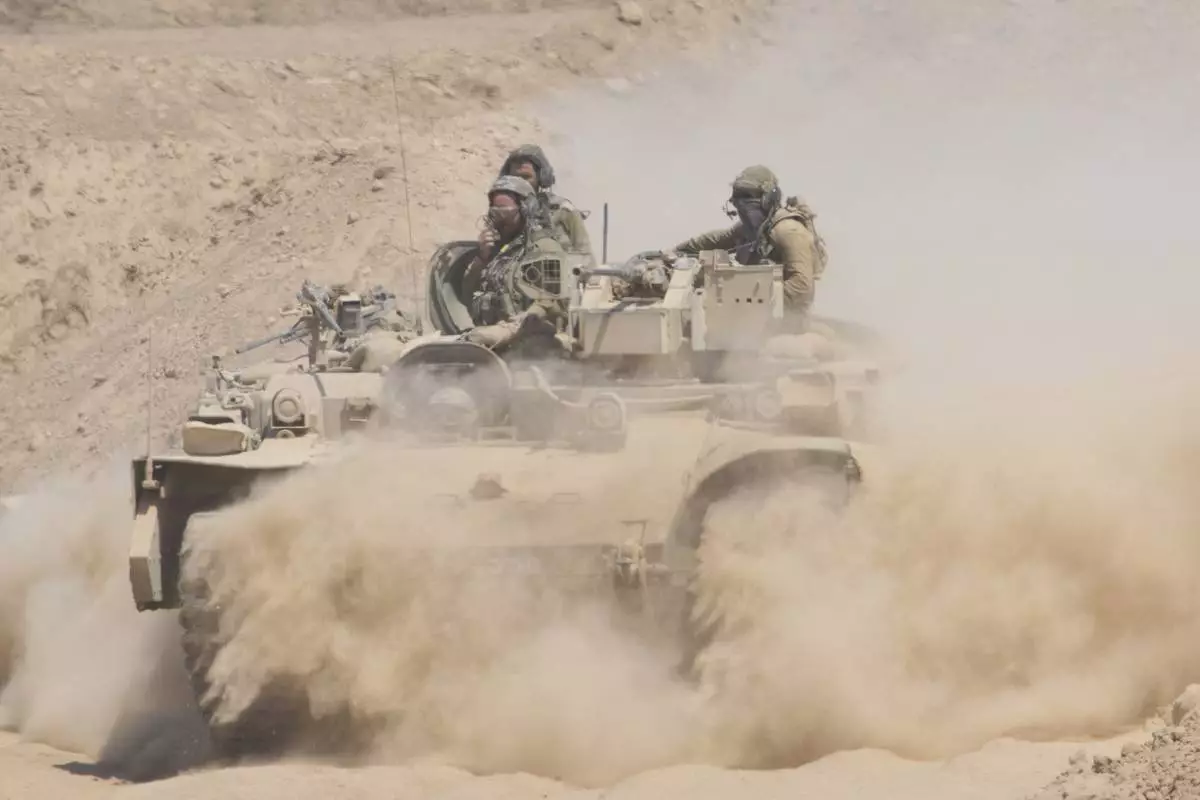
Israeli soldiers drive on their armored personnel carrier back from inside the northern Gaza Strip into southern Israel, Tuesday, July 29, 2025. (AP Photo/Ariel Schalit)
Israeli soldiers drive on their armored personnel carrier back from inside the northern Gaza Strip into southern Israel, Tuesday, July 29, 2025. (AP Photo/Ariel Schalit)

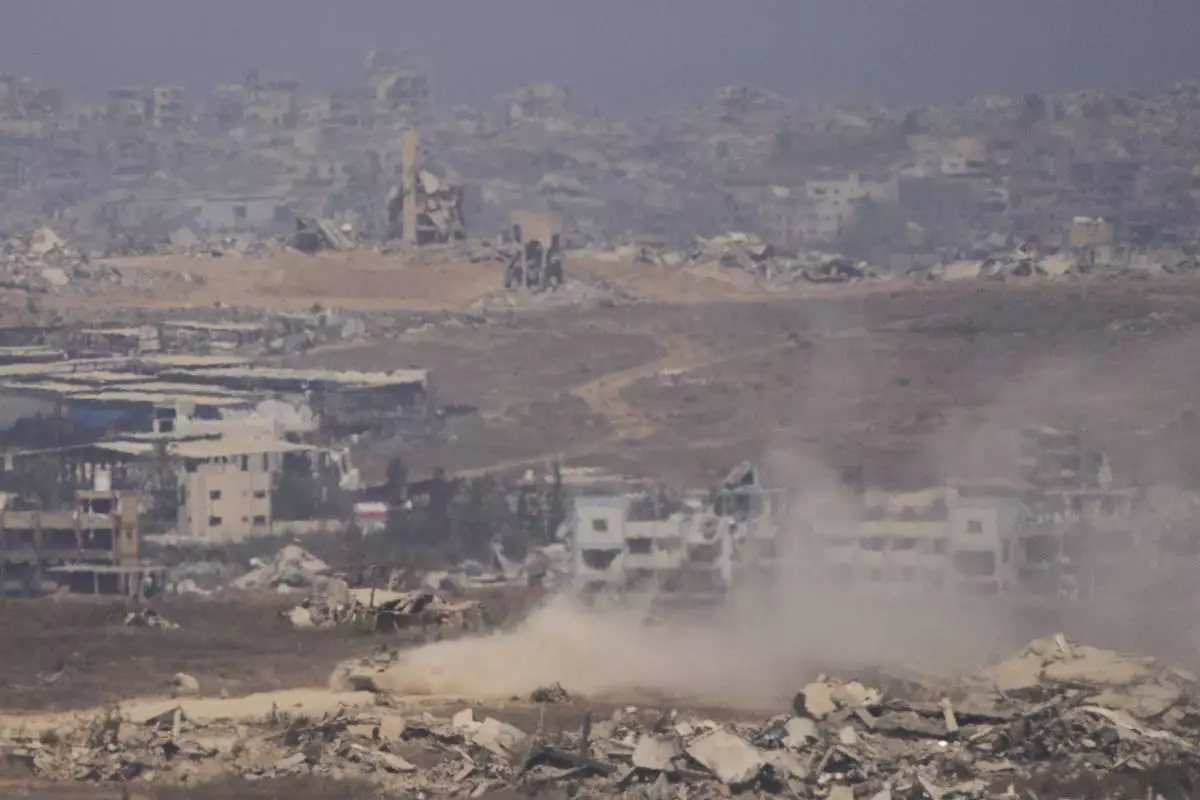
Israeli soldiers drive on their armored personnel carrier inside the northern Gaza Strip, as seen from southern Israel, Tuesday, July 29, 2025. (AP Photo/Ariel Schalit)
Israeli soldiers drive on their armored personnel carrier inside the northern Gaza Strip, as seen from southern Israel, Tuesday, July 29, 2025. (AP Photo/Ariel Schalit)

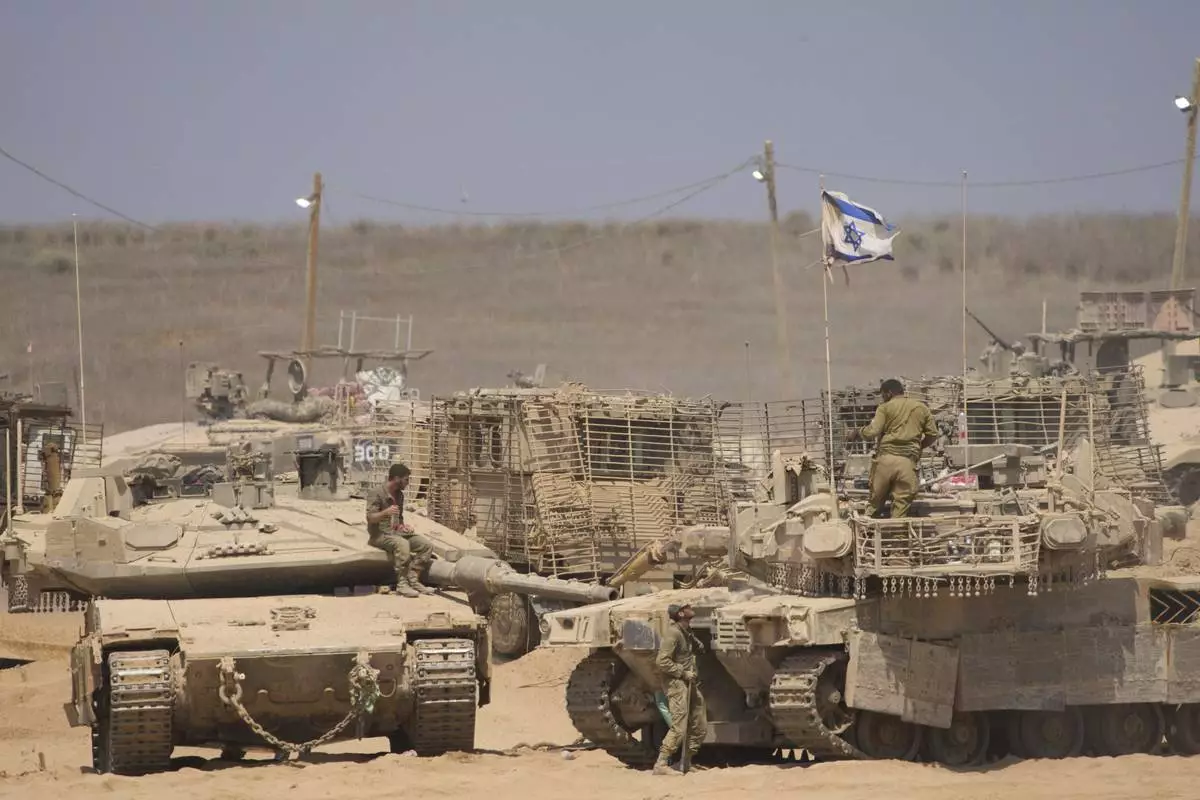
Israeli soldiers work on their tanks in a staging area on the border with Gaza Strip, in southern Israel, Tuesday, July 29, 2025. (AP Photo/Ariel Schalit)
Israeli soldiers work on their tanks in a staging area on the border with Gaza Strip, in southern Israel, Tuesday, July 29, 2025. (AP Photo/Ariel Schalit)

MELBOURNE, Australia (AP) — Carlos Alcaraz acknowledged that while he won the third-round match, he lost the battle of the drop shots against Corentin Moutet.

That could be a first for the 22-year-old Spaniard, who grew up relentlessly practicing his drop shots and is now at the Australian Open chasing a career Grand Slam.

The left-handed Moutet mixed things up for Alcaraz in an almost festival Friday vibe on Rod Laver Arena, his blend of drop shots, slice, tweeners, half-volleys, angled volleys and even an underarm serve keeping the world's No. 1-ranked player on his toes.

The 6-2, 6-4, 6-1 win over the No. 32 seed appeared like a fairly convincing scoreline, but the match was anything but routine.

“When you play someone like Corentin you don’t know what’s going to be next,” Alcaraz said in his on-court TV interview. “I had so much fun on the court. As you could see, we both pulled off great shots. Great points.”

Alcaraz laughed when he reflected on his surprise near the end of the first set, when he was fed up with tracking down drop shots and told his support team “I’m not going to run to get those.”

“I was tired to go forward to the net,” he said, adding that he'd looked at the stats and — with a mild exaggeration — thought “I’ve been to the net 55 times?”

“I thought we were in a drop-shot competition, but he won!”

There were moments of tension, like in the second set when Alcaraz surrendered a 3-0 lead when the 26-year-old Frenchman went on a four-game roll.

Ever the showman himself, Alcaraz chimed in with some of his own tricks and tweeners. It helped him stay composed.

In the first round, Moutet was booed by the crowd for his underarm serve on match point. There was much more love from the Aussie crowd this time.

After winning a point near the end of the match with a perfect, deep lob into the corner, he made an iconic fist pump celebration.

When he held in that game with a winning volley, he marked it by doffing his cap.

Alcaraz will next play Sunday against No. 19 Tommy Paul, who advanced when Alejandro Davidovich Fokina retired with an injury after dropping the first two sets 6-1, 6-1.

“We have a great battles against each other," Alcaraz said. "The matches against each other are always a great level.”

Aryna Sabalenka said there were times she felt like her head, her hands and her racket were not connected but she still had just enough to squeeze past Anastasia Potapova 7-6 (4), 7-6 (7).

The top-ranked Sabalenka, chasing her third Australian Open title in four years, led 6-5 and 40-0 in the opening set but Potapova saved all three set points to send it to a tiebreaker. Sabalenka led 3-0 in the tiebreaker before Potapova leveled at 3-3.

Sabalenka held two more set points and clinched the set when she laced a backhand down the line.

After trailing 4-0 in the second, Potapova rallied to level it at 4-4 and then again force a tiebreaker. Potapova had three set points in the tiebreaker but Sabalenka rallied when the pressure was on.

“She played incredible tennis,” Sabalenka said. “I was always on the back foot. There are days where you just have to fight — it was such a fight.”

Sabalenka won the Australian Open title in 2023 and 2024 and was the runner-up a year ago to Madison Keys. Sabalenka has also won the U.S. Open twice.

Her fourth-round match will be against the rising star Victoria Mboko, who beat 14th-seeded Clara Tauson 7-6 (5), 5-7, 6-3.

“I never actually talked to her, never had chance to hit, to practice with her. I only seen her outside. I was watching some matches," Sabalenka said of the teenage Canadian. “Yeah, she’s a great player. She’s a fighter. She’s playing really good, aggressive tennis.”

Daniil Medvedev rallied from two sets down for a 6-7 (5), 4-6, 7-5, 6-0, 6-3 comeback win over Fabian Marozsan, the fifth time he's rallied from 0-2 to win a Grand Slam match.

“I was not calm after the first set because I was mad at myself for not doing better. It cost me in the second,” Medvedev, the 2021 U.S. Open champion and three-time Australian Open runner-up, said. In the third, “I had to really let it go. Just think about what I need to do.”

He did that, and now he into a rematch with Learner Tien, the American who upset him in a second-round five-setter here last year.

The 25th-seeded Tien advanced to the fourth round again with a 7-6 (9), 6-4, 6-2 win over Nuno Borges.

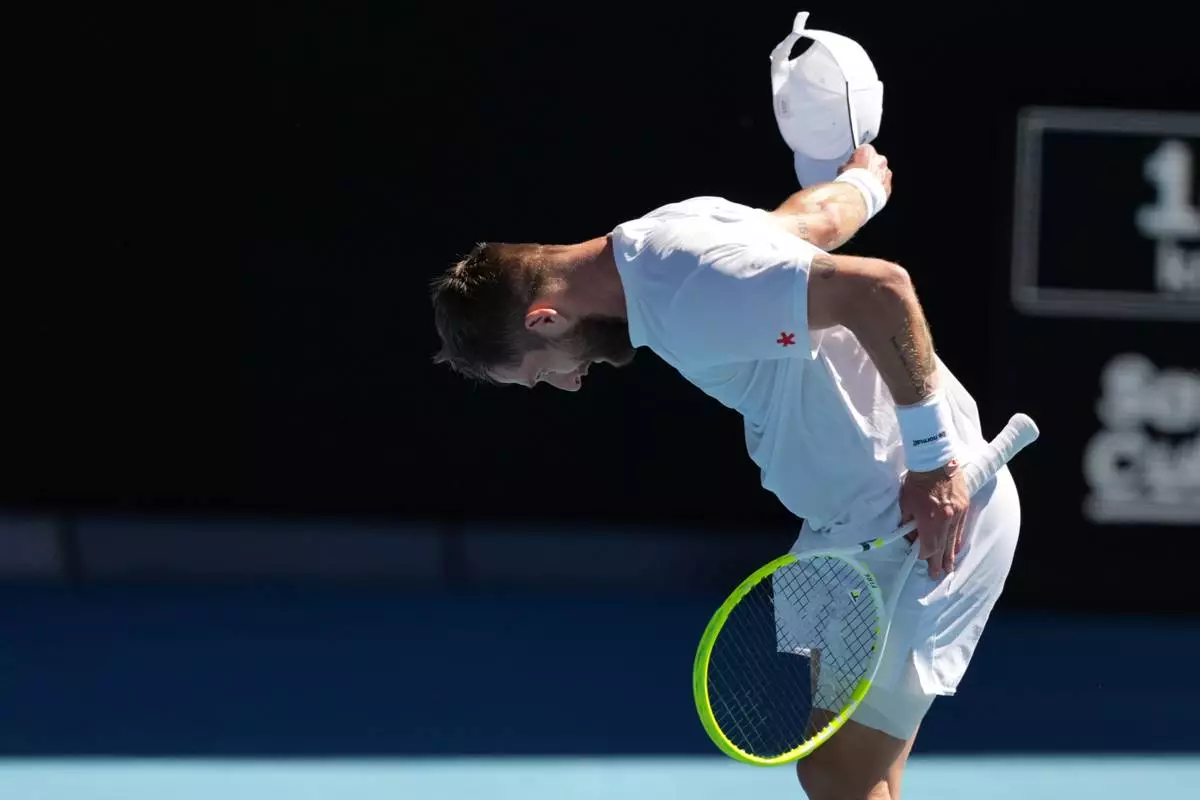
Corentin Moutet of France bows during his third round match against Carlos Alcaraz of Spain at the Australian Open tennis championship in Melbourne, Australia, Friday, Jan. 23, 2026. (AP Photo/Asanka Brendon Ratnayake)

Corentin Moutet of France bows during his third round match against Carlos Alcaraz of Spain at the Australian Open tennis championship in Melbourne, Australia, Friday, Jan. 23, 2026. (AP Photo/Asanka Brendon Ratnayake)

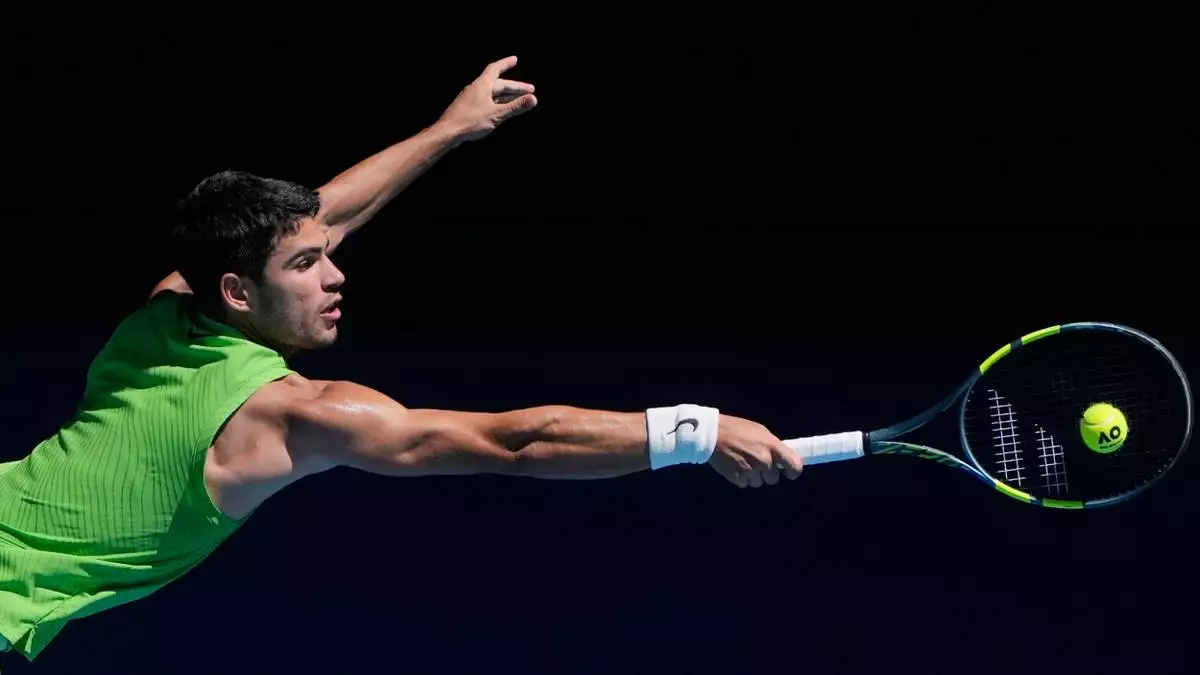
Carlos Alcaraz of Spain plays a backhand return to Corentin Moutet of France during their third round match at the Australian Open tennis championship in Melbourne, Australia, Friday, Jan. 23, 2026. (AP Photo/Asanka Brendon Ratnayake)

Carlos Alcaraz of Spain plays a backhand return to Corentin Moutet of France during their third round match at the Australian Open tennis championship in Melbourne, Australia, Friday, Jan. 23, 2026. (AP Photo/Asanka Brendon Ratnayake)

Victoria Mboko of Canada waves after defeating Clara Tauson of Denmark in their third round match at the Australian Open tennis championship in Melbourne, Australia, Friday, Jan. 23, 2026. (AP Photo/Aaron Favila)

Victoria Mboko of Canada waves after defeating Clara Tauson of Denmark in their third round match at the Australian Open tennis championship in Melbourne, Australia, Friday, Jan. 23, 2026. (AP Photo/Aaron Favila)

Learner Tien, right, of the U.S. is congratulated by Nuno Borges, left, of Portugal during their third round match at the Australian Open tennis championship in Melbourne, Australia, Friday, Jan. 23, 2026. (AP Photo/Dar Yasin)

Learner Tien, right, of the U.S. is congratulated by Nuno Borges, left, of Portugal during their third round match at the Australian Open tennis championship in Melbourne, Australia, Friday, Jan. 23, 2026. (AP Photo/Dar Yasin)

Aryna Sabalenka of Belarus celebrates after defeating Bai Zhuoxuan of China in their second round match at the Australian Open tennis championship in Melbourne, Australia, Wednesday, Jan. 21, 2026. (AP Photo/Dita Alangkara)

Aryna Sabalenka of Belarus celebrates after defeating Bai Zhuoxuan of China in their second round match at the Australian Open tennis championship in Melbourne, Australia, Wednesday, Jan. 21, 2026. (AP Photo/Dita Alangkara)

Aryna Sabalenka, right, of Belarus, is congratulated by Anastasia Potapova, left, of Austria following their third round match at the Australian Open tennis championship in Melbourne, Australia, Friday, Jan. 23, 2026. (AP Photo/Asanka Brendon Ratnayake)

Aryna Sabalenka, right, of Belarus, is congratulated by Anastasia Potapova, left, of Austria following their third round match at the Australian Open tennis championship in Melbourne, Australia, Friday, Jan. 23, 2026. (AP Photo/Asanka Brendon Ratnayake)

Aryna Sabalenka of Belarus serves to Anastasia Potapova of Austria during their third round match at the Australian Open tennis championship in Melbourne, Australia, Friday, Jan. 23, 2026. (AP Photo/Asanka Brendon Ratnayake)

Aryna Sabalenka of Belarus serves to Anastasia Potapova of Austria during their third round match at the Australian Open tennis championship in Melbourne, Australia, Friday, Jan. 23, 2026. (AP Photo/Asanka Brendon Ratnayake)

Recommended Articles