Skip to Content Facebook Feature Image

Venus Williams receives a wild-card entry with Reilly Opelka to play mixed doubles at the US Open

Sport

Venus Williams receives a wild-card entry with Reilly Opelka to play mixed doubles at the US Open
Sport

Sport

Venus Williams receives a wild-card entry with Reilly Opelka to play mixed doubles at the US Open

2025-07-29 23:37 Last Updated At:23:41

Venus Williams’ comeback is headed to the U.S. Open next month, when she will enter the redesigned mixed doubles tournament with Reilly Opelka via a wild-card entry.

The 45-year-old Williams, who returned to the tennis tour last week after more than a year away, and Opelka were among the 14 teams announced Tuesday by the U.S. Tennis Association for its mixed doubles event on Aug. 19-20.

Eight of the pairings received direct entry into the field based on having the highest combined current singles rankings, and six were given wild cards by the USTA.

The players with spots in the bracket include nine who have won at least one Grand Slam singles title and 14 who are ranked in the WTA or ATP top 10 for singles.

The eight duos with direct entry are No. 11 Emma Navarro and No. 1 Jannik Sinner; No. 10 Paula Badosa and No. 5 Jack Draper; No. 3 Iga Swiatek and No. 13 Casper Ruud; No. 12 Elena Rybakina and No. 4 Taylor Fritz; No. 7 Amanda Anisimova and No. 9 Holger Rune; Belinda Bencic and No. 3 Alexander Zverev; No. 4 Jessica Pegula and No. 15 Tommy Paul; No. 5 Mirra Andreeva and No. 14 Daniil Medvedev.

Badosa originally had sought a place in the field with Stefanos Tsitsipas, while Draper initially was going to play alongside Zheng Qinwen.

In addition to Williams-Opelka, the wild-card entrants are Emma Raducanu and No. 2 Carlos Alcaraz; No. 8 Madison Keys and No. 12 Frances Tiafoe; Olga Danilovic and No. 6 Novak Djokovic; Taylor Townsend — who made her debut at No. 1 in women's doubles this week — and No. 7 Ben Shelton; and last year’s U.S. Open mixed doubles champions, Sara Errani and Andrea Vavassori.

It's a group of star players that stands in stark contrast to the sort of lesser-known players and doubles specialists usually found in the mixed doubles bracket at a Grand Slam tournament. Some players were critical of the planned changes when they were announced in February, and Errani and Vavassori called the new setup a “pseudo-exhibition focused only on entertainment and show” that would shut out true doubles players.

In a bid to attract some of the sport's biggest names, the USTA increased the prize money, switched mixed doubles from the same time as the singles and other doubles events to the week before the start of singles competition and reduced the format to first-to-four-game sets with no-ad scoring.

A total of 16 duos will be competing for the $1 million top prize; the last two wild-card pairs will be announced by the USTA later.

It is still possible that Williams will ask for, and receive, a wild-card entry for singles. Those are expected to be announced by the USTA the week of Aug. 11.

She won one match each in singles and doubles at the D.C. Open in Washington last week after not competing anywhere since the Miami Open in March 2024.

Williams owns seven Grand Slam titles in singles, 14 in women’s doubles — all won with her younger sister Serena — and two in mixed doubles.

The 6-foot-11 (2.11-meter) Opelka is a 27-year-old American who used to be ranked in the top 20 and is now No. 74 after missing nearly two full seasons because of injuries.

Among the partnerships the USTA had said were hoping to get into the tournament that were not on Tuesday’s list: Katie Boulter and Alex de Minaur, who are engaged to be married; Jasmine Paolini and Lorenzo Musetti; Aryna Sabalenka and Grigor Dimitrov; Naomi Osaka and Nick Kyrgios; Karolina Muchova and Andrey Rublev; Iva Jovic and Jenson Brooksby; Gaby Dabrowski and Felix Auger-Aliassime; Demi Schuurs and Tallon Griekspoor; Katerina Siniakova and Marcelo Arevalo; Desirae Krawczyk and Evan King; and Su-Wei Hsieh and Jan Zielinski.
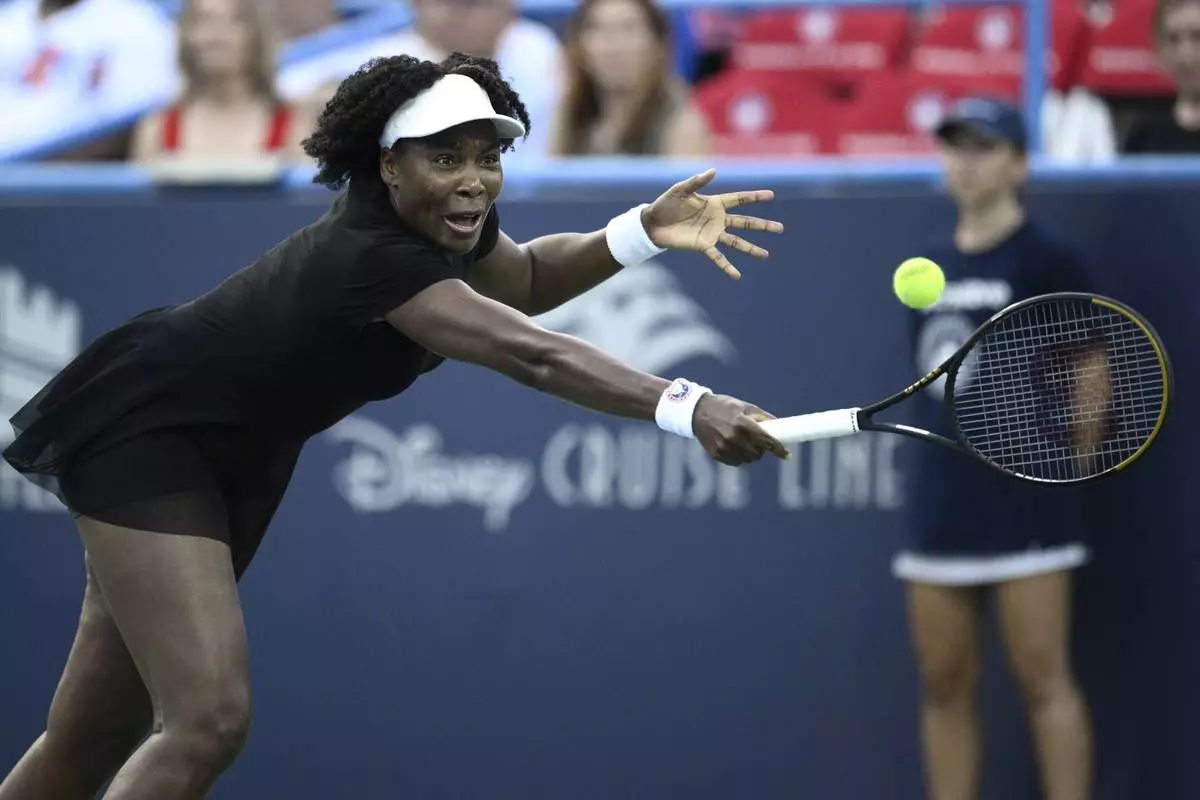
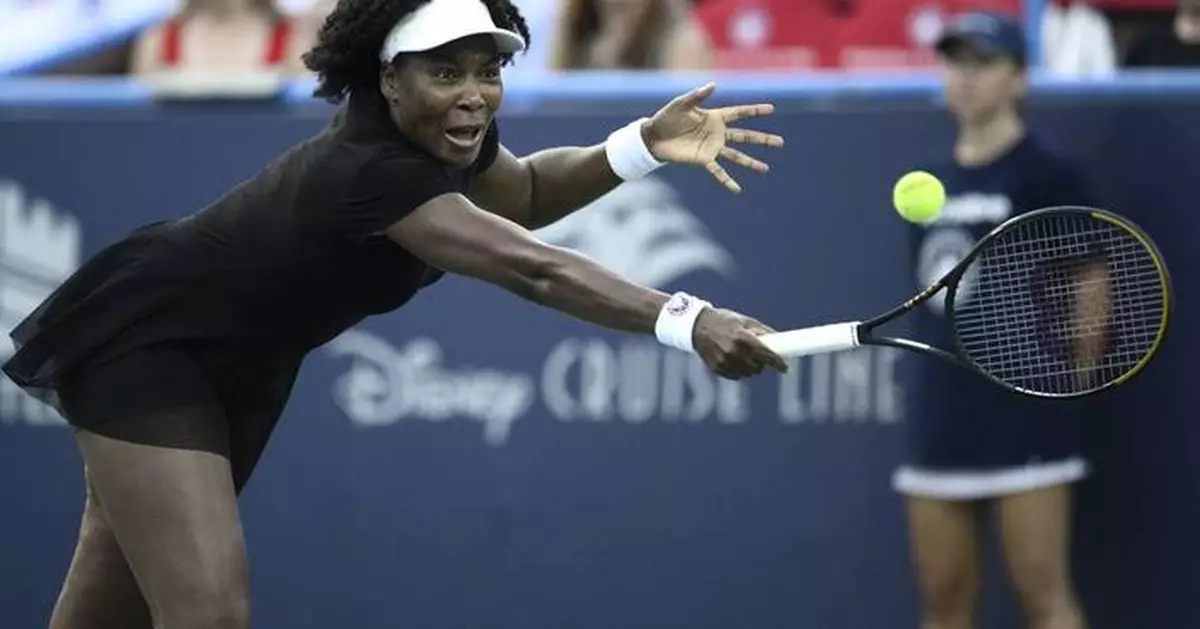
Venus Williams lunges for the ball during a match against Magdalena Frech, of Poland, at the Citi Open tennis tournament Thursday, July 24, 2025, in Washington. (AP Photo/Nick Wass)
Venus Williams lunges for the ball during a match against Magdalena Frech, of Poland, at the Citi Open tennis tournament Thursday, July 24, 2025, in Washington. (AP Photo/Nick Wass)
The White House and a bipartisan group of governors are pressuring the operator of the mid-Atlantic power grid to take urgent steps to boost energy supply and curb price hikes, holding a Friday event aimed at addressing a rising concern among voters about the enormous amount of power used for artificial intelligence ahead of elections later this year.

The White House said its National Energy Dominance Council and the governors of several states, including Pennsylvania, Ohio and Virginia, want to try to compel PJM Interconnection to hold a power auction for tech companies to bid on contracts to build new power plants,

The Trump administration and governors will sign a statement of principles toward that end Friday. The plan was first reported by Bloomberg.

“Ensuring the American people have reliable and affordable electricity is one of President Trump’s top priorities, and this would deliver much-needed, long-term relief to the mid-Atlantic region," said Taylor Rogers, a White House spokeswoman.

Pennsylvania Gov. Josh Shapiro is expected to be at the White House, a person familiar with Shapiro’s plans said, speaking on condition of anonymity ahead of the announcement. Shapiro, a Democrat, made his participation in Friday’s event contingent on including a provision to extend a limit on wholesale electricity price increases for the region’s consumers, the person said.

But the operator of the grid won't be there. “PJM was not invited. Therefore we would not attend,” said spokesperson Jeff Shields.

It was not immediately clear whether President Donald Trump would attend the event, which was not listed on his public schedule.

Trump and the governors are under pressure to insulate consumers and businesses alike from the costs of feeding Big Tech’s energy-hungry data centers. Meanwhile, more Americans are falling behind on their electricity bills.

Consumer advocates say ratepayers in the mid-Atlantic electricity grid — which encompasses all or parts of 13 states stretching from New Jersey to Illinois, as well as Washington, D.C. — are already paying billions of dollars in higher bills to underwrite the cost to supply power to data centers, some of them built, some not.

However, they also say that the billions of dollars that consumers are paying isn’t resulting in the construction of new power plants necessary to meet the rising demand.

Pivotal contests in November will be decided by communities that are home to fast-rising electric bills or fights over who’s footing the bill for the data centers that underpin the explosion in demand for artificial intelligence. In parts of the country, data centers are coming online faster than power plants can be built and connected to the grid.

Electricity costs were a key issue in last year's elections for governor in New Jersey and Virginia, a data center hotspot, and in Georgia, where Democrats ousted two Republican incumbents for seats on the state’s utility regulatory commission. Voters in New Jersey, Virginia, California and New York City all cited economic concerns as the top issue, as Democrats and Republicans gird for a debate over affordability in the intensifying midterm battle to control Congress.

Gas and electric utilities sought or won rate increases of more that $34 billion in the first three quarters of 2025, consumer advocacy organization PowerLines reported. That was more than double the same period a year earlier.

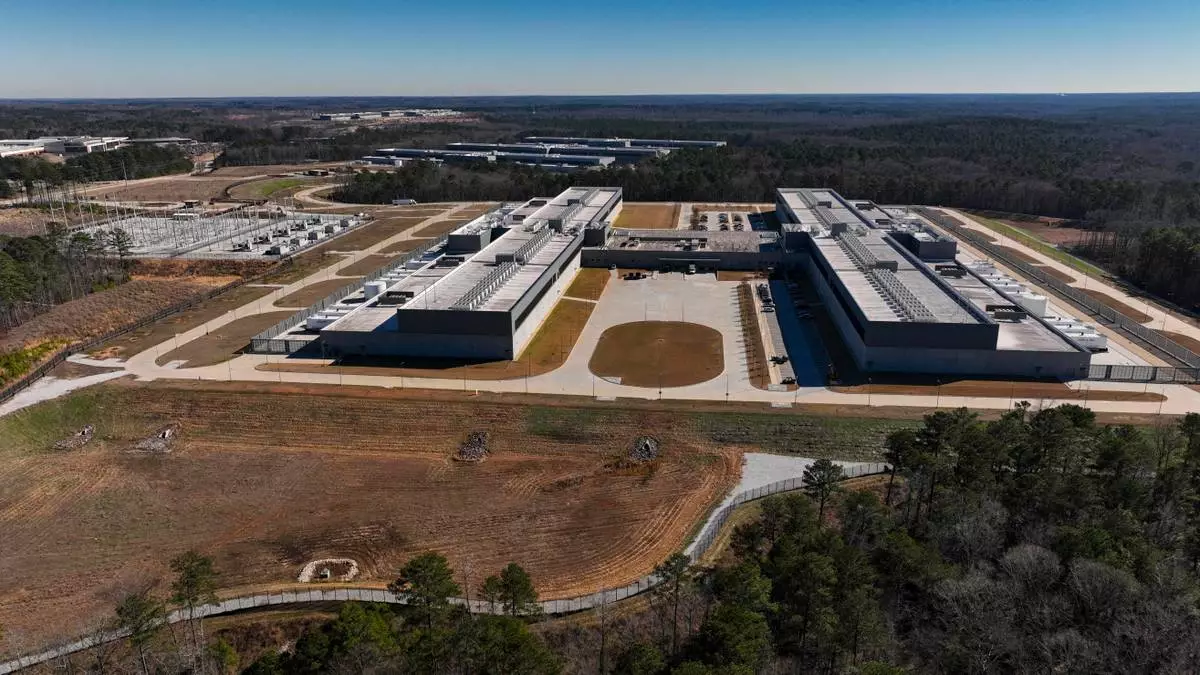
Meta's Stanton Springs Data Center is seen Tuesday, Jan. 13, 2026, in Newton County, East of Atlanta. (AP Photo/Mike Stewart)

Meta's Stanton Springs Data Center is seen Tuesday, Jan. 13, 2026, in Newton County, East of Atlanta. (AP Photo/Mike Stewart)

Recommended Articles