Skip to Content Facebook Feature Image

US health officials crack down on kratom-related products after complaints from supplement industry

TECH

US health officials crack down on kratom-related products after complaints from supplement industry
TECH

TECH

US health officials crack down on kratom-related products after complaints from supplement industry

2025-07-30 22:59 Last Updated At:23:00

WASHINGTON (AP) — U.S. health officials are warning Americans about the risks of an opioid-related ingredient increasingly added to energy drinks, gummies and supplements sold at gas stations and convenience stores, recommending a nationwide ban.

The chemical, known as 7- hydroxymitragynine, is a component of kratom, a plant native to Southeast Asia that has gained popularity in the U.S. as an unapproved treatment for pain, anxiety and drug dependence.

In recent months, dietary supplement companies that sell kratom have been urging the Food and Drug Administration to crack down on the products containing 7-OH, portraying it as a dangerously concentrated, synthetic form of the original ingredient.

The FDA action “is not focused on natural kratom leaf products," according to a statement Tuesday by the U.S. Department of Health and Human Services.

The agency said it was releasing a report to educate about the risks of “7-OH and its distinction from the kratom plant leaf.” Regulators are also recommending that the ingredient be placed on the federal government's most restrictive list of illegal drugs, which includes LSD and heroin.

“7-OH is an opioid that can be more potent than morphine," said FDA Commissioner Marty Makary. "We need regulation and public education to prevent another wave of the opioid epidemic.”

The agency’s recommendation will be reviewed by the Drug Enforcement Administration, which sets federal rules for high-risk drugs including prescription medicines and illicit substances. A national ban wouldn’t take effect until the agency drafts and finalizes new rules governing the ingredient.

Federal regulators have been scrutinizing kratom for about a decade after reports of addiction, injury and overdose. But users and distributors have long opposed efforts to regulate it, saying kratom could be a safer alternative to opioid painkillers that sparked the ongoing drug addiction epidemic.

Last month, the FDA issued warning letters to seven companies selling drinks, gummies and powders infused with 7-OH. Regulators said the products violated FDA rules because they have not been evaluated for safety and, in some cases, claimed to treat medical conditions, including pain, arthritis and anxiety.

Supplement executives quickly applauded the move.

The FDA "demonstrated the exact kind of data-driven, proactive regulatory excellence needed to safeguard unwitting consumers across the U.S.,” said Ryan Niddel of Diversified Botanics, a Utah-based company that sells kratom supplements.

An industry group, the American Kratom Association, has lobbied Congress for years against restrictions on the plant. Legislation supported by the group would prohibit the FDA from regulating kratom more strictly than food and dietary supplements.

In recent years, the association has lobbied at the state level for bills that limit synthetic 7-OH products.

On Tuesday, a rival group that supports the availability of 7-OH drugs criticized the government's move, pointing to the influence of kratom suppliers.

“Big kratom trade groups have spent years blaming 7-OH for harms caused by their own unregulated products, because it threatens their market share,” the Holistic Alternative Recovery Trust stated in an emailed message.

Nearly a decade ago, the federal government came close to banning kratom.

In 2016, the DEA announced plans to add it to the government’s most restrictive schedule 1, reserved for drugs that have no medical use and a high potential for abuse. But the plan stalled after a flood of public complaints, including a letter signed by more than 60 members of Congress.

The FDA then began studying the ingredient, concluding in 2018 that kratom contains many of the same chemicals as opioids, the addictive class of drugs that includes painkillers like OxyContin as well as heroin and fentanyl.

Since then, FDA regulators have continued to issue warnings about cases of injury, addiction and death with kratom supplements, which are usually sold in capsules or powders.

In recent months, the FDA has also issued warnings on other unapproved drugs sold as supplements or energy drinks, including the antidepressant tianeptine. Sometimes referred to collectively as “gas station heroin,” the drugs have been restricted by several states, but they are not scheduled at the federal level.

The Associated Press Health and Science Department receives support from the Howard Hughes Medical Institute’s Department of Science Education and the Robert Wood Johnson Foundation. The AP is solely responsible for all content.
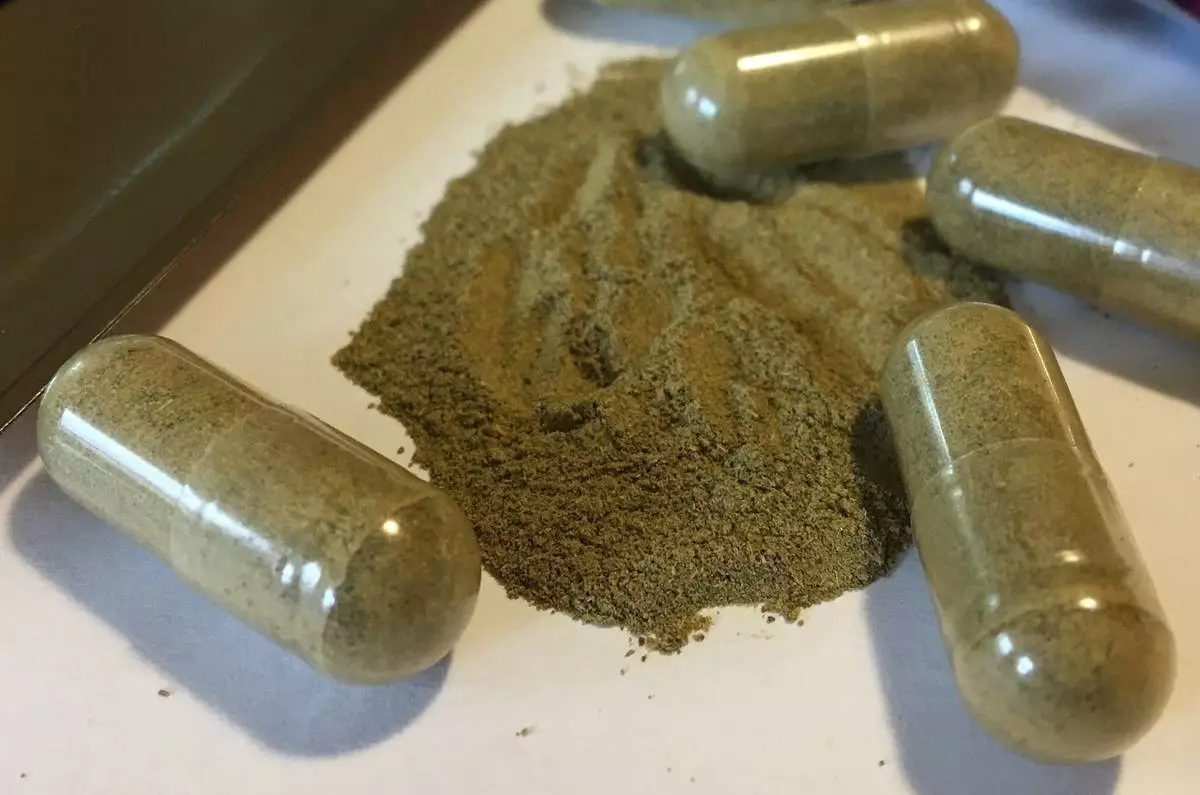
FILE - This Sept. 27, 2017 file photo shows kratom capsules in Albany, N.Y. (AP Photo/Mary Esch, File)


FILE - This Sept. 27, 2017 file photo shows kratom capsules in Albany, N.Y. (AP Photo/Mary Esch, File)
KAMPALA, Uganda (AP) — Vote counting was underway Friday in Uganda’s tense presidential election, which was held a day earlier amid an internet shutdown, voting delays and complaints by an opposition leader who said some of his polling agents had been detained by the authorities.

Opposition leader Bobi Wine said Thursday he was unable to leave his house and that his polling agents in rural areas were abducted before voting started, undermining his efforts to prevent electoral offenses such as ballot stuffing.

Wine is hoping to end President Yoweri Museveni's four-decade rule in an election during which the military was deployed and heavy security was posted outside his house near Kampala, the Ugandan capital, after the vote.

The musician-turned-politician wrote on X on Thursday that a senior party official in charge of the western region had been arrested, adding there was “massive ballot stuffing everywhere.”

Rural Uganda, especially the western part of the country, is a ruling-party stronghold, and the opposition would be disadvantaged by not having polling agents present during vote counting.

To try to improve his chances of winning, Wine had urged his supporters to “protect the vote” by having witnesses document alleged offenses at polling stations, in addition to deploying official polling agents.

Wine faced similar setbacks when he first ran for president five years ago. Museveni took 58% of the vote, while Wine got 35%, according to official results. Wine said at the time that the election had been rigged in favor of Museveni, who has spoken disparagingly of his rival.

Museveni, after voting on Thursday, said the opposition had infiltrated the 2021 election and defended the use of biometric machines as a way of securing the vote in this election.

Museveni has served the third-longest tenure of any African leader and is seeking to extend his rule into a fifth decade. The aging president’s authority has become increasingly dependent on the military, which is led by his son, Muhoozi Kainerugaba.

Uganda has not witnessed a peaceful transfer of presidential power since independence from British colonial rule six decades ago.

Voters line up to cast their ballots at a polling station, during the presidential election, in the capital, Kampala, Uganda, Thursday, Jan. 15, 2026. (AP Photo/Brian Inganga)

Voters line up to cast their ballots at a polling station, during the presidential election, in the capital, Kampala, Uganda, Thursday, Jan. 15, 2026. (AP Photo/Brian Inganga)

Election officials count ballots after the polls closed for the presidential election at a polling station in Kampala, Uganda, Thursday, Jan. 15, 2026. (AP Photo/Brian Inganga)

Election officials count ballots after the polls closed for the presidential election at a polling station in Kampala, Uganda, Thursday, Jan. 15, 2026. (AP Photo/Brian Inganga)

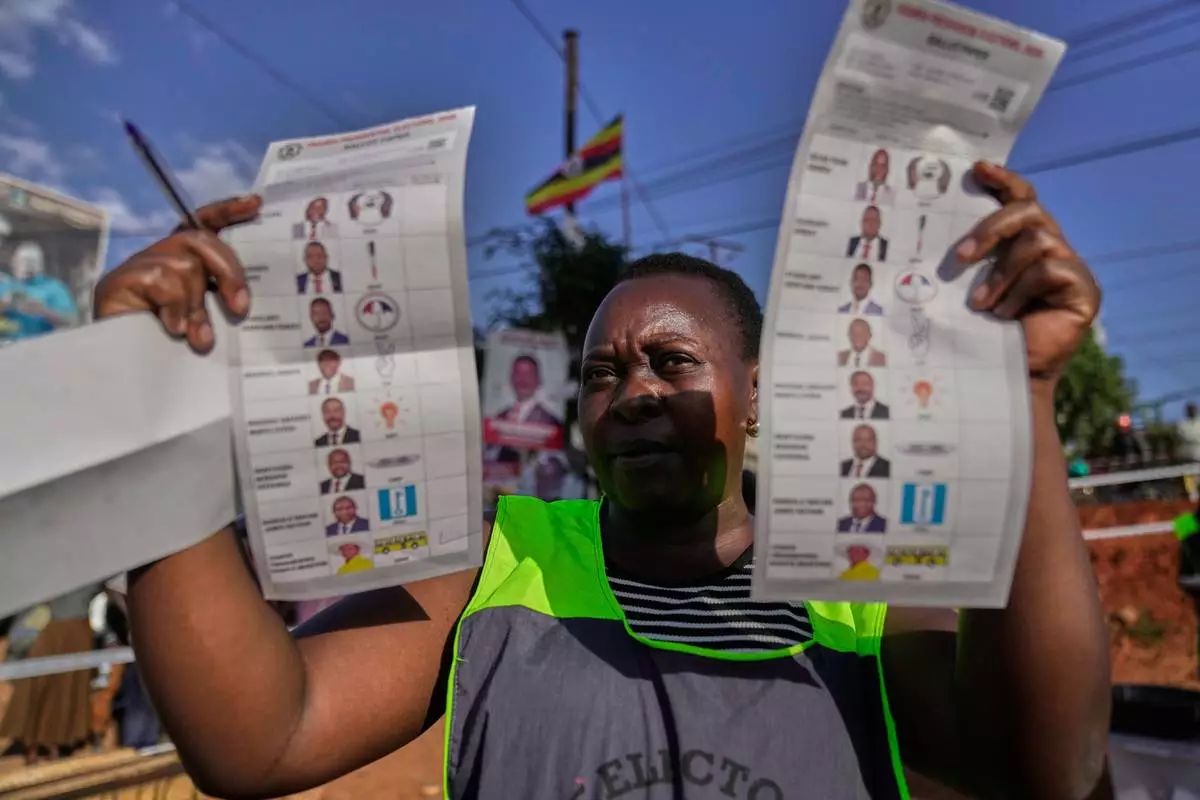
An election official holds up unmarked ballots during the vote count after polls closed for the presidential election, at a polling center in Kampala, Uganda, Thursday, Jan. 15, 2026. (AP Photo/Brian Inganga)

An election official holds up unmarked ballots during the vote count after polls closed for the presidential election, at a polling center in Kampala, Uganda, Thursday, Jan. 15, 2026. (AP Photo/Brian Inganga)

A political representative speaks as he works to observe and verify the counting of ballots after polls closed in the presidential election at a polling station in Kampala, Uganda, Thursday, Jan. 15, 2026. (AP Photo/Brian Inganga)

A political representative speaks as he works to observe and verify the counting of ballots after polls closed in the presidential election at a polling station in Kampala, Uganda, Thursday, Jan. 15, 2026. (AP Photo/Brian Inganga)

A supporter of leading opposition candidate Bobi Wine cheers while watching election officials count ballots, after polls closed at a polling station in Kampala, Uganda, Thursday, Jan. 15, 2026. (AP Photo/Brian Inganga)

A supporter of leading opposition candidate Bobi Wine cheers while watching election officials count ballots, after polls closed at a polling station in Kampala, Uganda, Thursday, Jan. 15, 2026. (AP Photo/Brian Inganga)

Recommended Articles