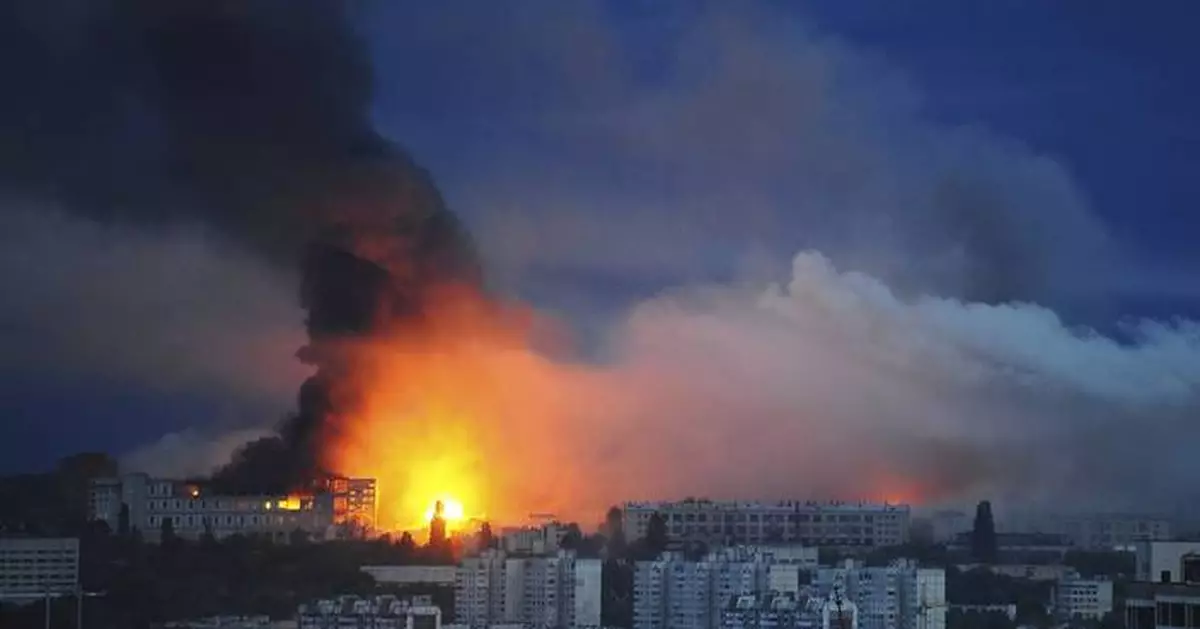
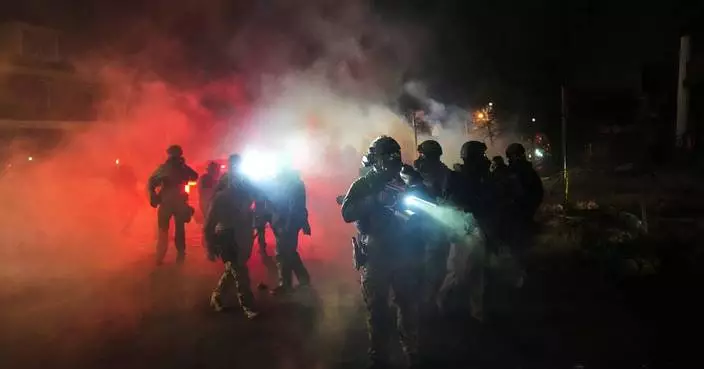
KYIV, Ukraine (AP) — A Russian missile hit a Ukrainian army training ground, killing three soldiers and wounding 18 others, authorities said, in the latest attack to embarrass military officials as they struggle to make up a severe manpower shortage in the nearly 3½-year war.
The Russian Defense Ministry said that the strike killed or wounded about 200 Ukrainian troops. The ministry said that Ukraine’s 169th training center near Honcharivske in the Chernihiv region was hit with two Iskander missiles, one armed with multiple submunitions and another with high explosives.
Meanwhile, Russia continued its stepped-up aerial campaign against Ukrainian civilian targets, launching 78 attack drones overnight, including up to eight newly developed jet-powered drones, Ukraine’s air force said Wednesday. At least five people were wounded.
The U.N. mission in Ukraine says there has been a worsening trend in civilian casualties from Russian attacks this year, with 6,754 civilians killed or injured in the first half of 2025 — representing a 54% increase from the same period in 2024.
Since Russia launched an all-out invasion of neighboring Ukraine on Feb. 24, 2022, at least 13,580 Ukrainian civilians, including 716 children, have been killed, according to the U.N.
In an effort to stop that, U.S. President Donald Trump said Tuesday he's giving Russian President Vladimir Putin until Aug. 8 for peace efforts to make progress or Washington will impose punitive sanctions and tariffs. Western leaders have accused Putin of dragging his feet in U.S.-led peace efforts in an attempt to capture more Ukrainian land.
Ukrainian forces are mostly hanging on against a grinding summer push by Russia’s bigger army, though the Russian Defense Ministry has claimed some recent small advances at places along the 1,000-kilometer (620-mile) front line.
Ukrainian ground forces acknowledged that a Russian strike hit a military training ground in the Chernihiv region of northern Ukraine, but its casualty report differed widely from one issued by Moscow.
A Russian Defense Ministry video showed multiple small explosions apparently caused by a missile with a shrapnel warhead followed by one big blast, apparently from the other one armed with a high-explosive warhead.
A similar Russian strike occurred last September, when two ballistic missiles blasted a Ukrainian military academy and nearby hospital, killing more than 50 people and wounding more than 200 others.
Ukrainian authorities said that a commission led by the head of the Military Law Enforcement Service has been formed to determine whether negligence or misconduct by officials contributed to the casualties in Chernihiv.
The attack was the fourth deadly strike in as five months on Ukrainian military facilities. The three previous strikes killed at least 46 soldiers and wounded more than 160, according to official reports.
Ukraine can ill afford to lose more troops. Though it has more than 1 million Ukrainians in uniform, including the National Guard and other units, it badly needs more.
Deeply rooted problems have bedeviled Ukraine and brought questions about how Kyiv is managing the war, from a flawed mobilization drive to the overstretching and hollowing out of front-line units through soldiers going AWOL.
Ukrainian President Volodymyr Zelenskyy signed a bill Tuesday that allows Ukrainian men over the age of 60 to voluntarily sign contracts with the armed forces. The new law allows those who want to contribute their experience and skills, particularly in noncombat or specialized roles.
In February, Ukraine’s Defense Ministry began offering new financial and other benefits that it hopes will attract men between the ages of 18 and 24 to military service. Men in that age group are exempt from the country’s draft, which covers men between 25 and 60 years old.
Ukraine lowered its conscription age from 27 to 25, but that has failed to replenish ranks or replace battlefield losses.
Follow AP’s coverage of the war in Ukraine at https://apnews.com/hub/russia-ukraine
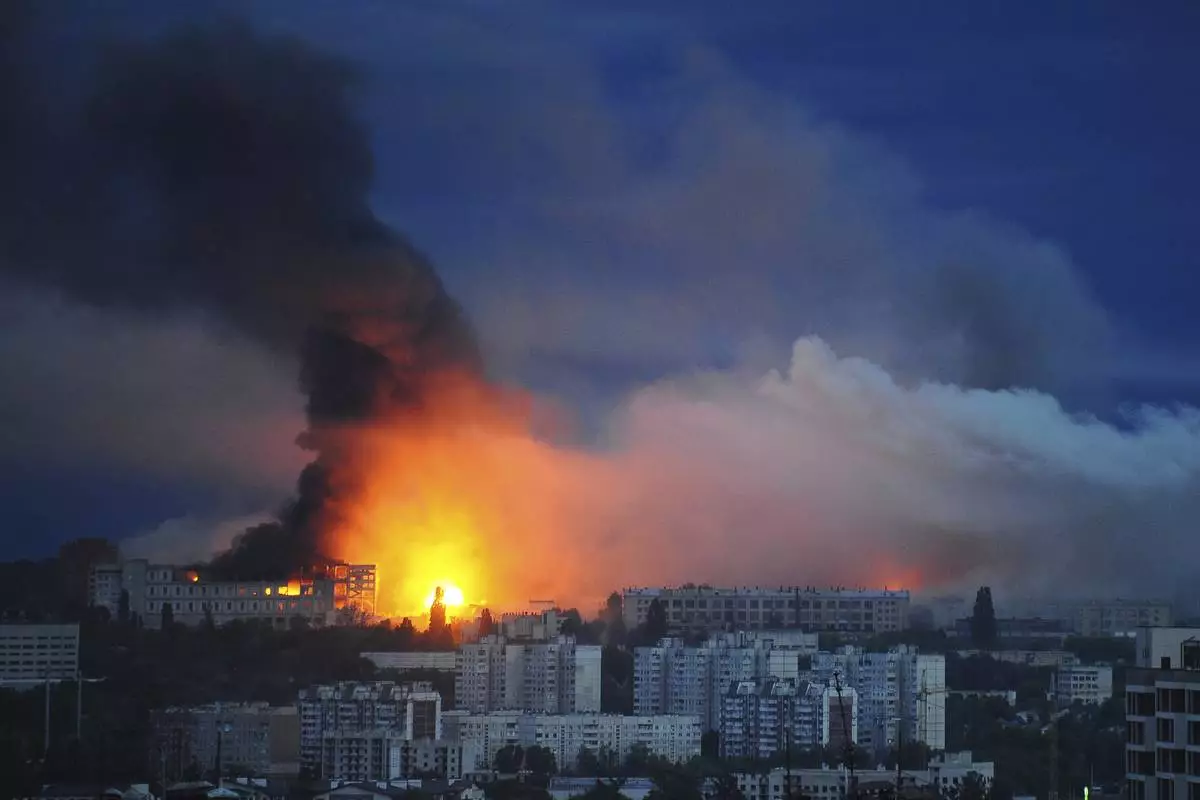
FILE - Fire and smoke rise from the site where a Russian missile struck a residential area in Kharkiv, Ukraine, Saturday, June 7, 2025, (AP Photo/Anatolii Lysianskyi, File)
CARACAS, Venezuela (AP) — Venezuela’s acting President Delcy Rodríguez used her first state of the union message Thursday to advocate for opening the crucial state-run oil industry to more foreign investment following the Trump administration's pledge to seize control of Venezuelan crude sales.
For the first time, Rodríguez laid out a vision for Venezuela’s new political reality — one that challenges her government’s most deeply rooted beliefs less than two weeks after the United States captured and toppled former President Nicolás Maduro.
Under pressure from the U.S. to cooperate with its plans for reshaping Venezuela’s sanctioned oil industry, Maduro's former vice president declared that a “new policy is being formed in Venezuela."
She urged the foreign diplomats in attendance to tell investors abroad about the changes and called on lawmakers to approve oil sector reforms that would secure foreign firms' access to Venezuela’s vast reserves.
“Venezuela, in free trade relations with the world, can sell the products of its energy industry,” she said.
The Trump administration has said it plans to control future oil export revenues to ensure it benefits the Venezuelan people.
In that vein, Rodríguez described cash from the oil sales flowing into two sovereign wealth funds, one to support crisis-stricken health services and another to bolster public infrastructure, much of which was built under Maduro’s predecessor, Hugo Chávez, and has since deteriorated.
These days the country's hospitals are so poorly equipped that patients are asked to provide supplies needed for their care, from syringes to surgical screws.
While Rodríguez criticized the U.S. capture of Maduro and referred to a “stain on our relations," she also promoted the resumption of diplomacy between the historic adversaries. Her succinct, 44-minute speech and mollifying tone marked a dramatic contrast to her predecessors' fiery rants against U.S. imperialism that often went on for hours.
“Let us not be afraid of diplomacy,” Rodriguez. “I ask that politics not be transformed, that it not begin with hatred and intolerance.”
The day before, she gave a 4-minute briefing to the media to say her government would continue releasing prisoners detained under Maduro's harsh rule. But human rights groups have verified just a fraction of the releases that she claimed took place.
Rodríguez appears to be threading a needle.
A portrait of Maduro and his wife, Cilia Flores, was displayed next to her as she spoke. She called for the U.S. government to "respect the dignity" of Maduro, who is being held in a Brooklyn jail after pleading not guilty to drug-trafficking charges. She portrayed herself as defending Venezuela's sovereignty even as the country warmed up to the U.S. with dizzying speed.
“If one day, as acting president, I have to go to Washington, I will do so standing up, walking, not being dragged," she said. "I'll go standing tall ... never crawling.”
Rodríguez delivered her speech as Venezuela's Nobel Prize-winning opposition leader María Corina Machado was the one in Washington to meet President Donald Trump.
Since Maduro's ouster, Trump has frozen Machado out of discussions about the nation's political fate while embracing Rodríguez, praising Maduro’s long-time loyalist as a “terrific person” after holding his first known phone call with her on Wednesday.
Machado, whose party is considered to have won the tumultuous 2024 presidential elections despite Maduro's claims of victory, said she presented her Nobel Peace Prize medal to Trump during their closed-door conversation.
Emerging from the White House afterward, she greeted dozens of cheering supporters. "We can count on President Trump,” she told them, without elaborating.
Her role in Venezuelan politics remains uncertain as Rodríguez’s government has been effectively relieved of having to hold elections for the foreseeable future.
Machado’s meeting with Trump received no coverage in Venezuela.
The country's state-run TV still pumps out a steady stream of pro-government images, including various statements from Iranian and Russian officials decrying “U.S. aggression" and wall-to-wall coverage of state-orchestrated rallies demanding Maduro's return.
Crowds of teachers on Thursday marched through the streets of Venezuela’s capital, Caracas, carrying posters condemning the U.S. for “kidnapping” Maduro and chanting slogans in support of the government. National police wearing riot gear were everywhere. Pro-government graffiti scrawled across city walls read: “To doubt is to betray."
“They've kept the same anti-imperialist rhetoric going, but more moderated," said David Smilde, a Venezuela expert at Tulane University who has studied Venezuela for 30 years. “Their idea is to give Trump everything he wants economically, but stay the course politically."
On the streets of central Caracas, most Venezuelans going about their days declined to be interviewed about their opinions, fearful of government reprisals as Maduro's security apparatus remains intact. Others were simply at a loss of what to say about their country's strange new reality in which the U.S. claims to call the shots.
“It’s a complete sea of uncertainty, and the only one who now has the power to make decisions is the United States government,” said Pablo Rojas, 28, a music producer.
He said he was following Trump's meeting with Machado closely "to see if she takes a leadership position, if they consider her ready to lead the country or be a candidate." He shook his head in puzzlement. “It’s impossible to know what will happen.”
Associated Press writers Isabel DeBre in Buenos Aires, Argentina, and Megan Janetsky in Mexico City contributed to this report.
Follow AP’s coverage of Latin America and the Caribbean at https://apnews.com/hub/latin-america
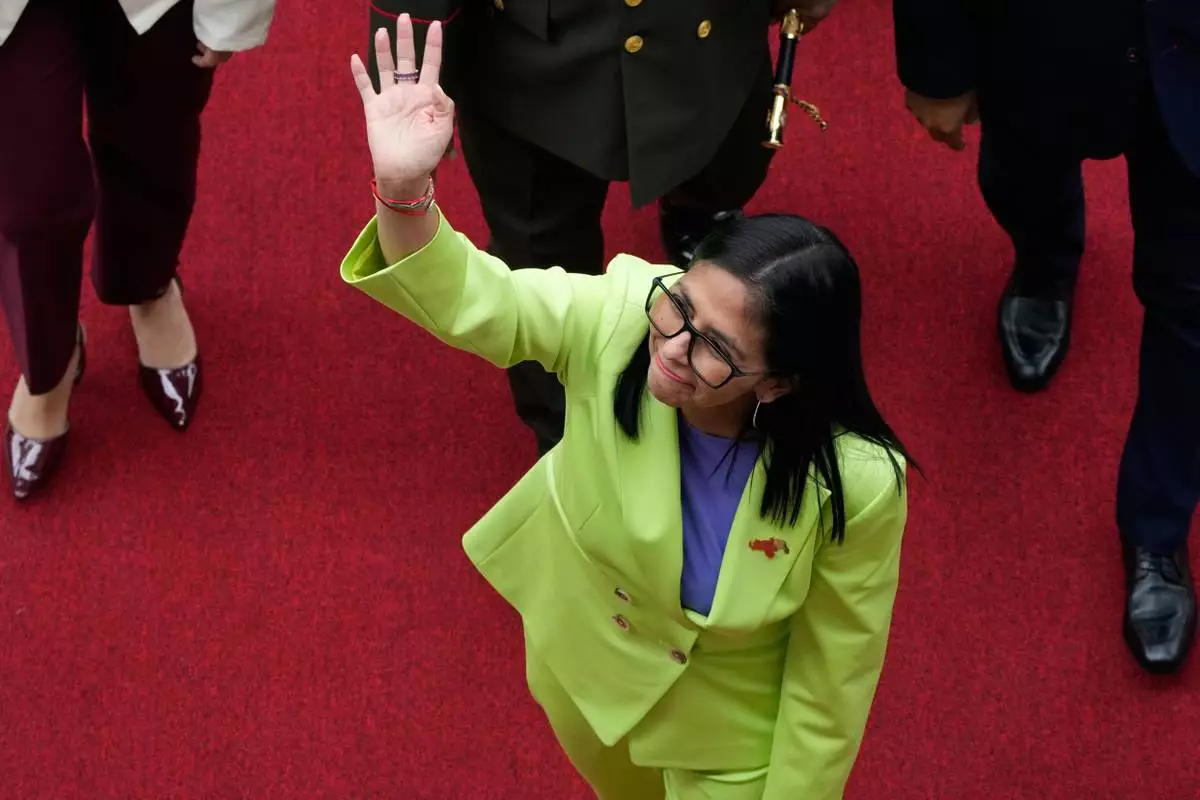
Venezuela's acting President Delcy Rodriguez arrives at the National Assembly in Caracas, Venezuela, Thursday, Jan. 15, 2026. (AP Photo/Ariana Cubillos)
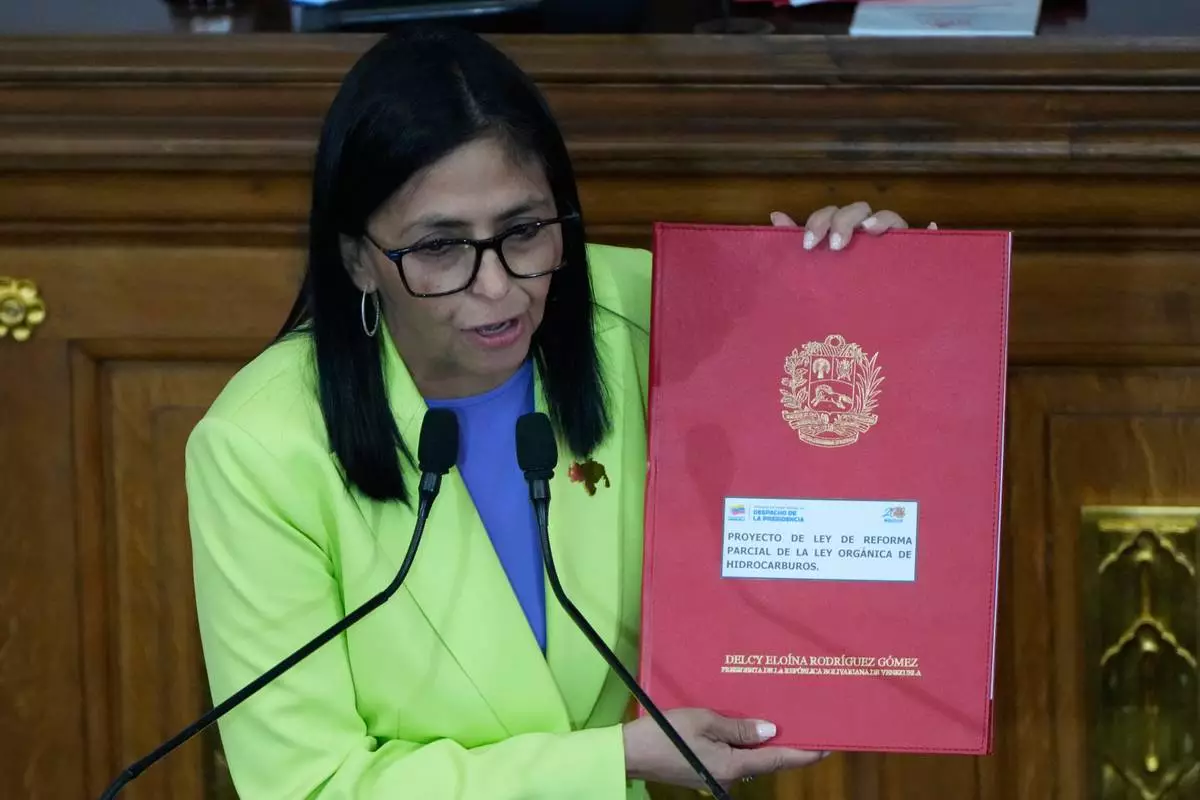
Venezuela's acting President Delcy Rodriguez delivers her first state of the union address at the National Assembly in Caracas, Venezuela, Thursday, Jan. 15, 2026. (AP Photo/Ariana Cubillos)
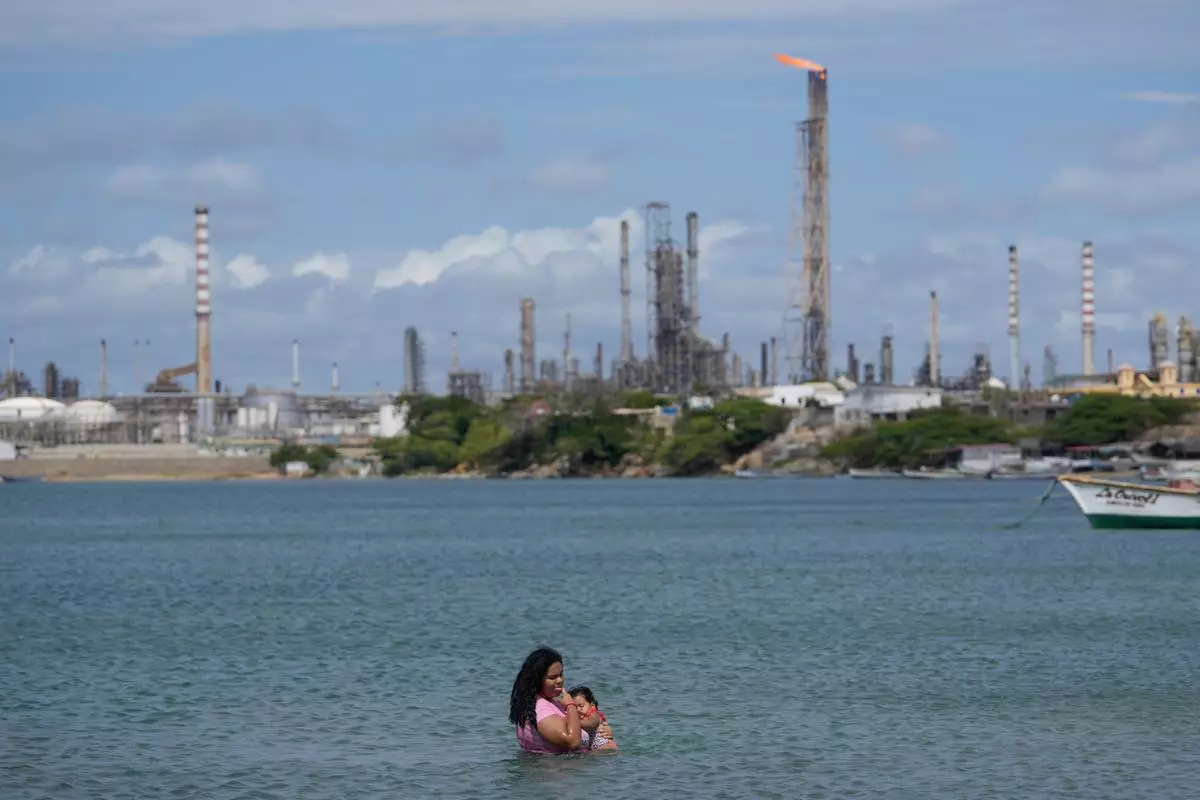
Ceylis Mendez and her daughter Zoe cool off in the Gulf of Venezuela in front of the Cardon oil refinery off the shore of Punta Cardon, Venezuela, Wednesday, Jan. 14, 2026. (AP Photo/Matias Delacroix)
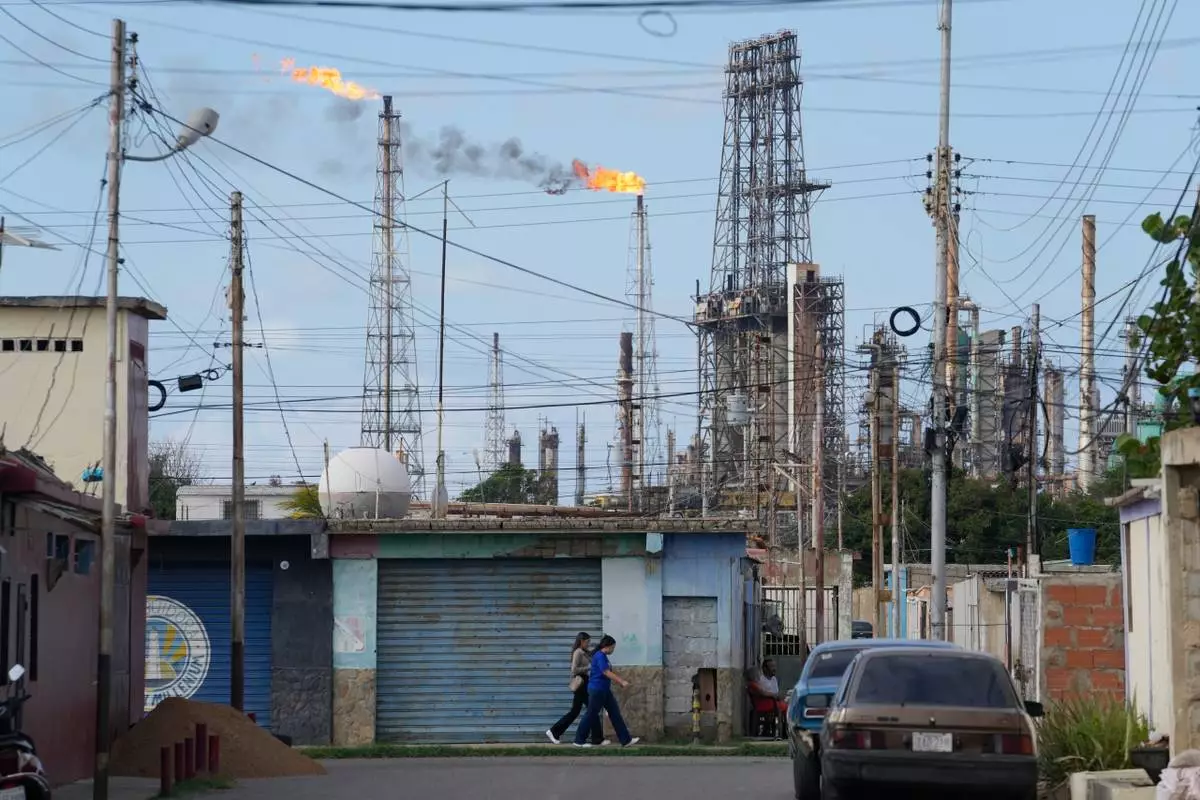
Flames rise from flare stacks at the Amuay refinery in Los Taques, Venezuela, Wednesday, Jan. 14, 2026. (AP Photo/Matias Delacroix)
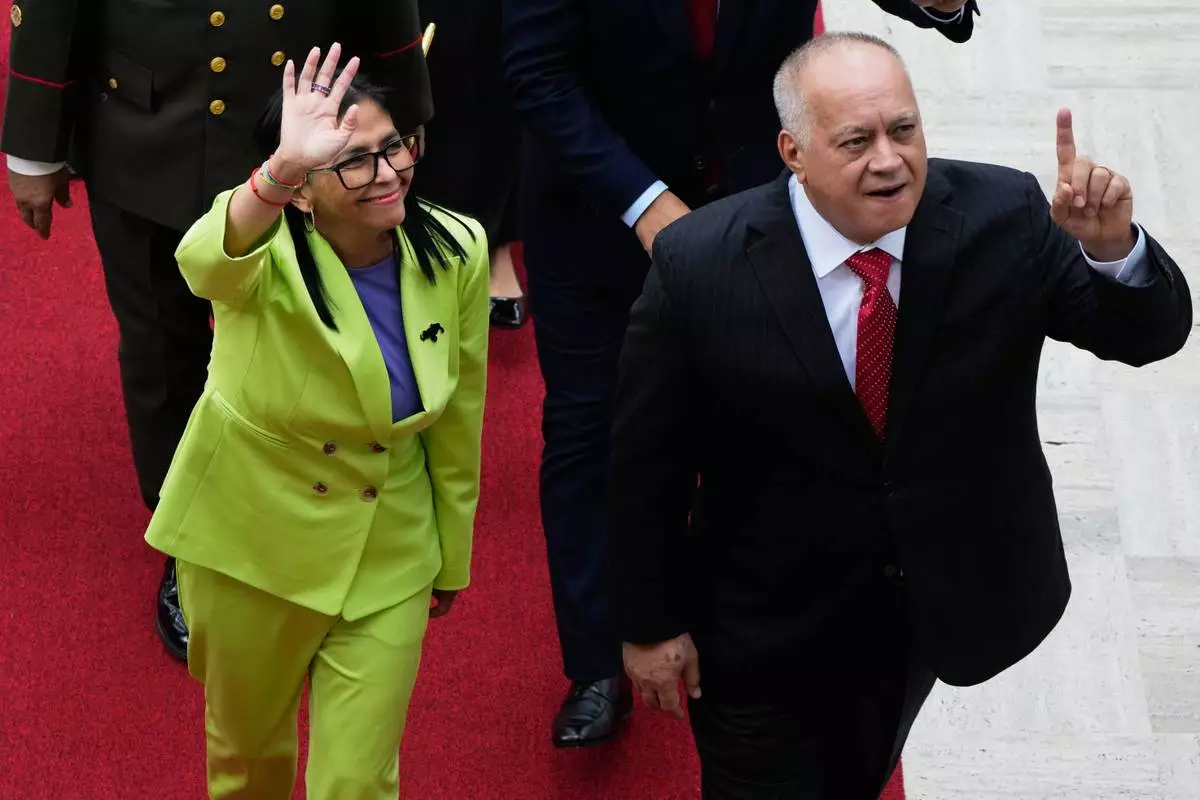
Venezuela's acting President Delcy Rodriguez, left, and Interior Minister Diosdado Cabello arrive at the National Assembly in Caracas, Venezuela, Thursday, Jan. 15, 2026. (AP Photo/Ariana Cubillos)
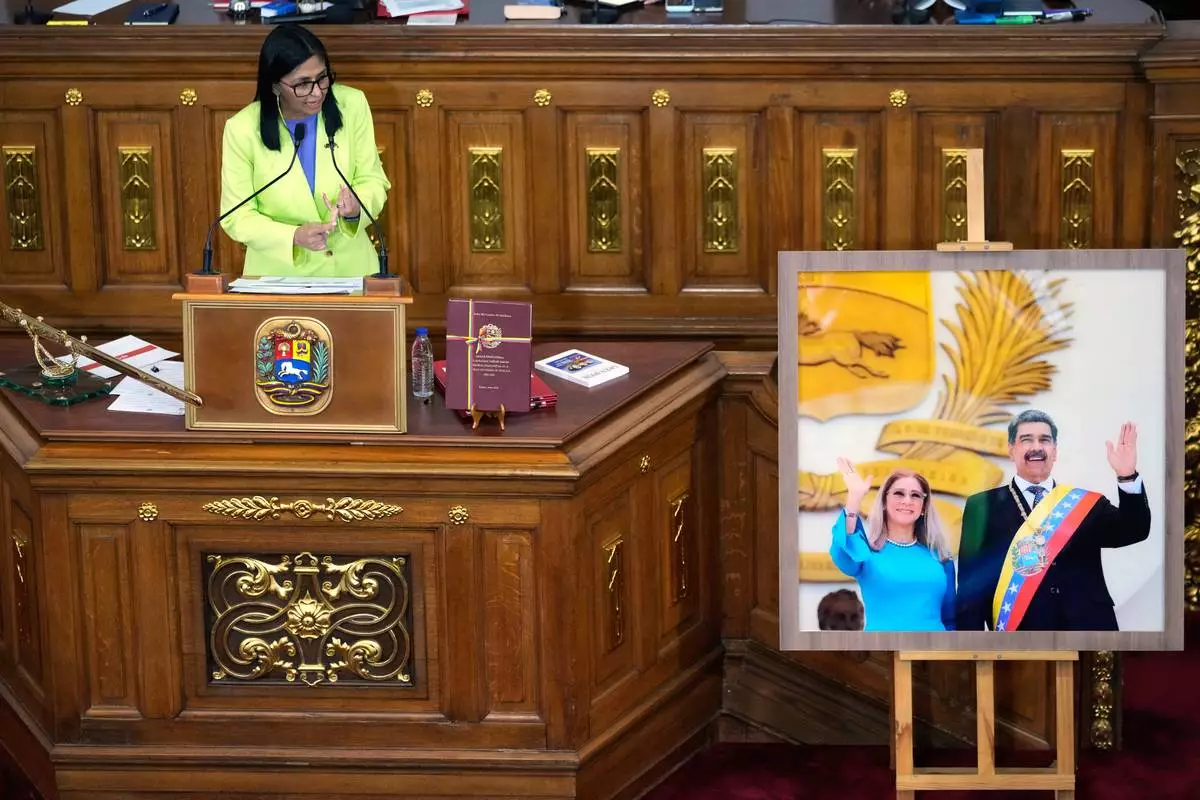
Venezuela's acting President Delcy Rodriguez addresses lawmakers next to a picture of former President Nicolas Maduro and his wife Cilia Flores, at the National Assembly in Caracas, Venezuela, Thursday, Jan. 15, 2026. (AP Photo/Ariana Cubillos)
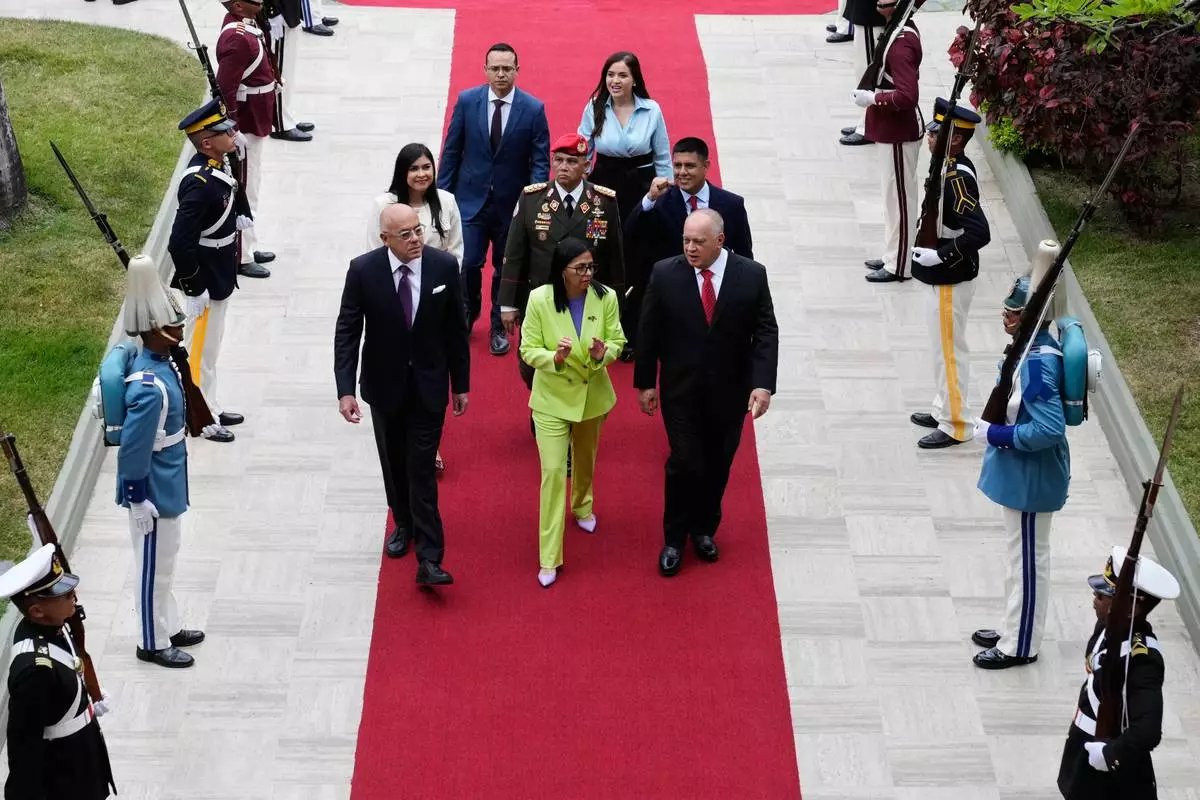
Venezuela's acting President Delcy Rodriguez, center, her brother National Assembly President, Jorge Rodriguez, left, and Interior Minister Diosdado Cabello arrive at the National Assembly in Caracas, Venezuela, Thursday, Jan. 15, 2026. (AP Photo/Ariana Cubillos)
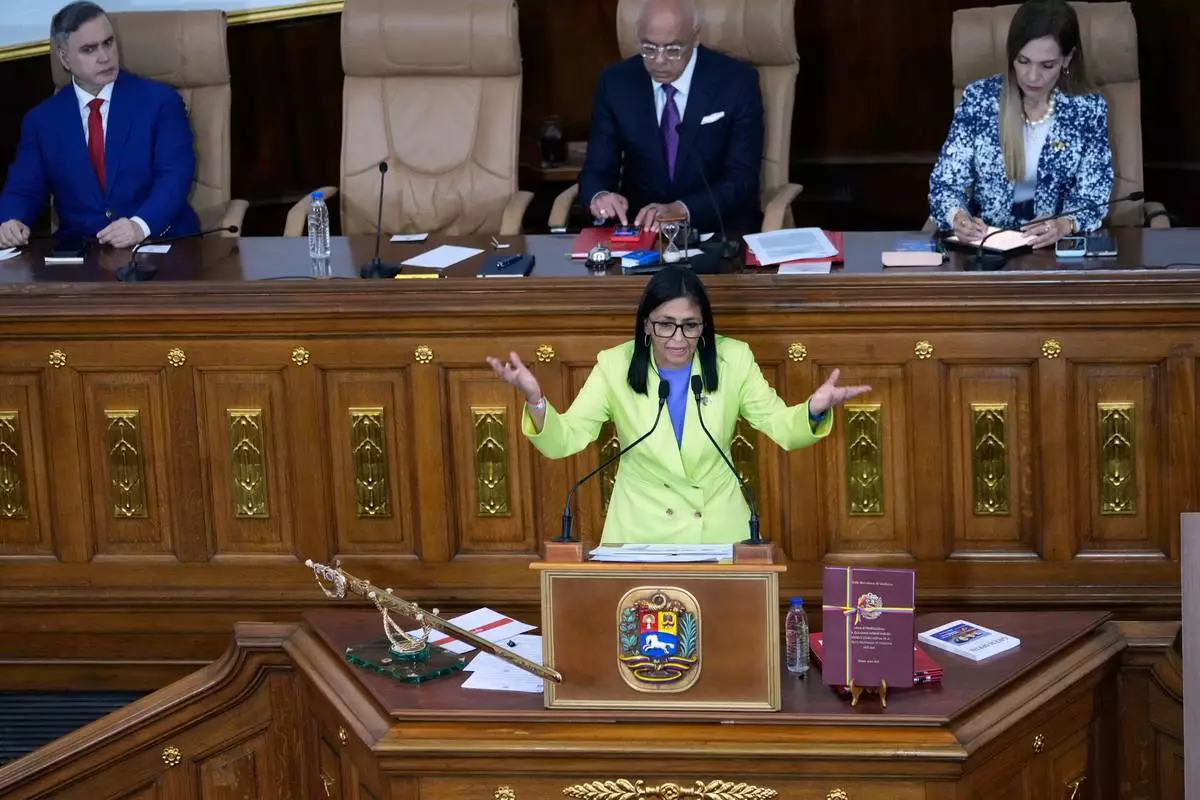
Venezuela's acting President Delcy Rodriguez addresses the National Assembly in Caracas, Venezuela, Thursday, Jan. 15, 2026. (AP Photo/Ariana Cubillos)
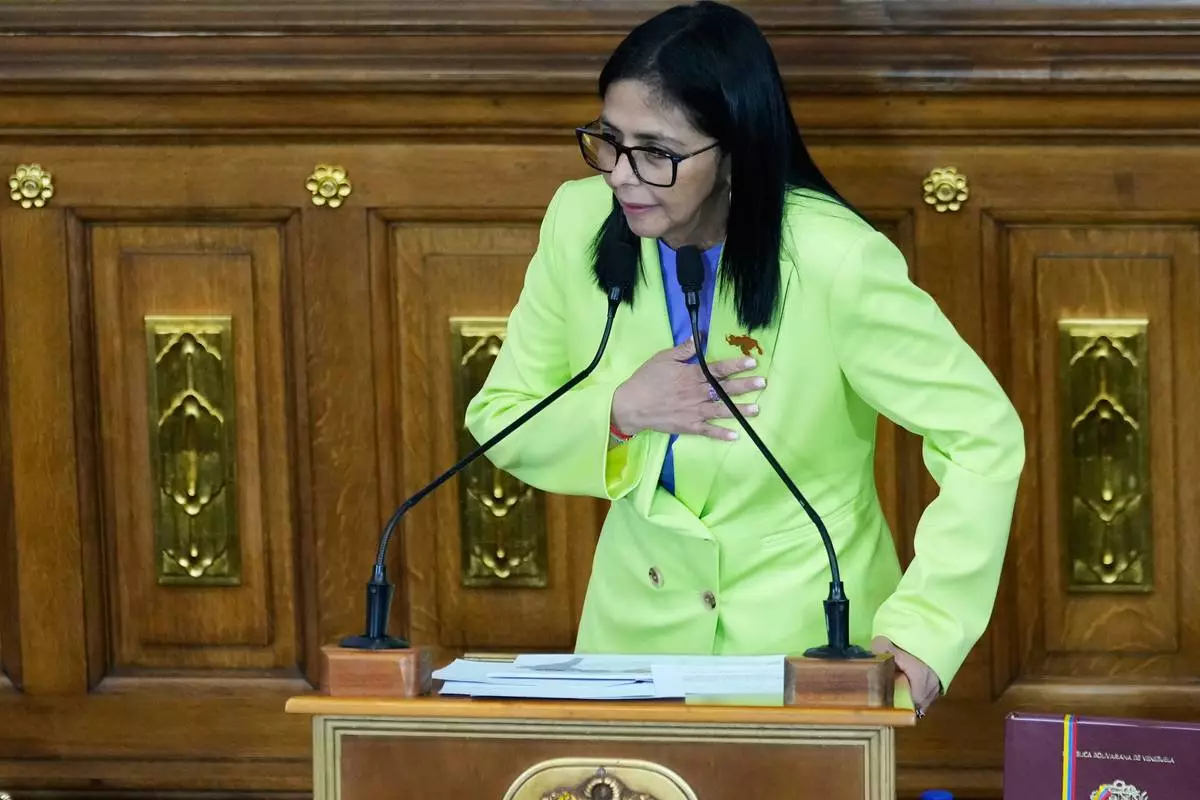
Venezuela's acting President Delcy Rodriguez addresses the National Assembly in Caracas, Venezuela, Thursday, Jan. 15, 2026. (AP Photo/Ariana Cubillos)
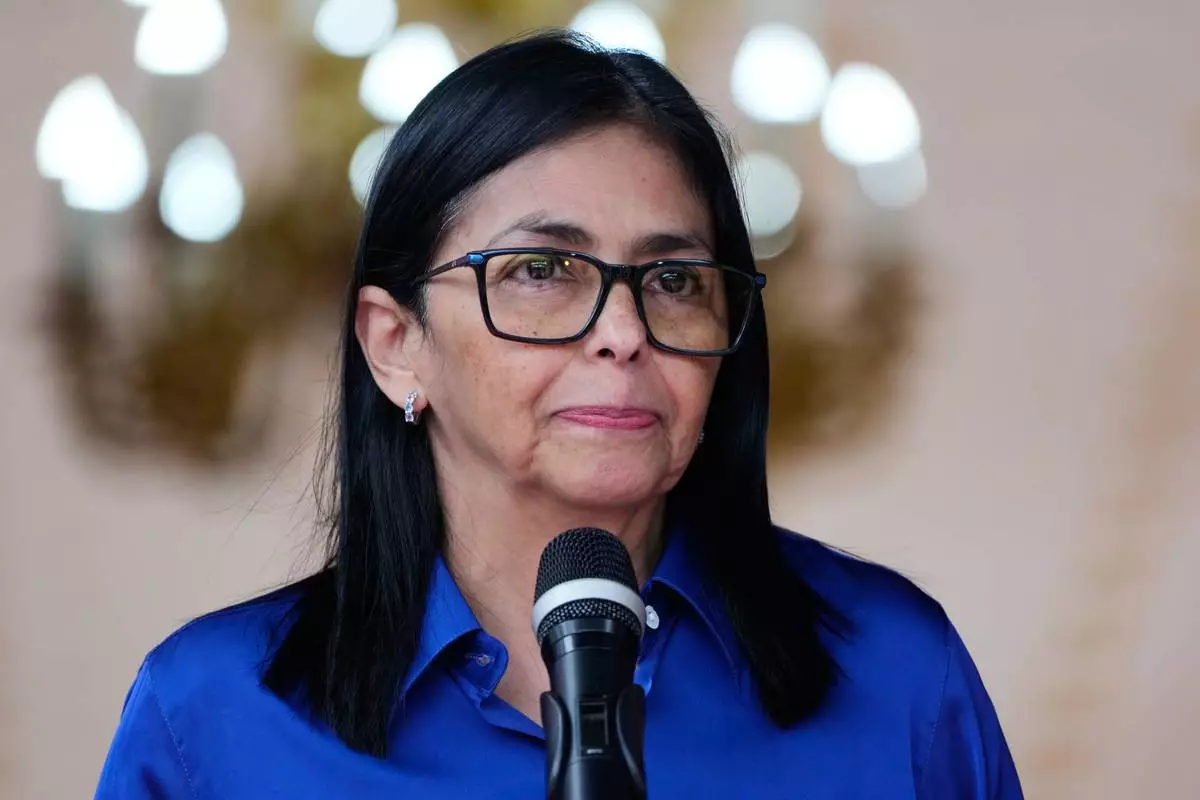
Venezuela's acting President Delcy Rodriguez makes a statement to the press at Miraflores presidential palace in Caracas, Venezuela, Wednesday, Jan. 14, 2026. (AP Photo/Ariana Cubillos)
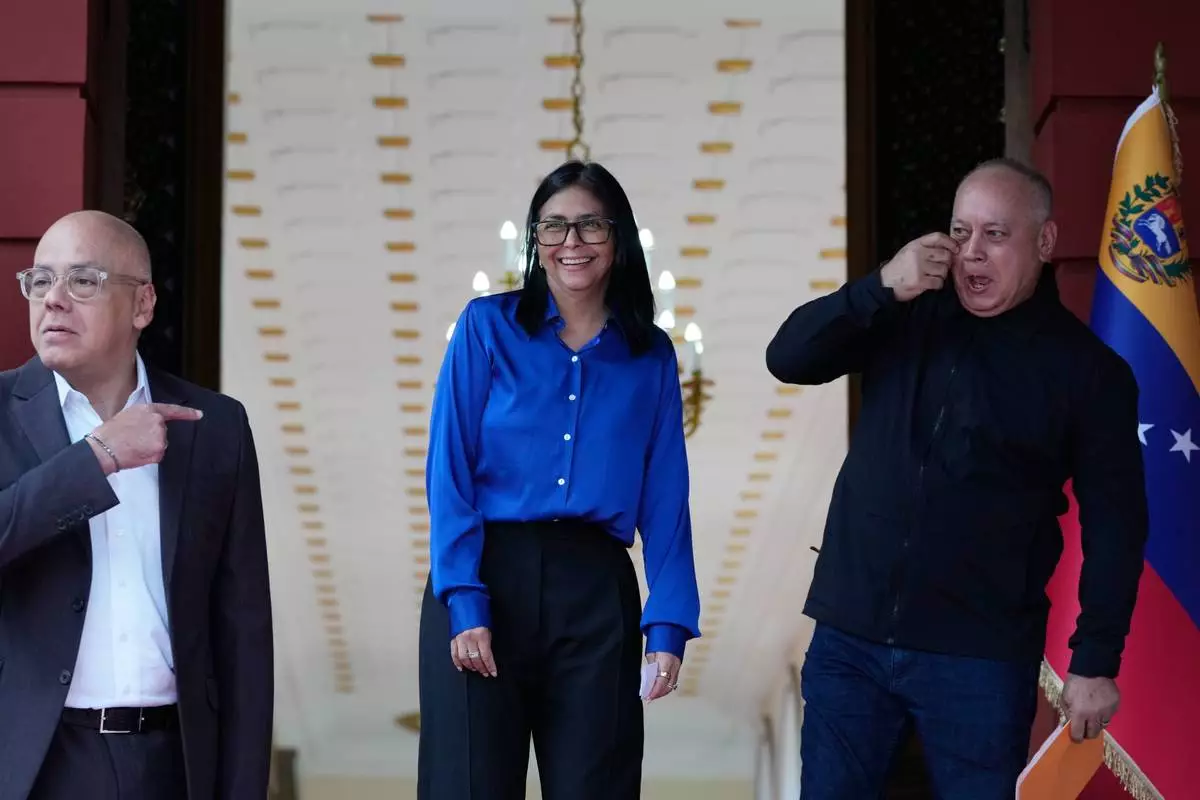
Venezuela's acting President Delcy Rodriguez, center, smiles flanked by Interior Minister Diosdado Cabello, right, and National Assembly President Jorge Rodriguez after making a statement to the press at Miraflores presidential palace in Caracas, Venezuela, Wednesday, Jan. 14, 2026. (AP Photo/Ariana Cubillos)