Skip to Content Facebook Feature Image

Hong Kong and Guangzhou Collaborate on Chikungunya Fever Prevention Amid Rising Global Cases

HK

Hong Kong and Guangzhou Collaborate on Chikungunya Fever Prevention Amid Rising Global Cases
HK

HK

Hong Kong and Guangzhou Collaborate on Chikungunya Fever Prevention Amid Rising Global Cases

2025-07-30 21:52 Last Updated At:22:08

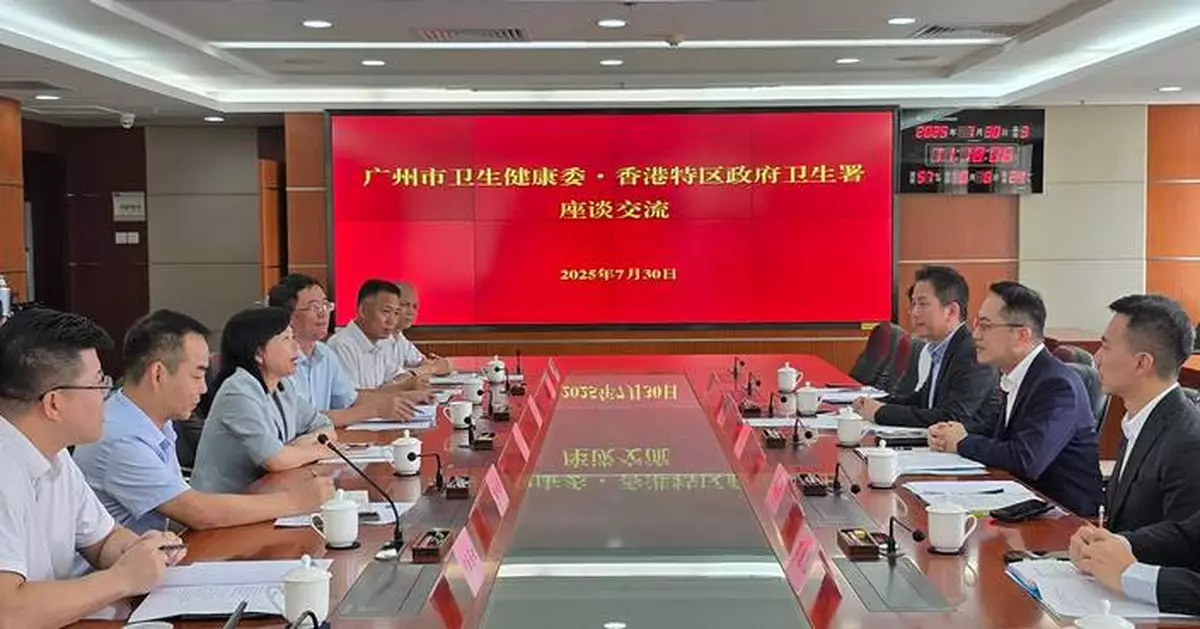
Director of Health meets Director General of Guangzhou Municipal Health Commission to deepen collaboration between Guangzhou and Hong Kong on communicable disease prevention and control

The Director of Health, Dr Ronald Lam, today (July 30) led representatives of the department to meet with Director General of the Guangzhou Municipal Health Commission, Ms Chen Bin, in Guangzhou to learn about the latest situation of Chikungunya fever (CF) in Guangdong Province and Guangzhou and the disease prevention measures, as well as share the emergency preparedness adopted in Hong Kong, to deepen thecollaboration between Guangzhou and Hong Kong on disease prevention and control.

"Thanks to the support of the National Health Commission and the Health Commission of Guangdong Province, the joint prevention and control measures of CF fully demonstrates the continuous and deepening co-operation between Guangdong, Hong Kong and Macao on prevention and control, and emergency response for communicable diseases. Owing to the communicable disease notification mechanism established by the three places, the Centre for Health Protection (CHP) of the Department of Health (DH) has kept abreast of the latest situation of CF in Guangdong Province. To enhance co-operation among professional staff and strengthen experience sharing in epidemic prevention and control, the DH has sent two field epidemiology doctors to join the Foshan Center of Disease Control and Prevention to conduct local epidemiological investigation and epidemic control, including mosquito surveillance, anti-mosquito operations in the community and management of patients, to gain invaluable experience on prevention and control of CF," said Dr Lam.

To further understand the latest epidemic prevention and control situation and measures, the DH has also sent a Principal Medical and Health Officer in the field of epidemiology from the Communicable Disease Branch of the CHP to visit Foshan this afternoon to exchange views on prevention measures on CF with the staff members of the Guangdong Provincial Disease Control and Prevention Administration and Foshan Center of Disease Control and Prevention.

The recent spike in CF cases in multiple regions worldwide (including neighbouring areas), and more frequently travelling among members of the public during summer holidays, pose an extremely high risk of imported cases in Hong Kong. The Government has been gearing up for emergency preparedness in response to the possible imported cases of CF, and intensifying publicity and health education across all fronts.

Public Education

The CHP will hold an online live seminar on its Facebook page from 8.30pm to 9pm tomorrow (July 31), to provide the latest information and health advices on CF, and respond to related enquiries from the public. Members of public are welcome to attend.

The CHP has set up mobile promotional booths at multiple locations across Hong Kong (including public markets, community health centres, and shopping malls) to educate the public on how to prevent mosquito-borne diseases. Details can be viewed atwww.chp.gov.hk/en/other/events/476.html.

Members of the public may visit the CF webpage of the CHP and Travel Health Service for the latest information and health advice.

Forum for the industry

The Infection Control Branch of the CHP and the Infectious Disease Control Training Centre of the Hospital Authority jointly organised the first online forum on July 28 for healthcare professionals from the public and private medical institutions. The forum covered topics on epidemiology and latest epidemic situation in Foshan, diagnosis and clinical management of CF, as well as anti-mosquito measures. The forum enhanced healthcare professionals' knowledge on the disease and its responsive measures through sharing and explanation by experts. The CHP will organise a second forum for healthcare professionals tomorrow.

The CHP also issued letters to all doctors and hospitals in Hong Kong to provide them with the latest epidemiological information and appeal them to watch out for CF-related symptoms among those who return to Hong Kong from outbound travel. If CF cases are detected, they should be immediately referred to hospitals for treatment and reported to the DH in accordance with the established mechanism so that the DH can initiate epidemiological investigations, and implement prevention and control measures.

Latest situation regarding CF

According to the information from the Foshan health authority, as of July 28, there were over 5 600 cases in Foshan. The majority of cases (4 890 cases) were in Shunde District. All cases were mild, with no severe or fatal cases so far. Moreover, confirmed cases were also recorded in other cities in Guangdong Province recently. Regarding Macao, as of July 29, there were six imported cases of CF, four of them travelled toFoshan during the incubation period.

In 2019, Hong Kong recorded 11 imported cases of CF. There have been no CF cases since 2020.

Director of Health meets Director General of Guangzhou Municipal Health Commission to deepen collaboration between Guangzhou and Hong Kong on communicable disease prevention and control  Source: HKSAR Government Press Releases

Director of Health meets Director General of Guangzhou Municipal Health Commission to deepen collaboration between Guangzhou and Hong Kong on communicable disease prevention and control Source: HKSAR Government Press Releases
CHP urges public to promptly receive seasonal influenza vaccination as another severe paediatric influenza infection case reported

The Centre for Health Protection (CHP) of the Department of Health (DH) today (January 18) recorded a severe paediatric influenza infection case. The CHP again reminded parents to arrange for their children to receive a free seasonal influenza vaccination (SIV) promptly. The SIV remains one of the most effective methods of preventing influenza and its complications, and can reduce the risk of serious complications or death from infection.

The case involves a 14-year-old boy with underlying illness. He developed a fever, shortness of breath and productive cough since January 16. He sought medical attention at the Accident and Emergency Department of Pamela Youde Nethersole Eastern Hospital on January 17 and was transferred to the paediatric intensive care unit for further management on the same day. He is currently in critical condition. His respiratory specimen tested positive for influenza A virus upon laboratory testing. The clinical diagnosis is influenza A infection complicated with severe pneumonia and septic shock.

A preliminary investigation revealed that the boy received the 2025/26 SIV only three days before onset of illness. As it generally takes two weeks for the body to develop sufficient protection after vaccination, the boy was not protected by the vaccine. Therefore, it is not counted as being vaccinated. The boy had no travel history during the incubation period. Two of his household contacts developed mild respiratory symptoms earlier. The nasal swab sample of one of the household contacts tested positive for influenza A virus via rapid antigen test. The symptoms were mild and hospitalisation was not required.

The summer influenza season just ended had recorded 25 severe paediatric influenza cases, including three fatal cases. The affected children were aged between 6 months to 17 years old. Among them, 20 cases (80 per cent) had not received an SIV (including one case who received the 2025/26 SIV only four days before onset of illness).

"The summer influenza season was ended. However, influenza activity may rise again as the weather remains cold in the first quarter of this year and it cannot be ruled out that the circulating virus strains may change as the winter influenza season approaches. Therefore, I once again urge all individuals aged 6 months or older, except those with known contraindications, to act promptly if they have not yet received an SIV. This includes those who contracted influenza during the summer influenza season in order to guard against other circulating virus strains that may emerge during the upcoming winter influenza season. Furthermore, although there are some antigenic differences between the currently circulating influenza A (H3) virus strain and the virus strain contained in the vaccine, scientific research indicates that this season's influenza vaccines can still offer protection against the variant strain of subclade K, as well as the influenza A (H1) and influenza B strains included in the vaccine," the Controller of the CHP, Dr Edwin Tsui, said.

"Although the influenza activity has declined to below the baseline level at the moment, outbreaks caused by influenza viruses still occurred in schools and residential care homes. For children who did not join the SIV School Outreach Programme, parents should promptly bring their children toprivate doctorsenrolled in the Vaccination Subsidy Scheme to receive an SIV. In addition, the SIV coverage rate for children aged 6 months to under 2 years is only about 23 per cent. Although this represents an approximate 4 percentage point increase compared to the same period last year, it is still much lower than that of other age groups. Through the Primary Healthcare Commission, the CHP has urged family doctors to assist in encouraging parents to allow their children to receive an SIV," Dr Tsui added.

He also reminded members of the public that, especially for children, the elderly and those with underlying illnesses, they should seek medical advice promptly for early treatment if they present with fever and respiratory symptoms. As children with influenza can deteriorate rapidly, parents must pay close attention to their children's condition. They should go to an Accident and Emergency Department immediately if the child's condition deteriorates, for example, if they develop symptoms such as shortness of breath, wheezing, blue lips, chest pain, confusion, a persistent fever or convulsions.

Separately, high-risk individuals should wear surgical masks when staying in crowded places. People with respiratory symptoms, even if mild, should wear a surgical mask and seek medical advice promptly. They should also consider whether to attend work or school.

In addition to issuing timely reminders to healthcare professionals and schools based on the latest seasonal influenza development, the CHP also uploads the latest seasonal influenza information on its website weekly. Members of the public can visit the CHP'sseasonal influenzaandCOVID-19 & Flu Expresswebpages.

Source: AI-found images

Source: AI-found images

Recommended Articles