Skip to Content Facebook Feature Image

Ivory Coast leader's bid for a 4th term after rivals sidelined is seen as a risk for democracy

News

Ivory Coast leader's bid for a 4th term after rivals sidelined is seen as a risk for democracy
News

News

Ivory Coast leader's bid for a 4th term after rivals sidelined is seen as a risk for democracy

2025-07-31 00:24 Last Updated At:00:31

LAGOS, Nigeria (AP) — The decision of Ivory Coast’s President Alassane Ouattara to run for a fourth term risks a return to a past era of “old guard dictator rule" in a region where democracy is increasingly being challenged, an analyst warned on Wednesday.

Ibrahim Anoba, an Africa affairs analyst at the Atlas Network, spoke to The Associated Press a day after Ouattara ended months of speculation about his contested candidacy in the October election with an announcement that is likely to lead to the extension of a presidency that started in 2010.

While Ouattara, 83, said his decision to run was informed by the “unprecedented security, economic and monetary challenges” the country faces, his announcement comes after the disqualification of most of his prominent rivals, including former Credit Suisse chief executive Tidjane Thiam.

After changing the constitution in 2016 to remove presidential term limits, Ouattara is the latest leader in West and Central Africa to attempt to stay in power with little or no challenge from a weakened opposition.

Togo’s Faure Gnassingbé swapped the presidential system with a parliamentary system and introduced a new all-powerful role, while in Cameroon Paul Biya is eyeing an eighth term after being in power since 1982, nearly half his lifetime. Central African Republic’s Faustin Touadera is seeking a third term amid a constitutional controversy.

With Ivory Coast considered a regional powerhouse, analysts say a weakened opposition and the constitutional change that kept Ouattara in power could lead the country to an era of one-man rule.

Opposition protests against Ouattara have been blocked, and several protesters have been arrested and accused of disturbing public order.

“We might be sliding back to that era of old men, old guard dictator rule in West Africa because (of) the attitude of the military and equally the civilian rulers,” said Anoba. “And the announcement by Ouattara is a reflection of that reality.”

Opposition politicians are now rallying against Ouattara, which could feed into a growing wave of discontent among citizens battling declining economies and security challenges.

“It is a repetition of the same problem that we have seen lead to the same consequences,” said Anoba.

West and Central Africa has recorded eight coups since 2020, with military juntas sometimes pointing to the lack of fair democratic processes as one reason for deposing elected governments.

The spate of power grabs by military forces has reconfigured the region’s geopolitical lines and split the decades-old regional bloc known as ECOWAS, while some countries now look to Russia and prune ties with traditional allies such as the United States and France.

Periodic elections have been used by others to maintain democratic credentials, but analysts say the trend of constitutional changes and attacks on opposition have been no different from the military powers that have extended their stay in power.

“What we are having at the moment across West and Central Africa is status-quo elections,” said Beverly Ochieng, a senior analyst at Control Risks. “They end up reinforcing the authority and executive power of the incumbent in a way the opposition parties are not able to challenge it.”

Ochieng added: “There is also almost like an equivalent in the sense that people want to prolong their stay in power and are willing to use constitutional and transitional means to achieve."

Ivory Coast has maintained its reputation as one of Africa’s most stable democracies, especially after its ruinous civil wars. It has established itself as a major African economic power, mostly due to the policies of Ouattara’s presidency.

However, beneath the veneer of stability is a firm grip on government institutions that makes it impossible for the opposition to challenge the ruling party, analysts say.

Ivory Coast in the past has experienced some electoral violence, which killed several people, following the civil war in 2011 when then-leader Laurent Gbagbo refused to concede defeat after losing the election. Some 3,000 people were killed in the violence that followed.
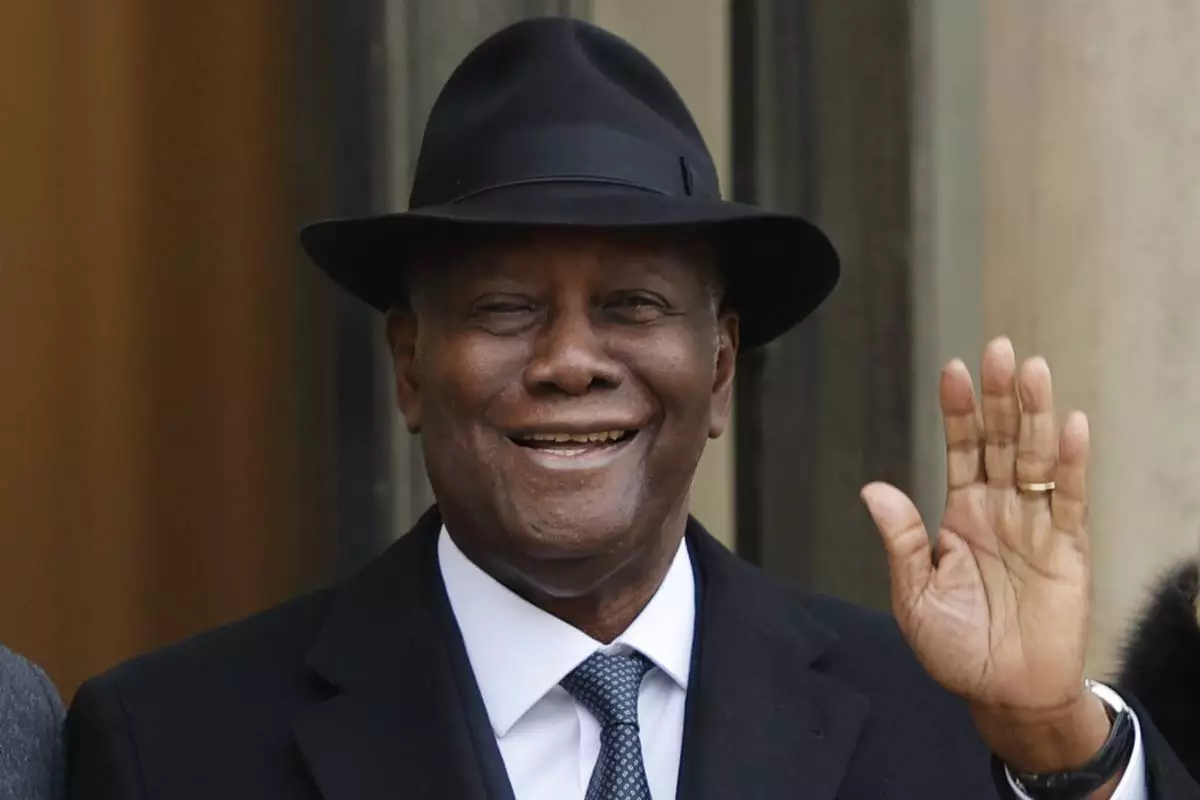
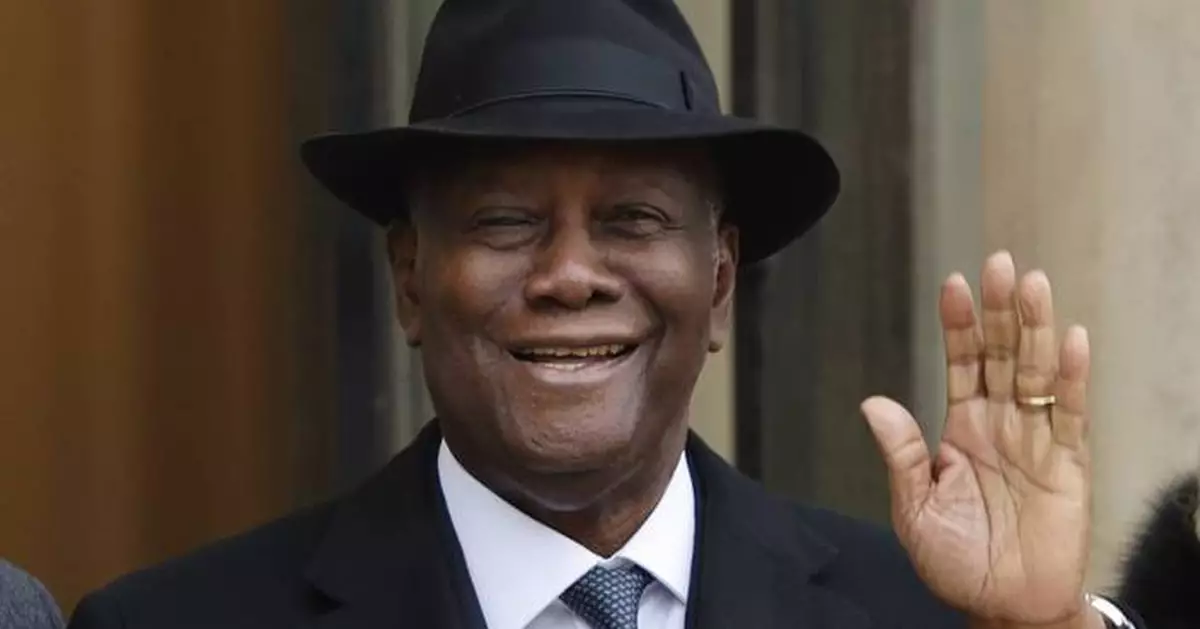
FILE - Ivory Coast President Alassane Ouattara waves before a working lunch at the Elysee Palace Wednesday, Jan. 25, 2023 in Paris. (AP Photo/Lewis Joly, File)

FILE - Ivory Coast President Alassane Ouattara waves before a working lunch at the Elysee Palace Wednesday, Jan. 25, 2023 in Paris. (AP Photo/Lewis Joly, File)
SEOUL, South Korea (AP) — A South Korean court sentenced former President Yoon Suk Yeol to five years in prison Friday in the first verdict from eight criminal trials over the martial law debacle that forced him out of office and other allegations.

Yoon was impeached, arrested and dismissed as president after his short-lived imposition of martial law in December 2024 triggered huge public protests calling for his ouster.

The most significant criminal charge against him alleges that his martial law enforcement amounted to a rebellion, and the independent counsel has requested the death sentence in the case that is to be decided in a ruling next month.

In Friday's case, the Seoul Central District Court sentenced Yoon for defying attempts to detain him, fabricating the martial law proclamation and sidestepping a legally mandated full Cabinet meeting.

Yoon has maintained he didn’t intend to place the country under military rule for an extended period, saying his decree was only meant to inform the people about the danger of the liberal-controlled parliament obstructing his agenda. But investigators have viewed Yoon’s decree as an attempt to bolster and prolong his rule, charging him with rebellion, abuse of power and other criminal offenses.

Judge Baek Dae-hyun said in the televised ruling that imposing “a grave punishment” was necessary because Yoon hasn’t shown remorse and has only repeated “hard-to-comprehend excuses.” The judge also restoring legal systems damaged by Yoon’s action was necessary.

Yoon, who can appeal the ruling, hasn’t immediately publicly responded to the ruling. But when the independent counsel demanded a 10-year prison term in the case, Yoon’s defense team accused them of being politically driven and lacking legal grounds to demand such “an excessive” sentence.

Prison sentences in the multiple, smaller trials Yoon faces would matter if he is spared the death penalty or life imprisonment at the rebellion trial.

Park SungBae, a lawyer who specializes in criminal law, said there is little chance the court would decide Yoon should face the death penalty in the rebellion case. He said the court will likely issue a life sentence or a sentence of 30 years or more in prison.

South Korea has maintained a de facto moratorium on executions since 1997 and courts rarely hand down death sentences. Park said the court would take into account that Yoon’s decree didn’t cause casualties and didn’t last long, although Yoon hasn’t shown genuine remorse for his action.

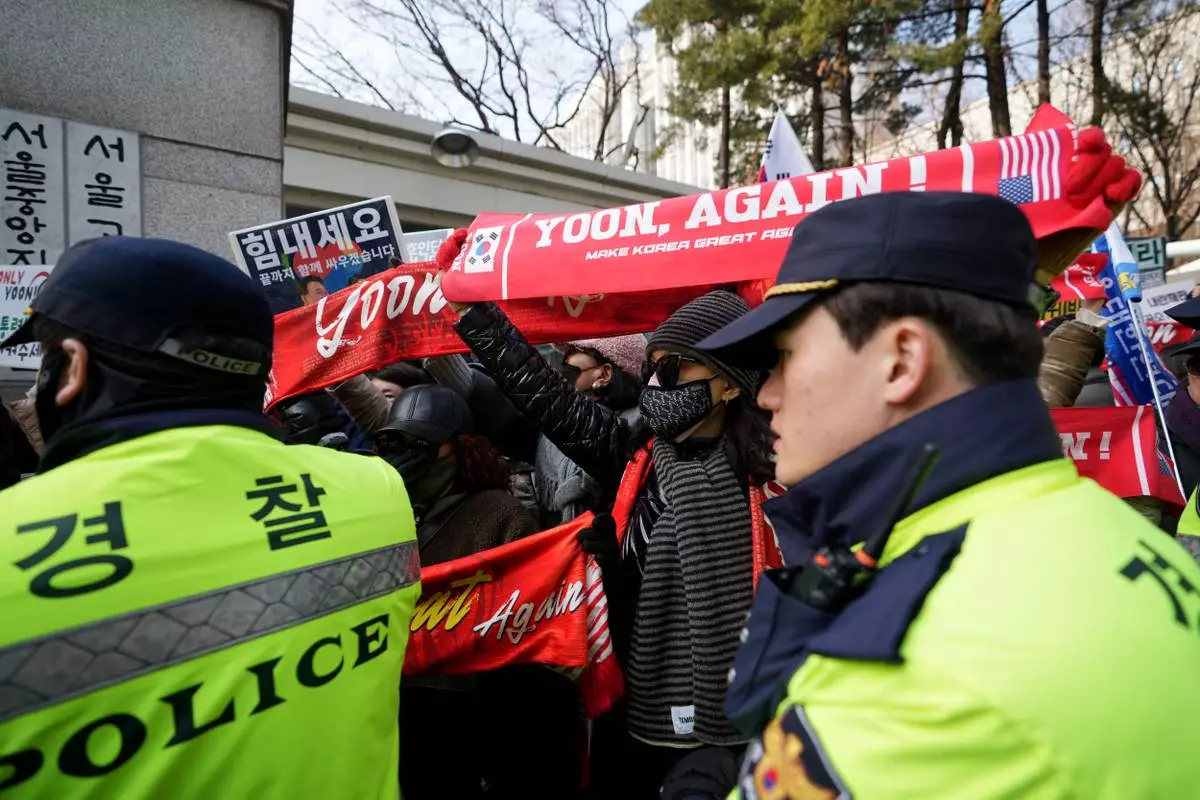
A supporter of former South Korean President Yoon Suk Yeol shouts slogans outside Seoul Central District Court, in Seoul, South Korea, Friday, Jan. 16, 2026. (AP Photo/Lee Jin-man)

A supporter of former South Korean President Yoon Suk Yeol shouts slogans outside Seoul Central District Court, in Seoul, South Korea, Friday, Jan. 16, 2026. (AP Photo/Lee Jin-man)

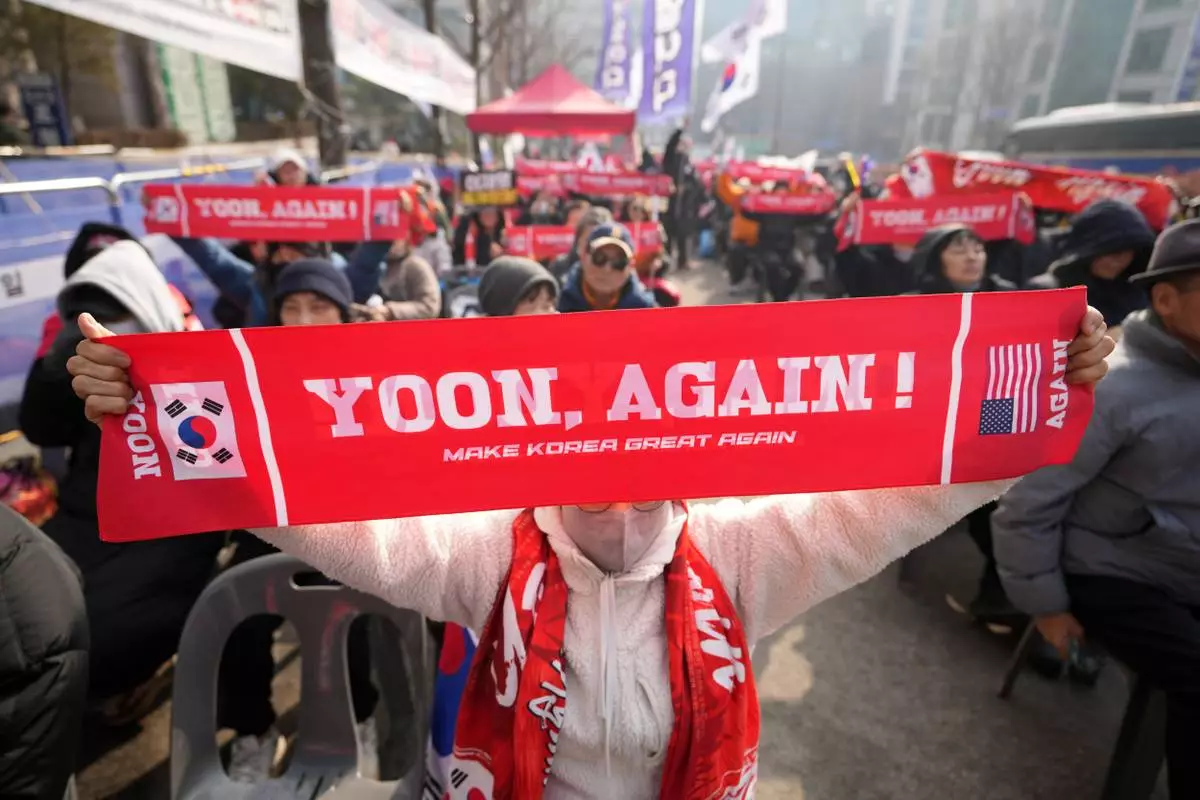
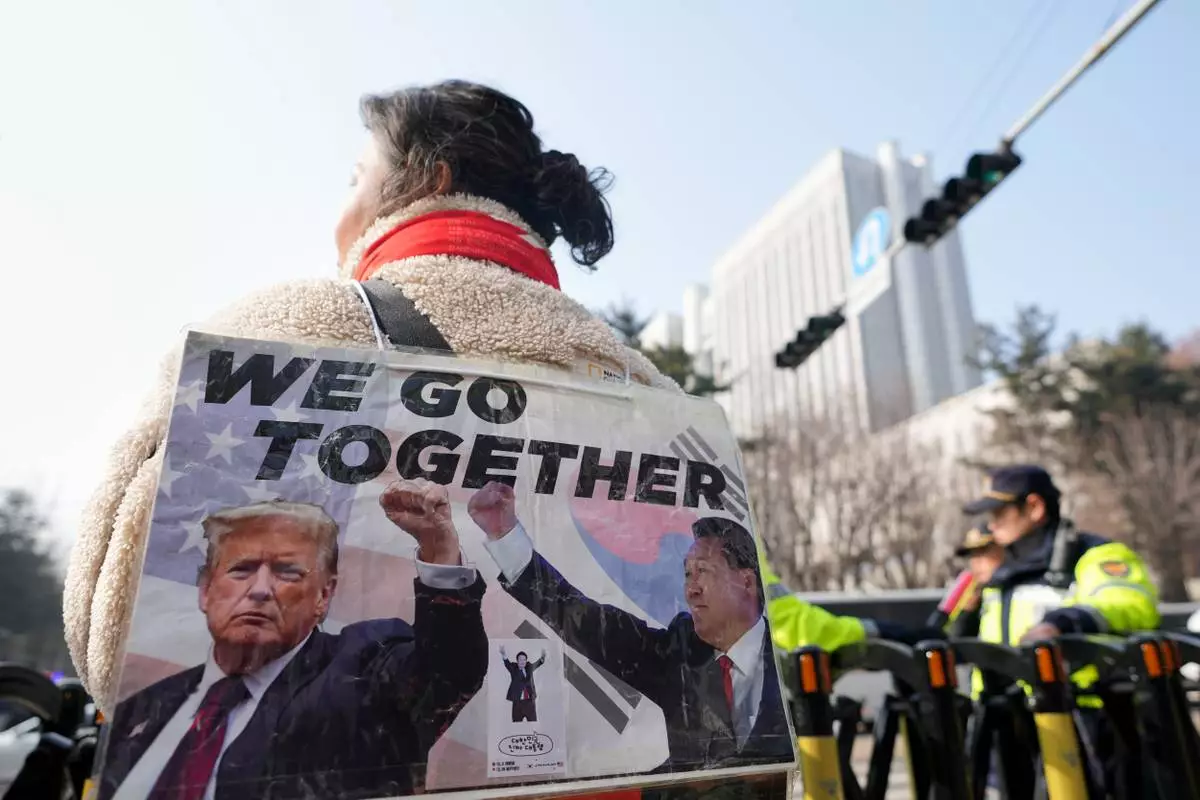
Supporters of former South Korean President Yoon Suk Yeol hold signs and flags outside Seoul Central District Court, in Seoul, South Korea, Friday, Jan. 16, 2026. (AP Photo/Lee Jin-man)

Supporters of former South Korean President Yoon Suk Yeol hold signs and flags outside Seoul Central District Court, in Seoul, South Korea, Friday, Jan. 16, 2026. (AP Photo/Lee Jin-man)

A supporter of former South Korean President Yoon Suk Yeol waits for a bus carrying former South Korean President Yoon Suk Yeol outside Seoul Central District Court, in Seoul, South Korea, Friday, Jan. 16, 2026. (AP Photo/Lee Jin-man)

A supporter of former South Korean President Yoon Suk Yeol waits for a bus carrying former South Korean President Yoon Suk Yeol outside Seoul Central District Court, in Seoul, South Korea, Friday, Jan. 16, 2026. (AP Photo/Lee Jin-man)

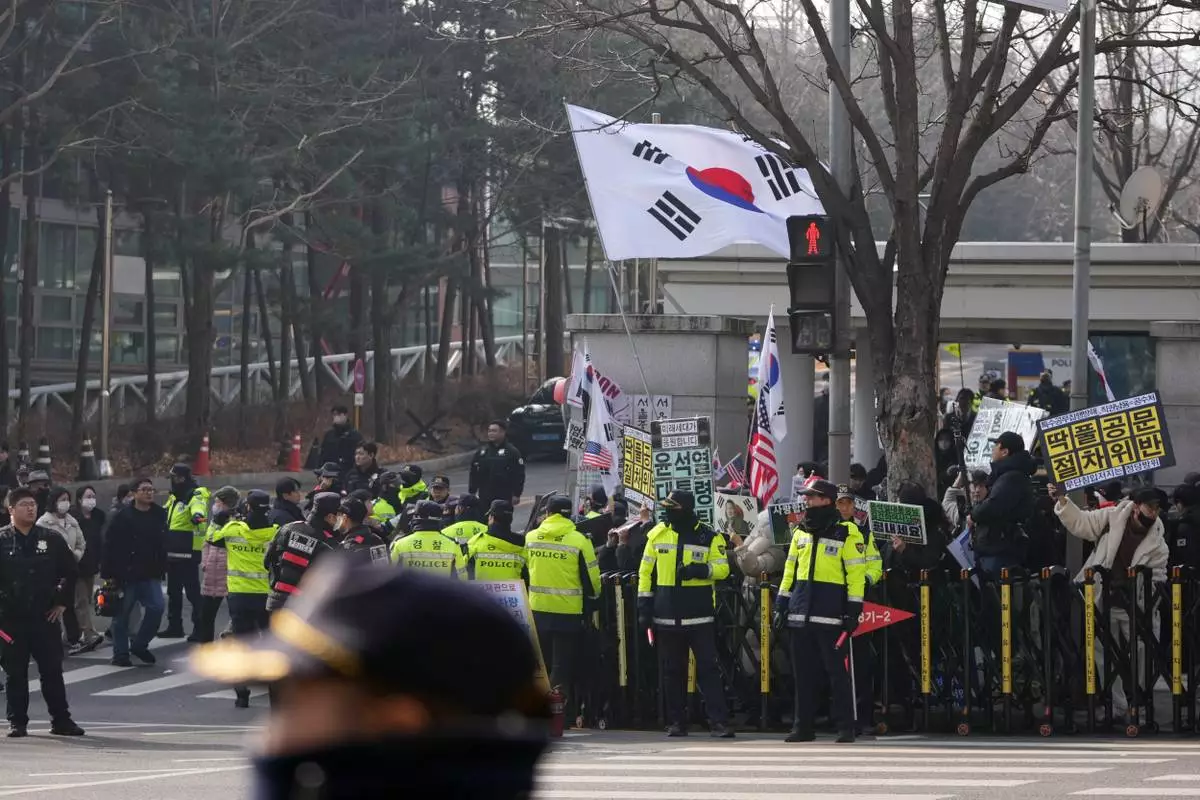
Supporters of former South Korean President Yoon Suk Yeol hold signs as police officers stand guard outside Seoul Central District Court, in Seoul, South Korea, Friday, Jan. 16, 2026. (AP Photo/Lee Jin-man)

Supporters of former South Korean President Yoon Suk Yeol hold signs as police officers stand guard outside Seoul Central District Court, in Seoul, South Korea, Friday, Jan. 16, 2026. (AP Photo/Lee Jin-man)

Supporters of former South Korean President Yoon Suk Yeol hold signs and flags outside Seoul Central District Court, in Seoul, South Korea, Friday, Jan. 16, 2026. (AP Photo/Lee Jin-man)

Supporters of former South Korean President Yoon Suk Yeol hold signs and flags outside Seoul Central District Court, in Seoul, South Korea, Friday, Jan. 16, 2026. (AP Photo/Lee Jin-man)

Supporters of former South Korean President Yoon Suk Yeol hold signs outside Seoul Central District Court, in Seoul, South Korea, Friday, Jan. 16, 2026. (AP Photo/Lee Jin-man)

Supporters of former South Korean President Yoon Suk Yeol hold signs outside Seoul Central District Court, in Seoul, South Korea, Friday, Jan. 16, 2026. (AP Photo/Lee Jin-man)

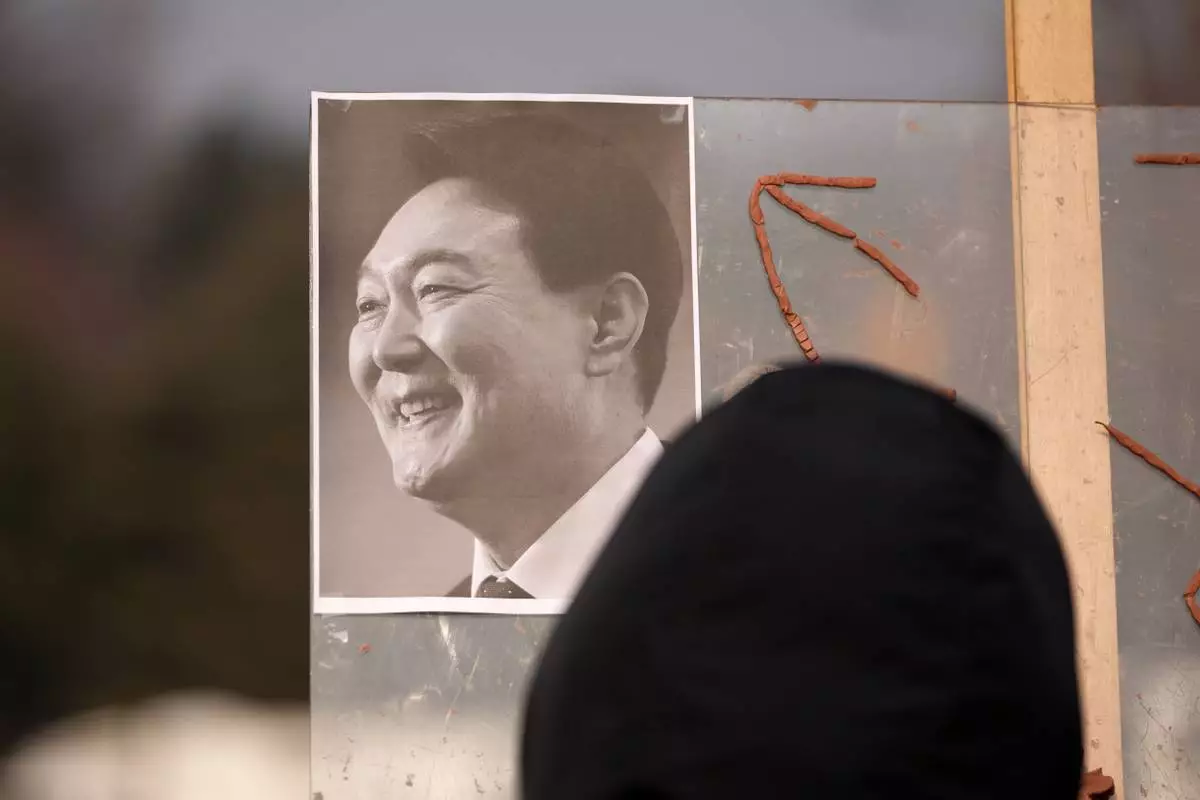
A picture of former South Korean President Yoon Suk Yeol is placed on a board as supporters gather outside Seoul Central District Court, in Seoul, South Korea, Friday, Jan. 16, 2026. (AP Photo/Lee Jin-man)

A picture of former South Korean President Yoon Suk Yeol is placed on a board as supporters gather outside Seoul Central District Court, in Seoul, South Korea, Friday, Jan. 16, 2026. (AP Photo/Lee Jin-man)

Recommended Articles