LA PAZ, Bolivia (AP) — It's no surprise that Samuel Doria Medina is running for president of Bolivia: The 66-year-old multimillionaire ran as a center-right candidate in the elections of 2005, 2009 and 2014. He failed each time as Bolivia's leftist ruling party, founded by former President Evo Morales, maintained a tight grip over politics.
What’s unexpected is that next month, after almost two decades of the Movement Toward Socialism (MAS) party in power, the candidate who promises to arrest Morales and cozy up to U.S. President Donald Trump stands a real chance of victory.
Polls show Doria Medina, owner of hotel chains and Bolivia’s Burger King restaurants, as a front-runner in the Aug. 17 election.
"Not only are we going to change the president, but the political cycle," Doria Medina, a former cement magnate, told The Associated Press Wednesday from his sleek office on the 20th floor of one of Bolivia’s tallest towers that he helped build. “Part of that change will be the emergence of new figures.”
Doria Medina, a successful businessman and entrepreneur, is tapping public outrage over Bolivia’s worst economic crisis since 1991.
He promises unity to voters frustrated by the fracturing of the MAS party between current President Luis Arce and his erstwhile ally, the larger-than-life Morales, who oversaw a so-called economic miracle of rising growth and falling poverty for much of his tenure from 2006-2019.
But Morales' statist economic model, built on natural gas exports, has gone bust. Now the landlocked nation of 12 million is approaching a watershed moment as crippling dollar shortages, mass unrest and fuel scarcity threaten the once-unquestioned dominance of the MAS party founded in the 1990s.
“We have a population that wants the economic conflict and lack of fuel to be solved,” Doria Medina said.
Much remains uncertain in the run-up to the highly anticipated vote, with Morales’ large base of loyalists vowing to leave their ballots blank on account of the former president’s contentious exclusion from the race — in part a result of his bitter political fight with Arce.
Facing a humiliating defeat, Arce dropped out of the race.
The only leftist candidate leading polls is Andrónico Rodríguez, the 36-year-old president of the senate and vice president of Morales’ coca-farming union. Rodríguez would be considered the political heir of Morales' MAS if it weren't for Morales branding him a traitor for running against him.
With other opposition candidates further to the right, analysts see the moderate Doria Medina as best-positioned to win over traditional MAS party supporters as he promises to put the brakes on the foreign exchange rate and resolve fuel shortages within his first 100 days.
The value of a boliviano on the black market is now around half the official exchange rate.
“This type of crisis has to be resolved very quickly," Doria Medina said, citing as a model the shock adjustment of radical libertarian President Javier Milei that drove down Argentina's double-digit inflation.
To achieve such a swift transformation, Doria Medina told AP he would first scrap fuel subsidies, which have long been a politically sensitive pillar of the MAS party’s economic policy. When Morales tried to eliminate the generous subsidies in 2010, mass nationwide riots forced him to backtrack.
“It's the biggest absurdity that in Bolivia it's $0.30 per liter of gasoline and in all neighboring countries it's $1,” Doria Medina said, dismissing possible fallout from the move. Bolivia hemorrhaged $3 billion subsidizing gasoline and fuel last year.
Doria Medina said his overhaul of subsidies and state-owned companies would accompany a major foreign policy shift after years of Bolivia aligning itself with China, Iran and Russia.
“Of course we're going to seek rapprochement with the United States,” he said. “We're obviously going to try to have an agreement so that Bolivian products can reach the largest market in the world.”
Arguably the biggest potential prize for the U.S. is Bolivia's large stockpiles of strategic minerals, including lithium, a key component of renewable batteries. Chinese and Russian companies have sought stakes in Bolivian lithium mines that remain largely undeveloped despite Morales' attempts and Arce's ambitions.
After being run out of the presidential election and hit with an arrest warrant on charges related to his sexual relationship with a 15-year-old girl, Morales remains holed up in his tropical stronghold. He says the allegations are politically motivated.
Doria Medina was blunt when asked about the fate of Morales if he were to be elected.
“One must comply with the law,” he said. “There is an award for his arrest. I'm going to comply with the law.”
Pressed on whether this meant prison time for Morales, he said yes, adding that he wouldn't be surprised if Morales fled the country first — as he did in 2019, after resigning under military pressure in the wake of protests over his disputed reelection to an unprecedented fourth term.
Doria Medina dismissed concerns over Morales' threats to “convulse the country” in protest over the elections.
“Evo Morales no longer has that political strength. If he did, it would be something else," he said.
“I travel all over the country and people are upset. They're telling me they will vote to punish him."
DeBre reported from Buenos Aires, Argentina.
Follow AP’s coverage of Latin America and the Caribbean at https://apnews.com/hub/latin-america
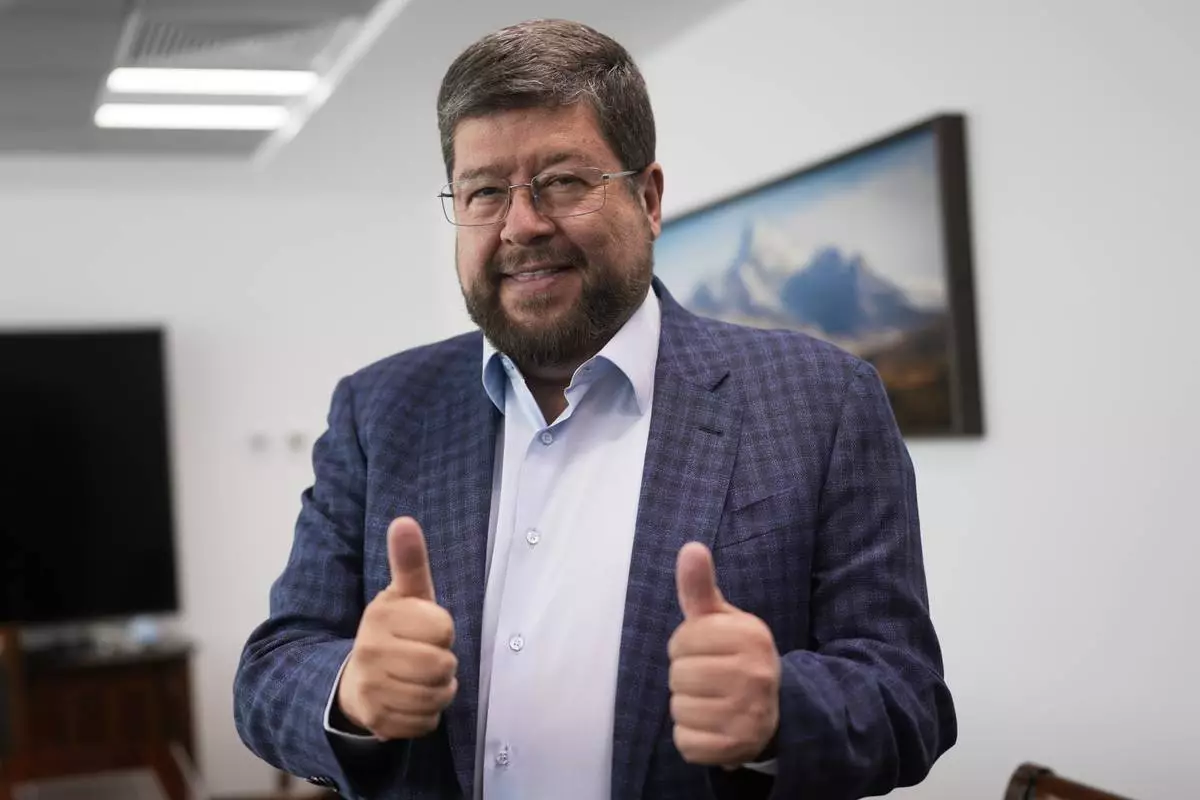
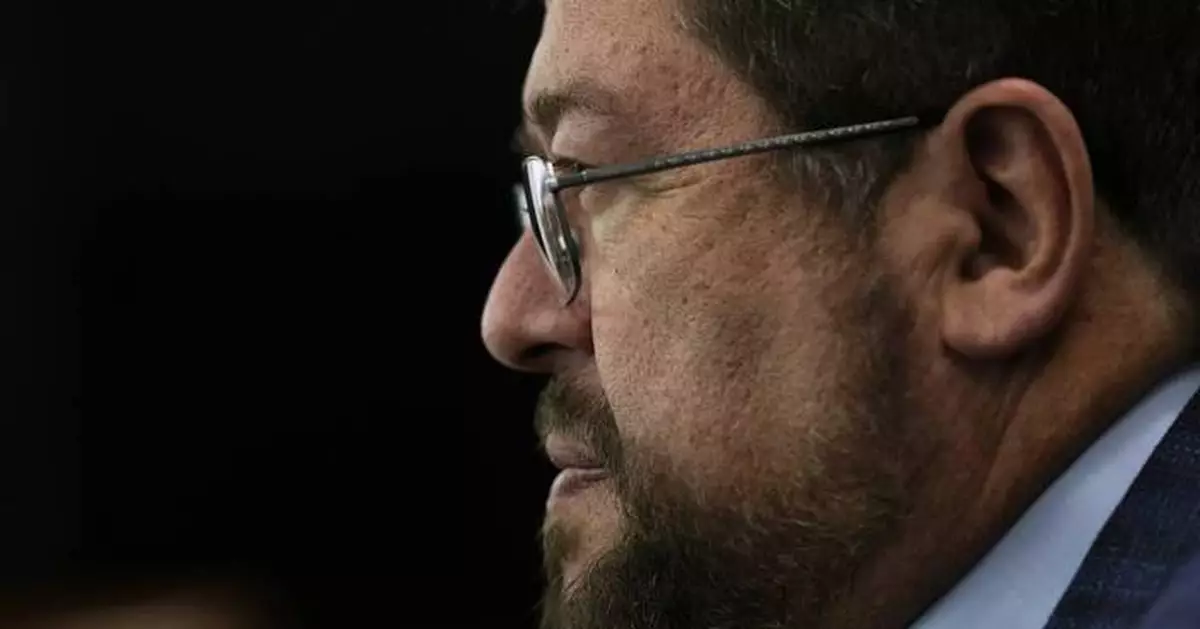
Bolivian presidential candidate Samuel Doria Medina flashes two thumbs up at the end of an interview in La Paz, Bolivia, Wednesday, July 30, 2025. (AP Photo/Juan Karita)
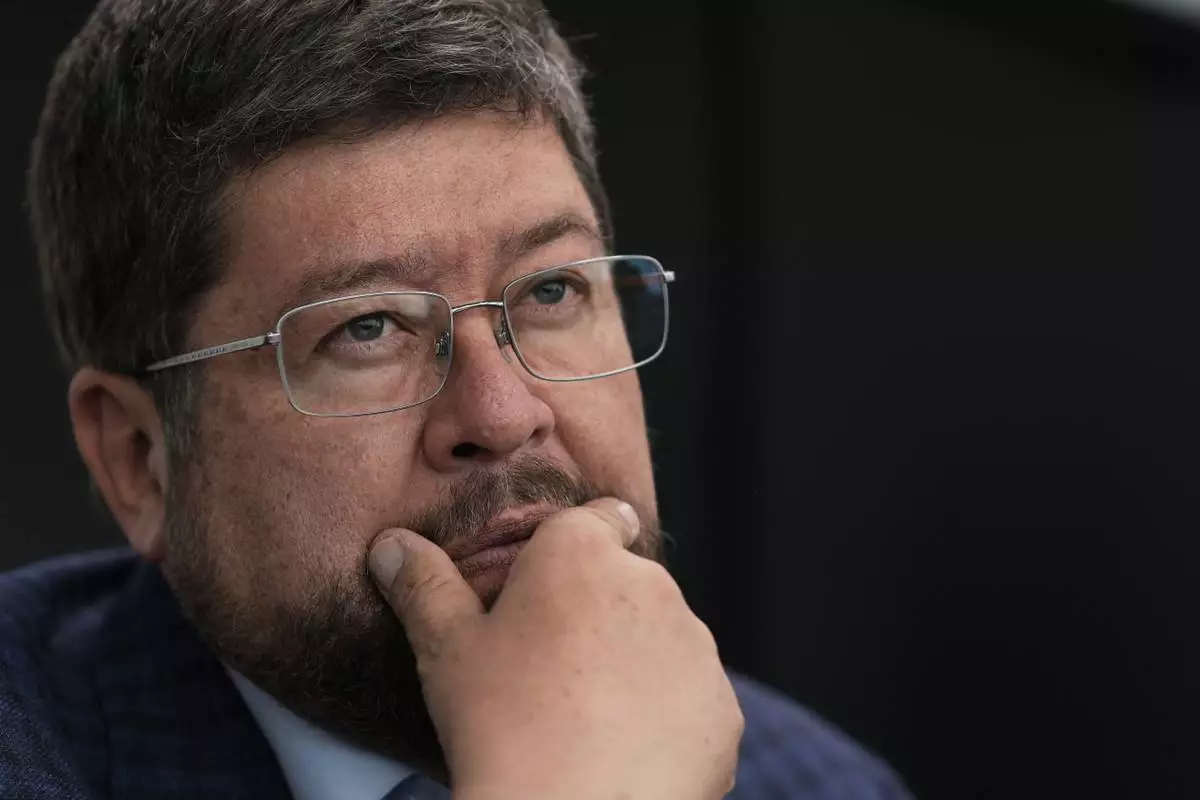
Bolivian presidential candidate Samuel Doria Medina listens to questions during an interview, in La Paz, Bolivia, Wednesday, July 30, 2025. (AP Photo/Juan Karita)
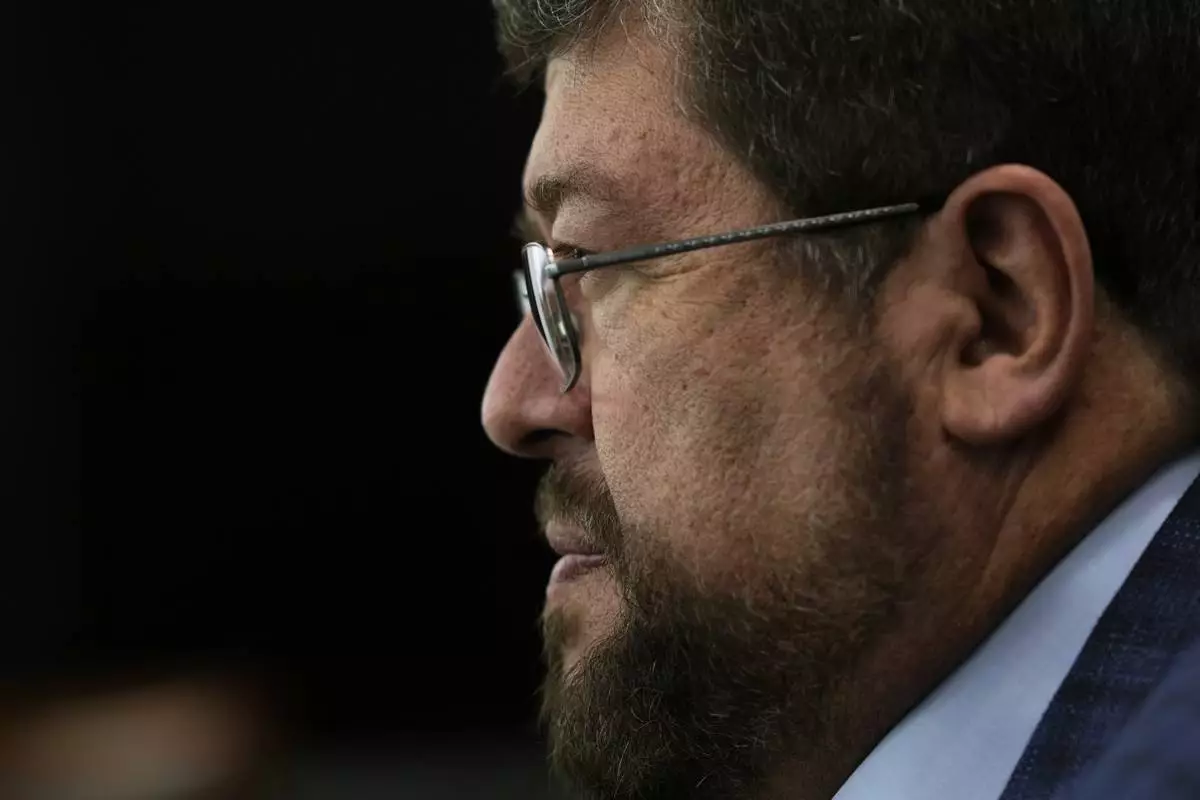
Bolivian presidential candidate Samuel Doria Medina listens to questions during an interview, in La Paz, Bolivia, Wednesday, July 30, 2025. (AP Photo/Juan Karita)