TOKYO & NOVI, Mich. & DÜSSELDORF, Germany--(BUSINESS WIRE)--Jul 31, 2025--
Diversified global manufacturer Asahi Kasei and Toyota Tsusho have established a strategic partnership for the supply of automotive lithium-ion battery (LIB) separator in North America. Their respective subsidiaries in the U.S., Asahi Kasei Battery Separator America, LLC (AKBSA) and Toyota Tsusho America, Inc. (TAI), have finalized a capacity rights agreement for AKBSA to supply Hipore™ wet-process LIB separator to TAI.
This press release features multimedia. View the full release here: https://www.businesswire.com/news/home/20250731161371/en/
The agreement entitles TAI to a preferential share of AKBSA’s production capacity for Hipore™ LIB separator. Beginning in mid-2027, AKBSA will supply TAI with coated Hipore™ separator from its new coating facility currently under construction in Charlotte, North Carolina.
This partnership allows Asahi Kasei to mitigate the risk of market fluctuations and effectively utilize resources by maintaining high rates of operation. Toyota Tsusho will benefit from a stable supply of LIB separator manufactured at the Charlotte plant as it promotes the establishment of an automotive battery supply chain in North America.
By combining Asahi Kasei's strengths in functional materials and Toyota Tsusho's expertise in mobility, the partnership will accelerate the adoption of high-quality wet-process separator in the North American battery market and facilitate the manufacture of higher-performance electric vehicles.
“This alliance fits perfectly with Asahi Kasei's global growth strategy to build and strengthen a supply chain in North America with our partners and to capture medium- to long-term growth opportunities in the electrified vehicle market,” said Ryu Taniguchi, Lead Executive Officer of Asahi Kasei and responsible for the company’s separator business. “As a supplier of high-quality LIB separator, in partnership with Toyota Tsusho we will build an ecosystem that supports electrification in North America and leads the way to a carbon-neutral future.”
Kazuyuki Urata, COO of Toyota Tsusho’s Circular Economy Division, added, “This collaboration with Asahi Kasei is an important step toward the acceleration of electrification in North America and the realization of a sustainable mobility society. Toyota Tsusho will leverage its global network and expertise in the mobility field to build a highly reliable automotive LIB supply chain, thereby creating a foundation to support the spread of electrified vehicles and the reduction of their environmental impact.”
To support growing demand in North America, Asahi Kasei is currently advancing plans to establish a battery separator facility in Canada, as announced in May 2024. Asahi Kasei’s separator business is positioned for Growth Potential in its medium-term management plan, with a focus on expanding Hipore™ wet-process separator in North America. Developing the Canadian facility alongside its U.S. plants will allow the company to continue building its presence within the growing battery ecosystem in North America.
About Asahi Kasei
The Asahi Kasei Group contributes to life and living for people around the world. Since its foundation in 1922 with ammonia and cellulose fiber business, Asahi Kasei has consistently grown through the proactive transformation of its business portfolio to meet the evolving needs of every age. With more than 50,000 employees worldwide, the company contributes to sustainable society by providing solutions to the world’s challenges through its three business sectors of Healthcare, Homes, and Material. For more information, visit https://www.asahi-kasei.com/.
Asahi Kasei is also dedicated to sustainability initiatives and is contributing to reaching a carbon neutral society by 2050. To learn more, visit https://www.asahi-kasei.com/sustainability/.
About Toyota Tsusho
Toyota Tsusho Corporation was founded in 1948 as the trading company for the Toyota Group. Today, Toyota Tsusho, with approximately 70,000 group employees in about 130 countries, strives to contribute to the creation of prosperous societies. Toyota Tsusho continues to expand as a global leader in vehicle exports and automobile production support. In addition to our long-cultivated mobility-related core business, we intend to accelerate growth investments for our next stage and elevate each of our businesses to a higher dimension, focusing on our seven priority domains: Next Mobility; Renewable Energy & Energy Management; Africa; Circular Economy; Batteries; Hydrogen & Alternative Fuels; and Economy of Life.
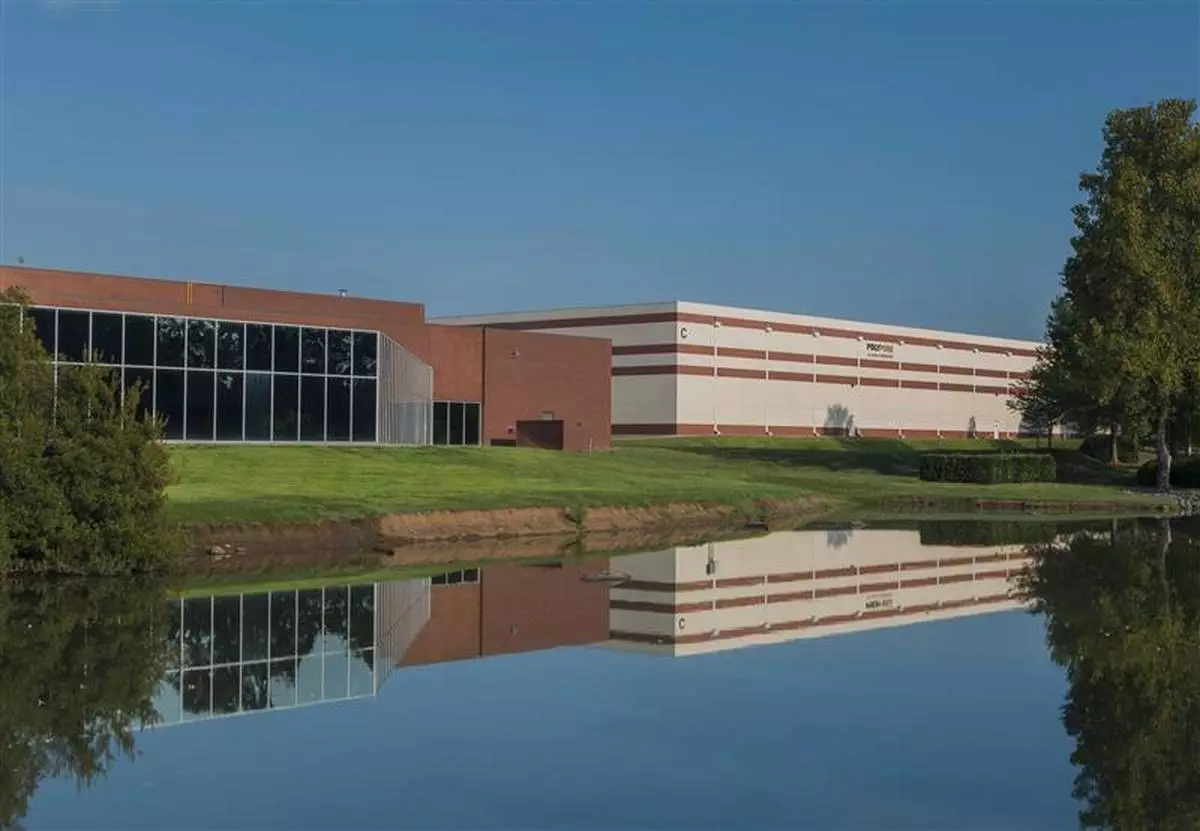
Charlotte Plant with new Hipore™ coating line under construction
PARIS (AP) — Tennis players at the French Open say they haven’t experienced conditions this hot at Roland Garros since the Paris Olympics.
And the 2024 Olympics were held in July and August.
Temperatures for the opening two days of the clay-court Grand Slam have soared to 33 degrees C (91 F) — far beyond normal for late May in the French capital. And it’s forecast to stay that way for the entire first week.
Besides making it uncomfortable for fans and players alike, the sultry conditions have also created faster conditions on court — changing the pace of the game.
“It is much different. Maybe it was that hot in the Olympics but the balls were different, so I wouldn’t treat it as the same tournament,” four-time French Open champion Iga Swiatek said after routing Emerson Jones 6-1, 6-2 in the first round on Monday.
Players have been putting bags of ice around their necks on changeovers to stay cool, while fans are refreshing themselves under sprinklers.
When workers water the clay courts between sets, they have taken to directing their hoses at spectators begging to be doused, too.
“I don’t remember the last time it was so hot at Roland Garros,” Russian-born Australian player Daria Kasatkina said after beating Zeynep Sonmez 6-4, 6-4. “Maybe one day. But we’re going to have it for the whole week.”
Kasatkina said the energy-sapping temperatures made for more up-and-down matches.
“You can suddenly just get out of the bench and feel that your focus dropped,” she said. “So this is a battle which you have to also win. … Whoever adapts better to today’s conditions gets it.”
Canadian player Gabriel Diallo said the heat was the main reason why he retired midway through his match against James Duckworth on Sunday.
Both Andrey Rublev and opponent Ignacio Buse called for the trainer on separate occasions during the second set of their match on Monday.
Buse took a medical timeout and had salts and minerals added to his water bottle as a stethoscope was placed on his chest. Rublev received treatment a few games later.
The French Open is usually cool compared to the heat at the Australian Open and U.S. Open.
But like in Australia and New York, the French Open has adopted an extreme weather policy.
If the Wet Bulb Globe Temperature (WBGT) — which takes into account temperature, humidity, sun, wind and other factors — reaches 30.1 degrees C (86 F) or higher, 10-minute cooling breaks can be installed between the second and third sets for women’s matches and between the third and fourth sets for men’s matches.
If the WBGT hits 32.2 C (90 F), play is suspended. It would require an air temperature of about 38 C (100 F) for play to be suspended.
Some players were embracing the hotter air.
“I’ve always preferred hot and lively conditions to chilly on a clay court, because I feel like I can bring a little bit more of my all-court tennis on this type of surface,” Australian player Alex de Minaur said after beating Toby Samuel 6-4, 6-4, 6-2.
“It’s easier to be a little bit more aggressive. The ball is jumping. I don’t necessarily have to use as much spin or heaviness, and I can let the conditions do the job for me. And it’s quite physical. I don’t mind the heat,” De Minaur added.
Same goes for American player Alex Michelsen, who eliminated Alexander Shevchenko in straight sets.
“It’s definitely good for us Americans,” Michelsen said. “Generally we’re big serve, big forehand, big ground game and like to play offense. When it’s super hot, the ball is moving through the air very fast. … I was so happy when I saw the forecast.”
AP tennis: https://apnews.com/hub/tennis
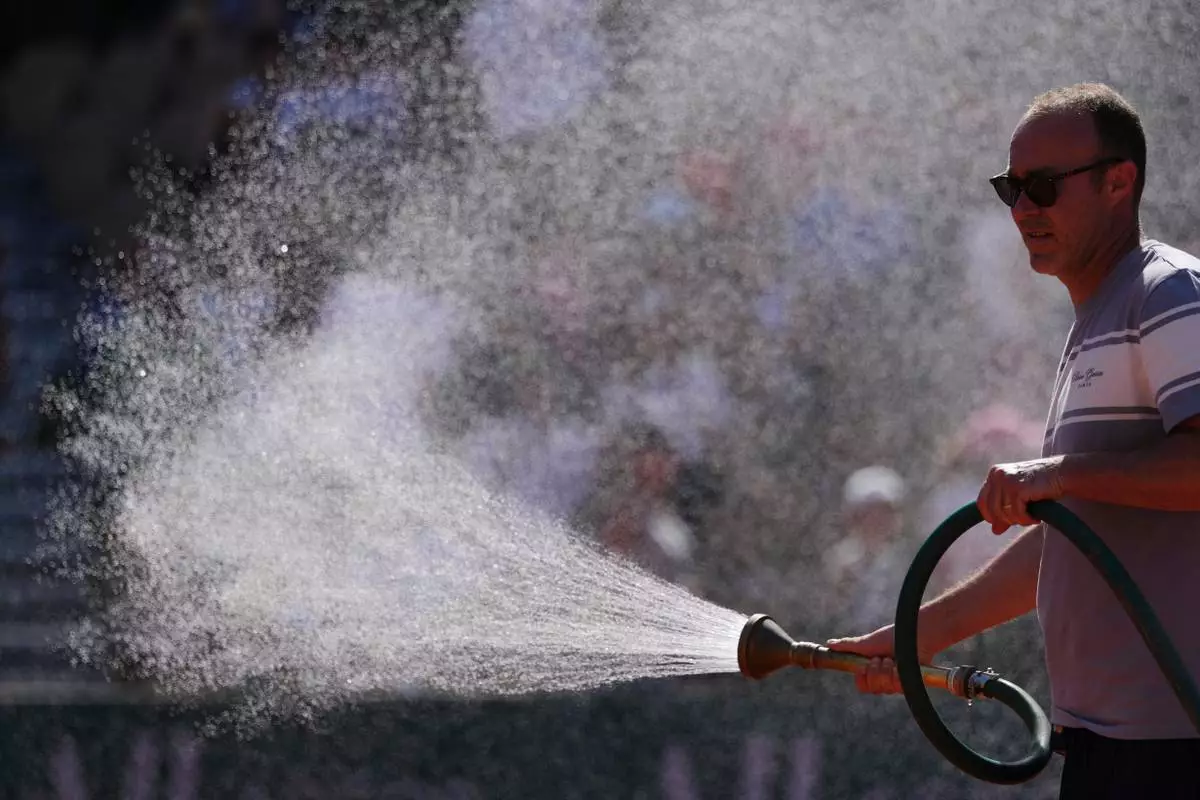
A stadium worker sprays the court with water before the first round men's singles tennis match at the French Open tennis tournament in Paris, Monday, May 25, 2026. (AP Photo/Aurelien Morissard)
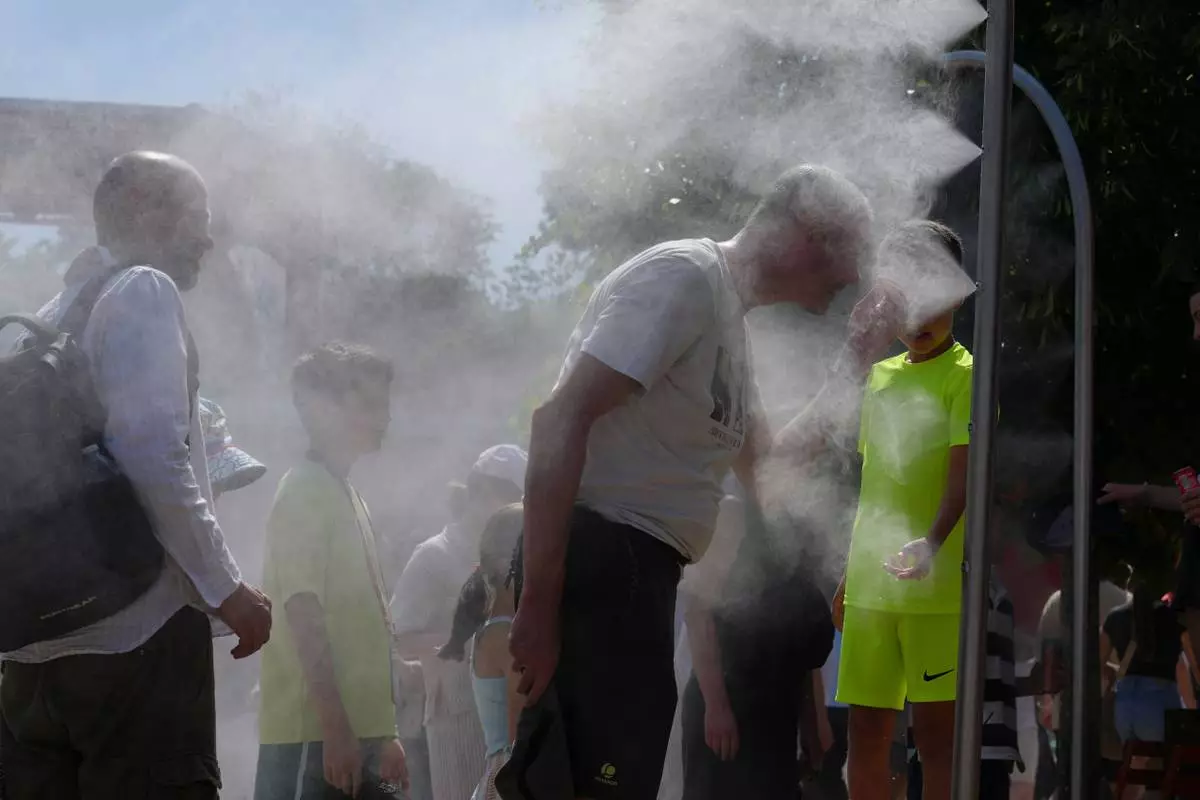
Visitors cool themselves with water from sprinklers during a hot day at the French Open tennis tournament in Paris, Monday, May 25, 2026. (AP Photo/Aurelien Morissard)
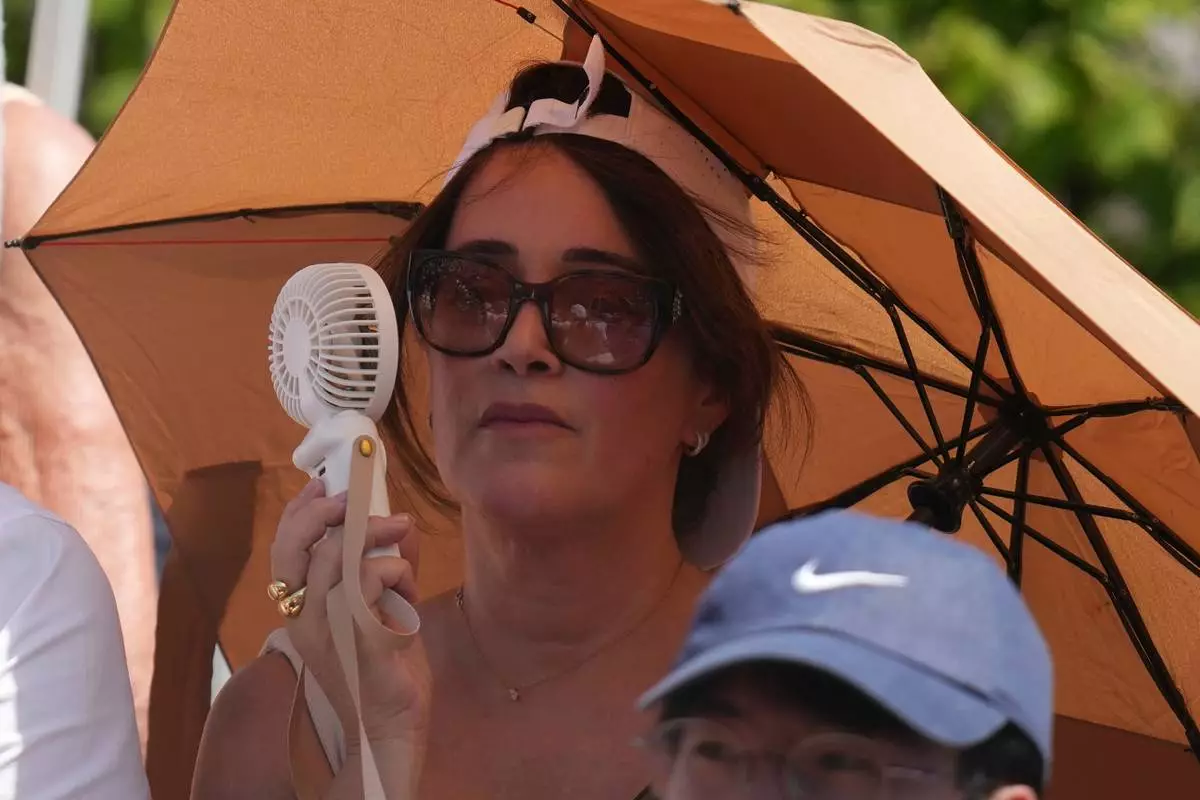
A woman cools herself with a portable fan during the first round men's singles tennis match between Alex De Minaur of Australia and Toby Samuel of Britain at the French Open tennis tournament in Paris, Monday, May 25, 2026. (AP Photo/Christophe Ena)

Spectators cool themselves with hand fans during the first round women's singles tennis match between Elina Svitolina of Ukraine and Anna Bondar of Hungary at the French Open tennis tournament in Paris, Monday, May 25, 2026. (AP Photo/Christophe Ena)
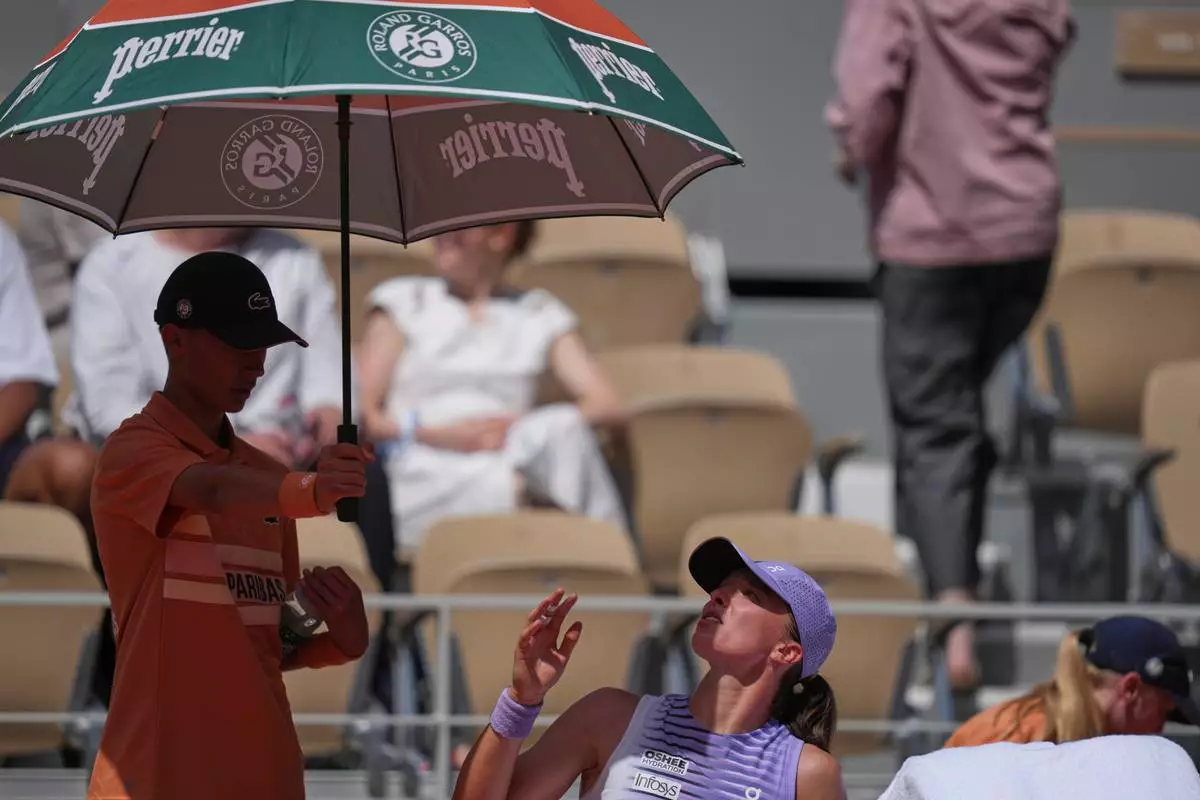
Poland's Iga Swiatek gestures for a ballboy as he shields her from the sun during a break at the first round women's singles tennis match against Emerson Jones of Australia at the French Open tennis tournament in Paris, Monday, May 25, 2026. (AP Photo/Thibault Camus)
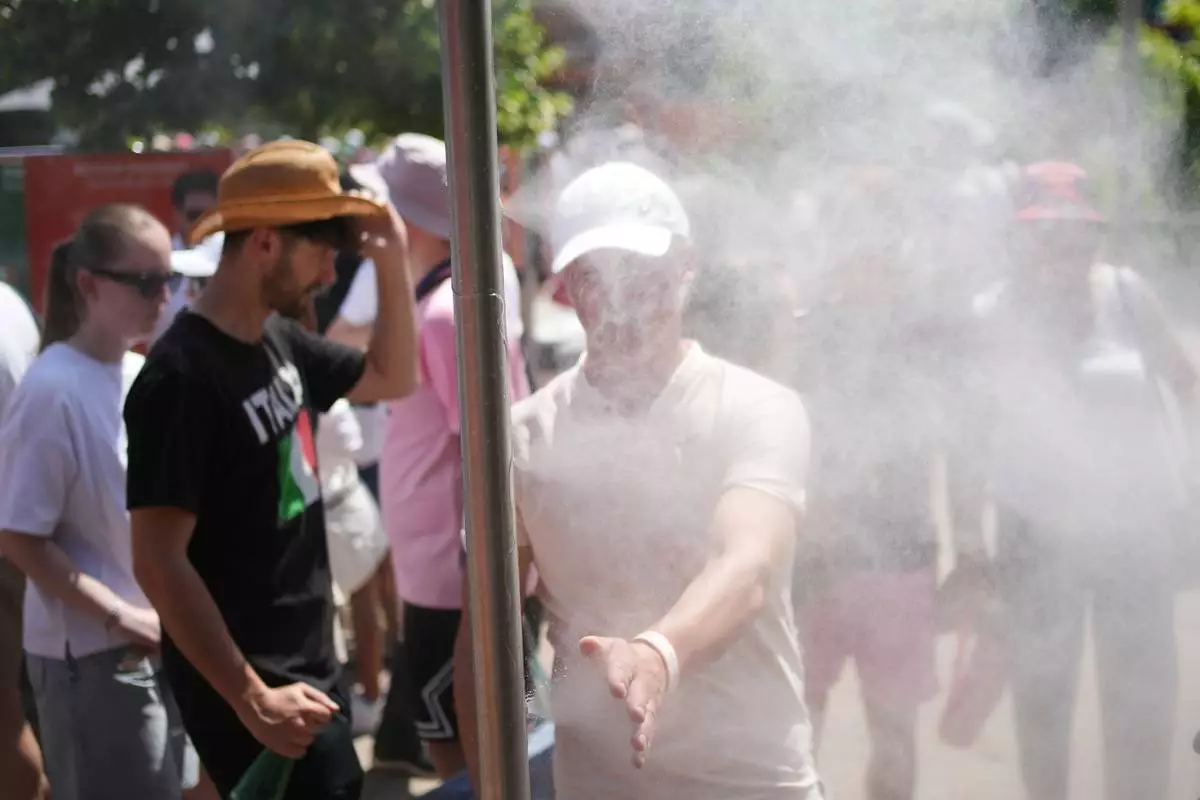
Visitors cool themselves with water from sprinklers during a hot day at the French Open tennis tournament in Paris, Monday, May 25, 2026. (AP Photo/Christophe Ena)

Alex De Minaur of Australia attends a break during the first round men's singles tennis match against Toby Samuel of Britain at the French Open tennis tournament in Paris, Monday, May 25, 2026. (AP Photo/Christophe Ena)