The life of herders in Nagqu City of in southwest China's Xizang Autonomous Region has been transformed thanks to the government's policy support for the local pastoral industry.
Located about 15 kilometers from Nagqu City's urban center, the Hangjia New Village is a traditional herding community. But what greets the eye there is not roaming yaks and sheep but rows of clean, modern two-story homes.
"It's very comfortable. Life here is truly happy. These homes are so much better than the old ones," said Nyainzhag, a villager.
Previously known as Luogang Village, the Hangjia New Village consists of nine natural villages with 85 households. Several households used to live in remote areas with poor road access, with some even had no mobile signals. Today, all these villagers are moving into new homes equipped with running water, electricity, heating, and internet access.
"These homes are jointly funded, half by the government and half by the villagers themselves. Building home together here allows the villagers to seek opportunities for development together. When everyone has joined the cooperative, it doesn't make any sense to keep living scattered in remote areas," said Tashi Chosphel, deputy head of the work team stationed in the village.
Joining the cooperative is part of the village's reform revolving around livestock breeding, which integrates pastoral industry, pasturelands, and herders. The villagers live together and pool their pastures and yaks into a large-scale cooperative in the village, in return, they get dividends which help improve their incomes.
Notably, the village's livestock breeding is supported by smart technologies.
Inside the village's smart animal husbandry exhibition center, real-time data on over 3,000 yaks is displayed. All the data is transmitted from electronic collars worn by the animals.
"These collars allow us to track the yaks' location. If they were attacked by wild animals or show signs of illness like abnormal body temperature, we can quickly intervene. We're even planning to introduce drones to support the herding in a modern way," said Tashi Chosphel.
Financial innovation is also helping modernize the industry.
"Based on these digital management tools, we've launched a new loan product called 'Smart Livestock and Animal Husbandry Loan', where live animals are used as collateral. So far this year, we've issued five loans in Nagqu totaling 5.25 million yuan (around 731,513 U.S. dollars)," said Xu Yangqi, general manager of Rural Revitalization Finance Department of Agricultural Bank of China, Xizang Branch.
Located at 4,700 meters above sea level, a pasture in Nyainrong County of Nagqu City has developed an integrated model supported by the local government which links leading companies, cooperatives, and herders to further increase the value of livestock products.
Since 2020, the pasture has been purchasing animal products from 124 cooperatives across 10 townships in the county for deep processing and selling the products nationwide.
"We've established a comprehensive animal husbandry industrial chain here -- from livestock breeding to product sales, logistics, and related industries. We've also created many jobs, especially for college graduates," said Hu Taoping, deputy director of Nyainrong County's Agricultural, Rural Affairs, Science and Technology Bureau.
Looking forward, Qian Yihao, deputy director of Nagqu City's Agriculture and Rural Affairs Bureau, said the goal is to further increase residents' incomes.
"By leveraging our geographic and resource advantages, we're building a unique regional brand for Nagqu and introducing our products to more markets to continuously boost residents' incomes," said Qian.
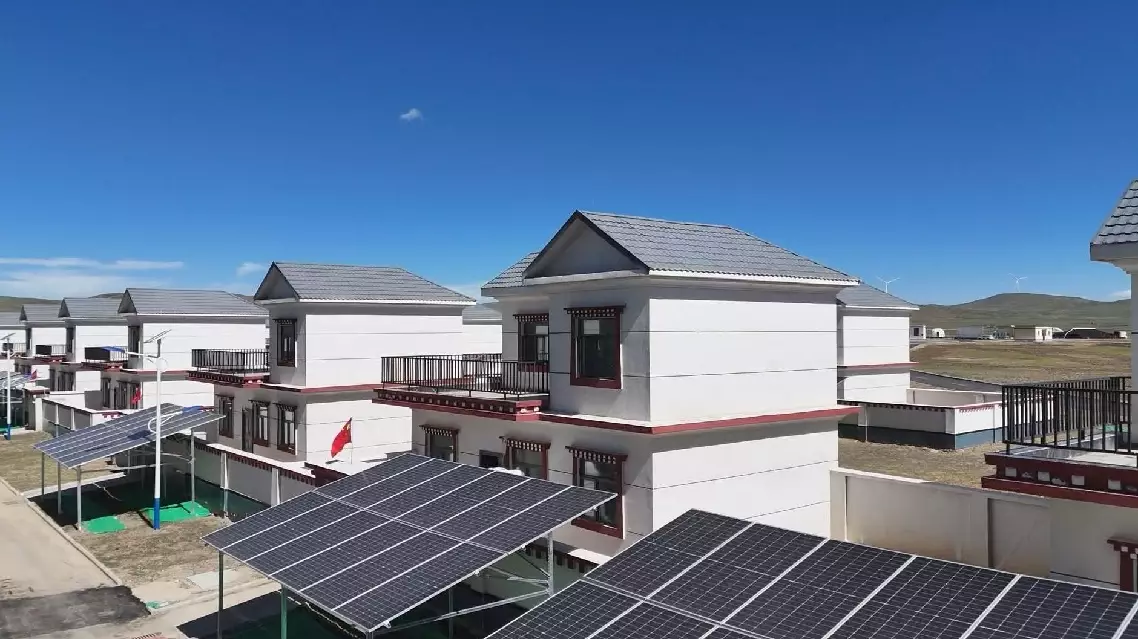
Policy support helps reshape herders' life in Xizang