DETROIT (AP) — The Environmental Protection Agency’s plan this week to relax rules aimed at cleaning up auto tailpipe emissions is the latest Trump administration move to undo incentives for automakers to go electric.
As part of a larger effort to undo climate-based governmental regulations, the EPA on Tuesday said it wants to revoke the 2009 finding that carbon dioxide and other greenhouse gases endanger public health and welfare. That would cripple the legal basis for limiting emissions from things like power plants and motor vehicles.
President Donald Trump’s massive tax and spending law already targets EV incentives, including the imminent removal of a credit that saves buyers up to $7,500 on a new electric car.
The tax law approved in early July also includes another provision that will hit Tesla and other EV makers in the pocketbook — repealing fines for automakers that don’t meet federal fuel economy standards.
Automakers can buy credits under a trading program if they don’t meet the mileage standards. EV makers like Tesla, which don’t rely on gasoline, earn credits that they can sell to other carmakers. The arrangement has resulted in billions of dollars in revenue for Tesla and millions for other EV makers like Rivian.
That is all set to go away under the new law.
Trump has also challenged federal EV charging infrastructure money and blocked California’s ban of new gas-powered vehicle sales.
It adds up to less pressure on automakers to continue evolving their production away from gas-burning vehicles. And that's significant because transportation — which also includes ships, trains and planes — is the sector that contributes the most to planet-warming emissions in the U.S.
Stringent tailpipe emissions and mileage rules were part of the Biden administration's pledge to clean up the nation’s vehicles and reduce use of fossil fuels by incentivizing growth in EVs. EVs do not use gasoline or emit greenhouse gases.
The Trump administration and the auto industry have said both rules were unreasonable for manufacturers.
Automakers could meet EPA tailpipe limits with about 56% of new vehicle sales being electric by 2032 — they're currently at about 8% — along with at least 13% plug-in hybrids or other partially electric cars, and more efficient gasoline-powered cars that get more miles to the gallon.
The latest mileage targets set under the Biden administration required automakers to get to an average of about 50 miles (81 kilometers) per gallon for light-duty vehicles by model year 2031, and about 35 miles per gallon for pickups and vans by model year 2035.
But Department of Transportation Secretary Sean Duffy pressured the National Highway Traffic Safety Administration earlier this year to reverse the rules, and has recently said Biden’s inclusion of EVs in calculating them was illegal. NHTSA will likely reset or significantly weaken them.
Then there are the fines that automakers will no longer face for falling short on the fuel economy rules.
“With the signing of the One Big Beautiful Bill, new penalties for automakers not complying with an illegal fuel economy standard designed to push EVs will be zero,” NHTSA spokesman Sean Rushton said in a statement.
Some legacy automakers have paid hundreds of millions of dollars in penalties for not meeting them. Just last year, Jeep-maker Stellantis paid $190.7 million for model years 2019 and 2020, and General Motors paid $128.2 million for the 2016 and 2017 model years.
Automakers that didn’t meet the standards could also instead buy credits from carmakers that did — or even surpassed them — such as Tesla. That provision earned Tesla $2.8 billion in 2024 — revenue it will no longer see.
Elon Musk sharply criticized the big tax-and-spending bill in June, saying it “gives handouts to industries of the past while severely damaging industries of the future.” Tesla did not immediately respond to a request for comment on the law's effect on those credits.
The agency wrote to carmakers earlier this month informing them the penalties wouldn’t be issued from the model year 2022 onward. Some automakers confirmed receiving the letter but declined to comment further.
Experts say without them, the law “invites automakers to cheat on government fuel economy rules by setting fines to $0, ensuring consumers will buy more gas guzzlers, pay more at the pump and enrich Big Oil,” said Dan Becker, director of the Center for Biological Diversity’s Safe Climate Transport Campaign.
Ann Carlson, an environmental law professor at the University of California, Los Angeles, and a former acting NHTSA administrator under Biden, called it a “stunning decision” for NHTSA to essentially forgive the fines from 2022 onward. She said it amounted to a windfall for companies that chose to pay penalties rather than produce more efficient cars.
Carlson said backing away from future fines also “poses a dilemma for auto manufacturers who may feel bound to comply with the law, even if there is not a financial consequence for failing to do so.”
It takes a while for carmakers to shift their product lines, and experts say automakers might be locked into their technology and manufacturing decisions for the next few model years. But changes could come for model year 2027 and beyond, they said.
EVs aren't as profitable as gas-engine cars, so automakers may make fewer of them if they no longer have to offset emissions from their gasoline models. Already, some automakers have pulled back on their ambitions to go all-electric with a slower pace of EV sales growth.
“Automakers also know every presidential administration eventually comes to an end, so they won’t abandon their EV development efforts," said Karl Brauer, executive analyst at iSeeCars.com. "But they will reduce their near-term efforts in this area.”
Alexa St. John is an Associated Press climate reporter. Follow her on X: @alexa_stjohn. Reach her at ast.john@ap.org.
The Associated Press’ climate and environmental coverage receives financial support from multiple private foundations. AP is solely responsible for all content. Find AP’s standards for working with philanthropies, a list of supporters and funded coverage areas at AP.org.
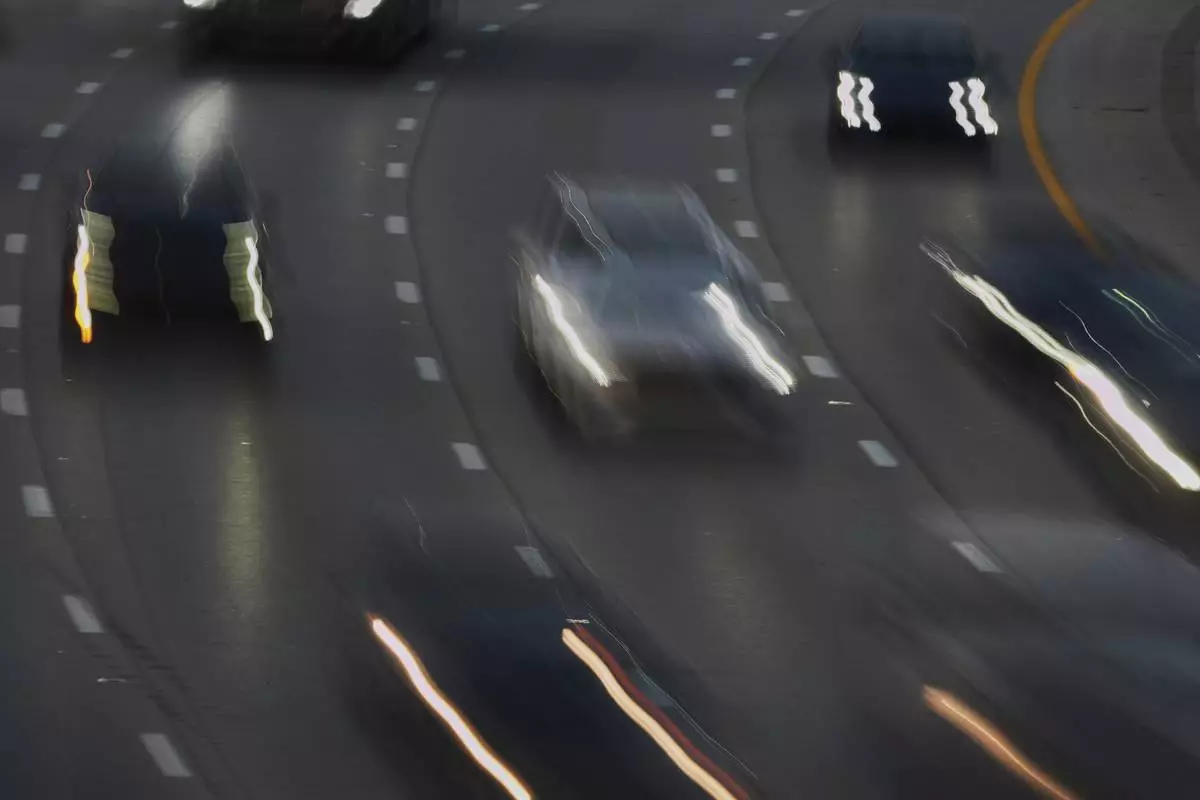
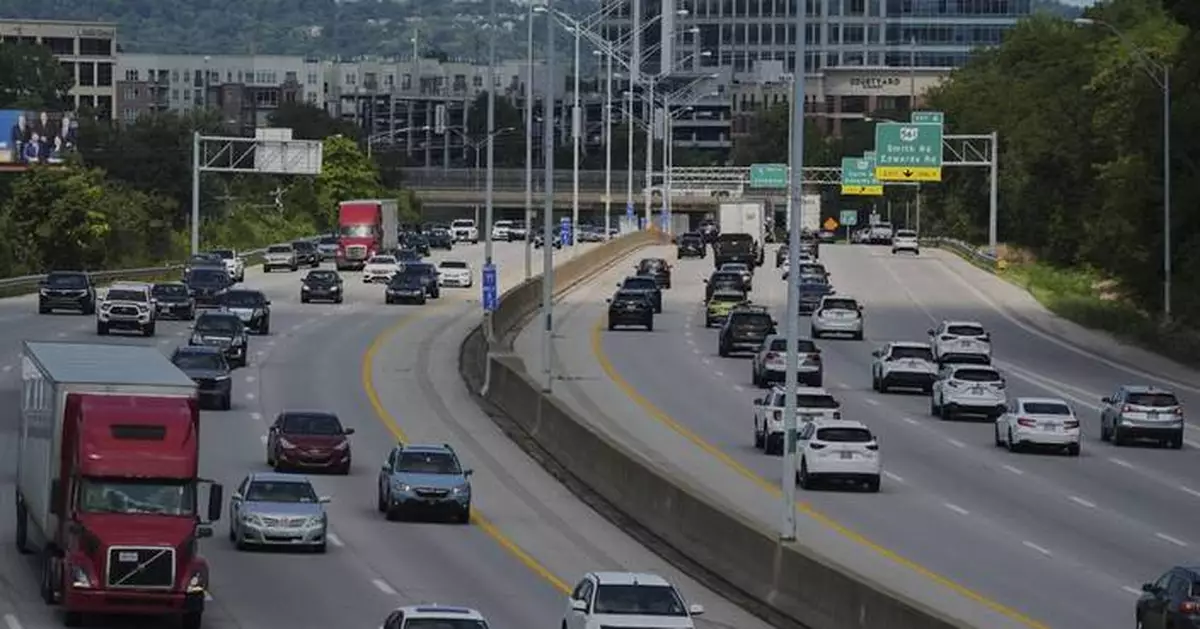
Vehicles drive along a highway Wednesday, July 30, 2025, in Cincinnati. (AP Photo/Joshua A. Bickel)
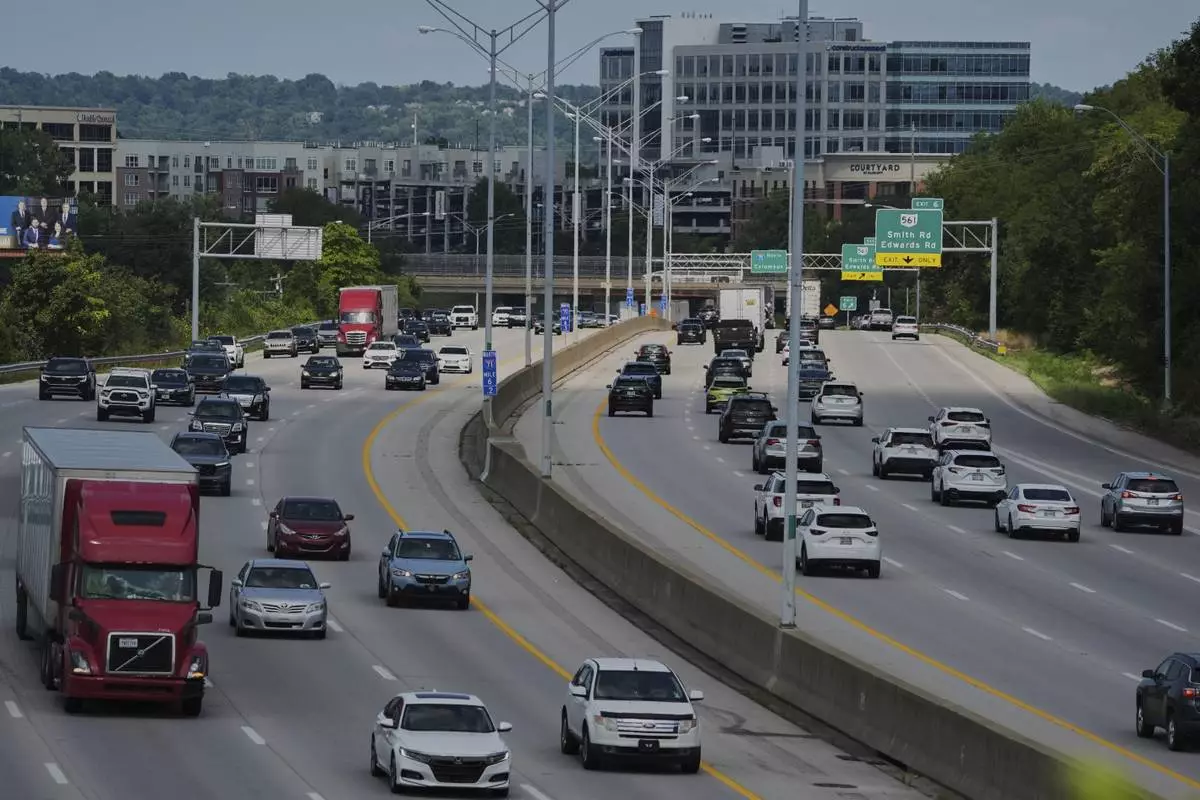
Vehicles drive along a highway Wednesday, July 30, 2025, in Cincinnati. (AP Photo/Joshua A. Bickel)
KAMPALA, Uganda (AP) — One figure looms large ahead of Uganda's elections Thursday, although he is not on the ballot: the president's son and military commander, Muhoozi Kainerugaba.
Kainerugaba, long believed to be the eventual successor, stood down for his father, President Yoweri Museveni, who is seeking a seventh term that would bring him closer to five decades in power.
Yet Kainerugaba, a four-star general, remains a key figure in Ugandan politics as the chief enforcer of his father’s rule in this east African country. He is the top military commander, appointed by his father nearly two years ago after Kainerugaba told a political rally he was ready to lead.
Kainerugaba’s appointment as army chief put his political campaign on hold — a least, critics say, for as long as Museveni still wants to stay.
Many Ugandans are now resigned to the prospect of hereditary rule, once vehemently denied by government officials who said claims of a secret “Muhoozi Project” for leadership were false and malicious.
Kainerugaba himself has been honest about his presidential hopes since at least 2023 and openly says he expects to succeed his father.
“I will be President of Uganda after my father,” he said in 2023, writing on social platform X. “Those fighting the truth will be very disappointed.”
The president’s son is more powerful than ever, his allies strategically deployed in command positions across the security services. As the presumed heir to the presidency, he is the recipient of loyalty pledges from candidates seeking minor political offices.
Kainerugaba joined the army in the late 1990s, and his fast rise to the top of the armed forces proved controversial.
In February 2024, a month before Kainerugaba was named army chief, the president officially delegated some of his authority as commander-in-chief to the head of the military.
Exercising authority previously reserved for the president, including promoting army officers of high rank and creating new army departments, Kainerugaba is more powerful than any army chief before him, said Mwambutsya Ndebesa, a political historian at Uganda’s Makerere University, adding that family rule appears inevitable.
“Honestly, I don’t see a way out through constitutional means,” he said.
Elections, he said, “is just wasting time, legitimizing authority but not intended as a democratic goal... Any change from Museveni will be determined by the military high command.”
With Museveni not saying when he would retire, a personality cult around Kainerugaba has emerged. Some Ugandans stage public celebrations of his birthday. Campaign posters of many seeking parliamentary seats often feature the emblem of Kainerugaba’s political group, the Patriotic League of Uganda. Speaker of Parliament Anita Among last year called Kainerugaba “God the Son."
The speaker's comments underscored the political rise of Kainerugaba in a country where the military is the most powerful institution and Museveni has no recognizable successors in the upper ranks of his party, the National Resistance Movement.
Some believe Kainerugaba is poised to take over in the event of a disorderly transition from Museveni, who is 81. One critic, ruminating on Kainerugaba’s military rank, has been urging the son to depose his father.
“I have endlessly appealed to Muhoozi Kainerugaba to, at least, pretend to coup his dad, become the opposition hero, and accuse the old man of all the crimes the general Kampala public accuses him of,” Yusuf Serunkuma, an academic and independent analyst, wrote in the local Observer newspaper last year.
“Sadly, Kainerugaba hasn’t heeded my calls thus far. That he is being pampered by his father to the presidency doesn’t look good at all.”
Kainerugaba’s supporters say he is humble in private and critical of the corruption that has plagued the Museveni government. They also say he offers Uganda the opportunity of a peaceful transfer of political power in a country that has not had one since independence from British colonial rule in 1962.
In addition to opposing family rule, his critics point out that Kainerugaba has behaved badly in recent years as the author of often-offensive tweets.
He has threatened to behead Bobi Wine, a presidential candidate who is the most prominent opposition figure in Uganda. He has said the opposition figure Kizza Besigye, jailed over alleged treason charges, should be hanged "in broad daylight” for allegedly plotting to kill Museveni. And he has appeared to confound even his father, who briefly removed him from his military duties in 2022 when Kainerugaba threatened on X to capture the Kenyan capital of Nairobi in two weeks.
Wine said in a recent interview with The Associated Press that Kainerugaba's army "has largely taken over the election.” Wine said his supporters are the victims of violence, including beatings, perpetrated by soldiers.
In its most recent dispatch ahead of voting, Amnesty International said the security forces were engaging in a “brutal campaign of repression.” It cited one event at a rally by Wine’s party, the National Unity Platform, in eastern Uganda on Nov. 28, when one man died after the military blocked an exit and open fired on the crowd.
It was not possible to get a comment from Kainerugaba, who rarely gives interviews.
Frank Gashumba, a Kainerugaba ally and vice chairman of the Patriotic League of Uganda, said Wine was exaggerating the threat against him. “Nobody is touching him,” he said. “He’s lacking the limelight.”
Only one senior member of the president’s party has publicly pushed back against hereditary rule.
Kahinda Otafiire, a retired major general who is among those who were by Museveni’s side when he first took power by force after a guerrilla war in 1986, has urged Kainerugaba to seek leadership on his own merits rather than as his father’s son.
“If you say so-and-so’s son should take over from the father, his son will also want to take over from his grandfather. Then there will be Sultan No. 1, Sultan No. 2, and then the whole essence of democracy, for which we fought, will be lost," Otafiire, who serves as Uganda's interior minister, told local broadcaster NBS last year.
"Let there be fair competition, including Gen. Muhoozi. Let him prove to Ugandans that he is capable, not as Museveni’s son but as he, Muhoozi, who is competent to manage the country.”
Follow AP’s Africa coverage at: https://apnews.com/hub/africa
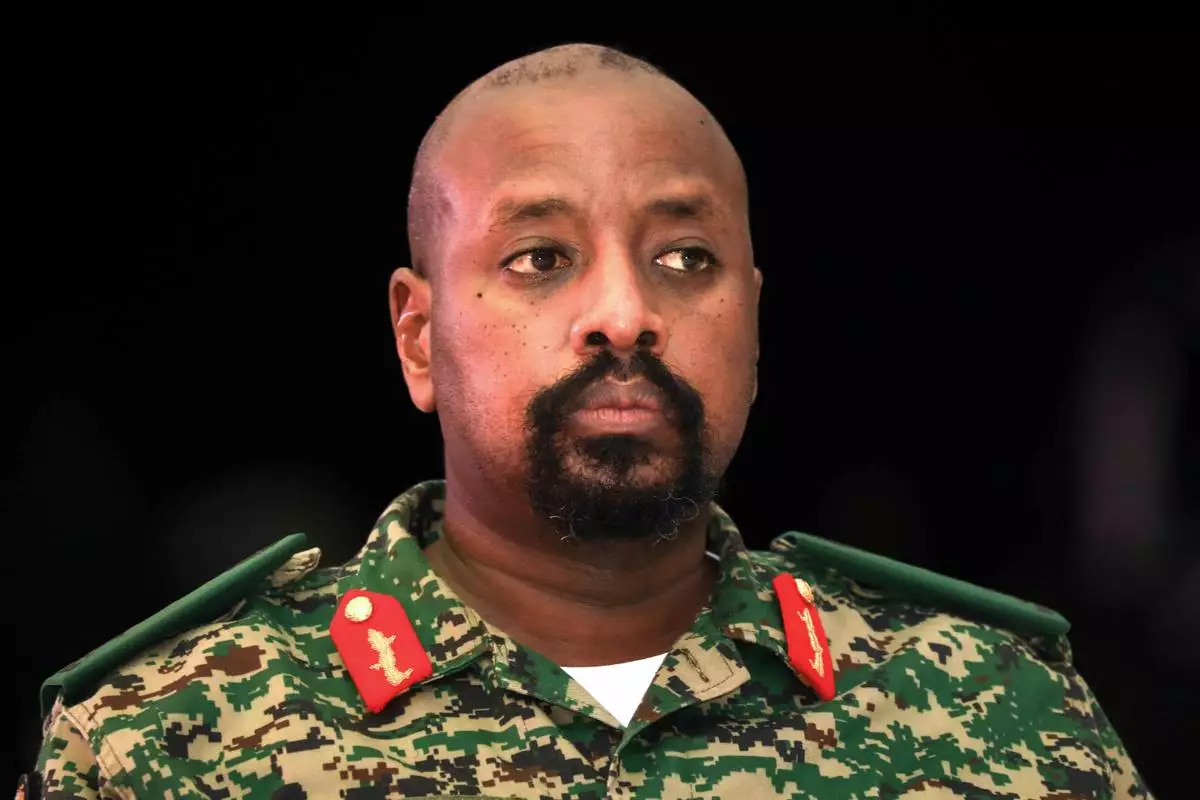
FILE - Lt. Gen. Muhoozi Kainerugaba, son of Uganda's President Yoweri Museveni, attends a "thanksgiving" ceremony in Entebbe, Uganda, May 7, 2022. (AP Photo/Hajarah Nalwadda, File)